


Walk into any barbershop in 2026 and you’ll hear the same request over and over: low taper on the sides, keep the top messy. That’s the Textured Fringe Low Taper, and it has quietly become the default men’s haircut for guys who want to look sharp without looking like they tried too hard.
This guide breaks down what the cut actually is, why barbers keep recommending it, the variations worth knowing, and exactly how to keep it looking fresh between visits. If you’ve ever left a barbershop happy with your cut and then struggled to recreate it at home, this is written for you.
What Is a Low Taper Fade Textured Fringe?
A Textured Fringe Low Taper combines two separate barbering techniques into one haircut.
The taper fade is the foundation. Unlike a high or mid fade, a low taper starts its blend close to the ears and neckline, leaving more length on the sides before the hair gradually shortens to skin or near-skin level. Because the fade sits so low, it never looks aggressive. There’s no harsh line where “long hair” suddenly becomes “buzzed scalp.” It’s a soft, gradual transition that a barber builds with descending clipper guards and blending shears.
The Textured Fringe Low Taper is the styling element on top. Instead of a flat, uniform front section, the fringe is cut with point-cutting, slide-cutting, or razoring techniques that break up the hair’s edges. This creates separation, movement, and a slightly undone finish rather than a stiff, comb-over look.
Put together, you get a haircut with tight, controlled sides and an expressive, textured top. The contrast between the two is exactly what makes the style work. The fade keeps things clean and professional, while the fringe adds personality and keeps the cut from feeling boring.
Why This Style Became So Popular
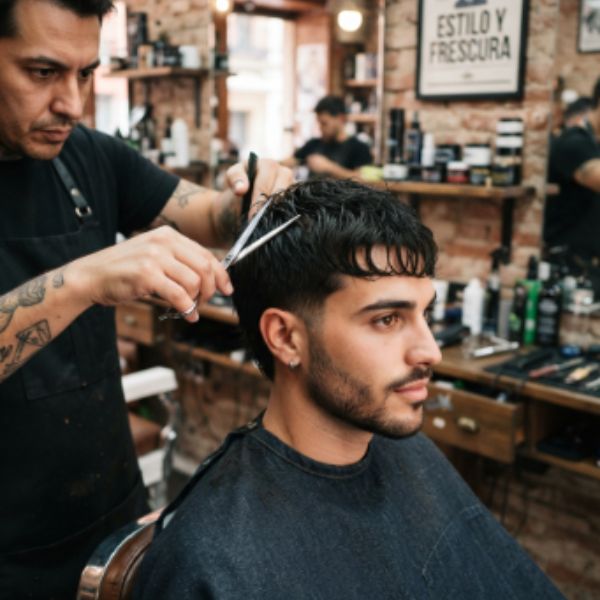
A haircut doesn’t stay in demand for years by accident. A few practical reasons explain why the low taper fade with textured fringe keeps showing up as a top request in 2026.
- It suits almost every face shape. Because the taper sits low, it doesn’t dramatically change facial proportions the way a high fade can. That makes it far more forgiving than more dramatic cuts.
- It works across hair types. Straight, wavy, curly, and coily hair can all be shaped into a textured fringe, just with different lengths and product needs.
- It transitions from formal to casual in seconds. Comb the fringe forward and neat for the office. Muss it with your fingers for the weekend. Same haircut, two completely different vibes.
- It’s genuinely low maintenance for how good it looks. The sides hold their shape for weeks, and the fringe only needs a quick styling routine each morning.
- It photographs and films well, which matters more than ever given how much hairstyle inspiration now comes from short-form video and social platforms rather than magazines.
In short, it’s a cut that rewards a small amount of daily effort with a look that reads as intentional, not overworked.
Read More : Modern Crew Cut: 27 Trendy Haircut Variations for Men
Variations of the Low Taper Fade with Textured Fringe
Not every low taper fade textured fringe looks the same. Barbers adjust the length, texture, and finishing technique to match your hair type and personal style. Here are the five most requested variations.
Short Textured Fringe

This version keeps the fringe close to the forehead, usually around 1.5 to 2 inches, with light layering for texture rather than heavy volume. It’s the easiest variation to maintain because there’s less hair to manage each morning, and it reads as neat and professional. Good for guys who want the textured look without a daily styling routine.
Wavy Fringe with Low Taper
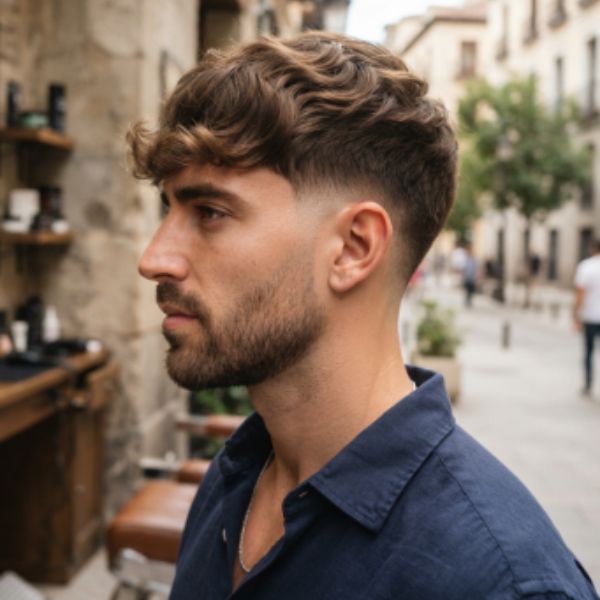
If your hair has natural wave, a barber will often cut the fringe slightly longer, around 2 to 3 inches, to let the movement show instead of cutting it out. A light sea-salt spray or texturizing cream enhances the natural bend rather than fighting it. This variation tends to need the least product of any on this list.
Curly Fringe Low Taper
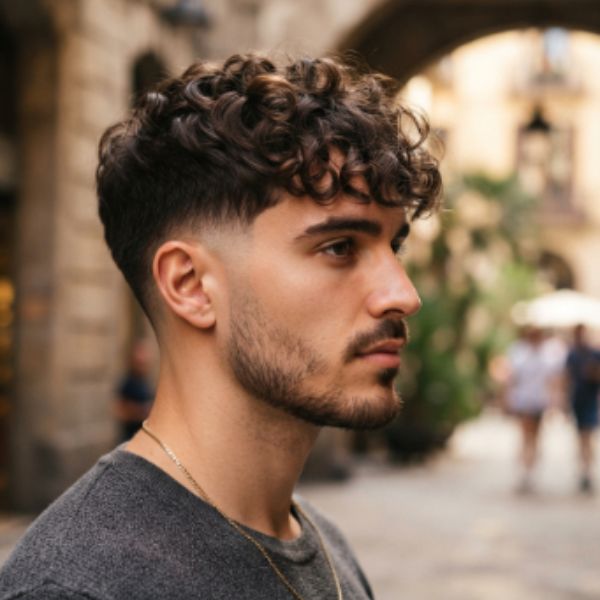
Curly and coily hair shrinks noticeably as it dries, so barbers typically leave extra length, often 3 inches or more, to account for that shrinkage. The result is a rounded, voluminous fringe that sits above the low taper for strong contrast between the tight sides and the fuller top. This variation leans on curl cream and diffusing rather than clay or paste.
Messy Textured Fringe

Built specifically for a lived-in, undone finish, this version relies on point-cutting to remove bulk and create irregular pieces. A matte clay or texturizing powder is worked through with fingers, not a comb, to keep the separation looking natural rather than styled. This is the most requested version among younger clients right now.
Layered Fringe with Low Taper
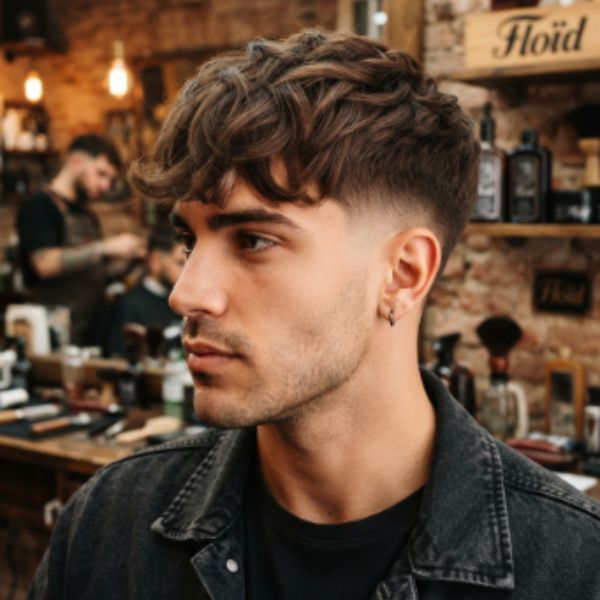
Instead of one uniform length, the top is cut in layers that stack length gradually toward the front. This adds dimension and makes fine hair look thicker than it is, since the layers create the illusion of more density. It’s a strong option for anyone whose hair tends to sit flat.
Read More : Modern Mullet Haircut: The Best Styles for Men in 2026
How Your Barber Creates This Haircut
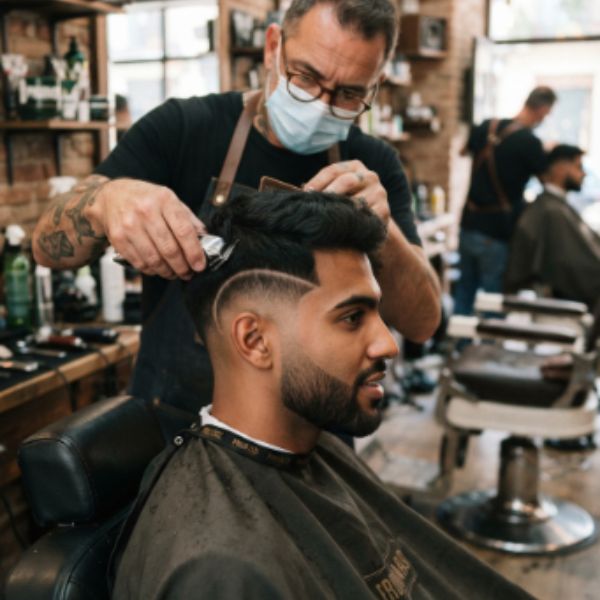
Understanding the process helps you have a better conversation in the chair, and it helps you spot the difference between a rushed cut and a well-blended one.
- Consultation and length check. The barber assesses your hair type, growth pattern, and how much length you currently have on top, since the fringe needs enough length to create texture.
- Sides and back with clippers. Using a guard, the barber tapers the sides starting low, near the sideburns and neckline, and works upward, switching to shorter guards or a bare blade as needed.
- Blending. This is the step that separates a good barber from an average one. Clipper-over-comb or blending shears are used to erase any visible line between the fade and the longer hair on top.
- Cutting the fringe. The top is cut using scissors or shears, often with point-cutting or slide-cutting techniques that create texture instead of a blunt, single-length edge.
- Finishing and styling. The barber applies a small amount of product, typically a matte clay or texturizing paste, and shows you roughly how to style the fringe at home.
What to Say to Your Barber
Vague requests lead to inconsistent results. Bring one or two reference photos, ideally front and side angles, and use specific language:
- “Low taper, keep the blend near my sideburns and neckline, not up by my temples.”
- “Leave the top long enough for a textured fringe, around two to three inches.”
- “Point-cut the top so it has movement, not a blunt edge.”
- “I want it messy, not combed flat.”
Barbers work far more accurately from photos and specific terms than from general descriptions like “make it look cool.”
How to Style a Low Taper Fade Textured Fringe at Home
Recreating the barbershop finish at home comes down to technique more than product quantity. Here’s a routine that works for most hair types.
- Start with damp, not wet, hair. Towel-dry until it’s just damp, since fully soaked hair takes too long to style and tends to fall flat.
- Apply a small amount of product first. A pea-sized amount of texturizing cream or matte clay, rubbed between your palms and worked through from root to tip.
- Blow-dry with your fingers, not a brush. Lift the roots and push the fringe in the direction you want it to fall, usually forward or slightly to one side.
- Add a second light layer of product once dry. This locks in separation and adds the matte texture that defines the look.
- Finish by hand, not comb. Use your fingertips to twist and separate small pieces of the fringe. Combing tends to flatten the texture you just built.
The whole process usually takes under five minutes once you’ve done it a handful of times. If your fringe looks stiff or “helmet-like,” you’re likely using too much product or brushing it out too smooth. Less is almost always more with this cut.
Maintenance and Hair Care
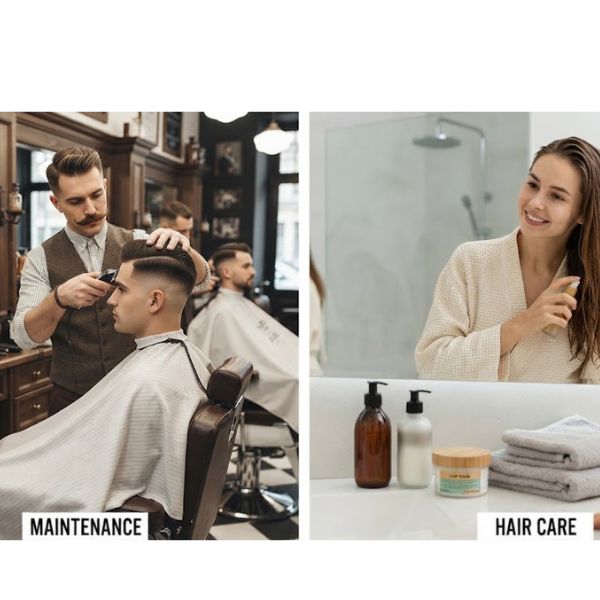
Barber Visits
Plan on a barber visit every 3 to 5 weeks. The sides grow out faster than they look, and once the taper starts to lose its sharp blend, the whole haircut reads as untidy even if the top still looks fine. If you want the fade especially crisp, lean toward the 3-week mark. If you prefer more length and don’t mind a softer edge, 5 weeks is fine.
At-Home Care
- Don’t over-wash. Washing every single day strips the natural oils that give texture its grip. Two to three washes a week, with water rinses in between, keeps hair healthier and easier to style.
- Use a light conditioner. This matters more for wavy and curly variations, where dryness can turn texture into frizz.
- Choose matte products over shiny ones. Clay, paste, or texturizing powder gives the “undone” look. Gel or pomade tends to look too polished for this style.
- Trim the fringe between full haircuts if it grows unevenly. A quick trim of just the front section can extend the time between full barber visits.
Who This Haircut Suits Best

Face Shapes
- Oval faces are considered the most balanced shape, and this cut simply maintains that balance without pulling attention in any one direction.
- Round faces benefit from the low taper’s tighter sides, which visually elongate the face, paired with a fringe that adds some forward height.
- Square faces get softened edges from the textured fringe, which breaks up a strong jawline without hiding it.
- Heart-shaped faces do well with a fringe that adds width near the forehead, balancing a narrower chin.
Hair Types
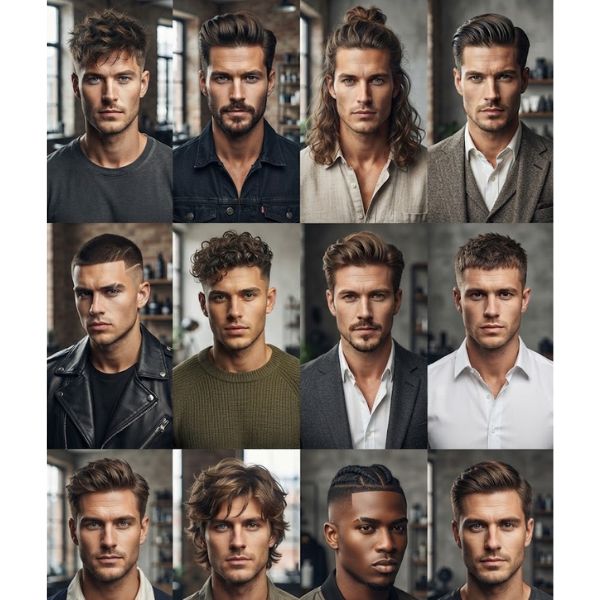
- Straight hair takes well to the short or layered fringe variations, since straight strands hold a defined shape easily.
- Wavy hair pairs naturally with this cut, since the wave itself creates texture without much extra styling effort.
- Curly and coily hair needs a bit more length left on top to account for shrinkage, but produces some of the most striking versions of this style once styled.
- Fine or thin hair benefits most from the layered variation, which creates the appearance of extra density.
The Style’s Journey and What’s Ahead
The taper fade itself has barbershop roots going back decades, valued for being sharp without exposing too much scalp. What’s changed more recently is the top. Where older versions of tapered cuts favored slicked, uniform styling, today’s textured fringe leans into deliberate imperfection, a shift driven partly by casual workplace dress codes and partly by how hairstyles now spread through short-form video rather than salon lookbooks.
Looking ahead, expect more customization rather than a replacement trend. Barbers are increasingly combining the low taper with design elements like subtle line work near the temple, or pairing it with beard grooming for a cohesive finished look. The core structure, low sides and a textured top, is flexible enough to keep evolving without losing what makes it work in the first place.
Low Taper Fade Textured Fringe: Asked Questions
People researching this cut tend to circle back to the same handful of practical questions before booking an appointment. Here are the ones that come up most.
How long does hair need to be before I can get this cut? You need at least 2 to 3 inches on top for a barber to create real texture. If your hair is shorter than that, they can still start the fade, but the fringe won’t have much to work with yet.
Can this cut be adjusted for a receding hairline? Yes. A barber can angle the fringe to soften the hairline’s appearance, often by keeping slightly more length at the front corners.
Does the fade have to be skin-level? No. A low taper can fade into a short guard length instead of bare skin, which some men prefer for a softer overall look.
FAQs
How often should I visit my barber for this cut?
Every 3 to 5 weeks keeps the fade sharp and the fringe at a manageable, easy-to-style length.
Does a textured fringe work on straight hair?
Yes. Point-cutting and slide-cutting techniques add texture to straight hair even though it lacks natural wave or curl.
What is the easiest way to style this at home?
Apply a small amount of matte clay to damp hair, blow-dry with your fingers, then finish by hand rather than combing it smooth.
Is the low taper fade good for growing out?
Yes. Because the fade starts low and gradual, it grows out more evenly than a high or skin fade, giving you a longer window before it looks untidy.
Can I add color or highlights to this cut?
Yes. Subtle highlights or a low-contrast color often enhance the textured fringe by making the movement and layers more visible.
What is the difference between a textured fringe and a blunt fringe?
A textured fringe is cut with point-cutting or razoring for irregular, layered edges, while a blunt fringe is cut to one uniform, straight-across length.
Is this cut high maintenance?
Not particularly. The sides hold their shape for weeks, and the fringe only takes a few minutes to style each morning.
Does this haircut work for men with beards?
Yes. Barbers frequently pair a low taper fade with a well-groomed beard, using the same gradual blending approach to connect the two seamlessly.
Read More : Medium Messy Mens Curly Hairstyles: 15 Easy Looks
Conclusion
The low taper fade with textured fringe earns its popularity honestly. It’s flattering across face shapes, adaptable to nearly every hair type, and flexible enough to go from a boardroom to a night out without a full restyle. The sides do the heavy lifting by staying clean and low maintenance, while the fringe gives you room to express a bit of personality up top.
If you’re heading to the barber for the first time with this cut in mind, bring a reference photo, use specific language about where the taper should start, and be clear about how much texture you want on top. Once you’ve got the base cut right, the at-home styling routine takes only a few minutes to master.

Zaria Rhodes is the lead editor and content curator at Lyrinexa, passionate about music, storytelling, and lyrical expression. With a deep love for discovering the meaning behind songs, she brings clarity, creativity, and accuracy to every post. Zaria is dedicated to providing readers with authentic lyrics, thoughtful interpretations, and a seamless music-exploration experience.

2 thoughts on “Textured Fringe Low Taper: Complete Guide for 2026”