


A low fade crew cut Hairstyles a short, tidy top with a fade that starts near the sideburn and blends into the nape without a hard line. It is the version of the crew cut men choose when they want sharp sides without the upkeep a skin fade demands. The cut works on straight, wavy, and curly hair, flatters most face shapes with a few small tweaks, and grows out cleanly between barber visits.
This guide covers what makes a fade “low” instead of high or mid, who the cut suits, twelve variations to try, the exact wording to use in the chair, and simple steps to style it at home. By the end, you will know which version fits your hair, your face, and your week.
What Is a Low Fade Crew Cut
A crew cut is a short, military-rooted hairstyle with closely trimmed sides and a slightly longer top, usually long enough to hold a bit of shape or stand on its own. Add a low fade and the sides begin their taper roughly one inch above the ear, fading down toward the neckline instead of stopping at a visible line partway up the head.
Because the fade sits low, the change from short to shorter is gradual. There is no obvious break point the way there is with a high or mid fade, which is one reason the low fade crew cut hairstyle photographs so cleanly and ages so well between cuts. It reads as neat and tailored rather than sharp or trend-driven, and it sits comfortably in an office as easily as it does on a weekend.
Read More: Short Wolf Cut Men 2026: Best Styles for Every Hair Type
Who It Suits
The low fade crew cut hairstyle works best for men who want a clean, low-maintenance profile without a dramatic contrast on the sides. It suits:
- Men moving from a buzz cut who want a bit more length on top without losing the tidy silhouette.
- First-time fade wearers, since a low fade is more forgiving to grow out than a skin fade or high fade.
- Office and school settings, where a subtle blend reads as polished rather than edgy.
- Anyone who prefers 4 to 6 week barber visits instead of the 2 to 3 week schedule a high fade usually needs.
- Men with thinning temples, since the low, gradual blend draws less attention to the hairline than a fade that starts higher up.
Face Shapes and Hair Types
| Face Shape | What Works Best |
| Oval | Almost any top length; classic or textured tops both suit this shape. |
| Square | A softer blend at the temple eases the jawline without hiding it. |
| Round | A touch more height on top adds length and balances the width. |
| Oblong or Long | A shorter top with a low fade keeps proportions balanced. |
| Heart or Diamond | A textured top with light fringe softens a narrower chin. |
Hair type matters just as much as face shape:
- Straight hair benefits from light texture on top, since flat straight strands can look one-dimensional without it.
- Wavy hair gets tamed nicely by the fade, which trims bulk at the sides and keeps waves from puffing out.
- Curly hair looks best with the crown kept flat, so the curls sit neatly instead of pushing upward into an unintended shape.
- Thick hair needs the sides thinned through the fade to avoid a heavy, boxy silhouette.
- Fine hair holds shape better with a slightly shorter top, since too much length can fall flat by midday.
Edges and Details
The finishing touches are what separate a sharp low fade crew cut hairstyle from an average one. The barber should keep the crown flat so the top reads as controlled rather than bulky. The neckline can be left natural, following the hair’s own growth pattern, or squared off for a crisper, more defined edge.
Around the ear, the blend should have zero visible lines, just a smooth gradient from skin-close at the base to fuller near the crown. For men with curved or rounded head shapes, asking the barber to dip the fade slightly behind the ear keeps the back looking tidy instead of boxy.
12 Variations Low Fade Crew Cut Hairstyles
Every version below keeps the same low, gradual blend at the sides. The difference comes from top texture, beard pairing, and finishing details.
Classic Low Fade Crew Cut
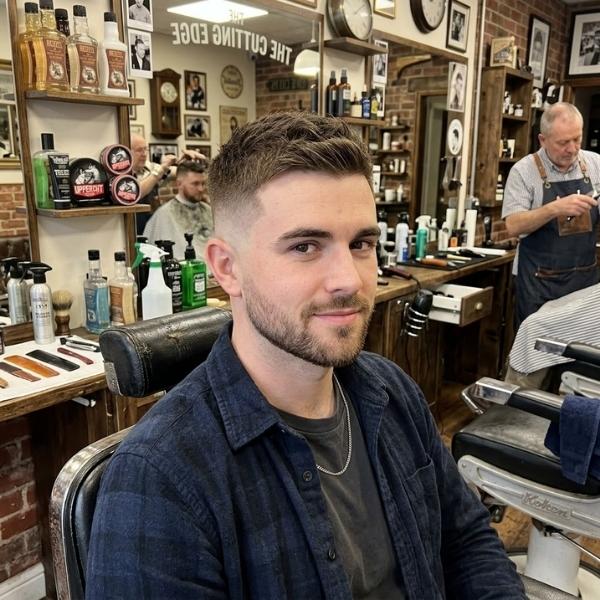
The original version. Clippers cut the sides short, the top sits around one inch and is finished with light scissor work, and the fade begins just above the ear. It needs almost no product and works in any setting, which is why it remains the reference point most barbers start from.
Textured Low Fade Crew Cut
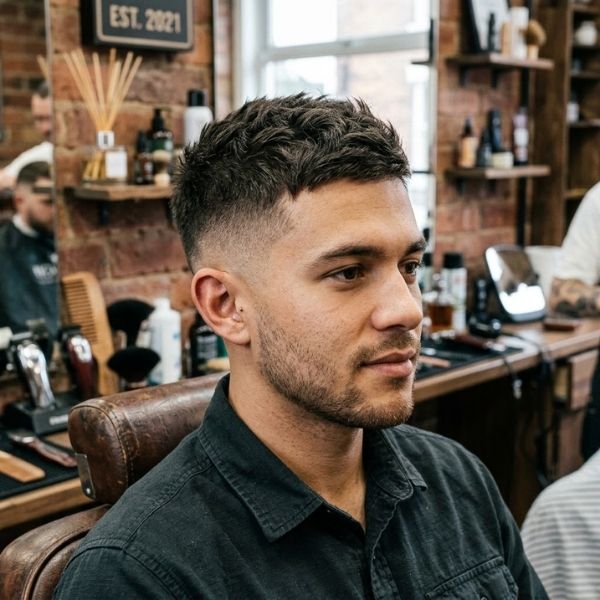
The top is cut with a razor or point-cutting shears to break up the hair into soft, uneven pieces instead of one flat block. A small amount of matte paste lifts the front slightly, giving the cut movement without looking overstyled.
Read More: Mid Fade Crew Cut Hairstyle: Sharp, Simple, Modern 2026
Messy Low Fade Crew Cut
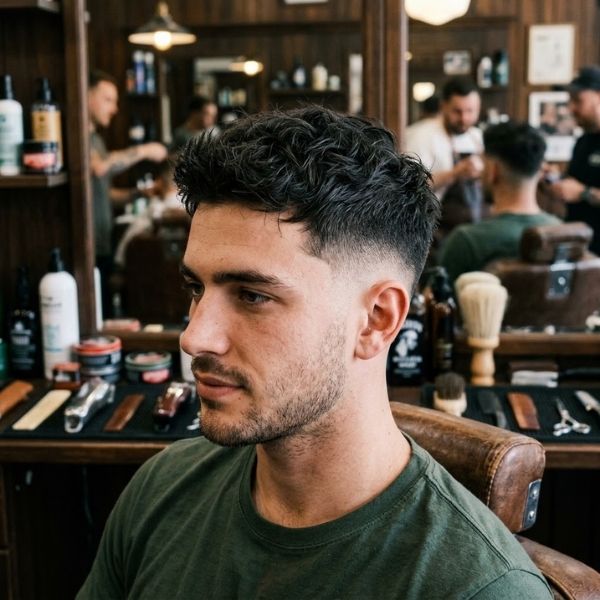
The top is left a little longer, roughly an inch and a half, and finger-styled rather than combed into place. It still reads as intentional because the fade and neckline stay sharp. Keep the crown flat so the “messy” part stays controlled.
Skin Low Fade Crew Cut
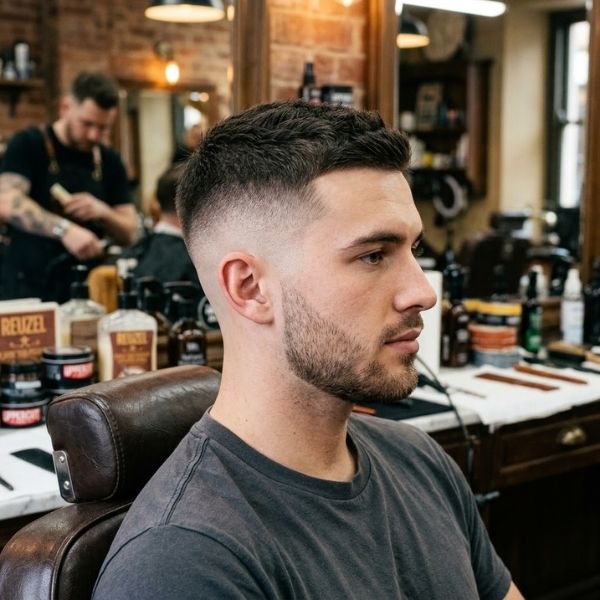
The blend drops all the way to bare skin at the base of the fade before softening as it climbs. This version gives the strongest contrast on the list and pairs well with a fully shaved face for a crisp, symmetrical finish. It also needs the most frequent touch-ups of any variation here.
Drop Low Fade Crew Cut
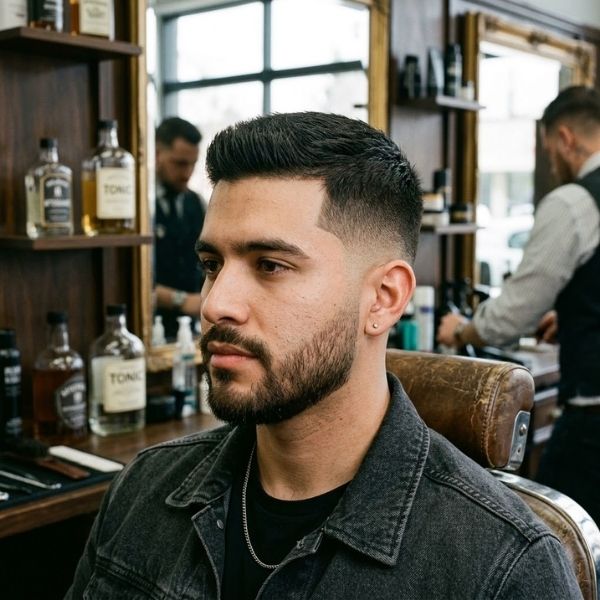
Instead of running in a straight line around the head, the fade curves, or “drops,” slightly lower behind the ear. This removes extra bulk at the nape on rounder head shapes and keeps the profile lean when viewed from the side.
Buzz Crew Cut Low Fade
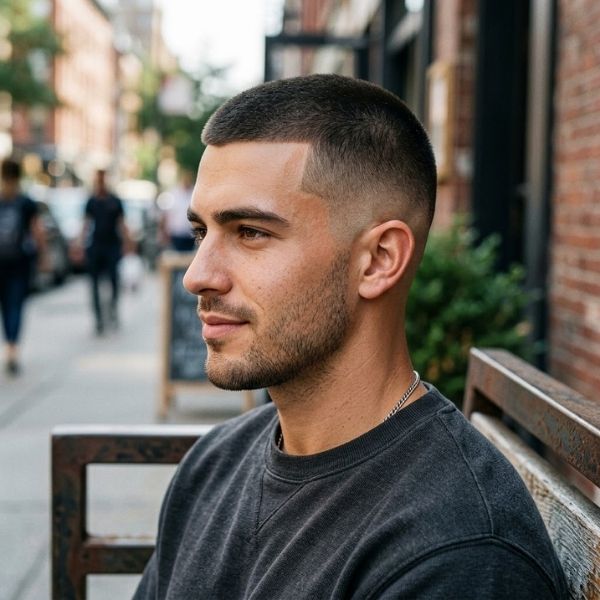
The top is cut very short, close to a half inch, while the sides still carry a true low blend rather than a uniform buzz. This variation is the lowest maintenance on the list and suits sport, service jobs, or hot climates where a longer top would be impractical.
Low Fade Crew Cut with Beard
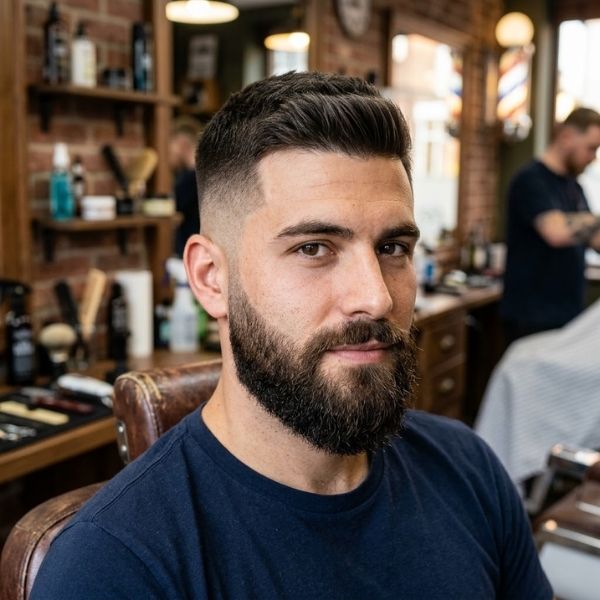
A short to medium beard is faded to match the sides, so the two blends connect at the jawline instead of clashing. The barber typically uses a slightly higher guard on the beard than the hair to keep the transition smooth.
Low Fade Crew Cut with Line Up
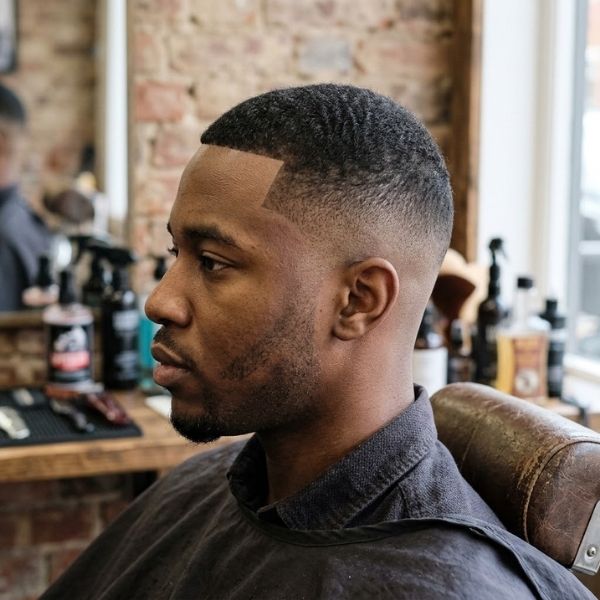
A straight razor traces a crisp line across the hairline and around the temples. It sharpens the front of the cut without changing anything about the low fade underneath, and it is a popular add-on for men who want extra definition between visits.
Low Fade Crew Cut with Hard Part
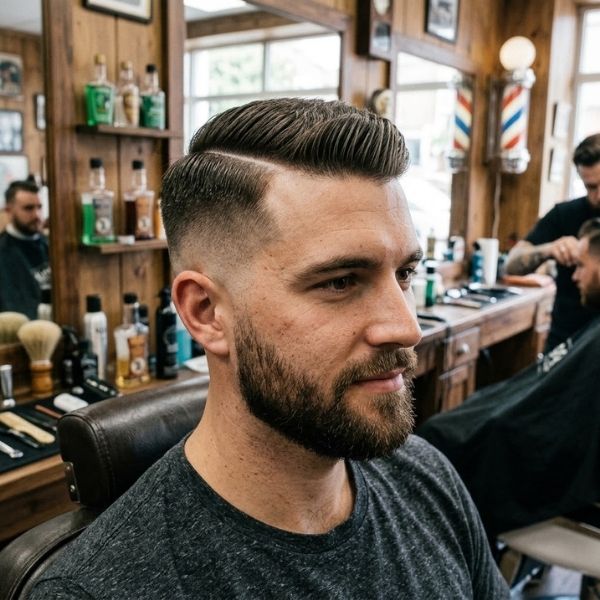
A thin shaved line separates the top section from the fade, usually running from the front hairline back toward the crown. It gives the cut a graphic, deliberate look and works especially well with a side-swept top.
Straight Hair Low Fade Crew Cut
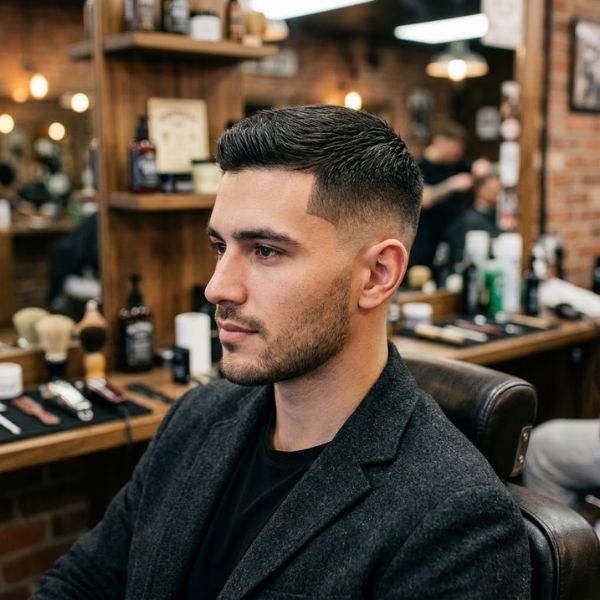
Straight strands lie flat by nature, so texture on top is what makes this version work. A light scissor-over-comb technique adds movement, and a small amount of clay keeps flyaways under control without weighing the hair down.
Wavy Low Fade Crew Cut
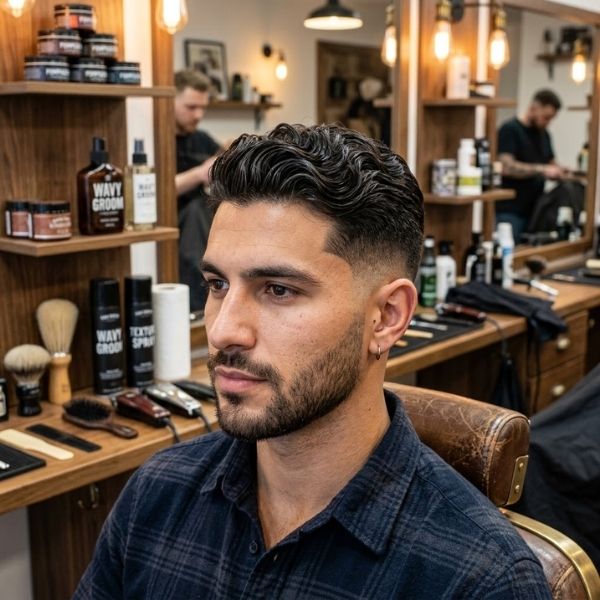
The natural bend in wavy hair does a lot of the styling work here. Keeping the sides tapered low reduces the puffiness waves can create near the ears, while a light cream on top enhances the natural pattern instead of fighting it.
Curly Low Fade Crew Cut
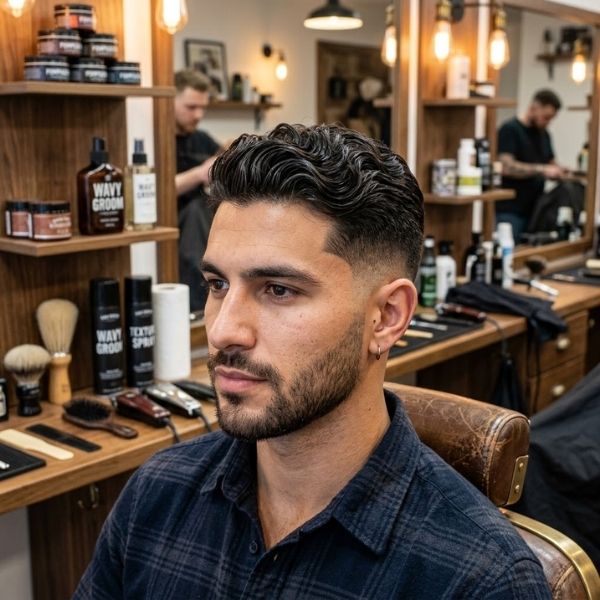
Curls stay compact and defined when the crown is cut flat and the sides fade low without pulling volume upward. A curl cream or light gel applied to damp hair helps define each curl instead of letting them frizz.
Read More: 20 Modern High Burst Fade Haircuts for Men in 2026
Barber Script
Walking into the chair with the exact wording removes almost all of the guesswork. Use this as a starting script and adjust the bracketed parts to match your face shape and hair type:
“I would like a low fade crew cut. Keep the top around a guard 3 to 4, cut short with light texture. Take the sides down to a true low fade, starting about an inch above the ear at the temple and nape, nothing higher. Keep the crown flat. Finish the neckline natural [or squared off]. Add a line up [or hard part] if you have time.”
Guard numbers give the barber a clear reference point:
- Guard 1 to 2 on top: closest to a buzz, minimal texture, lowest maintenance.
- Guard 3 to 4 on top: the standard crew cut length, enough for light texture and movement.
- Guard 5 and above: closer to a textured crop, better suited to men who want more styling flexibility.
Quick Styling Steps
A low fade crew cut hairstyle is built to be fast. Most mornings take under two minutes:
- Start with slightly damp hair, either fresh from the shower or lightly misted with water.
- Apply a dime-sized amount of matte paste, clay, or light pomade, depending on how much hold and shine you want.
- Work the product through your fingertips first, then run it through the top section only, avoiding the faded sides.
- Push the front section up and slightly forward to create texture and a small amount of lift.
- Use a comb only if you want a smoother, more polished finish; fingers alone give a more natural, textured look.
- Let it air dry for a sharper finish, or blow-dry on a low setting while styling for extra volume.
Photos and Description
Since results vary by hair density and head shape, here is what to check for when reviewing photos of a finished cut, or when judging your own in the mirror:
- The fade line near the ear should show a smooth gradient, with no visible “step” between lengths.
- The top should hold its shape without looking stiff or overly sprayed.
- From the side profile, the neckline should look either clean and natural or crisply squared, never uneven.
- The crown should sit flat rather than puffing outward, especially on wavy or curly hair.
- A well-done low fade crew cut hairstyle should look almost the same on day one and day ten, which is the clearest sign the fade was cut at the right height.
Conclusion
A low fade crew cut hairstyle earns its popularity by doing the basics well. The top stays short and manageable, the sides stay slim without demanding weekly touch-ups, and the blend near the ear looks natural in a way higher fades rarely do.
Whether you choose the classic version, add a beard fade, or go textured for more movement, the same barber script and styling routine apply. Bring the chair script above to your next appointment, pick the variation that matches your hair type and face shape, and you will walk out with a cut that holds its shape for weeks, not days.
FAQs
How often do I need to get a low fade crew cut trimmed?
Most men return every 4 to 6 weeks. The low, gradual blend grows out more naturally than a high or skin fade, so it stays presentable longer between visits.
Does a low fade crew cut work with thick hair?
Yes. The fade removes bulk from the sides, which keeps thick hair from looking heavy or boxy while the top stays full.
What guard number should I ask for on top?
A guard 3 to 4 is the standard starting point for a classic look. Go lower for a buzzed top or higher for more length and texture.
Is a low fade crew cut good for a first fade haircut?
Yes. It is more forgiving than a high or skin fade and grows out with far less visible contrast, making it an easy entry point into fade haircuts.
Can I get a low fade crew cut with curly hair?
Yes. Ask your barber to keep the crown flat during the cut so your curls sit neatly instead of pushing upward once they dry.
Does a low fade crew cut suit round faces?
Yes, with one adjustment. Keep a touch more length on top to add visual height, which balances the width of a rounder face shape.

Zaria Rhodes is the lead editor and content curator at Lyrinexa, passionate about music, storytelling, and lyrical expression. With a deep love for discovering the meaning behind songs, she brings clarity, creativity, and accuracy to every post. Zaria is dedicated to providing readers with authentic lyrics, thoughtful interpretations, and a seamless music-exploration experience.

1 thought on “Low Fade Crew Cut Hairstyles: Clean, Modern, Easy”