


A messy French crop is the rare haircut that looks effortless and still holds a real structure underneath. Short sides, a textured top, and a forward fringe come together to create a shape that photographs well, grows out cleanly, and takes less than two minutes to style on a normal morning.
This guide breaks down what the cut actually is, who it suits, how a barber builds it step by step, and how to keep it sharp between visits. If you have ever left a barber chair with a French crop that looked flat, boxy, or too neat, the details below explain what went wrong and how to ask for it correctly next time.
Messy French Crop: Effortless Texture, Clean Outline, Fast Style
The appeal of this cut sits in the contrast. The sides stay short and controlled, usually tapered or faded, while the top is left long enough to move. A barber uses point cutting or texturizing shears to break up the top so it falls forward with natural separation instead of sitting in one flat mass. The fringe finishes the look, messy french crop,framing the forehead without covering the eyes.
Unlike a slicked-back French crop, the messy variation is built to be touched. You rough it up with fingers and a small amount of product, and it holds shape without looking overworked. That combination messy french crop of low daily effort and a defined outline is why the style keeps showing up in barbershops and search results in 2026.
1) What Is a Messy French Crop
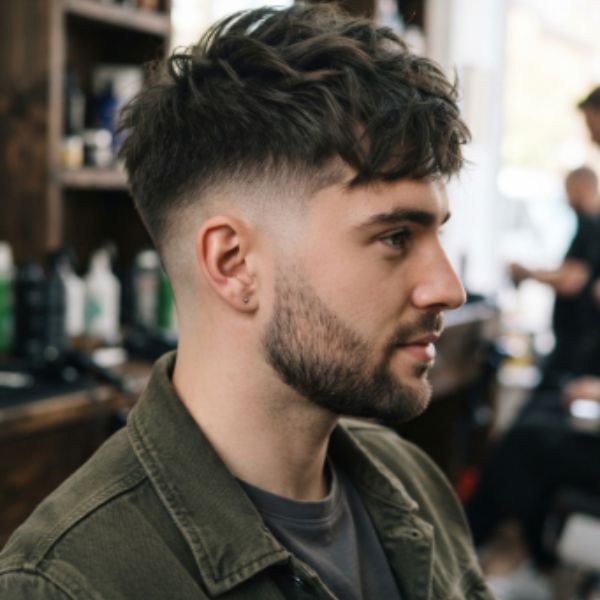
A messy French crop is a short-to-medium haircut with tapered or faded sides, a textured top left slightly longer than a traditional crop, and a forward-styled fringe with broken, choppy edges instead of a blunt line. The sides stay tight and disciplined, which keeps the silhouette clean even as the top looks loose and undone.
The style descends from the classic French crop, a military-influenced cut with short sides and a straight fringe. Adding texture and forward movement on top turns that clean base into something more relaxed. Think of it as the difference between a pressed shirt and the same shirt worn untucked with the sleeves rolled up. The structure is identical; only the finish changes.
Key traits that define the cut:
- Short sides, usually tapered or faded from skin to mid-length
- A top section kept between half an inch and three inches, depending on hair density
- A fringe that sits at or just above the eyebrows, cut with texture rather than a single straight line
- Visible separation on top, created with point cutting, slicing, or a texturizing comb
- A neckline and hairline that stay sharp even though the top looks casual
- Read More : Short Wolf Cut Men 2026: Best Styles for Every Hair Type
2) Why Choose This Cut
Men move toward the messy French crop because it solves a common problem: most short haircuts either look too formal or too plain once you stop styling them with heavy product. This cut is built to look intentional even on a low-effort day.
Reasons it keeps trending:
- Fast styling. Damp hair, a small amount of clay or paste, and thirty seconds of finger styling is usually enough.
- Works with natural texture. Waves and light curls actually help the cut instead of fighting it.
- Grows out cleanly. Because the top already has broken layers, an extra week or two of growth just adds volume instead of ruining the shape.
- Suits both casual and professional settings. A low or mid fade keeps it office-appropriate, while a longer, messier top adds an edgier feel for weekends.
- Camouflages a receding hairline. A textured, forward fringe softens the hairline better than a flat, combed-back style.
3) Face Shape Match
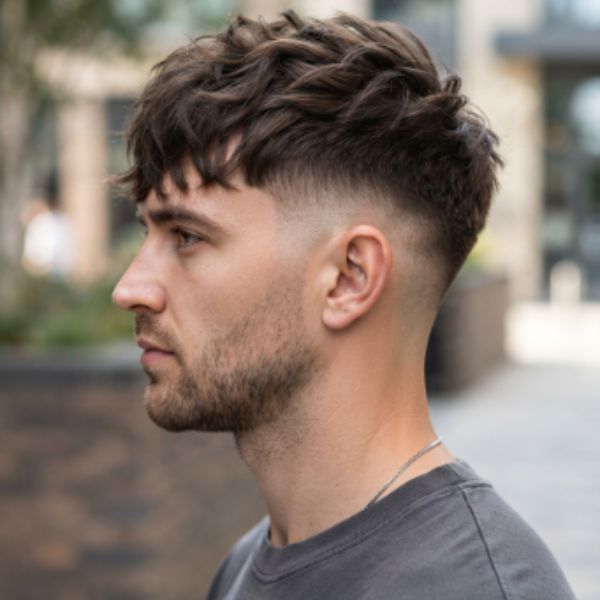
The horizontal fringe and short sides make the French crop one of the more forgiving haircuts on the chart, but small adjustments change how it reads on different faces.
- Oval: Almost any version works. This is the baseline face shape the cut was designed around.
- Round: Ask for extra height and texture through the crown, with a slightly longer fringe. This adds vertical lines and avoids widening the face further.
- Square: A textured top with a soft, broken fringe balances a strong jawline without competing with it.
- Heart or triangle: A fuller, slightly longer fringe helps balance a narrower chin against a wider forehead.
- Long or rectangular: Keep the top shorter and avoid extra height, so the cut does not stretch the face further.
- Diamond: A soft fringe with light texture at the temples softens angular cheekbones.
If you are unsure which category you fall into, bring a front-facing photo to your consultation. A barber can usually confirm your face shape in a few seconds and adjust the fringe length and side fade accordingly.
4) Hair Types & Top Textures
Hair type changes how the top behaves once texturizing shears go through it, so the cutting technique should shift with the strand type rather than staying identical for everyone.
- Straight hair: Holds a cleaner, slightly blunt fringe well. Point cutting near the front prevents the top from looking too flat or helmet-like.
- Wavy hair: Ideal for this style. The natural bend does most of the texture work, so a light touch with the shears is enough.
- Curly hair: Needs shape more than length reduction. A skilled barber will cut with the curl pattern, not against it, to avoid triangular bulk on top.
- Fine or thin hair: Shorter top lengths and a low fade create the illusion of density. Long, heavy tops tend to collapse and look thinner.
- Thick or coarse hair: Benefits from more aggressive thinning underneath to remove bulk while keeping the visible top layer full.
5) Exactly What to Tell Your Barber
Vague requests produce vague results. Instead of saying “give me a messy French crop,” describe the specific measurements and finish you want.
A useful script:
- “I want a French crop with a low or mid taper fade on the sides.”
- “Leave the top around one and a half to two inches, and texturize it so it has movement, not a flat block.”
- “Cut the fringe with texture, not a straight blunt line, sitting just above my eyebrows.”
- “Keep the neckline and hairline sharp even though the top should look messy.”
- Bring one or two reference photos, ideally from the same angle you will style your own hair.
Photos matter more than words here. Barbers see dozens of variations of “messy,” and a picture removes the guesswork about fringe length, fade height, and how much texture you actually want.
6) In the Chair: Step by Step
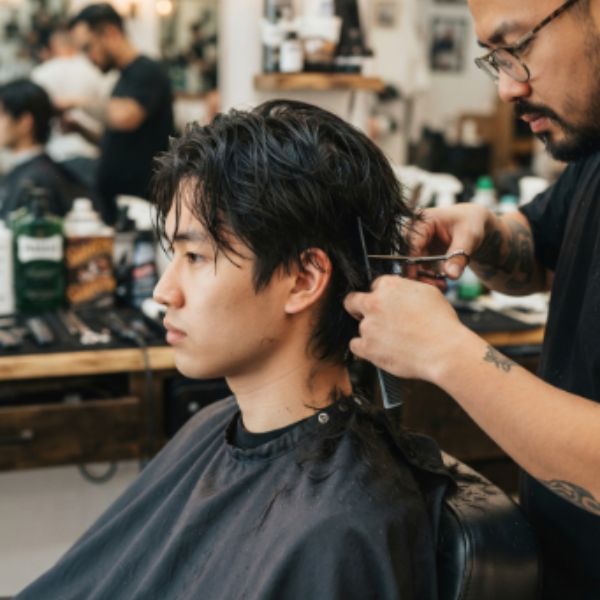
A messy French crop is not a random rough-up with clippers. It follows a specific order, and skipping steps is usually why a cut ends up flat, boxy, or unbalanced.
Step 1: Consult & Plan
The barber checks your hair growth pattern, cowlicks, density, and natural part before touching any tools. This is also when you confirm fade height, top length, and fringe style using your reference photos.
Step 2: Prep
Hair is washed and left damp, since damp hair is easier to cut evenly. The barber sections the hair, usually separating the top from the sides and back with clips, to keep guidelines clean as the cut progresses.
Step 3: Set the First Guideline
Using clippers or shears, the barber establishes the baseline length around the sides, typically starting at the lowest point of the fade or taper. This first guideline becomes the reference for every other length in the cut.
Step 4: Build the Taper or Fade
Working upward from the guideline, the barber blends the sides using progressively longer clipper guards, or switches to a fade technique for a smoother, skin-level transition. This stage decides whether the final look reads as sharp and structured or soft and understated.
Step 5: Blend Ridges
Any visible lines between clipper lengths, known as ridges, are softened using a shear-over-comb technique or a lighter clipper pass. This step is what separates a clean, professional fade from a choppy, self-cut look.
Step 6: Texture & Balance
The barber moves to the top, using point cutting, slicing, or texturizing shears to remove bulk and add movement. The goal is broken, separated layers rather than one flat mass, while keeping the overall shape balanced with the sides that were just faded.
Step 7: Cut the Fringe
The fringe is cut last, once the rest of the shape is set. Rather than a single straight snip, the barber typically point-cuts the edge to create a soft, broken line that will style forward without looking stiff.
Step 8: Finish
The barber checks the neckline, sideburns, and hairline with a straight razor or trimmer for sharp edges, then applies a small amount of product to show you how the finished style will sit day to day.
Read More: Low Taper Fade Haircut Black Male: 2026 Barber Guide for Waves, Curls, Afros & Locs
7) Daily Routine and Fast Style
Part of the appeal of this cut is that it does not demand a long routine. A simple, repeatable process keeps it looking fresh:
- Start with damp, towel-dried hair rather than soaking wet.
- Apply a small, dime-sized amount of matte clay or texture paste, rubbing it evenly between your palms first.
- Work the product through the top using your fingers, pushing hair slightly forward and up at the roots.
- Pull small sections of the fringe forward and down to define the edge.
- Let it air dry for a natural finish, or use a blow dryer on a low setting with a diffuser to add lift without frizz.
- Finish with a light sea salt spray if you want extra texture and grip that lasts through the day.
Avoid heavy gels or high-shine pomades. They flatten the broken layers that give this cut its texture and push it toward a slicked, formal look instead of the relaxed finish you are going for.
8) Beard & Outline Options
The messy French crop pairs naturally with several beard styles, and the outline around the ears and neckline is where a barber can fine-tune the overall balance.
- Clean shaven: Keeps the focus entirely on the fringe and top texture. Works well for formal settings.
- Short stubble: Adds a bit of contrast without competing with the haircut, a common pairing for everyday wear.
- Full beard: Balances a longer, messier top and gives the whole look more weight, especially on narrower faces.
- Goatee: Complements a low-fade version of the cut, particularly when the top is styled with a defined part.
For the outline, a low or mid fade keeps sideburns tapered and subtle, while a skin fade creates sharper contrast around the ears. Ask your barber to keep the neckline natural rather than squared off, since a soft, rounded neckline suits the relaxed nature of a messy top better than a hard line does.
9) Maintenance Timeline
How often you need a trim depends mainly on how aggressive the fade is, since the top can grow out gracefully for longer than the sides can.
- Skin or high fade: Every 2 to 3 weeks to keep the contrast sharp.
- Low or mid fade: Every 3 to 4 weeks, since the transition is more gradual and grows out less noticeably.
- Top length: Can typically stretch to 5 to 6 weeks before it starts to lose its shape, especially if you keep using texturizing product.
- Fringe: Often needs a quick trim between full haircuts if you want it to stay above the eyebrows.
Many men book a fade-only touch-up between full cuts, which keeps the sides sharp while letting the top build extra length and texture over time.
10) Common Mistakes & Quick Fixes
Even a well-planned cut can go wrong at home if the daily routine or upkeep is off. Here are the issues that come up most often, along with practical fixes.
- Problem: The top looks flat instead of textured. Fix: Use a mattifying clay instead of gel, and scrunch product in with fingers rather than combing it flat.
- Problem: The fringe looks too heavy or blunt. Fix: Ask your barber for point cutting along the fringe edge next visit, which softens the line without shortening it much.
- Problem: The fade shows a visible ridge line. Fix: This usually means the blending step was rushed. Request a shear-over-comb blend at your next appointment to soften the transition.
- Problem: The style collapses by midday. Fix: You are likely applying product to fully wet hair. Towel dry first, then apply product, then finish drying for better hold.
- Problem: The neckline looks patchy between cuts. Fix: A quick trimmer touch-up on the neckline alone, done at home or by a barber, extends the clean look without a full fade redo.
- Problem: The cut looks too similar to a standard buzz or crew cut. Fix: This usually means not enough length was left on top. Ask for at least 1.5 inches so there is room for texture and forward movement.
FAQs
Is a messy French crop low maintenance?
Yes. Once cut correctly, it usually takes under two minutes to style with a small amount of clay or paste and finger styling.
Does a messy French crop suit curly hair?
Yes. Curly and wavy hair actually enhance the texture, since the natural bend adds movement the cut is designed to show off.
How often should I get it trimmed?
Skin or high fades need touch-ups every 2 to 3 weeks, while low fades and the top length can stretch to 4 to 6 weeks.
What products work best for styling?
Matte clay, lightweight paste, or texture powder applied to damp hair with your fingers gives the best natural, non-shiny finish.
Can this cut hide a receding hairline?
Yes. A textured, forward-styled fringe softens the hairline more effectively than a slicked-back style would.
Is the messy French crop suitable for work?
Yes, especially with a low or mid fade. It reads as clean and professional while still looking modern and low-effort.
Read More : Burst Fade Design: Best Hair Design Ideas, Placement, and Barber Tips (2026)
Conclusion
The messy French crop works because it separates structure from styling. The sides stay disciplined through a proper taper or fade, the neckline stays clean, and the top does all the visual work through texture and forward movement. Once you understand the anatomy of the cut, from the initial guideline to the final fringe trim, it becomes much easier to communicate exactly what you want in the chair and to maintain it correctly at home.
Whether you have straight, wavy, or curly hair, and regardless of your face shape, the fundamentals stay the same: a controlled base, genuine texture on top, and a routine that takes minutes rather than half an hour. Bring a reference photo, use the script above, and you will walk out with a cut that looks deliberately undone rather than accidentally messy.

Zaria Rhodes is the lead editor and content curator at Lyrinexa, passionate about music, storytelling, and lyrical expression. With a deep love for discovering the meaning behind songs, she brings clarity, creativity, and accuracy to every post. Zaria is dedicated to providing readers with authentic lyrics, thoughtful interpretations, and a seamless music-exploration experience.
