


Choosing a new haircut can feel like a gamble, especially when you are not sure which style actually works with your hair texture. The taper fade white guy short hair solves that problem. It is one of the most requested cuts in barbershops right now because it flatters nearly every hair type, from poker straight to tightly coiled, and it grows out without looking messy.
This guide breaks down the best low taper fade styles for white guys, complete with barber tips, product recommendations, and guidance on what to ask for in the chair. Whether you want something sharp for the office or relaxed for weekends, there is a variation here that fits your lifestyle.
Low Taper Fade White Guy Hairstyles Variations
Below are the most popular ways barbers are pairing the low taper fade with different top lengths and textures. Each one changes the overall vibe of the cut while keeping that clean, gradual blend at the sides.
Low Taper Fade + Curly Hair
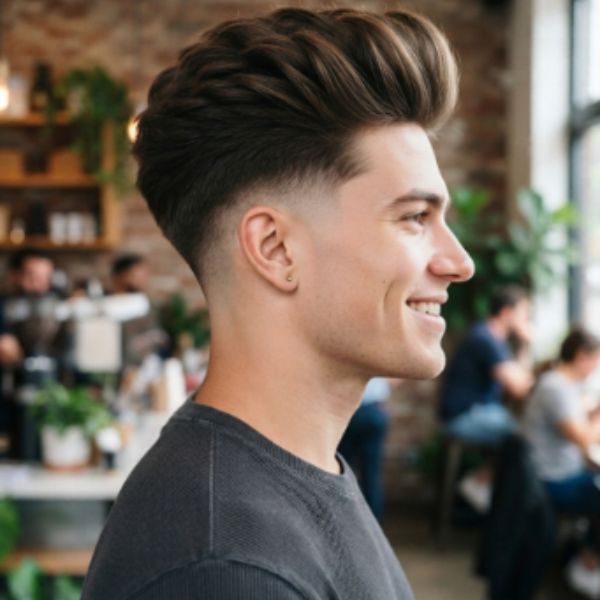
Curly hair and a low taper fade make a natural pairing. The fade cleans up the sides so curls do not spread out and look bulky, while the top keeps its natural spring and volume.
- Best for: Medium to thick curls, round or square face shapes
- Barber tip: Ask for a low to mid taper rather than a high fade, since curls need a bit more room to sit naturally without looking boxy
- Product tip: Use a curl cream or defining gel on damp hair, then let curls air dry or diffuse on low heat to avoid frizz
Low Taper Fade + Slick Back

The slick back with a taper fade white guy short hair is the go-to option for guys who want a polished, business-ready look. The sides stay tight while the top gets combed straight back for a sleek finish.
- Best for: Straight to wavy hair, oval and square face shapes, formal settings
- Barber tip: Keep at least three to four inches of length on top so the hair has enough weight to slick back cleanly
- Product tip: A pomade with medium shine gives the classic look, while a matte styling cream keeps it more modern and understated
Low Taper Fade + Comb Over

A comb over paired with a low taper fade is a timeless combination that works for nearly any occasion. The side part and swept-over top create sharp lines that pair perfectly with the soft blend at the sides.
- Best for: Straight or fine hair, oblong and heart-shaped faces
- Barber tip: Request a defined part line and ask your barber to blend the taper close to the part so there is no harsh contrast
- Product tip: A light hold pomade keeps the comb over flexible, while a stronger hold wax locks the shape in place for all-day wear
Low Taper Fade + Textured Crop / Fringe

The textured crop is one of the most popular modern haircuts for white guys right now. The top is cut short and styled forward with choppy, uneven ends that land just above or on the forehead as a fringe. The low taper keeps the sides clean while the textured top adds visual weight and a casual energy.
- Best for: Straight, fine, or slightly wavy hair, all face shapes, low-maintenance seekers
- Barber tip: Ask for choppy, point cut ends on top to build natural texture. Avoid a blunt fringe if you want a more undone look
- Product tip: A matte wax or sea salt spray works best. Apply to damp hair and push the fringe forward. No comb needed
Low Taper Fade + Buzz Cut

If you want something minimal, clean, and bold, the buzz cut with a low taper fade delivers exactly that. It strips things down to essentials while still giving a bit of definition at the sides.
- Best for: All hair textures, guys with strong facial features, low-maintenance routines
- Barber tip: A number two or three guard on top with a low fade prevents the cut from looking too plain or overly military
- Product tip: No styling product is really needed, though a light matte spray adds texture if you want a slightly grown-out look
Read More : Burst Fade Curly Hair 2026: Clean Sides, Big Curls
Low Taper Fade + Undercut

The undercut and low taper fade combo creates a strong contrast between the closely cropped sides and the longer, more voluminous top. It is bolder than a standard taper but still keeps a controlled shape.
- Best for: Thick or medium density hair, square and diamond face shapes
- Barber tip: Ask for a disconnected undercut if you want a more dramatic contrast, or a blended one for a softer transition
- Product tip: Use a strong hold paste or clay to keep the top upright and structured throughout the day
Low Taper Fade + Dreads

Dreads with a low taper fade create a striking contrast between the freeform locks on top and the sharp, clean sides. The taper acts as a visual frame, making the dreads appear fuller and more sculptural. This works well for white guys who have committed to growing dreadlocks and want a polished, barbershop finished look.
- Best for: Medium to long dreads, all face shapes
- Barber tip: Keep the fade close to the natural hairline curve. Pushing the taper too high can disrupt the flow and weight of the dreads
- Product tip: Use a light oil or loc spray to keep the dreads moisturized. Avoid heavy waxes that can cause buildup over time
Low Taper Fade + Afro

For white guys with naturally thick, curly, or coily hair, the afro paired with a low taper fade offers shape and structure without flattening the natural volume on top. The fade defines the outline while the afro stays full and round.
- Best for: Thick, curly, or coily hair textures, round and oval face shapes
- Barber tip: Ask your barber to round out the top with shears for an even shape, then keep the taper subtle so it does not compete with the volume
- Product tip: A leave-in conditioner followed by a light curl butter keeps the afro moisturized and defined without weighing it down
Read More : Boys Mullet Haircut Guide 2026: Styles, Fades, and Care
Low Taper Fade + Side Part

The side part with a low taper fade is a refined, classic option that works in almost any professional or casual setting. A hard or soft part line adds structure, while the fade keeps the sides sharp.
- Best for: Straight or wavy hair, most face shapes
- Barber tip: A hard part, meaning a shaved line, adds a more graphic edge, while a comb created part looks softer and more traditional
- Product tip: A light to medium hold pomade keeps the part crisp without looking greasy
Low Taper Fade + Blowout
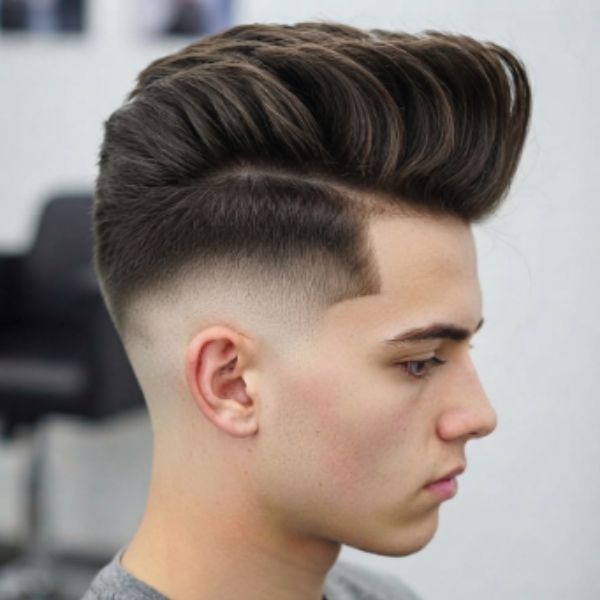
The blowout adds height and volume on top, making it a great option for guys who want more presence without going overly long. Paired with a low taper fade, it balances out rounder face shapes nicely by adding vertical length.
- Best for: Thick or medium hair, round and square face shapes
- Barber tip: Ask for extra length left on top specifically at the crown, since that is where the volume needs to build
- Product tip: Blow dry with a round brush for lift, then set with a volumizing mousse or light hold spray to hold the height
What is Low Taper Fade White Guy Styles
A low taper fade is a haircut where the hair gradually shortens from the top of the sides down toward the neck and ears, starting low, just above the ear line. Unlike a high fade that begins at the temples, the low taper keeps more hair on the sides, giving a softer and more conservative finish.
For white guys, this cut tends to work especially well because it blends cleanly with straight, fine, or slightly wavy hair textures, which are common among Caucasian hair types. The gradual transition means less obvious regrowth lines and fewer trips back to the barber. That said, as shown above, the low taper fade is not limited to straight hair. It adapts just as well to curly, coily, and dreadlocked textures when the barber adjusts the fade height and technique accordingly.
The appeal comes down to versatility. You can pair a low taper with almost any top style, from a buzz cut to a blowout, and the result always looks intentional rather than accidental. It also tends to suit a wide range of face shapes, since the tapered sides add subtle structure without overpowering your natural features.
The Evolution of Low Taper Fade White Guy Styles

Fade haircuts have been part of barbering culture for decades, but the low taper specifically has grown into a mainstream staple over the past several years. Early versions of the taper fade were mostly reserved for military and workplace regulations that required short, neat hair. Over time, barbers began experimenting with how low or high the fade could start, which eventually gave rise to the distinct categories we recognize today: low, mid, and high taper fades.
The low taper fade gained real momentum as men’s grooming trends shifted toward styles that looked polished but not overly severe. Compared to a high fade, which can appear bold and dramatic, the low taper offers a middle ground. It is sharp enough to look deliberate, yet subtle enough to work in conservative settings like offices, schools, and formal events.
Social media accelerated this shift. Barbers began sharing before and after transformations online, showing how the same low taper base could be styled a dozen different ways depending on the top length and texture. This visibility helped white guys in particular see how the cut translates across their own hair types, whether straight, wavy, curly, or textured with natural curl patterns.
Today, the low taper fade continues to evolve alongside broader trends in textured crops, curly top fades, and volume driven styles like the blowout. It has moved from a purely practical, low-maintenance option into a genuine style statement, one that barbers now treat as a foundation rather than a finished look. That foundation is exactly what makes it easy to update your style over time without needing to completely start over.
Read More : Crew Cut Low Fade Hairstyles: Clean, Modern, Easy
FAQs
How often do I need to get a low taper fade touched up?
Most guys need a touch-up every three to four weeks, though straighter hair types can sometimes stretch that out a bit longer between visits.
Does a low taper fade work with curly hair?
Yes, it works great. Straight and wavy hair blends the cleanest, though curly and coily textures can absolutely pull off this style too.
What products work best with a low taper fade?
A light pomade or matte wax works best for most looks. Curl cream suits curly variations, while volumizing mousse helps blowout styles hold shape.
Can a low taper fade flatter a round face?
Yes, especially with added height on top. Styles like a blowout or afro variation add volume that helps balance out rounder face shapes nicely.
What is the difference between a low taper fade and a high fade?
A low taper fade starts near the ear line and blends gradually toward the neck, while a high fade begins higher at the temples for a bolder, more dramatic contrast.
Is a low taper fade suitable for a professional workplace?
Yes, it is one of the most workplace-friendly cuts available, since it stays neat and controlled while still looking modern and current.
Conclusion
The low taper fade has earned its reputation as one of the most reliable, adaptable haircuts available today. Whether you have straight hair that slicks back cleanly, curls that need definition, or dreads that deserve a sharper frame, there is a version of this cut built for you. It works across face shapes, hair densities, and lifestyles, which is exactly why it keeps showing up in barbershops everywhere.
If you are ready for a fresh look, pick one of the styles above, save a reference photo, and bring it to your next appointment. A good barber can adjust the fade height and top length to match your hair type and face shape, so you walk out with a cut that actually suits you rather than a generic trend.

Zaria Rhodes is the lead editor and content curator at Lyrinexa, passionate about music, storytelling, and lyrical expression. With a deep love for discovering the meaning behind songs, she brings clarity, creativity, and accuracy to every post. Zaria is dedicated to providing readers with authentic lyrics, thoughtful interpretations, and a seamless music-exploration experience.
