


Meta description: Low fade mullet guide with styles, mid and high fade options, barber instructions, and upkeep tips to find your perfect cut.
If you want a haircut that feels bold up top and back but still passes for tidy at the office, the low fade mullet is worth a serious look. It keeps the sides short and controlled while the back holds onto length and movement, so you get contrast without going full retro.
This guide breaks the cut down piece by piece. You will learn what a low fade mullet actually is, how it compares with mid and high fade versions, and which of the seventeen variations fits your hair type, face shape, and daily routine. There are also simple styling steps, exact wording to use with your barber, and a maintenance plan so the cut stays sharp between visits.
By the time you finish reading, you should be able to sit in the barber’s chair and describe precisely what you want, instead of pointing at a photo and hoping for the best.
What Is a Low Fade Mullet
A low fade mullet is a modern haircut that pairs a subtle fade near the hairline with a longer, layered section at the back. The fade starts close to the ear, usually within an inch of the natural hairline, then blends upward into slightly longer hair on the sides and top.
Unlike a high fade or skin fade, the low fade keeps the transition soft. There is no harsh line, which means the cut grows out gracefully and needs less frequent touch-ups than sharper alternatives.
The back is where the mullet identity comes through. Instead of a blunt 1980s chop, today’s version uses feathered layers that taper naturally, so the length looks intentional rather than overgrown. This layered mullet haircut approach is what separates a modern cut from the dated version most people picture when they hear the word “mullet.”
The low fade mullet works across most hair types and face shapes with small adjustments in length and product choice, which is part of why barbers describe it as one of the more forgiving mullet fade hairstyles available right now.
Quick Fit Table
Use this table to get a fast read on which fade height suits your goals before diving into the full variation list.
| Fade Height | Contrast Level | Best For | Maintenance Frequency |
|---|---|---|---|
| Low Fade | Subtle | Office settings, thick or wavy hair, first-time mullet wearers | Every 4 to 6 weeks |
| Mid Fade | Moderate | Round or square faces, curly or straight hair, balanced everyday look | Every 3 to 5 weeks |
| High Fade | Bold | Angular faces, short beards, statement styles | Every 2 to 3 weeks |
The back length is a separate decision from the fade height. A shorter back (two to four inches) reads closer to a regular haircut, while a longer back (six inches or more) leans fully into mullet territory.
Variations
There are plenty of trendy mullet fade hairstyles to choose from, and small naming differences often point to real differences in fade height, top texture, or how the back is layered. Here is a breakdown of every major variation so you know exactly what to ask for.
1) Low Fade Mullet Haircut

This is the classic starting point and the safest entry into mullet territory. The fade hugs close to the ear, the top stays lightly textured, and the back sits with soft, feathered layers. It reads as neat enough for the office and relaxed enough for the weekend, which is why most first-timers start here.
Read more: Blowout Low Taper Fade Curly Hair: 2026 Barber Guide For Curls
2) Mullet Low Fade

This version keeps the fade height conservative to protect more length around the crown. It suits men who want visible contrast but prefer a softer edge near the temples rather than a crisp line. The layered back gives the ends natural movement instead of a blunt cut-off point.
3) Modern Mullet Low Fade
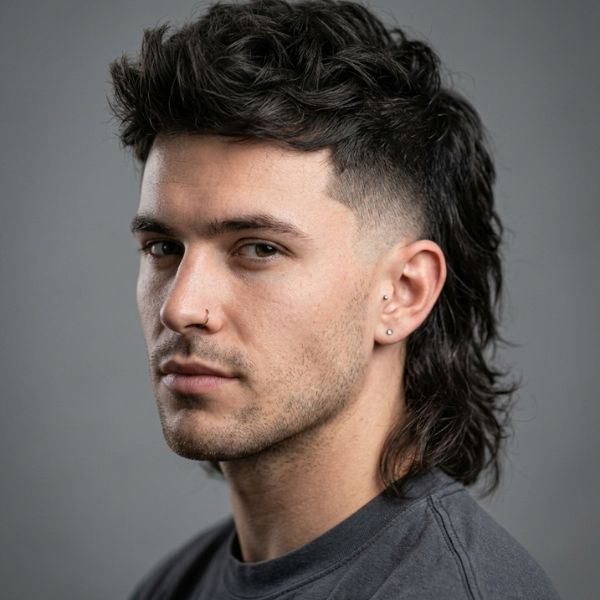
Here the emphasis is on crisp edges, a clean neckline, and defined layers that do not clump together. It leans into streetwear and smart-casual styling, pairing well with a two to three inch top that can be shaped quickly each morning using sea salt spray and a small amount of matte pomade.
4) Low Mullet Haircut
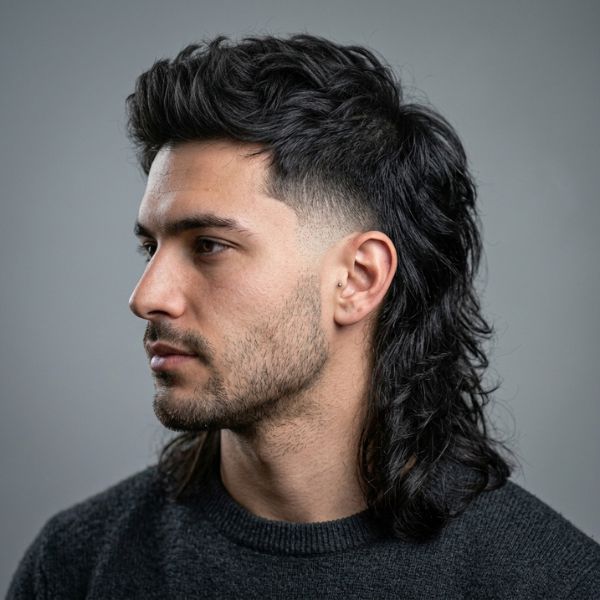
This is the low-maintenance option. The fade is subtle, the top stays light, and the back sits just past the collar. Think of it as a professional mullet: it grows out gracefully between appointments and fits stricter dress codes without ever looking corporate or stiff.
5) Mullet Low Fade Haircut
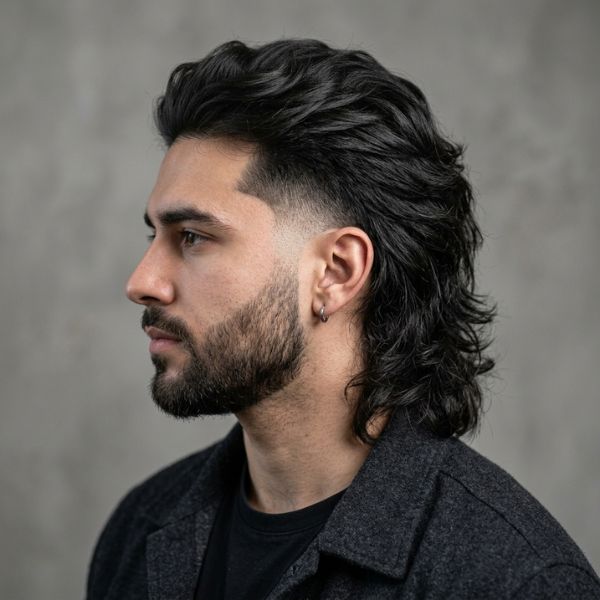
Best suited to thick hair, this variation manages bulk at the sides while letting the back carry the visible weight of the cut. The low fade removes density gradually rather than all at once, which keeps thick hair from looking bulky at the temples.
6) Low Mullet Fade

For men with fine hair, this version uses careful layering at the back to create the illusion of extra density. The low fade keeps the sides simple so all the visual interest sits in the textured top and layered back.
7) Low Mullet

A minimalist take that skips a dramatic fade in favor of a soft, natural taper. It suits guys who want the mullet silhouette, short front and longer back, without much contrast at all. This is the closest the cut gets to looking like a regular haircut from the front.
8) Mid Fade Mullet
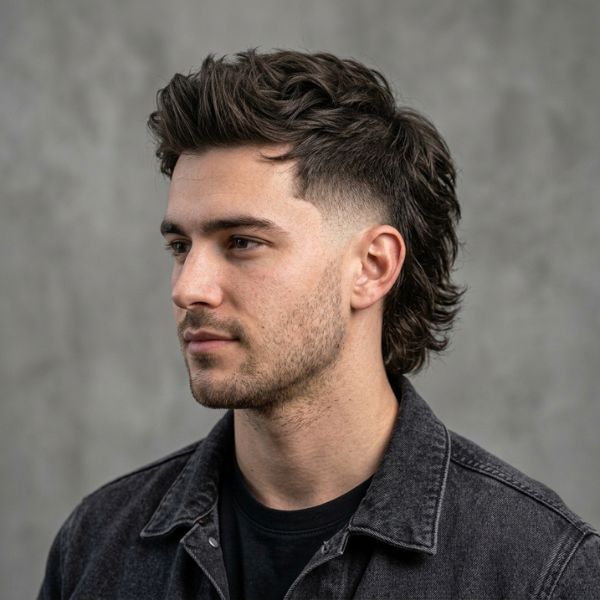
The mid fade mullet moves the blend point up above the temple, adding more visible contrast than a low fade while staying short of the sharper high fade look. It suits round and square face shapes well because the added definition at the sides helps balance wider features.
9) Mullet Mid Fade
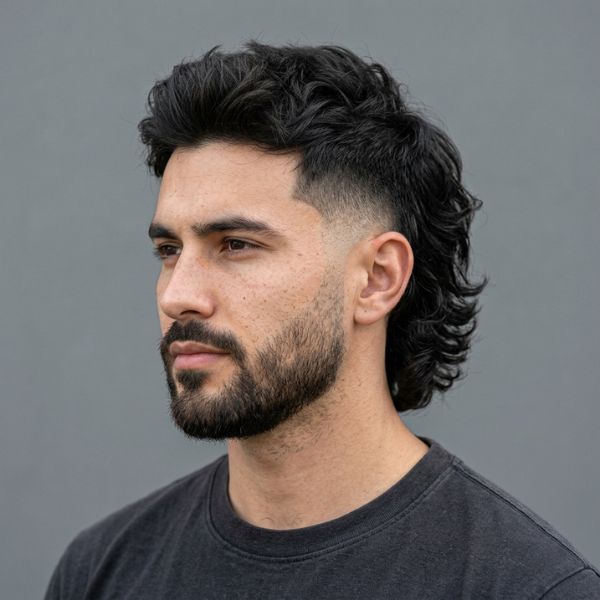
This naming variation is popular with curly hair types. The mid fade gives curls room to spring and hold their shape at the sides, while the back keeps enough length for the curl pattern to show through naturally.
10) Mid Fade Mullet Haircut
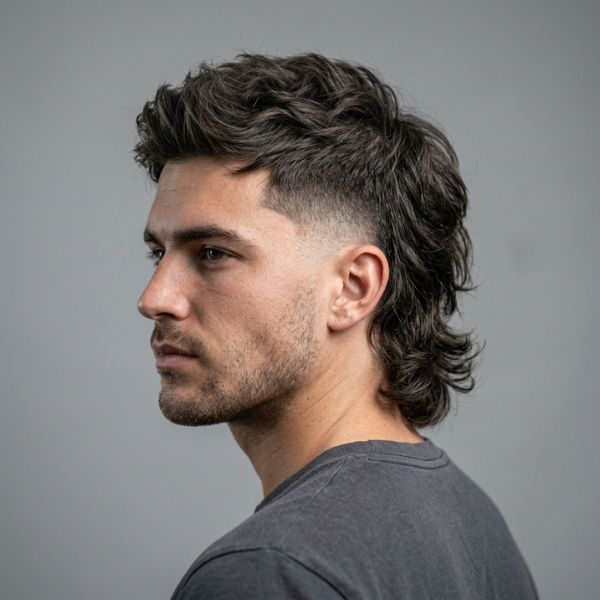
A textured top pairs with the mid fade here, giving the style more shape and personality than a simple comb-over top. It works particularly well for round faces since the added height and texture elongate the overall silhouette.
11) Mid Mullet

This version pairs the mid fade with a shorter back, roughly three to five inches, which softens the mullet’s drama while still delivering clear contrast on the sides. It’s a good middle ground for men easing into the style.
12) Mid Mullet Fade

Designed with wavy hair in mind, this variation lets natural wave patterns show through both the top and back. The mid fade keeps the sides from looking flat while the waves add movement everywhere else.
Read more: Low Taper Fade Black Male: 2026 Barber Guide for Waves, Curls, Afros & Locs
13) Mid Mullet Haircut

A workplace-friendly option that offers more definition than a low fade without tipping into high-contrast territory. It’s a solid choice for anyone who wants their haircut to read as deliberate rather than accidental.
14) High Fade Mullet
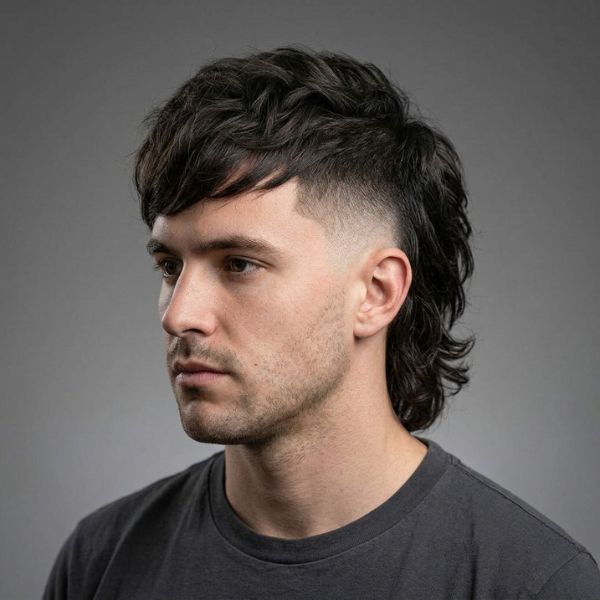
This sets the highest contrast of the group. The sides start very short and blend into the crown quickly, which sculpts strong cheekbones and a tighter jawline. It pairs well with a short beard and suits angular face shapes best.
15) High Mullet

A bold, statement-making version that often pairs with a disconnected top for extra drama. This works best for men who are comfortable with frequent barber visits, since the sharp fade line grows out faster than any other variation on this list.
16) High Mullet Haircut

An edgy option that demands the most upkeep of the seventeen variations. The trade-off for that maintenance is a strikingly clean, sharp look that photographs well and holds its shape through the day.
17) Mullet High Fade

Keep the back at a medium length here so the overall look stays modern rather than dated. This variation pairs especially well with a short, groomed beard, which balances the strong contrast at the sides.
How to Style in Three Steps
Styling a low, mid, or high fade mullet takes only a few minutes once you know the sequence.
- Prep the hair. Towel dry until damp, then apply a sea salt spray or light volumizing mousse for grip and texture.
- Rough dry and shape. Blow dry on low heat while guiding the top with your fingers or a vent brush. Focus airflow at the roots for lift, and pinch any fringe into place as it dries.
- Finish and set. Work a small amount of matte pomade or clay through the top, then run a light pass through the back to define the layers without weighing them down.
The entire routine takes about three minutes once you have the product amounts dialed in for your hair type.
Barber Instructions
Vague requests are the biggest reason people leave the chair with the wrong cut. Use this language to get an accurate result:
- State the fade height first: “low fade,” “mid fade,” or “high fade.”
- Specify where you want the fade to start, such as “an inch above the ear” for a low fade.
- Give a clear top length in inches, for example “two to three inches with light texture.”
- Describe the back length and layering, such as “collar length with soft, feathered layers, not blunt.”
- Mention your hair type (straight, wavy, curly, or coily) so the barber can adjust layering weight accordingly.
- Bring one or two reference photos showing the front, side, and back of the style you want.
If you are unsure which fade height suits you, ask your barber directly. Most can recommend a mid fade mullet or high fade mullet as alternatives on the spot once they see your hair density and face shape.
Read more: Low Taper Fade Black Male: 2026 Barber Guide for Waves, Curls, Afros & Locs
Care and Upkeep
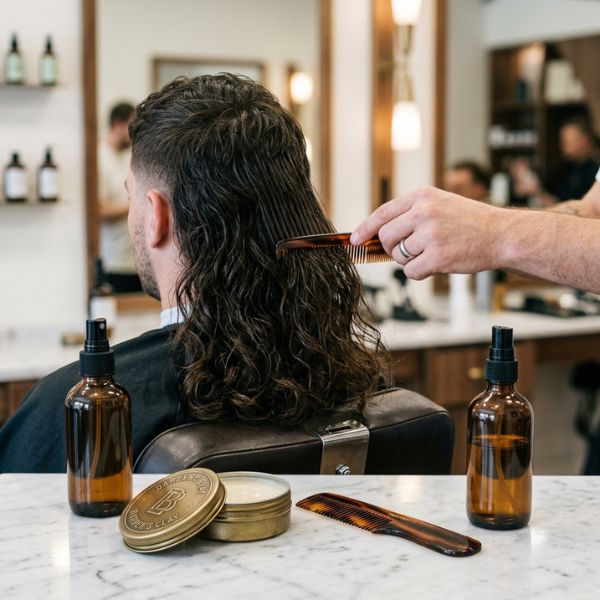
The fade grows out faster than the back length, so the two sections need different maintenance schedules.
- Fade touch-ups: every 2 to 3 weeks for a high fade, every 3 to 5 weeks for a mid fade, and every 4 to 6 weeks for a low fade.
- Back trims: every 8 to 12 weeks, or longer if you are actively growing out the length.
- Washing: two to three times a week with a moisturizing shampoo to avoid drying out the scalp and stripping styling products.
- Between visits: book a quick side-and-fringe cleanup rather than a full cut. Ten minutes of work on the sides restores contrast without touching the length you’re growing at the back.
- Product rotation: sea salt spray for texture, a lightweight mousse for volume, and matte clay or pomade for hold and finish.
Most people need three to six months of consistent growth before the back reaches a noticeably long mullet length, so patience during the early grow-out weeks matters as much as the haircut itself.
FAQs
Is a low fade mullet high maintenance?
No. It needs a fade refresh every four to six weeks and is otherwise as low maintenance as most medium-length haircuts.
Which face shapes suit a low fade mullet best?
Oval and square faces suit it most naturally, though round and angular faces can also wear it well with small adjustments to top texture.
Does a low fade mullet work with curly hair?
Yes. Curly hair pairs especially well with mid and low fade versions, since the curl pattern shows through the longer back.
Can I grow a low fade mullet from a regular short haircut?
Yes, though most people need three to six months of growth before the back reaches noticeable mullet length.
Should I pair a beard with a fade mullet?
Yes, especially with mid and high fade versions, since a groomed beard balances the added contrast at the sides.
Conclusion
The low fade mullet earns its popularity by solving a real problem: how to keep longer, expressive hair without looking messy or high maintenance. With seventeen variations to choose from across low, mid, and high fade heights, there is a version suited to nearly every hair type, face shape, and lifestyle.
Getting the right result comes down to clear communication with your barber, an honest read on your hair’s texture, and a bit of patience while the back grows in. Do that, and this cut delivers a look that holds up from a Monday meeting to a Saturday night out, with fewer trips to the chair than most other bold hairstyles demand.

Zaria Rhodes is the lead editor and content curator at Lyrinexa, passionate about music, storytelling, and lyrical expression. With a deep love for discovering the meaning behind songs, she brings clarity, creativity, and accuracy to every post. Zaria is dedicated to providing readers with authentic lyrics, thoughtful interpretations, and a seamless music-exploration experience.

1 thought on “Low Fade Mullet Guide: Styles, Mid and High Options”