


The burst fade mullet has become one of the most requested men’s haircuts of 2026, and for good reason. It gives you the sharp, sculpted sides that a fade is known for, while keeping the personality and movement of a mullet at the back. It’s not a throwback cut anymore. Barbers are treating it as a real style category with its own rules, its own maintenance schedule, and its own set of variations for every hair type.
This guide breaks down what a burst fade mullet actually is, how it compares to a drop fade or taper mullet, and which face shapes and hair textures it works best on. You’ll also find 25 specific burst fade mullet variations to bring to your barber, a quick reference table, a simple home styling routine, and answers to the questions men ask most before booking the cut.
What Is a Burst Fade Mullet
A burst fade mullet combines two distinct techniques into one haircut. The burst fade is a rounded fade that curves around the ear in a semicircle instead of cutting straight down like a standard fade. The mullet part means the barber deliberately leaves length at the back and nape while keeping the top and sides short or textured.
Put together, you get sharp contrast at the temples that shows off clean blending, paired with a longer back section that can be styled, flipped, or left to move naturally. The fade fans outward around the ear rather than running in a straight line down the sideburn, which is why it’s sometimes called a “sunburst” fade. That rounded shape is the main visual signal that separates a burst fade mullet from a regular fade mullet.
This cut works on straight, wavy, curly, and coily hair, and the fade itself can sit low, mid, or high depending on how much contrast you want against the length on top.
Why Choose a Mullet Fade
A mullet fade gives you more flexibility than most short haircuts and more edge than most long ones. Here’s what makes it worth considering:
- Low daily maintenance. The fade grows out cleanly and the back length doesn’t need constant trimming.
- Works with your natural texture. Curly, wavy, and straight hair all take the cut differently, so it never looks forced.
- Easy to dial up or down. A low burst fade with a short mullet reads professional, while a high burst fade with a longer back reads bold and statement-making.
- Grows into other styles. Because length stays at the back, you have the option to grow into a longer mullet or shaggy cut without starting over.
- Face-shape adaptable. Barbers can adjust the fade height and back length to balance almost any face shape.
It’s a cut that photographs well, holds up in humid weather better than fully long hair, and doesn’t require a strict styling routine to look intentional.
Read More : Carla Diab Net Worth 2026: $5M Fortune, Career & Wealth
Burst Fade Mullet vs Drop Fade Mullet
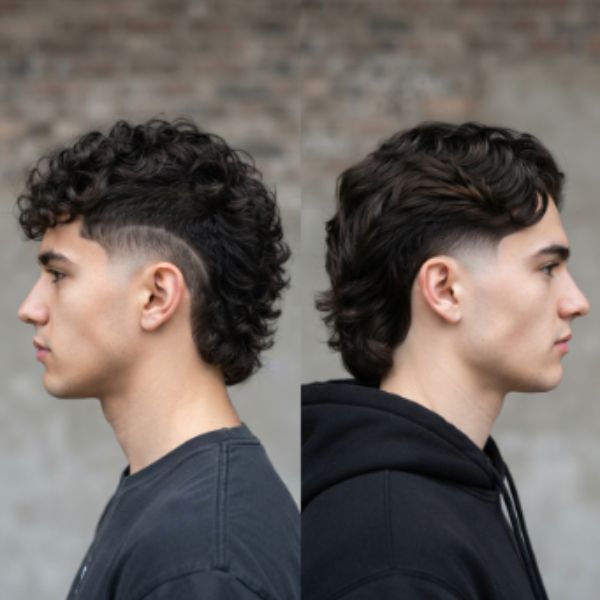
Both cuts start with short sides and a longer mullet back, but the fade line behaves differently.
A burst fade curves in a rounded arc around and behind the ear, fading outward like rays from a sunburst. It’s symmetrical on both sides and tends to sit closer to the ear, which makes it a strong match for shorter mullets and tighter curls.
A drop fade starts high near the temple and gradually drops lower as it moves toward the back of the head, following the curve of the skull rather than the ear. It creates a longer, sweeping line that pairs well with mullets that have more volume or a mohawk-style top, since the dropped line gives the illusion of extra height.
If you want a rounder, tighter, more classic barbershop look, ask for the burst. If you want a longer, more dramatic line that flows with the back length, ask for the drop.
Burst Fade Mullet vs Taper Mullet Fade
The taper mullet fade is the more subtle sibling of the burst fade mullet. A taper gradually shortens the hair around the ears and neckline without exposing much skin, so the transition from sides to back is smoother and less dramatic. A burst fade, by contrast, usually goes down to the skin at some point in the arc, creating a much sharper visual break.
Choose a taper mullet fade if you want:
- A lower-maintenance grow-out with less visible regrowth line
- A more conservative, workplace-friendly look
- A softer transition for fine or thin hair
Choose a burst fade mullet if you want:
- Maximum contrast between the sides and the back
- A bold, editorial look that stands out
- A style that highlights precise barbering work
Many men actually start with a taper mullet fade and move to a burst fade once they’re comfortable with the shorter sides.
Face Shape Tips
The fade height and back length can be adjusted to flatter almost any face shape.
- Round faces: A higher burst fade adds visual length and reduces width. Keep the back moderate to avoid adding more roundness.
- Square faces: A mid burst fade softens strong jawlines. Slightly longer top pieces help balance angular features.
- Oval faces: Nearly every burst fade mullet variation works here, so this is the easiest face shape to experiment with.
- Long faces: A low burst fade keeps the sides from adding extra height. Fringe or a curtain-style front can shorten the appearance of the face.
- Heart-shaped faces: A mid to low fade balances a wider forehead against a narrower jaw, and a textured top helps distribute visual weight evenly.
- Diamond faces: A burst fade that starts slightly below the cheekbone softens angles at the temple without overemphasizing them.
Bring a photo of your face shape’s recommended fade height when you visit the barber. It’s easier to communicate visually than to describe in words.
Bangs, Hairline, and Sideburns
The front of a burst fade mullet matters as much as the back. A few decisions to make before your appointment:
- Bangs or fringe: A soft, textured fringe works well with round and long face shapes, and it balances a receding hairline without looking like a cover-up.
- Hairline treatment: Ask your barber whether to keep a natural hairline or add a slight line-up. A line-up sharpens the front but needs touch-ups every two to three weeks.
- Sideburns: Sideburns should connect smoothly into the burst fade’s curve rather than stopping abruptly. Uneven sideburns are one of the most common mistakes in a DIY burst fade mullet.
If you have a receding or uneven hairline, mention it before the cut starts. Barbers can adjust the fade height and fringe length to work with it rather than draw attention to it.
Read More : Nikki Hakuta: Life, Family, and the Legacy of a Celebrity Child
25 Burst Fade Mullet Variations
1. Classic Burst Mullet
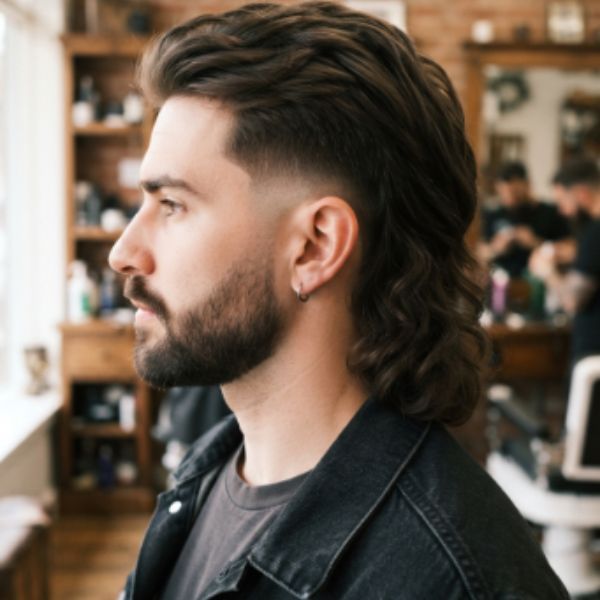
The foundational version: a clean rounded burst fade on the sides with medium length left at the crown and nape. Works on almost any hair type and is the easiest style to ask for by name.
2. Burst Fade Mullet Haircut
A slightly more textured take with layered cutting on top, giving movement and volume rather than a flat crown. Good for men who want a mullet that looks styled, not just grown out.
3. Low Burst Fade Mullet
The fade sits closer to the ear instead of climbing up the temple, creating a subtle, office-friendly version of the cut. Ideal for first-timers or conservative workplaces.
4. Straight Hair Burst Fade Mullet
Straight hair shows off the fade’s rounded lines with extra sharpness since there’s no curl pattern to soften the edges. The back tends to lie flat, so a slight point cut helps add texture.
5. Burst Fade Mullet Curly Hair

Curls add natural volume to the back section and a soft, organic contrast against the crisp fade. Barbers usually cut curly versions slightly longer since curls shrink after drying.
6. Mullet Skin Fade
Taken all the way down to bare skin around the burst arc, this version delivers the highest possible contrast against the mullet length. It requires more frequent barber visits to keep the skin line crisp.
7. Mullet Side Fade
The fade is concentrated mainly on the sides rather than wrapping fully around the back of the head, leaving more length near the nape untouched. A good middle ground between a full burst and a simple taper.
8. Modern Mullet Fade

A contemporary styling of the mullet with a textured, piece-y top and a mid-height fade, designed to look intentional rather than retro. Pairs well with a matte styling product for a natural finish.
9. Taper Mullet Fade
A softer transition version with no skin exposure, blending gradually from short to long. Best for men who want minimal upkeep and a subtle grow-out.
10. Curly Mullet Fade
Similar to the curly burst version but with a gentler taper instead of a hard burst line, giving a softer overall silhouette. Works especially well on medium-length curls.
11. Short Mullet Fade
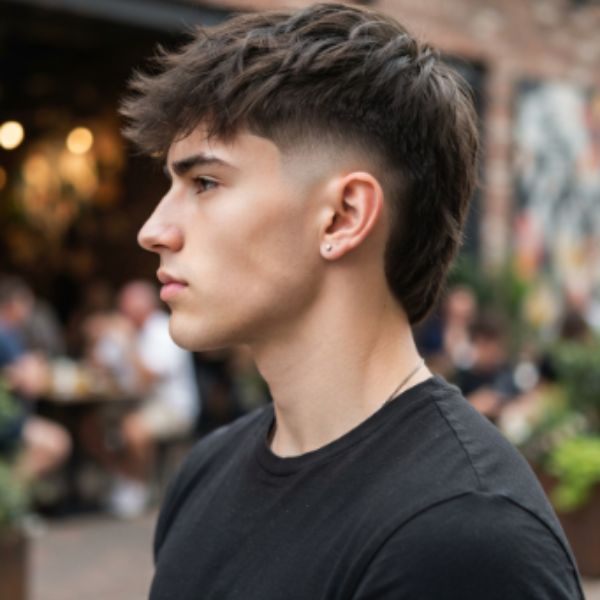
Both the sides and the back length are kept shorter than usual, making this the lowest-maintenance mullet fade on the list. A practical option for first-time mullet wearers.
12. Kids Mullet Fade
A scaled-down, gentler version of the burst fade mullet with a softer fade line and shorter back length, suited to school dress codes. Barbers typically keep the fade less aggressive for younger clients.
13. Taper Modern Mullet Fade
Combines the smooth blending of a taper with modern textured layering on top and back. A polished option for men who want the mullet silhouette without a hard fade line.
14. Taper Short Mullet Fade
A compact version pairing a soft taper with minimal back length, great for men easing into the mullet trend without committing to a dramatic length difference.
15. Modern Mullet Fade Straight Hair
Straight hair paired with a modern taper or burst creates crisp, defined lines throughout the cut. A light texturizing spray helps prevent the top from looking too flat.
16. Burst Fade Mullet V Cut
The back is cut into a V shape at the nape instead of a straight line, adding a stylized point that draws the eye downward. A popular choice for longer mullet lengths.
17. Mullet Burst Fade
Essentially the burst fade mullet with extra emphasis on the burst’s rounded shape, often cut slightly higher on the head for more visible contrast. A strong pick for thick or coarse hair.
18. Temple Fade Mullet

The fade is concentrated tightly around the temple area only, leaving more length everywhere else on the sides. A subtler alternative to a full burst fade.
19. Burst Fade Mullet Straight Hair V Cut
Combines the crisp lines of straight hair, the rounded burst fade, and a V-shaped back for a highly defined, editorial look. Best suited to men who don’t mind regular barber visits to maintain sharp lines.
20. Mid Burst Fade Mullet
The fade starts at a middle point on the head, balancing contrast without looking too aggressive or too subtle. Often considered the most versatile fade height for everyday wear.
21. High Burst Fade Mullet
The fade climbs higher up the sides for maximum contrast against the length on top and back. A bold, statement-making version best suited to men comfortable with a lot of attention.
22. Burst Fade Mullet with Design

Adds a shaved line, pattern, or geometric design within the fade itself for extra personalization. Popular among younger clients and anyone wanting a fully custom look.
23. Taper Burst Fade Mullet
A hybrid technique blending a soft taper near the hairline with a burst curve around the ear, offering contrast without going all the way to skin. A good compromise between the two most requested fade styles.
24. Burst Fade Mullet with Beard Blend
The fade connects seamlessly into a beard fade, tying the whole look together from sideburns to jawline. Requires coordinated upkeep of both the hair and beard to stay sharp.
25. Burst Fade Mohawk Mullet
Adds extra height and texture down the center of the top, essentially merging a faux hawk with a mullet’s long back and a burst fade’s clean sides. The boldest and most attention-grabbing style on this list.
Quick Reference Table
| Style | Best For | Maintenance | Fade Height |
|---|---|---|---|
| Classic Burst Mullet | All-purpose, first-timers | Medium | Mid |
| Low Burst Fade Mullet | Workplace, subtle looks | Low | Low |
| Mullet Skin Fade | Maximum contrast | High | High |
| Taper Mullet Fade | Minimal upkeep | Low | Low |
| Curly Mullet Fade | Curly and coily hair | Medium | Mid |
| Burst Fade Mohawk Mullet | Bold, statement styles | High | High |
| Burst Fade Mullet with Beard Blend | Full facial grooming | High | Mid to High |
Read More : Straight Hair Mullet Guide 2026: Styles, Fade, and Easy Care
Easy Styling Routine
You don’t need a long routine to keep a burst fade mullet looking sharp. Follow these steps:
- Wash with a lightweight shampoo two to three times a week to avoid stripping natural oils that keep the back section manageable.
- Towel dry, don’t rub. Squeeze water out gently to prevent frizz, especially on wavy or curly versions.
- Apply a small amount of product such as a matte clay for texture on top or a light cream for curl definition at the back.
- Style the top first, using your fingers to push volume upward or forward depending on the look you want.
- Finish the back by scrunching curls or smoothing straight hair with a comb, then let it air dry or use a diffuser on low heat.
- Set with a light-hold spray if you want the style to last through a humid day.
The whole process takes under five minutes once you know your hair’s texture and how it responds to product.
What to Tell Your Barber
Clear communication makes the difference between a great burst fade mullet and a disappointing one. Bring these details to your appointment:
- The exact fade height you want: low, mid, or high
- Whether you want a burst, taper, or drop fade specifically
- How much length to leave at the back and crown
- Whether you want a V cut, straight line, or blunt finish at the nape
- Any face shape concerns or a receding hairline you want worked around
- Whether you’ll want a beard blend or design element added
Bringing two or three reference photos, including close-ups of the fade line and the back length, helps avoid miscommunication far more than a verbal description alone.
Care and Upkeep
Plan on a barber visit every two to four weeks to keep the fade line sharp, since fade lines grow out faster than the length at the back. Between visits, trim any split ends at the back yourself only if you’re confident with scissors, otherwise wait for your next appointment.
Where It Fits
The burst fade mullet works in casual and creative workplaces, music and art scenes, and everyday settings where personal style is welcomed. A lower, more tapered version adapts well to more traditional or corporate environments, while a higher, bolder version suits settings where standing out is the goal.
FAQs
Is a burst fade mullet high maintenance?
It’s moderate. The fade line needs a barber touch-up every two to four weeks, but daily styling only takes a few minutes.
Does a burst fade mullet work on curly hair?
Yes, curly hair actually adds natural volume and texture that pairs well with the fade’s clean lines.
What’s the difference between a burst fade and a regular fade?
A burst fade curves around the ear in a rounded arc, while a regular fade cuts in a straighter line down the side of the head.
Can I grow a burst fade mullet out into a longer style?
Yes, since length is already kept at the back and crown, growing out mainly means letting the fade soften over time.
Is the burst fade mullet appropriate for work?
A low or mid burst fade with a shorter back reads professional in most casual to business-casual workplaces.
How often should I get my burst fade mullet trimmed?
Every two to four weeks for the fade, and every six to eight weeks for the length at the back.
Conclusion
The burst fade mullet earns its popularity because it’s genuinely adaptable. It can be dialed down into something subtle and professional or turned up into a full statement cut, and it works across straight, wavy, curly, and coily hair types alike. Whether you’re drawn to the clean lines of a classic burst mullet, the drama of a burst fade mohawk mullet, or the low-key ease of a taper mullet fade, there’s a version on this list built for your hair, your face shape, and your lifestyle. Bring your reference photos, be specific about fade height and back length, and you’ll walk out with a cut that looks deliberate rather than default.

Zaria Rhodes is the lead editor and content curator at Lyrinexa, passionate about music, storytelling, and lyrical expression. With a deep love for discovering the meaning behind songs, she brings clarity, creativity, and accuracy to every post. Zaria is dedicated to providing readers with authentic lyrics, thoughtful interpretations, and a seamless music-exploration experience.
