


Straight hair might be the single best canvas for a mullet, and barbers will tell you the same thing. There is no frizz to hide behind and no curl pattern to disguise a rushed blend, so every line the barber cuts shows up clearly. That is exactly why the straight hair mullet has become one of the most requested cuts of 2026, from clean fades on men to soft, layered versions on women and teens.
This guide walks through every major variation of the straight hair mullet, how to style it at home, which products actually work on flat, straight strands, what to say in the chair so your barber gets it right the first time, and how to keep it looking sharp between trims. By the end, you will know exactly which version fits your hair type, your face shape, and your day-to-day routine.
What Is a Straight Hair Mullet?
A straight hair mullet is a haircut built on contrast. The sides and front stay short or tapered, the crown carries movement and texture, and the back grows out longer with soft, blended layers. That short-to-long transition is the whole point of a mullet, and straight hair displays it with unusual precision.
Unlike wavy or curly hair, which naturally blends length differences, straight strands hang exactly where they are cut. That means the fade line, the layering pattern, and the back length all need to be planned carefully, but it also means the finished result looks crisp, deliberate, and easy to photograph. A well-cut straight hair mullet reads as a modern, styled haircut rather than a retro throwback, which is a big part of why it keeps trending.
Why Straight Hair Is Perfect for a Mullet
Straight hair suits a mullet for a few practical reasons that go beyond looks:
- Definition: Every layer and blend line is visible, so the cut looks sharp instead of blurry.
- Predictable growth: Straight strands grow out in a fairly even line, which keeps the shape wearable between appointments.
- Faster styling: There is no need to fight curl pattern or shrinkage, so a full style takes just a few minutes.
- Versatility: Straight hair takes well to fades, tapers, and shags equally, which opens up more options than curlier textures usually allow.
The one downside is that straight hair can fall flat on top or flip out at the ends if it is left without layers. That is a cutting issue, not a texture issue, and it is easy to fix with the right technique, which we will cover in the styling and barber sections below.
Straight Hair Mullet Variations
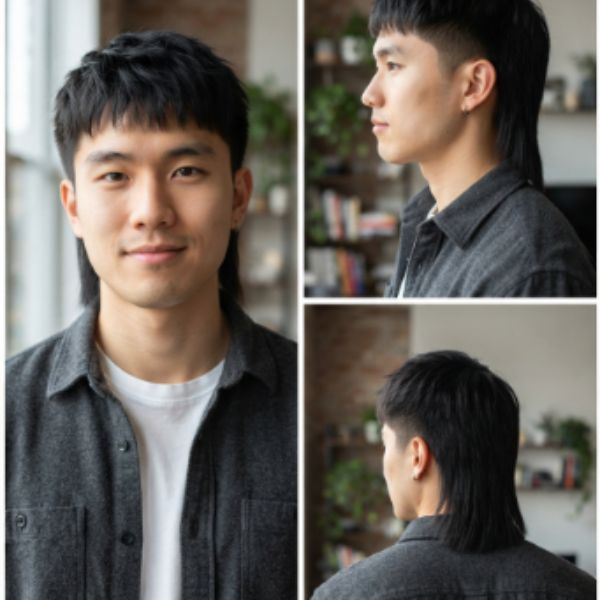
Classic Straight Hair Mullet
The classic version is the closest to the original mullet shape, just cleaned up for modern standards. Sides are kept short and neat, the top has light texture, and the back sits around collar length with soft layering so it does not look chopped off. It is a forgiving first-timer cut because it is bold enough to notice but still easy to wear to most jobs and events.
Modern Straight Hair Mullet
This is the version most barbershops are cutting right now. The sides stay controlled with a taper or light fade, the top is left with two to four inches of length for styling flexibility, and the back is layered rather than blunt so it moves instead of sitting like a slab. A little texturizing spray after blow-drying gives it that lived-in, slightly undone finish that still looks put together.
Straight Hair Mullet with Taper Fade
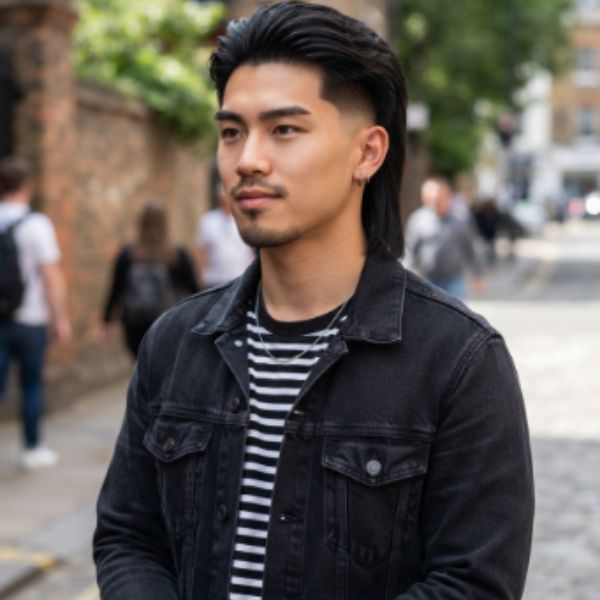
A taper fade blends the sides from shorter near the ear and neckline to gradually longer higher up, without cutting down to skin. It is a subtle transition that reads as tidy and professional, which makes it one of the safest fade choices for office settings or conservative dress codes. If you like the mullet silhouette but want low visual contrast, this is the pick.
Low Taper Straight Hair Mullet
The low taper keeps the fade tight and close to the hairline near the ears and nape, leaving most of the head untouched by the blend. It grows out cleanly, needs fewer touch-ups than a mid or high fade, and fits school and workplace guidelines that require a more conservative look. Pair it with a longer, layered back for the classic mullet contrast without the sides drawing too much attention.
Read More : Messy French Crop Haircuts: Fast Style, Sharp Results
Straight Hair Mullet Fade
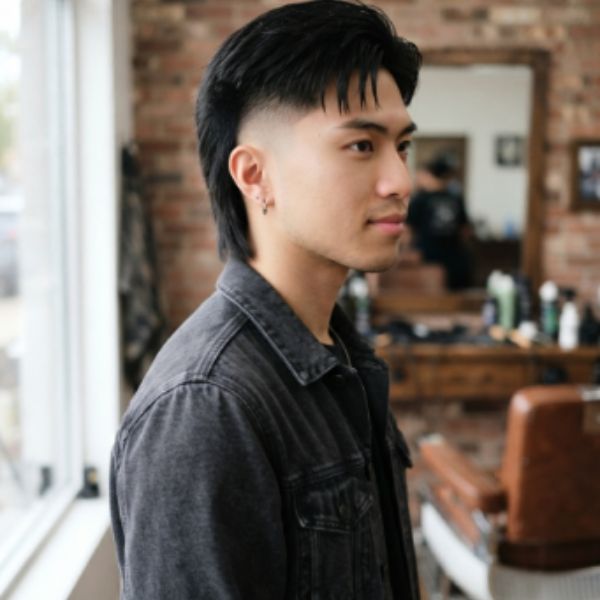
For a bolder statement, a true fade version drops from very short near the ear to noticeably longer on top, creating strong contrast against the long back. This works especially well on thick straight hair, since it removes bulk around the ears and neck while keeping weight and length where you want it, at the crown and back. Skin fades and mid fades both apply here depending on how much contrast you’re after.
Short Straight Hair Mullet
A short straight hair mullet keeps the back just long enough to register as a mullet, usually not much past the collar. It suits fine or thin hair particularly well because there is less length to weigh the style down, and it is the easiest version to maintain since there is less hair to layer, condition, or protect. Daily styling usually takes under two minutes.
Long Straight Hair Mullet

The long version pushes the back toward shoulder length while keeping the sides clean and tapered. Because straight hair holds a flat shape naturally, heavy internal layering is essential here, otherwise the back reads as a solid curtain rather than a flowing mullet. This variation needs the most upkeep in terms of conditioning and trim scheduling, but it also has the most visual drama and works beautifully for anyone growing hair out over a longer period.
Layered Straight Hair Mullet
In this variation, layering is not a finishing touch, it is the entire design. Multiple layers cut throughout the crown and back remove weight so hair moves rather than hangs flat. It suits medium to thick straight hair especially well, since finer textures may need extra volumizing help to avoid looking thin at the ends. A round brush and blow dryer combination brings out the shape best.
Straight Hair Mullet with Fringe or Bangs

Adding a fringe changes the whole face-framing effect of the cut. A shorter, textured fringe softens a strong or square hairline, shortens the look of a longer face, and gives the eyes a natural frame. Straight hair holds a fringe shape well without needing daily flat-ironing, which makes this one of the lowest-effort ways to customize a mullet.
Straight Hair Shag Mullet
The shag mullet blends choppy, feathered layers with the standard mullet outline. The crown gets airy, textured pieces, the sides stay relatively tidy, and the back keeps its length with an intentionally undone finish. It has strong 70s roots but reads as thoroughly current in 2026, especially paired with a texturizing paste for separation.
How to Style a Straight Hair Mullet
Straight hair styles fastest when it is prepped correctly. Follow this order for consistent results:
- Towel-dry gently. Squeeze water out with a microfiber towel instead of rubbing, which prevents frizz and keeps the layer pattern intact.
- Apply a texturizing or sea salt spray to damp hair, focusing on the roots and mid-lengths for grip.
- Blow-dry on low to medium heat, lifting the roots at the crown with your fingers or a round brush to build volume.
- Work a small amount of matte paste or pomade through the top, rubbing it between your palms first so it distributes evenly instead of clumping.
- Shape the fringe or front section, pinching pieces apart if you want a textured, separated look.
- Smooth the back layers with your hands or a wide-tooth comb so they settle into a natural line instead of flipping outward.
Most people can complete this full routine in three to five minutes once it becomes a habit.
Best Products for a Straight Hair Mullet
| Product Type | What It Does | Best For |
|---|---|---|
| Texturizing or sea salt spray | Adds grip and matte texture without stiffness | Nearly every straight hair mullet variation |
| Matte clay or pomade | Defines the top, controls flyaways | Medium to thick hair |
| Volumizing mousse | Lifts fine, flat hair at the root | Fine or thin straight hair |
| Lightweight hair oil or serum | Smooths and adds shine to longer back sections | Long or layered mullets |
| Texturizing paste | Separates choppy layers for a shag finish | Shag mullets, layered mullets |
| Heat protectant spray | Shields hair during blow-drying or flat-ironing | Anyone using heat tools regularly |
A general rule for straight hair: skip heavy waxes and high-shine gels. They weigh the top down and can make a straight mullet look greasy well before the day is over.
Read More : Short Wolf Cut Men 2026: Best Styles for Every Hair Type
What to Tell Your Barber for a Straight Hair Mullet
The gap between what you picture and what you get usually comes down to communication. Bring these specifics to your next appointment:
- Name the fade or taper you want, for example “low taper on the sides” or “mid skin fade.”
- Ask for the back to be layered internally, not just cut to length, so it flows instead of sitting flat.
- Request texture through the crown so straight strands do not fall flat by midday.
- Bring three reference photos: front, side, and back, so there is no guesswork about proportions.
- Mention your hair thickness. Thick hair usually needs debulking in the back; fine hair usually needs a shorter back length paired with more texture on top.
A five-minute conversation before the first cut saves multiple corrective visits later.
Straight Hair Mullet Maintenance Tips
- Book a trim every four to six weeks. The fade and the length transition both soften quickly on straight hair, so regular upkeep keeps the shape sharp.
- Wash two to three times a week with a sulfate-free shampoo. Washing daily strips natural oils that help the back sit smoothly.
- Condition mid-lengths and ends every wash, especially on long or layered versions where the ends are older and drier.
- Refresh with water and a light texturizing spray on non-wash days instead of a full restyle.
- Sleep on a satin or silk pillowcase. It cuts down on friction, which reduces tangling and helps the back layers keep their shape overnight.
- Trim split ends promptly on longer versions, since straight hair shows split and frayed ends more obviously than curlier textures.
Straight Hair Mullet for Men
Men’s straight hair mullets in 2026 lean toward clean fades paired with deliberate length at the back. The mid taper mullet and the low fade mullet are the most requested versions because they transition easily between gym, office, and weekend without extra styling effort. A well-groomed beard adds balance: a short, neat beard pairs naturally with a mid fade mullet for contrast, while a fuller beard usually looks better with a lower taper so the overall silhouette does not feel too busy.
Straight Hair Mullet for Women
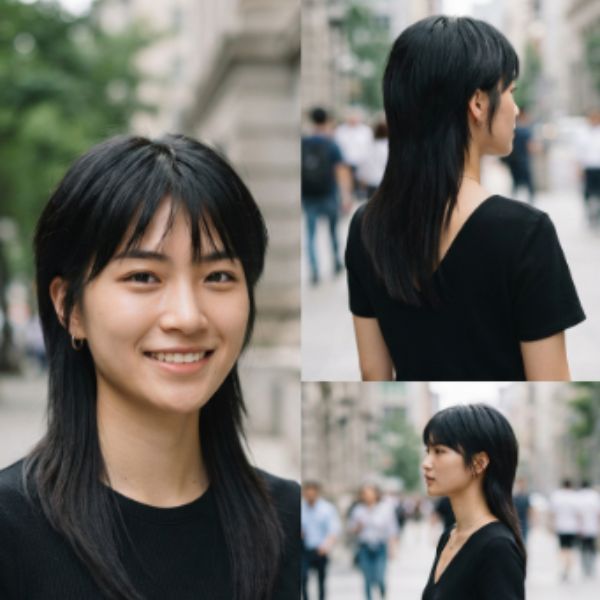
Women are choosing the straight hair mullet for its combination of edge and low daily maintenance. Popular versions include the layered mullet with a soft fringe, the shag mullet, and the long mullet with softly rounded ends. Straight hair photographs this cut particularly well since the lines and layers stay crisp. A flat iron can be used sparingly to bend the fringe or face-framing pieces for a softer everyday look, and highlights or a money piece around the front add dimension without needing extra length.
Straight Hair Mullet for Girls
For younger wearers, the short straight hair mullet and the fringe mullet are the most practical choices. Both are easy to grow out, low commitment, and simple to maintain within school dress codes when kept trimmed and tidy. A quick morning routine of light mousse and a two-minute blow-dry is usually enough. The shag mullet is also popular with teens who want texture and personality without a long styling process before school.
Straight Hair Mullet vs. Wolf Cut
| Feature | Straight Hair Mullet | Wolf Cut |
|---|---|---|
| Overall shape | Structured, with a clear short front and longer back | Softer, with rounded volume through the crown |
| Layering | Concentrated contrast between front and back | Layers spread evenly from crown to ends |
| Maintenance | Fewer styling steps between trims | More frequent styling to keep volume alive |
| Best hair type | Straight and slightly wavy | Works across most textures, especially wavy |
| Overall vibe | Bold and intentional | Casual and undone |
| Fade compatibility | Common, taper or skin fade both work well | Less common, usually cut without a hard fade |
If you want a cut with a clear structure and strong length contrast, the mullet is the better fit. If you prefer soft, all-over volume with a more casual finish, the wolf cut usually wins. Both work well on straight hair, so the choice really comes down to how much contrast and structure you want in the final shape.
Best Face Shapes for a Straight Hair Mullet
| Face Shape | Best Mullet Option | Why It Works |
|---|---|---|
| Round | Taper fade mullet with height on top | Adds vertical lift and narrows visual width |
| Square | Mullet with a soft taper | Softens strong jaw angles while staying clean |
| Oval | Almost any variation | Naturally balanced proportions suit most cuts |
| Long or oblong | Mullet with fringe or bangs | Fringe shortens the visual length of the face |
| Diamond | Layered mullet with fringe | Balances wide cheekbones with added forehead width |
| Heart | Short or classic mullet with texture | Adds lower fullness without extra volume up top |
Read More : Low Taper Fade Haircut Black Male: 2026 Barber Guide for Waves, Curls, Afros & Locs
Frequently Asked Questions
Does a straight hair mullet work on fine or thin hair?
Yes. Choose a shorter back length and add volumizing mousse at the roots, since less length keeps fine hair from falling flat.
How often should I trim a straight hair mullet?
Every four to six weeks keeps the fade sharp and the length contrast looking intentional rather than overgrown.
Can I style a straight hair mullet without heat tools?
Yes. A texturizing spray applied to damp hair and air-dried works well, though a blow-dry adds more lift and shape.
Is a straight hair mullet low maintenance?
It is, especially the short or taper versions. Most people finish a full style in three to five minutes with basic products.
What is the difference between a mullet and a shag mullet?
A shag mullet adds choppy, feathered layers throughout the crown for a more textured, undone finish than a standard mullet.
Will a straight hair mullet suit a round face?
Yes, particularly with a taper fade and added height on top, which adds vertical length and reduces visual width.
How long does hair need to be to start a mullet?
Most barbers can begin shaping a mullet once the back reaches at least ear to jaw length, with shorter styles started even sooner.
Conclusion
The straight hair mullet earns its popularity in 2026 through genuine versatility, not nostalgia. Straight strands display every layer and blend with total clarity, which is why this cut looks so deliberate and current when it is done well. Whether you go for a sharp skin fade, a subtle low taper, a short low-maintenance crop, or a long dramatic back, the same principles apply every time: keep the sides controlled, build texture into the top, and layer the back so it moves instead of sitting flat.
Upkeep is manageable, styling takes minutes, and the range of variations means there is a version for almost every job, age, and personal style. Talk through the specifics with your barber, bring clear reference photos, use products suited to straight hair, and stay on top of your trim schedule. Do that consistently, and your straight hair mullet will stay sharp, current, and easy to live with.

Zaria Rhodes is the lead editor and content curator at Lyrinexa, passionate about music, storytelling, and lyrical expression. With a deep love for discovering the meaning behind songs, she brings clarity, creativity, and accuracy to every post. Zaria is dedicated to providing readers with authentic lyrics, thoughtful interpretations, and a seamless music-exploration experience.
