


A low taper fade with textured fringe is one of the most requested men’s haircuts of 2026, and it’s easy to see why. It blends a close, gradual fade on the sides with a piece of longer, choppy hair left at the front, giving you a look that feels sharp at the barbershop and relaxed everywhere else. This guide walks through what the cut actually is, why barbers and clients keep gravitating toward it, the most popular variations by hair type, exactly how a barber builds the shape, and how to keep it looking fresh between visits. Whether you’re walking into a barbershop for the first time or trying to explain the cut to a new stylist, you’ll leave with the language and know-how to get it right.
What Is a Low Taper Fade Textured Fringe?
A low taper fade textured fringe combines two separate techniques into one cohesive style. The “low taper” part refers to where the fade begins on the sides and back. Instead of starting high on the head like a skin fade or high fade, the blending starts low, usually just above the ear, and fades gradually into the skin near the hairline and neckline.
The “textured fringe” part refers to the hair left on top, cut with layers and often finished with a matte texturizing product so the front section falls forward in a piece-y, slightly undone way rather than lying flat. The result is a haircut that reads as clean and professional from the sides, with a front section that adds movement, volume, and a bit of personality.
Because the taper stays subtle rather than aggressive, this cut suits office environments, school dress codes, and casual settings alike, which is part of why it has stayed in such heavy rotation with barbers.
Why This Style Became So Popular
Several factors pushed the low taper fade textured fringe into the mainstream, and most of them come down to versatility.
- It works with nearly every hair type. Straight, wavy, curly, and coily hair can all be shaped into a textured fringe, which widens the audience far beyond a single hair texture.
- It’s low commitment compared to a skin fade. Because the taper is soft rather than shaved to the scalp, it grows out more gracefully and needs fewer touch-ups.
- Social media accelerated the trend. Short-form video content from barbers demonstrating the cutting and styling process made the look easy to reference and request by name.
- It flatters a wide range of face shapes. The fringe adds forward volume that can soften angular features or add proportion to a longer face.
- Celebrities and athletes wearing shorter, textured cuts gave the style visibility outside of barbershop culture, pushing it into everyday fashion conversations.
Put simply, the cut sits at the intersection of tidy and trendy, which is exactly the balance most men are looking for in a 2026 haircut.
Read more: Burst Fade Design: Best Hair Design Ideas, Placement, and Barber Tips (2026)
Variations of the Low Taper Fade with Textured Fringe
Not every low taper fade textured fringe looks the same. The base structure, a low blend with a longer front section, stays consistent, but the finish changes depending on hair type, styling products, and how much length is left on top. Below are the most common variations barbers are cutting right now.
| Variation | Best For | Key Feature |
|---|---|---|
| Short Textured Fringe | Straight or fine hair | Low volume, choppy tips |
| Wavy Fringe with Low Taper | Naturally wavy hair | Soft movement, beachy finish |
| Curly Fringe Low Taper | Curly hair types | Defined curl clumps up top |
| Messy Textured Fringe | Thick or medium hair | Undone, tousled shape |
| Layered Fringe with Low Taper | Longer top sections | Dimension through layering |
Short Textured Fringe
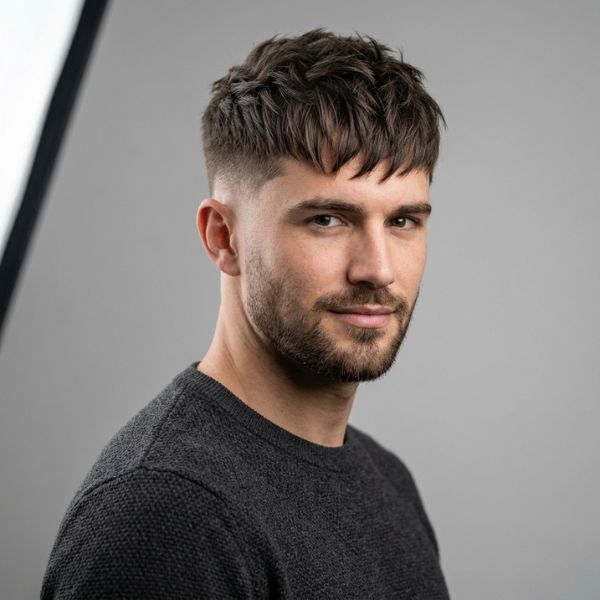
This version keeps the top short, usually between one and two inches, with the ends point-cut to create texture rather than a blunt edge. It’s a favorite for men who want the look of a fringe without much daily styling, since shorter hair holds its shape with minimal product.
Wavy Fringe with Low Taper
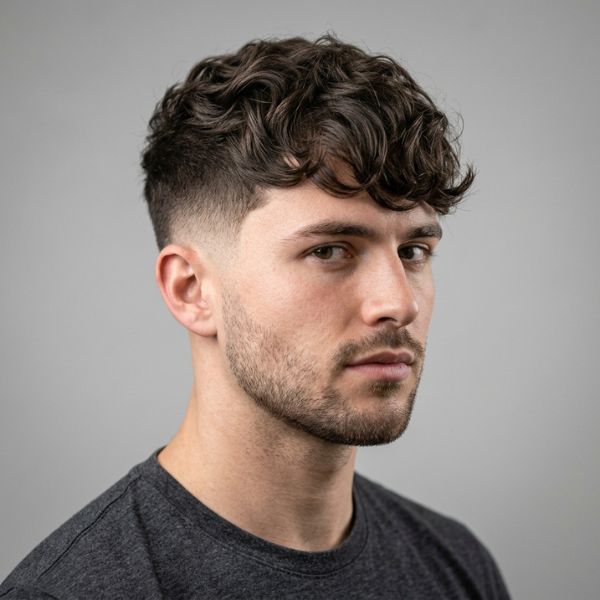
Natural waves are enhanced rather than fought in this variation. Barbers often cut slightly more length on top to let the wave pattern show through, then finish with a light sea salt or texturizing spray to define the movement without weighing the hair down.
Curly Fringe Low Taper
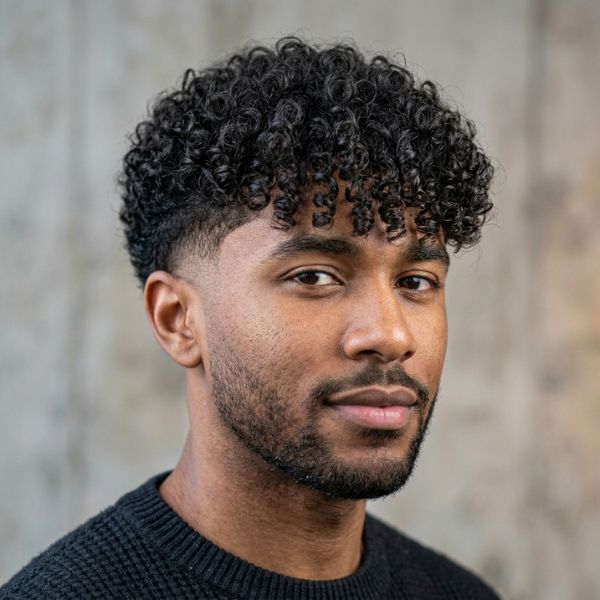
For curly hair, the barber typically uses a dry cutting technique so each curl falls into its natural resting position before trimming. This prevents the shrinkage that comes with cutting curly hair wet, and it keeps the fringe from ending up shorter than intended once it dries.
Messy Textured Fringe
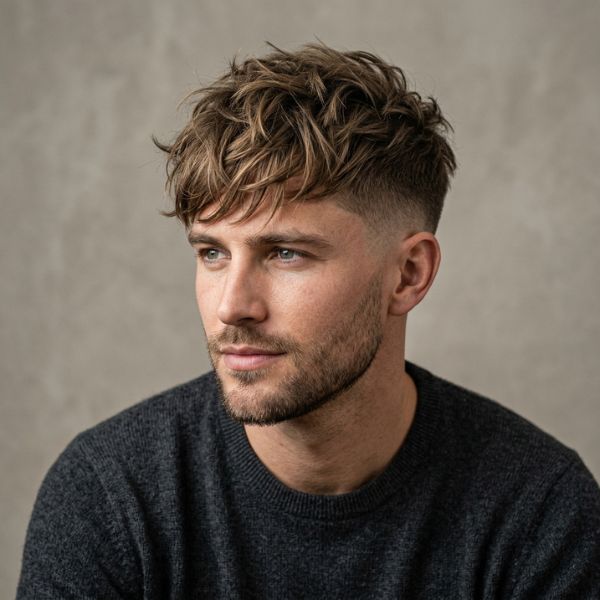
This is the most relaxed take on the style. The top is cut with heavier layering and styled with a matte paste or clay, then scrunched or finger-styled rather than combed into place. It reads as effortless, though it still relies on a precise low taper underneath to look intentional.
Layered Fringe with Low Taper
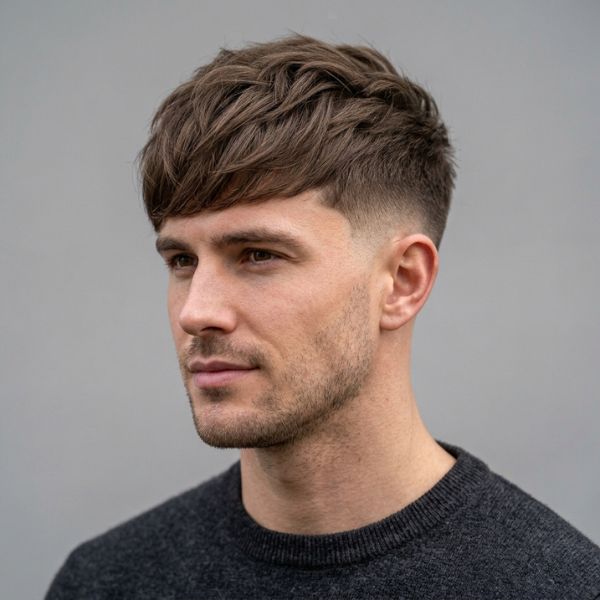
Men who prefer a longer top, closer to two and a half to three inches, often ask for internal layering so the fringe has movement instead of sitting as one heavy block. This variation gives the most styling flexibility, since it can be pushed forward, side-swept, or brushed up depending on the day.
Read more: Boys Mullet Haircut Guide 2026: Styles, Fades, and Care
How Your Barber Creates This Haircut
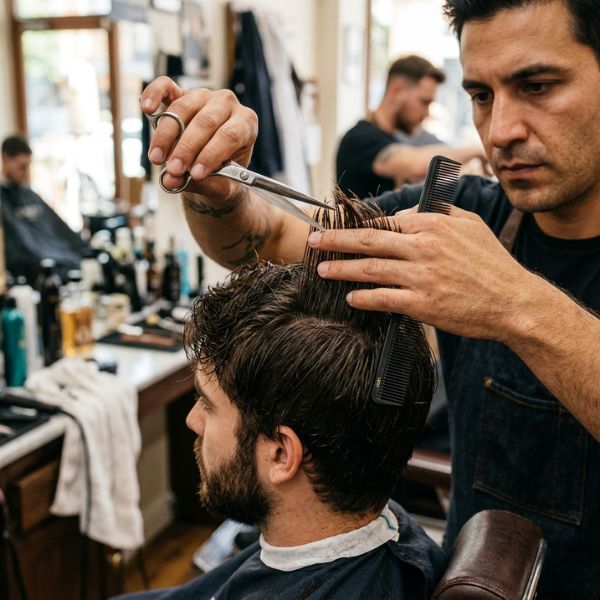
A skilled barber builds this cut in a specific order to keep the transition between the fade and the fringe smooth. The general process looks like this:
- Consultation and hair analysis. The barber checks hair density, growth pattern, and texture to decide how low the taper should start and how much length to preserve on top.
- Clipper work on the sides and back. Using guarded clippers, the barber works from the lowest point of the fade upward, blending through several guard lengths so there’s no visible line between sections.
- Blending into the top. Scissor-over-comb or shear work connects the faded sides into the longer top section, avoiding a harsh shelf where the two lengths meet.
- Cutting the fringe. The front section is point-cut or texturized with thinning shears to remove bulk and create the piece-y look that defines the style.
- Detailing the hairline and edges. A straight razor or trimmer cleans up the neckline, temples, and hairline for a crisp finish.
- Styling and product application. The barber finishes by styling the fringe with a texturizing product so you can see exactly how it will look day to day.
What to Say to Your Barber
Clear communication is the difference between getting this haircut right and walking out with something close but not quite it. Try using these specific phrases:
- “I’d like a low taper fade, starting just above my ears, not a skin fade.”
- “Keep the blend soft and gradual rather than a sharp line.”
- “Leave enough length on top for a textured fringe I can push forward.”
- “Use point cutting or thinning shears on the front to remove bulk.”
- Bring a reference photo. Barbers work visually, and a photo removes guesswork about how low the taper should sit or how much texture you want up top.
How to Style a Low Taper Fade Textured Fringe at Home
Styling this cut at home takes only a few minutes once you know the routine.
- Start with damp, towel-dried hair. Product grips better on hair that’s damp rather than soaking wet or completely dry.
- Apply a small amount of texturizing product. A matte clay, paste, or texturizing cream works better than gel or wax, which can make the fringe look wet or stiff instead of natural.
- Rough dry with your fingers. Using a blow-dryer on a low or medium heat setting, lift the roots and push the fringe forward or slightly to the side while your fingers shape it.
- Break up the ends. Once mostly dry, use your fingertips to separate individual pieces of the fringe so the texture reads as intentional rather than flat.
- Set with a light hold spray if needed. This step is optional, but it helps the style hold through a humid day or a long shift at work.
The whole process usually takes under five minutes once you’re familiar with how your hair responds to product, which is part of what makes this cut so practical for daily wear.
Maintenance and Hair Care
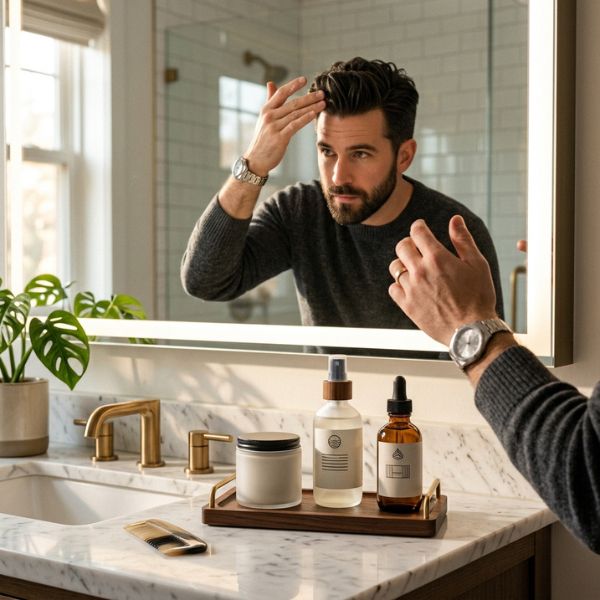
Keeping a low taper fade textured fringe looking sharp comes down to two things: regular barber visits and consistent at-home care.
Barber Visits
Most men need a touch-up every two to four weeks to keep the fade crisp, since the low taper section grows out faster in appearance than the longer top. If your hair grows quickly or you prefer a very clean line, aim for the two-week mark. If you’re comfortable with a slightly softer, grown-out edge between visits, four weeks works fine.
At-Home Care
- Wash with a moisturizing shampoo two to three times a week. Washing too often can strip natural oils and leave the fringe dry and harder to style.
- Condition regularly, especially if you have wavy or curly hair, since these textures tend to need more moisture to stay defined.
- Trim split ends yourself between visits only if you’re confident with scissors, otherwise leave detailing to your barber.
- Protect the fringe at night with a silk or satin pillowcase to reduce frizz and preserve the shape you styled the day before.
- Use a heat protectant if you regularly blow-dry, since repeated heat exposure without protection can make textured hair brittle over time.
Who This Haircut Suits Best
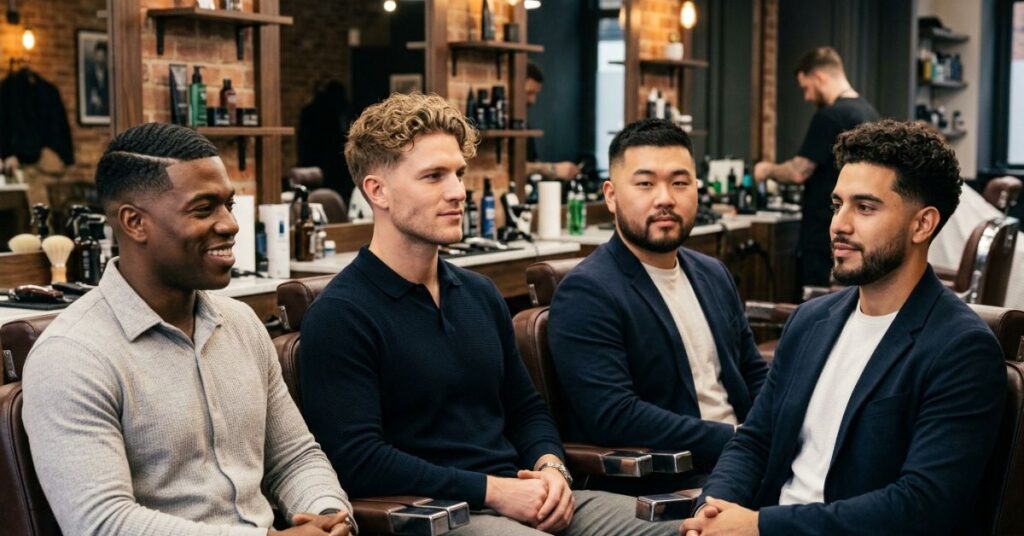
One reason this cut has stayed popular is that it adapts to a wide range of face shapes and hair types rather than being limited to one look.
Read more: Crew Cut Low Fade Hairstyles: Clean, Modern, Easy
Face Shapes
- Round faces benefit from the added height and forward volume of the fringe, which helps elongate the face.
- Square faces pair well with a slightly longer, softer fringe that takes some of the visual weight off a strong jawline.
- Oval faces can wear almost any version of this cut, since the balanced proportions of an oval face work with nearly every fringe length.
- Long faces generally look best with a fuller, side-swept fringe rather than one pushed straight back, since this adds width rather than height.
Hair Types
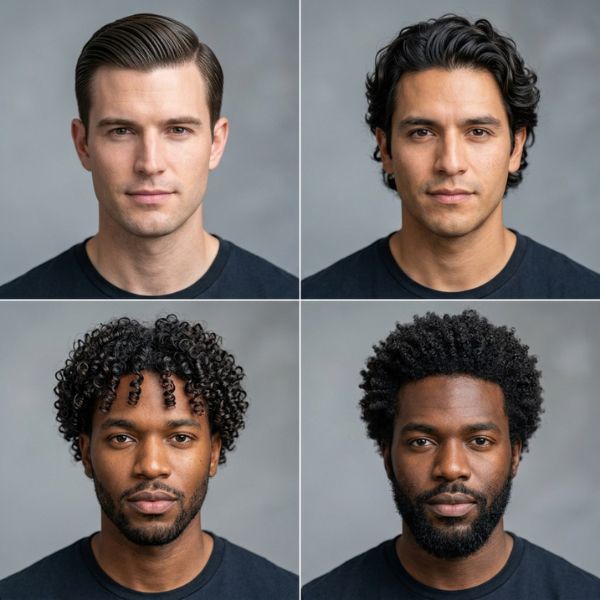
- Straight hair holds the short textured fringe variation well and styles quickly with minimal product.
- Wavy hair naturally complements the messy or layered fringe variations, since the wave pattern adds texture on its own.
- Curly hair works best with a dry cut and a curl-defining product to keep the fringe from looking uneven once it dries.
- Thick hair may need more aggressive thinning on top to prevent the fringe from looking bulky, while fine hair usually needs less removal to maintain volume.
The Style’s Journey and What’s Ahead
Taper fades have circulated through men’s grooming for decades, but the pairing with a longer, textured fringe is a more recent development shaped by a shift away from ultra-short, uniform buzz cuts toward styles with more personality on top. Barbers report that clients increasingly want a cut that photographs well, styles easily, and still reads as polished in professional settings, and the low taper fade textured fringe checks all three boxes.
Looking ahead, expect continued interest in subtle customization rather than dramatic reinvention. Barbers are experimenting with slightly longer fringes, softer color work like subtle highlights woven through the front section, and more natural, air-dried finishes rather than heavily gelled looks. The core structure of a low, soft fade paired with a textured top is likely to remain a barbershop staple well beyond 2026, simply because it solves a real problem: it gives men a way to look put together without much daily effort.
Low Taper Fade Textured Fringe: Asked Questions
Is a low taper fade textured fringe good for beginners requesting their first fade? Yes. Because the fade sits low and blends gradually, it’s more forgiving than a high or skin fade if you’re new to getting fades regularly.
Can this haircut be adjusted for thinning hair? Yes, a barber can keep more length and use lighter thinning on top to preserve the appearance of density while still creating a soft fade below.
Does the fringe need to be pushed forward, or can it be worn back? Both work. A forward fringe gives a more casual look, while pushing it back or to the side creates a slightly more formal finish for the same haircut.
How long does it take to grow out a low taper fade before it looks messy? Most men can go around four to six weeks before the fade edges soften enough to look noticeably grown out, longer than a high or skin fade.
Conclusion
The low taper fade with textured fringe earns its popularity by doing something a lot of haircuts fail to do: it looks sharp without demanding constant upkeep. The soft, low blend keeps things wearable in any setting, while the textured fringe on top gives you room to add personality, whether that means a short choppy finish, natural waves, defined curls, or a longer layered look. Bring a clear reference and the right vocabulary to your next barber visit, keep up with touch-ups every two to four weeks, and a few minutes of styling each morning will keep this cut looking as good on day twenty as it did on day one.
FAQs
How often should I visit my barber for this cut?
Plan on a touch-up every two to four weeks to keep the low taper blend looking clean and intentional.
Does a textured fringe work on straight hair?
Yes, straight hair holds a short textured fringe especially well and is one of the easiest textures to style day to day.
What is the easiest way to style this at home?
Apply a matte texturizing product to damp hair, then rough dry with your fingers while pushing the fringe forward.
Is the low taper fade good for growing out?
Yes, because the fade starts low and blends gradually, it grows out more evenly than a high or skin fade.
Can I add color or highlights to this cut?
Yes, subtle highlights or a slightly lighter fringe are increasingly common ways to add dimension without a full color change.
What is the difference between a textured fringe and a blunt fringe?
A textured fringe is point-cut for a piece-y, layered finish, while a blunt fringe is cut in one straight, even line.
Is this cut high maintenance?
It’s moderate maintenance. It needs regular barber visits every few weeks but only a few minutes of daily styling.
Does this haircut work for men with beards?
Yes, the low taper fade pairs well with most beard styles since the low blend on the sides doesn’t compete visually with facial hair.

Zaria Rhodes is the lead editor and content curator at Lyrinexa, passionate about music, storytelling, and lyrical expression. With a deep love for discovering the meaning behind songs, she brings clarity, creativity, and accuracy to every post. Zaria is dedicated to providing readers with authentic lyrics, thoughtful interpretations, and a seamless music-exploration experience.

1 thought on “Low Taper Fade with Textured Fringe: Complete Guide for 2026”