


A mid burst fade is one of those haircuts that looks simple in a photo but gets messy the moment you try to explain it in a barber chair. You sit down, the barber asks “how short around the ear,” and suddenly you’re not sure if you want a burst, a drop, or just a regular mid fade.
This guide clears that up. You’ll learn exactly what a mid burst fade is, how it differs from a drop fade and a regular mid fade, which version fits your hair type, the exact words to use with your barber, and a week-by-week plan to keep it looking fresh between appointments.
No filler, just the details you actually need before your next haircut.
What is a mid burst fade?
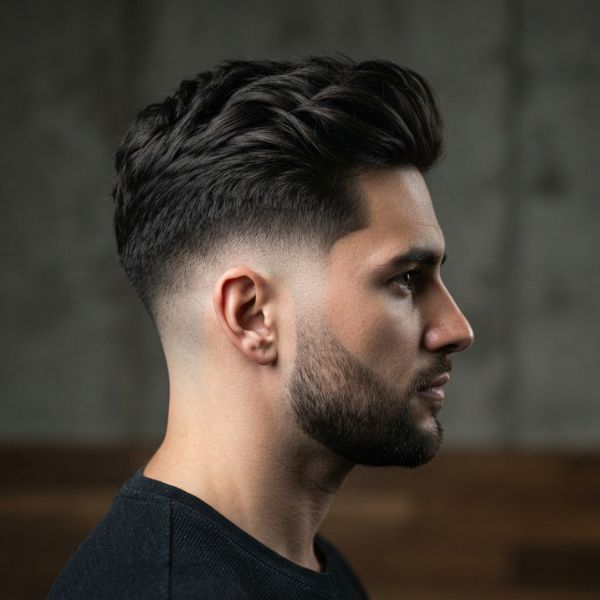
A mid burst fade is a fade that curves around the ear in a rounded, half-moon shape instead of running in a flat, straight line. The fade sits at the midpoint of the head, roughly between the bottom of the ear and the temple, which is why barbers call it “mid” rather than “low” or “high.”
Instead of shaving straight across the side of the head, the clipper work bends around the ear like a C. That curve is what gives the cut its shape and its name. The top is usually left longer, which creates contrast against the tightly faded sides and lets you style texture, waves, curls, or a fringe on top.
Because the fade starts at a middle height, it’s considered the most balanced option of the three burst fade heights. It’s noticeable enough to look intentional, but it doesn’t expose as much scalp as a high burst fade does.
Read more: Low Taper Fade Black Male: 2026 Barber Guide for Waves, Curls, Afros & Locs
Why it’s called “burst”
The name comes from the shape of the fade line, not from any styling product or technique. When the clippers curve tightly around the ear and then blend outward, the fading pattern looks like it’s “bursting” open from a single point, similar to a firework or a sunburst.
This is different from a fade that runs in one continuous straight or diagonal line down the side of the head. A burst fade concentrates its shortest hair and sharpest contrast right around the ear, then blends that curve into the rest of the head. That concentrated curve around the ear is the single detail that separates a burst fade from almost every other fade style.
Mid burst fade vs regular mid fade
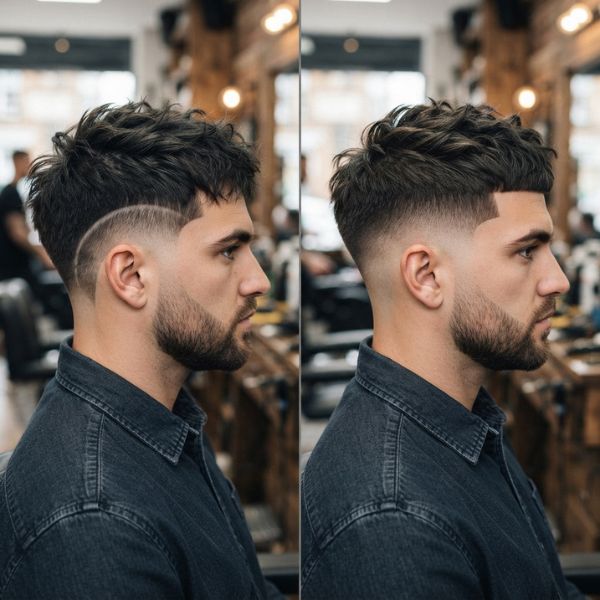
A regular mid fade runs in a straight, horizontal line across the side of the head at ear level. It blends evenly all the way around, without curving in toward the ear itself.
A mid burst fade takes that same starting height but wraps the fade around the ear in a rounded shape instead of keeping it flat. Here’s the simplest way to decide between them:
- Choose a mid burst fade if you want the ear and cheek area framed with a visible curve and sharper contrast.
- Choose a regular mid fade if you prefer a cleaner, more uniform line that doesn’t draw extra attention to the ear.
- Both start at roughly the same height, so the choice comes down to shape, not placement.
Neither option is objectively better. It’s really a question of how much definition you want around your ear versus a smoother, more classic finish.
Low vs mid vs high burst fade and drop fade
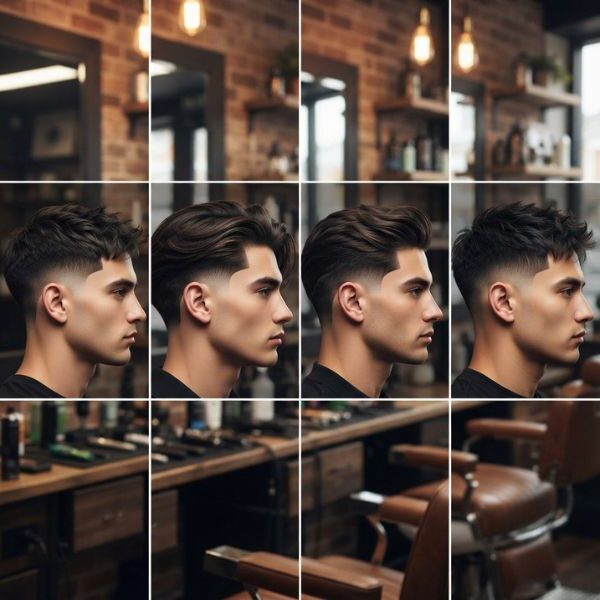
Burst fades are grouped by height, and each height changes how bold the contrast looks and how often you’ll need a touch-up.
- Low burst fade: starts close to the ear, leaves more hair on the sides, and grows out the most gracefully. It’s a forgiving choice if you’re trying a fade for the first time.
- Mid burst fade: sits halfway up the side of the head. It balances visible contrast with a look that still works in professional settings.
- High burst fade: starts near the temple and shows the most skin. It’s the boldest option and needs the most frequent upkeep since new growth is noticeable within two to three weeks.
A drop fade is a separate category entirely. Instead of curving around the ear, a drop fade follows a continuous line that dips lower as it travels behind the ear and toward the nape of the neck. It creates a more even, all-around fade rather than one concentrated burst of contrast near the ear.
Read more: Low Taper Fade with Textured Fringe: Complete Guide for 2026
Mid burst fade vs drop fade

People mix these two up constantly, so here’s the distinction in plain terms:
- A mid burst fade concentrates its fading around the ear in a rounded arc, and the back of the head is often left a little longer.
- A drop fade fades evenly all the way around, with the line dropping lower behind the ear and continuing toward the neckline.
- Burst fades pair naturally with mullets, curly tops, and longer back sections because the back isn’t fully faded.
- Drop fades give a more uniform, all-over finish that suits people who want the same level of shortness everywhere.
If your goal is a clean ear outline with a rounded side profile, ask for a burst. If you want the fade to shape your neckline and continue evenly around the back, ask for a drop fade instead.
Best mid burst fade styles by hair type
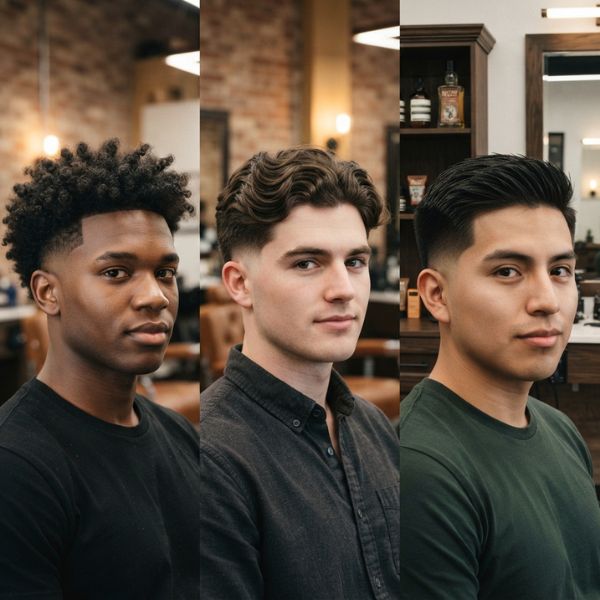
The fade itself stays fairly consistent, but the top styling changes a lot depending on your natural hair texture. Here are the most requested variations for 2026.
Read more: Burst Fade Design: Best Hair Design Ideas, Placement, and Barber Tips (2026)
Mid burst fade curly hair

Curly hair pairs especially well with a mid burst fade because the volume on top creates strong contrast against the tightly faded sides. The curls sit naturally rounded, which echoes the curved shape of the burst itself.
- Ask your barber to leave 2 to 3 inches on top to preserve curl definition.
- Use a curl cream or light gel instead of heavy pomade, which can weigh curls down.
- Scrunch curls upward while damp rather than brushing them flat.
Mid burst fade straight hair
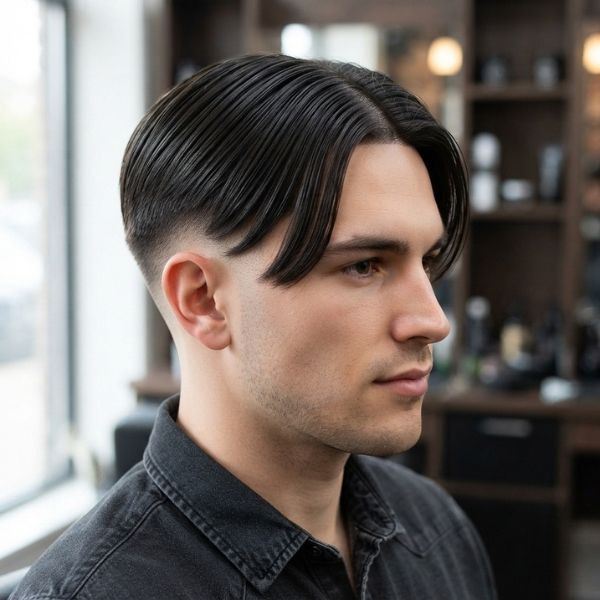
Straight hair shows a cleaner, sharper line where the fade meets the longer top. It’s a great match for people who want a polished, low-effort finish.
- A side part or a simple forward brush works well without extra product.
- Matte clay or a light molding paste adds texture without shine.
- Straight hair tends to grow out more visibly at the crown, so keep an eye on that area between cuts.
Mid burst fade textured fringe

A textured fringe adds movement to the front while the burst fade keeps the sides sharp. This combination is popular because it softens the face without losing the structured look of the fade.
- Point-cut ends on the fringe create a choppy, natural texture.
- Texture powder gives lift without making the fringe feel stiff or heavy.
- This style works especially well for oval and square face shapes.
Mid burst fade short hair and mid burst fade buzz cut
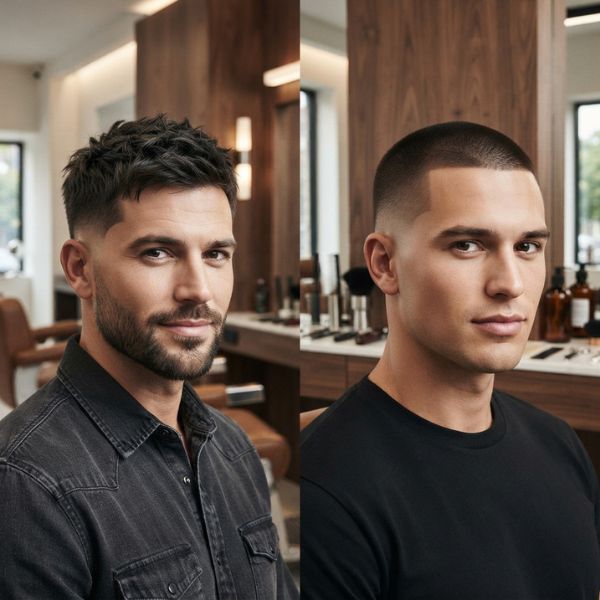
For a lower-maintenance version, the top is kept short instead of long, using a clipper guard rather than scissors.
- #0 to #0.5: very tight, bold contrast against the fade.
- #1 to #2: sharp but still soft enough for daily wear.
- #3 to #4: a slightly longer, more natural finish on top.
This version is ideal if you want the burst fade’s shape without the daily styling that longer hair requires.
Mid burst fade mullet and mid burst fade mohawk

Both styles use the burst fade as a frame for a bolder statement on top or in the back.
- The mid burst fade mullet pairs faded sides with longer hair left at the back, creating strong contrast between short and long sections. It’s currently one of the most requested burst fade variations.
- The mid burst fade mohawk keeps a raised strip of length running from the front to the crown, faded sharply on both sides. It reads as edgier and works best when you’re comfortable with more upkeep.
Both variations need the fade refreshed slightly more often than a standard burst, since the contrast between the shaved sides and the longer top or back makes any regrowth easy to spot.
Mid burst fade black men

On coily and tightly curled hair types, a mid burst fade creates especially sharp contrast because the density of the curls stands out strongly against the skin-faded sides. This combination is a long-standing favorite in barbershops for good reason.
- A skin fade base with a burst curve around the ear gives the cleanest edge definition.
- Twists, coils, or a simple curl sponge on top complement the density without extra bulk.
- Regular moisturizing of the faded skin helps prevent dryness or flaking between visits.
Mid burst fade with design and mid burst fade with V

Adding a design or a V-shape at the nape turns a standard burst fade into something more personalized.
- A design typically involves a shaved line, part, or pattern placed within the fade itself, usually near the temple.
- A V-cut shapes the hairline at the back of the neck into a pointed V rather than a straight or rounded edge.
- Both additions require more frequent touch-ups, since a crisp design or V-line grows out faster than the fade around it.
What to tell your barber
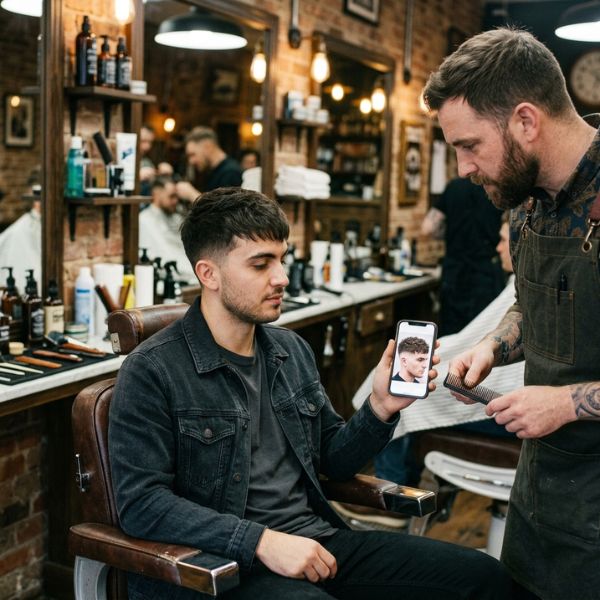
Even a great haircut idea can go wrong if the wording is vague. Use these specific phrases to get the exact result you want:
- “I’d like a mid burst fade, not a drop fade, curving around the ear.”
- “Start the fade about halfway between my ear and temple.”
- “Leave [X] inches on top” (be specific, since “a little longer” means different things to different barbers).
- “Keep the burst rounded and symmetrical on both sides.”
- “I want [guard number, e.g. #1 or #2] on the sides blending into skin near the ear.”
If you’re bringing a reference photo, that helps too, but the verbal description matters just as much because lighting and angles in photos can be misleading. Also mention your hair type and how much daily styling time you’re willing to put in. A curly top styled with a curl cream needs a different cut than a straight top styled with clay.
Maintenance schedule (week-by-week)
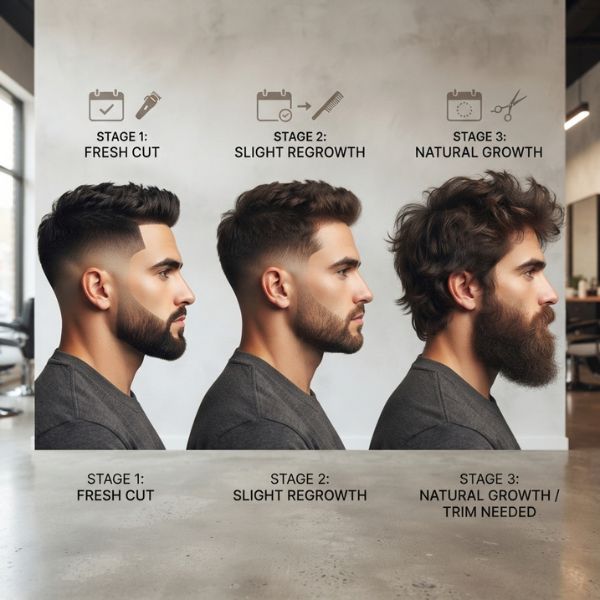
A mid burst fade looks its best in the first two weeks and then gradually softens as hair grows back in. Here’s what to expect and do at each stage.
- Week 1: The fade is at its sharpest. Moisturize the skin around the ear daily to prevent dryness, and avoid heavy products that can clog the freshly cut area.
- Week 2: The curve around the ear starts to soften slightly. This is a good time for light at-home cleanup with clippers around the neckline and edges, but leave the burst shape itself to your barber.
- Week 3: Regrowth becomes noticeable, especially on curly or coily hair types where growth shows up faster. Book your touch-up now if you want to stay consistently sharp.
- Week 4: The fade has visibly blurred for most hair types. If you skip this touch-up, the style will still look intentional, just softer and more blended, rather than a fresh, defined burst.
Most people find a 2 to 3 week touch-up schedule keeps the mid burst fade looking crisp without requiring constant barber visits. If you prefer a lower-maintenance routine, stretching to 4 weeks is fine, the style just transitions into a softer, more grown-out look rather than losing its shape completely.
Common mistakes and quick fixes

Even a well-cut mid burst fade can look off if a few small details are missed. Here are the mistakes that come up most often, along with how to fix them.
- Asking for “a burst fade” without specifying the height. Fix: always say “mid burst fade” and describe where you want it to start relative to your ear.
- Confusing it with a drop fade in conversation. Fix: mention explicitly that you want the fade to curve around the ear, not drop down behind it toward the neckline.
- Letting it grow past 5 to 6 weeks before a touch-up. Fix: book appointments every 2 to 3 weeks if you want consistent sharpness, or accept a softer look if you stretch it longer.
- Using heavy pomade on curly or coily tops. Fix: switch to a lightweight curl cream or gel so the top doesn’t lose its natural volume.
- Ignoring the skin around the fade. Fix: moisturize daily, since dry or flaky skin makes even a fresh fade look uneven.
- Trying to fix the burst shape yourself at home. Fix: leave the curved arc to your barber and only handle simple neckline or edge cleanup between visits.
Conclusion
A mid burst fade earns its popularity for a simple reason: it balances bold contrast with everyday wearability. The curved shape around the ear gives it more personality than a standard mid fade, while sitting at a middle height keeps it more versatile than a high burst fade or a full drop fade.
Whether you’re working with curly hair, straight hair, a textured fringe, or pairing it with a mullet, mohawk, design, or V-cut, the key to keeping it sharp comes down to two things: describing exactly what you want to your barber and sticking to a 2 to 3 week touch-up routine. Get those two details right, and the mid burst fade will stay one of the cleanest, most reliable cuts you can ask for in 2026.
Frequently Asked Questions
Is a mid burst fade good for curly hair?
Yes. The volume and rounded shape of curly hair naturally complement the curved burst around the ear, creating strong contrast.
How long does a mid burst fade last before it needs a touch-up?
Most people need a touch-up every 2 to 3 weeks, though it can stretch to 4 weeks for a softer, more relaxed look.
What’s the main difference between a burst fade and a drop fade?
A burst fade curves around the ear in a rounded shape, while a drop fade fades evenly and dips lower behind the ear toward the neckline.
Can I get a mid burst fade with long hair on top?
Yes. Longer tops work especially well with mullets, curly styles, and textured fringes, since the burst fade provides contrast without requiring the top to be short.
Does a mid burst fade work for a receding hairline?
Yes, in many cases. Starting the fade at mid height and keeping length on top can help soften the appearance of a receding hairline, though it’s worth discussing your specific hairline with your barber first.
Is a mid burst fade suitable for a first-time fade client?
It’s a solid middle-ground choice. It’s bolder than a low burst fade but far more forgiving to grow out than a high burst fade.

Zaria Rhodes is the lead editor and content curator at Lyrinexa, passionate about music, storytelling, and lyrical expression. With a deep love for discovering the meaning behind songs, she brings clarity, creativity, and accuracy to every post. Zaria is dedicated to providing readers with authentic lyrics, thoughtful interpretations, and a seamless music-exploration experience.

2 thoughts on “Mid Burst Fade Best Styles, How to Ask, and Easy Care 2026”