


A burst fade design takes a standard burst fade, the fade that curves around the ear instead of cutting straight across the head, and adds a shaved pattern into that curved section for a more personal, custom finish. Barbers use clippers, detail trimmers, and sometimes a straight razor to carve a line, shape, or symbol into the shortest part of the fade.
This guide covers what separates a burst fade design from a plain burst fade, the best spots on the head to place one, the most requested pattern ideas going into 2026, and how fade height, hair type, and top style affect the final look. You’ll also find simple talking points for your barber and a realistic maintenance schedule to keep the design sharp.
What Is a Burst Fade Design
A burst fade is a haircut where the fade radiates outward from around the ear in a rounded, sunburst-like pattern rather than running in a straight line down the side of the head. It’s a subtype of the fade family, alongside the low fade, mid fade, high fade, and drop fade, and it’s especially popular for its ability to leave more length at the back and neckline while keeping the sides tight around the ear.
A burst fade design simply means a barber has added a shaved detail, such as a line, shape, or pattern, into that curved fade section. The design usually sits in the shortest part of the cut, where there’s enough contrast between skin and hair for the pattern to stand out clearly.
Read More: Jynxzi Age, Real Name, Height, and Everything About the Popular Streamer
Burst Fade With Design vs Regular Burst Fade

The difference comes down to detail work and upkeep. A regular burst fade is a clean, symmetrical blend with no added artwork, which makes it lower maintenance and a safer choice for formal or professional settings. A burst fade with design adds a custom element, like a line, star, or geometric shape, that turns the haircut into a personal statement piece.
- A regular burst fade relies on smooth, gradual blending for its appeal.
- A burst fade with design relies on sharp contrast and clean edges to make the pattern pop.
- Designs need more frequent barber visits than a plain fade because regrowth blurs the shape faster than it blurs a simple blend.
Where Should the Design Go on a Burst Fade
Placement matters as much as the pattern itself. Because a burst fade curves around the ear, the natural “canvas” for a design sits in that curved zone, where the hair is shortest and the skin shows through cleanly. Two placements dominate most 2026 barber portfolios.
Behind the Ear Burst Fade Design

Placing the design directly behind or above the ear takes advantage of the burst fade’s signature curve. This spot offers a clean, mostly flat surface, good visibility from the side profile, and enough space for small to medium patterns like lines, stars, or short zigzags. It’s the most common placement because it follows the fade’s natural shape instead of fighting it.
Nape and V Area Design
The nape, or the V-shaped area at the back of the neck, is the second most popular design zone, particularly when the burst fade is paired with a longer top or a mullet. This placement works well for larger patterns, such as geometric shapes or extended line work, because the V area gives a barber more open space to shape a design without crowding the ear.
Best Burst Fade Design Ideas

Below are the pattern styles barbers are cutting most often heading into 2026, ranging from beginner-friendly single lines to more advanced geometric work.
Burst Fade Line Design
A single shaved line, straight or slightly curved, is the simplest and most requested burst fade design. It’s easy for a barber to cut cleanly, easy to maintain, and works on nearly every hair type and face shape. Some clients add a second parallel line for a bolder, more structured look.
Read More: Paul Mauro Net Worth 2026: His Wealth & Income Revealed
Burst Fade Zigzag Design
The zigzag adds movement and edge without needing a large canvas. Cut into the curved section behind the ear, it creates visual rhythm against the smooth fade underneath. It suits clients who want something more distinctive than a straight line but still simple enough for a barber to touch up quickly.
Burst Fade Lightning Bolt Design
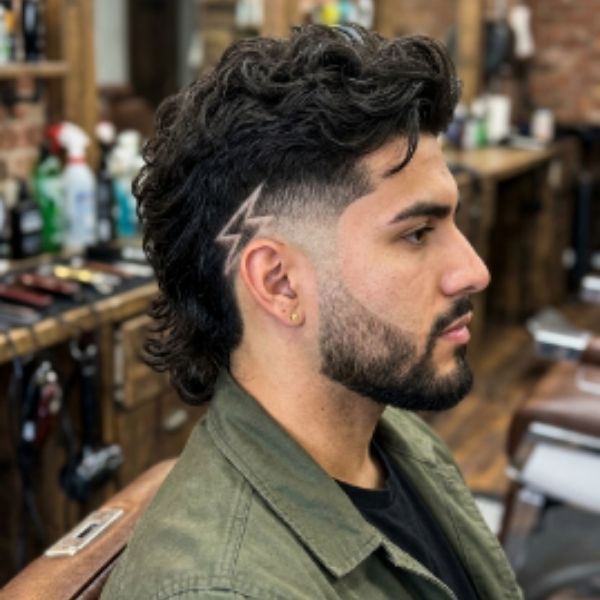
A lightning bolt is a bold, single-symbol design that works well as a standalone statement piece. Because the shape has sharp angles, it needs a steady hand and a fine trimmer to keep the edges crisp, and it tends to show regrowth faster than a simple line due to its narrow points.
Burst Fade Heart Design
The heart design has become a popular personalized option, often requested for a specific occasion or as a playful style choice. It works best in a slightly larger space, like the nape or a wider section behind the ear, since the curved lines of a heart need more room than a straight pattern.
Burst Fade Star Design
A star, whether a simple five-point outline or a filled shape, adds a graphic, symmetrical element to the fade. It photographs well because of its clean geometry, but it also requires more precision from the barber than a line or zigzag, since uneven points are easy to spot.
Burst Fade Geometric Design and Negative Space

Geometric patterns, triangles, hexagons, or layered shapes, along with negative space designs (where the untouched hair forms the shape and the shaved skin becomes the background) are the most advanced options on this list. These require an experienced barber comfortable with detailed shading and precise clipper work, and they tend to look best on shorter overall fades where contrast is highest.
Burst Fade With V Design
Instead of a symbol, a V design uses the natural shape of the nape to create a pointed, chevron-style pattern at the back of the neck. It pairs especially well with a burst fade mullet or longer back sections, since the longer hair frames the shaved V and gives it more definition.
Low vs Mid vs High Burst Fade Design.
| Fade Height | Where the Blend Starts | Best For | Design Visibility |
| Low burst fade | Just above the ear | Conservative, workplace-friendly looks | Subtle, smaller design area |
| Mid burst fade | At the temple | Most versatile, works with many face shapes | Balanced contrast and space for medium designs |
| High burst fade | Near the top of the head, above the temple | Bold, statement styles | Maximum contrast, room for larger or multiple designs |
Low Burst Fade Design
A low burst fade design keeps the blend close to the ear, which suits office environments, interviews, or anyone who wants a design without a dramatic overall change. The design itself usually stays small, such as a single line or a thin zigzag, since there’s limited space to work with.
Read More: Dan Katz’s Wife: What’s Confirmed About Big Cat in 2026
Mid Burst Fade Design

The mid burst fade design is the most commonly requested option because it balances edge and versatility. Starting the blend at the temple gives enough room for medium-sized patterns like stars or short geometric shapes while still looking wearable for everyday settings.
High Burst Fade Design
A high burst fade design pushes the blend well above the temple, creating the strongest contrast on this list. It suits clients who want their design to be the focal point of the haircut and works especially well with shorter top styles, since the high contrast draws attention upward.
Burst Fade Design for Different Hair Types

Hair texture and density change how sharp a design looks and how long it holds its shape between visits.
Burst Fade Design on Straight Hair
Straight hair gives the cleanest possible line work because there’s no natural curl to soften the edges of a shaved pattern. Designs like lines, zigzags, and geometric shapes tend to look their sharpest on straight hair, and they typically hold their crisp look a few extra days compared to curlier textures.
Burst Fade Design on Curly Hair
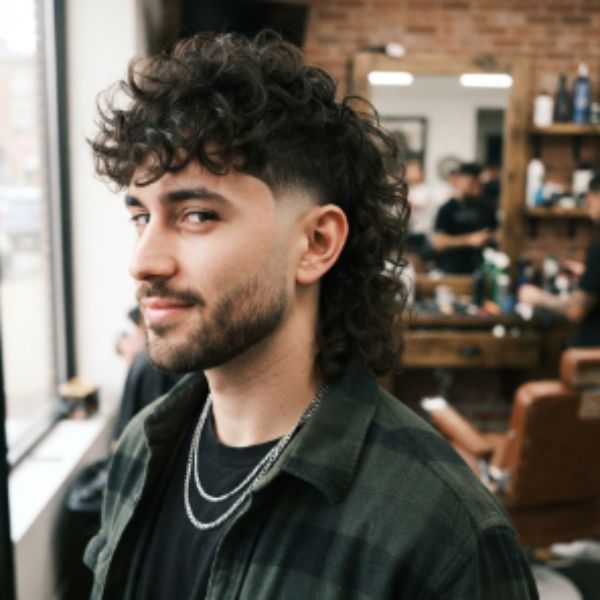
Curly and coily hair adds natural texture around the design, which can soften sharp corners but also gives the overall look more dimension. Barbers often stretch the hair gently while cutting to avoid uneven lines, and curly-haired clients may need slightly more frequent touch-ups to keep intricate shapes, like stars or negative space patterns, looking defined.
Burst Fade Design for Thick Hair vs Thin Hair
Thick hair holds a design’s contrast well since there’s more volume surrounding the shaved section, which makes even simple line designs stand out. Thin hair shows less natural contrast around the design, so barbers often recommend simpler patterns, like a single line, since detailed shapes can look less defined once the surrounding hair is styled.
Burst Fade Design With Popular Top Styles

The style on top of the head influences where a design looks balanced and how often it needs upkeep.
Burst Fade Mohawk Design
Pairing a burst fade with a mohawk creates a high-contrast, edgy combination where the design usually sits behind the ear to complement the shaved sides of the mohawk itself. This combination works best on straight to wavy hair and needs regular maintenance on both the mohawk strip and the design to stay sharp.
Burst Fade Mullet Design
The burst fade mullet keeps length at the back while fading and detailing the sides and nape. This is one of the best pairings for a nape or V-area design, since the longer back hair frames the shaved pattern and gives it a finished, intentional look rather than an isolated detail.
Burst Fade Textured Crop or Fringe Design

A textured crop or fringe on top, paired with a burst fade design near the ear, creates a modern, low-key combination. The textured top draws attention upward while the design adds a subtle detail lower on the head, making this a good middle ground for clients who want a design without it dominating the whole haircut.
What to Tell Your Barber
Clear communication is the single biggest factor in getting a burst fade design that actually matches what you pictured. Bring a reference photo whenever possible, since terms like “small line” or “medium star” can mean different things to different barbers.
- Name the fade type and height: say “burst fade” specifically, then specify low, mid, or high.
- Point to the placement: show exactly where you want the design, whether that’s behind the ear or in the nape V area.
- Describe the pattern in plain terms: a straight line, a zigzag, a star, or a geometric shape.
- Mention your top style: a mohawk, mullet, crop, or fringe changes how the design should be framed.
- Ask about upkeep: confirm how often you’ll need to return to keep the shape crisp.
Simple Guard and Blend Notes
Clipper guard numbers give your barber exact length information instead of vague descriptions. A guard 1 leaves roughly an eighth of an inch of hair, a guard 2 about a quarter inch, and so on, with the fade typically starting at a 0 or skin-close guard at the bottom and blending up through longer guards toward the top. For the design itself, most barbers use a fine trimmer or a straight razor rather than a guard, since the shaved lines need to reach the skin for clean contrast. Simply saying “fade to skin at the bottom, blend up to a 3 on top, with a thin line design behind my ear” gives most barbers everything they need.
Burst Fade Design Maintenance

A burst fade design looks its sharpest in the first several days after a cut, then gradually softens as new hair grows in around the shaved lines.
How Often to Redo the Design
Most barbers recommend a touch-up every one to two weeks for the design itself, since fine lines and shaped patterns lose definition faster than a simple fade blend. The full fade underneath the design typically holds up for two to three weeks before it needs a complete refresh. Fast-growing or dark, dense hair tends to blur a design sooner and may need touch-ups closer to the one-week mark.
Aftercare Tips
- Moisturize the scalp around the shaved area daily, since freshly cut skin can dry out and flake.
- Avoid picking at or scratching the design area to prevent irritation.
- Use a soft brush or comb to keep surrounding hair from falling over and hiding the pattern.
- Protect the area from excess sun exposure right after a fresh cut, since razored skin is more sensitive.
- Schedule touch-ups before the design fully blurs rather than waiting until it disappears, since it’s easier for a barber to sharpen an existing line than to recut a faded one from scratch.
Burst Fade Design Mistakes to Avoid
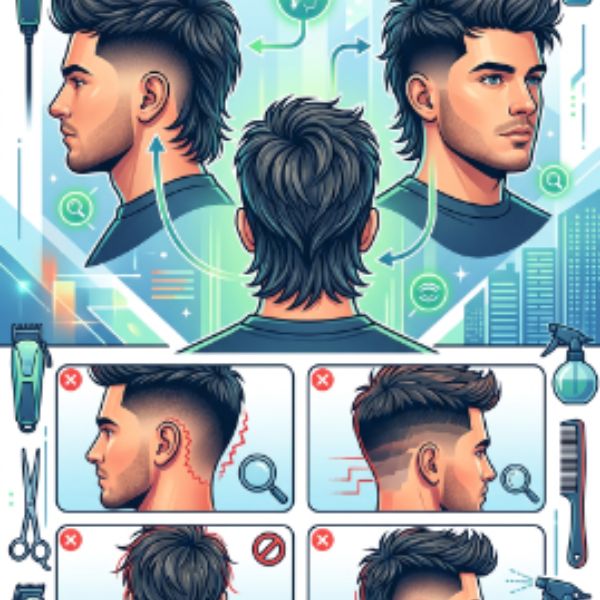
A few recurring mistakes separate a sharp burst fade design from one that looks messy or dated within days.
- Choosing a design that’s too complex for a first attempt, since intricate geometric or negative space patterns are harder to maintain and easier to mess up.
- Skipping the reference photo, which often leads to a size or placement that doesn’t match what the client had in mind.
- Ignoring hair type. A pattern that looks crisp on straight hair may soften quickly on curly or coily textures.
- Waiting too long between touch-ups. A design that grows out unevenly looks worse than a simple fade that’s a week overdue.
- Going too high or too bold for the setting. A large, high-contrast design may not suit every workplace, so match the fade height and design size to daily life.
Conclusion
A burst fade design is one of the easiest ways to turn a classic curved fade into a genuinely personal haircut, whether that means a single clean line behind the ear or a detailed geometric shape in the nape.
Getting the best result comes down to a few consistent factors: choosing a placement that follows the fade’s natural curve, picking a pattern that matches your hair type and how often you can get to the barber, and communicating clearly using fade height, guard numbers, and a reference photo. With the right maintenance schedule, a burst fade design can stay sharp and intentional cut after cut rather than growing out into a blurred outline.
FAQs
How long does a burst fade design last?
A shaved design typically stays sharp for one to two weeks before regrowth softens the lines, while the fade underneath can last two to three weeks before it needs a full refresh.
Does a burst fade design work on all hair types?
Yes, though straight hair shows the crispest lines, while curly or thick hair may need simpler patterns and slightly more frequent touch-ups to stay defined.
Where is the best spot for a first-time burst fade design?
Behind the ear is the most beginner-friendly placement, since it follows the fade’s natural curve and works with almost any pattern size.
Can I add a design to a low burst fade?
Yes, though the design area is smaller, so simple patterns like a single line or thin zigzag tend to work best on a low burst fade.
How much more maintenance does a design add compared to a plain fade?
A design usually needs touch-ups about once a week sooner than a plain fade, since fine shaved details lose their sharp edges faster than a smooth blend.

Zaria Rhodes is the lead editor and content curator at Lyrinexa, passionate about music, storytelling, and lyrical expression. With a deep love for discovering the meaning behind songs, she brings clarity, creativity, and accuracy to every post. Zaria is dedicated to providing readers with authentic lyrics, thoughtful interpretations, and a seamless music-exploration experience.
