


Short on top by comparison to a quiff, longer than a buzz cut, and finished with a fringe that frames the whole face. That’s the quick version of what makes this cut so popular right now. The French crop haircut has become one of the most requested men’s styles at barbershops worldwide because it works with almost any hair type, needs very little daily styling, and looks equally sharp in an office or on a night out. It suits straight, wavy, curly, and thick hair, flatters most face shapes, and pairs well with a fade, a taper, or simple clipper-cut sides. This guide breaks down what the cut actually is, walks through 18 of the best variations men are asking their barbers for, and explains why it remains such a dependable choice season after season.
What Is A French Crop Haircut?
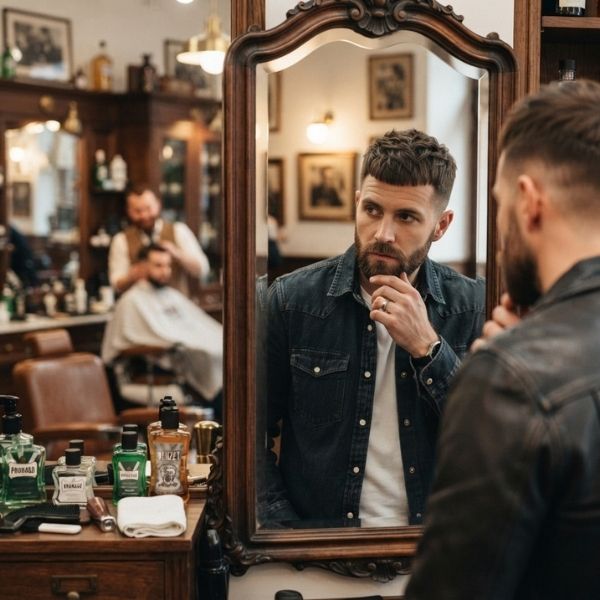
A French crop is a short men’s haircut built around three simple parts: a cropped fringe at the front, a slightly longer top, and short back and sides that are usually clipped, tapered, or faded. The fringe sits low on the forehead and can be worn blunt and straight or softened with texture, while the top gives a barber room to add movement without sacrificing the tidy, low-maintenance shape underneath.
The style has military roots, tracing back to short, functional crew-style cuts, and it gained fresh popularity through period dramas and footballers who wore a sharper, more textured version of the same idea. Today’s French crop has moved well past its uniform origins and become a genuine fashion staple, with barbers adapting the base shape into dozens of finishes depending on hair texture, fringe length, and fade height.
People often confuse it with a Caesar cut or a crew cut, and the differences are worth knowing before you sit in the chair. A Caesar cut has a shorter, more even fringe and less contrast between the top and sides. A crew cut skips the fringe altogether and keeps everything short and tapered. The French crop sits between the two, with more length and texture on top and a fringe that’s long enough to style, making it a more versatile option for men who want a bit of personality without extra upkeep.
Read more: Burst Fade Straight Hair: 15 Trendy Styles That Look Sharp
Best French Crop Haircut for Stylish Men
Barbers rarely cut the French crop the same way twice, and that’s part of its appeal. The following 18 variations show how small changes to the fringe, sides, and texture can completely shift the mood of the cut, from boardroom-ready to weekend-casual.
1. Classic French Crop

The original version keeps the fringe blunt, straight, and cut just above the eyebrows, with short, clean sides that taper into the neckline. There’s no fuss and almost no styling required, which is why it remains the go-to reference point every barber works from.
2. Textured French Crop

This variation uses point-cutting or texturizing shears to break up the top into choppy, layered pieces. A matte clay or texture paste worked through damp hair brings out separation, giving the cut more depth and a slightly undone finish than the classic style.
3. Messy French Crop

Built for men who want a lived-in, unbothered look, the messy French crop leaves the top a little longer and roughs it up with fingers rather than a comb. It photographs well, needs almost no product, and still holds the recognizable crop silhouette underneath.
4. French Crop Fade

Pairing the crop with a skin fade or a burst fade sharpens the whole look by creating a hard contrast between the longer top and the closely shaved sides. It’s one of the most requested combinations because it reads as modern without changing the core shape of the cut.
Read more: Blowout Low Taper Fade Curly Hair: 2026 Barber Guide For Curls
5. Short French Crop Haircut

Here, both the fringe and the top are kept close to the head, which suits fine hair or men who prefer a tighter, more compact silhouette. It’s practical for hot climates and active lifestyles since there’s very little length to manage.
6. Long French Crop

The opposite approach lets the top grow out further, giving more room to style the fringe forward, back, or to the side. This version needs slightly more upkeep and product but rewards the extra effort with far more styling flexibility.
7. Curly French Crop Haircut

Natural curls add volume and texture to the crop without any extra work from a stylist. A barber will usually cut the sides shorter to balance the fullness on top, and a lightweight curl cream helps define the curl pattern instead of weighing it down.
8. Modern Low Fade French Crop Haircut

A low fade keeps the fading close to the ears and neckline rather than climbing up toward the temple, which suits men who prefer a subtler transition. It’s a safer, workplace-friendly option compared to a high or skin fade.
9. French Crop with Taper

A taper fade blends the sides gradually instead of creating a sharp line, which softens the overall look and grows out more evenly between barber visits. It’s a solid middle ground for men who want structure without the boldness of a full fade.
10. Fringe French Crop Haircut

This variation puts all the focus on the fringe itself, cutting it slightly heavier and more forward-facing so it becomes the standout feature of the whole style. It works particularly well for men wanting to soften a strong forehead or a longer face shape.
11. Wavy French Crop Haircut

Natural waves add subtle texture and movement across the top, and a barber will often leave a touch more length here to let the wave pattern show through. A light sea-salt spray or texture spray enhances the wave without making the hair look greasy.
12. Crop Top Fade with Sharp Blunt Fringe

Combining a precise, razor-sharp fringe line with a high or mid fade creates one of the boldest versions of the cut. The contrast between the crisp fringe and the closely shaved sides gives this style a distinctly editorial, high-fashion edge.
Read more: James Byrd Rogers: Where Is Fred Rogers’ Son in 2026?
13. Short Sides with Layered Fringe Crop

Instead of a single blunt line, the fringe is cut in soft layers that create a feathered, less rigid front section. Paired with short, simple sides, it’s an easy everyday option that still looks intentional and well groomed.
14. Disconnected French Crop Haircut

A disconnected cut creates a deliberate gap between the length on top and the closely clipped sides, skipping the gradual blend of a fade. It’s a striking choice for men who want the top to stand out as its own distinct section.
15. Side-Swept French Crop with Low Fade
Rather than sitting straight across the forehead, the fringe is directed to one side using a blow-dryer and a light styling cream. Combined with a low fade, this version feels a little more polished and works well for smart-casual occasions.
16. French Crop Mullet

A newer, more experimental take, the French crop mullet keeps the signature short fringe and faded sides at the front while leaving noticeably more length at the back and nape. It’s a bolder statement cut for men comfortable standing out from the crowd.
17. Straight French Crop Haircut

This version keeps the top completely flat and smooth rather than textured, giving the whole cut a clean, structured, almost formal appearance. It suits naturally straight hair best and works well for men who prefer a neat, no-texture finish.
18. Blunt Fringe Crop Haircut
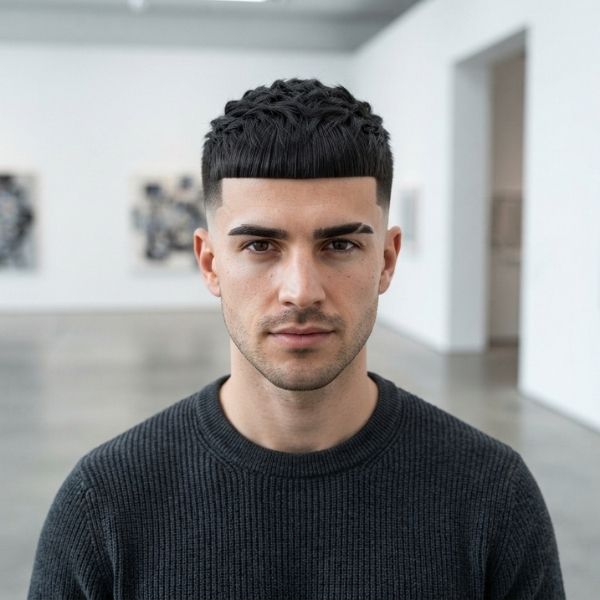
The fringe is cut in one straight, uniform line across the forehead with no layering or texturizing at all. It’s the sharpest, most defined version of the style and tends to suit men with straighter hair textures that hold a clean line naturally.
Why Choose the French Crop Haircut?
The French crop earns its popularity through practicality as much as looks. Here’s what makes it worth considering at your next barber appointment.
- Low maintenance: Most versions need only a small amount of product and a couple of minutes of styling each morning, making it a realistic option for busy schedules.
- Works with most hair types: Straight, wavy, curly, and thick hair can all be shaped into a French crop, with only small adjustments to fringe length and side detailing.
- Suits a wide range of face shapes: A fuller fringe balances a narrower chin, while a shorter, sharper fringe suits rounder or squarer faces by adding definition.
- Flexible styling: The fringe can be worn blunt, textured, side-swept, or messy, so the same base cut can look different depending on the occasion.
- Grows out well: Because the sides are already short and the top has some length, regrowth between barber visits looks tidier compared to very short fades or buzz cuts.
- Suitable for most ages and settings: From students to professionals, the French crop reads as neat enough for formal environments and relaxed enough for everyday wear.
Regular trims every three to four weeks keep the shape sharp, particularly around the fringe and the fade line where regrowth shows fastest.
Frequently Asked Questions
Is a French crop haircut hard to maintain?
No, it’s one of the lower-maintenance short haircuts available. A quick trim every few weeks and a small amount of styling product is usually all it needs.
What’s the difference between a French crop and a Caesar cut?
A French crop has a longer, often textured fringe, while a Caesar cut features a shorter, more uniform fringe with less contrast against the sides.
Does the French crop suit curly hair?
Yes, curly hair adds natural volume and texture on top, and barbers typically shorten the sides slightly to keep the overall shape balanced.
How often should I get a French crop trimmed?
Every three to four weeks is standard, since the fringe and fade line grow out and lose their sharp shape the fastest.
Can a French crop cover a receding hairline?
A slightly longer, softer fringe can help disguise early recession, though a barber should be consulted for the most flattering length and shape.
Conclusion
The French crop haircut has stayed relevant for years because it solves a common problem: it looks sharp and current without demanding hours of upkeep. With 18 variations ranging from the classic blunt fringe to bolder options like the French crop mullet or disconnected crop, there’s a version suited to nearly every hair type, face shape, and lifestyle. Whether the goal is a polished office-ready look or something more relaxed and textured, this cut offers enough flexibility to keep evolving with you, one trim at a time.

Zaria Rhodes is the lead editor and content curator at Lyrinexa, passionate about music, storytelling, and lyrical expression. With a deep love for discovering the meaning behind songs, she brings clarity, creativity, and accuracy to every post. Zaria is dedicated to providing readers with authentic lyrics, thoughtful interpretations, and a seamless music-exploration experience.

1 thought on “French Crop Haircut: 18 Stylish Variations for Modern Men”