


If you want a haircut that looks put together without eating up your morning, the messy French crop is one of the smartest choices on the market right now. It pairs a tight, tailored base with a loose, textured top, so you get a style that reads as intentional even on a lazy day. Barbers keep this cut in heavy rotation for a reason: it grows out well, suits nearly every face shape, and takes less than two minutes to style once you know the routine.
This guide breaks down everything you need before you sit in the chair, what to actually say to your barber, and how to keep the cut sharp between visits. Whether you are new to the messy french crop or switching from a cleaner version to something more textured, you will find a clear, practical path here.
Messy French Crop: Effortless Texture, Clean Outline, Fast Style
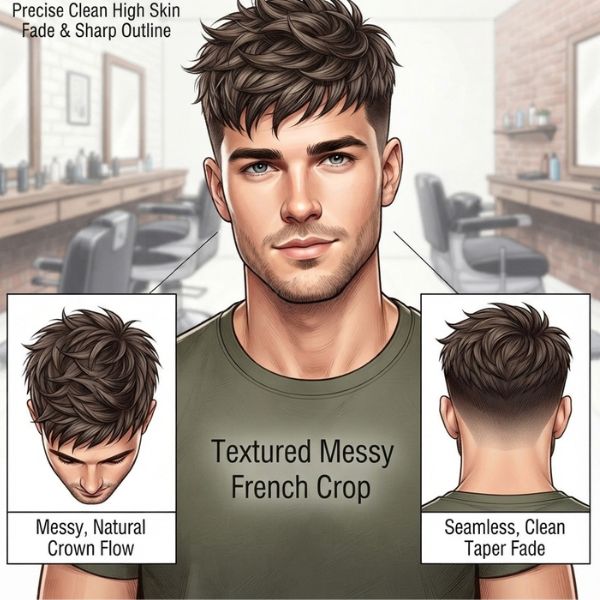
The appeal of this haircut comes down to a simple contrast. The sides and back stay short and disciplined, while the top gets left longer and cut with movement. That tension between tidy and tousled is what gives the style its character. It is not a grown-out cut and it is not a strict, combed style either. It sits right in the middle, and that middle ground is exactly why it works for so many different guys.
1) What Is a Messy French Crop

The messy French crop is a variation of the classic messy french crop, built on short sides and back with a longer, textured top and a soft fringe over the forehead. The original French crop is a tidy, military-influenced cut with a blunt fringe combed forward. The messy version keeps that same skeleton but swaps the smooth, combed finish for choppy layers, broken texture, and a fringe that falls naturally instead of sitting flat.
Key traits of this cut include:
- Short, clipper-cut sides and back, often faded or tapered
- A top section left between two and four inches for texture and movement
- A soft, piece-y fringe rather than a blunt, straight-edge one
- A finish that looks tousled and lived-in rather than combed and set
Because the underlying shape is so structured, the messy top never looks unkempt. The clean outline does the heavy lifting, and the texture on top just adds personality.
Read More : Short Wolf Cut Men 2026: Best Styles for Every Hair Type
2) Why Choose This Cut
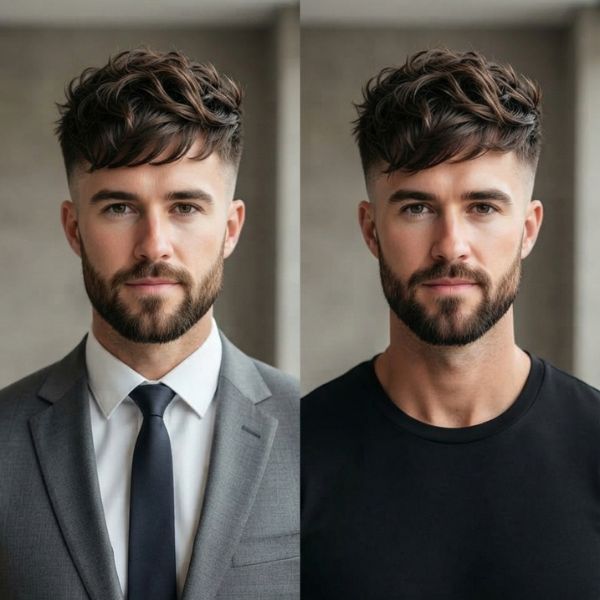
Most men land on this haircut because it solves two problems at once: it looks sharp, and it does not demand daily upkeep. A few practical reasons this cut keeps trending:
- Fast styling. A bit of paste or clay worked through damp hair is usually all it takes, no blow-dryer required.
- Forgiving regrowth. Because the top is meant to look slightly undone, a week or two of growth does not ruin the shape the way it would with a precision cut.
- Wide appeal. It works for casual weekends and office settings alike, since the short sides keep it looking professional.
- Versatility. You can dress it up with a slicked fringe for a formal event or leave it loose and textured for everyday wear.
- Low product dependency. Unlike pompadours or slick styles, this cut relies on the haircut itself, not a heavy styling routine, to hold its shape.
For anyone who wants a haircut that photographs well, holds up through a full day, and does not require a stylist-level skill set at home, this is a dependable option.
3) Face Shape Match

A good barber will adjust the fringe length, top volume, and taper height based on your face shape. Here is a general guide to what tends to work best:
- Oval faces: Almost any version works here. This is considered the ideal base shape for the cut.
- Square faces: A textured top with a slightly softer fringe helps balance strong, angular jawlines.
- Round faces: Extra height on top and a shorter, angled fringe create the illusion of length and definition.
- Heart-shaped faces: A fuller, longer fringe helps balance a narrower chin against a broader forehead.
- Rectangular faces: Keep the top from getting too tall. A flatter, wider silhouette with side texture works better than height.
If you are unsure which category you fall into, a quick way to check is to look at your face straight on and note whether your forehead, cheekbones, and jawline are roughly equal in width (oval or round) or whether one area is noticeably wider or more angular (square, heart, or rectangular).
4) Hair Types & Top Textures
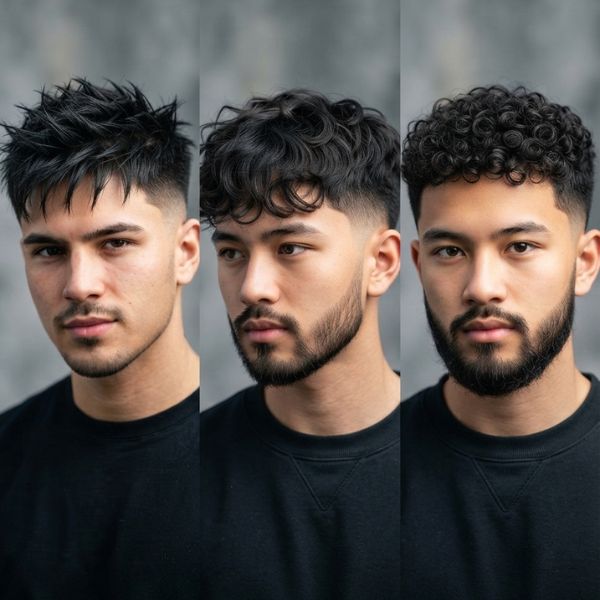
The messy French crop adapts well across hair types, though the finished texture will look a little different depending on what you are working with.
- Straight hair: Holds a crisp, defined fringe well. A texturizing spray or light clay adds separation so the top does not sit flat.
- Wavy hair: This is arguably the easiest hair type for this cut. Natural movement does most of the styling work, and a small amount of product enhances what is already there.
- Curly hair: Curls give the top natural volume and a built-in tousled look. A barber will usually use scissors over clippers on top to preserve curl pattern and avoid a puffy, triangular shape.
- Thick hair: Benefits from heavier internal thinning so the top does not become bulky. Texturizing shears help keep weight manageable.
- Fine hair: Needs shorter layers and a lighter hand with product, since too much weight or heavy paste can flatten fine strands quickly.
Knowing your hair type before your appointment helps your barber choose the right tools, whether that is razor work for softness, point cutting for texture, or straight scissor work for a cleaner fringe line.
5) Exactly What to Tell Your Barber

Vague instructions lead to inconsistent results. Bring specifics to your appointment so the outcome matches what you actually pictured. Useful phrases to use:
- “Short taper or fade on the sides and back, French crop style.”
- “Leave the top around two to three inches, textured, not combed flat.”
- “I want a soft, piece-y fringe, not a blunt, straight line.”
- “Point cut or texturize the top so it looks broken up and natural.”
- “Keep the fringe long enough to touch my eyebrows” or “keep it shorter, above the brow.”
It also helps to bring a reference photo. Even a rough visual saves time and avoids miscommunication, since terms like “messy” and “textured” can mean different things to different barbers.
6) In the Chair: Step by Step
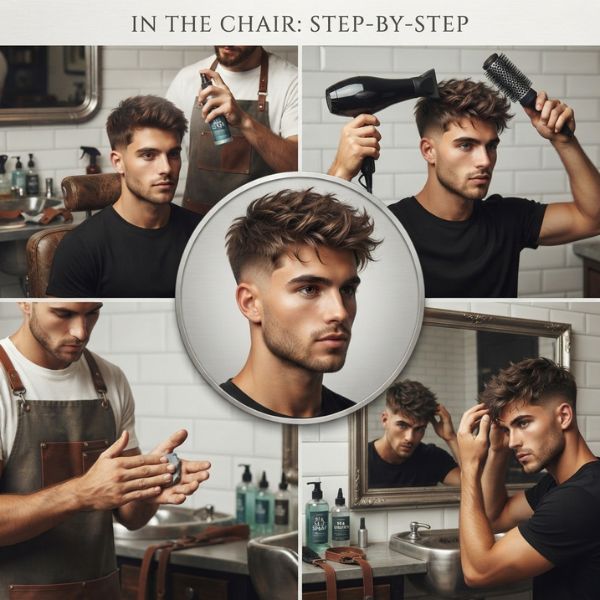
Understanding the process helps you know what to expect and gives you the vocabulary to speak up if something feels off partway through.
Step 1: Consult & Plan
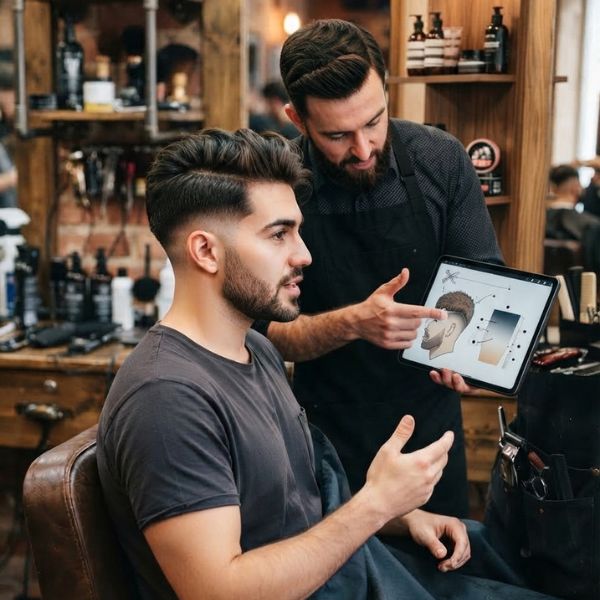
Your barber checks your hair type, growth pattern, face shape, and any cowlicks before picking up a single tool. This is the point to confirm fringe length, taper height, and how much texture you want on top.
Step 2: Prep
Hair gets washed and combed into its natural fall. Starting from a clean, detangled base lets the barber see exactly how the hair behaves before any cutting begins.
Step 3: Set the First Guideline
The barber establishes the shortest length at the neckline and around the ears using clippers, creating the foundation the rest of the cut will build from.
Step 4: Build the Taper or Fade
Working upward from that first guideline, the barber gradually increases clipper guard length, creating a smooth transition from very short to longer hair as it moves up the head.
Step 5: Blend Ridges
Any harsh lines between clipper sections are softened using shears over comb or a clipper-over-comb technique, so the transition from sides to top looks seamless rather than stepped.
Step 6: Texture & Balance
The barber moves to the top section, using point cutting, texturizing shears, or a razor to break up the length and remove bulk, creating the choppy, natural movement the style is known for.
Step 7: Cut the Fringe
The front section is trimmed last, shaped to the length and style discussed in the consultation, whether that is a soft, broken edge or something closer to brow length.
Read More : Low Fade Crew Cut Hairstyles: Clean, Modern, Easy
Step 8: Finish
The cut is dried and styled with a small amount of product so you can see the finished shape in motion, not just lying flat and damp. This is your chance to request small adjustments before you leave the chair.
7) Daily Routine and Fast Style

One of the biggest selling points of this haircut is how quickly it comes together each morning. A simple routine looks like this:
- Start with damp, towel-dried hair rather than soaking wet.
- Apply a small amount of matte clay, texture paste, or sea salt spray, rubbing it between your palms first.
- Work the product through the top using your fingers, pushing hair forward and slightly off to one side.
- Scrunch or tousle the fringe for a piece-y, separated finish rather than a smooth, combed look.
- Let it air dry, or use a diffuser on low heat if you want extra volume.
This entire process typically takes under three minutes, which is exactly why so many men choose this cut when they want low-effort mornings without sacrificing a polished appearance.
8) Beard & Outline Options

The messy French crop pairs naturally with a range of facial hair styles, and getting the outline right ties the whole look together.
- Clean shave: Puts full focus on the fringe and jawline, best for those with strong, symmetrical features.
- Light stubble: Softens angular faces and adds a rugged edge without much upkeep.
- Full beard: Balances the short sides of the crop and works especially well on rounder or narrower faces that benefit from added width at the jaw.
- Sharp neckline and edges: Whether or not you grow facial hair, a crisp, defined neckline and hairline keep the cut looking finished rather than grown in.
Ask your barber to line up your beard and hairline together during the same visit so the transitions between hair, beard, and skin look intentional.
9) Maintenance Timeline

Because the sides are cut short and the top relies on layered texture, regular trims matter more than they might for a longer, all-one-length style. A general schedule:
- Every 2 to 3 weeks: Ideal if you like the sides kept very tight and defined, especially with a skin fade.
- Every 3 to 4 weeks: The sweet spot for most men, keeping the taper sharp while letting the top build a bit more texture between visits.
- Every 4 to 6 weeks: Workable if your sides are cut with a slightly longer guard or a taper rather than a hard fade, since the grow-out is less noticeable.
Between visits, a light trim of the fringe alone can extend the life of the cut by a week or two if the sides are still holding their shape.
10) Common Mistakes & Quick Fixes
Even a well-executed cut can look off if it is styled or maintained the wrong way. Watch for these issues:
- Overusing heavy product. Too much paste or wax weighs the top down and kills the texture. Fix: use a small, dime-sized amount and build up slowly.
- Letting the sides grow out too long. This blurs the contrast that makes the cut work. Fix: book trims on a consistent schedule rather than waiting until it looks messy in the wrong way.
- Combing instead of finger-styling. A comb smooths out the texture you paid for. Fix: use your fingers to keep the piece-y, separated look intact.
- Skipping the consultation. Jumping straight into the cut without discussing fringe length or texture often leads to a result that misses the mark. Fix: always walk through length, taper height, and finish before the clippers come out.
- Ignoring hair type. A curly-hair client asking for a razor-cut fringe may end up with unwanted frizz. Fix: discuss your natural texture so the barber picks the right cutting technique.
11) Frequently Asked Questions
Is a messy French crop hard to maintain at home?
No, it usually takes under three minutes with a small amount of paste or clay worked through damp hair using your fingers.
How is the messy French crop different from a regular French crop?
The classic version has a smooth, combed fringe, while the messy version uses choppy layers and a loose, textured finish.
Does this haircut work for receding hairlines?
Yes, the forward fringe helps soften a receding hairline and draws attention away from the hairline itself.
Can I get this cut with curly hair?
Yes, curls add natural texture on top, though your barber may use scissors instead of a razor to avoid frizz.
How often should I get a trim?
Most men book a trim every three to four weeks to keep the sides sharp while letting the top build texture.
Read More : Straight Hair Mullet Guide 2026: Styles, Fade, and Easy Care
Conclusion
The messy French crop earns its popularity by balancing two things that usually compete: a sharp, tailored silhouette and a relaxed, low-effort top. The short sides give the cut structure, while the textured fringe gives it personality, and neither side has to fight for attention. Whether your hair is straight, wavy, or curly, and whatever your face shape, there is a version of this cut that will work for you.
Walk into your next appointment with clear language for your barber, a realistic maintenance schedule in mind, and a simple styling routine ready to go. Get those three things right, and this haircut will reward you with sharp results every single day, without ever feeling like a chore.

Zaria Rhodes is the lead editor and content curator at Lyrinexa, passionate about music, storytelling, and lyrical expression. With a deep love for discovering the meaning behind songs, she brings clarity, creativity, and accuracy to every post. Zaria is dedicated to providing readers with authentic lyrics, thoughtful interpretations, and a seamless music-exploration experience.

1 thought on “Messy French Crop Haircuts: Fast Style, Sharp Results”