


Straight hair mullet haircuts have moved from throwback novelty to one of the most requested cuts at barbershops in 2026, and it’s easy to see why. The straight hair mullet takes the classic short front, long back silhouette and gives it a sharper, cleaner outline than curly or wavy versions ever could.
Straight strands lie flat against the head, so every line the barber cuts, whether it’s a fade, a taper, or a blunt back edge, stays visible instead of getting lost in texture. This guide walks through every major variation of the straight hair mullet, how to style it day to day, which products actually hold up on flat hair, what to say to your barber, and how the cut compares to a wolf cut. Whether you’re a man, woman, or parent looking into this style for a kid, you’ll find practical, up-to-date answers below.
What Is a Straight Hair Mullet?
A straight hair mullet is a haircut where the front and sides are cut noticeably shorter than the back, worn on naturally straight or chemically straightened hair. The defining feature is contrast: short, controlled hair up top and around the ears, with length left to grow out at the nape and crown.
Unlike a mullet on curly or wavy hair, where the transition between lengths tends to blend naturally because of volume and bend, a straight hair mullet shows a crisp, almost architectural line between the two zones. That’s the main reason stylists often recommend this cut specifically for people with flat, straight strands, the hair itself does the work of highlighting the shape.
The mullet’s roots go back further than most people assume, appearing in ancient Greek and Roman art and various working-class European fashions long before the 1980s made it a cultural punchline. The straight hair version simply modernizes an old idea with cleaner barbering techniques, fades, and layering tools that weren’t common decades ago.
Why Straight Hair Is Perfect for a Mullet
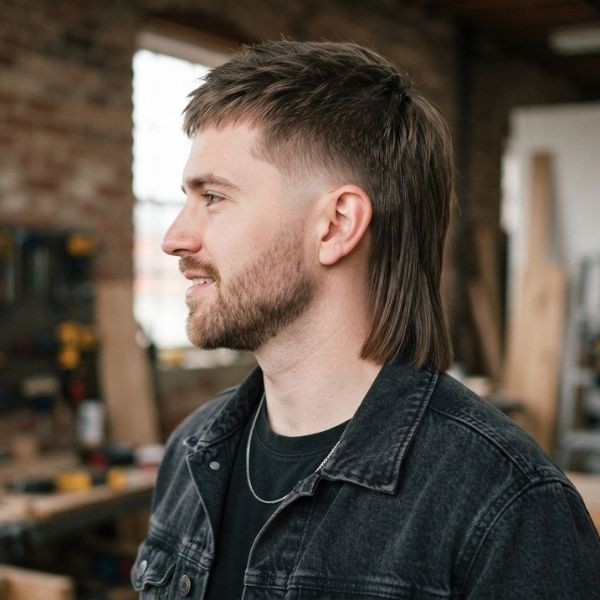
Straight hair and the mullet silhouette work together for a few concrete reasons.
- Sharper contrast. Straight strands don’t curl back on themselves, so the length difference between the front and back reads clearly, even from a distance.
- Cleaner fades. A taper or skin fade needs hair that lies flat to show a smooth gradient. Curly hair can disguise fade lines; straight hair reveals them.
- Easier daily styling. Straight hair typically needs less product and less time to style than curly or coily textures, which suits a cut that’s meant to look intentional without heavy effort.
- Better shine and light reflection. Straight hair reflects light more evenly along the strand, giving the longer back section a glossy, polished look that curlier textures don’t produce as easily.
- Simpler growing-out phase. Because straight hair doesn’t shrink or spring up, it’s easier to predict how long the back section will actually hang as it grows.
The trade-off is that straight hair can look flat without layering, which is why most 2026 variations lean on textured cutting techniques rather than a single blunt length.
Read more: Burst Fade Design: Best Hair Design Ideas, Placement, and Barber Tips (2026)
Straight Hair Mullet Variations
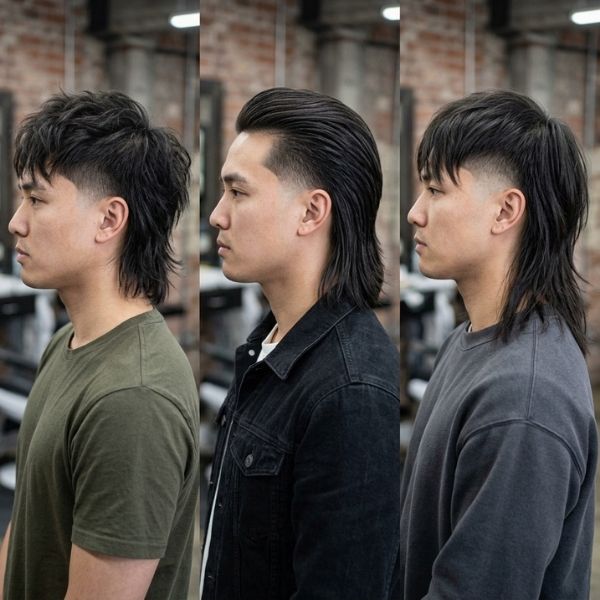
The straight hair mullet isn’t one haircut, it’s a family of related styles. Below are the variations barbers and stylists are cutting most often right now.
Classic Straight Hair Mullet
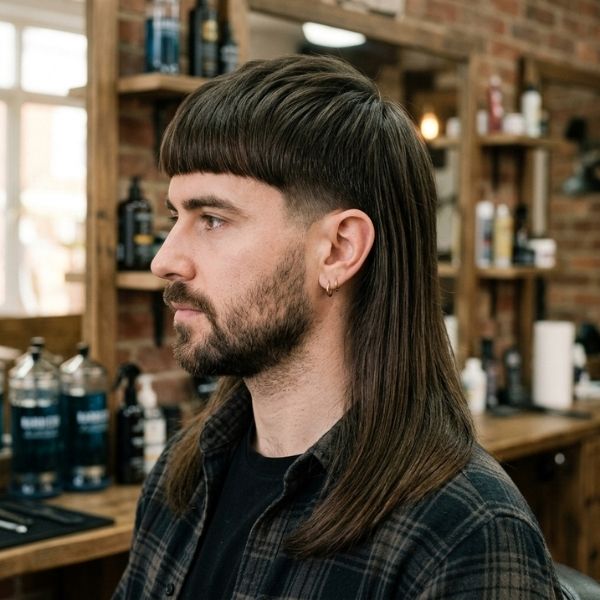
The classic version stays close to the original 1980s shape: short, neat sides and top with a noticeably longer back, cut with minimal layering. On straight hair, this style looks clean and deliberate rather than shaggy, since there’s no natural volume to soften the lines. It suits people who want a recognizable, no-frills mullet without extra styling steps.
Modern Straight Hair Mullet

The modern take softens the retro shape with blended sides, subtle layering through the crown, and a less abrupt transition into the back length. It keeps the mullet’s core identity while looking wearable in professional or everyday settings, which is part of why it’s become one of the most requested versions among men trying the cut for the first time.
Straight Hair Mullet with Taper Fade

Adding a taper fade means the sides gradually shorten toward the skin without going bald, creating a soft gradient rather than a hard line. On straight hair, a taper fade looks exceptionally crisp because there’s no curl pattern breaking up the blend. This variation gives the cut a more grown-up, put-together finish.
Low Taper Straight Hair Mullet
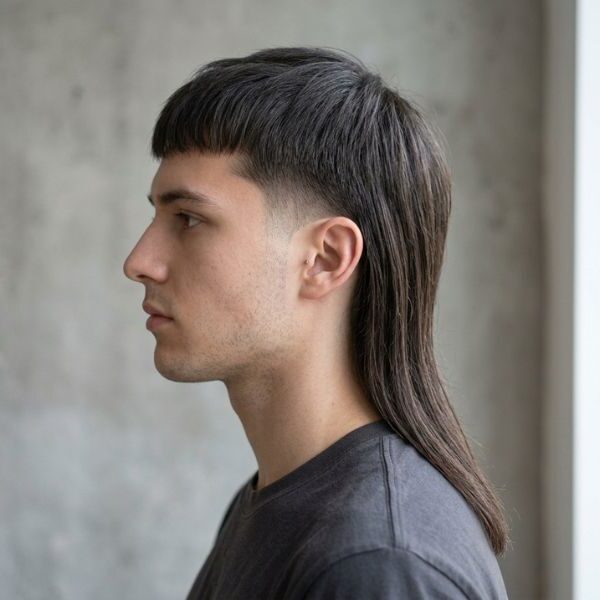
A low taper keeps the fade close to the hairline and ears, leaving more length around the rest of the head compared to a mid or high fade. It’s a subtler option for anyone who wants the mullet’s back length and top volume but isn’t ready for a high-contrast fade. It also tends to suit more conservative workplaces better than a skin fade.
Straight Hair Mullet Fade

This is the broader category covering any straight hair mullet paired with clipper fade work, whether that’s a low, mid, or high fade, or a full skin fade. The fade replaces the traditional “short sides” of a classic mullet with a graduated, barbered finish, giving the whole haircut a sharper, more modern edge.
Read more: Messy French Crop Haircuts: Fast Style, Sharp Results
Short Straight Hair Mullet
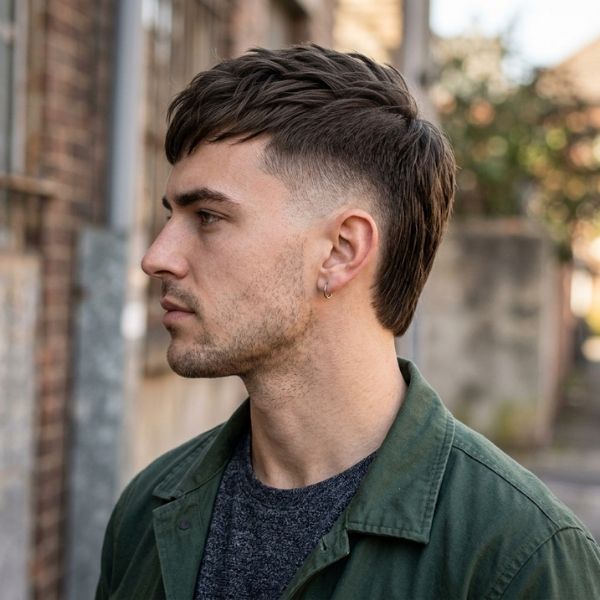
A short mullet trims the back length down significantly, sometimes just an inch or two past the natural nape line, so the mullet shape is present but understated. This version is popular with people who like the idea of a mullet but don’t want to commit to dramatic length or deal with tangling.
Long Straight Hair Mullet
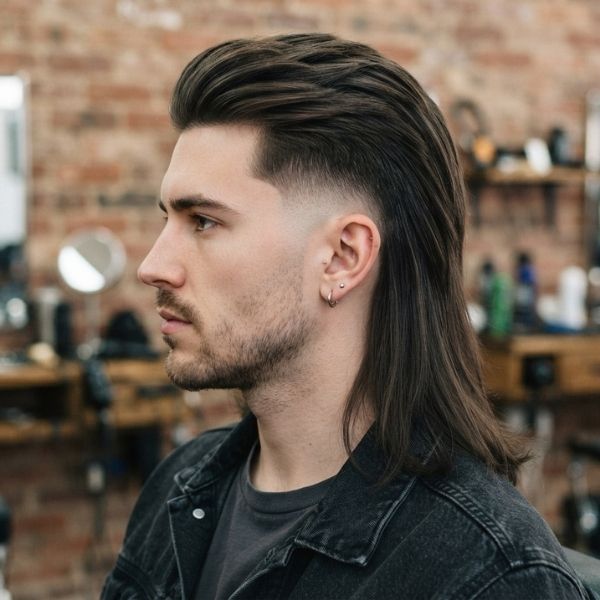
At the opposite end, the long mullet lets the back grow past the shoulders while keeping the front and sides short. Straight hair suits this variation especially well because the extra length doesn’t puff up or tangle the way curly hair can, it hangs smoothly and shows off the length contrast dramatically.
Layered Straight Hair Mullet

Layering is added throughout the top, crown, and back to prevent straight hair from looking flat or heavy. A barber uses point cutting or razor work to break up the length, adding movement and texture that straight hair doesn’t produce on its own. This is one of the most commonly recommended techniques for straight-haired clients specifically.
Straight Hair Mullet with Fringe or Bangs
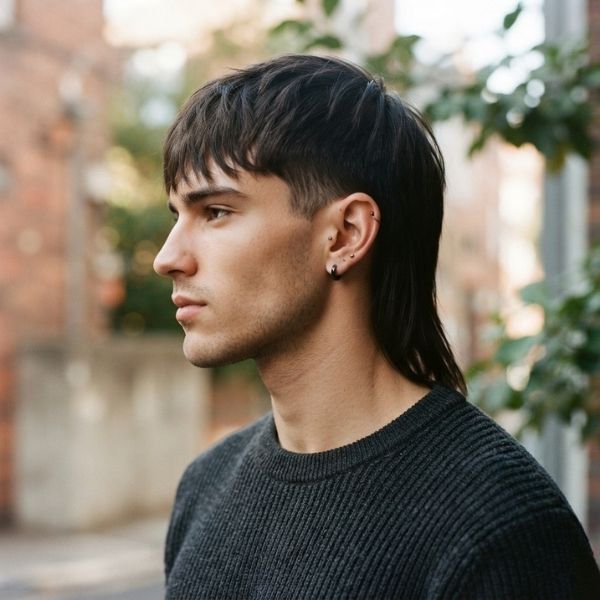
Adding a fringe brings the front length down over the forehead, either as a full blunt bang or a softer, textured curtain fringe. This works particularly well on straight hair since bangs need flat, controllable strands to sit correctly and frame the face evenly.
Straight Hair Shag Mullet
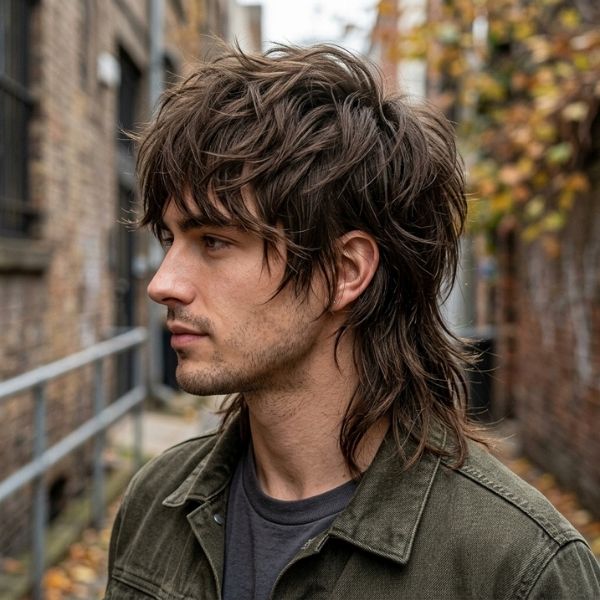
The shag mullet blends heavy layering and choppy, textured ends throughout the whole head, not just the crown. It’s the most relaxed, lived-in version of the cut and typically needs a texturizing spray or light pomade to recreate the “undone” look on hair that’s naturally sleek and flat.
How to Style a Straight Hair Mullet

Styling a straight hair mullet is faster than most people expect, and a few consistent steps make a real difference.
- Start with damp, not soaking hair. Towel-dry until hair is about 70% dry before applying product, straight hair holds shape better when it’s not fully saturated.
- Apply a small amount of product to the roots first. This is where most volume is lost on straight hair, so root-focused application matters more than tip application.
- Blow-dry the front and top with a round brush. Lifting the roots while drying adds volume that straight hair otherwise lacks.
- Leave the back to air-dry or dry it flat. The longer back section usually looks better with a smoother, less voluminous finish.
- Finish with a light-hold product. Heavy waxes can weigh straight hair down; a lighter cream or spray usually keeps movement without flattening the cut.
- Touch up with fingers, not a comb. Combing straight hair mid-day tends to flatten it again, finger-styling preserves texture longer.
Best Products for a Straight Hair Mullet

Straight hair responds differently to styling products than curly or wavy hair, so the product choice matters as much as the technique.
| Product Type | Best For | Why It Works on Straight Hair |
|---|---|---|
| Texturizing spray | Shaggy or layered mullets | Adds grip and roughness that straight hair lacks naturally |
| Matte clay | Classic and modern mullets | Provides hold without shine, keeps short front hair in place |
| Light styling cream | Everyday, low-maintenance looks | Controls flyaways without weighing hair down |
| Volumizing mousse | Layered or long mullets | Lifts roots before blow-drying for added body |
| Sea salt spray | Shag mullets | Creates texture and a slightly undone finish |
| Pomade (light hold) | Fringe or bang variations | Keeps the front section controlled without heavy shine |
As a general rule, shorter and cleaner variations need more structured products, while shaggier or longer styles need lighter, texture-focused ones.
What to Tell Your Barber for a Straight Hair Mullet

Miscommunication is the most common reason a mullet doesn’t turn out the way a client pictured it.
- Name the exact variation you want, for example “low taper straight hair mullet” rather than just “mullet.”
- Specify the back length in inches or by comparison, such as “collarbone length” or “two inches past the collar.”
- Mention whether you want a hard fade line or a soft, blended transition.
- Bring one or two reference photos, ideally of someone with a similar hair type and face shape.
- Ask for guard numbers on the sides so you can request the same length at your next visit.
- Clarify how much layering you want in the crown, since this affects how flat or voluminous the top looks.
Straight Hair Mullet Maintenance Tips

A mullet’s appeal depends on the length contrast staying visible, which makes maintenance non-negotiable.
- Trim the front and sides every 3 to 4 weeks. This is the section that grows out fastest and blurs the cut’s shape if ignored.
- Trim the back only every 8 to 12 weeks. You’re growing this section out, so trims here should just remove split ends, not shorten the length.
- Wash 2 to 3 times a week. Straight hair tends to get oily faster than curly hair, and product buildup flattens the style.
- Use a heat protectant before blow-drying or straightening. Straight hair mullets often involve frequent heat styling on the front section.
- Deep condition the back length monthly. Longer straight hair is more prone to dryness and split ends the further it grows.
- Sleep on a silk or satin pillowcase. This reduces friction that can cause tangling and breakage in the longer back section.
Straight Hair Mullet for Men
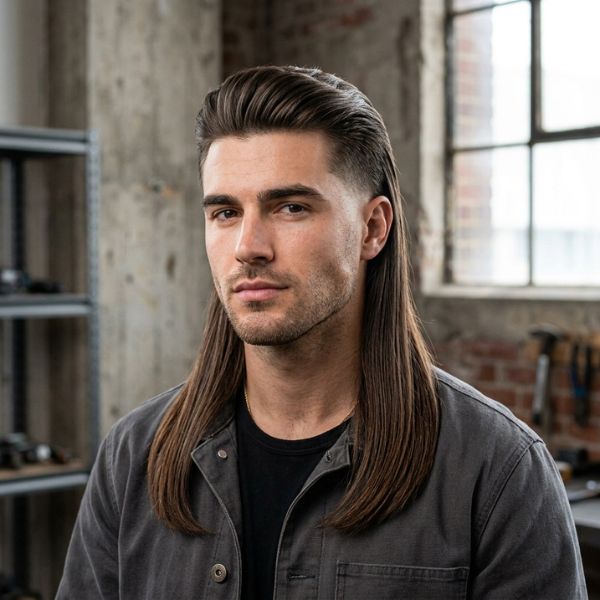
For men, the straight hair mullet usually leans toward fades, tapers, or the modern blended version, since these variations look sharp in both casual and semi-professional settings. Skin fades paired with a short mullet are especially popular right now because they combine two current trends, fades and mullets, into one cohesive look. Men with thicker straight hair often add layering through the crown to avoid a flat, helmet-like appearance, while men with finer hair tend to keep styling minimal and rely on the fade itself to create visual interest.
Read more: Short Wolf Men 2026: Best Styles for Every Hair Type
Straight Hair Mullet for Women

Women’s versions of the straight hair mullet tend to favor longer, more layered interpretations, often incorporating curtain bangs or face-framing pieces at the front. The shag mullet and layered mullet are particularly common choices, since the added texture keeps the cut from looking severe. Many women also opt for a softer transition between the front and back lengths rather than a sharp fade, which gives the style a slightly more feminine, blended finish while still keeping the signature mullet contrast.
Straight Hair Mullet for Girls

For younger girls, stylists typically recommend a shorter, subtler mullet with a gentler length difference between the front and back, since dramatic contrast can be harder to manage day to day and grows out unevenly on a child’s faster-changing hair. A soft, layered version with light bangs tends to be the easiest to maintain at home and requires the least frequent professional trims, making it a practical choice for parents as much as a style one.
Straight Hair Mullet vs. Wolf Cut
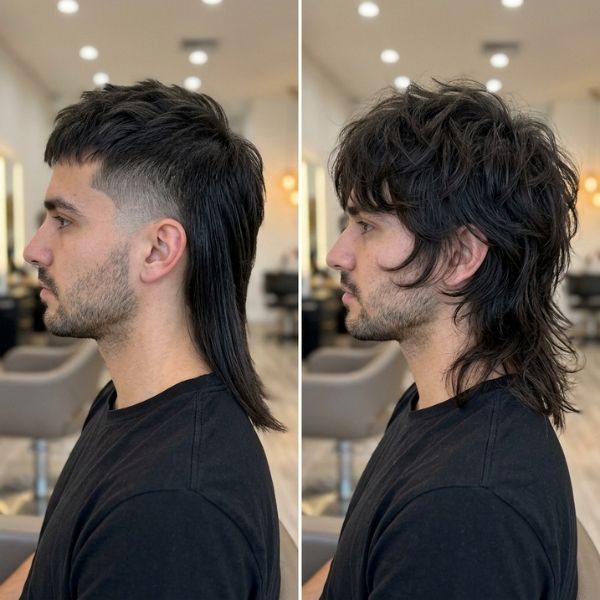
The straight hair mullet and the wolf cut are often confused because both feature shorter hair up top and longer hair toward the back, but the two haircuts are built on different principles.
| Feature | Straight Hair Mullet | Wolf Cut |
|---|---|---|
| Core structure | Clear, intentional contrast between short front and long back | Blended layers throughout with no sharp break |
| Visual effect | Bold, graphic, high-contrast | Soft, rounded, voluminous |
| Layering style | Concentrated mainly at the transition point | Layered evenly from crown to ends |
| Maintenance | Needs frequent trims on the short section to preserve contrast | Grows out more forgivingly since there’s no hard line |
| Best hair type | Straight hair to keep the line crisp | Works on straight, wavy, or curly hair |
| Overall vibe | Edgy, retro-inspired, statement-making | Relaxed, trend-driven, everyday wearable |
If the goal is a bold, unmistakable line between lengths, the mullet is the better match. If the goal is soft volume and easy blending with less upkeep, the wolf cut suits straight hair just as well without demanding the same maintenance schedule.
Best Face Shapes for a Straight Hair Mullet
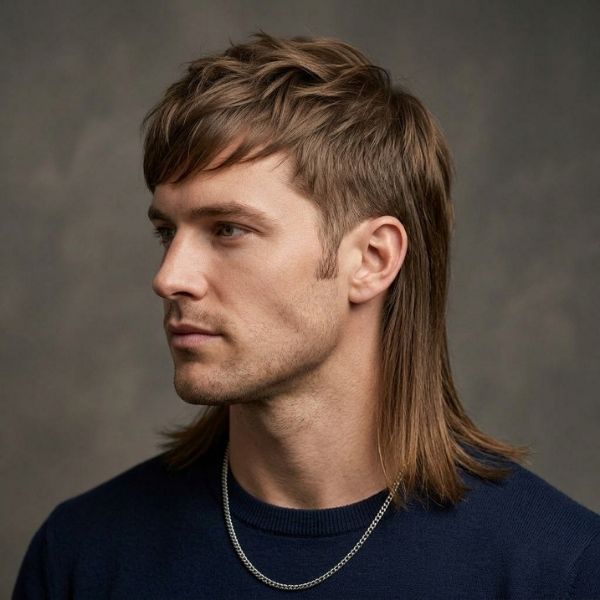
Most face shapes can wear a straight hair mullet, but small adjustments make the cut more flattering for each one.
- Round faces: Ask for extra volume on top and a fade on the sides to add length and reduce width.
- Square faces: Softer, layered fringe pieces help balance strong jawlines without hiding them completely.
- Oval faces: This shape suits nearly every mullet variation, from classic to shaggy, since the proportions are already balanced.
- Long faces: A fuller fringe or curtain bangs shorten the appearance of the face and add width near the temples.
- Heart-shaped faces: A layered mullet with volume through the mid-lengths balances a wider forehead and narrower chin.
- Diamond faces: A textured, layered top softens angular cheekbones while the longer back keeps the overall shape balanced.
Discussing face shape directly with a barber before the first cut usually produces a better outcome than picking a variation from a photo alone.
Conclusion
The straight hair mullet earns its place as one of 2026’s standout haircuts because straight strands do exactly what this style needs: they hold a clean line, show off a fade with precision, and keep the length contrast sharp instead of blurred. Whether it’s the classic version, a taper fade take, a shaggy layered look, or a softer style for women or kids, the core appeal stays the same, an intentional, confident break between short and long. With the right barber conversation, a manageable trim schedule, and products matched to the specific variation, a straight hair mullet stays looking deliberate rather than overgrown, which is really what separates a good mullet from a bad one.
FAQs
Can straight hair actually hold a mullet shape well?
Yes. Straight hair shows off the mullet’s length contrast more clearly than curly or wavy hair because the strands lie flat and don’t disguise the line between short and long sections.
Does a straight hair mullet need daily styling?
Not usually. Most variations only need a few minutes of blow-drying or light product application, especially the classic and short versions.
How often should a straight hair mullet be trimmed?
Trim the front and sides every 3 to 4 weeks and the back every 8 to 12 weeks to keep the contrast sharp while still growing out the length.
Is a straight hair mullet suitable for a professional workplace?
A low taper or modern blended mullet tends to look neat enough for most offices, while high-contrast fades or long back sections may suit more casual environments better.
What’s the difference between a mullet and a wolf cut on straight hair?
A mullet has a clear, intentional break between short front and long back hair, while a wolf cut blends layers gradually with no hard line.
Does a straight hair mullet suit all face shapes?
Most face shapes can wear a version of this cut, but details like fringe, volume, and fade height should be adjusted based on the individual’s features.

Zaria Rhodes is the lead editor and content curator at Lyrinexa, passionate about music, storytelling, and lyrical expression. With a deep love for discovering the meaning behind songs, she brings clarity, creativity, and accuracy to every post. Zaria is dedicated to providing readers with authentic lyrics, thoughtful interpretations, and a seamless music-exploration experience.

1 thought on “Straight Hair Mullet Guide 2026: Styles, Fade, and Easy Care”