


A plain burst fade already looks sharp on its own. Add a shaved design into the mix and you get a completely custom look that turns a simple haircut into a personal statement. Whether you want a single clean line, a bold lightning bolt, or a full geometric pattern carved into negative space, the burst fade gives barbers a round canvas that curves perfectly around the ear.
This guide breaks down everything you need to know about burst fade design in 2026: where the design should sit, which patterns are trending, how hair type changes the outcome, and exactly what to say to your barber so you walk out with the cut you actually asked for.
What Is a Burst Fade Design
A burst fade design is a shaved pattern or line work added into a burst fade haircut, usually placed around the temple, behind the ear, or along the nape. The fade itself tapers in a rounded, sunburst shape around the ear rather than in a straight diagonal line, which gives the design area more curved space to work with compared to a standard taper fade.
Barbers typically use a T-blade trimmer or zero-gap clipper to outline the shape, then go back with a straight razor to sharpen the edges and add depth. Because the burst fade blends short hair on the sides with longer hair on top, the design usually sits in the mid-length transition zone, where the contrast between shaved skin and remaining hair is most visible.
Burst Fade With Design vs Regular Burst Fade
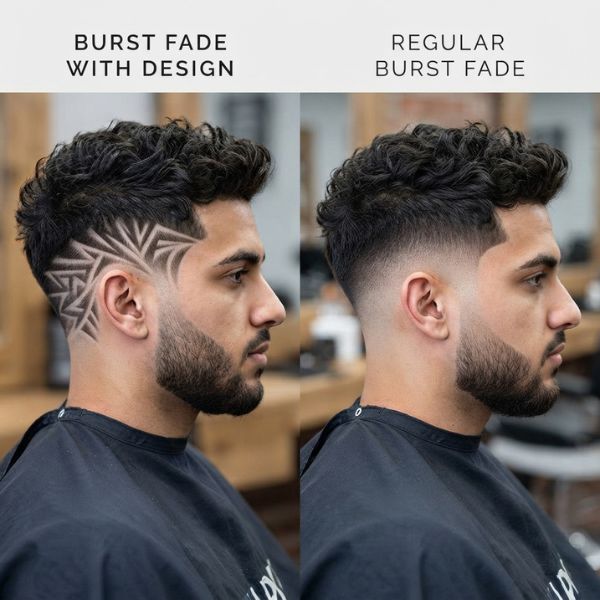
A regular burst fade is simply the rounded taper around the ear with no extra detailing, offering a clean and versatile look on its own. A burst fade with design adds an extra layer of customization, such as a line, shape, or pattern shaved into the fade zone.
The main differences come down to three things:
- Maintenance: A plain burst fade can go 3 to 4 weeks between visits. A design needs touch-ups every 1 to 2 weeks to stay sharp, since hair grows fastest along the hairline and temple.
- Cost: Most shops charge extra for freestyle design work, since it takes more time and a steadier hand.
- Barber skill: Not every barber specializes in line art. A clean fade doesn’t guarantee clean design work, so it’s worth checking a barber’s portfolio specifically for shaved patterns before booking.
Read More : Boys Mullet Haircut Guide 2026: Styles, Fades, and Care
Where Should the Design Go on a Burst Fade
The design should sit wherever the fade curves the most, since that’s where there’s the greatest contrast between skin and hair length. On a burst fade, that usually means behind or above the ear, along the temple, or down into the nape and V area at the back of the neck.
Placement also depends on the top style. A mohawk or mullet burst fade often pushes the design lower, toward the nape, while a textured crop or fringe usually keeps it higher, near the temple, where it’s easier to see when the hair is styled forward.
Behind the Ear Burst Fade Design
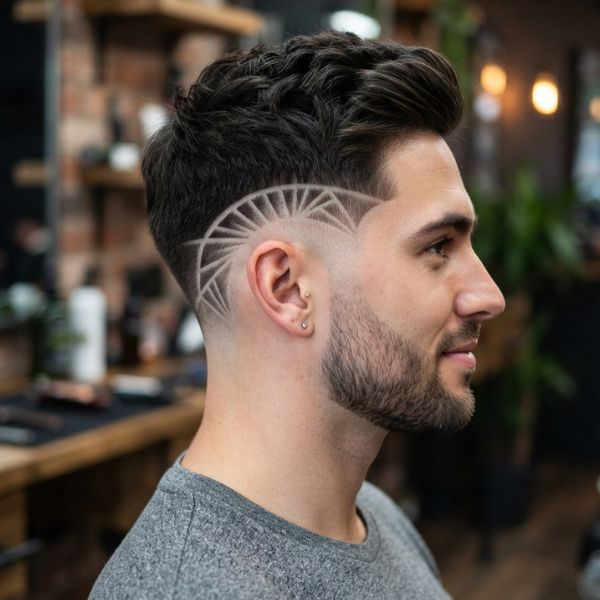
Behind the ear is the most popular spot for a burst fade design because the curve of the fade naturally frames the shape. Small icons, single lines, or a short zigzag tend to work best here since the space is compact.
This placement is also the most practical for everyday life. It’s visible when hair is pushed back or styled up, but it’s easy to cover for work or formal settings just by combing hair forward over the ear.
Nape and V Area Design

The nape and V area sit at the back of the neck, where the hairline naturally comes to a point. This spot gives barbers more horizontal room, which makes it a strong choice for wider patterns like geometric shapes, a thick V-cut line, or a small text detail.
Designs placed here pair especially well with mullet burst fades, since the longer back hair creates extra contrast against the shaved lines underneath.
Best Burst Fade Design Ideas
Below are the most requested burst fade design styles right now, ranging from simple and low-maintenance to bold and highly detailed.
Burst Fade Line Design
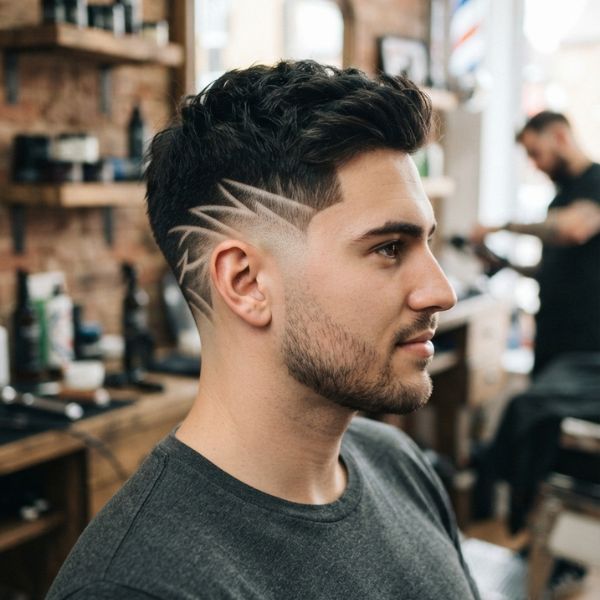
A single shaved line, or a set of two to three parallel lines, is the easiest design to start with and the easiest to maintain. It works on almost any hair length and face shape, and it only takes a few minutes for a skilled barber to add.
Line designs are a good entry point if you’ve never had a shaved pattern before, since they’re subtle enough for most workplaces but still add a custom touch.
Burst Fade Zigzag Design
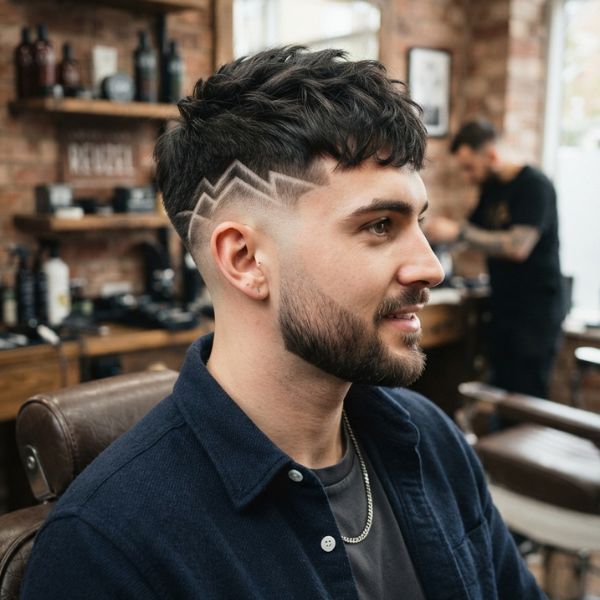
The zigzag is created by tapping the corner of a trimmer blade into the hair in short, controlled taps rather than one continuous stroke. Done correctly, it produces sharp, symmetrical angles that catch the light differently than a straight line.
This is a harder pattern to execute cleanly, so it’s worth confirming your barber has done zigzag work before. A wobbly zigzag is one of the more noticeable mistakes in burst fade design work.
Burst Fade Lightning Bolt Design
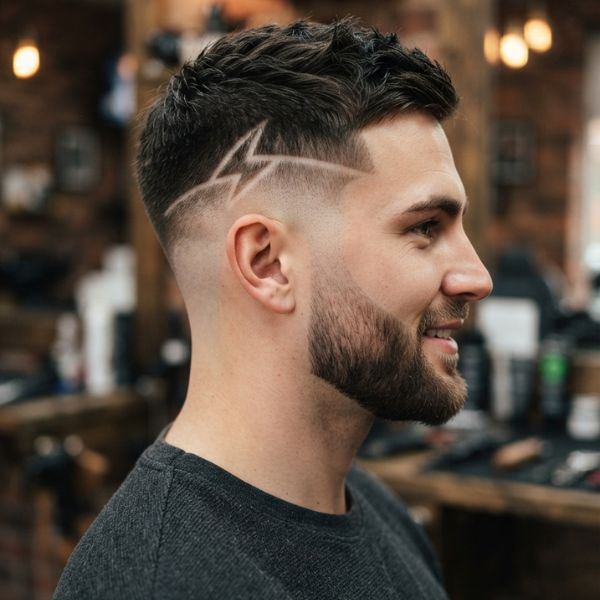
The lightning bolt remains one of the most requested shaved patterns because it’s bold, recognizable, and works at almost any size. It’s typically placed at the temple or behind the ear and pairs well with high contrast fades where the skin shows through clearly.
Burst Fade Heart Design
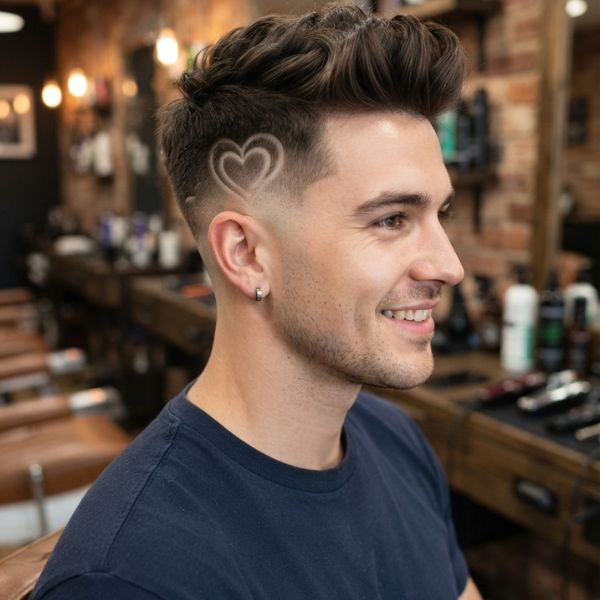
A heart design adds a playful, personalized touch and is often chosen for a specific occasion, like a birthday or a partner’s request. It’s a smaller detail piece that works best behind the ear or near the nape rather than as a large statement design.
Burst Fade Star Design

Stars work well individually or in small clusters, giving barbers room to get creative with size and spacing. A single star behind the ear is subtle, while a scattered star pattern across the fade zone creates a bolder, more artistic effect.
Burst Fade Geometric Design and Negative Space

Geometric patterns use straight lines, triangles, or angular shapes, often combined with negative space, where sections of longer hair are left untouched to form part of the design instead of shaving everything down. This technique creates depth and texture rather than relying purely on skin contrast.
Negative space designs take the most skill and the longest chair time, so expect a higher price and a longer appointment if you go this route.
Burst Fade With V Design
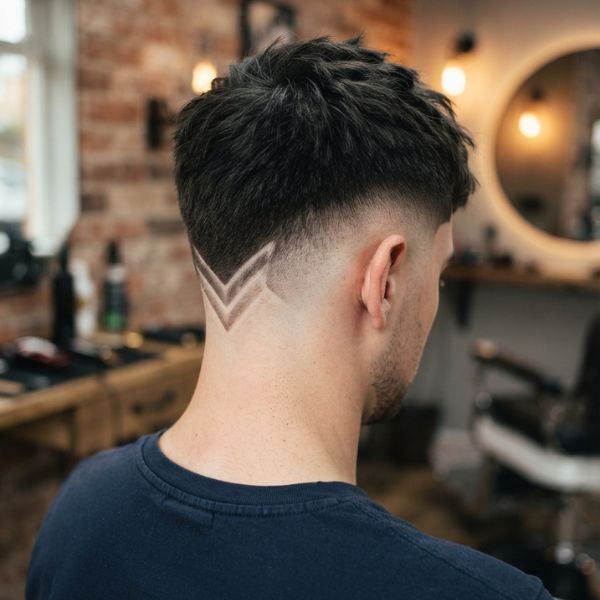
A V design uses the natural point of the nape hairline as the base for the pattern, often combined with a V-shaped neckline cut instead of a rounded one. This works especially well with mullet and longer top styles, since it echoes the shape of the hair falling at the back.
Low vs Mid vs High Burst Fade Design
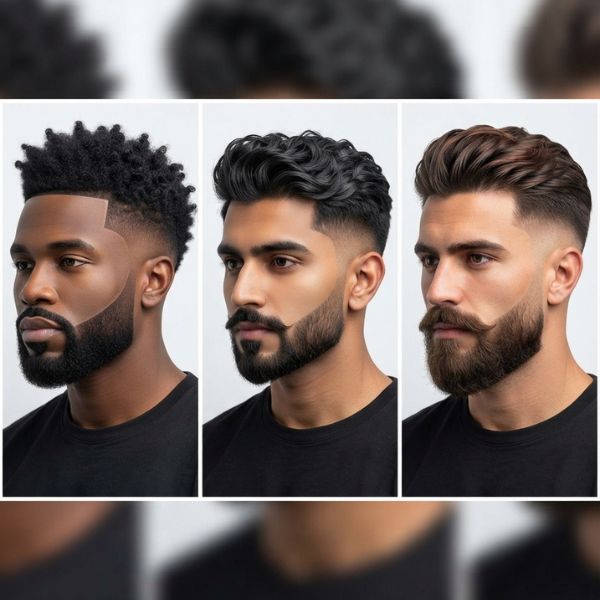
The height of the fade changes how much room a barber has to work with and how visible the design will be day to day.
Low Burst Fade Design

A low burst fade keeps the fade close to the hairline, leaving more length above it. Designs here sit lower on the head, which makes them more subtle and easier to hide by simply combing hair down.
This is a solid pick for anyone in a conservative workplace who still wants a design without it being obvious at first glance.
Mid Burst Fade Design
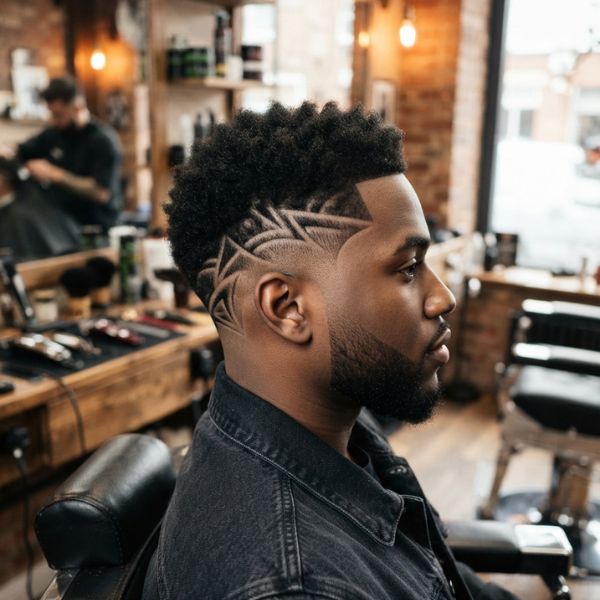
A mid burst fade sits between the low and high options, curving around the middle of the ear. It gives a good balance of visibility and versatility, and it’s the most common height requested for burst fade design work because it offers enough space for most patterns without going too dramatic.
Read More : Burst Fade Design: Best Hair Design Ideas, Placement, and Barber Tips (2026)
High Burst Fade Design
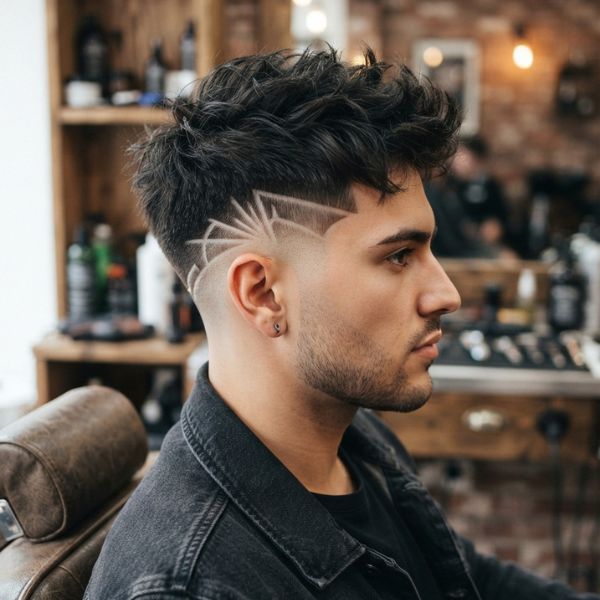
A high burst fade starts well above the ear, creating the most skin contrast and the most visible canvas for a design. This height suits bolder patterns like large geometric shapes or full negative space work, but it also means the design grows out faster and needs more frequent upkeep.
Burst Fade Design for Different Hair Types
Hair type affects how sharp a design looks and how long it holds its shape between visits.
Burst Fade Design on Straight Hair

Straight hair produces the cleanest, sharpest lines because it lies flat and doesn’t distort the shaved pattern. This makes it the easiest hair type for detailed designs like zigzags or fine geometric shapes.
Burst Fade Design on Curly Hair
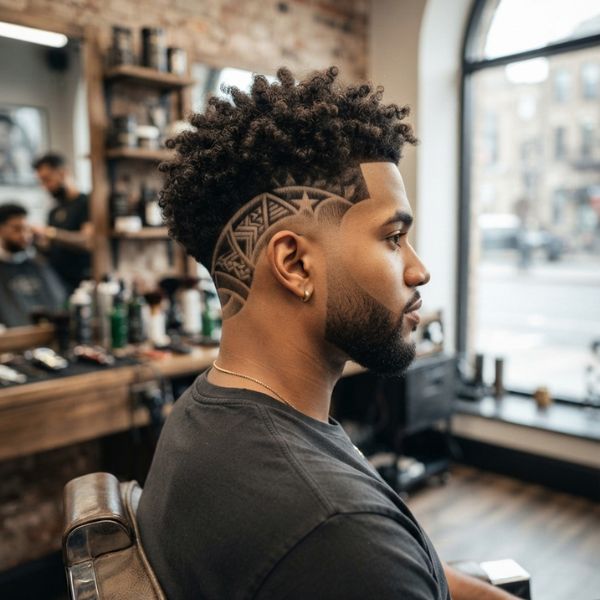
Curly hair adds natural texture and volume on top, which contrasts nicely against a shaved design, but the curl pattern can make fine lines look slightly softer than they would on straight hair. Simpler, bolder shapes like a single line or a lightning bolt tend to read better on curly hair than intricate patterns.
Burst Fade Design for Thick Hair vs Thin Hair
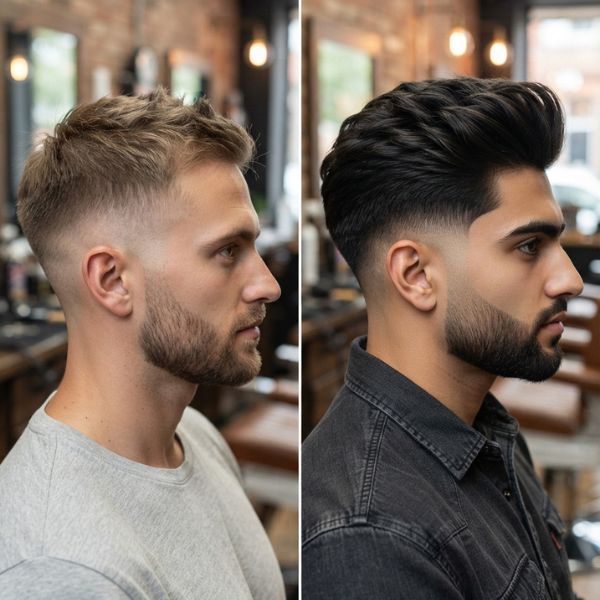
Thick hair holds a design longer since there’s more hair to grow out before the pattern starts blending back into the surrounding length. Thin hair shows the scalp more easily, which can make skin fades and designs look sharper immediately after cutting, but the pattern may need touch-ups sooner as regrowth becomes visible faster.
Burst Fade Design With Popular Top Styles
Burst Fade Mohawk Design
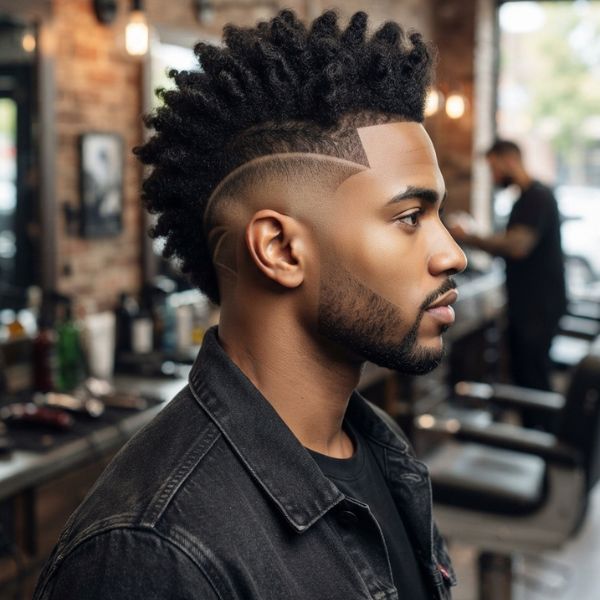
Pairing a burst fade with a mohawk creates strong contrast between the shaved sides and the raised strip of hair on top. Designs on this combo usually sit behind the ear or along the nape, since the mohawk itself already draws attention to the crown.
Burst Fade Mullet Design

The burst fade mullet keeps length at the back while fading tight around the ears, and it’s one of the most popular combinations for nape and V area designs. The extra length at the back gives the shaved pattern more room to stand out against longer hair.
Burst Fade Textured Crop or Fringe Design
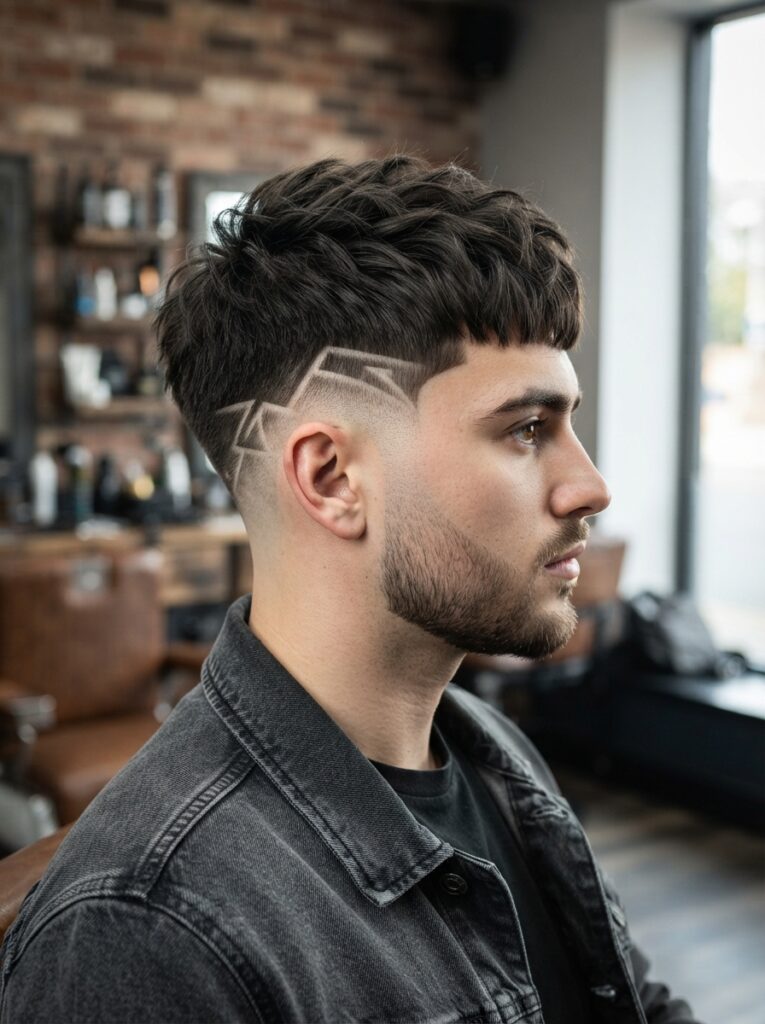
A textured crop or fringe on top pairs well with a smaller design near the temple, since the fringe naturally draws the eye toward the front of the head. Keeping the design compact here avoids competing with the texture on top.
What to Tell Your Barber

Clear communication is the single biggest factor in getting a burst fade design that actually matches what you pictured. Bring a photo or video reference, since barbers interpret “burst fade” and “design” differently depending on their training.
Useful things to mention before the clippers start:
- The exact fade height you want: low, mid, or high
- Where you want the design placed: behind the ear, temple, or nape
- The size of the design, described in inches if possible
- Whether you want a symmetrical design on both sides or just one
- How often you’re realistically willing to get touch-ups
Simple Guard and Blend Notes
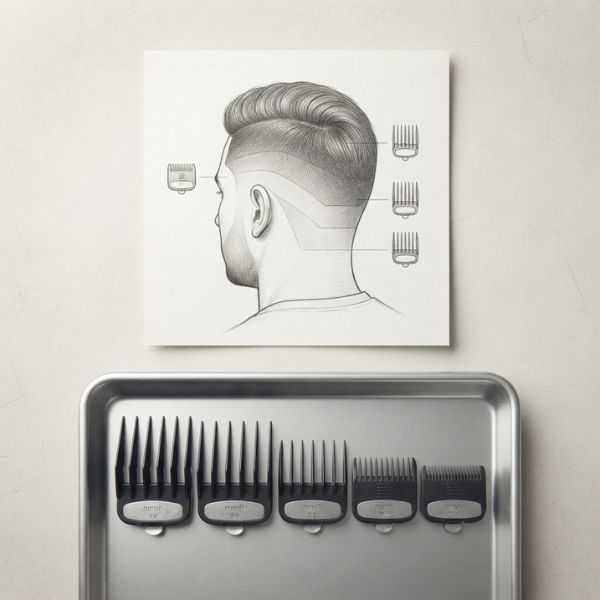
Most barbers start the fade with a #2 or #3 guard before working down to skin, then use a T-blade trimmer for the design outline and a straight razor to sharpen the final edges. You don’t need to know the exact technical steps, but mentioning that you want the blend “soft” or “skin-tight” helps set expectations for how dramatic the contrast will look.
Burst Fade Design Maintenance
How Often to Redo the Design
Most burst fade designs need a touch-up every 1 to 2 weeks, since hair around the temple and hairline grows back faster than hair on top. A plain burst fade without a design can usually stretch to 3 to 4 weeks between visits.
Aftercare Tips
- Avoid heavy styling products directly on the design for the first day to prevent irritation
- Use a light moisturizer or beard oil on the shaved area if the skin feels dry or tight
- Sleep on a clean pillowcase to reduce the chance of ingrown hairs around freshly shaved lines
- Book your next touch-up before the design starts blending into regrowth, rather than waiting until it’s already faded out
Burst Fade Design Mistakes to Avoid

- Skipping the reference photo. Verbal descriptions of a design rarely match what’s in your head, so always bring a picture.
- Choosing a barber without design experience. A great fade specialist isn’t automatically great at line work. Check their portfolio specifically for shaved patterns.
- Going too intricate for thin or curly hair. Fine details can blur out faster on certain hair types, so match the complexity of the design to your hair texture.
- Ignoring touch-up timing. Waiting too long between visits causes the design to grow out unevenly and lose its sharp edges.
- Placing a large design where it clashes with the top style. A busy pattern next to a busy mohawk or heavily textured crop can look cluttered instead of clean.
FAQs
How long does a burst fade design take to cut?
A simple line design usually adds 10 to 15 minutes to a regular burst fade appointment, while detailed geometric or negative space patterns can add 30 minutes or more.
Does a burst fade design hurt?
No, the process only involves clippers and a straight razor on the surface of the scalp, so there’s no pain beyond normal haircut sensations.
Can I get a burst fade design removed easily?
Yes, since it’s just shaved hair, growing it out or having a barber blend it into a fresh fade removes the design completely within a few weeks.
Is a burst fade design good for job interviews?
A low burst fade with a small, subtle design placed behind the ear is usually the safest option for formal settings, since it can be covered easily.
What’s the best burst fade design for beginners?
A single shaved line or a small geometric shape behind the ear is the easiest starting point, since it’s quick to cut and simple to maintain.
Read More : Low Taper Fade with Textured Fringe: Complete Guide for 2026
Conclusion
A burst fade design turns a solid haircut into something distinctly yours, whether that’s a simple line behind the ear or a full geometric pattern carved into negative space. The key to getting it right comes down to picking the correct placement for your top style, choosing a design that suits your hair type, and finding a barber who’s genuinely comfortable with freestyle line work, not just fades. Bring a clear reference photo, stay on top of touch-ups, and the design will stay as sharp as the day you left the chair.

Zaria Rhodes is the lead editor and content curator at Lyrinexa, passionate about music, storytelling, and lyrical expression. With a deep love for discovering the meaning behind songs, she brings clarity, creativity, and accuracy to every post. Zaria is dedicated to providing readers with authentic lyrics, thoughtful interpretations, and a seamless music-exploration experience.

5 thoughts on “Burst Fade Design: Best Hair Design Ideas, Placement, and Barber Tips (2026)”