


Picking the right cut for an active kid means finding something that survives recess, swim practice, and school picture day without a fuss. The boys mullet haircut has become one of the most requested styles of 2026 because it solves exactly that problem. Short and tidy up front, with just enough length left at the back to feel different from everyone else in class, it adapts to straight, wavy, and curly hair alike. Parents like that it still passes most school dress codes.
Kids like that it feels bold without needing a complicated routine. This guide covers every popular variation, how to match one to your son’s hair type and age, and the right words to use at the barber shop.
What Is a Boys Modern Mullet

A boys modern mullet keeps the top and sides short or lightly tapered while letting the back grow out longer. It is not the choppy, uneven cut people remember from old family photos. Today’s version is blended, with the barber softening the line between the short front and the longer back so the transition looks planned rather than random.
The technique behind this is simple. The barber tapers or fades the sides first, then uses scissors to layer the crown and let the back fall naturally past the collar or shoulder, depending on the length the family wants. Because the sides stay clean, the cut still looks neat for school, sports, and family events. The longer back is what gives it personality.
This style has grown in popularity because it offers a middle ground. Boys who want something more interesting than a standard short cut, but whose parents do not want a dramatic change, both get what they are after. It also works on nearly every hair texture, which is part of why barbers now recommend it so often.
Read more: Short Wolf Cut Men 2026: Best Styles for Every Hair Type
How to Choose the Right Version
Not every mullet variation suits every kid. A few factors decide which version will actually work day to day, rather than just looking good in a single photo.
- Hair type. Straight hair holds a sharper, choppier shape. Wavy hair blends naturally into soft layers. Curly hair needs the cut shaped around its natural pattern instead of forced into straight lines.
- Age. Younger boys usually do better with a shorter, simpler version that grows out evenly. Older boys and teens can handle more length and a stronger fade.
- Activity level. Kids who play sports or swim often need shorter sides and a shorter back so helmets, goggles, and sweat do not become a daily battle.
- School rules. Some schools restrict shaved patterns or dramatic length. A softer taper instead of a hard fade usually keeps things within the dress code.
- Willingness to maintain it. A mullet with a fade needs more frequent trims than a softer, tapered version, so it helps to be honest about how often you can get to the barber.
Once these five points are settled, picking a specific style from the list below becomes far easier.
The Best Boys Mullet Haircut Variations
There is no single “correct” boys mullet haircut. There are a dozen solid takes on it, and each one fits a different hair type, age, or lifestyle. Here are the twelve versions worth asking a barber about in 2026.
1) Classic Boys Mullet
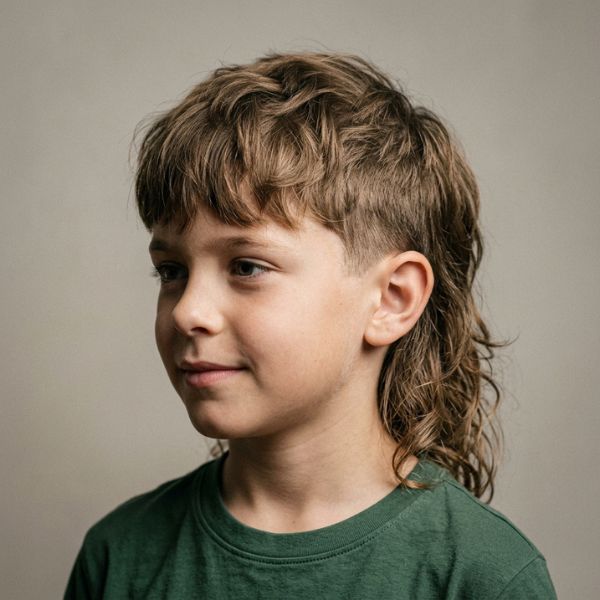
This is the safest starting point for a first mullet. The sides stay tidy, the top gets a bit of texture, and the back sits just past the collar rather than reaching the shoulders. It works on straight, wavy, or curly hair without any special styling, which makes it the easiest version to describe to a barber and the easiest to trim back later if a family decides the look is not for them.
2) Boys Mullet Fade

Adding a fade to the sides sharpens the whole look. The contrast between the closely faded sides and the longer top and back gives the cut a cleaner, more deliberate feel. This version suits boys who already get regular haircuts, since a fade needs touch-ups more often than a plain taper to avoid growing out unevenly.
3) Short Mullet Haircut Boy
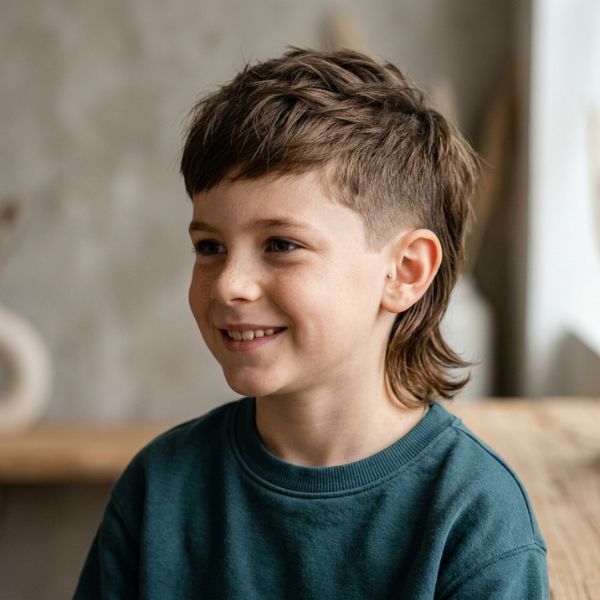
For families who want the idea of a mullet without a long tail, this version trims the back down to a subtle flick instead of noticeable length. It is a practical choice for active kids, since there is less hair to get in the way during sports, swimming, or rough play, while still keeping that signature shape at the nape.
4) Curly Boys Modern Mullet

Curly hair should be shaped around its natural texture rather than fought. A barber working with curls typically leaves a bit more length throughout to let the curl pattern show, then uses soft layering at the back so the hair does not bunch into a triangle shape. A light curl cream on damp hair helps define the shape without weighing it down.
5) Boys Modern Mullet Straight Hair

Straight hair holds a crisp line well, so this version often pairs a taper fade with slightly choppy layers through the back. Choppy ends stop the length from sitting flat against the neck, which is a common complaint with straight-haired mullets that skip this step. It also holds its shape longer between trims than curlier versions.
Read more: Low Fade Crew Cut Hairstyles: Clean, Modern, Easy
6) Tapered Modern Mullet Haircut Boy
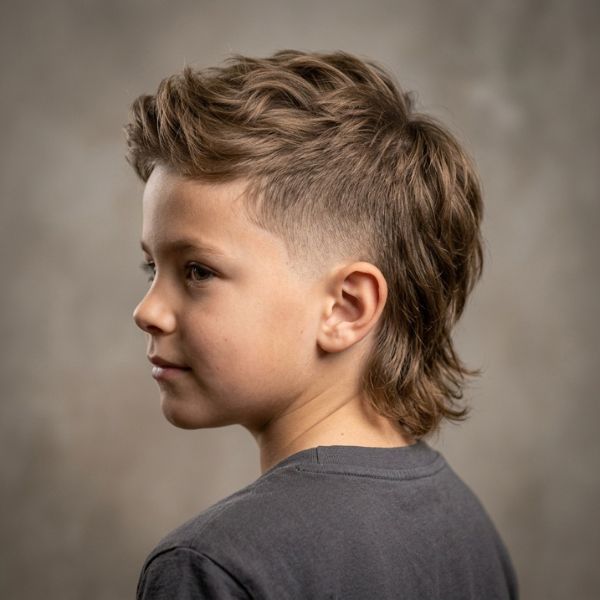
Instead of a hard fade line, a taper blends gradually from short to slightly longer without a sharp contrast. This softer approach is popular for school photos and more conservative dress codes, since it still reads as a mullet without drawing as much attention to the sides.
7) Burst Fade Boys Mullet Haircut

This version curves the fade around the ear in a circular shape instead of a straight line, creating a burst pattern that fans outward. It is a favorite among older boys and teens who want their cut to stand out and requires a barber comfortable with detailed fade work, since the shape takes more precision than a standard taper.
8) Sporty Medium Mullet
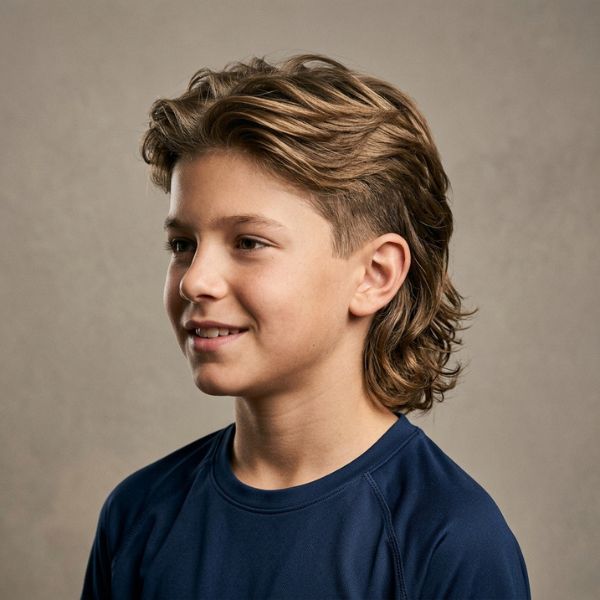
Built for kids who never sit still, this take keeps the length practical. The sides stay clean enough to sit comfortably under a helmet or cap, while the back holds enough length to still look like a mullet. It handles sweat and constant movement without falling apart between wash days.
9) Wavy Surfer Mullet for Boys

This relaxed version channels a beachy look by letting natural waves move freely through the top and back. A little sea salt spray on damp hair enhances the texture and gives it that effortless, sun-bleached appearance, even for boys who have never actually been surfing.
10) Fringe Mullet
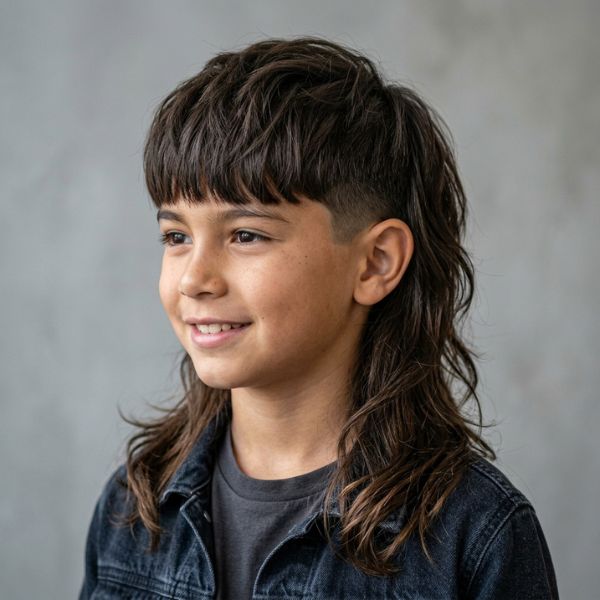
Bringing hair forward into a fringe across the forehead changes the whole feel of the cut. This version works especially well for boys with finer hair, since the fringe gives the front more visual weight while the back stays light and layered so nothing looks heavy or unbalanced.
11) Low Fade Modern Mullet
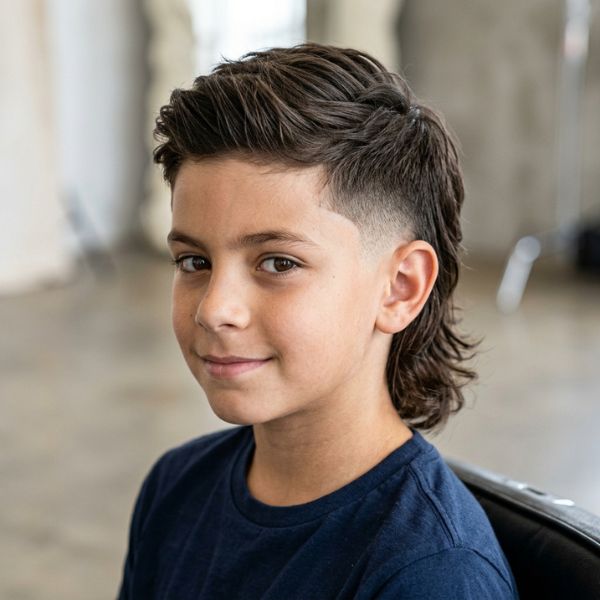
A low fade places the sharpest contrast right at the hairline near the ear, leaving more length above for a gentler blend into the top. It is polished without being loud, which makes it a solid option for boys who want a bit of edge without a dramatic sides-to-top jump.
12) Longer Back, School Safe

For schools that allow a bit more length, this version leans into it while keeping the front and crown tidy enough to pass a dress code inspection. Soft layers through the ends stop the longer back from clumping together, so it reads as a deliberate style choice rather than simply overgrown hair.
Read more: 15 Best Wavy Mullet Haircuts That Are Trending in 2026
Quick Age and Care Guide
Different ages call for different lengths and trim schedules, since younger kids’ hair often grows more evenly and needs less frequent shaping than an older boy chasing a sharper fade.
| Age Range | Best Fit Style | Trim Frequency | Notes |
|---|---|---|---|
| 3 to 6 years | Classic mullet, short mullet | Every 5 to 6 weeks | Keep it simple, less styling needed |
| 7 to 10 years | Tapered mullet, sporty medium mullet | Every 4 to 6 weeks | Good balance of style and low upkeep |
| 11 to 14 years | Fade, burst fade, low fade mullet | Every 3 to 5 weeks | Fades grow out faster, need closer attention |
| 15 and up | Any variation, including longer back | Every 4 to 6 weeks | Can handle more product and daily styling |
Daily Styling That Kids Can Do
Part of what makes this cut popular with parents is that most versions do not require constant supervision at the mirror. A few simple habits go a long way.
- Towel dry gently after a shower instead of rubbing hair aggressively, which helps curly and wavy versions keep their natural shape.
- Apply a small, pea sized amount of matte clay or lightweight cream to damp hair, focusing on the top and back.
- Use fingers instead of a comb to shape the top, since combing tends to flatten texture rather than build it.
- Let hair air dry when possible, or use a low heat setting for older kids who use a hair dryer.
- Add sea salt spray for wavy or straight versions that need a bit more texture and hold through the day.
Once a boy gets used to the routine, most of these cuts take less than five minutes to style each morning.
Care and Upkeep

A boys mullet haircut only looks intentional if it is kept up. Left alone for too long, the contrast between the short front and longer back starts to blur, and the whole cut looks unfinished rather than styled.
- Book a full trim every four to six weeks to maintain the shape, and closer to four weeks if the cut includes a fade.
- Clean up the neckline and around the ears every two to three weeks between full cuts to keep the sides sharp.
- Wash two to three times a week rather than daily, since overwashing can dry out both the scalp and the longer back section.
- Use conditioner on the back section specifically, since that hair is older and more prone to dryness than the fresh growth up top.
- Switch to a satin or silk pillowcase for wavy and curly versions, which cuts down on overnight frizz and tangling.
- Trim regularly rather than waiting for split ends to travel up the hair shaft, which makes the back look thinner over time.
Following this schedule keeps the cut looking deliberate between barber visits instead of gradually turning into an unstructured, overgrown style.
Barber Talk That Works
Walking into a barber shop with the right words saves everyone time and avoids a haircut that misses the mark.
- Ask for a “blended mullet with a smooth transition” rather than just saying “mullet,” since that phrase tells the barber you want the sides and back to connect naturally.
- Specify low, mid, or high fade if you want one, since each sits at a different point on the head and changes how the whole style reads.
- For curly hair, ask for soft layers and close sides so the curl pattern is not fighting a heavy, blunt cut.
- For straight hair, request choppy layers through the back so the length does not sit flat against the neck.
- Give an exact length reference, such as “just above the collar,” instead of a vague description like “a little long.”
- Always bring a reference photo. Words mean different things to different barbers, and a picture removes most of the guesswork.
FAQs
Is a boys mullet haircut appropriate for school?
Most tapered or low fade versions with a modest back length pass typical school dress codes, since the front and sides remain neat and professional looking.
How often should a boys mullet be trimmed?
A full trim every four to six weeks keeps the shape sharp, with a quick neckline cleanup every two to three weeks in between.
Does a boys mullet work on curly hair?
Yes. Curly hair often looks even better with this cut, as long as the barber shapes it around the natural curl pattern rather than forcing straight lines.
Is a fade necessary for this haircut?
No. A soft taper gives a similar effect without the sharper contrast of a fade, and it usually grows out more evenly between trims.
What is the best age to start a mullet?
There is no strict age requirement, though younger boys usually do better with the classic or short version, while older boys can handle fades and more length.
How long does it take to grow the back out?
Most boys see a noticeable back length within three to four months of regular trims that only shape the sides and top, leaving the back to grow.
Conclusion
The boys mullet haircut earns its popularity in 2026 by fitting into real life rather than just looking good for one photo. It works for school, sports, and weekends, and it adapts to straight, wavy, and curly hair without much fuss. Picking the right version comes down to a few honest questions about hair type, age, activity level, and how often you can realistically get to the barber. From there, choosing between a classic cut, a fade, or a longer back is simply a matter of personal taste. Keep up with trims, use light products, and bring a reference photo to the barber, and the result is a haircut your son will actually want to keep.

Zaria Rhodes is the lead editor and content curator at Lyrinexa, passionate about music, storytelling, and lyrical expression. With a deep love for discovering the meaning behind songs, she brings clarity, creativity, and accuracy to every post. Zaria is dedicated to providing readers with authentic lyrics, thoughtful interpretations, and a seamless music-exploration experience.

3 thoughts on “Boys Mullet Haircut Guide 2026: Styles, Fades, and Care”