


A burst fade design takes the classic rounded taper around the ear and adds a personal touch, a shaved line, shape, or pattern cut straight into the fade itself. It is one of the most requested customizations in barbershops right now because it turns a standard haircut into something that looks made for one person only.
This guide covers what a burst fade design actually is, where it works best on the head, the most popular shapes barbers are cutting in 2026, and how to keep the design sharp between visits. Whether you have straight hair, curly hair, thick hair, or fine hair, there is a version of this style that fits. By the end, you will know exactly what to ask for in the chair and how to avoid the mistakes that make a design look messy within a week.
What Is a Burst Fade Design
A burst fade is a haircut where the hair tapers down to the skin in a circular pattern around the ear, then blends upward into longer hair on top. Unlike a standard fade that runs in a straight line across the sides, a burst fade curves like a sunburst around the ear, which is where the name comes from. It sits between a mullet and a mohawk, leaving length at the back and top while keeping the area around the ear tight and clean.
A burst fade design adds a shaved detail inside that curved taper zone, typically cut with a T-liner or a fine trimmer once the fade itself is complete. The design can be as simple as one straight line or as detailed as a geometric pattern, a star, or a set of parallel arcs that follow the curve of the fade. It is a freehand technique, so the barber’s steadiness and clipper control matter just as much as the idea behind the shape.
Burst Fade With Design vs Regular Burst Fade
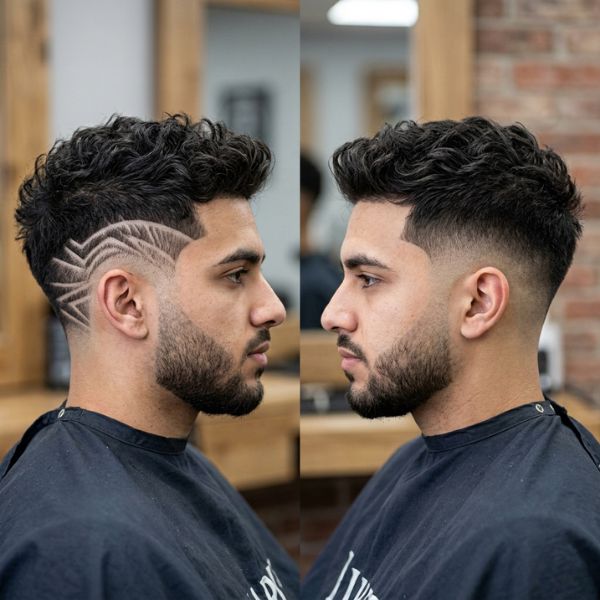
A regular burst fade relies purely on the taper itself for style, clean gradient, sharp curve, and no shaved lines involved. A burst fade with design goes a step further by carving a pattern into the faded section, which raises the maintenance level but also raises the visual impact.
| Feature | Regular Burst Fade | Burst Fade With Design |
|---|---|---|
| Look | Smooth gradient, no lines | Gradient plus a shaved pattern |
| Barber skill needed | Standard clipper work | Freehand line work, steady hand |
| Chair time | Shorter | Longer, extra 10 to 20 minutes |
| Touch up frequency | Every 2 to 4 weeks | Every 1 to 2 weeks for crisp lines |
| Best for | Low key, everyday looks | Standing out, personal expression |
Both versions start from the same base cut. The design is simply an add on, so anyone who already likes the shape of a burst fade can try a design without changing the overall haircut structure.
Where Should the Design Go on a Burst Fade
Placement decides whether a design looks intentional or crowded. Because the burst fade tapers in a circular pattern, the natural curve of the cut already gives the barber a guide to follow. Most designs sit in one of two zones: directly behind or around the ear, or lower down near the nape and the V shaped section at the back of the neck.
A good rule of thumb is to keep the design inside the faded area only, never crossing into the longer top hair, since that keeps the pattern clean and easy to maintain. Simple, single line designs tend to hold their shape longer than dense patterns, which matters if a design is being tried for the first time.
Read more: Boys Mullet Haircut Guide 2026: Styles, Fades, and Care
Behind the Ear Burst Fade Design
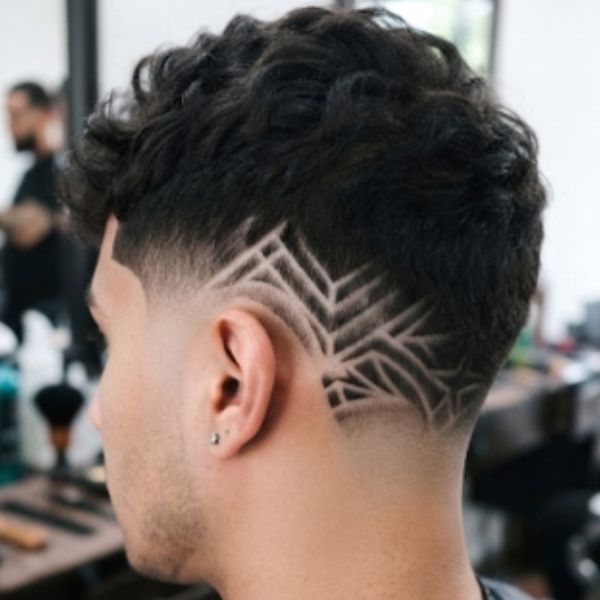
The area directly behind and above the ear is the most common spot for a burst fade design because it is the widest part of the taper and gives the barber the most room to work. A single line, a small lightning bolt, or a short zigzag placed here catches attention from the side without dominating the whole haircut. This placement also grows out the slowest compared to the neckline, so it tends to stay sharp a few days longer.
Nape and V Area Design
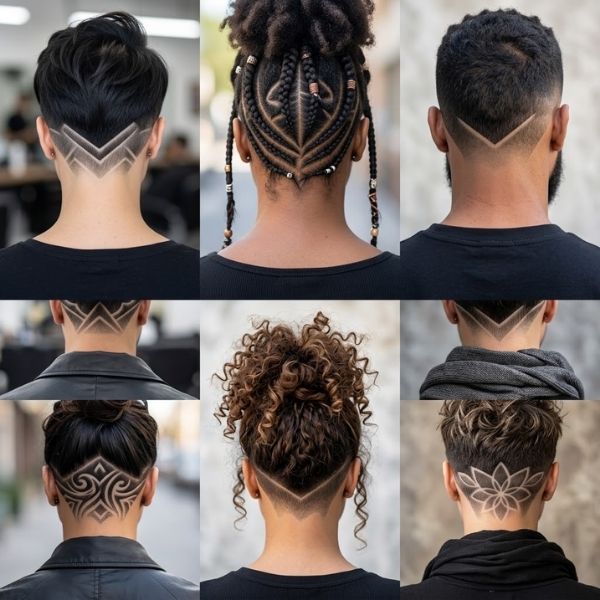
The nape, or the V shaped taper at the back of the neck, is the second most popular placement. This spot suits slightly larger designs, such as a star, an initial, or a geometric block, because there is more open skin to work with once the hair is faded down low. Designs placed here are more visible when the hair is worn short on top, and they pair especially well with mullet and mohawk top styles where the back of the head is already a focal point.
Best Burst Fade Design Ideas
There is no single correct pattern for a burst fade, and barbers often build custom combinations, but a handful of shapes have become the most requested across barbershops in 2026. Each works differently depending on skin tone, hair density, and how often a person is willing to get touch ups.
- Line designs for a clean, subtle accent
- Zigzag patterns for movement and texture
- Lightning bolts for a bold, sharp statement
- Hearts and stars for a playful, personalized look
- Geometric shapes and negative space cuts for a modern edge
- V shaped lines that follow the fade’s natural curve
Burst Fade Line Design
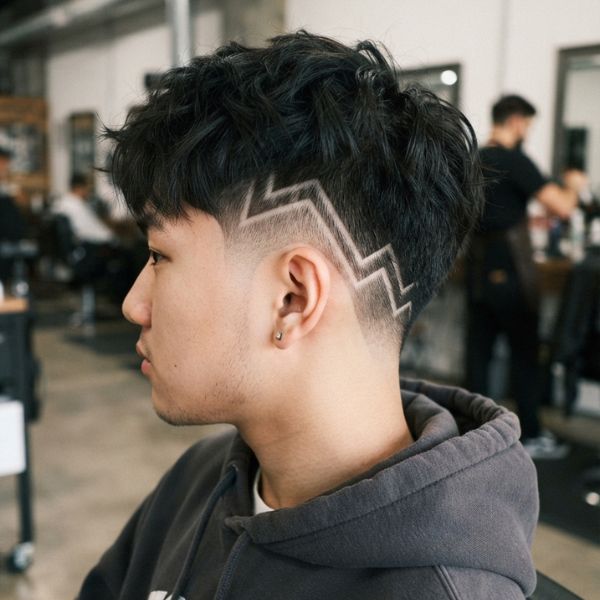
A single straight or curved line is the easiest design to maintain and the most beginner friendly option for anyone trying a burst fade design for the first time. It usually follows the same direction as the fade’s curve, starting near the temple and arcing down behind the ear. Because it is one continuous line, touch ups only take a minute or two, which makes it a practical choice for people who do not want to sit in the chair every week.
Burst Fade Zigzag Design
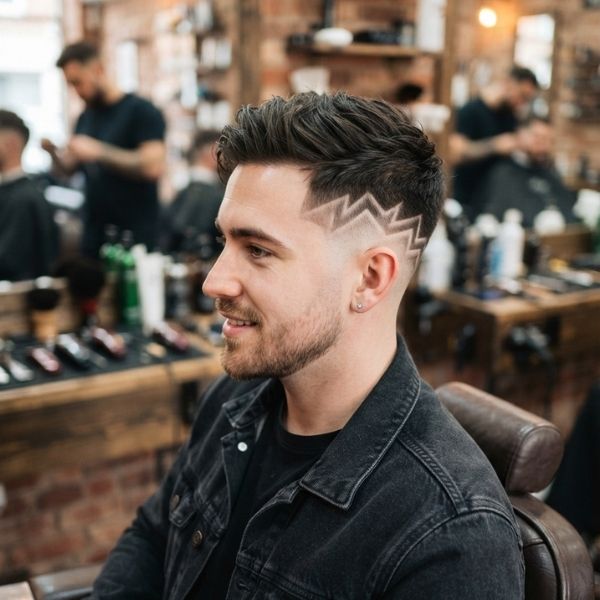
The zigzag adds energy to the cut by breaking a straight line into sharp angles. It works particularly well on thicker hair where the contrast between the shaved zigzag and the surrounding faded hair shows up clearly. This design needs a steady, practiced hand, since uneven angles are noticeable immediately, so it is worth asking to see a barber’s previous zigzag work before committing.
Read more: Messy French Crop Haircuts: Fast Style, Sharp Results
Burst Fade Lightning Bolt Design

A lightning bolt is one of the boldest options because of its sharp diagonal cuts and dramatic shape. It is usually placed behind the ear or along the side of the head where there is enough space for the full bolt shape to read clearly. This design tends to grow out faster than a simple line because of its multiple angles, so weekly touch ups keep it looking crisp.
Burst Fade Heart Design

A heart shaped design is popular for a softer, more personal statement and is often chosen for a specific occasion, a partner’s initials nearby, or simply as a fun seasonal look. It is typically kept small and placed near the nape or just behind the ear so it does not overpower the rest of the haircut.
Burst Fade Star Design
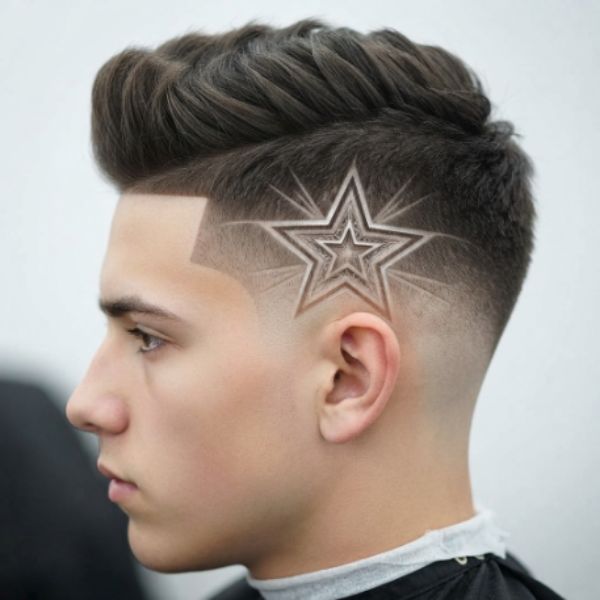
Stars are a classic choice because the shape is recognizable even when kept small, and it reads well from a distance. A single star behind the ear or a cluster of smaller stars along the taper both work, depending on how much detail someone wants. Star designs hold their shape reasonably well since the points are short and do not require long, thin lines that blur quickly as hair regrows.
Burst Fade Geometric Design and Negative Space
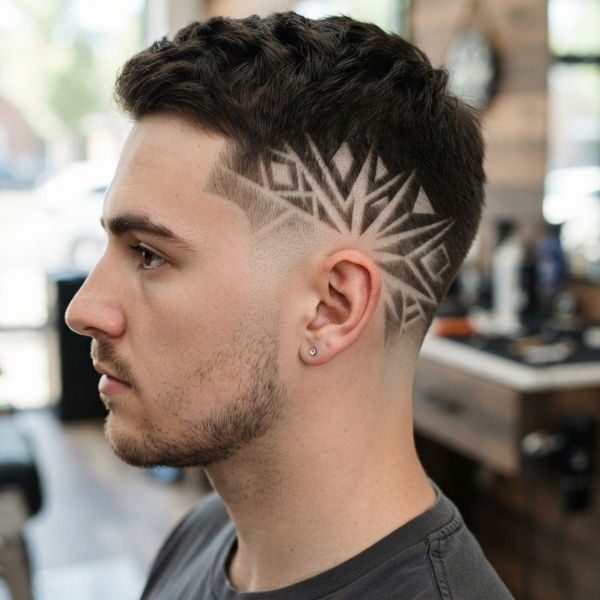
Geometric and negative space designs use blocks, triangles, or intentional gaps of skin against the faded hair to create a more abstract, modern pattern. This style leans on contrast rather than a single recognizable shape, which makes it a strong option for anyone who wants something unique rather than a common symbol. It generally requires the most frequent maintenance of all the design types because multiple angles and edges are involved.
Burst Fade With V Design

A V shaped design follows the natural taper of the burst fade itself, usually mirrored at the nape to create a symmetrical look. Because it works with the fade’s existing shape rather than against it, this design tends to look the most seamless and is a common choice for people who want a design that still feels understated.
Low vs Mid vs High Burst Fade Design
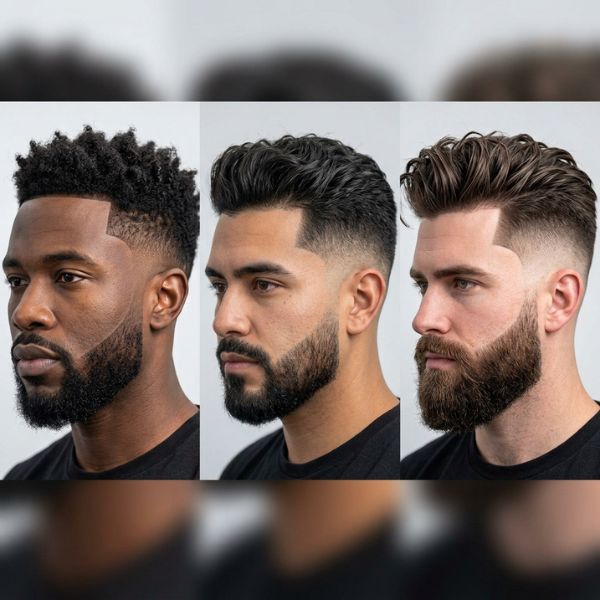
The height of a burst fade changes how noticeable the design will be and how often it needs attention. Height refers to where the taper starts on the head, measured from the hairline upward.
Low Burst Fade Design
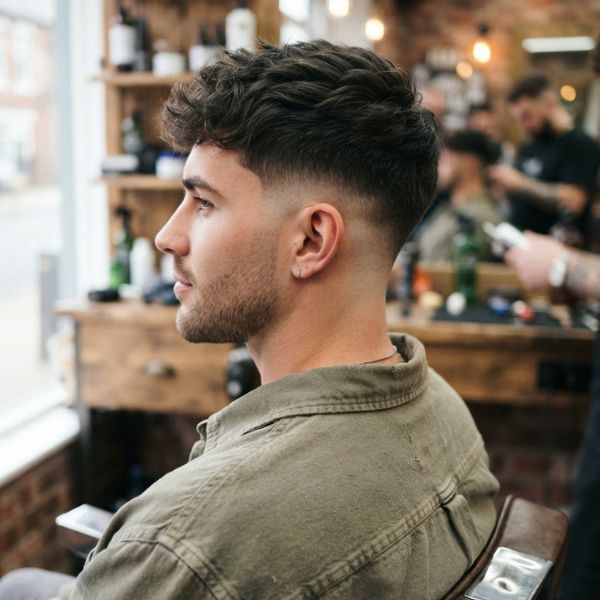
A low burst fade keeps the fade close to the ear and hairline, leaving more hair on the sides overall. This version is the most subtle and works well for formal or professional settings, since the design is smaller and less visible from a distance. It also grows out the slowest of the three heights, so it needs fewer barber visits to stay sharp.
Mid Burst Fade Design
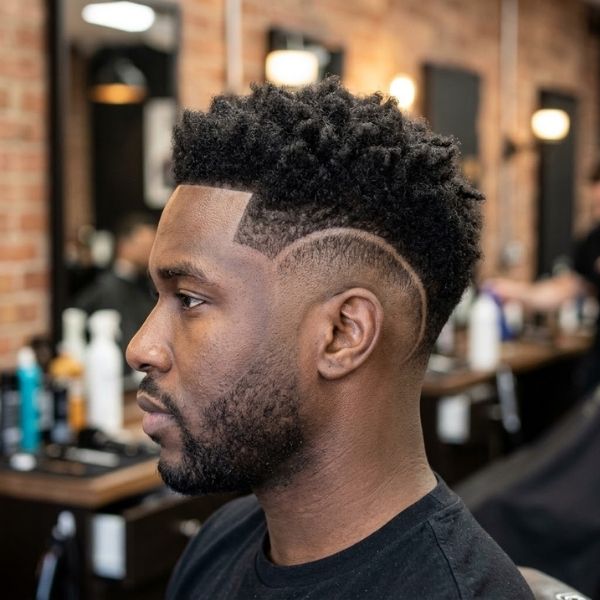
A mid burst fade starts partway up the side of the head, giving a balanced amount of contrast between the shaved sides and the longer top. This is the most common height requested for designs because it offers enough open space for a clear pattern while still looking wearable day to day.
High Burst Fade Design
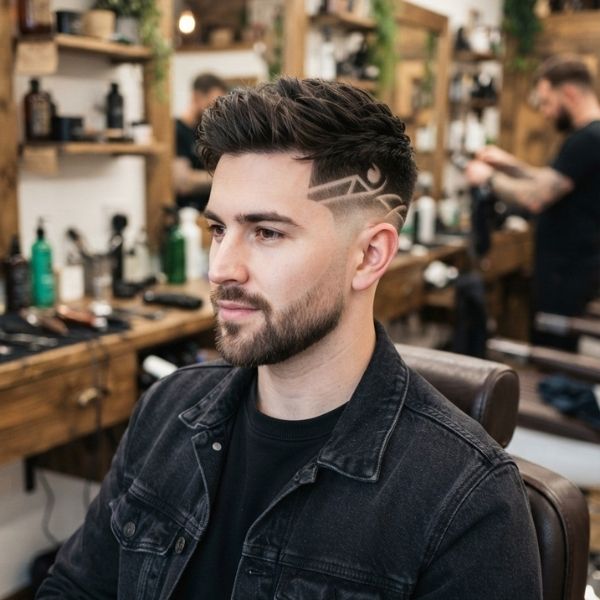
A high burst fade starts well above the ear, closer to the temple, and creates the sharpest contrast between the top hair and the faded sides. This version gives a design the most visibility and the most room for detail, but it also grows out fastest and typically needs a touch up every one to two weeks to keep the pattern from blurring.
Burst Fade Design for Different Hair Types
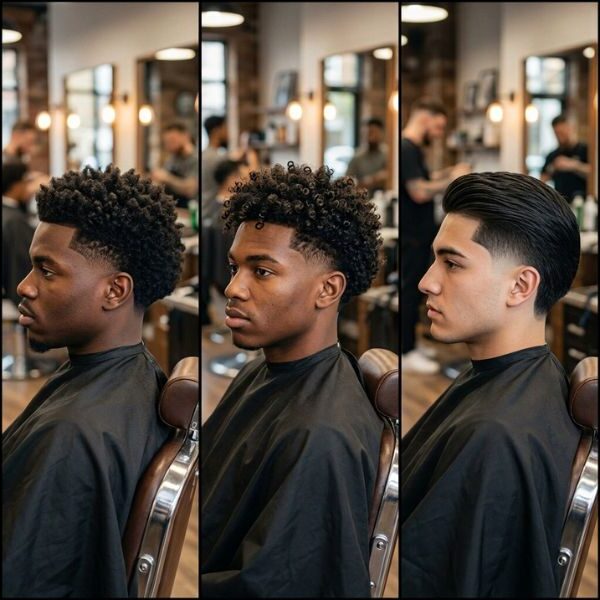
Hair type affects how a design is cut, how long it holds its shape, and how it looks once the top hair is styled over it.
Burst Fade Design on Straight Hair
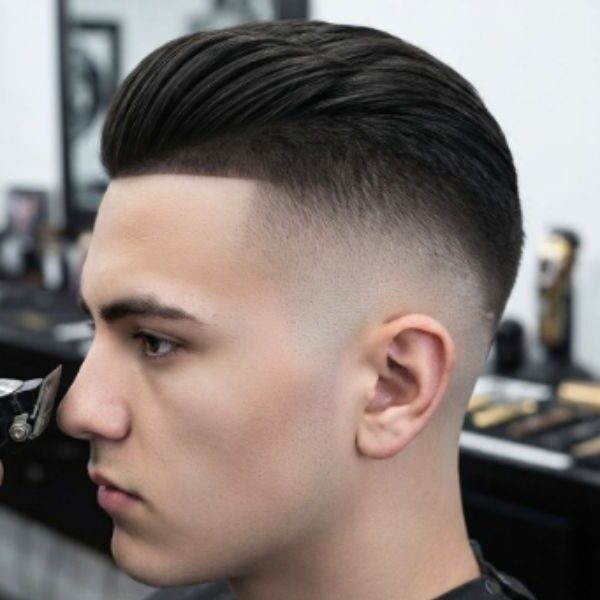
Straight hair shows off a burst fade design with the most clarity because there is no natural curl pattern competing with the shaved lines. Designs on straight hair tend to look crisp immediately after cutting and stay visible for longer, since straight strands lie flat and do not cover the faded area as quickly during regrowth.
Burst Fade Design on Curly Hair
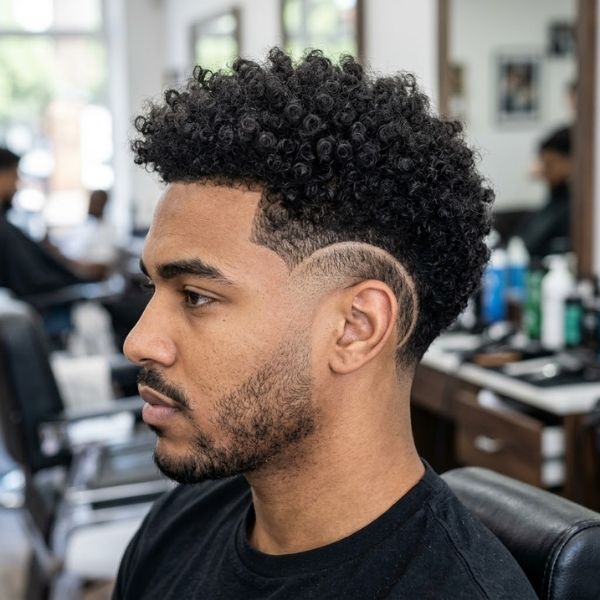
Curly hair adds volume and texture around the design, which can soften sharp lines but also creates a striking contrast between the tight curls on top and the clean shaved pattern below. Barbers often recommend slightly bolder, thicker lines on curly hair since fine details can get visually lost against the curl pattern.
Burst Fade Design for Thick Hair vs Thin Hair
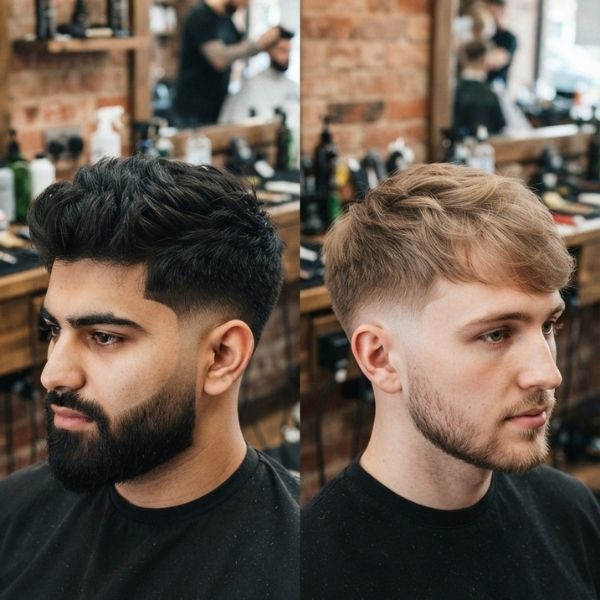
Thick hair holds a design’s contrast well because there is more density surrounding the shaved area, making the pattern pop. Thin hair can still carry a design successfully, but simpler shapes such as a single line or a small star tend to work better, since thin hair regrows less densely and can make intricate patterns look patchy sooner.
Burst Fade Design With Popular Top Styles
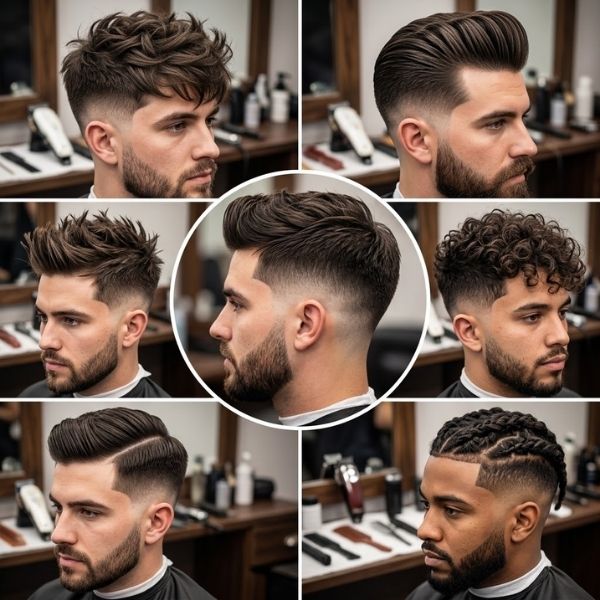
A burst fade design is rarely worn on its own since the top of the head still needs a style to pair with it. The most requested combinations in 2026 include the mohawk, the mullet, and the textured crop or fringe.
Read more: Straight Hair Mullet Guide 2026: Styles, Fade, and Easy Care
Burst Fade Mohawk Design

Pairing a burst fade with a mohawk creates strong height and contrast, and the design usually sits behind the ear where it complements the shaved sides already framing the raised center strip. This combination is one of the boldest overall looks and suits anyone comfortable with a high maintenance style.
Burst Fade Mullet Design
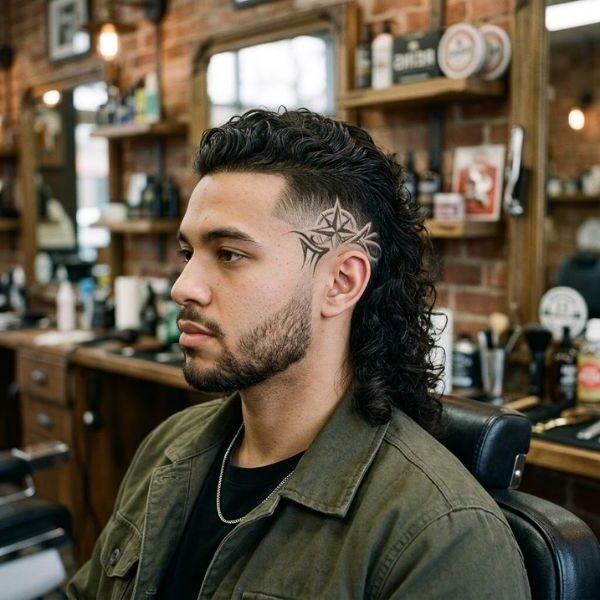
The mullet burst fade keeps length at the back of the neck while the sides stay tightly faded, and a design placed in the nape or V area works especially well here since that section is already a focal point of the mullet shape. This pairing has remained one of the most popular burst fade combinations because it balances a retro silhouette with a modern, customized detail.
Burst Fade Textured Crop or Fringe Design
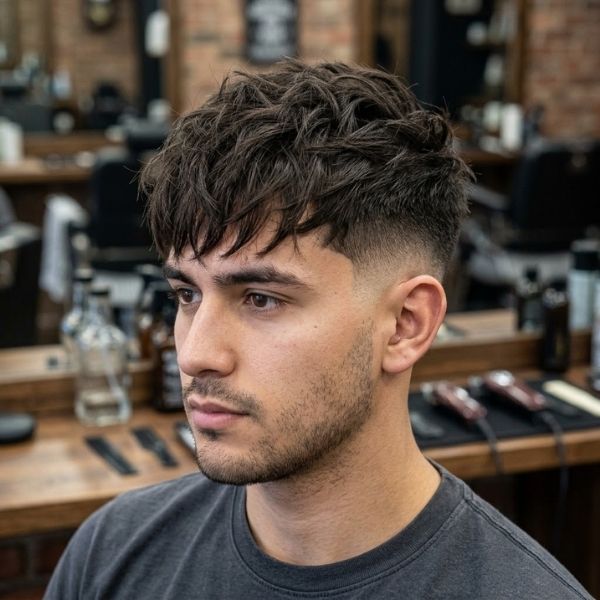
A textured crop or fringe on top keeps the front of the head structured and full, while the design on the sides adds an extra layer of personalization without competing with the fringe itself. This combination tends to suit straight to wavy hair best and is a lower maintenance option compared to mohawk or mullet pairings.
What to Tell Your Barber
Clear communication is the single biggest factor in getting a burst fade design that actually matches what was pictured. Bringing a reference photo or video is the most reliable way to avoid miscommunication, since terms like “small design” or “a few lines” can mean very different things to different barbers.
Before sitting down, it helps to be ready to discuss:
- The exact fade height (low, mid, or high)
- The design placement (behind the ear or in the nape and V area)
- The size and complexity of the pattern
- The top style being paired with the fade
- How often touch ups are realistic given a personal schedule
Simple Guard and Blend Notes
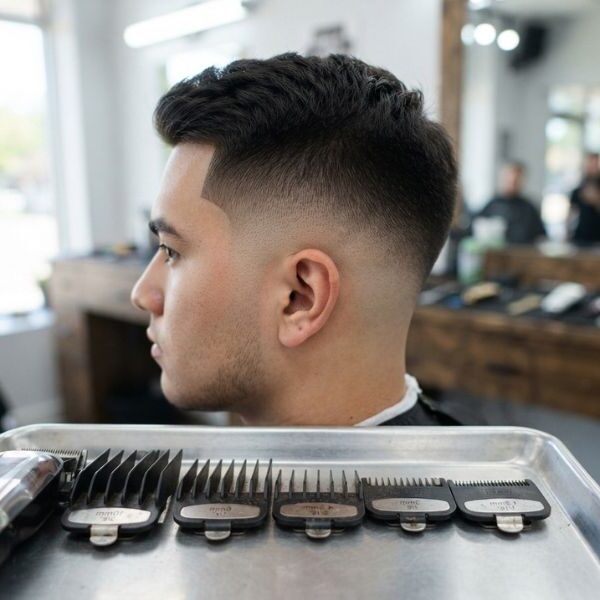
Most burst fades start with a guard between a 0 and a 2 near the skin, blending up through a 3 or 4 toward the top, though exact numbers vary by barber and hair density. It is worth asking the barber to note down the guards and blend points used so future appointments, even with a different barber, can match the same shape.
Burst Fade Design Maintenance
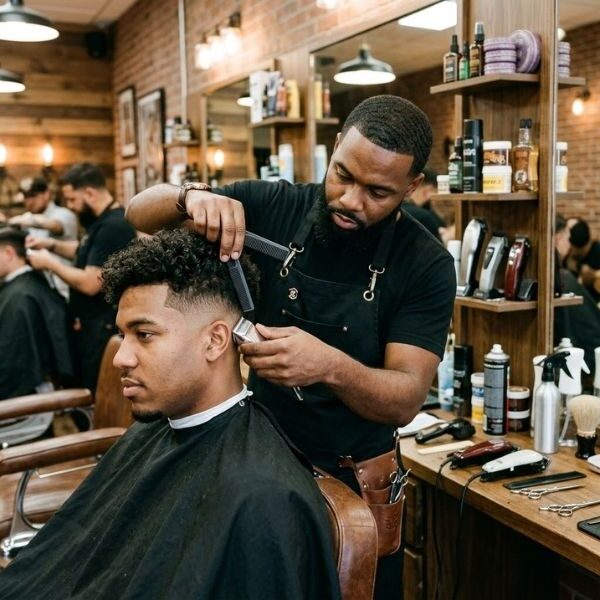
A design only looks sharp for as long as the shaved lines stay defined, which is a shorter window than the fade itself typically holds.
How Often to Redo the Design
Most barbers recommend touching up the design every one to two weeks, while the surrounding fade can usually go two to three weeks before needing a full reshape. High fades and detailed patterns such as zigzags or geometric shapes tend to need the more frequent end of that schedule, while simple line or V designs can often stretch closer to two weeks without losing clarity.
Aftercare Tips
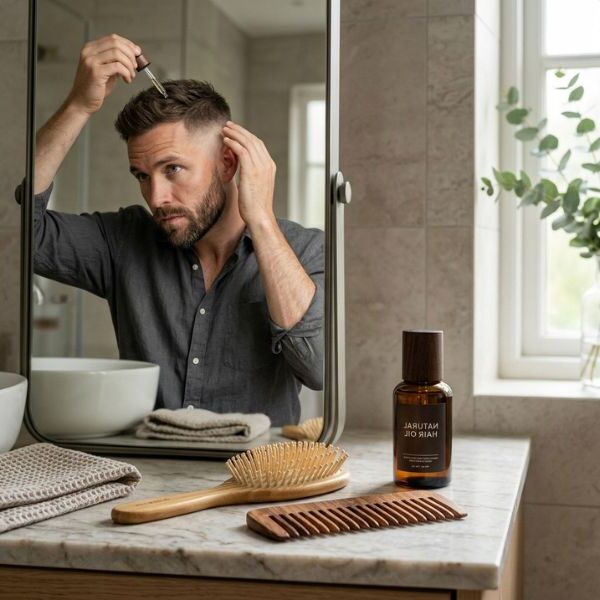
Keeping the design looking fresh between visits comes down to a few habits:
- Wash with a gentle shampoo two to three times a week to avoid stripping natural oils
- Apply a light moisturizer or oil around the shaved lines to prevent dry, flaky skin
- Avoid excessive heat styling directly over the faded and designed area
- Use a soft brush to keep surrounding hair from covering the design as it grows
- Protect the area from prolonged sun exposure, which can dry out exposed skin
Burst Fade Design Mistakes to Avoid
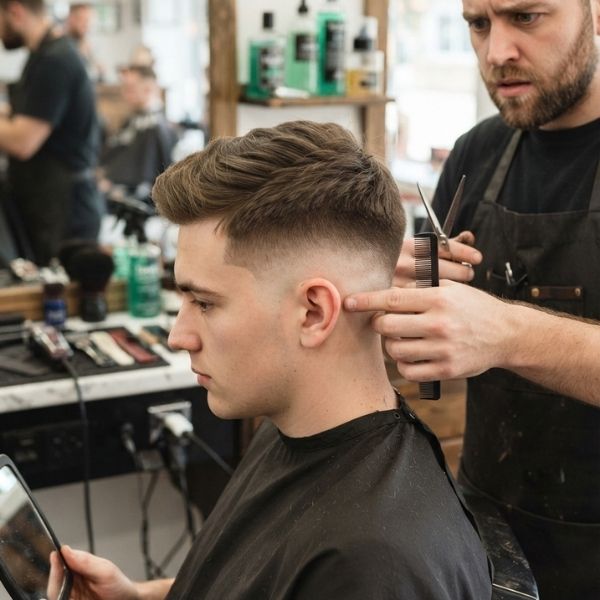
A few recurring mistakes tend to ruin an otherwise good burst fade design, and most are avoidable with a bit of planning.
- Choosing a design too intricate for a first attempt, making future touch ups hard to match
- Skipping a reference photo and relying on a verbal description alone
- Placing the design too close to the top hair, where it gets buried as the fade grows out
- Waiting too long between touch ups, causing the lines to blur into regrowth
- Skipping aftercare, leading to irritation around the shaved lines
- Choosing a barber without freehand design experience, since not every barber who fades well also specializes in line work
FAQs
How much does a burst fade design cost?
Barbers usually charge an add on fee above a standard haircut price, ranging from a small flat rate to more for detailed patterns.
Can I add a burst fade design at home?
It is possible with a steady hand and a fine trimmer, but freehand lines are hard to keep symmetrical, so a barber usually gives cleaner results.
Does a burst fade design work on short natural hair?
Yes, short natural or coily hair holds a design well once faded, though bolder lines are recommended since shorter hair covers detail faster.
Will the design grow out unevenly?
Some unevenness after a week or two is normal since hair does not grow at the same rate everywhere, which is why regular touch ups matter.
Is a burst fade design appropriate for work or school?
A low or mid fade with a small, simple design generally reads as professional, while larger or high placed designs suit casual settings better.
Conclusion
A burst fade design is one of the easiest ways to turn a standard fade into a personal statement without changing the overall structure of the haircut. The right choice comes down to a few decisions: where the design sits, how bold the pattern is, how the fade height suits daily life, and how often touch ups are realistic. Starting with a simple line or V design is a smart way to test the style before committing to something more detailed like a geometric pattern or a full lightning bolt. With clear communication, a barber experienced in freehand line work, and a consistent touch up schedule, a burst fade design can stay sharp, clean, and completely custom for as long as it is worn.

Zaria Rhodes is the lead editor and content curator at Lyrinexa, passionate about music, storytelling, and lyrical expression. With a deep love for discovering the meaning behind songs, she brings clarity, creativity, and accuracy to every post. Zaria is dedicated to providing readers with authentic lyrics, thoughtful interpretations, and a seamless music-exploration experience.

2 thoughts on “Burst Fade Design: Best Hair Design Ideas, Placement, and Barber Tips (2026)”