


The high burst fade is a bold men’s haircut that creates a curved, semicircular fade around the ear while keeping more length through the top, crown, or center back. Unlike a traditional high fade that moves more evenly around the sides, the burst fade follows the natural shape around the ear.
The word “high” describes where the fade rises on the side of the head. A higher starting point removes more side hair and creates stronger contrast between the faded area and the longer hair above it.
This makes the haircut especially popular with mullets, mohawks, faux hawks, textured crops, curls, and other hairstyles that benefit from a strong side profile. Current haircut guides consistently identify the curved ear area as the defining feature of a burst fade, while the height determines how dramatic the result looks.
What Is a High Burst Fade?
A high burst fade is a fade that starts relatively high near the temple and curves downward around the ear.
Instead of removing hair in a straight horizontal or vertical pattern, the barber creates a rounded arc.
The shortest section can finish at:
- Skin
- Zero clipper length
- Very short stubble
- A darker shadow fade
The choice determines how much contrast you get.
The hair behind the ear and through the center back can remain longer. That’s why a high burst fade works particularly well with mullets, mohawks, and other styles where the back needs to retain length.
Why Is the High Burst Fade So Popular?
The haircut offers something different from a standard fade.
A conventional fade generally creates a more continuous transition across the side of the head. A burst fade concentrates the fading around the ear.
The result gives you:
- Strong side contrast
- A distinctive curved shape
- More visible top volume
- A cleaner ear area
- More freedom with the back
- Multiple styling options
It’s also customizable. You can combine the same high burst pattern with a buzz cut, textured crop, curls, fringe, faux hawk, mohawk, or mullet.
Read More: Long Crew Cut Hairstyle Men: Clean Length, Easy Control
High Burst Fade vs Mid Burst Fade vs Low Burst Fade
The height of the fade changes the overall character of the haircut.
| Type | Fade placement | Overall look | Best for |
| Low burst fade | Close to ear | Subtle | Conservative styles |
| Mid burst fade | Middle side area | Balanced | Everyday styles |
| High burst fade | Higher toward temple | Bold | Mullets, mohawks, textured styles |
A low burst fade leaves more side hair intact.
A mid burst fade provides a middle ground.
A high burst fade removes more side weight and produces the strongest visual contrast.
If you’re getting your first burst fade, a mid version may be easier to adjust later. If you already know you want a dramatic haircut, the high version makes a much stronger statement.
Best High Burst Fade Hairstyles
1. Classic High Burst Fade
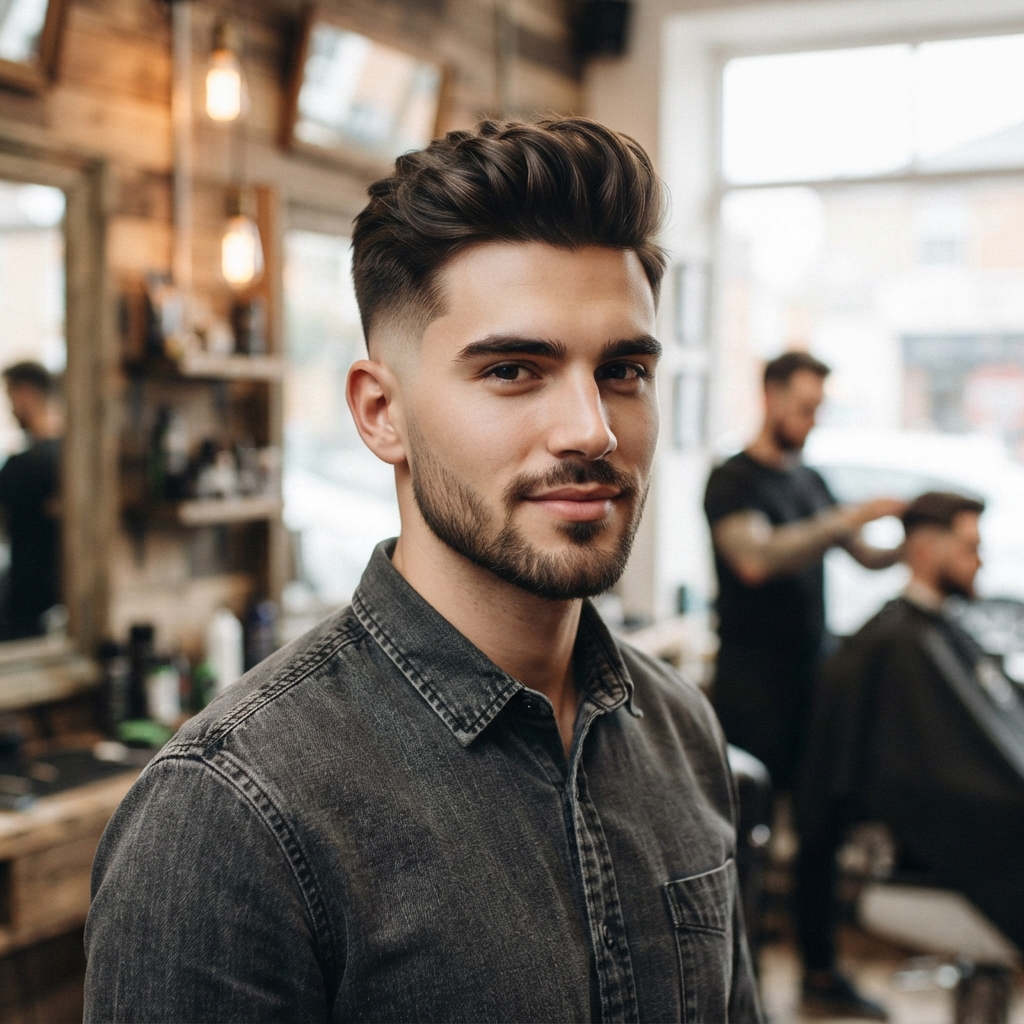
The classic version keeps the top moderately short while creating a clean high arc around the ear.
It’s a good option if you want the defining burst shape without committing to a very long mullet or dramatic mohawk.
A matte styling product can add light texture on top.
2. High Burst Fade Mullet
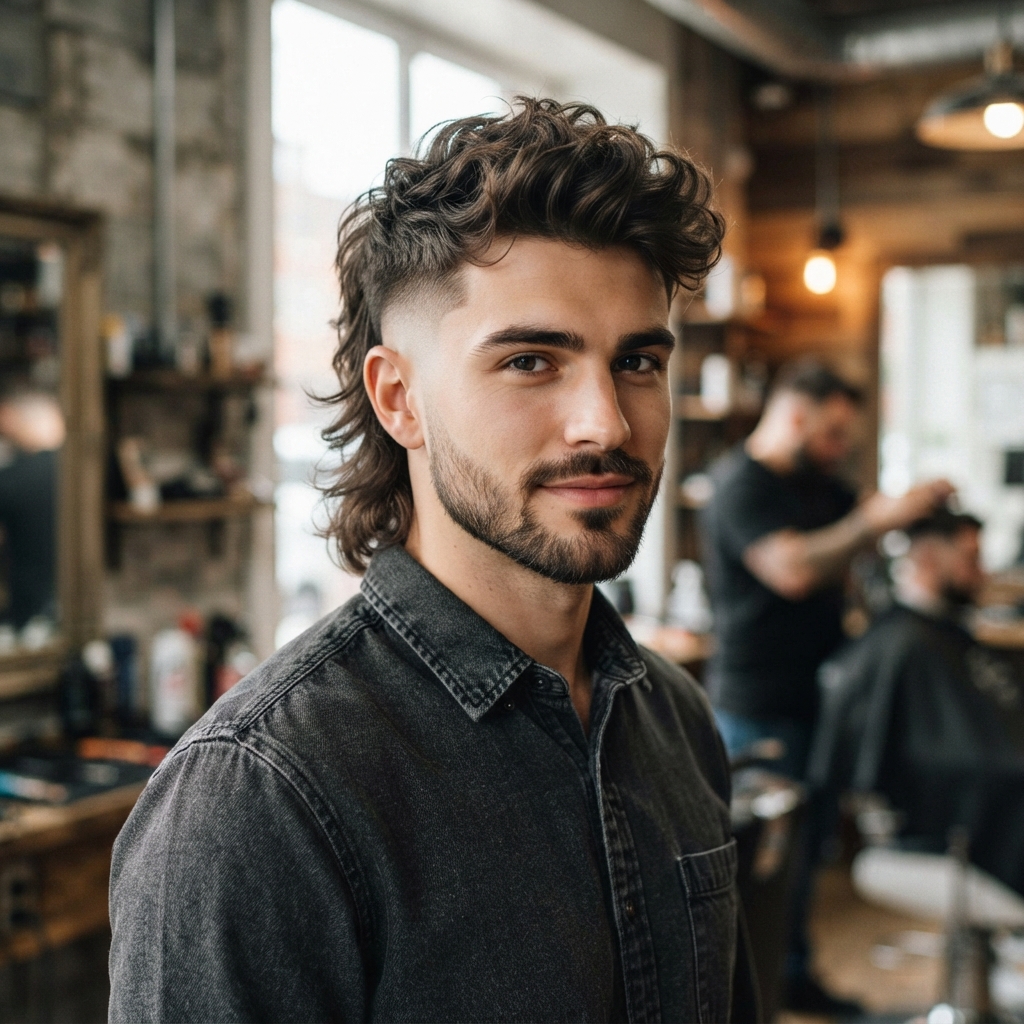
The high burst fade mullet is one of the most recognizable combinations.
The sides become tight around the ears while the back stays considerably longer.
The key is keeping enough hair through the crown to connect the top with the longer back. If the barber removes too much crown weight, the mullet can lose its natural flow.
This combination is frequently featured among current high burst fade styles.
3. High Burst Fade Mohawk

A mohawk keeps a strip of longer hair running through the center of the head.
The high burst removes much of the side bulk while leaving the central section prominent.
This is one of the boldest versions of the haircut and works particularly well if you want a strong silhouette.
4. High Burst Fade Faux Hawk

A faux hawk offers a less extreme alternative to a traditional mohawk.
Keep the center section longer and style it upward.
This gives you the visual effect of a mohawk while allowing a more gradual transition between the top and sides.
5. High Burst Fade With Textured Crop
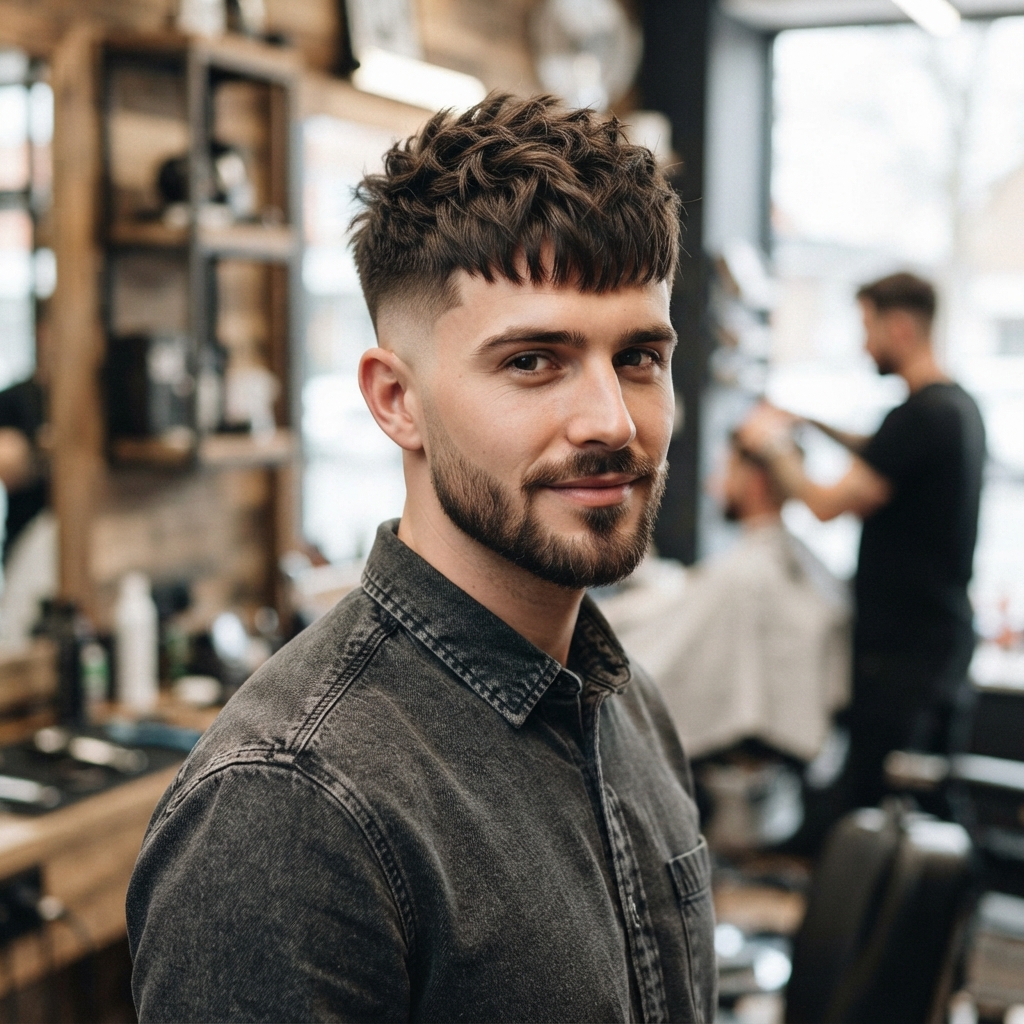
A short textured crop can make a high burst fade more wearable.
Ask your barber to keep the top short but add controlled texture.
This works particularly well with thick or medium-density straight and wavy hair.
6. High Burst Fade With Fringe
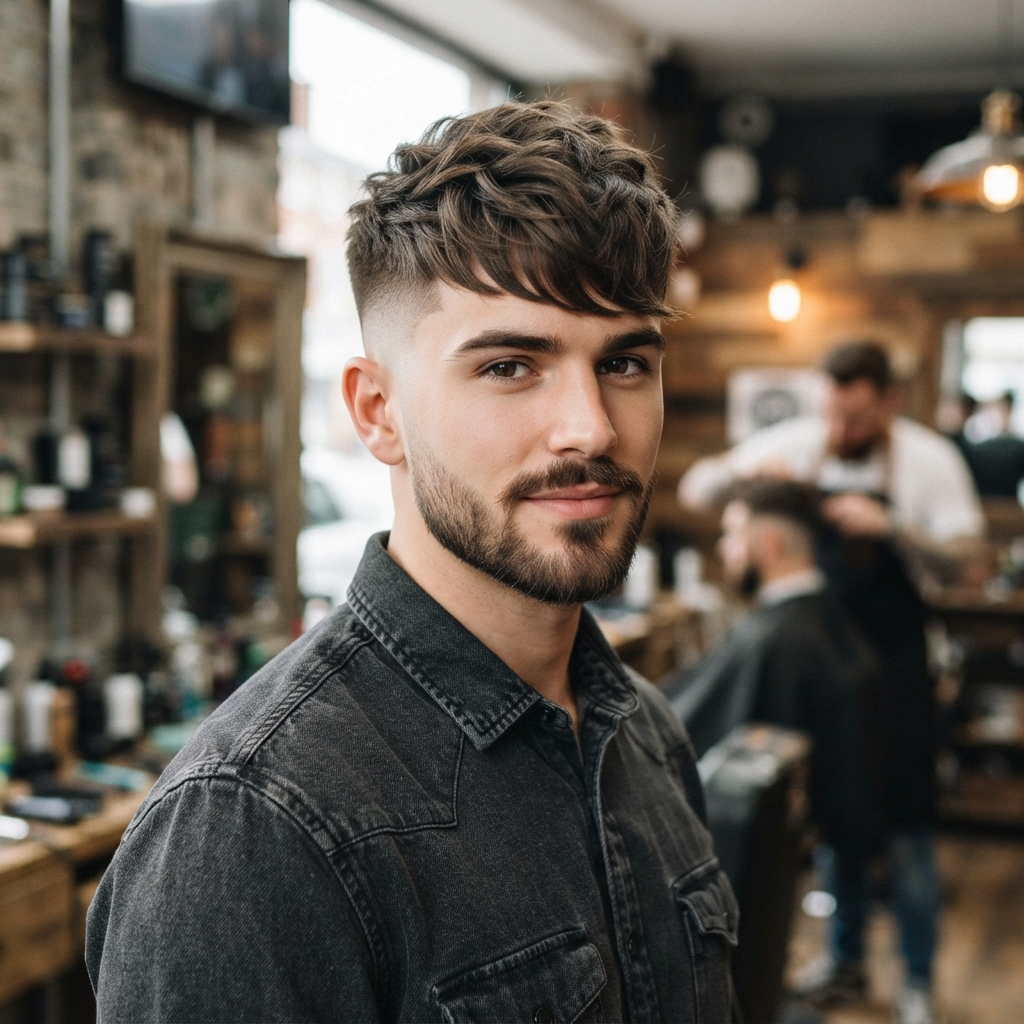
A textured fringe can balance the strong sides.
Instead of cutting the fringe into a perfectly straight line, ask for point-cut texture.
This gives the front a softer and more natural finish.
7. High Burst Fade With Curly Hair

Curly hair creates natural volume on top while the high burst controls the sides.
The contrast can be striking.
Don’t ask your barber to remove too much volume from the top if your curls are the main feature of the haircut.
8. High Burst Fade With Wavy Hair
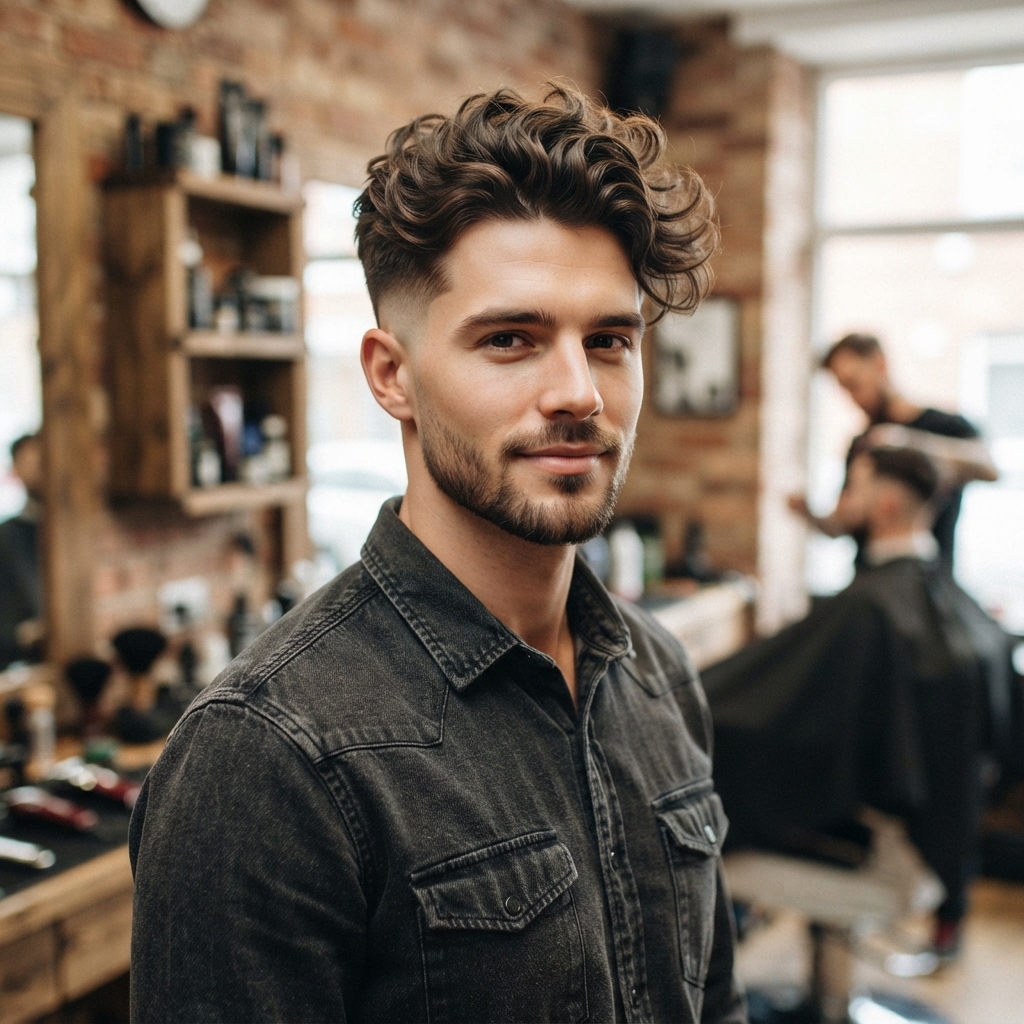
Wavy hair adds movement without requiring extreme styling.
Keep the top medium length and allow the natural waves to form.
A lightweight styling cream or matte paste can enhance definition.
9. High Burst Fade With Straight Hair
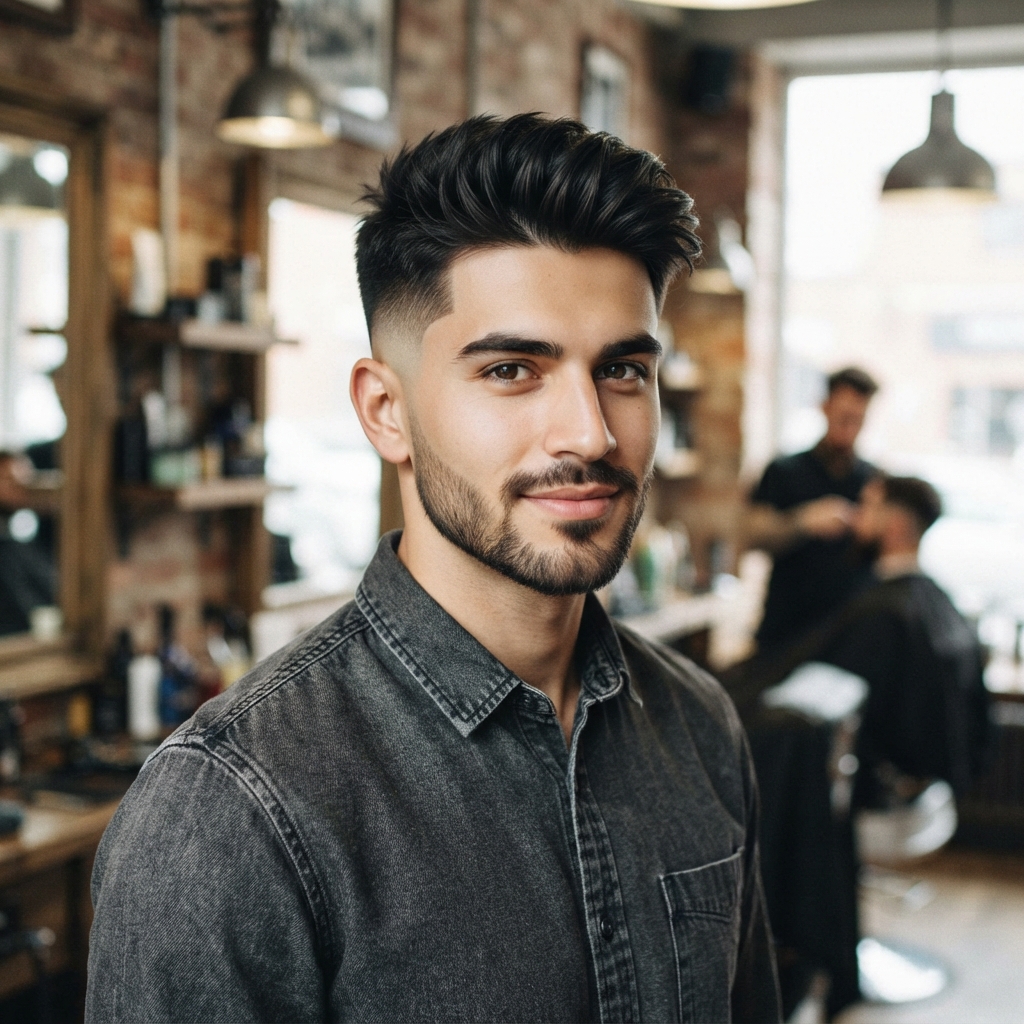
Straight hair makes the curved fade particularly visible.
The top can be styled into a quiff, side sweep, textured crop, slick back, or messy finish.
If your hair is fine, avoid taking the fade unnecessarily high because the additional contrast can make areas of lower density more noticeable.
10. High Burst Fade Buzz Cut
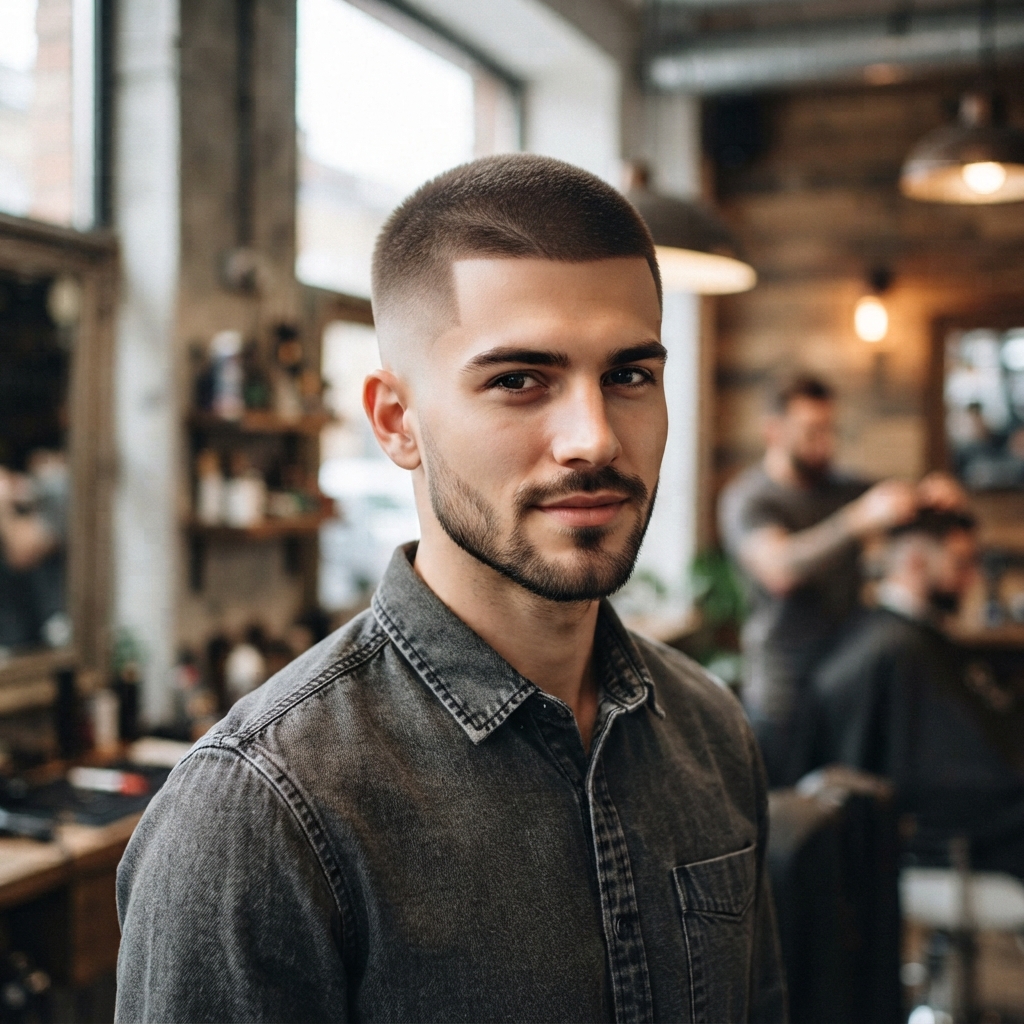
A buzz cut keeps the top extremely simple.
The high burst becomes the main visual feature.
This is a practical option if you want very little daily styling.
11. High Burst Fade With Side Part
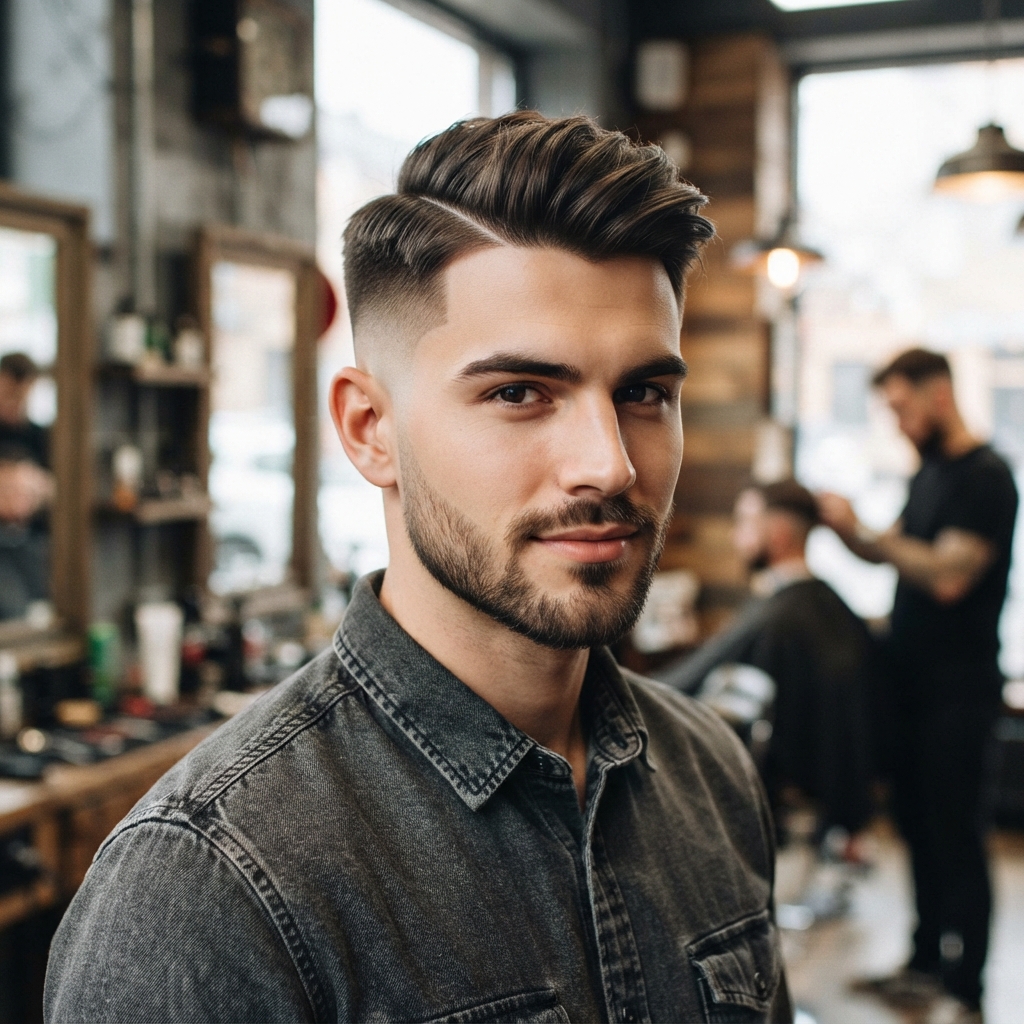
A side part gives the haircut a more traditional appearance.
However, the high burst itself remains quite noticeable, so this isn’t as conservative as a low taper.
Use a comb and light pomade for a polished finish.
12. High Burst Fade Pompadour

The pompadour adds substantial height to the top.
The high burst creates a sharp contrast underneath the volume.
This combination works best when your hair is thick enough to support the extra height.
13. High Burst Fade Slick Back

Keep the top long enough to brush backward.
Use a medium-hold pomade for a controlled finish.
This version looks more polished than a messy or textured high burst.
14. High Burst Fade With V-Shaped Back
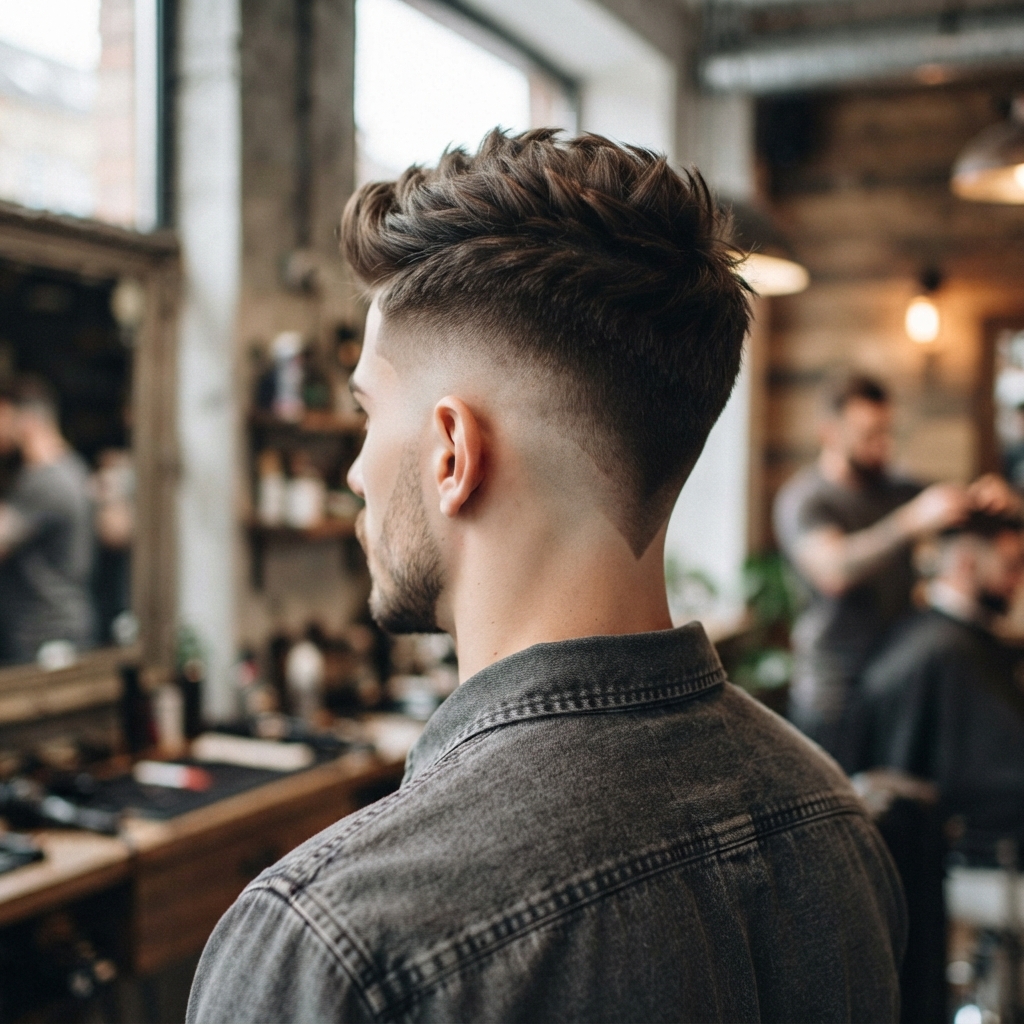
A V-shaped neckline adds another design element to the back.
It’s particularly effective when the haircut already has a strong shape, although it requires more precise maintenance.
15. High Burst Fade With Beard
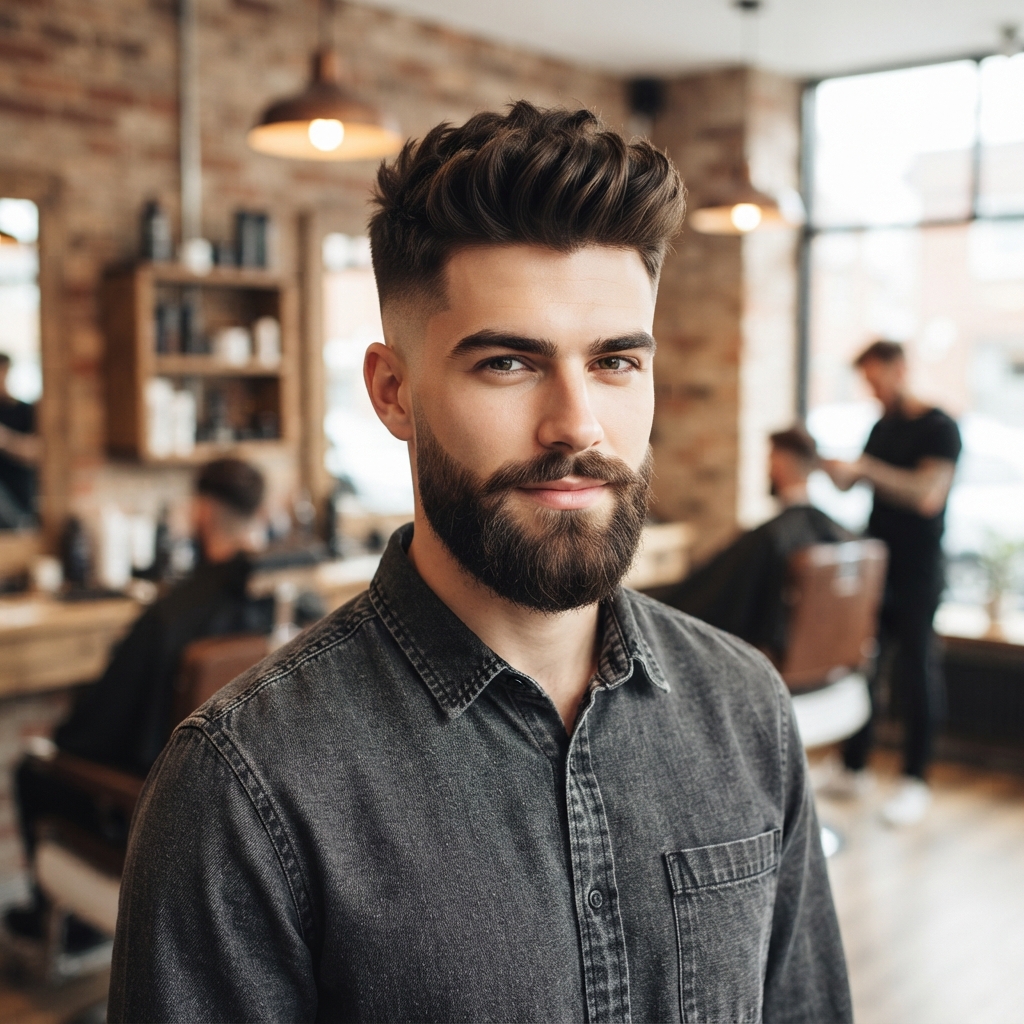
A beard can connect the haircut with your facial structure.
Ask your barber to blend the sideburn area naturally into the beard rather than creating an abrupt transition.
The beard length should complement the haircut instead of competing with it.
Which Hair Types Work Best?
A high burst fade can work with almost any texture, but the ideal version changes according to density and behavior.
Thick Hair
Thick hair is particularly flexible.
You can choose a high fade without worrying as much about losing visual fullness.
Textured crops, faux hawks, mullets, and quiffs can all work well.
Straight Hair
Straight hair makes the fade pattern highly visible.
A textured top can prevent the haircut from appearing flat.
Wavy Hair
Wavy hair adds natural movement.
Keep enough length on top to allow the wave pattern to develop.
Curly Hair
Curly hair provides natural volume and texture.
The high burst can remove side bulk while keeping the curls prominent.
Fine Hair
Fine hair needs more planning.
Taking the fade too high can expose more scalp and make the top look less dense.
A barber should consider your natural density before choosing the fade height.
How to Ask Your Barber for a High Burst Fade
Simply saying “high burst fade” may not give your barber enough information.
Explain these five things:
- How high you want the burst.
- Whether you want skin, zero, or shadow at the shortest point.
- How much length you want on top.
- How much length you want in the back.
- Whether you want a sharp or natural neckline.
A useful request is:
“I want a high burst fade that rises toward the temple and curves tightly around the ear. Take the shortest section down to skin, blend it smoothly, keep the crown connected, and leave enough length on top for texture.”
If you want a mullet, add:
“Keep the back long and don’t fade the center of the nape.”
This type of wording gives the barber much more information than simply naming the haircut.
Current barber guides also recommend specifying the height of the arc, shortest point, and what happens at the back before cutting begins.
Skin High Burst Fade vs Shadow High Burst Fade
The shortest length changes how aggressive the haircut looks.
Skin High Burst Fade
The shortest section reaches the scalp.
This creates maximum contrast.
It also grows out more noticeably, so regular appointments are important.
Shadow High Burst Fade
The shortest area retains a small amount of visible hair.
This creates a softer appearance.
It’s easier to grow out and may suit people who don’t want a very dramatic skin contrast.
How to Style a High Burst Fade
Your styling routine depends on the top.
For a Textured Style
- Start with slightly damp hair.
- Apply a small amount of matte paste.
- Work the product through the top.
- Use your fingers to separate sections.
- Finish with light hairspray if needed.
For a Quiff
Use a blow dryer to lift the front.
Apply a small amount of matte clay after creating volume.
For a Slick Back
Apply a medium-hold pomade.
Comb the hair backward while slightly damp.
Allow it to set naturally.
For Curly Hair
Use a lightweight curl cream.
Avoid heavy waxes that can weigh curls down.
How Often Should You Get a High Burst Fade?
If you want the fade extremely sharp, a 2 to 3 week cleanup is a practical schedule.
Some people can stretch it to three or four weeks if they prefer a softer appearance.
The curved area around the ear is usually where the haircut begins to lose its definition.
Current high burst fade guides commonly recommend approximately two to four weeks depending on how crisp the wearer wants the fade.
Common High Burst Fade Mistakes
Making the Burst Too High
Higher isn’t automatically better.
The fade should complement the face shape and top style.
Destroying the Crown Connection
This is especially important with mullets and mohawks.
The crown needs enough weight to connect the haircut properly.
Using Too Much Product
Heavy styling products can flatten fine or straight hair.
Start with a small amount.
Ignoring Hair Density
A high fade can expose scalp more clearly when hair density is low.
Discuss this with your barber before choosing a skin-level finish.
Making the Arc Uneven
The curved section is the defining feature.
The left and right sides should have a consistent shape.
Confusing It With a Regular High Fade
A high burst fade doesn’t simply mean “very short sides.”
The curved pattern around the ear is essential.
Is a High Burst Fade Professional?
It depends on the workplace and how you style it.
A high burst with a short textured top can look relatively clean and controlled.
A high burst mullet or mohawk is considerably more noticeable.
If you work in a conservative environment, a low or mid burst may be easier to wear professionally.
Is a High Burst Fade High Maintenance?
The styling can be relatively simple, but maintaining the fade itself requires regular barber visits.
If you choose a skin finish, the contrast becomes noticeable quickly as the hair grows.
If you prefer less maintenance, ask for a shadow finish instead.
Frequently Asked Questions:
What is a high burst fade?
A high burst fade is a fade that starts high on the sides and curves around the ear while preserving more length through the top or center back.
Is a high burst fade good for straight hair?
Yes. Straight hair clearly shows the curved fade and works with crops, quiffs, side parts, and textured tops.
Is a high burst fade good for curly hair?
Yes. Curly hair provides natural volume on top while the fade removes excess side bulk.
What is the difference between a high burst fade and a high fade?
A high burst fade curves around the ear, while a conventional high fade generally creates a more continuous fade across the sides.
Does a high burst fade work with a mullet?
Yes. The burst removes side bulk while allowing the crown and back to remain longer.
How often should you get a high burst fade?
For a consistently sharp appearance, many people schedule a cleanup every two to three weeks.
Is a skin burst fade better than a shadow fade?
A skin finish creates stronger contrast, while a shadow finish looks softer and usually grows out more naturally.
Does a high burst fade suit a round face?
Yes. Pairing it with some height on top can create a more elongated visual appearance.
Can thin hair get a high burst fade?
Yes, but a barber should consider your density before taking the fade very high or down to skin.
What should I tell my barber?
Specify the fade height, shortest length, top length, back length, and whether you want a natural or sharp finish. Bring a reference photo for the most accurate result.
Conclusion
The high burst fade is a strong choice if you want a haircut with noticeable contrast and a distinctive shape around the ears. Its biggest advantage is versatility. You can combine the same fade pattern with a textured crop, buzz cut, quiff, curly top, faux hawk, mohawk, or mullet.
Before choosing one, think about your hair density, face shape, styling habits, and how frequently you want to visit the barber.
For a bold modern appearance, a high burst fade with a textured top or mullet is hard to ignore. If you want something easier to maintain, choose a shadow finish rather than taking the shortest section completely to skin.
The most important detail is precision. The arc around the ear needs to be symmetrical, smoothly blended, and connected properly to the top and back. That’s what separates a professionally shaped high burst fade from simply having very short sides.

Zaria Rhodes is the lead editor and content curator at Lyrinexa, passionate about music, storytelling, and lyrical expression. With a deep love for discovering the meaning behind songs, she brings clarity, creativity, and accuracy to every post. Zaria is dedicated to providing readers with authentic lyrics, thoughtful interpretations, and a seamless music-exploration experience.
