


A straight hair mullet pairs the sharpest version of a retro icon with the one hair texture built to show off its lines cleanly. Straight strands fall flat instead of curling into softness, so every taper, layer, and length break stays crisp from the first day to the last week before a trim.
This guide breaks down the most requested straight hair mullet variations for men, women, and girls, how to style one at home, which products actually work on flat, straight strands, and how the cut compares to its softer cousin, the wolf cut. Whether you want a subtle office-friendly taper or a full-length statement in the back, there’s a version of this cut built for your hair and your face shape.
What Is a Straight Hair Mullet?
A straight hair mullet is a haircut built on one simple rule: short hair through the front, top, and sides, with noticeably longer length left at the back and nape. On straight strands, that contrast reads instantly because the hair lies close to the head instead of curling or coiling to disguise the length break.
The front and crown are usually cut short enough to sit neat or slightly textured, the sides are tapered or faded, and the back is left long enough to graze the collar, shoulders, or beyond depending on how bold the wearer wants to go.
The cut traces back decades, with early versions showing up in different cultures long before it became a defining look of the 1980s rock and sports scenes. What’s changed in 2026 is the finish.
Modern barbers blend the sides with skin fades or tapers, add movement through the top with layering shears, and shape the back so it looks intentional rather than simply “grown out.” On straight hair specifically, this means the classic mullet silhouette without the extra bulk that thicker, curlier textures can add.
Read More: Low Fade Crew Cut Hairstyles: Clean, Modern, Easy
Why Straight Hair Is Perfect for a Mullet
Straight hair is arguably the easiest texture for a barber to cut a mullet on, and that’s both a strength and a warning. Every line, layer, and length change shows up exactly where the scissors or clippers put it, which means clean fades look razor sharp and any unevenness is just as visible.
Here’s why straight strands work so well for this style:
- Clear contrast. Straight hair emphasizes the short-to-long drop that defines the mullet, so the shape reads instantly even from a distance.
- Sharper fades. Tapers and skin fades blend more smoothly against flat hair than against wavy or curly textures, which can obscure the gradient.
- Easier daily styling. Straight hair requires less product and effort to lie in place, so upkeep between barber visits is genuinely low.
- Better shine and definition. Light reflects more evenly off straight strands, which gives the cut a polished, deliberate look rather than a messy one.
The trade off is that straight hair can sit flat at the crown, so most stylists recommend adding light layering or a bit of root lift through styling to stop the top from looking pancaked against the head.
Straight Hair Mullet Variations
There isn’t one single straight hair mullet. It’s a family of cuts that share the same short-to-long structure but change dramatically depending on length, fade style, and how much texture is layered in. Below are the versions barbers report being asked for most often in 2026.
Classic Straight Hair Mullet
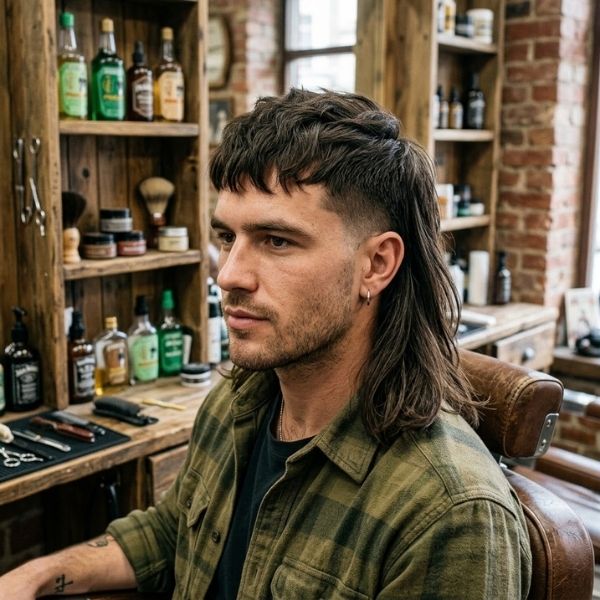
The classic version sticks closely to the original 1980s shape: short, blunt front and sides with a solid block of length left at the back, cut with minimal layering. On straight hair, this reads as clean and slightly retro, with well-defined lines rather than soft, blended edges. It’s a strong pick for anyone who wants the nostalgic silhouette without a lot of modern styling added on top.
Modern Straight Hair Mullet
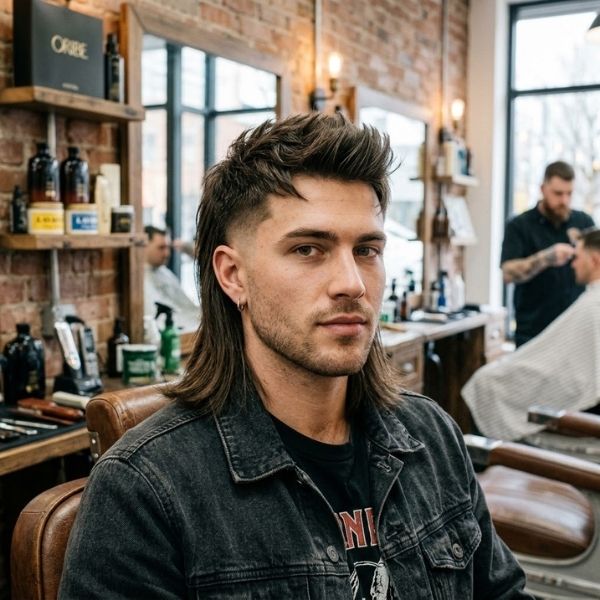
The modern take softens the classic shape with a blended fade on the sides, subtle layering through the crown, and a back section that’s shaped rather than left blunt. It’s the most requested version for men who want the edge of a mullet with a finish that still looks intentional in professional settings. Straight hair keeps the fade lines sharp while the added texture on top stops the style from looking dated.
Straight Hair Mullet with Taper Fade
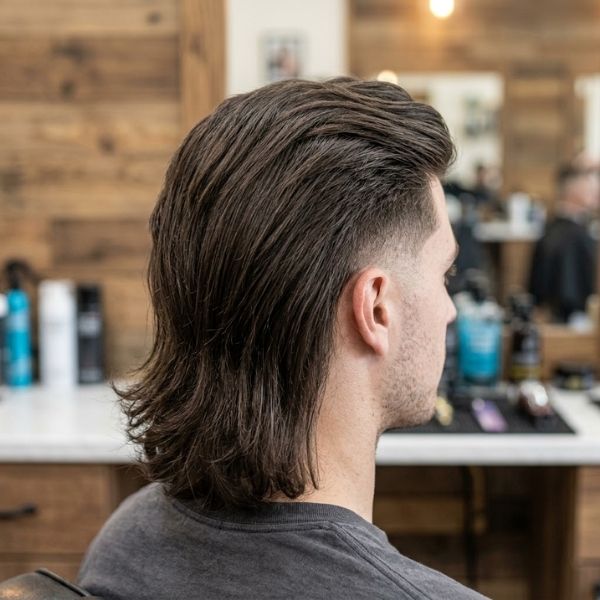
A taper fade gradually shortens the hair from the crown down toward the neckline without cutting all the way to the skin. Paired with straight hair, this creates a soft but visible gradient that frames the face without the high contrast of a skin fade. It’s a versatile middle ground: sharper than a scissor-cut side, more forgiving than a full fade.
Low Taper Straight Hair Mullet
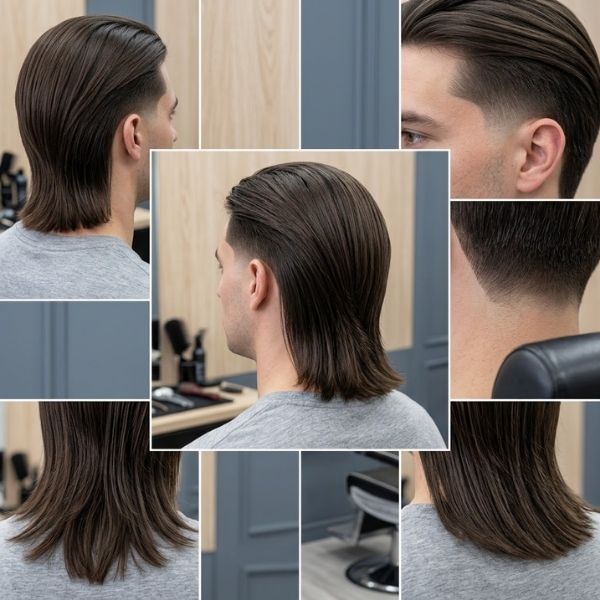
The low taper keeps the fade close to the hairline and neck, leaving more length through the sides and top compared to a high or mid taper. This is often described as the safest entry point into mullet territory because the length reduction is gradual and subtle, making it easier to grow out or adjust later. It suits anyone easing into the cut for the first time.
Straight Hair Mullet Fade
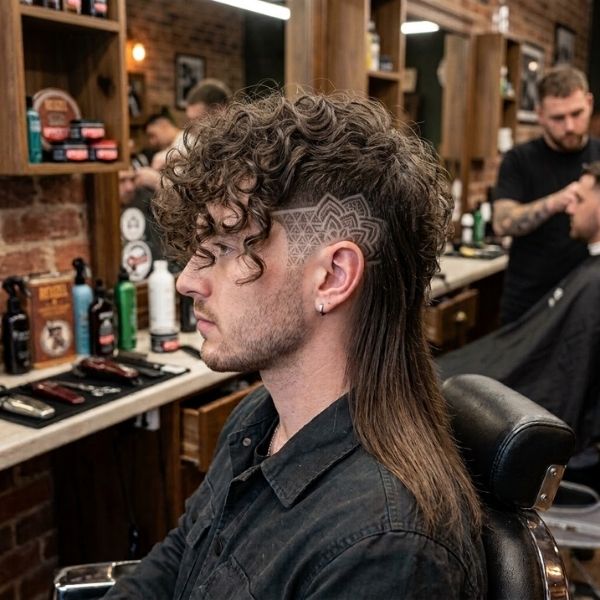
This is the umbrella term for any mullet where the sides are cut using clippers rather than scissors, ranging from a soft taper to a skin-tight fade. On straight hair, a fade delivers the cleanest possible line between the short sides and the longer top and back, which is why it has become the default request at most modern barbershops.
Short Straight Hair Mullet
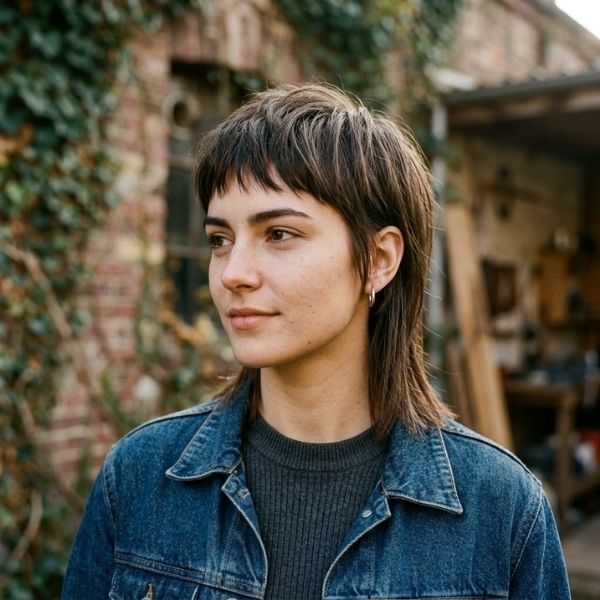
For a lower-commitment version, the short mullet trims the back down to a minimal length, often just enough to graze the collar. It keeps the mullet’s signature short-to-long structure while staying far more manageable day to day, making it a popular choice for workplaces with more conservative grooming expectations.
Long Straight Hair Mullet
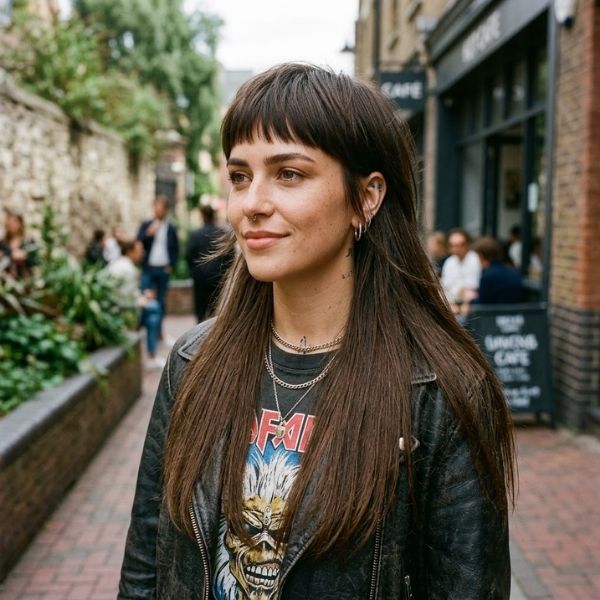
At the opposite end, the long mullet lets the back grow past the shoulders for a dramatic, standout shape. Straight hair suits this length particularly well because it hangs in a straight line rather than curling and losing definition, so the length itself becomes the statement.
Layered Straight Hair Mullet

Adding layers throughout the top and back introduces movement and volume, which helps counter the tendency of straight hair to lie flat. A skilled barber uses point cutting or razor work to break up the blunt edges, giving the cut a slightly tousled, lived-in finish without sacrificing the core mullet shape.
Straight Hair Mullet with Fringe or Bangs
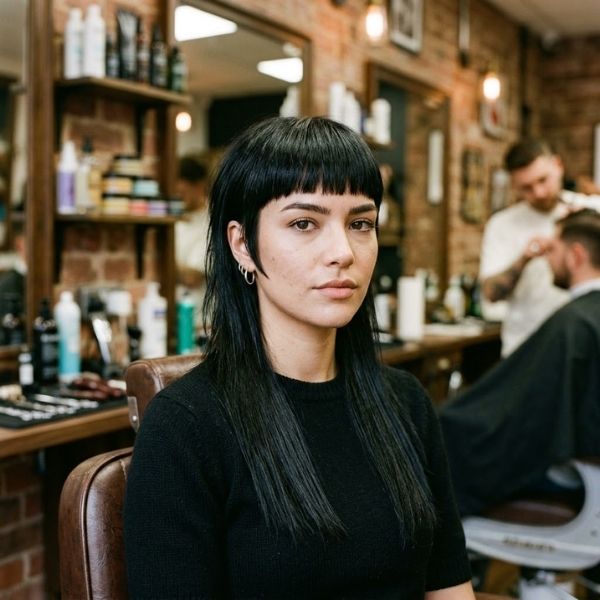
Bringing a straight, blunt fringe to the front adds a youthful, face-framing element to the cut. The fringe can sit anywhere from eyebrow length to a longer, side-swept style, and it pairs particularly well with straight hair since the fringe holds its shape without curling upward through the day.
Straight Hair Shag Mullet

The shag mullet blends heavier, uneven layering throughout with the classic mullet outline, drawing on 1970s shag styling. On straight hair it needs a bit more product to hold the tousled texture, since straight strands don’t naturally hold the “undone” look the way wavy or curly hair does, but the payoff is a rock-inspired, textured finish that still keeps the length contrast intact.
How to Style a Straight Hair Mullet
Styling a straight hair mullet at home doesn’t take long once you know the order of operations. Follow these steps for a clean, everyday finish:
- Start on towel-dried hair. Work styling product through damp, not soaking wet, hair for even distribution.
- Add lift at the crown first. Since straight hair falls flat, blow-dry the roots upward with a round brush before touching the rest of the head.
- Blow-dry the front and top. Direct airflow forward or back depending on the style, shaping the fringe or top layers as you go.
- Shape the back last. Straighten or smooth the longer back section with a flat iron or brush for a sleek finish, or scrunch in texturizing spray for a more tousled look.
- Finish with a light product. A small amount of pomade, clay, or texturizing spray locks the shape in place without weighing straight hair down.
The whole process usually takes under ten minutes once you’re used to your own hair’s length and thickness, which is part of why straight hair mullets are considered relatively low maintenance day to day.
Read More: Burst Fade Mullet 2026: 25 Clean Styles That Look Bold
Best Products for a Straight Hair Mullet
| Product Type | Best For | Why It Works |
| Texturizing spray | Shag and layered mullets | Adds grip and lift without heaviness |
| Sea salt spray | Tousled, undone finishes | Creates a matte, lived-in texture |
| Matte clay or paste | Modern and taper fade mullets | Offers flexible hold with a natural look |
| Volumizing mousse | Fine or thin straight hair | Lifts the roots and adds body at the crown |
| Light-hold gel | Classic and sleek mullets | Smooths flyaways for a polished finish |
| Heat protectant spray | Any style using a flat iron or blow-dryer | Shields straight strands from heat damage |
What to Tell Your Barber for a Straight Hair Mullet
Walking into a barbershop with the right language saves time and avoids a cut that misses the mark. Bring a reference photo if possible, and be specific about these details:
- The exact fade type you want (taper, low fade, skin fade, or scissor-only sides)
- How much length to leave at the back, described in inches or by a reference point like “collar length” or “past the shoulders”
- Whether you want a fringe, bangs, or a swept-back front
- How much layering or texture to add through the crown to prevent flatness
- How gradually the fade should blend into the longer back section
Mentioning that your hair is straight is also worth saying out loud, since a barber may adjust the layering technique to add volume that curlier textures get naturally.
Straight Hair Mullet Maintenance Tips
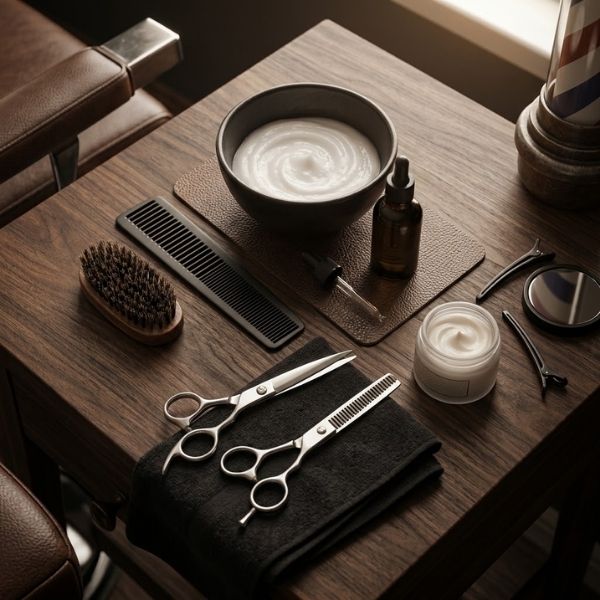
A straight hair mullet is easier to maintain than most trend cuts, but a few habits keep it looking sharp between visits:
- Book a trim every four to six weeks to keep the fade or taper from growing out unevenly.
- Wash with a volumizing shampoo and conditioner to stop fine, straight hair from looking limp.
- Use a nourishing conditioner or occasional deep treatment, since longer back sections are more prone to dryness and split ends.
- Avoid overloading the crown with heavy product, which can make straight hair look greasy rather than textured.
- Protect the longer back length with a heat protectant before using a flat iron or blow-dryer.
Skipping trims is the most common mistake, since the short front sections grow out visibly faster than the longer back, which throws off the entire silhouette.
Straight Hair Mullet for Men
For men, the straight hair mullet is currently one of the most requested barbershop cuts, ranging from subtle low tapers suitable for office settings to bold, long-back versions worn by musicians and athletes. Popular combinations include a skin fade on the sides with a textured top and a moderate length in the back, or a fully classic cut with blunt, minimal layering for a more retro feel. Straight hair gives men’s mullets a sharp, high-contrast finish that’s harder to achieve with wavy or curly textures.
Straight Hair Mullet for Women

Women’s straight hair mullets lean into softer layering and often incorporate a fringe or curtain bangs to frame the face. Because straight hair holds a sleek finish so easily, women’s versions frequently pair the cut with a glossy, polished look rather than a rougher, shag-inspired texture, though both directions are common depending on personal style.
Face-framing layers at the front combined with length left at the back create a versatile shape that works from casual days to styled-out evenings.
Straight Hair Mullet for Girls
For younger wearers, a straight hair mullet is typically cut with softer, more subtle contrast than adult versions, keeping the sides only lightly shorter than the back rather than using a hard skin fade.
This makes the style easier to maintain for school and extracurricular activities while still giving a modern, on-trend shape. Parents and stylists often favor a shorter back length for younger girls, since it’s easier to manage day to day and grows out more gracefully.
Read More: Is Mychael Schnell Married? Husband & Personal Life Facts
Straight Hair Mullet vs. Wolf Cut
The mullet and the wolf cut are frequently confused because both feature shorter hair up top and longer hair toward the back, but the finished shapes are distinct.
- Contrast: The mullet has a sharp, intentional break between the short front and long back. The wolf cut blends its layers gradually, so there’s no hard line.
- Layering: A mullet uses fewer, more structured layers. A wolf cut relies on heavy, even layering throughout for a fluffier, rounder silhouette.
- Overall finish: The mullet reads as bold and retro. The wolf cut reads as soft, tousled, and more casual.
- Maintenance: Mullets need more frequent trims to keep the sharp contrast clean, while wolf cuts grow out more naturally thanks to their blended layers.
- Best hair type: Straight hair suits the mullet’s precise lines especially well, while the wolf cut tends to look fuller on wavy or curly textures.
If you want a dramatic, high-impact shape with clearly defined sections, the mullet is the stronger choice. If you’d rather have a softer, more forgiving cut that still plays with length contrast, the wolf cut is worth considering instead.
Best Face Shapes for a Straight Hair Mullet
Most face shapes can wear a straight hair mullet with the right adjustments from a barber, but certain shapes pair especially well with specific variations:
- Oval faces: Almost any mullet variation works, since oval faces are naturally balanced.
- Square or angular faces: Structured, modern mullets with a defined taper fade complement strong jawlines.
- Round faces: Added volume and height at the crown, paired with a longer back, helps elongate the face.
- Long or rectangular faces: Softer layering and a fringe help break up length and add width visually.
- Heart-shaped faces: A fringe or side-swept front balances a wider forehead with a narrower chin.
A good barber will adjust fade height, crown volume, and fringe length based on your specific face shape rather than applying a single template to everyone.
Frequently Asked Questions
Can you get a mullet with straight hair?
Yes. Straight hair is actually one of the easiest textures for a barber to cut a clean, well-defined mullet on.
Is a straight hair mullet high maintenance?
No, it’s considered low to moderate maintenance, needing a trim roughly every four to six weeks and minimal daily styling.
Does a straight hair mullet suit thin or fine hair?
Yes, though volumizing shampoo, mousse, and root-lifting techniques help prevent fine, straight hair from looking flat.
How long does it take to grow out a straight hair mullet?
Growing the front and sides to match the back length typically takes several months, depending on how short the initial fade was cut.
What’s the difference between a mullet and a wolf cut on straight hair?
A mullet has a sharp, visible break between the short front and long back, while a wolf cut blends its layers gradually with no hard line.
Conclusion
A straight hair mullet works because the texture itself does half the job, holding every taper, layer, and length break exactly where it’s cut. Whether you’re drawn to a subtle low taper, a bold long-back statement, or a softer shag-inspired finish, straight hair adapts to nearly every variation of this cut without demanding heavy daily styling.
The key is choosing a version that fits your face shape and lifestyle, communicating it clearly to your barber, and keeping up with regular trims so the short-to-long contrast stays sharp. With the right cut and a light styling routine, a straight hair mullet can be one of the easiest standout hairstyles to live with in 2026.

Zaria Rhodes is the lead editor and content curator at Lyrinexa, passionate about music, storytelling, and lyrical expression. With a deep love for discovering the meaning behind songs, she brings clarity, creativity, and accuracy to every post. Zaria is dedicated to providing readers with authentic lyrics, thoughtful interpretations, and a seamless music-exploration experience.

1 thought on “Straight Hair Mullet Guide 2026: Styles, Fade, and Easy Care”