


If you’ve scrolled through barbershop photos lately, you’ve probably noticed one cut showing up again and again: the mid burst fade. It sits in that sweet spot between subtle and sharp, curving cleanly around the ear instead of following a straight line down the side of the head. That curved detail is exactly what makes it look more custom than a standard fade, and it’s a big reason barbers report more requests for it every season.
This guide breaks down what a mid burst fade actually is, how it compares to a regular mid fade and a drop fade, which version fits your hair type and face shape, exactly what to say in the chair, and a realistic week-by-week maintenance plan so it doesn’t grow out looking patchy. By the end, you’ll know enough to walk into any barbershop and get the cut you actually pictured.
What is a mid burst fade?

A mid burst fade is a men’s haircut where the sides and back fade down starting at the midpoint of the head, roughly between the temple and the ear, while the hair curves around the ear in a rounded shape instead of a straight taper line. The top is usually left longer, which lets the shorter sides “burst” outward into visible length.
Unlike a plain buzz or crew cut, the fade does the heavy lifting here. The barber blends clipper guards from short to long in smooth stages, so there’s no harsh line between the skin-close sides and the fuller top. The mid placement means it isn’t as dramatic as a high fade and isn’t as understated as a low fade, which is exactly why it works for so many face shapes and settings, from the office to a night out.
Why it’s called “burst”
The name comes from the shape of the fade itself. Instead of running in a straight horizontal line around the head, a burst fade curves in a semicircle around the ear, almost like a ray of light spreading outward. That rounded shape is the entire identity of the cut, and it’s what separates it visually from every other type of fade.
Because the curve wraps tightly around the ear, even a small amount of new growth changes how defined that arc looks. That’s one reason this style has a reputation for needing more attentive upkeep than a straight taper, a point we’ll come back to in the maintenance section.
Mid burst fade vs regular mid fade
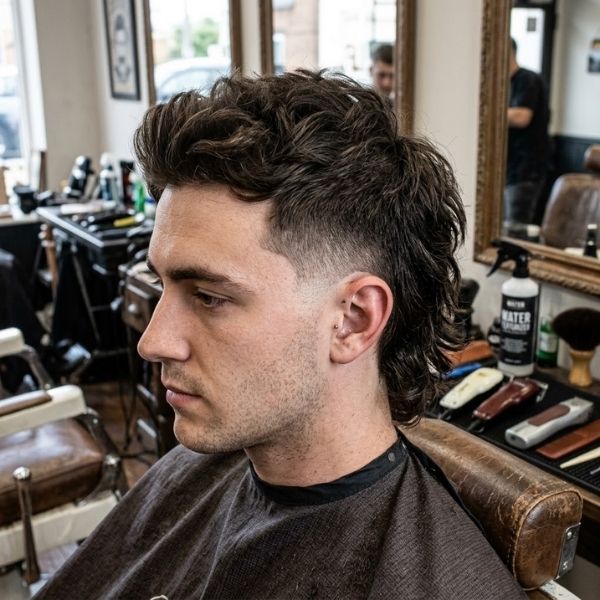
A regular mid fade tapers in a straight line that runs roughly parallel to the hairline, starting between the temple and the ear and gradually blending down to the skin. A mid burst fade takes that same starting height but wraps the fade around the ear in a curve rather than a straight line.
In practical terms, a standard mid fade looks clean and linear from the side profile. A mid burst fade looks more sculpted and three-dimensional, and it tends to draw more attention to the ear and jawline area. If you want something classic and low-key, ask for a mid fade. If you want a cut that photographs well and has a bit more personality, the burst version is the better call.
Read more: 15 Best Wavy Mullet Haircuts That Are Trending in 2026
Low vs mid vs high burst fade and drop fade

Burst fades are typically grouped by where the fade begins on the head:
- Low burst fade. Starts just above the ear. Subtle, professional, and the easiest to grow out without looking messy.
- Mid burst fade. Starts between the temple and the ear. Balanced contrast, works with most face shapes and hair densities.
- High burst fade. Starts well above the ear, closer to the temple or crown. Bold contrast, but needs the most frequent touch-ups since regrowth shows fastest.
A drop fade is a related but distinct style. Instead of curving around the ear and stopping, a drop fade continues its curve down and back, following the natural curve of the skull toward the nape of the neck. The top hair in a drop fade usually doesn’t extend all the way to the neckline, while a burst fade often does.
Mid burst fade vs drop fade

The easiest way to tell them apart is to look at what happens behind the ear. A mid burst fade keeps its rounded shape isolated near the ear, almost like a spotlight. A drop fade extends that curve further back and lower, wrapping around the base of the skull for a more continuous, sculpted outline.
Hair type also plays a role in which one suits you better. Burst fades tend to pair naturally with curly, coily, and textured hair because the circular shape complements volume on top. Drop fades often look cleanest on straight or wavy hair, since the extended curve reads more smoothly without a lot of texture interrupting the line. Neither is objectively better; it comes down to the shape you want and how your hair naturally sits.
Best mid burst fade styles by hair type
One reason the mid burst fade has stayed popular is that it adapts to nearly every hair texture, density, and length on top. Here’s how it looks across different hair types and finishing styles.
Mid burst fade curly hair
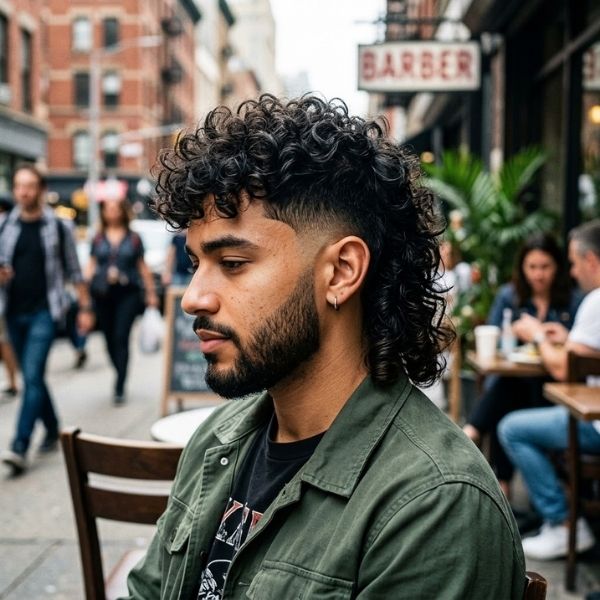
Curly hair and burst fades were made for each other. The rounded fade line echoes the natural bounce and shape of curls, so the whole cut looks intentional rather than accidental. Ask your barber to leave enough length on top to let the curl pattern show, and keep the fade itself tight and well-defined so it contrasts against the volume above it. A curl-defining cream or light gel works better here than a heavy pomade, which can weigh curls down and flatten the shape.
Mid burst fade straight hair

Straight hair shows the fade’s clean lines more clearly, since there’s no texture to soften the transition. This makes precision especially important; any unevenness in the blend will be obvious. A textured crop or slightly longer top with a side part both work well, since straight hair holds a defined part line without much product. A matte clay or light pomade gives hold without unwanted shine.
Mid burst fade textured fringe
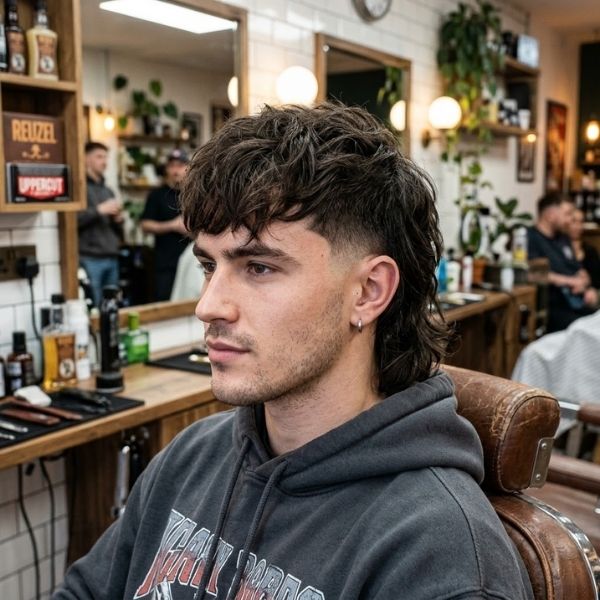
Pairing the mid burst fade with a textured fringe brings the length forward instead of styling it back or up. The fringe is usually point-cut or texturized with thinning shears so it falls naturally over the forehead rather than sitting as a blunt, heavy line. This combination suits round and oval face shapes particularly well, since the fringe can be styled to break up the width of the forehead.
Read more: Messy French Crop Haircuts: Fast Style, Sharp Results
Mid burst fade short hair and mid burst fade buzz cut
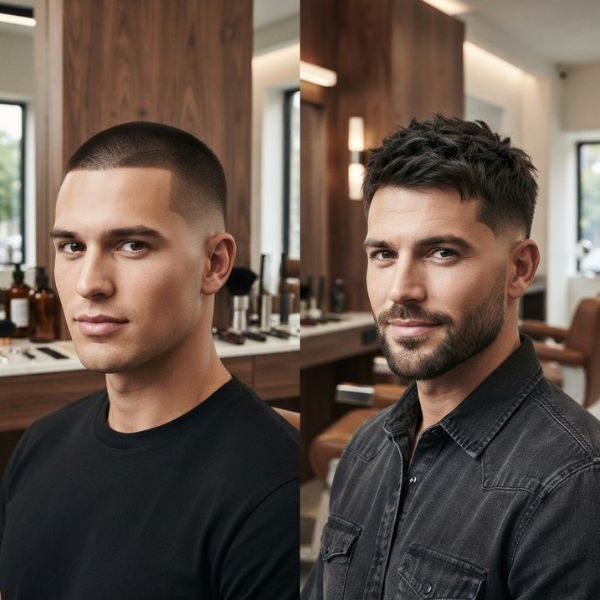
If you prefer low maintenance, keeping the top short (around a quarter to half an inch) still lets the burst fade do the visual work without any daily styling. The buzz cut version takes this even further, using one length on top and letting the fade provide all the contrast. It’s one of the lowest-effort combinations available, since there’s no length on top to style, brush, or apply product to.
Mid burst fade mullet and mid burst fade mohawk
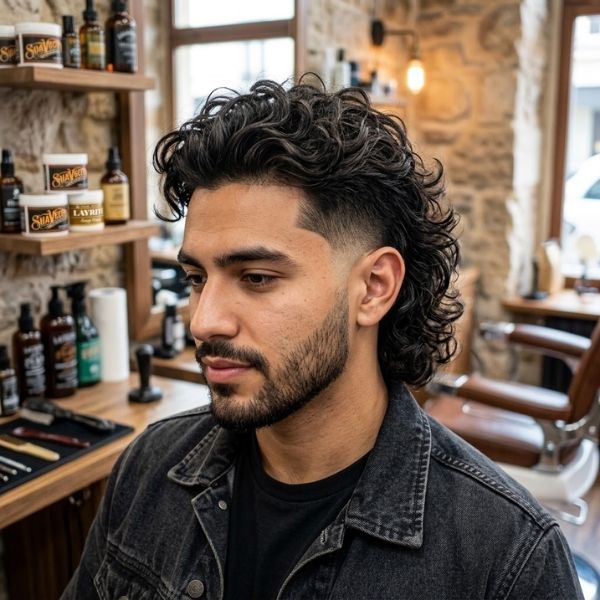
The mullet version keeps noticeably longer hair at the back and crown while the fade curves cleanly around the sides and ears. It’s a bolder, more fashion-forward take and has become one of the most requested mid burst fade variations among younger clients in the past year.
The mohawk pairing works differently: hair is left in a strip running from the forehead to the crown or nape, while everything on either side gets the mid burst treatment. This version needs the most frequent trims since the contrast between the strip and the shaved sides is so extreme that any regrowth is instantly noticeable.
Mid burst fade black men

On coarser, coily hair textures common among Black men, the mid burst fade tends to hold its sharp lines longer between cuts because tighter curl patterns disguise minor regrowth better than straight hair does. Barbers often combine this cut with a defined edge-up along the hairline for extra sharpness, and many clients pair it with a low or mid taper on top, a twist-out, or short natural texture. Line-ups along the front hairline and temple are especially popular here since they add another layer of precision to the overall look.
Mid burst fade with design and mid burst fade with V

Adding a design means shaving a pattern, usually a line, star, or lightning bolt, into the faded section for extra detail. Designs work best on lower or mid burst fades where there’s enough blank space in the fade to make the pattern visible.
A mid burst fade with a V refers to the neckline shape at the back, cut into a V point rather than a straight or rounded line. This detail is subtle from the front but adds a sharper, more tailored finish at the back of the neck, and it’s a simple upgrade to request even on a fairly standard cut.
What to tell your barber
Miscommunication is the most common reason a fade doesn’t turn out the way a client pictured it. Being specific saves both of you time and gets you closer to the result you want on the first try.
- Name the fade height clearly. Say “mid burst fade” specifically, not just “fade,” so your barber knows to start the taper between the temple and ear rather than higher or lower.
- Specify the guard length on top. Give a rough number, like a half inch or one inch, or point to a reference photo.
- Mention your hair type. If you have curly or coily hair, say so, since it changes how the barber approaches blending and length.
- Say whether you want a design or a V-shaped neckline. These are add-ons your barber won’t assume unless you ask.
- Bring reference photos. A photo removes the guesswork around exactly how curved and tight you want the burst shape.
- Ask about beard blending. If you have a beard, clarify whether you want the fade to connect into it seamlessly or stay separate for more contrast.
Maintenance schedule (week-by-week)
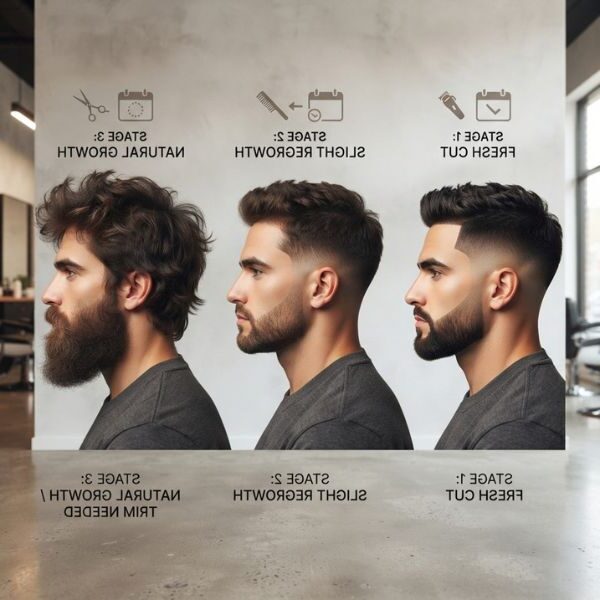
A mid burst fade looks its sharpest in the first few days after a cut, then gradually softens as hair grows back in. Here’s a realistic timeline for keeping it looking intentional between full barber visits.
- Week 1. The fade is at its cleanest. Stick to light styling products and avoid touching up the lines yourself; there’s nothing to fix yet.
- Week 2. The curved edge around the ear starts to soften slightly. This is a good time for a quick neckline and sideburn cleanup with a detail trimmer if you want to stretch the cut further.
- Week 3. Regrowth becomes visible, especially on high and mid burst fades. Most people book their next barber appointment around now, or do a light at-home touch-up with clippers on the longer guard settings only, never on the actual fade blend itself.
- Week 4 and beyond. The contrast between the fade and the top has mostly grown out. This is the natural point for a full reset with your barber, including re-establishing the burst shape around the ear.
Hair growth speed, hair density, and how high you set the fade all affect this timeline. A low burst fade can often stretch past three weeks, while a high burst fade usually needs attention closer to every two weeks to stay sharp.
Read more: Short Wolf Cut Men 2026: Best Styles for Every Hair Type
Common mistakes and quick fixes
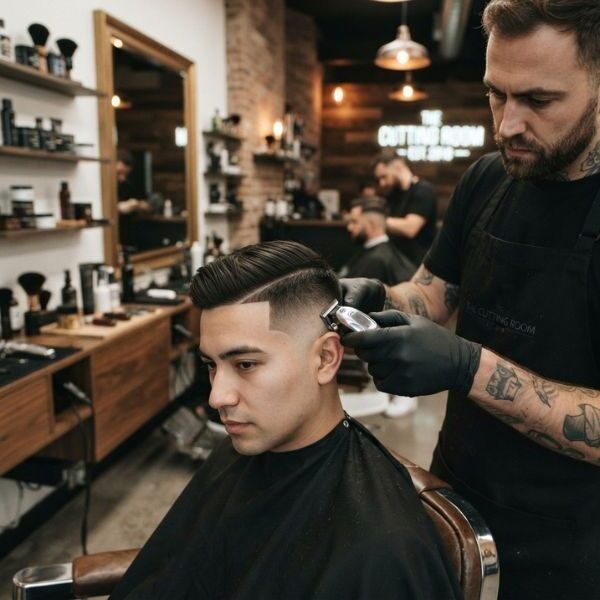
- Cutting your own fade blend at home. Detail trimmers are fine for necklines and sideburns, but the actual gradient blend is easy to mess up and hard to fix. Leave that part to your barber.
- Skipping reference photos. “Fade” means different things to different barbers. A photo closes that gap instantly.
- Over-drying with a rough towel. This roughens the hair cuticle and creates frizz that makes the fade line look less crisp. Pat dry or switch to a microfiber towel.
- Ignoring the neckline between cuts. The neckline grows in faster than most people expect. A quick trim every 10 to 14 days keeps the whole cut looking deliberate.
- Using heavy product on curly or coily hair. Thick pomades can flatten curl volume and work against the shape the burst fade is meant to highlight. Lighter creams or gels usually work better.
- Waiting too long between appointments. Letting a high or mid burst fade grow past four weeks makes the reset harder, since the barber has to work through more uneven length to re-establish the curve.
FAQs
How long does a mid burst fade last?
Most mid burst fades hold their sharp shape for two to three weeks before regrowth starts softening the curve around the ear.
Does a mid burst fade work with thin hair?
Yes, though the top is usually kept shorter so it doesn’t look flat, and a texturizing product adds the appearance of extra density.
Is a mid burst fade high maintenance?
It needs more frequent attention than a straight fade because the curved line around the ear shows regrowth quickly, but it’s manageable with touch-ups every two to three weeks.
Can I get a mid burst fade with long hair on top?
Yes, this pairs well with mullets, textured crops, and curly styles, since the length on top contrasts nicely against the tight fade.
What face shapes suit a mid burst fade best?
Oval, square, and round face shapes generally suit it well, since the curved fade line softens angles or adds definition depending on your natural shape.
Conclusion
The mid burst fade earns its popularity honestly. It’s sharp without being extreme, flexible enough to fit curly, straight, or coily hair, and easy to customize with a mullet, mohawk, design, or V-shaped neckline depending on your style. The real key to keeping it looking sharp is communication with your barber and a realistic maintenance rhythm, whether that’s a touch-up every two weeks or a full reset every month. Bring a reference photo, name the fade height clearly, and you’ll walk out with a cut that actually matches what you pictured in your head.

Zaria Rhodes is the lead editor and content curator at Lyrinexa, passionate about music, storytelling, and lyrical expression. With a deep love for discovering the meaning behind songs, she brings clarity, creativity, and accuracy to every post. Zaria is dedicated to providing readers with authentic lyrics, thoughtful interpretations, and a seamless music-exploration experience.

2 thoughts on “Mid Burst Fade: Best Styles, How to Ask, and Easy Care 2026”