


The modern mullet haircut pairs short, faded sides with longer, textured length at the back, turning the once mocked 80s cut into one of the most requested men’s hairstyles of 2026. Barbers now shape it with precision fades, layered texture, and clean lines instead of the choppy, uneven edges the style was once known for. This guide breaks down the best modern mullet variations for every hair type and face shape, shows you how to style one at home, explains where the cut actually came from, and answers the questions men ask most before booking the chair. Whether you want a subtle, office-friendly taper or a loud, statement-making shag, there is a version of this cut built for you.
Trending Types of Mullet Hairstyles (Modern Mullet)
The mullet is no longer a single look. It is a category of haircuts that share one idea: shorter hair up front, more length in the back. Below are the variations men are actually asking barbers for in 2026.
Long Mullet
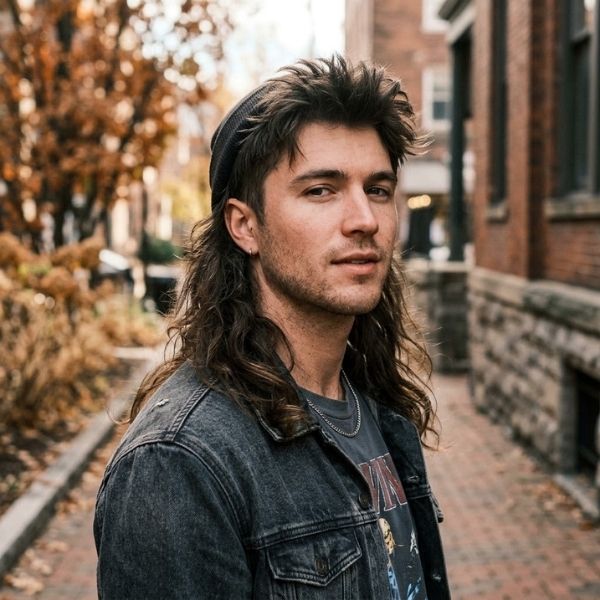
The long mullet keeps serious length at the back, sometimes past the collar, while the sides stay short and clean. It suits men with thick or medium hair who want maximum drama and don’t mind extra maintenance to keep the ends healthy.
Mullet Taper Fade
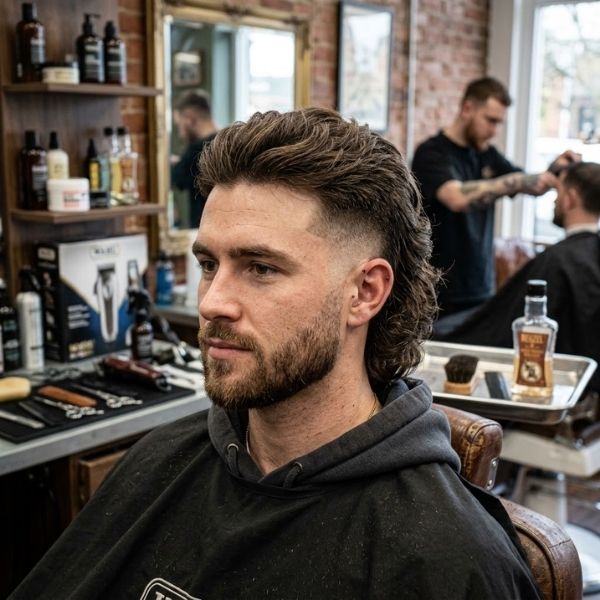
This version blends a gradual taper fade into short, tidy sides while the crown and back stay longer and textured. It is one of the most versatile modern mullet styles because it reads as sharp and professional from the front, yet still delivers the flowing back.
Read More: Low Fade Crew Cut Hairstyles: Clean, Modern, Easy
Mohawk Mullet
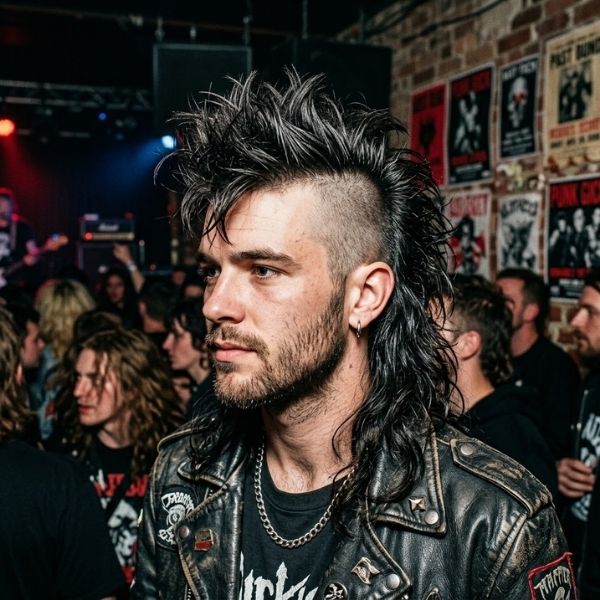
Sides are shaved down completely, leaving a strip of hair running from the forehead into a long tail at the nape. It borrows the edge of a mohawk and the flow of a mullet, making it a bold pick for men who already lean toward statement haircuts.
Short Mullet
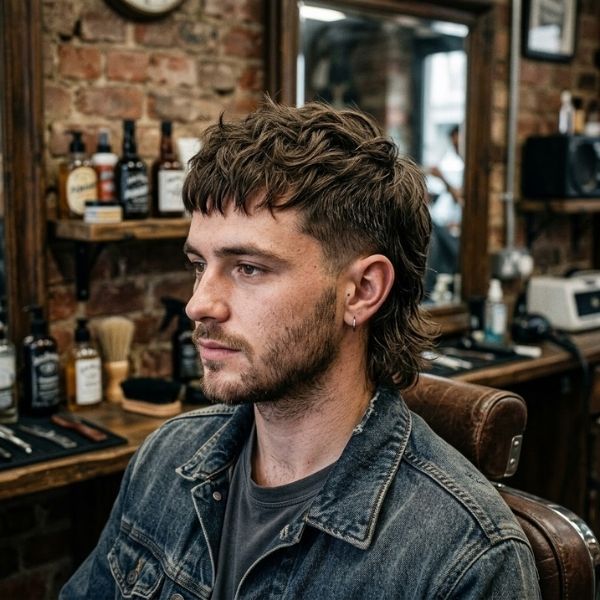
A short mullet trims the back down to a modest length instead of letting it flow past the shoulders, so it reads as a regular haircut at first glance. It is the easiest entry point for anyone trying the trend for the first time.
Burst Fade Mullet
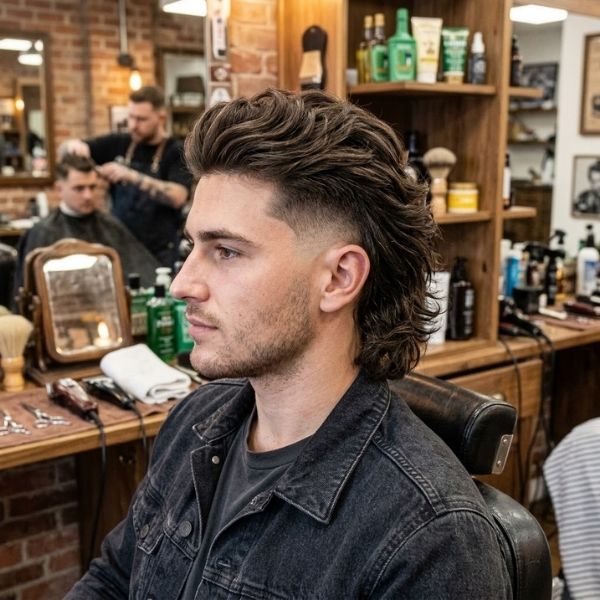
Instead of a straight fade line, the burst fade curves around the ear, blending into the longer back without a hard stop. This creates a rounder, more natural transition and works especially well with curly or wavy textures.
Curly Mullet

Natural curls add volume the moment length grows out at the back, so a curly mullet often needs less product to look full. Regular trims keep the curl pattern from turning into unwanted bulk on the sides.
Mullet Fade
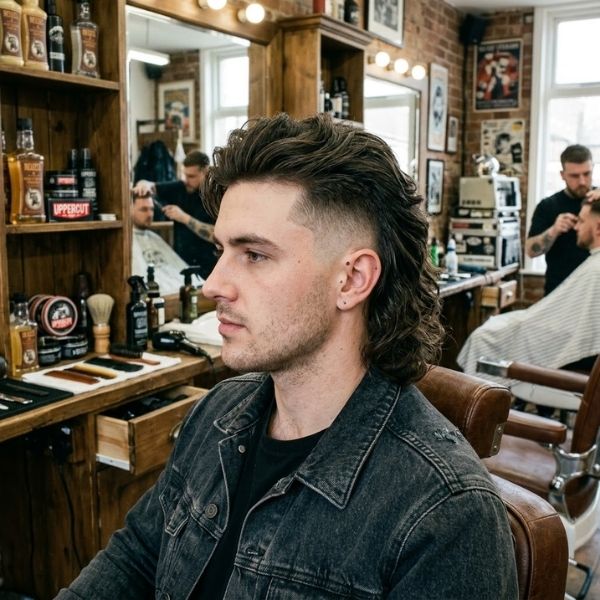
A broader term for any mullet finished with a clean fade rather than a scissor cut on the sides. It gives the style structure and contrast, since the sharp fade sets off the loose, longer hair on top.
Shaggy Mullet

Heavy layers and a deliberately undone finish define the shaggy mullet. It leans into the 70s rock influence and works best on medium to thick hair that can hold texture without going flat.
Two Block Mullet
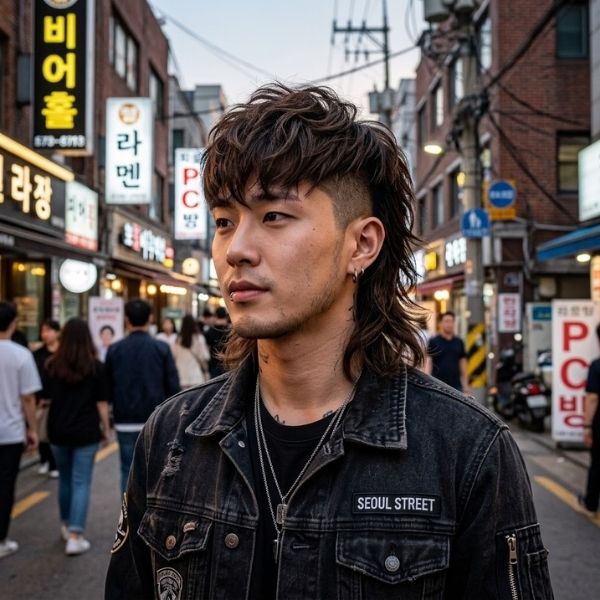
Borrowed from Korean barbering, the two block mullet keeps a disconnected line between short sides and a longer, thicker top and back. The visible break gives it a graphic, structured look that stands apart from softer, blended fades.
Trendy Short Mullet with Low Taper Fade
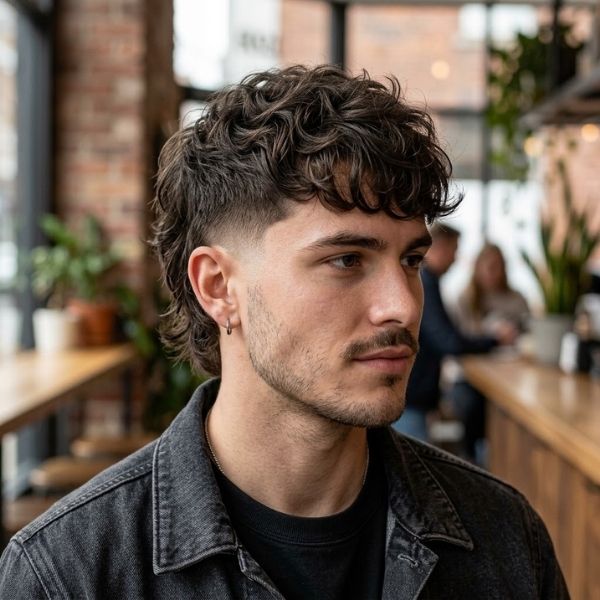
A low taper fade sits close to the hairline and skin fades gradually, keeping the sides subtle while a short mullet length stays wearable in most workplaces. It is one of the safest ways to try the trend without drawing too much attention.
Mullet Faux Hawk
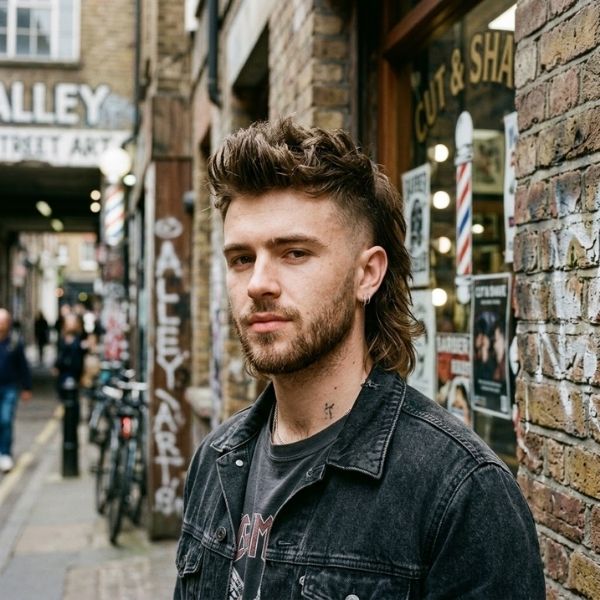
Sides are cut close and the top is styled upward into a faux hawk shape, with the back left long to carry the mullet element. Matte paste or clay helps hold the raised center section through the day.
Temp Fade Mullet
A temple fade, sometimes called a temp fade, trims only around the hairline and temples rather than fading the whole side. It keeps more natural hair density while still sharpening the front for a cleaner silhouette.
Faded Mullet with Fringe
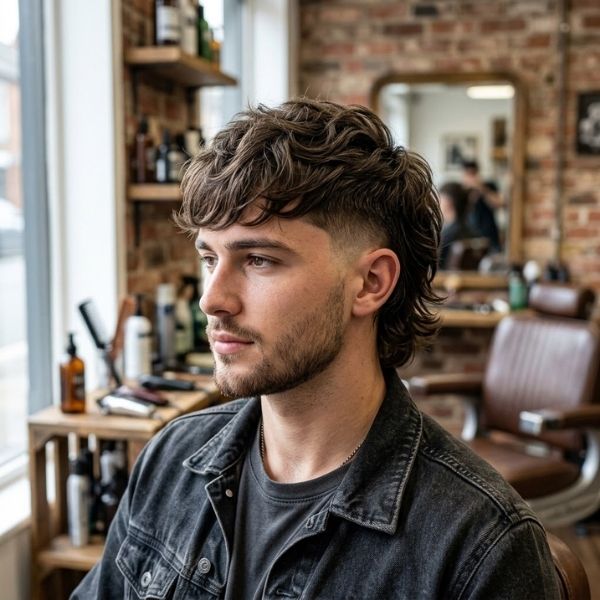
A soft, textured fringe falls forward over the forehead while the sides fade down and the back stays long. Barbers usually keep the fringe lightweight so it moves naturally instead of sitting heavy.
Fluffy Mullet
Blow-dried for volume and finished with a texture powder, the fluffy mullet has extra lift at the crown that makes fine hair look thicker. It photographs well and suits guys who like a soft, lived-in finish.
Sexy, Modern Mullet From The Back
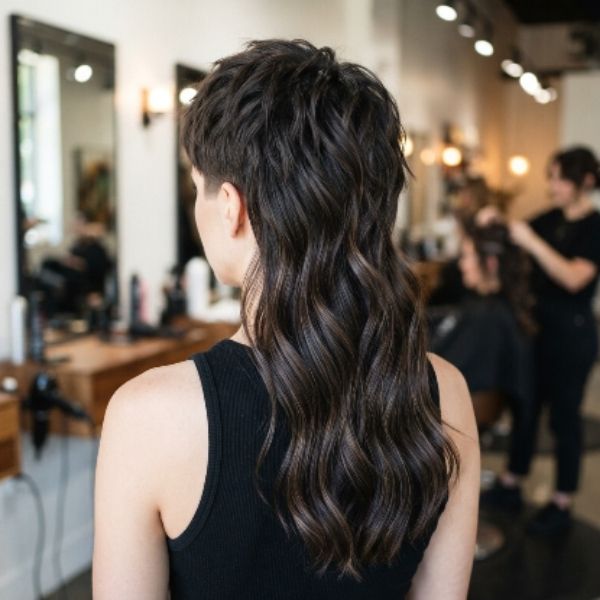
Viewed from behind, this style shows off layered, flowing ends that taper naturally rather than ending in a blunt line. It is less a separate cut and more proof that the back shape matters as much as the front.
Messy Mullet with Texture
Sea salt spray and a quick scrunch with the fingers give this mullet its deliberately undone look. It takes only a few minutes to style and hides the fact that a lot of precision cutting sits underneath.
Edgy Mullet with Beard
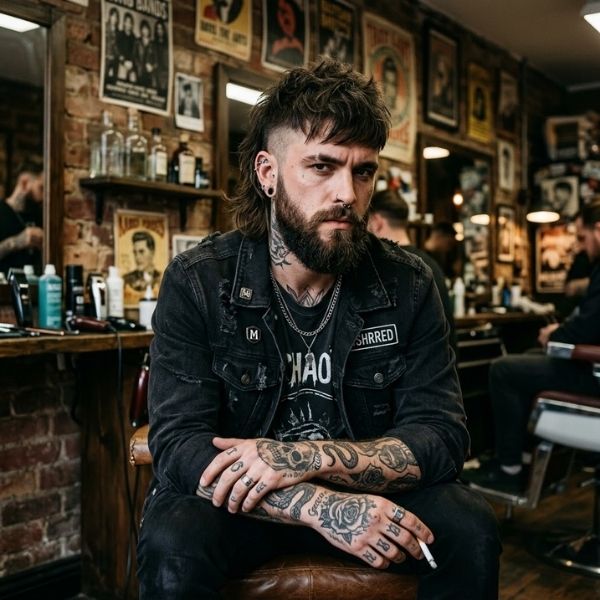
Pairing a textured mullet with a full, groomed beard turns the haircut into a complete look rather than just a cut. The beard balances the extra hair at the back and adds structure to the jawline.
Classy Mullet
A tighter taper, a neater part, and less exaggerated length at the back make the classy mullet appropriate for client meetings and formal settings. It proves the style can be dressed down without losing its identity.
Read More: Mid Burst Fade Best Styles, How to Ask, and Easy Care 2026
Quiff Mullet Fade
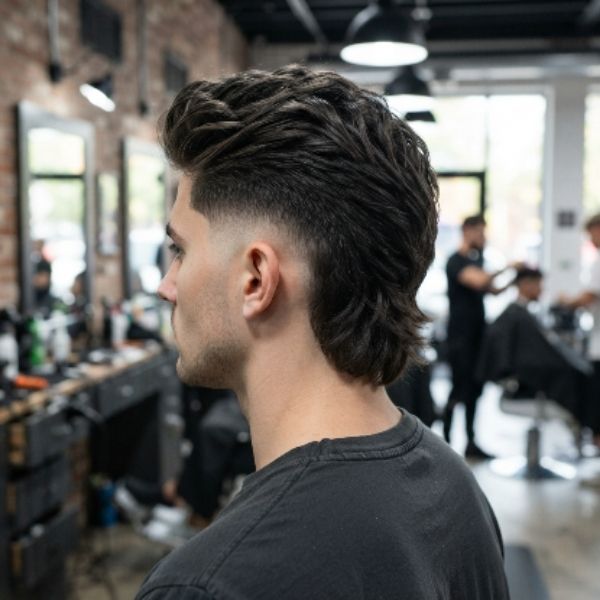
The front is styled up and back into a quiff, sides are faded close, and the back keeps traditional mullet length. It combines two retro-inspired trends into one modern silhouette.
Permed Mullet Taper
A loose perm adds curl and volume to straight hair, then a taper on the sides keeps the shape controlled. This is a popular choice for men who want the fullness of a curly mullet without naturally curly hair.
Medium Mullet

Sitting between the short and long versions, the medium mullet keeps enough length to layer and style but doesn’t require months of growing out. It is a practical middle ground for first timers who still want visible flow.
Spiky Mullet
Short, gelled spikes on top contrast with a longer, looser back section. The mix of structured front and relaxed back gives this variation an early 2000s edge with a more polished finish.
Choppy Mullet Taper Fade
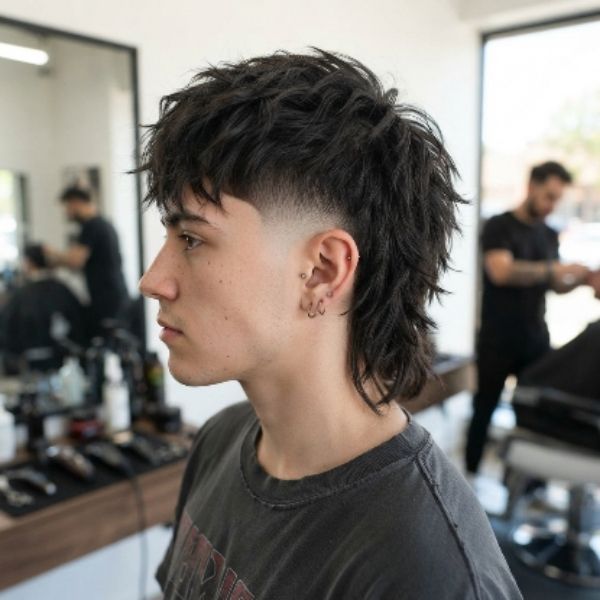
Razor or scissor over comb work creates choppy, uneven ends on top and at the back, while a taper fade keeps the sides controlled. The contrast between rough texture and a clean fade is what makes this version pop.
Flowing Mullet
Longer layers are cut to move together rather than sit in separate chunks, giving the flowing mullet a softer, more blended silhouette. It suits men who want length without the shaggy, choppy finish.
Thick Mullet
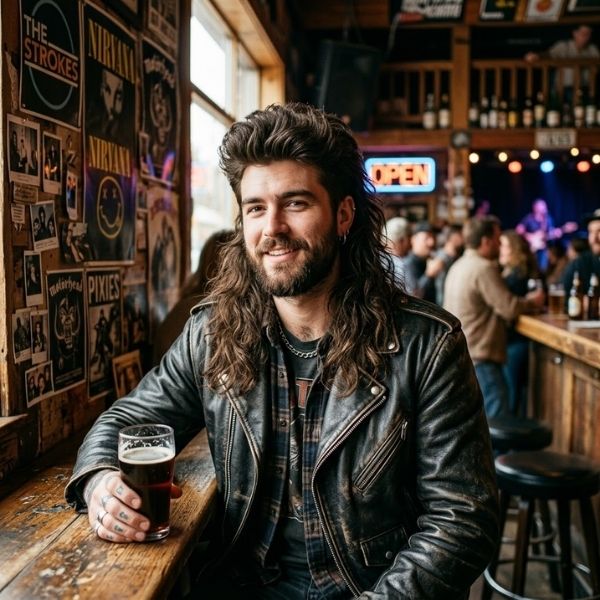
Dense, thick hair holds this style’s shape without much product, so the thick mullet often looks fuller at the crown and heavier at the back than other variations. Regular thinning at the ends keeps it from feeling too heavy.
Wavy Mullet
Natural waves add texture and break up the length at the back, so the wavy mullet rarely looks as flat as a straight cut of the same length. A light sea salt spray enhances the wave pattern without weighing it down.
Wolf Cut Mullet
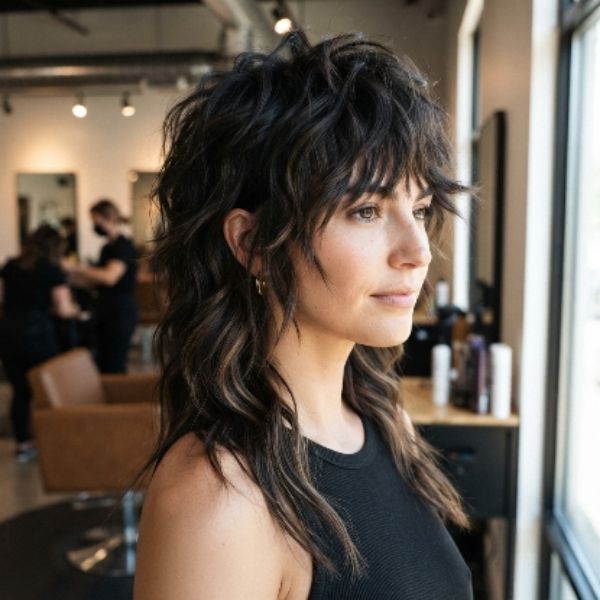
The wolf cut mullet blends heavy, shaggy layers with mullet proportions, creating a fuller crown and a soft, flowing drop behind the ears. It has become one of the most searched mullet variations because it works on almost any hair type.
Mullet Pompadour
Volume is pushed straight back off the forehead in classic pompadour style, sides are tapered down, and the back keeps traditional mullet length. It brings old school pompadour energy into a modern two part haircut.
Mullet Blowout
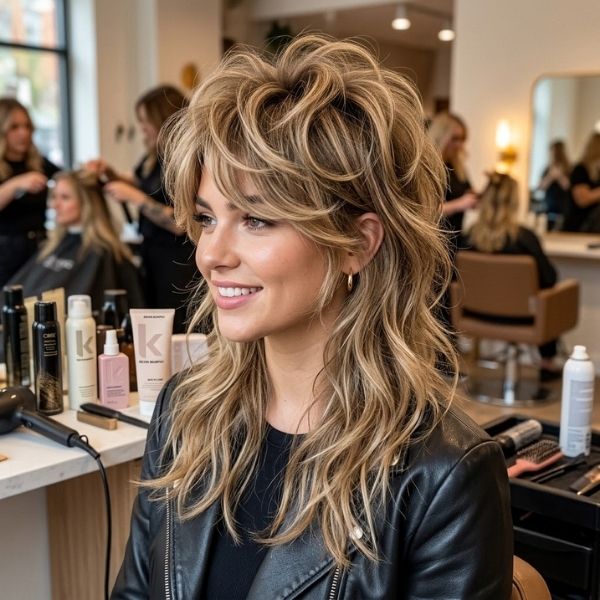
The top is blown out and pushed back for height and volume, sides are cut close, and the back stays long. It is a high maintenance style that leans dramatic, best suited to thick hair that can hold the lift.
How To Style A Mullet
Styling a mullet is really two separate jobs. The front and sides need control, while the back needs texture or flow, and treating them differently is what makes the cut look intentional instead of accidental.
Read More: Low Taper Fade with Textured Fringe: Complete Guide for 2026
Style the Front and Sides First
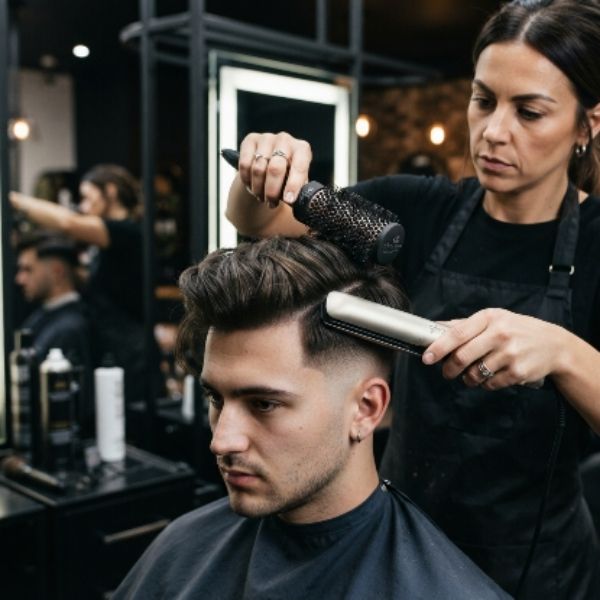
Start on damp hair with a small amount of styling cream or matte paste worked through the roots. Blow dry the top and sides into shape first, since this section sets the overall silhouette of the haircut and is what people notice before anything else.
Finish the Back with Texture or Flow
Once the front is set, apply sea salt spray or texture powder to the longer back section and either scrunch it for a messy finish or blow dry it smooth for a flowing look. A light hold product keeps the length from looking greasy while still letting it move naturally through the day.
What Is A Mullet Haircut?
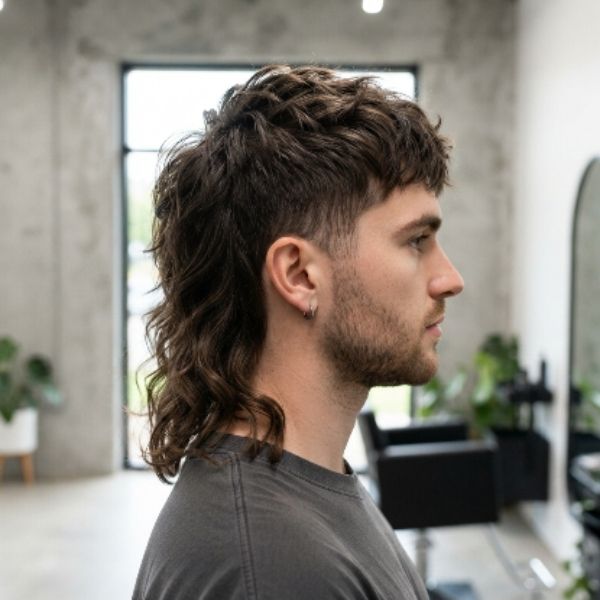
A mullet haircut is defined by shorter hair at the front and sides paired with noticeably longer hair left at the back and crown. The concept behind it is often summed up as business in the front, party in the back, meaning the front reads as neat and manageable while the back carries the length and personality of the cut. Modern versions rely on fades, tapers, and layered texture to blend the two lengths smoothly, which is the main reason today’s mullets look cleaner than the choppy versions from decades past.
The Evolution of the Mullet Haircut
The idea behind the mullet is older than most people assume. Ancient Greek and Roman soldiers, along with several early European and nomadic groups, wore similar short front, long back shapes for practical reasons: it kept hair out of their eyes while still protecting the neck. The look resurfaced through the 1970s glam rock scene, most notably with David Bowie, before exploding into the mainstream during the 1980s through rock musicians, country singers, and athletes.
By the mid 1990s the mullet had fallen out of favor and became a pop culture punchline, a shorthand for outdated style in movies and television. It stayed on the fringes through the 2000s and early 2010s, worn mostly as an ironic throwback. The current comeback, driven largely by Gen Z and amplified through TikTok and Instagram, has reshaped the cut with precision barbering. Sharp fades replaced razor lines, texture replaced bulk, and a once divisive haircut became a genuine style choice men request on purpose rather than by accident.
Modern Mullet Haircut Tutorial
Getting a modern mullet starts with the consultation, not the clippers. Bring a reference photo and tell your barber which fade you want on the sides, whether it’s a low taper, temple fade, or burst fade, and how much length you want kept at the back. Most barbers will fade or taper the sides first, then move to the crown and back, cutting in layers rather than one straight line so the transition between lengths looks natural.
Growing a modern mullet into its full shape usually takes about three to five months, since the back needs real length to work with while the sides are trimmed every three to four weeks to keep the fade sharp. During the growing out phase, ask your barber to clean up only the sides and taper line and leave the back untouched, so the length keeps building while the rest of the cut stays neat.
Conclusion
The modern mullet haircut has moved from a punchline to one of the most versatile trends in men’s grooming, and its range is exactly what makes it worth trying. Whether it’s a low taper mullet that passes for an office cut or a wolf cut mullet built for maximum volume, the style adapts to hair texture, face shape, and personal taste rather than forcing everyone into one silhouette.
Talk to a barber who has cut mullets before, pick a variation that matches how much maintenance you’re willing to do, and give the cut a few weeks to settle before judging the final shape.
FAQs
Are mullets still trending in 2026?
Yes, modern mullets remain one of the most requested men’s cuts in 2026, driven largely by social media visibility and their range from subtle to bold.
How long does it take to grow a mullet?
Most modern mullets take three to five months to reach a workable length at the back while the sides stay trimmed.
Is a mullet professional enough for work?
Subtler versions like the low taper mullet, short mullet, or classy mullet are neat enough for most office environments.
How often should I get a mullet trimmed?
Plan on a trim every three to four weeks to keep the fade or taper sharp while the back continues growing.
Does a mullet work with curly hair?
Yes, curly and permed mullets often need less product since natural curl already adds volume and texture at the back.
What products do I need to style a mullet?
A styling cream or matte paste for the front and sides, plus sea salt spray or texture powder for the back, covers most modern mullet styles.

Zaria Rhodes is the lead editor and content curator at Lyrinexa, passionate about music, storytelling, and lyrical expression. With a deep love for discovering the meaning behind songs, she brings clarity, creativity, and accuracy to every post. Zaria is dedicated to providing readers with authentic lyrics, thoughtful interpretations, and a seamless music-exploration experience.
