


A burst fade curly hair cut pairs a rounded, ear-hugging fade with natural curl texture on top. Instead of a straight line down the side of the head, the fade curves in a half circle around the ear, so it “bursts” outward rather than cutting flat across.
For 2026, this cut is one of the most requested styles for curly and coily hair because it solves a real problem. Curls tend to puff out near the temples and ears, which can make the whole head look wider and less shaped. A burst fade trims that bulk away in a curve that follows your natural hairline, so the curls on top get to be the focus instead of fighting with bulky sides.
This guide covers every burst fade curly hair variation worth knowing in 2026, from low and mid to mullets and mohawks, plus how to talk to your barber, how to style curls at home, and a maintenance schedule that actually keeps the fade sharp between visits.
Read more: Boys Mullet Haircut Guide 2026: Styles, Fades, and Care
What is a Burst Fade on Curly Hair
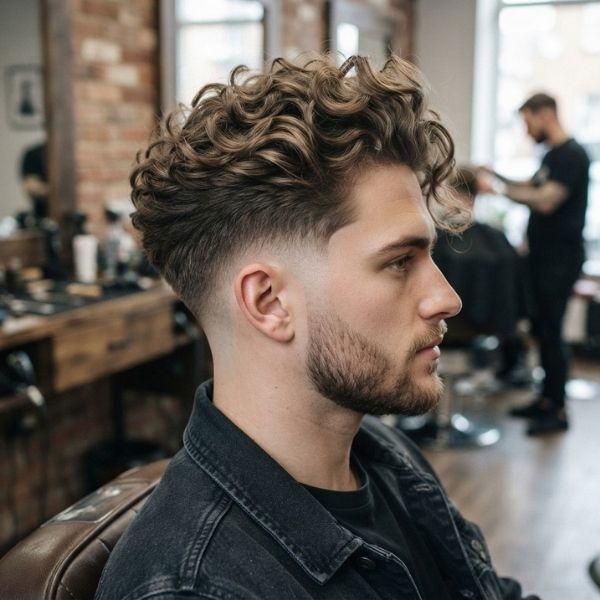
A burst fade is a fade pattern that curves around the ear instead of running in a straight diagonal line down the side of the head. The clipper work follows the shape of the ear, blending from skin or a very short guard near the bottom up into longer length at the temple and crown.
On curly and coily hair, this shape does a few specific things:
- It removes the “puff” that builds up right above the ear, where curls naturally expand outward.
- It keeps more length on top, so the curl pattern still has room to move and show its shape.
- It creates a rounded frame around the face instead of a hard, straight edge.
- It works on nearly every curl type, from loose 2C waves to tight 4C coils.
Because the fade line is curved rather than straight, it tends to look softer and more natural against curly texture than a traditional side part fade does. That’s really the whole appeal: sharp sides, but a shape that flatters curls instead of competing with them.
Low vs Mid vs High Burst Fade Curly Hair
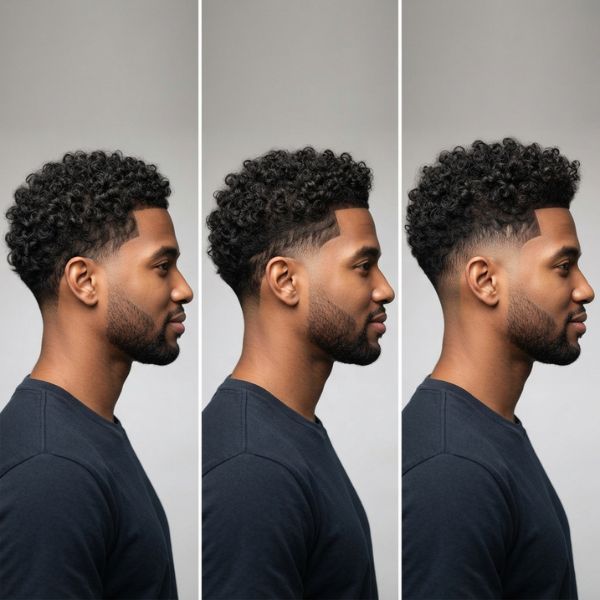
The height of the burst fade changes how bold the contrast looks and how often you’ll need to see your barber. Here’s how the three main heights compare.
| Fade height | Where it starts | Best for | Touch-up frequency |
|---|---|---|---|
| Low burst fade | Just above the ear and nape | First-timers, office settings, school | Every 3 to 4 weeks |
| Mid burst fade | Mid-way up the side, above the temple | Most face shapes and hair densities | Every 2 to 3 weeks |
| High burst fade | Near the crown, closer to the part line | Thick or dense curls, statement looks | Every 1 to 2 weeks |
A low burst fade is the easiest to grow out and the most versatile for daily life, since the contrast stays subtle. A mid burst fade is the middle ground most barbers recommend for a first curly burst fade, since it balances curl volume with a defined fade line. A high burst fade gives the sharpest, most dramatic contrast, but it needs the most upkeep because regrowth shows up fastest near the top of the head.
Thicker, denser curls often look better with a mid or high fade, since there’s enough curl volume on top to balance the higher contrast. Finer or looser curls can look flatter with too much height removed, so a low or mid option usually works better for those textures.
Read more: Mid Burst Fade Best Styles, How to Ask, and Easy Care 2026
Burst Fade vs Taper Burst Fade Curly Hair

A standard burst fade can drop all the way down to skin at the bottom of the curve, which gives the sharpest, cleanest outline. A taper burst fade curly hair style keeps a bit more length at the sideburns and neckline instead of fading to bare skin.
The practical difference comes down to two things: how sharp the look is on day one, and how it grows out.
- Burst fade: Cleaner, more defined outline. Best for guys who like a crisp look and don’t mind more frequent barber visits.
- Taper burst fade: Softer transition, less contrast at the hairline. Grows out more evenly and is more forgiving between appointments.
If your priority is the sharpest possible photo-ready look, ask for a burst fade. If you’d rather stretch out the time between cuts and avoid an obvious “grown out” stage, a taper burst fade is the safer pick, especially for curly hair that already has natural volume doing a lot of the visual work.
Read more: Low Taper Fade with Textured Fringe: Complete Guide for 2026
Best Burst Fade Curly Hair Styles
1. Low Burst Fade Curly Hair

The low burst fade keeps the curve close to the ear and nape, which makes it one of the most wearable options for work, school, or a first attempt at this cut. Curls on top stay full and rounded while the sides stay quiet and clean.
2. Low Burst Fade Curly Hair Men
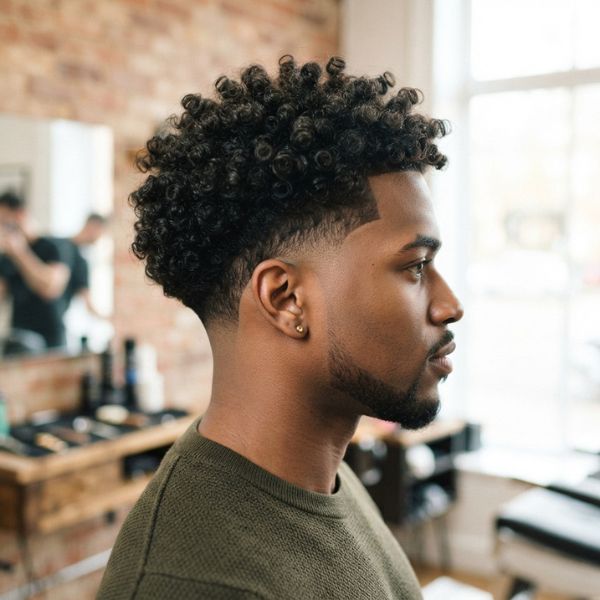
This version leans slightly shorter on top than a standard low burst fade, giving a tighter, more compact curl shape. It suits guys who want low maintenance styling with minimal daily product use.
3. Mid Burst Fade Curly Hair

The mid burst fade raises the curve to sit above the temple, creating more visible contrast between the fade and the curls. It’s often described as the most balanced option, since it shows off the curl pattern without looking flat.
4. Mid Taper Burst Fade Curly Hair
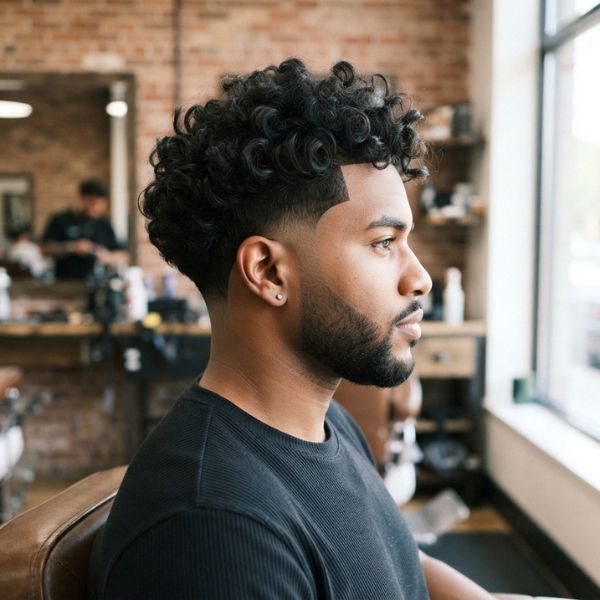
This combines a mid-height curve with a softer, tapered finish at the bottom instead of a skin fade. The result is a rounder, more natural transition that still reads as sharp from a distance.
5. High Burst Fade Curly Hair

A high burst fade pushes the curve up near the crown, leaving a smaller area of curls on top surrounded by a much larger faded section. This is the boldest option on the list and works best with thick, dense curl patterns.
6. Taper Burst Fade Curly Hair
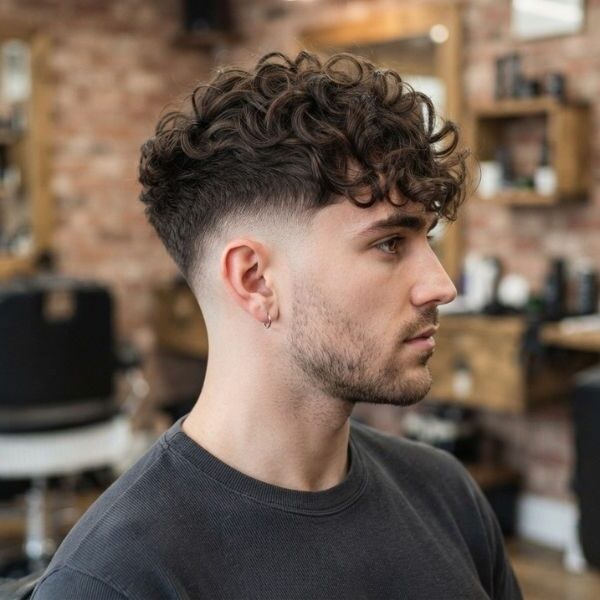
Rather than a hard line at any height, this style tapers the length gradually along the whole side, softening the classic burst curve. It’s a good pick for anyone who wants the burst silhouette without a sharp skin finish.
7. Low Taper Burst Fade Curly Hair
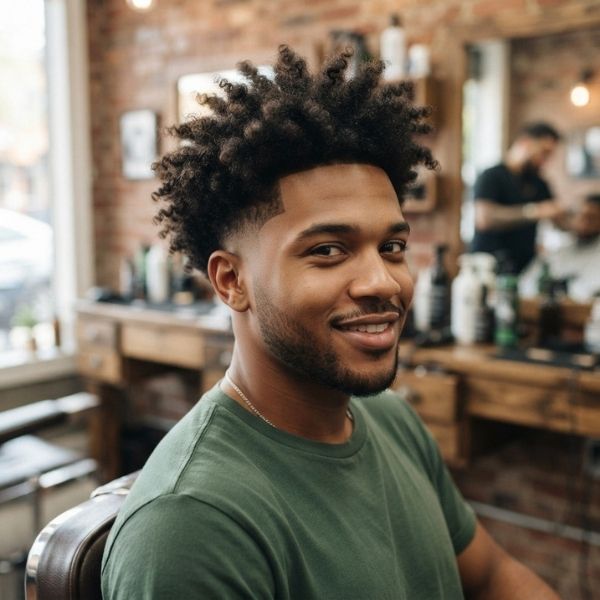
This pairs the subtlety of a low fade with the soft grow-out of a taper, making it arguably the lowest-maintenance option in this entire list. Regrowth is barely noticeable for weeks.
8. Burst Fade Curly Hair Mullet

The mullet version keeps extra length at the back while the sides get the classic burst curve. It’s one of the biggest trend combinations for curly hair in 2026, mixing a clean fade with a longer, freer back section.
9. Modern Mullet Burst Fade Curly Hair
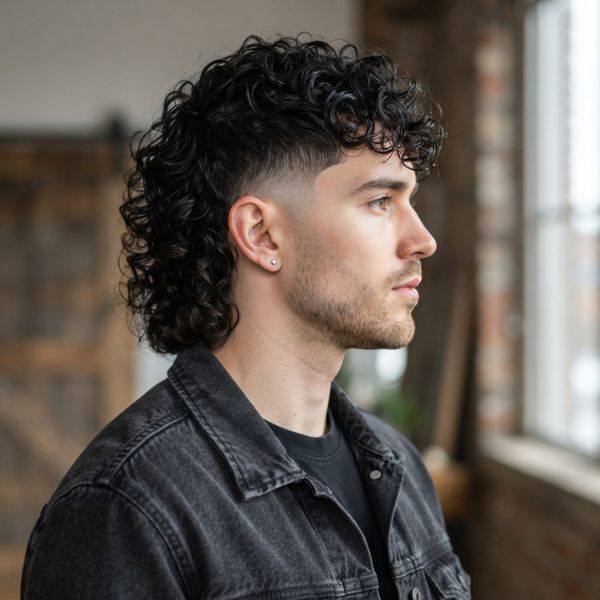
A more polished take on the mullet burst fade, this style uses tighter clipper work on the sides and more deliberate shaping at the back instead of letting curls grow out loosely. It reads as intentional rather than accidental.
10. Mohawk Burst Fade Curly Hair
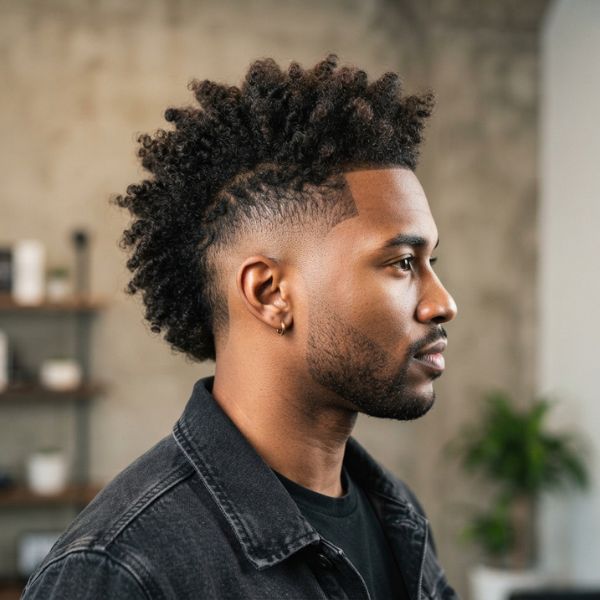
Here the burst fade feeds into a mohawk strip running down the center of the head. The sides are cut tight, and the curls stay concentrated in a narrow band on top, which makes for a dramatic, high-contrast look.
11. Burst Fade Curly Hair V

The “V” refers to a pointed shape carved into the nape, usually paired with a low or mid burst fade. It adds a small design detail without going full pattern work on the sides.
12. Burst Fade Curly Hair Design
This style adds line art, parts, or geometric shapes shaved directly into the fade section. It’s a way to personalize a burst fade curly hair cut and stands out especially well against darker hair colors.
13. Low Burst Fade Curly Hair Mullet
A gentler mullet combination, this keeps the fade low and subtle while still letting the back grow out. It’s a good middle step for someone who wants a mullet without a huge style commitment.
14. Mid Burst Fade Curly Hair Mullet
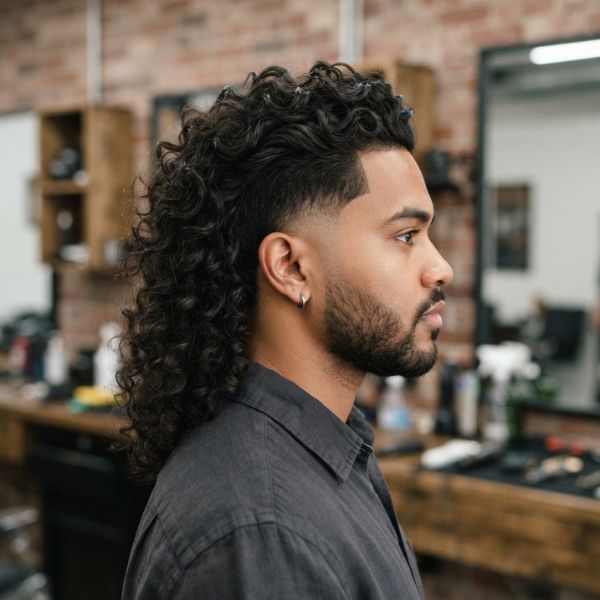
Raising the fade to mid height adds more contrast to the mullet shape, making the back length stand out more clearly against the shorter sides.
15. High Burst Fade Curly Hair Mullet
The boldest mullet option, this pairs a high, sharp burst curve with a longer back section for maximum contrast between short sides and long back curls.
16. Burst Fade Curly Hair Men
A general go-to style for men who want a versatile burst fade without a specific theme like a mullet or mohawk. Height and design details can be adjusted to fit personal preference and face shape.
17. Mens Burst Fade Curly Hair
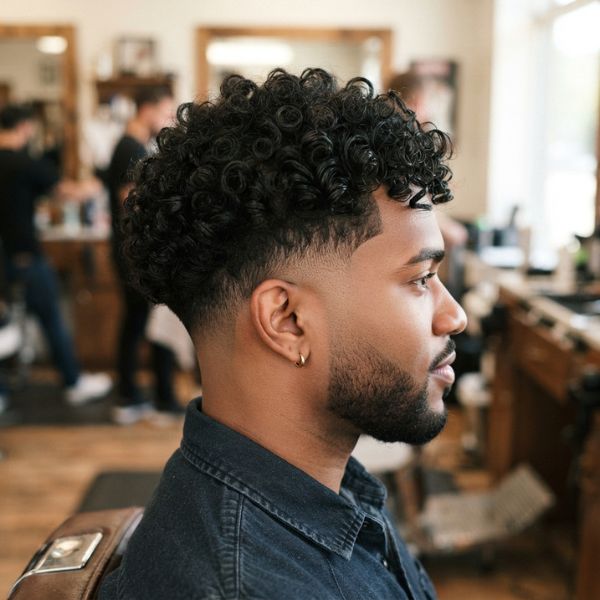
Similar to the style above, this variation often includes slightly more length on top for guys who want extra styling options, like a curl-forward pompadour or textured fringe.
18. Burst Fade Curly Hair With Design
This style focuses specifically on adding a shaved pattern, such as a lightning bolt, stars, or lines, into the fade curve itself. It works best on shorter fade heights where there’s enough visible skin to carve the design clearly.
19. Burst Fade Curly Hair Short
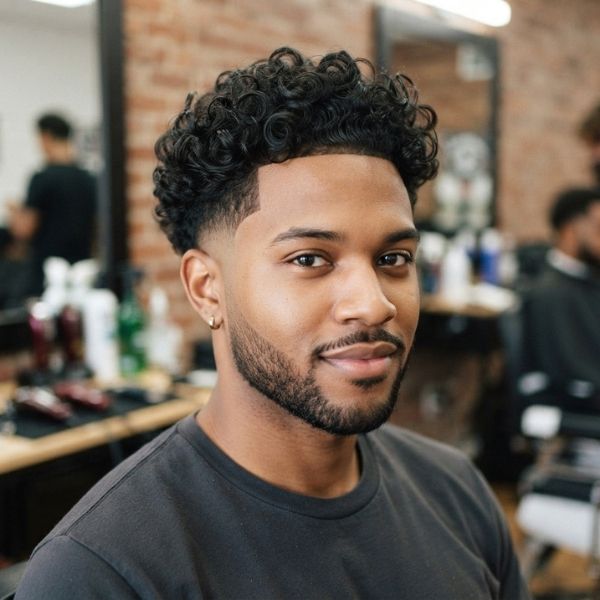
A shorter overall length on top keeps curls tight and compact, pairing well with any fade height. It’s a low-effort option for guys who don’t want to spend much time styling in the morning.
20. Burst Fade Curly Hair Black
Popular among Black men with coily and tightly coiled hair, this version usually pairs a sharp burst curve with a rounded top shape, since coily textures naturally hold volume and shape well against a tight fade.
21. Short Burst Fade Curly Hair
This keeps both the top and the fade on the shorter side overall, resulting in a neat, compact silhouette that suits formal settings and low-maintenance routines equally well.
Barber Tutorial: Burst Fade Curly Hair

Most barbers follow a similar sequence when cutting a burst fade on curly hair, and knowing the basic order helps you understand what to expect in the chair.
- Assess the curl pattern dry. Curly hair shrinks when it dries, so barbers usually check length and curl pattern before cutting, not just when wet.
- Establish the guideline. The barber marks where the curve will start near the ear and how high it will run up the side.
- Cut the burst curve with clippers. Using a rounded clipper-over-comb or freehand technique, the barber blends length from the guideline down to skin or a short guard.
- Blend upward into the top. The fade is connected smoothly into the longer curly section so there’s no visible line between the two lengths.
- Detail the neckline and sideburns. A straight razor or trimmer cleans up the edges for a crisp finish.
- Style the top. Curl cream or a light gel is worked through damp curls to show the finished shape before you leave the chair.
Curly hair often needs extra patience during the blending step, since curls can hide unevenness that becomes obvious once the hair is styled. A barber who works regularly with textured hair will usually check the cut from multiple angles before finishing.
How to Ask Your Barber for a Burst Fade With Curly Hair
Clear communication makes a big difference with a style that has this many variations. Bring a reference photo if possible, and be specific about these details:
- Fade height: Say “low,” “mid,” or “high” burst fade rather than just “burst fade.”
- Finish at the bottom: Specify skin fade or taper finish, since these look very different on curly hair.
- Length on top: Mention how much curl length you want to keep, since curls shrink as they dry.
- Any design work: Ask directly if you want a part line, V-shape, or pattern added.
- Length in the back: Clarify if you want a standard cut or extra length for a mullet style.
It also helps to mention your curl type, such as loose waves, springy curls, or tight coils, since this affects how much the hair will shrink and how the fade will look once it’s dry and styled.
Styling and Care for Curly Burst Fades
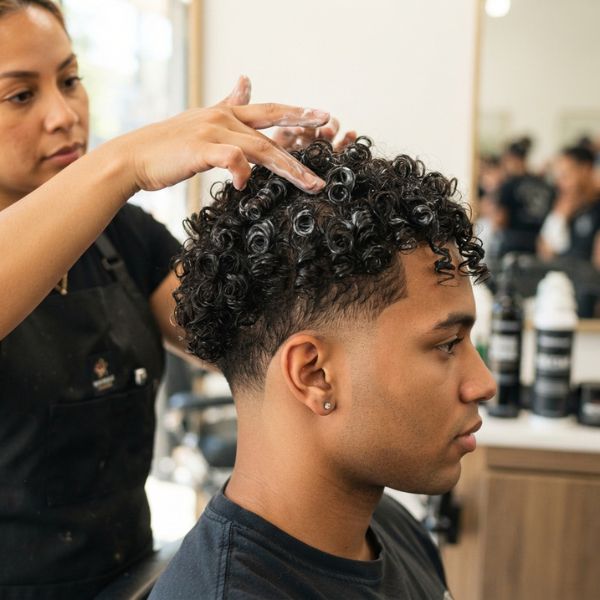
A sharp fade only looks good if the curls on top are healthy and defined. These habits keep both parts of the cut looking their best between barber visits.
- Wash with sulfate-free products. Regular shampoo can strip natural oils that curls need to stay soft and defined.
- Apply product to damp hair. Curl cream, mousse, or a lightweight gel works best when curls are still wet, not after they’ve air dried.
- Diffuse on low heat. A diffuser attachment helps curls hold their shape and adds volume without creating frizz.
- Refresh instead of rewashing. On non-wash days, a light mist of water mixed with leave-in conditioner brings curls back to life without stripping them.
- Protect curls at night. Sleeping on a satin or silk pillowcase, or wrapping hair in a satin scarf, reduces friction that causes frizz and flattens curl definition.
- Keep product light near the fade. Heavy pomades can migrate down into the fade area and make it look greasy or blurred instead of sharp.
Maintenance Schedule
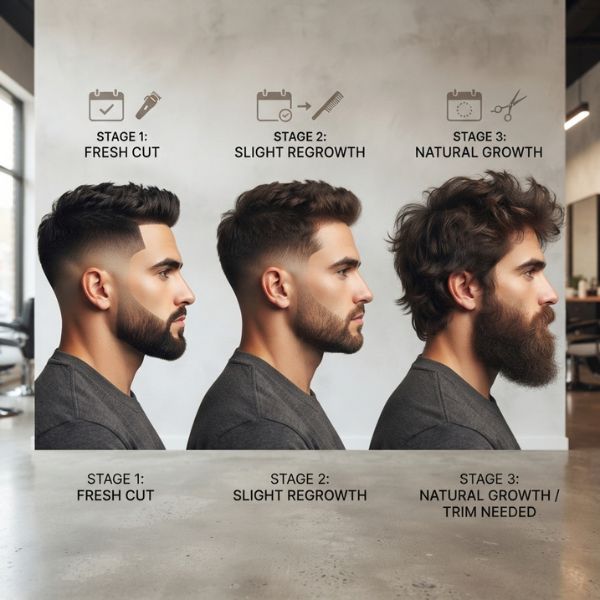
How often you need a touch-up depends mostly on the fade height and how fast your hair grows.
| Fade height | Recommended touch-up | Why |
|---|---|---|
| Low burst fade | Every 3 to 4 weeks | Regrowth is less noticeable near the nape |
| Mid burst fade | Every 2 to 3 weeks | Contrast is higher, so regrowth shows sooner |
| High burst fade | Every 1 to 2 weeks | Skin exposure near the crown grows out fastest |
Between appointments, keep the neckline and sideburns tidy at home with a trimmer if you’re comfortable doing so, but leave the actual fade blending to your barber. Curly hair hides small mistakes well, but uneven blending becomes obvious once curls are styled and dry.
Common Mistakes and Easy Fixes

- Mistake: Letting curls dry without any product, leading to frizz and a shapeless top. Fix: Apply curl cream or gel to damp hair right after washing, not once it’s already dry.
- Mistake: Waiting too long between barber visits. Fix: Book your next appointment before you leave the shop, based on the fade height chart above.
- Mistake: Using heavy oils or pomades near the fade line. Fix: Keep richer products for the curls on top and use something lighter, like a water-based gel, near the sides.
- Mistake: Washing curly hair every day. Fix: Wash two to three times a week and refresh curls with water and leave-in conditioner in between.
- Mistake: Picking a fade height that’s too dramatic for thin or fine curls. Fix: Start with a low or mid burst fade, since there’s more room to go bolder later once you know how it looks.
FAQs
Is a burst fade good for curly hair?
Yes. The curved shape removes bulk near the ears without cutting into the curl pattern on top, which makes it one of the more flattering fade styles for curly and coily textures.
Which burst fade height is best for thick curly hair?
Mid and high burst fades usually work best for thick curls, since there’s enough curl volume on top to balance the added contrast on the sides.
How long does a burst fade curly hair style last?
The style itself doesn’t fade in look, but the sharpness of the cut typically needs a touch-up every 1 to 4 weeks depending on fade height.
Can I get a burst fade if my curls are naturally dry or frizzy?
Yes, but a hydration routine with sulfate-free products and regular deep conditioning will make the top half of the cut look far more defined.
Does a burst fade work for all face shapes?
Generally yes, since the height and curve can be adjusted. Rounder faces often suit a mid or high burst fade for added length illusion, while longer faces may prefer a low burst fade.
Conclusion
A burst fade curly hair cut earns its popularity in 2026 by solving a problem straight fades never quite fix: keeping curls looking full and shaped instead of bulky near the ears. Whether you go low for an easy, everyday option or high for maximum contrast, the curved fade line works with your natural texture instead of against it.
The real key to keeping this cut looking sharp is consistency, both in your barber schedule and your at-home curl routine. Pick a height that matches your curl density and lifestyle, communicate clearly with your barber, and keep curls hydrated between visits. Get those three things right, and a burst fade curly hair style will stay one of the cleanest, most versatile looks you can wear.

Zaria Rhodes is the lead editor and content curator at Lyrinexa, passionate about music, storytelling, and lyrical expression. With a deep love for discovering the meaning behind songs, she brings clarity, creativity, and accuracy to every post. Zaria is dedicated to providing readers with authentic lyrics, thoughtful interpretations, and a seamless music-exploration experience.
