


A low fade mullet is one of the few haircuts that works in a boardroom and at a concert on the same day. The sides stay short and controlled, the top keeps texture, and the back holds onto real length. It low fade mullet that reads as tidy up close and bold from a distance, which is exactly why barbers keep seeing it on their books in 2026.
This guide walks through what the cut actually is, how it compares to the mid fade mullet and high fade mullet, and which of the 17 variations below fits your hair type and face shape. You will also get a quick fit table, three-step styling instructions, the exact words to use in the barber chair, and a maintenance routine that keeps the shape sharp between visits.
What Is a Low Fade Mullet
A low fade mullet keeps the fade close to the hairline, usually starting an inch or so above the ear rather than climbing toward the temple. The sides taper down gradually into the neckline, the top carries light to medium texture, and the back is left long enough to move.
Because the fade sits low, the transition from short to long is gentler than a mid or high fade. That makes low fade mullet more forgiving as it grows out, and it explains why so many first-time mullet wearers start here. The front view looks like a clean, professional crop. Turn to the side or back and the layered length shows the personality of the cut.
The style suits straight, wavy, and curly hair, and it adapts to thick or fine strands with small changes to layering and product weight. Oval faces handle almost any version of it, while round, square, and heart-shaped faces usually look best with extra height on top to balance the jawline.
Quick Fit Table
| Fade Height | Contrast Level | Best For | Maintenance |
|---|---|---|---|
| Low fade | Soft | First-time mullet wearers, office settings | Trim every 4 to 6 weeks |
| Mid fade | Moderate | Balanced, everyday versatility | Trim every 3 to 5 weeks |
| High fade | Bold | Statement looks, defined cheekbones | Trim every 2 to 3 weeks |
Read More : Tesehki Age: How Old Is She and What’s Her Story? 2026
Variations
Each cut below uses a short, direct description so you can compare them quickly and pick a reference to bring to your barber.
1) Low Fade Mullet Haircut
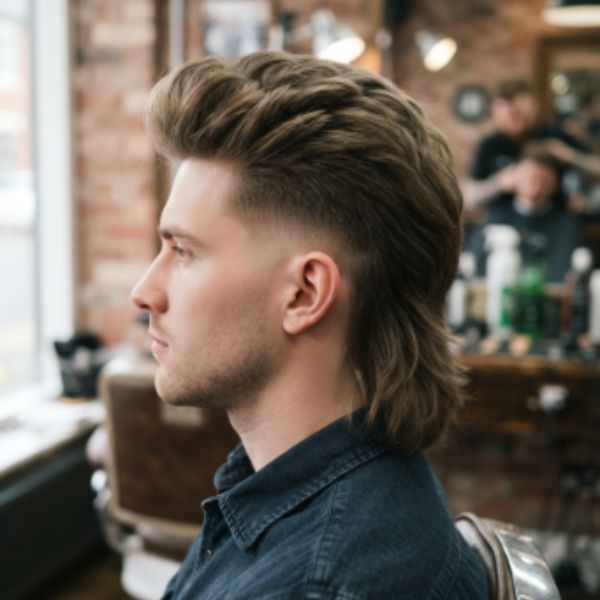
This is the baseline version. The fade hugs the hairline just above the ear, the top stays lightly textured, and the back sits with soft layers rather than one blunt line. It is neat enough for daily work life while still carrying real length behind the ears.
2) Mullet Low Fade
Here the emphasis flips slightly toward the mullet shape rather than the fade. The sides are trimmed close but the fade blend is kept subtle, so the length at the back reads as the focal point of the whole cut. It suits guys who want the retro silhouette without a sharp gradient stealing attention.
3) Modern Mullet Low Fade
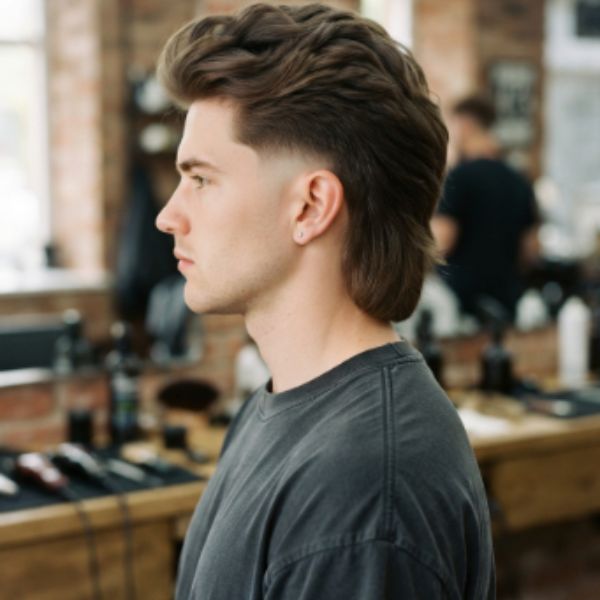
This variation swaps the boxy 1980s layering for razored, feathered ends. The fade stays low and clean, the crown gets light volume, and the back finishes in soft, piece-y layers instead of a blunt curtain. It is the version most often seen on musicians and creatives right now.
4) Low Mullet Haircut
A slightly more compact take, with shorter overall length through the top and a back section that sits around collar level. It is a practical choice for men who want the mullet outline without committing to dramatic length in the first few months of growing it out.
5) Mullet Low Fade Haircut
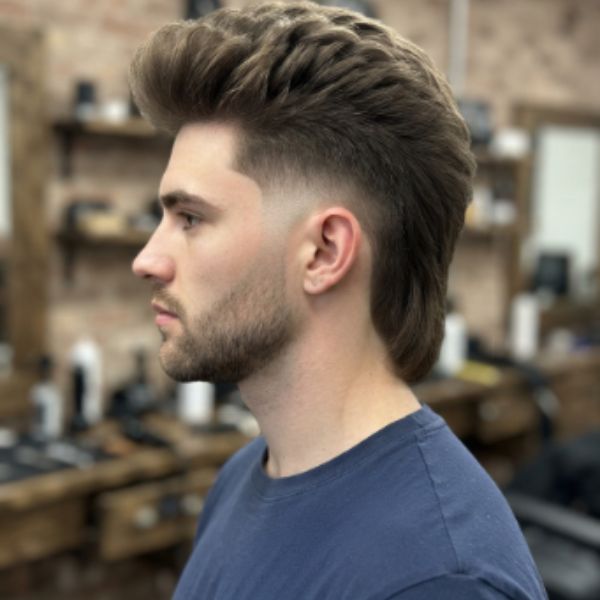
This one leans into contrast between a textured, slightly longer top and a tightly faded side. The back keeps moderate length with movement, giving a balanced silhouette that works equally well brushed forward or swept back.
6) Low Mullet Fade
A close cousin to the classic version, with the fade line kept extremely tight to the hairline for a cleaner, almost invisible blend. This suits men who want the fade to look intentional but understated rather than a bold statement.
7) Low Mullet
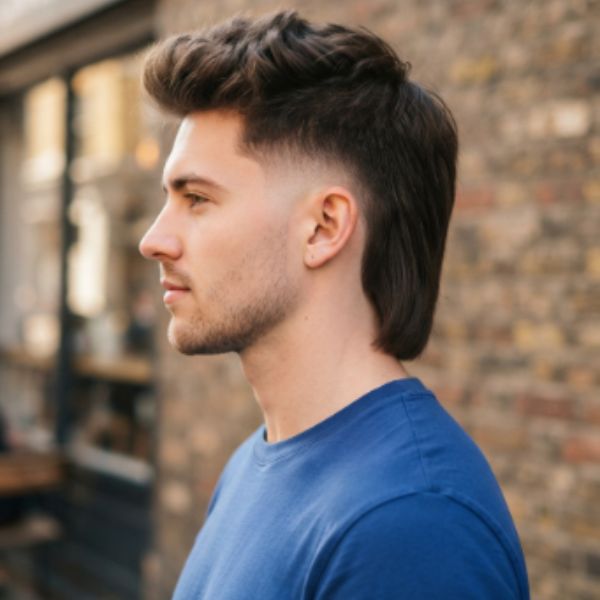
The simplest interpretation of the family. Sides are cut short with minimal fading, the top keeps natural body, and the back grows out with soft, natural layers. It is the lowest-maintenance option on this list and a good starting point if you are unsure how much length you actually want to keep long term.
8) Mid Fade Mullet
The fade line moves up to around the middle of the side, between the ear and the temple. This creates noticeably more contrast than a low fade while still leaving room for the back length to feel proportionate rather than extreme.
9) Mullet Mid Fade
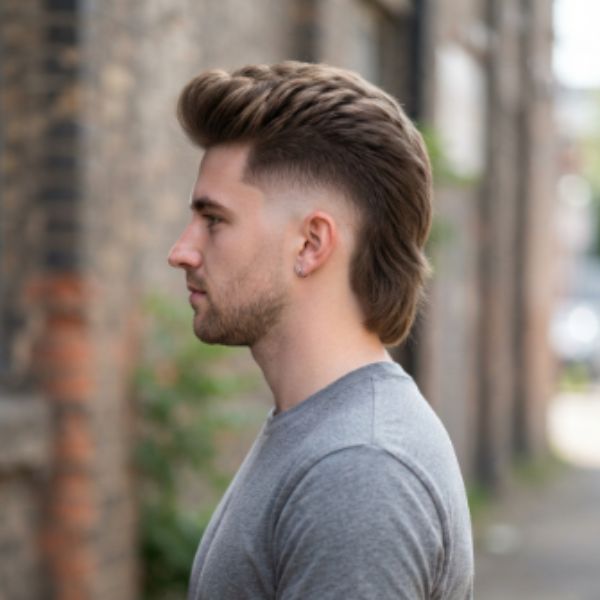
A version built around balance. The top carries medium length with texture, the sides taper cleanly through the middle zone, and the back sits at collar length. It photographs well from every angle, which is part of why it has become a popular reference photo request.
10) Mid Fade Mullet Haircut
This cut sharpens the blend zone slightly more than a standard mid fade, giving a crisper line while keeping the overall silhouette wearable for both casual and semi-formal settings. Pair it with a short beard for extra definition along the jaw.
11) Mid Mullet
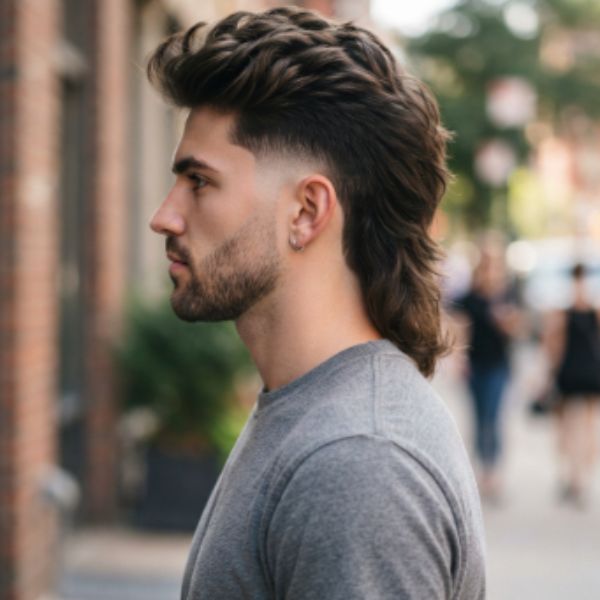
A shorter-length variant where the back is trimmed to a moderate length rather than left long. It keeps the fade’s mid height but reduces overall maintenance, making it a good transition cut for someone moving away from a shorter style.
12) Mid Mullet Fade
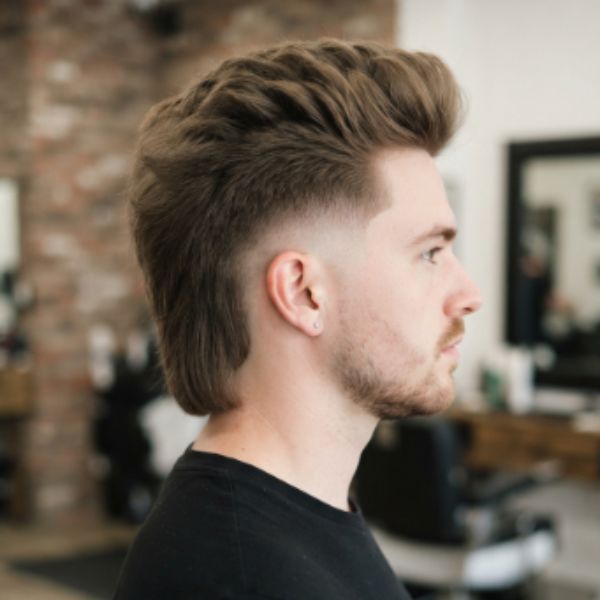
Here the fade and the mullet length are treated as equal partners. The blend is crisp through the middle of the side, the top has enough length to style in multiple directions, and the back holds a natural taper into the neckline.
13) Mid Mullet Haircut
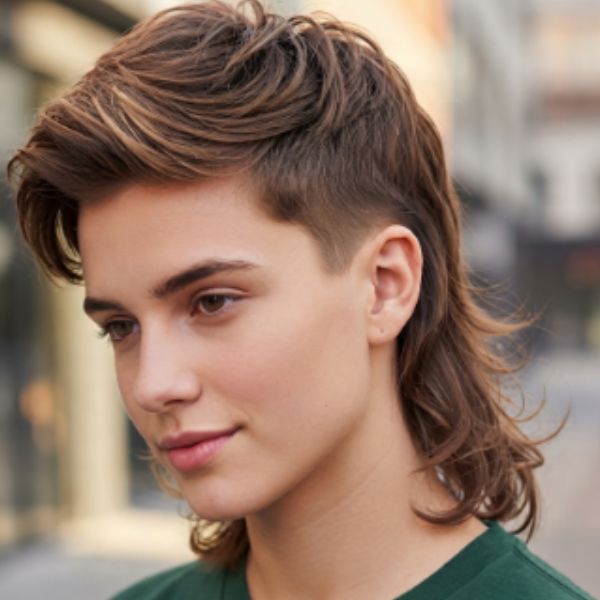
A textured, everyday version of the mid fade family. Light layering throughout keeps the hair from looking flat, and the moderate fade height means it grows out without needing constant touch-ups.
14) High Fade Mullet
This is the highest-contrast option. The sides are cut very short and blend into the crown quickly, which sharpens the jawline and cheekbones. Keeping the back at a medium length balances the boldness of the fade so the cut still reads as a mullet rather than a straight fade with a long patch on top.
15) High Mullet

A slightly softened take on the high fade version, with a touch more length left through the transition zone. It still delivers strong contrast but avoids the razor-sharp lines of a full skin fade.
16) High Mullet Haircut
This variation pairs the high fade with a heavily textured top, creating a spiky or brushed-up finish. It suits thicker hair types that can hold volume and shape without collapsing by midday.
17) Mullet High Fade
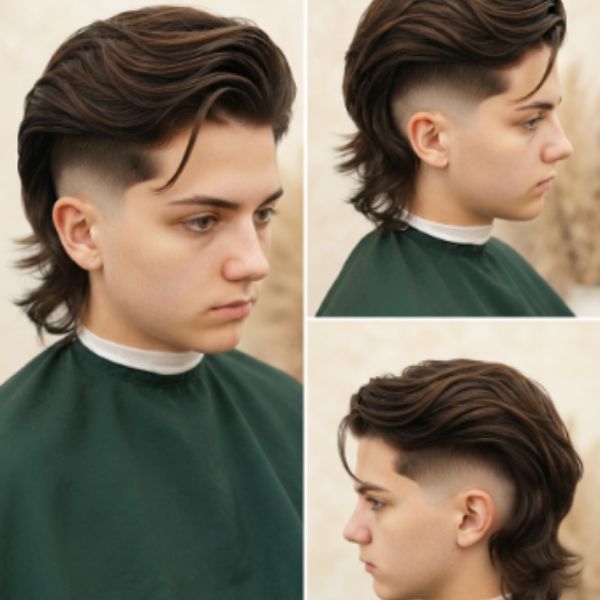
The boldest version on the list. Maximum contrast on the sides meets maximum length at the back, with almost no blending between the two extremes near the ears. It is best suited to men who already wear short sides comfortably and want to add a statement without softening the edges.
Read More : Military High Skin Fade Haircut for Men: Complete Barber Guide
How to Style in Three Steps
- Prep damp hair. Towel dry until it is just damp, then work a sea salt spray or light mousse through the roots for grip and volume.
- Blow-dry with direction. Use a low heat setting and guide the top forward or back with your fingers or a vent brush, focusing extra lift at the roots.
- Finish and define. Rub a small amount of matte pomade or clay between your palms and work it through the top and back to lock in shape without stiffness. The whole routine takes about three to five minutes.
Barber Instructions
Walking in with the right wording saves time and avoids a result you did not ask for. Try this script:
- Ask for a low, mid, or high fade mullet and be specific about where the blend should start.
- State the top length in inches or fingers, plus how you want it styled (forward, swept back, or textured).
- Give a clear back length, such as collar level, mid-neck, or shoulder graze.
- Mention your hair type, since curly and wavy hair need different layering than straight hair to avoid bulk.
- Bring one or two reference photos, ideally showing the back and side angles, since most miscommunication happens over what “long” actually means.
Care and Upkeep
- Book a fade refresh every 2 to 3 weeks for high fades, and every 4 to 6 weeks for low fades, since the softer blend grows out more gracefully.
- Wash with a sulfate-free shampoo two to three times a week and follow with conditioner to keep the longer back section soft and manageable.
- Limit high-heat blow-drying and straightening, since repeated heat exposure weakens the hair shaft over time.
- Use a lightweight product for straight and fine hair, and a curl cream or diffuser routine for curly and wavy textures to keep the back section defined instead of frizzy.
- A silk or satin pillowcase reduces the friction that leads to tangling and split ends on longer back layers.
- Trim the back every 8 to 10 weeks even if you are growing it out, so the ends stay healthy and the shape stays intentional rather than shaggy by accident.
FAQs
Is a low fade mullet good for beginners?
Yes. The soft blend grows out gracefully and suits most face shapes, making it the easiest mullet fade to start with.
What is the difference between a low, mid, and high fade mullet?
The difference is where the fade begins: low starts near the ear, mid starts around the middle of the side, and high starts near the temple or crown.
Does a low fade mullet work with curly hair?
Yes, curly hair holds the shape well, especially with a curl-defining cream and a diffuser to keep the back section from frizzing.
How often should I get my low fade mullet trimmed?
Plan on a fade touch-up every 4 to 6 weeks for a low fade, though bolder mid and high fades need refreshing every 2 to 3 weeks.
Can I wear a mullet fade to a professional workplace?
A low or mid fade mullet with moderate back length usually reads as neat and professional from the front, making it office-appropriate.
Read More : Best Taper Fade White Guy Short Hair Styles for White Guys With Photos
Conclusion
The low fade mullet family covers a wide range of looks, from the barely-there blend of a classic low mullet to the sharp statement of a mullet high fade. What ties all 17 variations together is the same core idea: short, controlled sides paired with length and movement at the back. Pick the fade height that matches how bold you want to look, match the top texture to your hair type, and use the barber script above to walk out with exactly what you pictured. With a simple three-step styling routine and a maintenance schedule that fits the fade height you choose, this cut stays sharp with very little daily effort.

Zaria Rhodes is the lead editor and content curator at Lyrinexa, passionate about music, storytelling, and lyrical expression. With a deep love for discovering the meaning behind songs, she brings clarity, creativity, and accuracy to every post. Zaria is dedicated to providing readers with authentic lyrics, thoughtful interpretations, and a seamless music-exploration experience.
