


If you’ve spent any time in a barbershop chair or scrolling through men’s grooming content this year, you’ve heard the phrase more than once: low taper fade buzz cut. It’s not hype. This cut has quietly become the go to choice for men who want to look sharp without babysitting their hair every morning.
This guide breaks down what the cut actually is, why it keeps growing in popularity, every major variation worth knowing in 2026, and how to match it to your hair type and face shape. You’ll also get the exact words to use in the barber chair and a maintenance routine that keeps the fade looking fresh between visits. No filler, just what you need to walk out of the barbershop with a cut that actually works for you.
What Is a Low Taper Fade Buzz Cut Men?
A low taper fade buzz cut is a short men’s hairstyle that pairs an evenly clipped top, usually a #2, #3, or #4 guard, with a gentle fade that begins low on the head, just above the ears, and blends down toward the neckline.
The word “low” refers to where the fade starts. Unlike a mid or high fade, which drops sharply near the temple, a low taper begins its transition much closer to the ear and hairline. That means less contrast, a softer gradient, and a look that reads as clean rather than dramatic.
Two things happen at once with this cut:
- The top gets buzzed to a uniform, brush like length with clippers and a guard.
- The sides and back taper gradually, often finishing at skin or a very short guard right at the neckline.
Because the fade stays low, more natural hair length is preserved around the sides of the head. That’s the main reason this style suits nearly every hair type, from straight to coily, and works equally well in an office, a gym, or a night out.
Why the Low Taper Is Trending in 2026
A few clear factors are driving the demand for this cut right now.
- Grow out forgiveness. Because the taper never touches skin in most versions, regrowth looks intentional instead of patchy. Many men stretch their touch ups to two or three weeks instead of returning weekly like they would with a skin fade.
- Workplace friendly styling. The low taper reads as polished and conservative, which makes it a safe pick for corporate environments, interviews, and client facing roles, while still looking current.
- Universal fit. It flatters round, square, oval, diamond, and oblong face shapes, and it works with straight, wavy, curly, and coily textures. Few haircuts check that many boxes at once.
- Social proof from barbers and athletes. Barbershops report the low taper as one of their most requested cuts, and it’s become a common sight on athletes and creators who need a cut that survives helmets, hats, and sweat without losing shape.
- Low daily effort. There’s no comb, no product routine, and no risk of a bad hair day. For a lot of men in 2026, that convenience matters as much as the style itself.
Benefits of the Low Taper Fade Buzz Cut Men
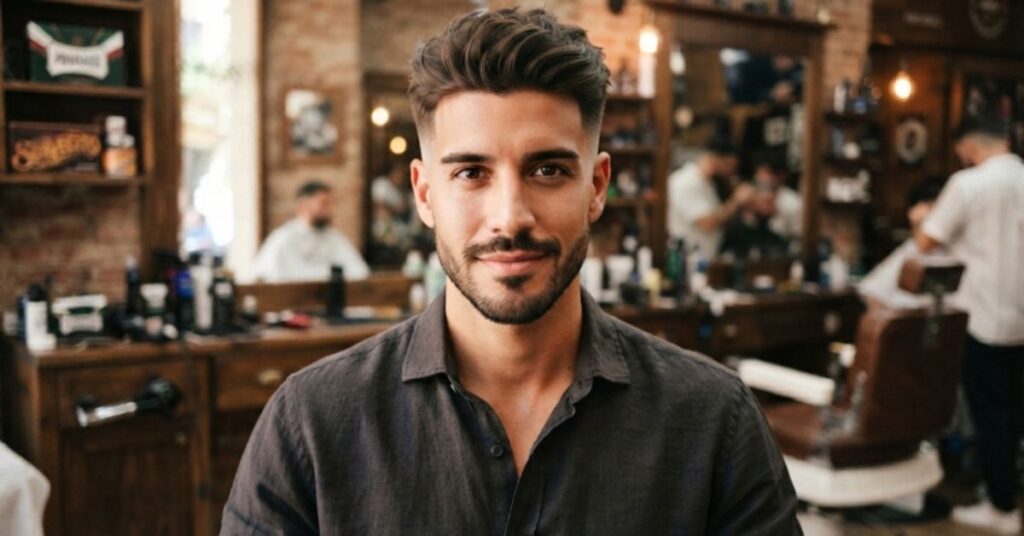
- Low maintenance. A quick pass of light oil or matte paste is usually all it needs. No blow drying, no styling tools.
- Longer time between trims. The gradual, low placed fade grows out evenly, so most men can go three to four weeks between visits instead of two.
- Works with facial hair. The taper blends cleanly into a beard, goatee, or stubble, which is part of why it’s such a common request alongside beard grooming.
- Flatters bone structure. Removing bulk from the sides draws attention to the jawline and cheekbones without the harsh, exposed look of a high skin fade.
- Adapts to hair density. Thick hair loses bulk and stops looking like a “helmet.” Fine hair gains the appearance of density because the buzzed length stands up evenly.
- Age and setting flexible. It looks appropriate on a teenager, a 40 year old professional, or a retiree. Few trend driven cuts age that gracefully.
Read More : Burst Fade Straight Hair: 15 Trendy Styles That Look Sharp
Best Low Taper Fade Buzz Cut Variations (2026 Edition)
There isn’t just one version of this cut. Barbers are customizing it heavily this year, and knowing the variations helps you communicate exactly what you want.
Classic Low Taper Buzz Cut
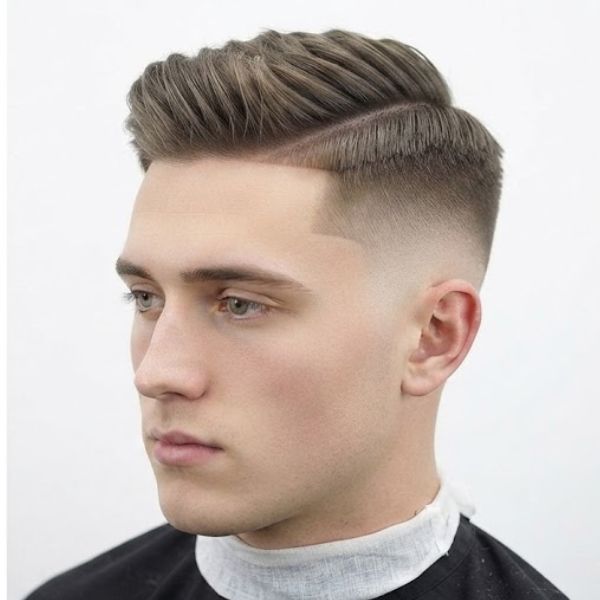
The original and still the most requested version. The top sits at a uniform #2 to #4 guard, and the sides fade softly starting just above the ear, finishing at a short guard rather than bare skin. It’s simple, timeless, and needs almost no upkeep beyond a scheduled trim.
Low Taper Fade Buzz Cut with Line-Up
This version adds a crisp, straight edge along the hairline and temples using a straight razor or trimmer. It sharpens the front of the cut and gives it that “fresh from the barbershop” finish that lasts several days longer than a cut without one.
Beard-Blend Low Taper Buzz Cut
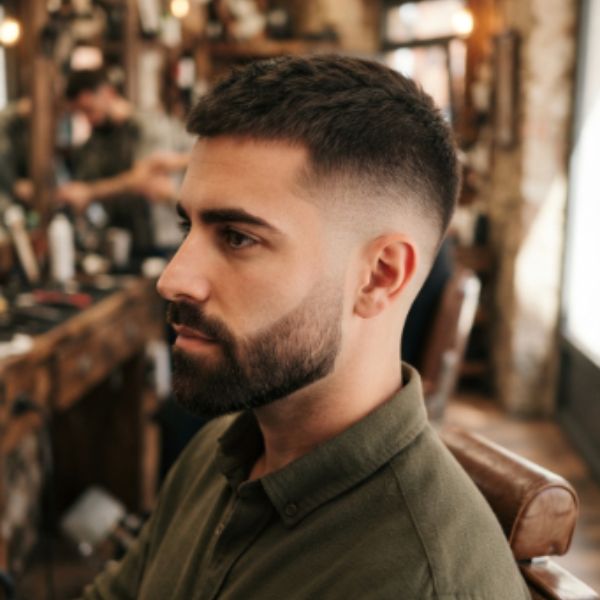
Here, the taper on the sides connects directly into a groomed beard or stubble line, removing any hard edge between hair and facial hair. It’s one of the most requested combinations for men who keep facial hair, since it creates one continuous, intentional shape from temple to jaw.
Curly Low Taper Buzz Cut
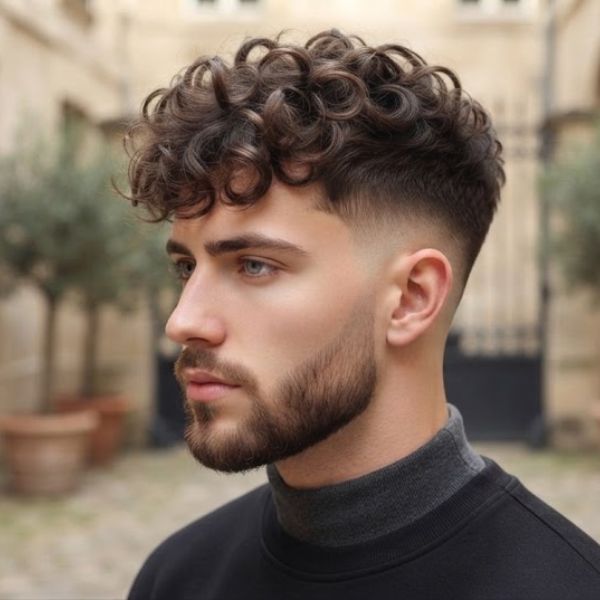
For curly hair, the top is usually left slightly longer, around a #3 to #5, so the natural curl pattern and texture stay visible instead of getting buzzed flat. The low taper on the sides keeps the volume on top from looking heavy.
Wavy Low Taper Buzz Cut
Wavy hair gets a similar treatment, with the top kept a touch longer to let the natural wave pattern show through. A lightweight matte cream can help define the waves without weighing them down.
Low Taper Buzz Cut with Drop Fade Shape
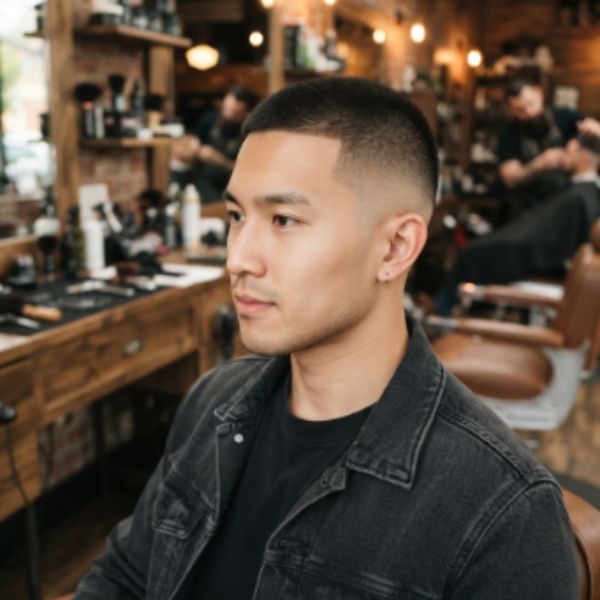
Instead of following a straight line behind the ear, the fade curves downward and dips lower toward the nape. This drop fade shape adds visual interest and pairs especially well with round or oval faces, since the curve softens the sides.
Textured Top Low Taper Buzz Cut
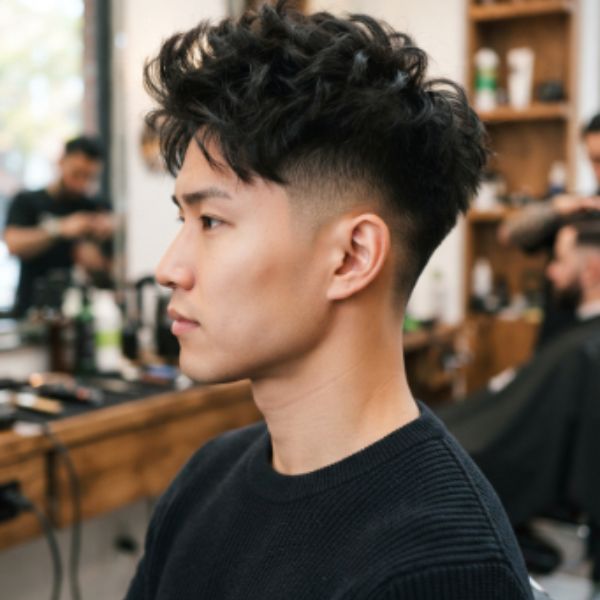
The top is cut slightly longer than a standard buzz, then point cut or texturized with scissors to create movement and a less uniform surface. This variation gives the cut a more modern, tousled finish while the low taper keeps the sides clean.
Ultra-Short Low Taper Fade Buzz Cut
For men who want minimal length overall, the top is buzzed to a #1 or #1.5, and the taper fades close to skin around the ears. The contrast between the short top and faded sides still gives the cut definition, even at this length.
Read More : Crew Cut Long Hairstyle Men: Clean Length, Easy Control
Low Taper Buzz Cut by Hair Type
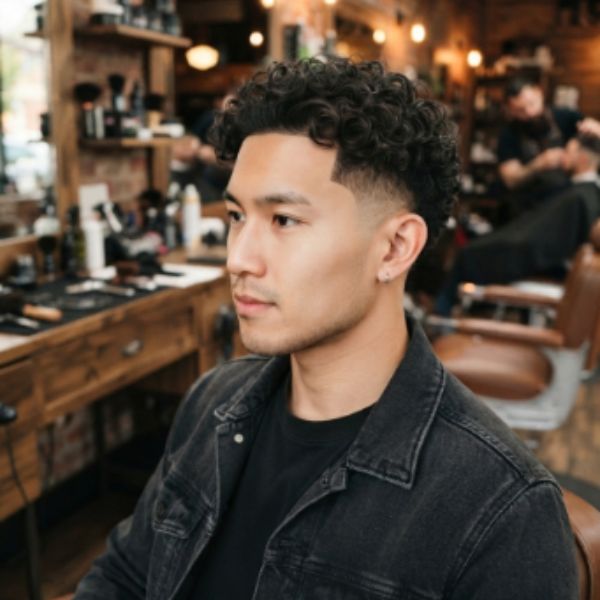
The guard length on top and the taper’s finishing point should shift based on your natural hair type. Here’s how barbers typically adjust it.
For Straight Hair Men
Straight hair holds a buzzed shape cleanly and shows the taper’s line clearly. A #2 to #3 guard on top works well, and the cut generally needs the least amount of daily product.
For Wavy Hair Men
A slightly longer top, around a #3 to #4, allows the wave pattern to remain visible instead of getting cut away entirely. A small amount of matte cream helps keep flyaways controlled.
For Curly Hair Men
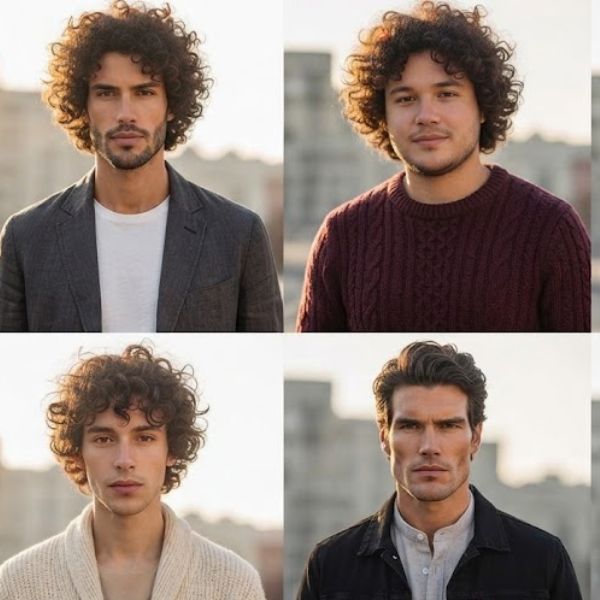
Curly hair benefits from extra length on top, typically a #4 or #5, so the curl pattern isn’t lost. Going too short with curly hair on top can make the cut look uneven once it dries, since curls shrink as they dry out.
For Thick Hair Men
Thick hair is where the taper does the most work. It removes bulk from the sides and prevents the top heavy, helmet like look that thick hair often develops with a straight buzz. A #3 top paired with a well blended taper keeps the whole cut balanced.
For Fine Hair Men
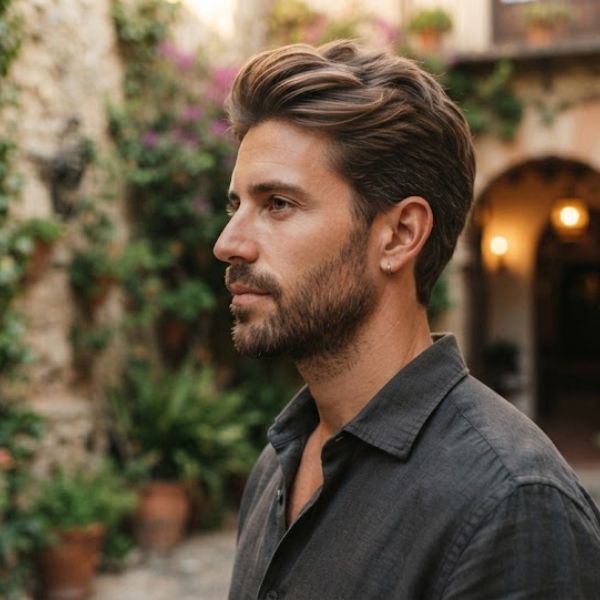
Fine hair looks fuller with a slightly longer buzz, usually a #3, since more length stands up and creates the appearance of density. A very short guard on fine hair can expose the scalp more than intended.
Best Low Taper Buzz Cut for Every Face Shape
Matching the cut to your face shape makes a noticeable difference in how balanced the final look feels.
- Oval face: The most versatile shape for this cut. A classic #3 top with a standard low taper works well without any adjustments needed.
- Round face: Keep the top slightly longer, around a #3 or #4, to add height. Avoid a very short, flat buzz, since it can widen the appearance of the face.
- Square face: A classic low taper with a sharp line-up highlights a strong jawline nicely. A #2 to #4 top balances the bone structure without over softening it.
- Diamond face: A slightly fuller top, around a #3 to #5, helps balance wider cheekbones. Avoid going too tight on the sides, since it can emphasize the narrowness at the jaw and forehead.
- Heart face: A longer top with a soft taper adds visual weight to the lower half of the face, which helps balance a wider forehead.
- Oblong or long face: Keep the top from adding too much extra height. A flat, even #3 or #4 guard with a low taper avoids stretching the face further.
How to Ask Your Barber for a Low Taper Fade Buzz Cut Men
Vague requests are the number one reason men leave a barbershop unhappy with the result. Saying “just a fade” gives your barber almost nothing to work with. Instead, be specific:
- State the top length using a guard number, for example “a number 3 buzzed evenly on top.”
- Specify where the fade should start, such as “start the taper just above my ears, not higher.”
- Say how far down it should go, for example “blend it down to skin at the neckline” or “keep a short guard at the bottom instead of going to skin.”
- Mention any extras, like a line-up, a beard blend, or a drop fade shape around the ear.
- Bring a reference photo if you have one. Even a rough visual removes most of the guesswork.
Step-by-Step Barber Technique (Pro Breakdown)
Understanding the actual process helps you spot a well executed cut and communicate better if something needs adjusting.
- Sectioning and initial buzz. The barber clips the top to the agreed guard length first, working against the grain for an even, uniform finish.
- Establishing the taper line. Using clippers without a guard or a very short guard, the barber marks where the fade will begin, typically just above the ear.
- Blending the transition. Using a fading technique with overlapping, upward flicking motions, the barber gradually shortens the hair from the taper line down to the neckline, avoiding any hard visible lines.
- Detailing the edges. The hairline, sideburns, and neckline are cleaned up with a trimmer or straight razor for sharp, defined edges.
- Final check and texture pass. The barber checks the blend from multiple angles under good lighting and lightly texturizes the top if needed for movement.
Daily Styling Routine for a Low Taper Buzz Cut (2026 Method)
One of the biggest draws of this cut is how little daily effort it needs. Here’s a simple routine that keeps it looking sharp.
- Rinse hair with warm water in the shower and use a light, sulfate free shampoo two to three times a week.
- Pat dry, don’t rub, to avoid frizz on wavy or curly textures.
- Apply a dime sized amount of lightweight hair oil or matte cream while hair is still slightly damp.
- Use your fingers or a soft brush to distribute product evenly and set the direction of the top.
- For textured or longer top variations, a small amount of sea salt spray can add extra definition before the product step.
Maintenance & Care Guide
- Trim schedule. Plan a touch up every two to four weeks depending on how fast your hair grows and how tight you want the taper to stay.
- Scalp care. Since more scalp is exposed near the neckline, keep that area moisturized to prevent dryness or irritation, especially in colder months.
- Sun protection. A short buzzed top means more scalp exposure to the sun. A hat or scalp SPF is worth using on long outdoor days.
- Between trim upkeep. A trimmer at home can help you clean up the neckline and sideburns between full barbershop visits.
- Product buildup. Wash regularly to prevent oil or cream buildup, which can make short hair look greasy or flat faster than longer styles.
Read More : French Crop Curly Hair Cut: 18 Stylish Variations for Modern Men
FAQs
How often should I get a low taper fade buzz cut trimmed?
Most men need a touch up every two to four weeks, depending on hair growth speed and how sharp they want the taper line to stay.
Does a low taper fade buzz cut work for thick or curly hair?
Yes, thick and curly hair actually benefit the most, since the taper removes bulk while a slightly longer top preserves natural texture.
What guard number should I ask for on top?
A #2 to #4 guard is standard, with thinner hair often looking fuller at a #3 or #4 and thicker hair holding shape well at a #2 or #3.
Is a low taper fade appropriate for a professional workplace?
Yes, it’s one of the most workplace friendly fades available, since the soft blend reads as neat and conservative rather than trendy or extreme.
Can I combine a low taper fade buzz cut with a beard?
Yes, a beard blend is one of the most requested combinations, and it creates a clean, continuous line from the temple down to the jaw.
What’s the difference between a low, mid, and high taper fade?
The difference is where the fade begins on the head. A low taper starts just above the ear, a mid taper starts around temple level, and a high taper starts much higher, creating more contrast.
Conclusion
The low taper fade buzz cut earns its popularity honestly. It’s sharp without being high maintenance, it flatters nearly every face shape and hair type, and it grows out gracefully enough to stretch your time between barbershop visits. Whether you go classic, add a line-up, blend it into a beard, or keep some texture on top, the core formula stays the same: a clean buzzed top and a fade that starts low and blends smooth. Bring the specifics from this guide into your next barber appointment, and you’ll walk out with a cut that actually matches what you asked for.

Zaria Rhodes is the lead editor and content curator at Lyrinexa, passionate about music, storytelling, and lyrical expression. With a deep love for discovering the meaning behind songs, she brings clarity, creativity, and accuracy to every post. Zaria is dedicated to providing readers with authentic lyrics, thoughtful interpretations, and a seamless music-exploration experience.
