


The mullet spent decades as a punchline. In 2026, it’s a genuine trend again, and the wavy version is the reason why. Natural texture takes the harsh, dated edge off the classic shape and replaces it with movement, softness, and a lived-in finish that barely needs product.
If you’ve got wavy hair and you’ve been eyeing this cut, you’re in the right place. Below is a complete breakdown of what a wavy mullet actually is, fifteen ways to wear it, how length and fringe change the whole look, a simple daily styling routine, and exactly what to tell your barber so you walk out with the cut you pictured.
What Is a Wavy Mullet Men
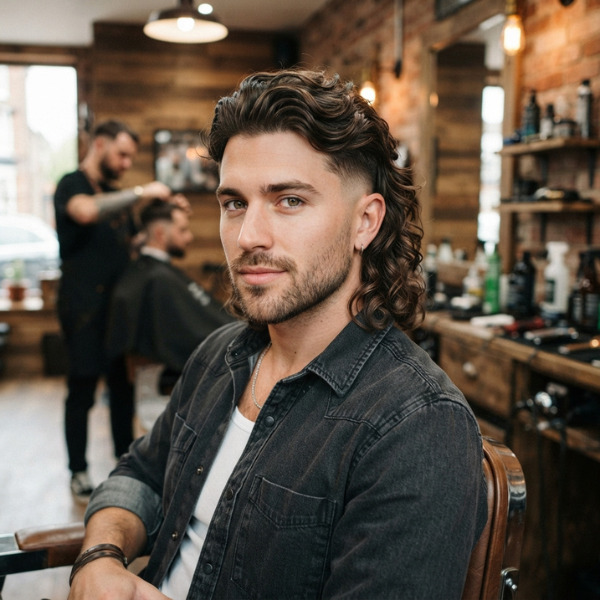
A wavy mullet is the traditional mullet structure, short at the front and sides, longer through the crown and nape, built around natural or styled wave pattern instead of blunt, straight layering.
The wave does three jobs that straight hair can’t do on its own:
- It softens the line between the short sides and the long back, so the cut doesn’t look like two different haircuts stitched together.
- It adds volume and lift at the crown without a blow dryer doing all the work.
- It creates texture at the ends, which gives the back section shape instead of hanging flat.
That’s why barbers keep saying wavy hair and mullets were made for each other. A straight-haired mullet needs a flat iron or curling wand to fake the same movement. Wavy hair does it while you sleep.
The style also sits at the center of a bigger 2026 shift in men’s hairstyling: away from rigid, symmetrical cuts and toward texture-first shapes that look intentional even when they’re a little undone. Curtain fringes, soft fades, and shaggy layering all point the same direction, and the wavy mullet fits right into that movement.
Read more: Straight Hair Mullet Guide 2026: Styles, Fade, and Easy Care
Quick Fit Table
Use this table to shortcut your way to the right variation before you book an appointment.
| Hair Type | Face Shape | Best Wavy Mullet Style | Maintenance Level |
|---|---|---|---|
| Fine or thin waves | Oval, round | Wavy Mullet Medium | Low |
| Medium thickness | Oval, heart | Wavy Hair Mullet Fade | Medium |
| Thick, dense waves | Square, diamond | Wavy Modern Mullet | Medium |
| Loose, beachy waves | Any | Long Wavy Modern Mullet | Low to medium |
| Tight, springy waves | Round, square | Burst Fade Wavy Mullet | High |
| Straight hair, light texture | Oval, long | Korean-Inspired Wavy Mullet | Low |
| Naturally short waves | Oval, square | Short Wavy Mullet Men | Medium to high |
Wavy Mullet Variations
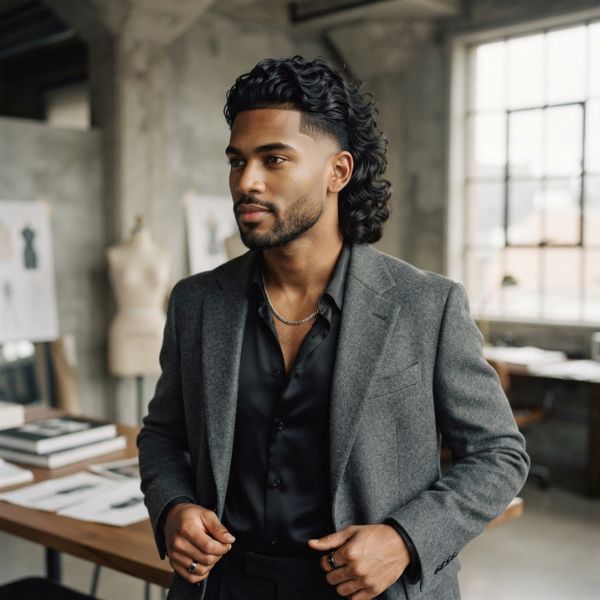
Not every wavy mullet looks the same. The differences come down to how the sides are cut, how much length stays in the back, and where the wave is allowed to show. Here are the eight core styles worth showing your barber, plus seven additional directions to explore if you want more range beyond the basics.
Read more: Capri Garnett: Age, Family, Net Worth & Volleyball 2026
1) Classic Wavy Mullet Men
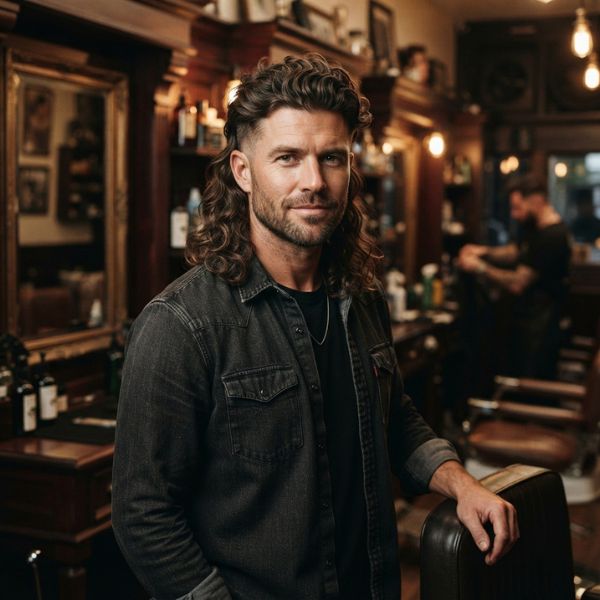
This is the baseline version: moderately short sides, a fuller crown, and a back section that clears the collar without going dramatically long. It keeps the traditional mullet silhouette intact but relies entirely on the natural bend of the hair to soften the transition.
It works especially well on medium to thick wavy hair, since there’s enough density for the waves to hold shape through the day. Oval and heart face shapes get the most balanced result, since the back length adds visual weight that offsets a narrower jaw.
2) Wavy Hair Mullet Fade

Adding a taper or low fade to the sides sharpens the whole cut. The fade tightens the sides gradually instead of leaving them shaggy, which puts more visual focus on the texture up top and at the nape.
This variation reads as more polished and office-appropriate than the fully undone versions on this list, which makes it a solid pick if your workplace has a dress code but you still want in on the trend.
3) Short Wavy Mullet Men

The short version trims the back down to just an inch or two past the natural hairline instead of letting it grow past the collar. It’s the most subtle, low-commitment way to wear a mullet, and it’s easy to grow out of or trim back into a regular short cut if you change your mind.
Because there’s less back length to manage, this style suits men who want the trend without a long adjustment period.
Read more: Low Fade Crew Cut Hairstyles: Clean, Modern, Easy
4) Wavy Modern Mullet

The modern mullet swaps out the retro version’s harsh, unblended back for soft layering and a clean fade. Think of it as the 2026 refinement of the original shape: same short-to-long structure, but every transition is blended instead of choppy.
This is the version most barbers are seeing requested right now, since it looks intentional in professional settings while still carrying the mullet’s rebellious edge underneath.
5) Wavy Mullet Medium

Sitting between the short and long variations, the medium wavy mullet gives just enough back length to show real movement without turning into a statement cut. It’s versatile enough for weekends and smart-casual workwear alike, and it’s forgiving if your waves are on the finer or looser side.
6) Long Wavy Modern Mullet

For men who want maximum drama, the long version pushes the back length well past the collar while keeping the top layered and full. Straight hair at this length tends to look stringy and weighed down. Waves prevent that by adding body and separation instead of letting the strands clump together.
This style needs the most patience to grow into and the most conditioning to keep healthy, but it delivers the boldest silhouette on this list.
7) Burst Fade Wavy Mullet
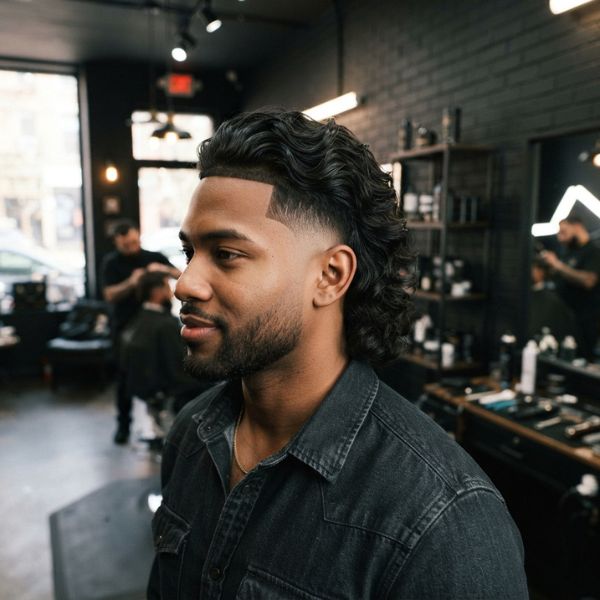
A burst fade curves around the ear instead of running in a straight line across the side, creating a rounded, high-contrast finish. Paired with waves on top, it’s one of the most attention-grabbing options here, and also one of the higher-maintenance ones, since the curved fade line needs fresh edging every couple of weeks to stay sharp.
Burst fades tend to suit oval and diamond face shapes best, since the rounded shape near the ear complements angular jawlines.
8) Korean-Inspired Wavy Mullet

Influenced by K-pop and Korean street style, this version softens the front with face-framing curtain layers while keeping the length concentrated at the back. Sides are typically left less aggressively faded than the burst fade version, and the front is styled forward rather than pushed back.
It’s a strong option for men with fine to medium wavy hair who want a softer, more youthful finish over a sharp, high-contrast one.
Beyond the core eight, barbers are also seeing strong demand for:
- Shaggy wavy mullet: heavy point-cut layering for a rock-inspired, piecey finish.
- Wolf mullet hybrid: shag layering blended into mullet length for extra volume through the crown.
- Middle-part wavy mullet: a centered part that adds symmetry and pairs naturally with curtain layers.
- Skin fade wavy mullet: the sharpest possible contrast against the longer back, best on thick or coarse waves.
- Curly-leaning wavy mullet: for hair that sits between wavy and curly, using diffused drying to maximize definition.
- Sun-bleached wavy mullet: long, lightened layers for a coastal, surf-inspired look.
- Baby mullet with waves: a subtle, low-drama take where the back barely clears the neckline.
Length and Fringe
Length and fringe are the two variables that change a wavy mullet’s personality more than anything else, so it’s worth thinking through both before your appointment.
Back length options:
- Short (collar-grazing): subtle, easy to maintain, and the fastest to grow out if you change your mind.
- Medium (past the collar): the most versatile length, balancing visibility with manageability.
- Long (well past the collar): the boldest option, but it needs healthy, well-conditioned hair to avoid looking thin or stringy.
Fringe options:
- Curtain fringe: parted and swept to the sides, softening the forehead and working well with oval, square, or long face shapes.
- Textured crop fringe: pushed forward with matte product, popular for hiding a receding hairline.
- Blunt fringe (Edgar-style): a straighter, more defined front paired with mullet length in back, for a bolder contrast.
- No fringe, pushed back: keeps the front clean and puts all the visual attention on the fade and back length.
A general rule that most barbers apply: longer or narrower faces usually look more balanced with some kind of fringe, since it visually shortens the face. Rounder or squarer faces often do better with the front pushed back or up, adding height rather than width.
Daily Styling in Three Steps
One of the biggest advantages of a wavy mullet is that it doesn’t demand a long routine. Here’s a simple three-step approach that works for most wave patterns.
- Apply product to damp hair. Work a light sea salt spray or curl cream through towel-dried hair, focusing on the mid-lengths and ends rather than the roots. This enhances the natural wave pattern instead of weighing it down.
- Air dry or diffuse. Letting hair air dry preserves the most natural texture. If you’re short on time, use a diffuser attachment on low heat, scrunching gently upward to encourage clumping and volume.
- Finish and separate. Once dry, rake a small amount of matte clay or texture paste through with your fingers, separating the waves at the crown and back so they don’t fall into a single flat mass.
That’s it. No flat iron, no curling wand, and no daily blow-dry required for most wave patterns. The one exception is very loose or barely-there waves, which may need a light mousse at the roots for extra lift.
Care and Upkeep
Wavy hair needs a slightly different maintenance approach than straight hair, especially once it’s cut into a mullet shape with mixed lengths.
- Trim every four to six weeks. This keeps the contrast between the short sides and long back looking deliberate instead of grown-out and messy. Faded versions may need touch-ups every two to three weeks to keep the fade line sharp.
- Condition regularly, especially the back length. Once the back section grows past collar length, it dries out faster than the shorter sides. A hydrating conditioner or leave-in treatment prevents frizz and split ends.
- Wash two to three times a week with a sulfate-free shampoo. Washing daily strips the natural oils that help waves hold their shape.
- Detangle before styling, not after. Wet detangling reduces breakage, especially on tighter wave patterns.
- Use a smoothing serum to control flyaways. A small amount on the ends keeps the style looking clean without flattening the volume on top.
- Always apply heat protectant before diffusing or blow-drying. Even low heat adds up over repeated styling sessions.
Skipping these basics is the most common reason a wavy mullet starts looking unkempt rather than intentionally textured.
Barber Talk That Works
Walking in with the right vocabulary makes a real difference in how closely the final cut matches what you pictured. Use these phrases as a starting point.
- “Keep the sides short with a [taper/burst/skin] fade, and leave the back long enough to clear my collar.”
- “Don’t flatten the natural wave, cut with the texture instead of against it.”
- “Add layers through the crown and back so it has movement, not just length.”
- “I want the fade to curve around my ear” (for a burst fade specifically, rather than a straight taper).
- “Keep the fringe long enough to push forward” (if you want a curtain or textured crop front).
It also helps to bring reference photos from multiple angles, front, side, and back, since verbal descriptions of fade height and back length can be interpreted differently from barber to barber.
Conclusion
The wavy mullet works because it stops fighting your hair’s natural texture and starts using it. Whether you land on a clean taper, a rounded burst fade, or a soft Korean-inspired curtain front, the same principle applies across every version on this list: let the wave do the styling work, keep up with regular trims, and be specific with your barber about fade height and back length. Pick the variation that matches your face shape and hair thickness from the quick fit table above, bring a couple of reference photos, and you’ll walk out with a cut that looks current rather than costume.
FAQ’s
Does a wavy mullet work on straight hair?
Yes, though you’ll need a light perm, sea salt spray, or curling wand to create the texture that wavy hair produces naturally.
How often should I trim a wavy mullet?
Every four to six weeks for most versions, or every two to three weeks if you’re wearing a burst or skin fade.
Is a wavy mullet high maintenance?
Not usually. Most versions only need a light product and air-drying, though faded styles require more frequent barber visits.
What face shapes suit a wavy mullet best?
Oval and heart shapes are the most versatile, but square and diamond shapes pair well with burst fade versions, and long faces benefit from a fringe.
Can I get a wavy mullet with thin hair?
Yes. Layering through the crown and back adds the appearance of volume, and a lighter product like mousse works better than heavy pomade.
What’s the difference between a wavy mullet and a curly mullet?
A wavy mullet has a looser, gentler bend, while a curly mullet has a tighter, more defined curl pattern. The cutting approach is similar, but curly versions usually need more diffusing and curl-defining product.

Zaria Rhodes is the lead editor and content curator at Lyrinexa, passionate about music, storytelling, and lyrical expression. With a deep love for discovering the meaning behind songs, she brings clarity, creativity, and accuracy to every post. Zaria is dedicated to providing readers with authentic lyrics, thoughtful interpretations, and a seamless music-exploration experience.

2 thoughts on “15 Best Wavy Mullet Haircuts That Are Trending in 2026”