


The mid burst fade has become one of the most requested cuts in barbershops going into 2026, and it is easy to see why. It sits in a sweet spot between subtle and sharp, curving cleanly around the ear instead of running in a flat line down the side of the head. That small design choice makes a big visual difference, which is why so many men are swapping their standard mid fade for this rounder, more sculpted version.
This guide breaks down what a mid burst fade actually is, how it compares to a regular mid fade and a drop fade, which version fits your hair type and face shape, exactly what words to use with your barber, and a simple maintenance routine that keeps it looking fresh between visits.
Read more: 15 Best Wavy Mullet Haircuts That Are Trending in 2026
What is a mid burst fade?
A mid burst fade is a haircut where the hair fades from skin level to longer length starting around the middle of the head, roughly between the temple and the top of the ear. Instead of blending in a straight horizontal line, the fade curves around the ear in a half circle, then continues down toward the nape of the neck.
The result is a cut that looks more dynamic than a standard fade but is still balanced enough for everyday wear, school, or the office. It works with almost any top style, from a short crop to a longer textured fringe, because the burst technique only affects the sides and back.
Why it’s called “burst”
The name comes from the shape of the fade line itself. Instead of a straight taper, the hair fades outward from the ear in a rounded arc, similar to a burst of light radiating from a single point. Barbers sometimes describe it as a sunburst or a spotlight effect around the ear.
This curved shading is what separates a burst fade from every other fade type. It softens the transition around the ear while still creating strong contrast between the skin and the longer hair on top.
Read more: Mid Burst Fade Best Styles, How to Ask, and Easy Care 2026
Mid burst fade vs regular mid fade
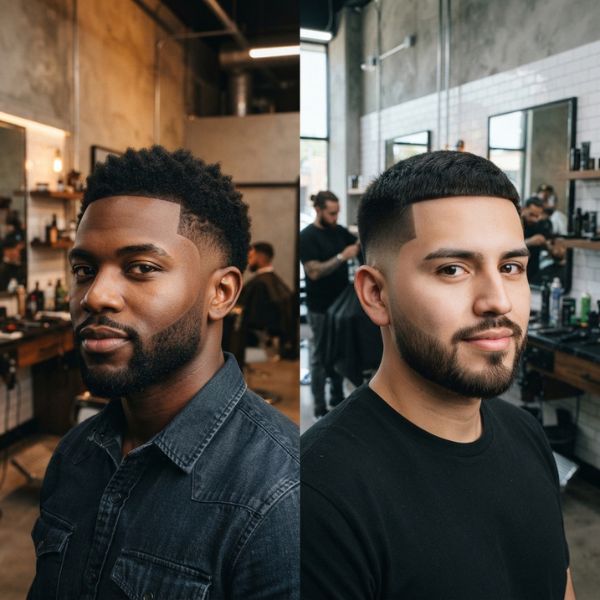
A regular mid fade blends the hair in a straight, even line that runs horizontally around the head, usually starting between the temple and ear. A mid burst fade uses that same starting height but reshapes the line into a curve around the ear.
The practical differences are:
- A regular mid fade has a uniform blend line all the way around the head.
- A mid burst fade has extra shaping specifically around the ear, creating more depth and dimension.
- Burst fades tend to draw more attention to the ear area, which pairs well with mullets, mohawks, and fringes.
- Regular mid fades are slightly quicker for barbers to maintain since there is less detailed shaping involved.
If you want a clean, low maintenance look, a regular mid fade works fine. If you want something with a bit more edge and personality, the burst version is the better pick.
Low vs mid vs high burst fade and drop fade

Burst fades are categorized by where the fade starts on the head, and that starting point changes the whole look of the cut.
- Low burst fade: Starts just above the ear, keeps more hair on the sides, and offers a subtle, office friendly look.
- Mid burst fade: Starts between the temple and the top of the ear, giving a balanced contrast that suits most face shapes.
- High burst fade: Starts near the temple or higher, creating a bold, high contrast look with more skin showing.
Each version keeps the same rounded burst technique around the ear. The only thing that changes is how high the fade begins and how dramatic the contrast looks.
Read more: 15 Best Wavy Mullet Haircuts That Are Trending in 2026
Mid burst fade vs drop fade

People often mix these two up because both create a curved fade line, but they are shaped differently. A mid burst fade forms an isolated semicircle centered on the ear, so the curve appears and then blends back into the rest of the fade. A drop fade forms one continuous line that dips lower as it wraps around the back of the head, following the natural curve of the skull rather than circling the ear.
In simple terms, a burst fade highlights the ear specifically, while a drop fade reshapes the entire back and side profile. Burst fades tend to suit curly, coily, or thick hair and edgier styles like mohawks and mullets. Drop fades usually suit straight or fine hair and more classic looks like a side part or crew cut. Burst fades also need slightly more frequent trims, usually every two to three weeks, because the detailed shaping around the ear grows out faster than a straight fade line.
Best mid burst fade styles by hair type
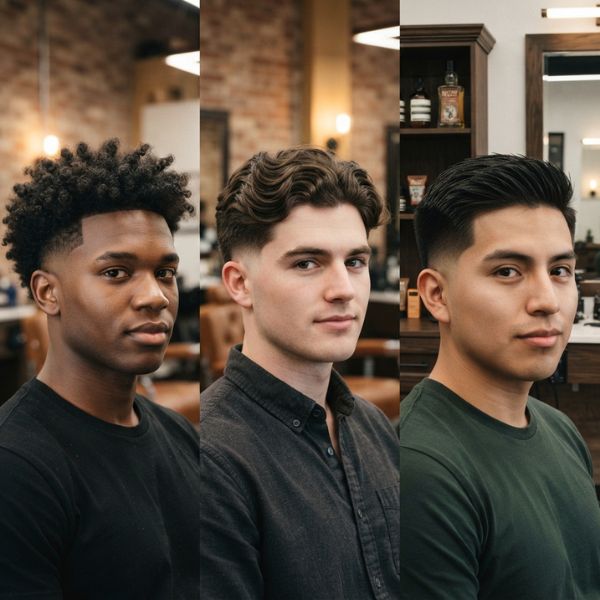
Not every mid burst fade looks the same once it leaves the chair. Hair type and texture change how the top and fade interact, so here are the most requested variations for 2026.
Mid burst fade curly hair

Best for curly hair, a mid burst fade keeps volume and bounce on top while the shaved sides create sharp contrast underneath the curls. The burst shaping around the ear also helps prevent curls from looking bulky or shapeless.
Ask your barber to leave enough length on top to preserve curl pattern, then use a lightweight curl cream or texture clay to define the curls without weighing them down. A leave in conditioner before styling also helps reduce frizz on drier curl types.
Mid burst fade straight hair

On straight hair, the mid burst fade gives a clean, structured look since the top lies flat and shows off the sharp fade lines clearly. This version works especially well with a side swept or textured crop on top.
A matte paste or clay is usually the best product choice here because straight hair can look flat or shiny with heavier pomades. Blow drying the roots for a few seconds before styling adds a bit of lift.
Mid burst fade textured fringe

Pairing a mid burst fade with a textured fringe brings the focus forward, framing the face with choppy, piece defined bangs while the sides stay tight and faded. It is a popular choice for men who want a modern, low key look that still feels current.
Ask for point cutting or texturizing scissors on the fringe so the ends look soft rather than blunt. A small amount of matte clay worked through dry hair keeps the pieces separated all day.
Mid burst fade short hair and mid burst fade buzz cut
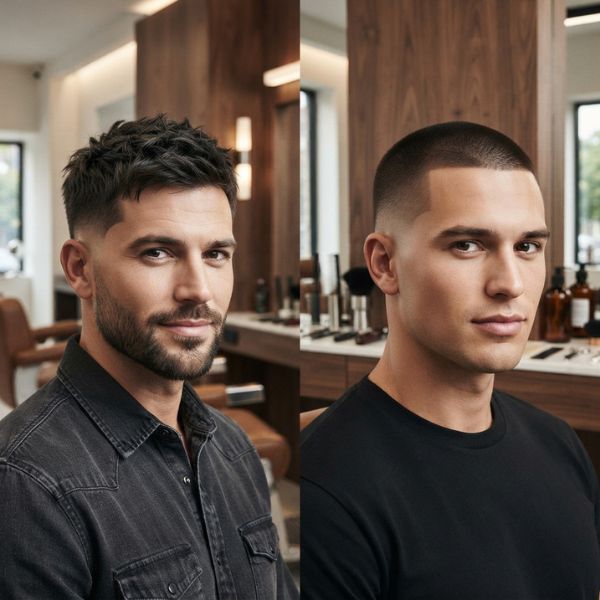
For short hair, the mid burst fade adds shape and detail to an otherwise simple cut, giving even a basic crop or buzz a bit more personality. On a buzz cut specifically, the burst fade becomes the main visual feature since there is little length on top to distract from it.
This combination is one of the lowest maintenance options on this list in terms of daily styling, though the fade itself still needs regular touch ups to stay sharp.
Mid burst fade mullet and mid burst fade mohawk

The mid burst fade mullet keeps length at the back while the sides fade tightly around the ear, creating a strong contrast between short and long sections. It has become one of the most popular combinations of the past few years because it feels retro and modern at the same time.
The mid burst fade mohawk takes a strip of longer hair down the center of the head and fades everything else away from the ear outward. Both styles rely heavily on the burst shaping to make the transition between long and short hair look intentional rather than uneven.
Mid burst fade black men
For black men, mid burst fades work particularly well with coily and kinky textures because the rounded fade line complements natural curl patterns and adds definition around the hairline. Many barbers pair this cut with a defined part, a textured top, or a light waves pattern for extra detail.
Regular moisturizing is important here since fades expose more scalp, so a light oil or moisturizing cream helps prevent dryness and keeps the hairline looking crisp between cuts.
Mid burst fade with design and mid burst fade with V

Adding a design means the barber shaves a pattern, line, or shape into the faded section, usually near the temple or behind the ear where the burst curve provides extra space to work with. Popular choices include single or double lines, geometric shapes, or initials.
The mid burst fade with V refers to a V shaped line cut into the hairline at the nape of the neck, which sharpens the back profile and pairs especially well with mullets or longer top styles. Both options add a custom touch, but they also require more frequent maintenance since fine lines and shapes grow out noticeably within a week or two.
What to tell your barber
Miscommunication is the most common reason a mid burst fade turns out wrong, so being specific helps a lot. Try using this checklist during your appointment:
- Say “mid burst fade” specifically, and clarify that you want the fade to curve around the ear rather than run in a straight line.
- Point to a reference photo on your phone so the barber can see the exact fade height and curve you want.
- Mention your hair type, such as curly, coily, straight, or fine, so the barber can adjust the technique accordingly.
- Specify how much length you want left on top, using a rough guide like one inch, two inches, or a specific clipper guard number.
- Ask about adding a design, a part, or a V shape at this stage if you want one, since it is easier to plan for before cutting begins.
- Confirm how the fade should blend into your beard if you have one, so there are no visible gaps along the jawline.
Bringing a clear photo is one of the most effective things you can do, since fade heights and burst curves can look very different from barber to barber depending on how they interpret the request verbally.
Maintenance schedule (week by week)
A mid burst fade looks its sharpest in the first few days, then gradually softens as hair grows back in. Here is a simple schedule to keep it looking fresh.
- Week 1: The fade is at its sharpest. Stick to light daily styling with a small amount of product and avoid overwashing, since that can dry out the scalp right after a fresh cut.
- Week 2: The fade line starts to soften slightly, especially around the ear. A quick line up or edge up at home or at the barbershop can restore sharpness without a full cut.
- Week 3: This is usually the point where a full trim is needed, particularly if you have a design or a V shape that has started to grow out unevenly.
- Week 4 and beyond: Without a trim, the burst shape will blend into the rest of the hair and lose its defined curve. Most people book their next full mid burst fade appointment around this point.
For daily upkeep between cuts, a light moisturizing oil helps if your scalp feels dry, and a soft bristle brush can help blend regrowth so the fade does not look patchy.
Common mistakes and quick fixes

Even a well cut mid burst fade can go wrong with poor communication or the wrong aftercare routine. Here are the most common issues and how to fix them.
- Fade line too straight, not curved: This usually means the barber cut a standard mid fade instead of a burst. Ask specifically for the fade to wrap around the ear next time, and bring a reference photo.
- Fade grown out unevenly after two weeks: This is normal since burst shaping grows out faster around the ear than the rest of the head. Book touch ups every two to three weeks instead of waiting a full month.
- Top looks flat with straight hair: Switch from a heavy pomade to a lightweight clay or matte paste, and add a few seconds of root drying before styling.
- Curls look shapeless after a burst fade: Ask your barber to leave slightly more length on top and use a defined curl cream rather than a gel that can weigh curls down.
- Design or V shape looks blurry after a week: Fine line work grows out quickest of all. If you want to keep a design crisp, plan on a touch up every one to two weeks.
- Dry, irritated scalp after the cut: This is common right after a close fade. A light, fragrance free moisturizer applied a day or two after the cut usually solves it.
Conclusion
The mid burst fade earns its popularity by combining a balanced fade height with a rounded, eye catching curve around the ear. It adapts well to curly, straight, coily, and fine hair, and it pairs naturally with mullets, mohawks, fringes, and clean buzz cuts alike. The key to getting a great result is clear communication with your barber, a solid reference photo, and a realistic maintenance schedule that accounts for how quickly the shaping around the ear grows out. With the right upkeep, a mid burst fade can stay sharp and stylish appointment after appointment throughout 2026.
FAQs
How often do you need to get a mid burst fade redone? Most people need a touch up every two to three weeks since the curved shaping around the ear grows out faster than a straight fade line.
Does a mid burst fade work with thick or curly hair? Yes, it works especially well with curly and thick hair because the rounded fade adds contrast without flattening natural volume on top.
Is a mid burst fade the same as a drop fade? No, a burst fade curves in a semicircle around the ear, while a drop fade forms one continuous line that drops lower around the back of the head.
Can you add a beard blend to a mid burst fade? Yes, many barbers blend the fade directly into the beard along the jawline for a seamless, connected look.
What should I ask for to avoid getting a regular mid fade by mistake? Specifically say you want the fade to curve around the ear, not run in a straight line, and show a reference photo to avoid confusion.

Zaria Rhodes is the lead editor and content curator at Lyrinexa, passionate about music, storytelling, and lyrical expression. With a deep love for discovering the meaning behind songs, she brings clarity, creativity, and accuracy to every post. Zaria is dedicated to providing readers with authentic lyrics, thoughtful interpretations, and a seamless music-exploration experience.

1 thought on “Mid Burst Fade Best Styles, How to Ask, and Easy Care 2026”