


A haircut only earns “low maintenance” status if it survives sweat, sleep, hats, and a rushed Monday morning without falling apart. The low fade crew cut does exactly that. It pairs a short, tidy top with a gradual blend that starts near the ear and disappears into the neckline, so there is no harsh line to grow out awkwardly and no daily styling routine to remember.
Barbers reach for it because it works on almost every head shape, hair texture, and lifestyle, from office desks to gym floors. This guide breaks down what the cut actually is, who it flatters, twelve ways to wear it, the exact words to say in the chair, and how to style it in under two minutes at home.
What Is a Low Fade Crew Cut
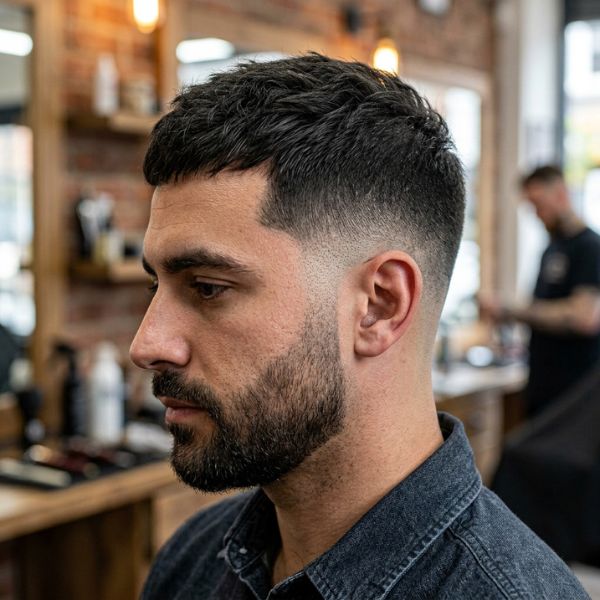
A crew cut is a short, military-derived hairstyle that keeps the top cropped close, usually between half an inch and one and a half inches, while the sides stay neat and controlled. Add a low fade to that base, and the sides begin their taper roughly an inch above the ear rather than at the temple or crown. The blend runs smoothly down toward the nape, so the shortest hair sits at the bottom and gradually lengthens as it climbs.
Because the transition point sits so close to the hairline, the change in length is subtle. There is no obvious ring around the head the way a high or mid fade produces. This is part of why the style ages so well between visits and looks tidy from every angle, including in photos taken from above or the side.
Barbers typically build this blend using a combination of clipper guards and scissor-over-comb work. The guard numbers step down gradually (often a 4 or 3 on top of the fade zone moving to a 1 or 0 near the skin) so the eye cannot pinpoint exactly where one length ends and the next begins. That gradual math is the entire difference between a low fade that looks professional and one that looks patchy.
Read more: Who Is Dallas Yocum? The Untold Story of Mike Lindell’s Short-Lived Wife
Who It Suits
The low fade crew cut flatters a wide range of men because it does not demand a specific head shape, hair density, or lifestyle to look intentional.
- Men moving on from a buzz cut who want a bit more length and versatility on top without committing to a longer style.
- Professionals who need a haircut that reads as polished in a boardroom and still looks sharp after a workout.
- Men with a conservative style preference who like the sharpness of a fade but find a skin fade or high fade too bold for daily wear.
- Anyone with thick or unruly sides who wants the bulk removed without shaving the whole head.
- First-time fade wearers, since a low fade is the most forgiving entry point and rarely looks wrong even a few weeks after a trim.
Face Shapes and Hair Types
Face shape changes how the top length and fade height should be adjusted, and hair type changes how much texture the top needs to avoid looking flat or bulky.
| Face Shape | What to Ask For |
|---|---|
| Oval | Any top length works well; this shape has the most flexibility, so a classic or textured top both look balanced. |
| Square | A softer, lower blend at the temple that eases the strong jawline without hiding it. |
| Round | A little extra height at the crown and a slight lift at the front to elongate the profile. |
| Oblong | A shorter top and a calm, low blend, since extra height only stretches the face further. |
| Diamond | A textured top with light volume at the temples to balance a narrower jawline and forehead. |
Hair type matters just as much as bone structure:
- Straight hair can look flat on top without texture, so ask the barber for light texturizing or a slightly longer guard at the crown.
- Wavy hair benefits directly from the fade itself, since removing bulk from the sides stops waves from puffing outward.
- Curly hair looks cleanest when the crown is kept relatively flat, letting natural curl pattern sit on top instead of ballooning upward. Coarser or coily textures often pair well with a slightly longer top guard to preserve curl definition rather than clipping it away entirely.
- Thick hair gets noticeably lighter and easier to manage once the sides are thinned through the fade.
- Fine hair gains the appearance of density because the shorter sides create contrast against the top.
Edges and Details
The small details around the perimeter often decide whether a low fade crew cut looks sharp or unfinished.
- Neckline: A natural, rounded neckline looks softer and grows out more evenly, while a squared-off neckline gives a crisper, more structured finish.
- Sideburns: Keeping sideburns level with the fade line, rather than leaving them long, keeps the whole side consistent.
- Hairline: A line-up along the forehead and temple sharpens the front of the cut, though it is optional and requires more frequent upkeep to avoid looking overgrown.
- Crown: Keeping the crown relatively flat prevents the top from looking heavy or unbalanced against the tightly faded sides.
12 Variations Low Fade Crew Cut Hairstyle
Once the base concept is clear, the real decision is which finish fits a person’s routine, job, and hair type. Below are twelve of the most requested versions, each with a distinct look and level of upkeep.
Read more: Car Storage in Perth: Secure Vehicle Options Explained
Classic Low Fade Crew Cut
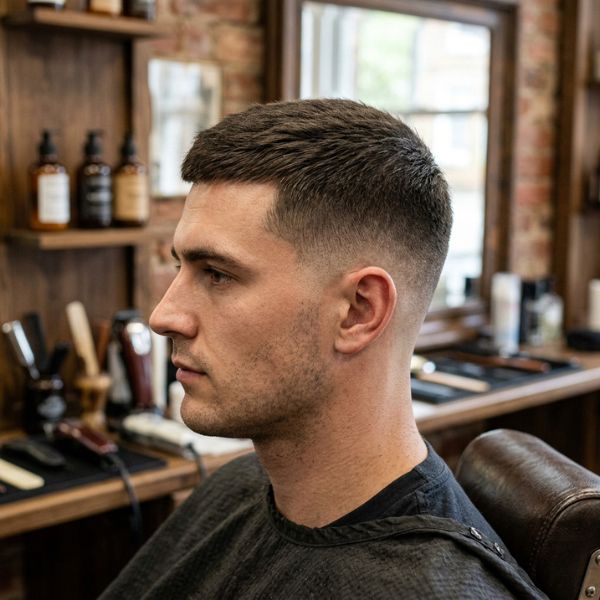
This is the baseline version: short, even length on top with a smooth low blend at the sides. It requires almost no product and works in nearly every professional setting, which is why it remains the most requested version at most barbershops.
Textured Low Fade Crew Cut
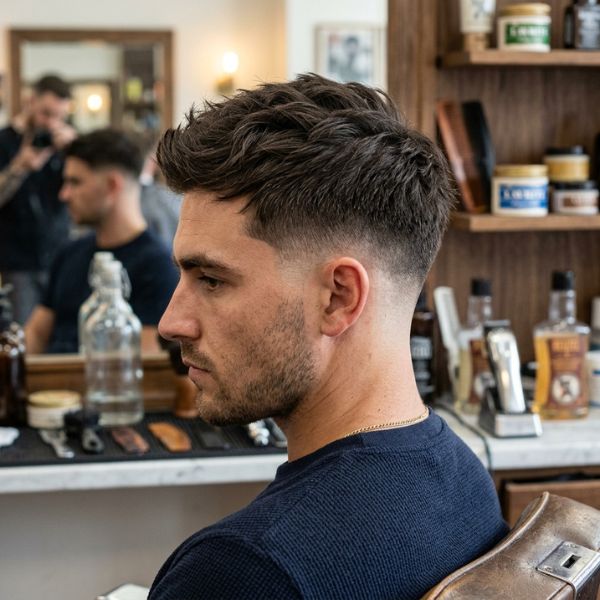
Here, the top is cut with slightly more length and finished with texturizing shears or a razor to break up uniformity. The result is soft, piecey movement on top that pairs naturally with a clean low blend, giving the cut a bit more personality without adding maintenance time.
Messy Low Fade Crew Cut
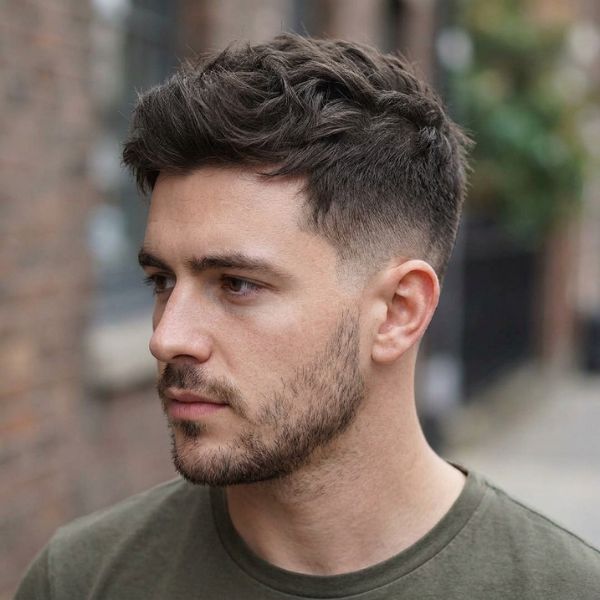
The top is left a touch longer here and styled to fall into loose, natural-looking pieces rather than a smooth surface. It still reads as intentional rather than unkempt because the fade and neckline stay precise. Keeping the crown flat is what stops the “messy” element from tipping into “uncombed.”
Skin Low Fade Crew Cut
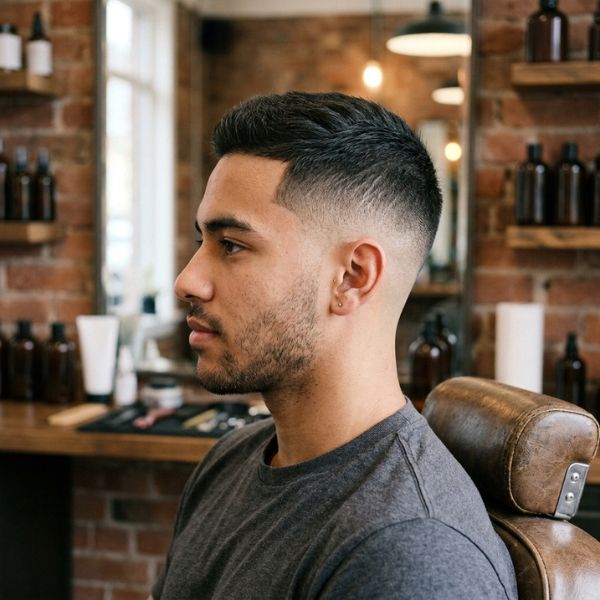
This version takes the fade all the way down to bare skin at its lowest point near the ear, then blends upward into the top length. The contrast is stronger than a standard low fade, which sharpens the jawline visually and photographs particularly well under bright light. It does need more frequent trims, typically every two to three weeks, to keep the skin section from growing out unevenly.
Drop Low Fade Crew Cut
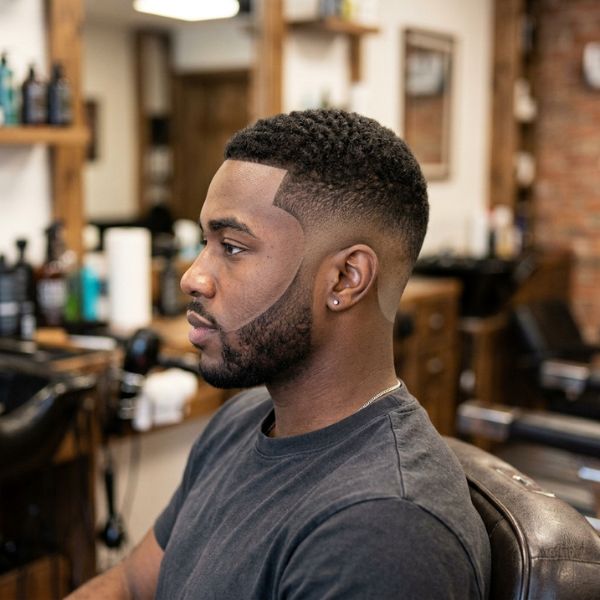
Instead of running in a straight line around the head, the fade dips slightly behind the ear before curving back up. This works especially well on rounder head shapes, since it removes bulk near the nape and keeps the back of the head looking tidy rather than boxy.
Read more: Lamine Yamal Net Worth: The Rising Star’s Journey to Football Fortune
Buzz Crew Cut Low Fade
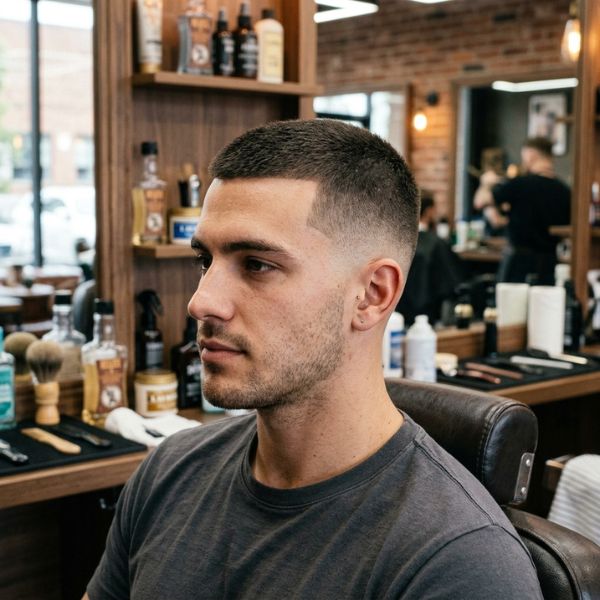
This is the shortest and lowest-maintenance version on the list. The top is clipped very close, often with a guard between 2 and 4, while the sides fade low into a tight blend. It suits hot climates, active jobs, sports, and any workplace with strict grooming standards, since it needs almost no daily styling.
Low Fade Crew Cut with Beard
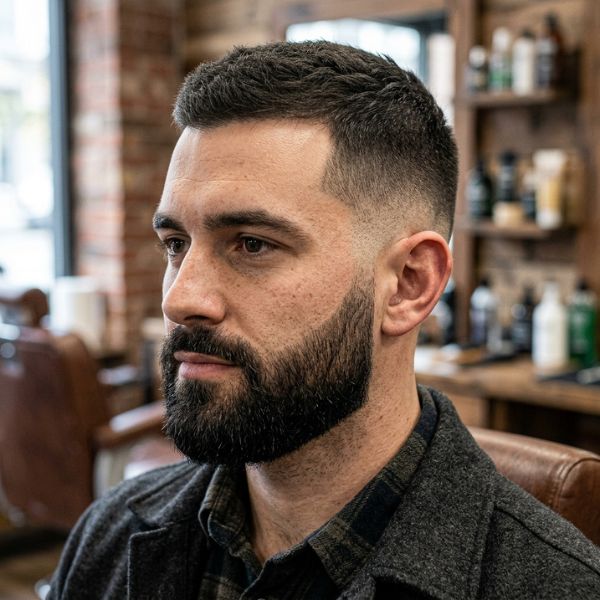
Pairing the cut with a well-maintained beard fade creates a cohesive, masculine look where the facial hair blends into the same low line as the hair. This combination works particularly well for square and oval face shapes and requires coordinating both the hair and beard trims on the same schedule to keep the transition seamless.
Low Fade Crew Cut with Line Up
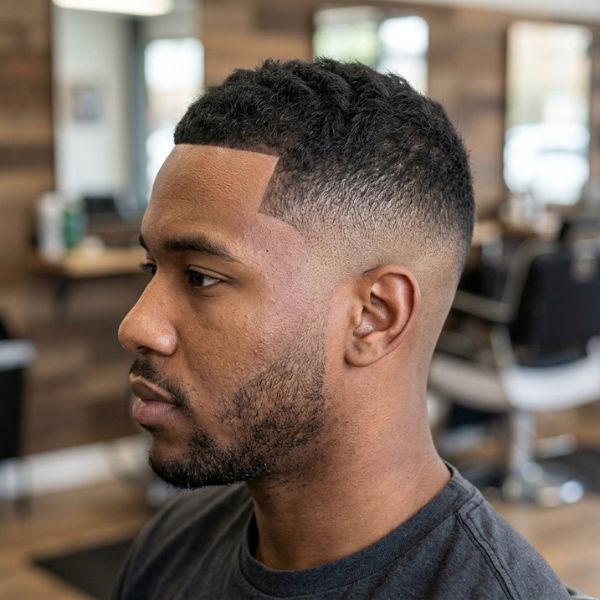
Adding a crisp line-up along the hairline and temple sharpens the front of the style and gives it a more defined, barbershop-fresh finish. It suits men who prefer a sharper, more structured look and are comfortable getting touch-ups every one to two weeks, since a grown-out line-up looks noticeably softer than a fresh one.
Low Fade Crew Cut with Hard Part
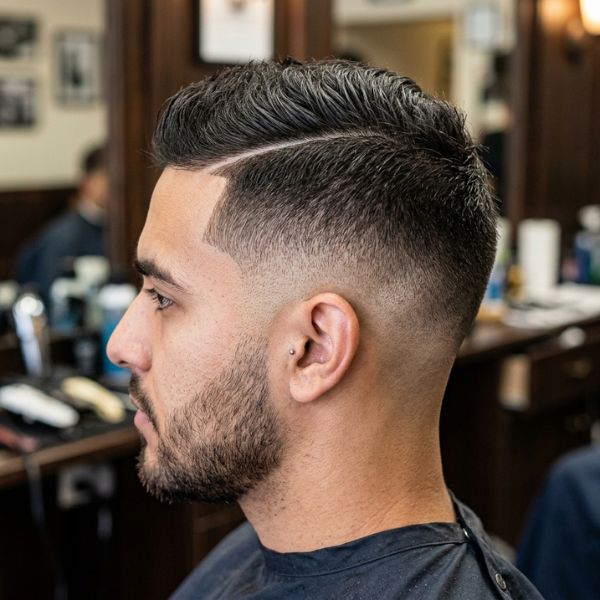
A hard part is a thin shaved line cut directly into the hair, usually just above the ear, which separates the top from the fade with a distinct edge instead of a gradual blend. It adds a graphic, modern element to an otherwise classic cut and works best on straight or wavy hair, where the line stays visible.
Straight Hair Low Fade Crew Cut
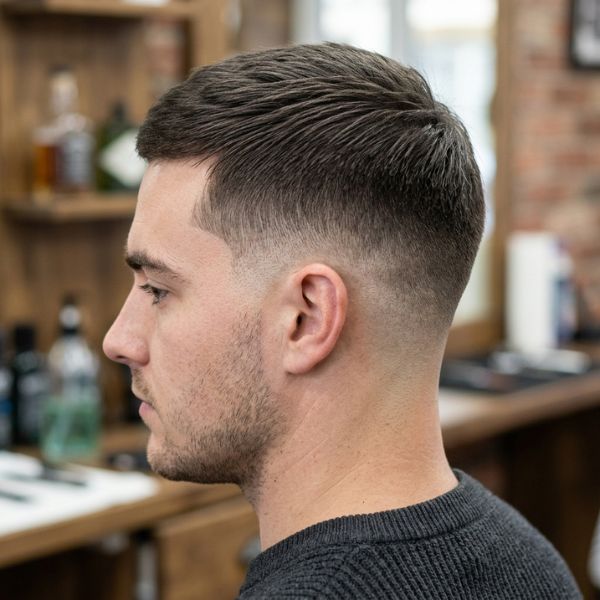
Straight hair holds this cut cleanly but benefits from a small amount of texturizing on top to prevent the classic “flat cap” look. A light matte product applied to damp hair, then blow-dried upward briefly before combing into place, keeps volume without shine.
Wavy Low Fade Crew Cut
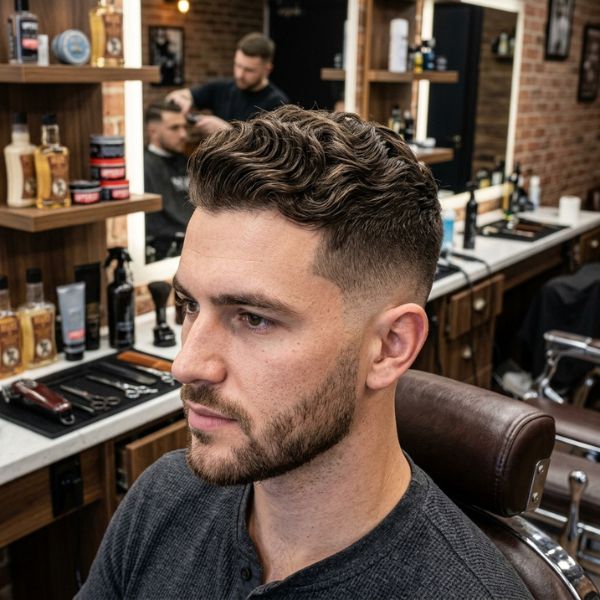
Wavy hair naturally pairs well with this style because the fade removes the extra volume that waves tend to create at the sides. The top can be left slightly longer than on straight hair to let the natural wave pattern show through, especially once air-dried rather than blow-dried flat.
Curly Low Fade Crew Cut
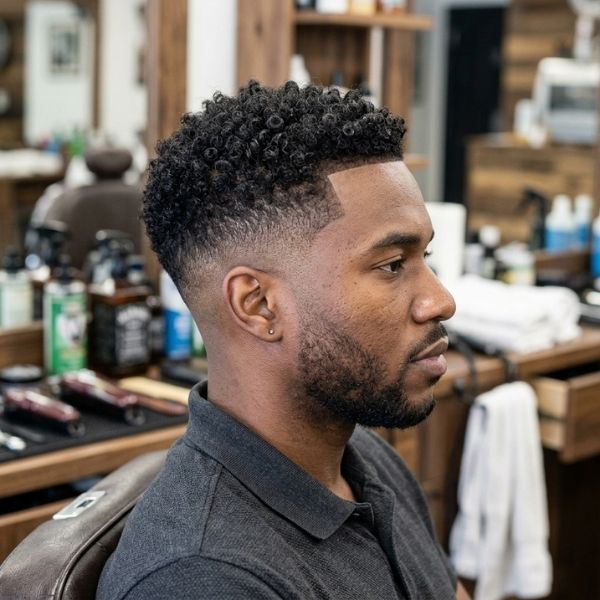
Curly hair looks strongest here when the top is left with enough length for the curl pattern to be visible, usually one to two inches, while the crown stays flat so curls sit close rather than expanding outward. A lightweight curl cream applied to damp hair helps define individual curls without adding heaviness.
Barber Script
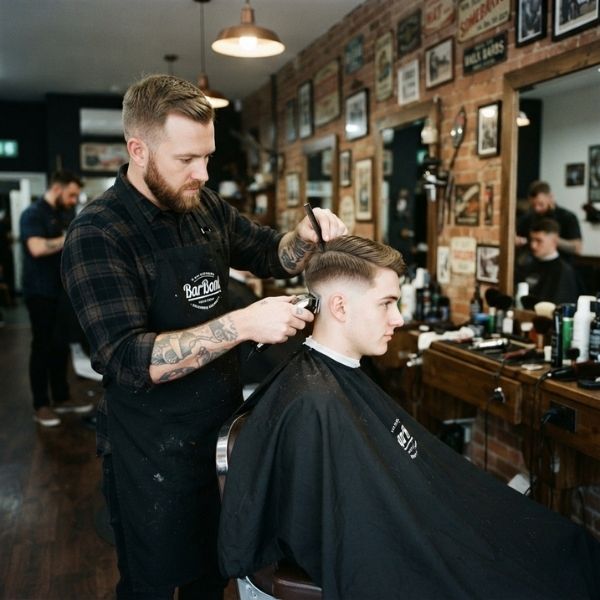
Walking into a barbershop with vague instructions is the most common reason a haircut turns out wrong. Use this exact phrasing to get a consistent result every visit:
“I’d like a low fade crew cut. Keep the top short with light texture, and take the sides down to a true low fade starting right at the temple and nape, no higher up the head. Keep the crown relatively flat. Finish the neckline natural” (or “squared off,” depending on preference), “and let me know if a line-up or hard part would work with my hairline.”
If a specific finish from the list above is wanted, naming it directly, such as “the skin low fade version” or “a drop fade at the back,” gives the barber an even clearer target.
Quick Styling Steps
Most mornings, this cut takes under two minutes to style. Here is the fastest reliable routine:
- Apply a small amount of styling product (matte paste for straight or wavy hair, curl cream for curly hair) to damp or towel-dried hair.
- Use a blow-dryer on a low or medium heat setting, lifting the roots at the crown with a brush or fingers for volume.
- Finish with a brief blast of cool air to help the style hold its shape through the day.
- Comb or finger-style once to set the direction and smooth any flyaways.
- Skip heavy oils or gels, since they tend to weigh down the short top and can make fine hair look thin.
Between visits, a quick neckline cleanup with a trimmer around week two keeps the fade looking fresh even before the next full appointment. Most men return every three to five weeks, though skin fade and line-up versions typically need visits closer to the two-to-three-week mark to maintain sharp edges.
Photos and Description
Visually, a well-cut low fade crew cut shows three clear zones when viewed from the side: a short, textured or smooth top; a gradual blend running from roughly ear height down to the neckline; and a clean, defined edge at the hairline and neck. From the front, the cut should look balanced rather than top-heavy, with the fade barely visible unless the head is tilted. From behind, the neckline shape (natural or squared) should mirror the same cleanliness seen at the front hairline. A correctly blended fade shows no visible “step” or line where guard lengths change, only a smooth gradient from skin to top length.
FAQs
Is a low fade crew cut good for a job interview?
Yes, it is one of the safest professional haircuts available, since the sides stay slim and the top remains short and neat without looking severe.
How often does a low fade crew cut need a trim?
Most versions need a trim every three to five weeks, though skin fades and line-ups often need touch-ups every two to three weeks.
Does a low fade crew cut work with thinning hair?
Yes, the short length reduces the contrast between hair and scalp, which makes thinning less noticeable than it would be with longer styles.
Can curly hair handle a low fade crew cut?
Yes, curly hair works well as long as the top is left long enough to show the curl pattern and the crown is kept relatively flat.
What is the difference between a low fade and a skin fade crew cut?
A low fade blends into short hair near the base, while a skin fade takes the blend all the way down to bare skin before rising into the top length.
Do I need styling products for this haircut?
Not always. Straight and short versions can look finished with no product, though a small amount of matte paste or curl cream helps texture and hold on longer tops.
Conclusion
The low fade crew cut earns its popularity by solving a common problem: most men want a haircut that looks sharp without demanding daily effort or constant barber visits. Because the fade sits low and blends gradually, it suits nearly every face shape, hair type, and lifestyle, from a first fade experience to a long-time go-to style. Whether the choice is the classic version, a textured top, a skin fade, or a beard pairing, the same principle holds true across every variation: a tight, well-blended base at the sides and a clean, controlled top. Bring the barber script above to the next appointment, pick the variation that fits the daily routine best, and expect a cut that holds its shape from the chair to the following month.

Zaria Rhodes is the lead editor and content curator at Lyrinexa, passionate about music, storytelling, and lyrical expression. With a deep love for discovering the meaning behind songs, she brings clarity, creativity, and accuracy to every post. Zaria is dedicated to providing readers with authentic lyrics, thoughtful interpretations, and a seamless music-exploration experience.

2 thoughts on “Low Fade Crew Cut Hairstyles: Clean, Modern, Easy”