


Few haircuts have bounced back from “outdated joke” to “most requested style in the chair” quite like the mullet. The modern mullet haircut keeps the short front and sides that made the original famous, but swaps the harsh, uneven back line for clean tapers, blended fades, and deliberate texture. Instead of one rigid look, it now covers dozens of variations that work with straight, wavy, curly, and coily hair, and with almost every face shape. Barbers report more requests for this cut than for standard fades, driven largely by short-form video and celebrities wearing softened, grown-up versions of the style. This guide breaks down the trending mullet types for 2026, how to style one, where the haircut came from, and how to walk into a barbershop and ask for it correctly.
Trending Types of Mullet Hairstyles (Modern Mullet)
Most 2026 mullets combine three building blocks: fade style (burst, taper, skin, low, mid), texture (curly, wavy, shaggy, spiky), and length (short, medium, long). The variations below mix these so you can match one to your hair type, face shape, and how much upkeep you want.
Read more: Long Crew Cut Hairstyle Men: Clean Length, Easy Control
Long Mullet
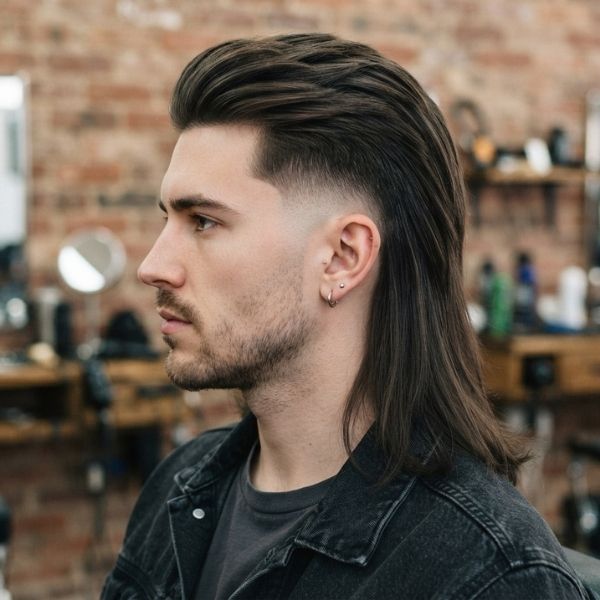
Keeps dramatic length through the crown and back while the top and sides stay short. Best for straight or wavy hair and oval or square faces. Requires several months of growing out plus side trims every four to six weeks.
Mullet Taper Fade
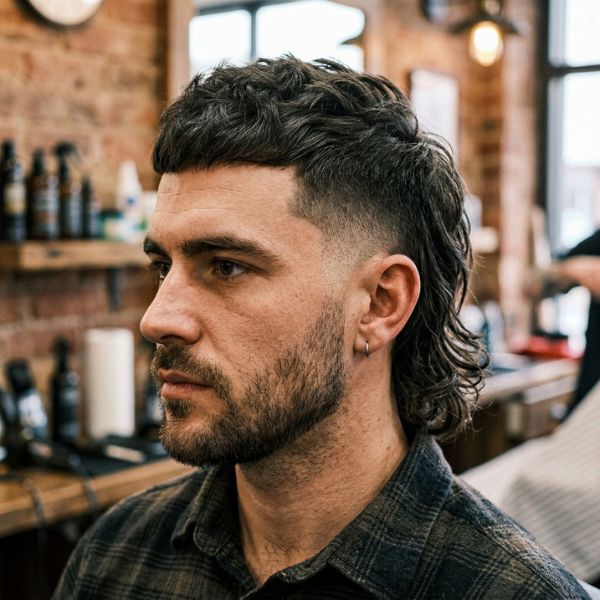
Pairs a gradual taper on the sides with mullet length at the back for a cleaner, more office-friendly finish than a classic mullet. Works on nearly any hair type and needs a touch-up every three to five weeks.
Read more: Low Fade Crew Cut Hairstyles: Clean, Modern, Easy
Mohawk Mullet
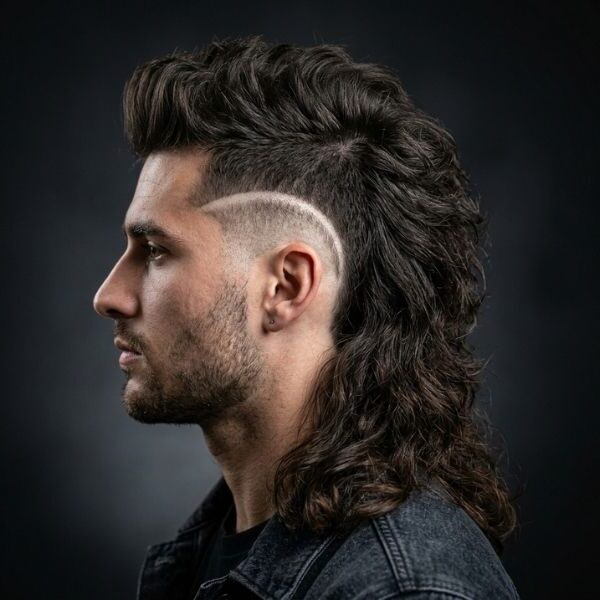
Raises a strip of hair along the center, shaves the sides close, and lets the back grow into a tail. A bold pick for thick, straight, or wavy hair, held with a strong gel or wax.
Short Mullet

Also called the “mini mullet,” it trims the back to a modest length so it stays wearable in conservative settings. Suits every face shape and needs only light styling cream.
Burst Fade Mullet

Curves the fade in a half-circle around the ear, keeping the back full while sharpening contrast up top. Barbers name it among the most requested variations, suiting thick, straight hair and tighter curl patterns alike.
Curly Mullet

Natural curls add volume and movement without extra styling effort. Pairs well with a taper or low fade on the sides so the curls stand out at the crown and back. A light curl cream keeps definition.
Mullet Fade

The umbrella term for any mullet paired with a fade instead of a scissor-cut side. Choosing low, mid, or high mostly comes down to preference and dress code. Refresh every three to four weeks.
Shaggy Mullet

Leans into an undone, layered look with choppy ends instead of one flat length at the back, echoing a 1970s rock aesthetic. Thick or medium hair holds the layers best with a sea salt spray.
Two Block Mullet

Borrowed from Korean barbering, this buzzes the underside short while leaving the top and back length untouched, hiding the fade until the top is pushed up. Suits straight or slightly wavy hair and needs a barber familiar with the technique.
Trendy Short Mullet with Low Taper Fade
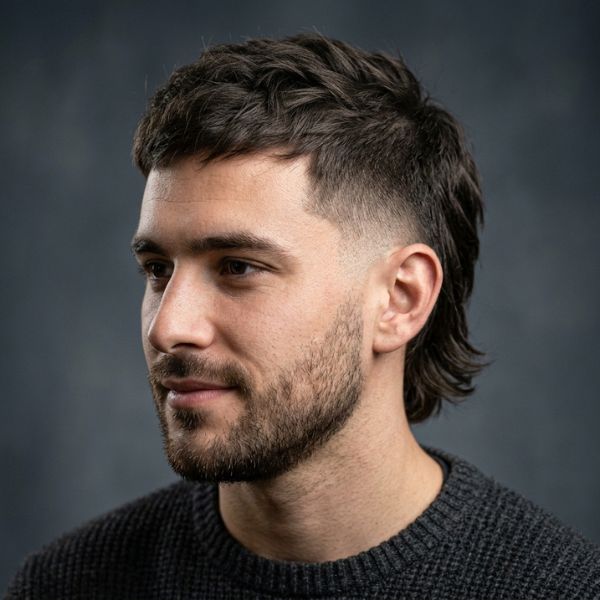
Combines a shorter back with a low taper fade, landing between a textured crop and a full mullet. A strong entry point for first-timers, flattering oval, diamond, and heart face shapes.
Read more: Lamine Yamal Net Worth: The Rising Star’s Journey to Football Fortune
Mullet Faux Hawk
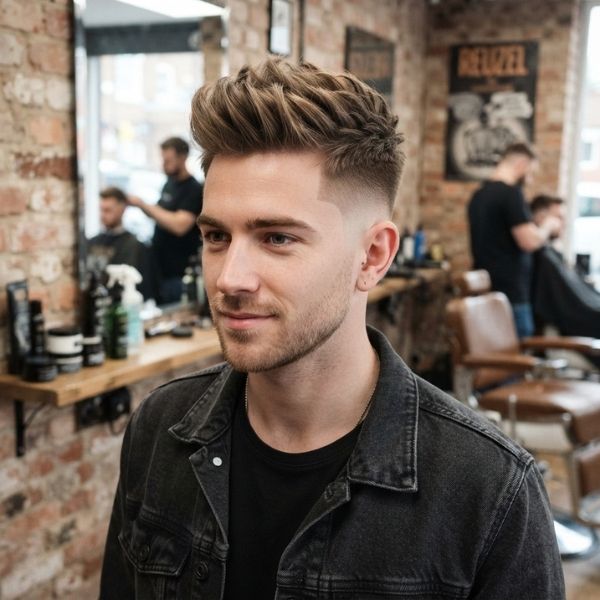
Lifts and styles the center section forward or upward without shaving the sides to skin, a softer take on the mohawk mullet. Suits medium to thick hair with a matte paste or fiber product.
Temp Fade Mullet
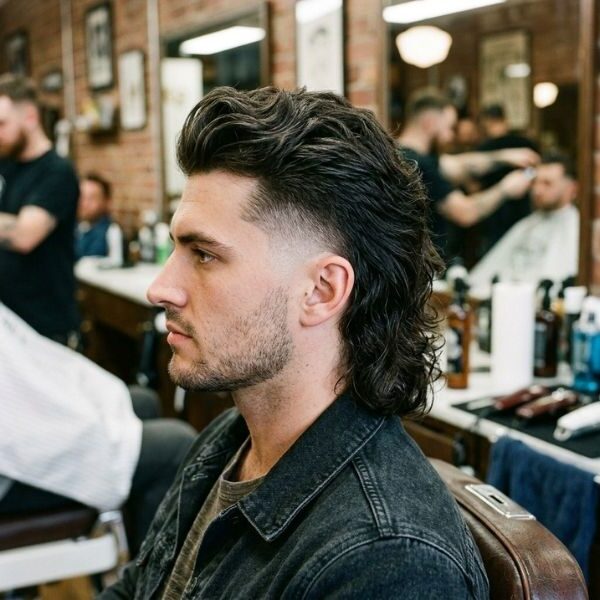
Blends the hairline around the temple and ear into the mullet’s length rather than fading the whole side. Keeps more overall length while still sharpening edges. Refresh every two to three weeks.
Faded Mullet with Fringe
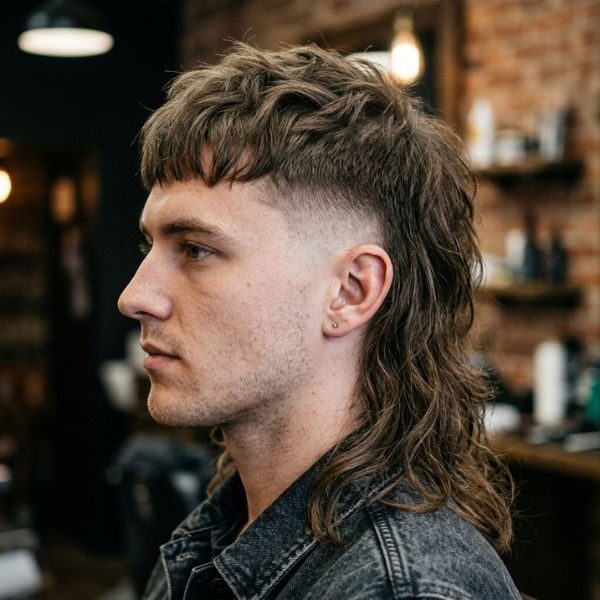
Adds a fringe to soften round or square faces, worn textured and choppy or swept to one side. Pairs a side fade with fringe trims every three to four weeks.
Fluffy Mullet
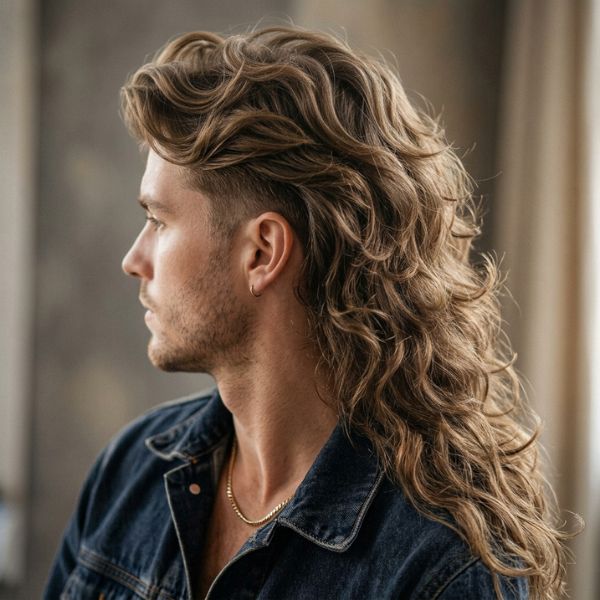
Uses layering and light blow-drying to build volume and softness rather than sharp, defined pieces. Best on medium to thick straight or wavy hair with a volumizing mousse applied before drying.
Sexy, Modern Mullet From The Back
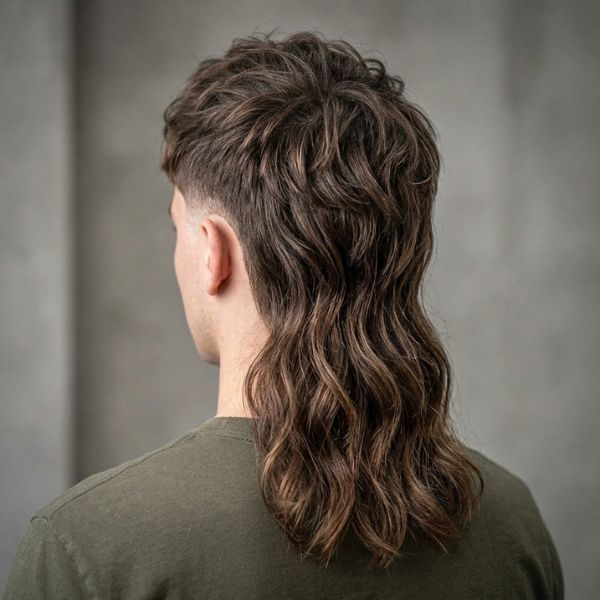
Judged mainly by its back profile, with layered ends that taper gradually rather than ending in one blunt line. Regular trims keep the movement looking healthy as the back grows out.
Messy Mullet with Texture

A slightly unkempt, lived-in finish built with texturizing powder or clay. One of the lowest-maintenance mullets on this list, since imperfection is the point, and it works across nearly every hair type.
Edgy Mullet with Beard
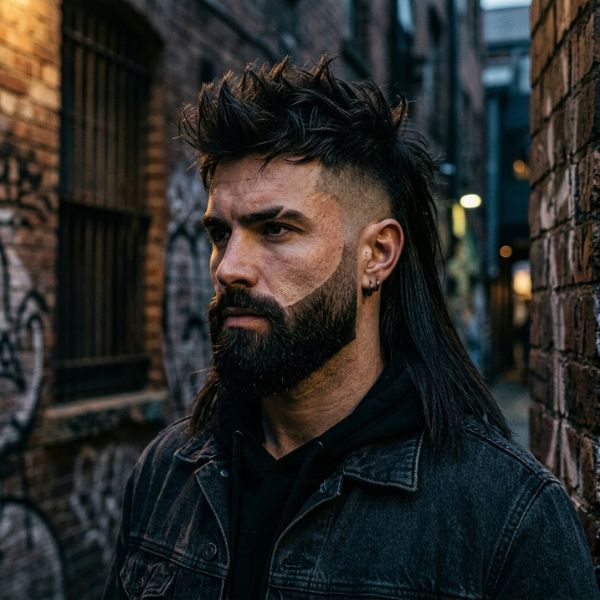
Pairs a textured mullet with a full, groomed beard for a complete look rather than just a haircut. A temple or burst fade usually connects the cut to the beard line. Needs regular beard upkeep alongside mullet trims.
Classy Mullet

Dials back the drama with a subtle length difference and a soft side part, wearable in corporate settings. Suits straight or wavy hair, finished with a light, natural-shine pomade.
Quiff Mullet Fade
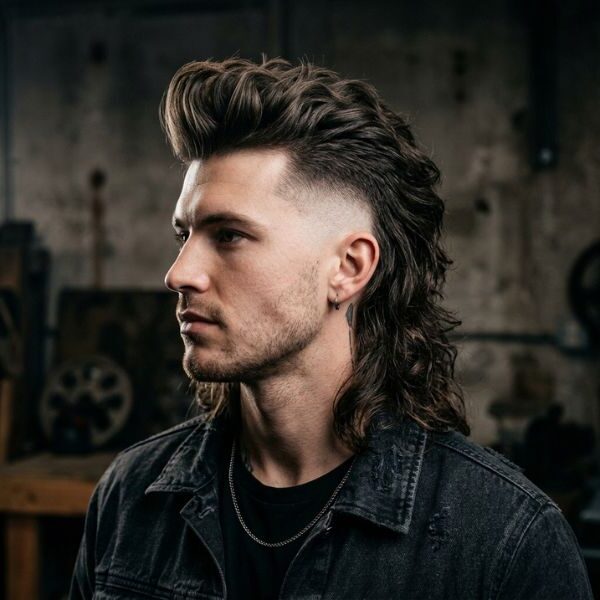
Lifts the front into a quiff and pairs it with a side fade and mullet length at the back. Works for casual and formal occasions with medium to thick, dense hair.
Permed Mullet Taper

Adds curl and volume to naturally straight or fine hair through a perm, paired with a taper fade to keep the silhouette balanced. Perms need touch-ups roughly every four to six months.
Medium Mullet
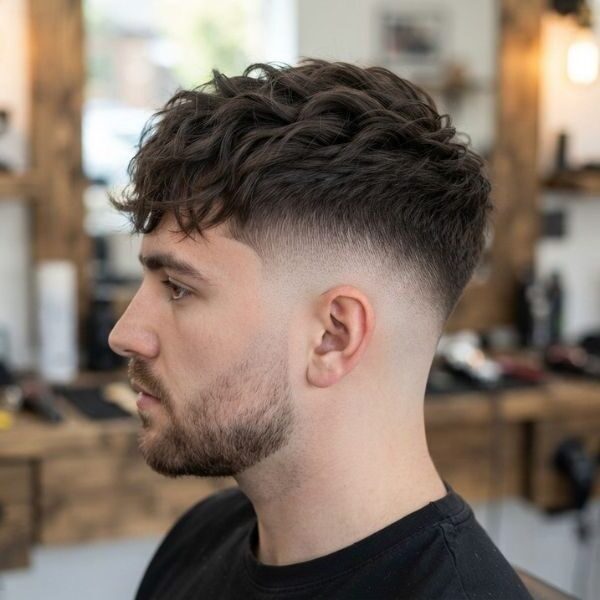
Sits between the short and long versions, with enough back length to read as a mullet without months of growth. A flexible middle ground often recommended to first-time wearers.
Spiky Mullet
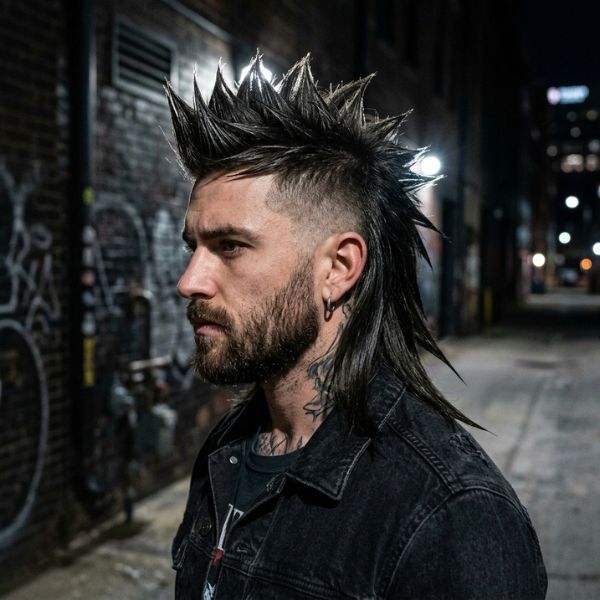
Uses strong-hold wax or gel to push the top into defined spikes while the back keeps typical mullet length, giving an early-2000s edge. Pairs naturally with a skin fade or high taper.
Choppy Mullet Taper Fade
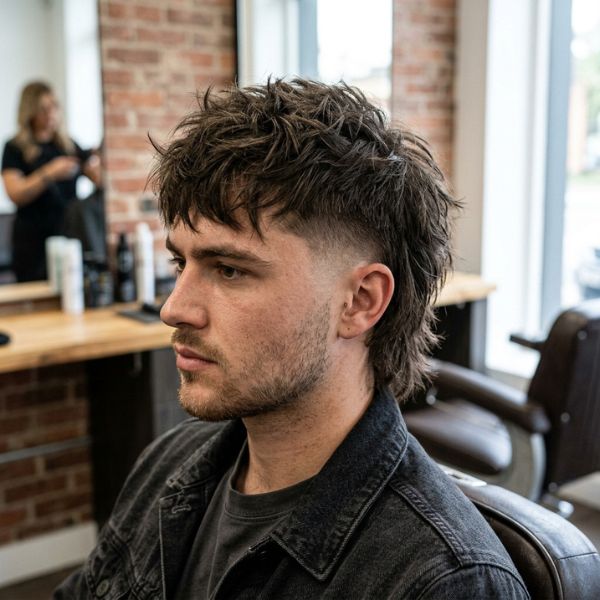
Point-cut layers give a jagged, undone edge on top, balanced against a clean taper fade on the sides. Medium to thick hair holds the choppy texture best with a matte paste.
Flowing Mullet
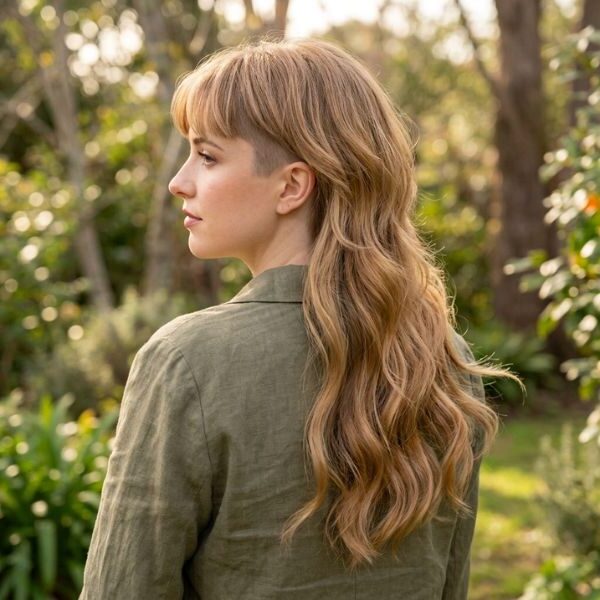
Emphasizes movement, with longer layers at the back that swing rather than sit stiff, often finished with a round-brush blowout. Suits wavy or slightly curly hair with natural body.
Thick Mullet
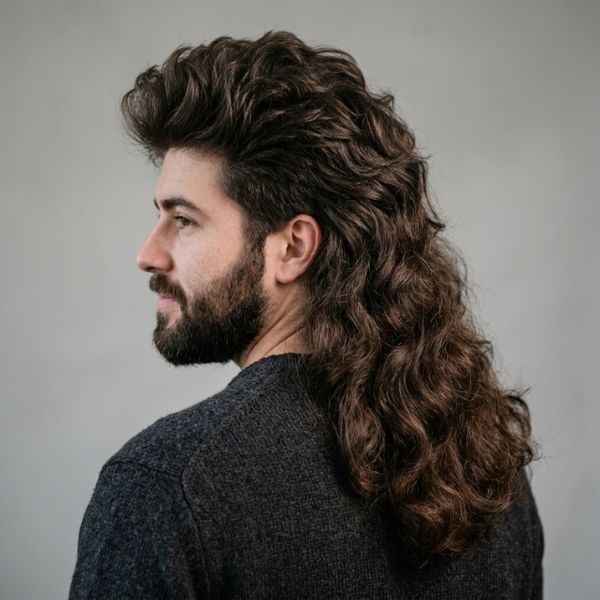
Naturally dense hair adds volume without extra product, making shorter lengths at the back look more dramatic. A texturizing shear on the ends keeps the cut from looking too heavy.
Wavy Mullet
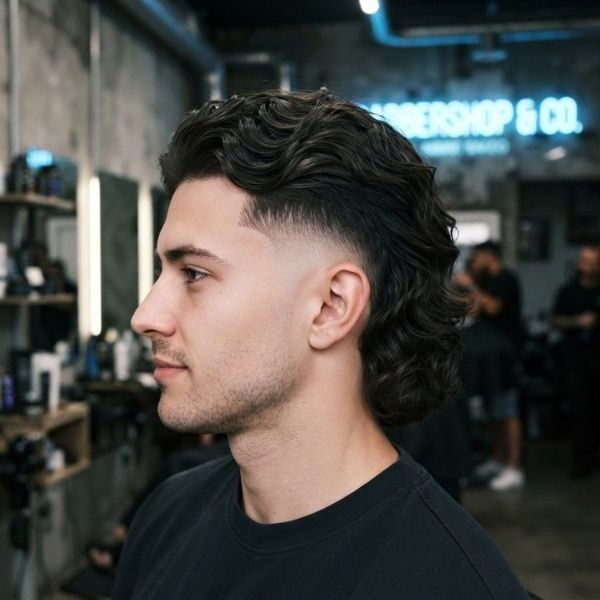
Natural waves add subtle texture and separation, enhanced with a light sea salt spray so the hair doesn’t fall flat. Pairs well with a mid or low fade on the sides.
Wolf Cut Mullet

Blends heavy, face-framing layers and shaggy volume with the mullet silhouette, merging two major haircut trends into one. Suits medium to thick hair with natural wave or curl and needs an experienced stylist.
Mullet Pompadour
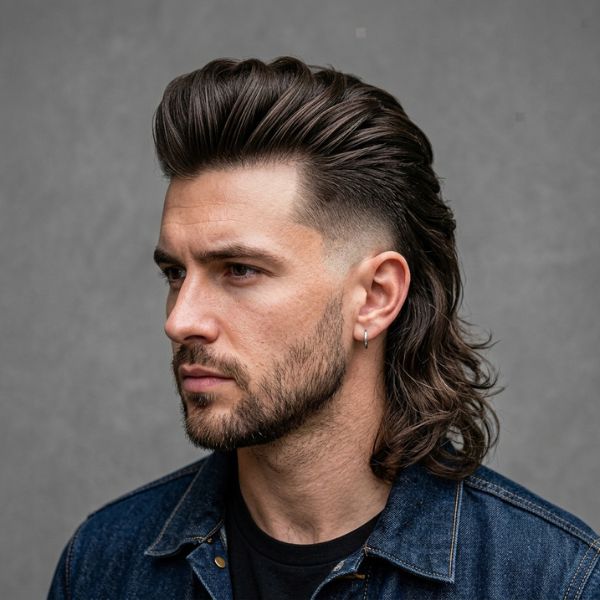
Combines height and volume at the front with a longer back section for a polished, rebellious mix. Needs a strong-hold pomade and regular blow-drying, making it one of the higher-maintenance variations.
Mullet Blowout

Uses a round brush and dryer to lift the roots and add sweeping volume through the top and back. Works best on medium to thick hair paired with a taper or fade on the sides.
How To Style A Mullet
Styling a mullet is really two jobs, since the front and sides behave differently from the longer back and usually need different products.
Style the Front and Sides First
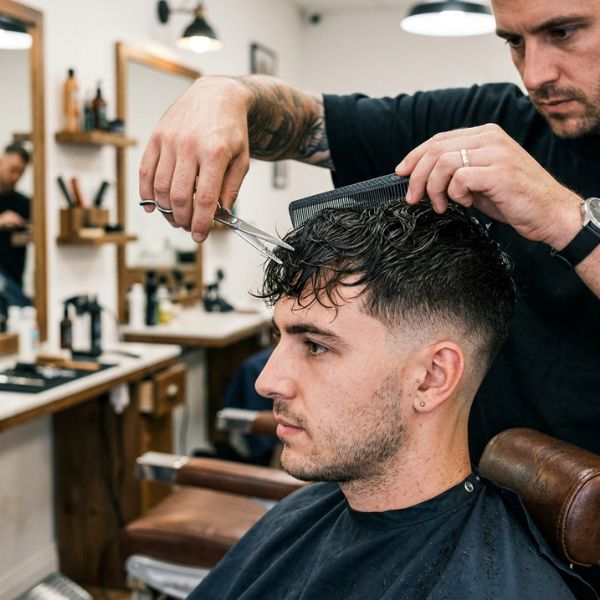
Start on damp hair with a small amount of styling cream or matte clay, then set the shape with fingers or a comb, whether that’s a textured crop or a swept quiff. Keep this section slightly drier than the back so the fade stays crisp. A blow-dryer on a low, cool setting adds root volume without frizzing the shorter hair.
Finish the Back with Texture or Flow
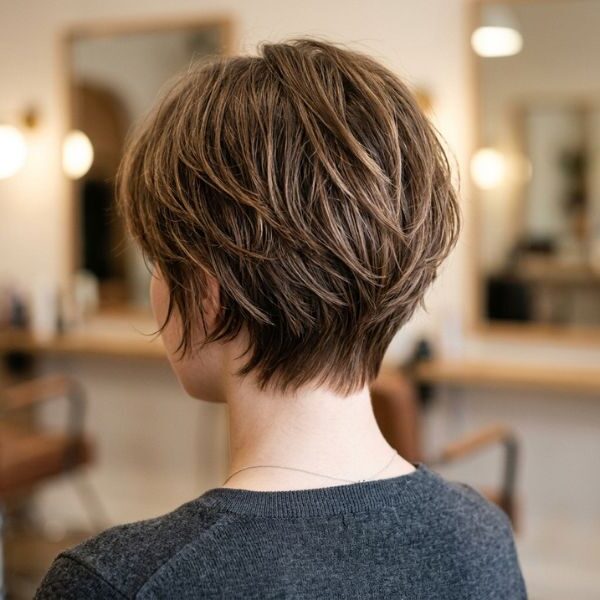
Apply a lighter product, such as a sea salt spray or texture powder, to the back and crown to bring out natural movement. Scrunch curly or wavy hair with your hands rather than combing it through, which flattens the texture you’re building. For a smoother, flowing back, finish with a round brush and dryer to add shine and control frizz.
What Is A Mullet Haircut?
A mullet is a haircut with noticeably shorter hair on the top, front, and sides paired with longer hair left at the back and nape, often summed up as “business in the front, party in the back.” The defining feature is the length contrast itself, not any single fade or part, which is why the style has produced so many variations. Modern versions rely on tapers, fades, and layered texturizing to blend that contrast smoothly, rather than the single, hard line that defined the original look.
The Evolution of the Mullet Haircut

The short-front, long-back silhouette is far older than most people assume. Historians point to Ancient Greek and Roman depictions of warriors wearing a similar cut, worn for practical reasons: it kept hair out of the eyes during combat while the longer back protected the neck. Variations appeared among Native American communities and later among 1970s rock musicians, including David Bowie’s Ziggy Stardust look, which is widely credited with reintroducing the shape to Western pop culture.
The style exploded in mainstream popularity during the 1980s, worn by musicians, athletes, and everyday men across the United States, though the term “mullet” itself wasn’t coined until the Beastie Boys’ 1994 song “Mullet Head” popularized the name. Through the 1990s and 2000s the cut fell out of favor and became a punchline, largely because barbering at the time relied on a hard, undifferentiated line rather than any blending technique. Its comeback gained real traction in the early 2020s, helped along by extended time at home, nostalgia for 1980s and 1990s style, and a new generation of barbers applying modern fading and layering techniques the original cut never had. By 2026, those techniques have turned the mullet into one of the most requested and customizable haircuts in barbershops worldwide.
Modern Mullet Haircut Tutorial
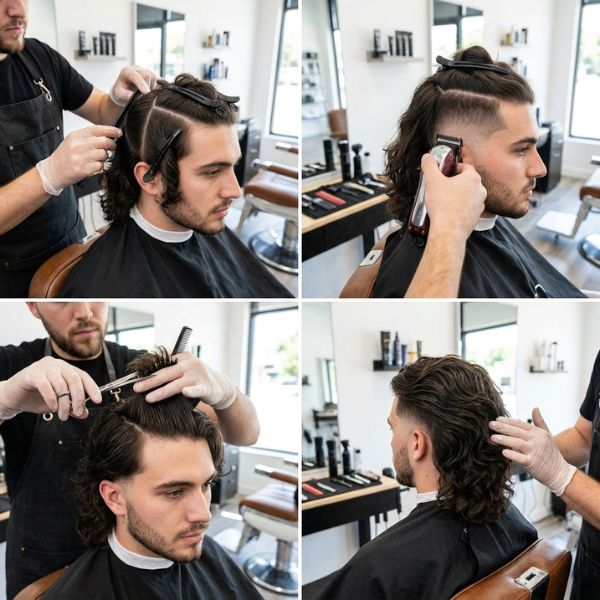
Getting a clean modern mullet starts before the clippers touch your head. Follow these steps to walk in prepared and get a cut that matches what you pictured.
- Choose your fade or taper first. Decide on a low, mid, or burst fade, or a soft scissor taper, since this affects how dramatic the contrast with the back looks.
- Bring reference photos. Barbers work more accurately from images than verbal descriptions, so save two or three photos showing the exact length and fade you want.
- Discuss your current back length honestly. If you’re growing a mullet from a shorter cut, decide how much length to sacrifice now versus over the next few months.
- Ask for guard numbers on the sides. A specific clipper guard, such as a number two or three, gives you a repeatable reference for future trims.
- Get the back shaped, not just left long. Unlayered length looks unfinished; ask for layers or a slight taper so the length moves naturally.
- Set a maintenance schedule. Most mullets need a side trim every three to five weeks even while the back keeps growing.
- Test styling products at home. Try a matte clay, sea salt spray, and light pomade over your first few weeks to find what suits your hair type.
Conclusion
The modern mullet haircut has moved well past its retro reputation into a genuine styling category, with room for straight, curly, wavy, and coily hair alike. Picking the right variation comes down to matching a fade or taper to your hair type and face shape, then committing to a realistic maintenance schedule while the back grows in. Whether you go for a subtle short mullet with a low taper fade or a full wolf cut mullet with heavy layers, the rule holds true across every barber’s advice: a good mullet is defined by how well it’s blended, not by how long the back gets.
Frequently Asked Questions
Is the mullet still trending in 2026?
Yes, it remains one of the most requested men’s haircuts in 2026, driven by social media, celebrity styling, and modern fading techniques.
How long does it take to grow a mullet?
Most men need three to five months of growth at the back before the shape becomes fully visible, with regular side trims during that period.
What face shapes suit a mullet?
Oval, diamond, square, and heart face shapes generally suit mullets best, though barbers can adjust volume and fringe placement for round or long faces too.
How often should you trim a mullet?
Plan on a side trim or fade refresh every three to five weeks, even as the back is left to grow longer between full haircuts.
Can curly hair wear a mullet?
Curly and wavy hair suit mullets especially well, since the natural texture creates volume and separation that straight hair usually needs product to achieve.
Is a mullet professional enough for work?
Low-key variations such as the short mullet, taper fade mullet, or classy mullet with a subtle side part are polished enough for most office settings.

Zaria Rhodes is the lead editor and content curator at Lyrinexa, passionate about music, storytelling, and lyrical expression. With a deep love for discovering the meaning behind songs, she brings clarity, creativity, and accuracy to every post. Zaria is dedicated to providing readers with authentic lyrics, thoughtful interpretations, and a seamless music-exploration experience.

1 thought on “Modern Mullet Haircut: The Best Styles for Men in 2026”