


The mullet is no longer a joke haircut. It has become one of the most requested cuts at barbershops, and straight hair happens to be the best texture for pulling it off cleanly. If you have flat, straight strands and you have been eyeing this short in front, long in back look, you are in the right place.
This guide walks through every popular straight hair mullet variation for 2026, how to style it at home, which products actually work, what to say in the barber’s chair, and how the cut compares to the wolf cut.
By the end, you will know exactly which version fits your face shape, your lifestyle, and how much upkeep you are willing to commit to.
What Is a Straight Hair Mullet?
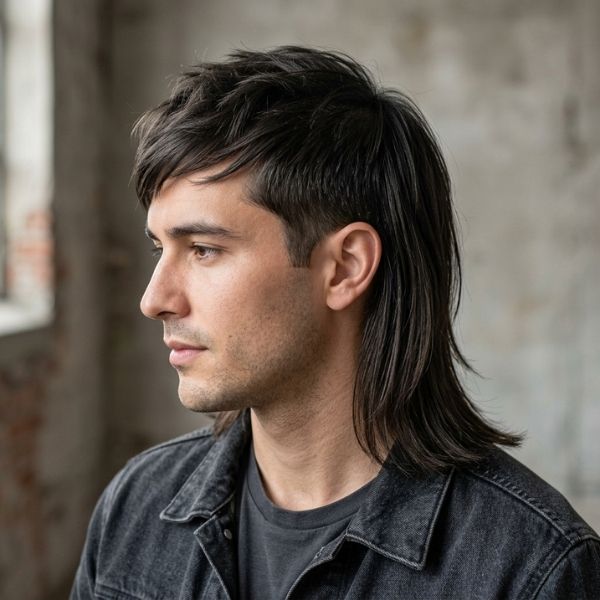
A straight hair mullet is a haircut with short, tapered hair at the front and sides and noticeably longer hair left at the back of the head. On straight strands, this contrast reads sharper and cleaner than it does on curly or wavy hair, because straight hair falls flat and shows the exact line the barber cut.
The mullet dates back centuries in various forms, but it became a cultural icon in the 1980s as a rebellious, anti-establishment statement. Today’s version keeps that short front, long back silhouette but swaps the bulky, undefined shape for tapers, fades, and intentional layering. It is less “accidental haircut” and more “designed hairstyle,” which is a big part of why it has returned to mainstream barbershops rather than staying a retro punchline.
The core structure stays consistent across every variation:
- Short or cropped hair on the sides and front
- A blended or faded transition zone
- Length preserved at the crown and nape that flows down the back
Why Straight Hair Is Perfect for a Mullet

Not every hair texture handles a mullet the same way, and straight hair genuinely has an advantage here.
- Sharp definition. Straight strands lie flat, so every line the barber creates, whether it is a fade, a taper, or a blunt cut at the back, stays visible instead of getting lost in curl pattern or frizz.
- Easier daily styling. Straight hair naturally separates and falls into place, which means less time with a diffuser, curling iron, or styling gel just to get the shape to show.
- Cleaner fades. Skin fades and taper fades look crisper on straight hair because there is no natural volume fighting the blend line.
- Versatile length contrast. The short-to-long drop that defines a mullet reads more dramatically on straight hair, since the top sits close to the head while the back swings freely.
The one trade-off worth knowing: straight hair can sit flat at the crown, which sometimes makes the top of a mullet look thin. A little product and the right cutting technique (more on that below) solves this easily.
Read more: Messy French Crop Haircuts: Fast Style, Sharp Results
Straight Hair Mullet Variations
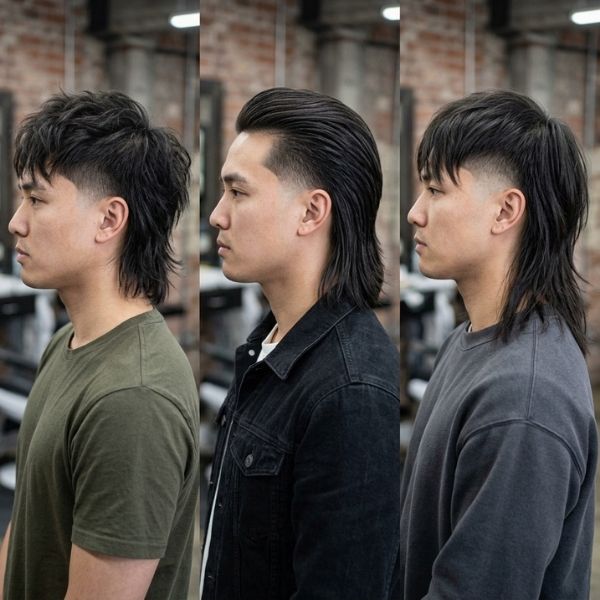
There is no single “correct” mullet. The style has branched into dozens of variations, and picking the right one depends on your lifestyle, workplace, and how bold you want to go.
Classic Straight Hair Mullet
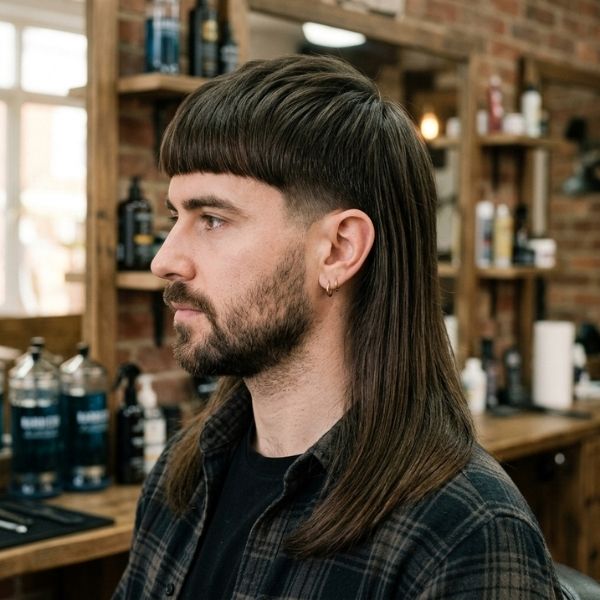
This is the closest version to the original 1980s shape, just cleaned up. Expect short sides, a fuller top, and a noticeably long back with minimal layering. It suits people who want the retro silhouette without chasing a heavily blended, modern finish.
Modern Straight Hair Mullet
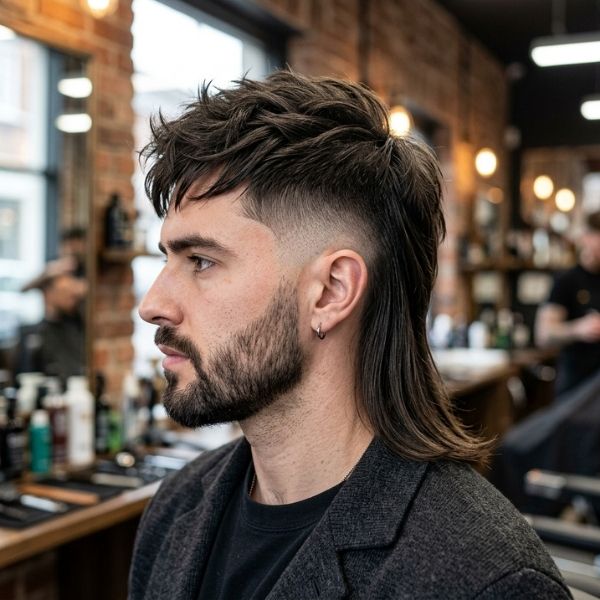
The modern take softens the harsh 80s edges. Sides and front are kept short and tidy, the top carries light texture, and the back is layered rather than left as one thick chunk. This version works in professional settings far more easily than the classic cut.
Straight Hair Mullet with Taper Fade

Here, the sides gradually shorten toward the skin using a taper fade instead of a hard clipper line. On straight hair, this creates one of the smoothest transitions available, since there is no curl texture to disguise the blend. It is a strong pick for anyone who wants a mullet that still looks tidy at the office.
Low Taper Straight Hair Mullet

A low taper keeps the fade close to the hairline, well below the temple, rather than climbing up the sides of the head. This is the most conservative fade option and the easiest to grow out without an awkward in-between stage, which makes it popular for first-timers who are not sure they want a dramatic mullet just yet.
Straight Hair Mullet Fade

This is a broader category that covers any mullet paired with a fade, from a skin fade to a mid fade. On straight hair, fades create high contrast between the shaved or short sides and the longer top and back, giving the cut a sharper, more graphic outline than a taper alone.
Short Straight Hair Mullet
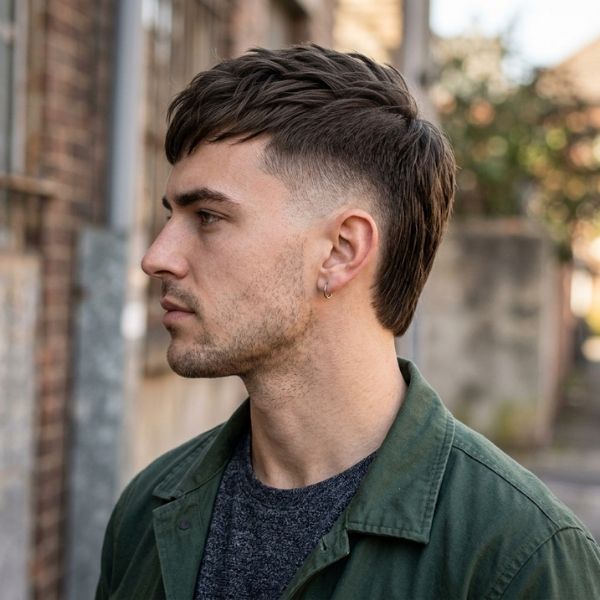
For people who want the mullet silhouette without much commitment, the short version trims the back down so it barely extends past the neckline. It keeps the short-long contrast but in a subtler, workplace-friendly package that needs far less maintenance than longer versions.
Long Straight Hair Mullet

The opposite approach: the back is left to grow well past the shoulders for a dramatic, statement-making look. This variation needs healthy, well-maintained ends since straight hair shows split ends and damage more obviously than textured hair, especially at longer lengths.
Layered Straight Hair Mullet

Layering throughout the back and crown adds movement to a texture that can otherwise look a little stiff or one-dimensional. This is a smart option if your straight hair is on the thicker side and you want the back to swing rather than hang like a single flat sheet.
Straight Hair Mullet with Fringe or Bangs

Adding a fringe (also called curtain bangs in some circles) softens the forehead and balances out the short-long contrast at the back. It is especially flattering on longer face shapes and gives the front of the cut a bit more personality than a plain short crop.
Straight Hair Shag Mullet
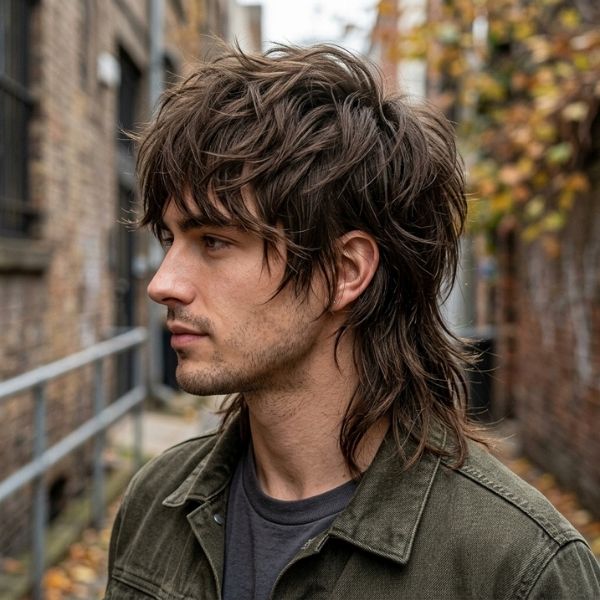
This variation blends classic shag texture, think heavy layering and a slightly undone finish, with mullet length placement. It reads more relaxed and lived-in than a sharply faded mullet, and it is a good middle ground between a mullet and a wolf cut.
How to Style a Straight Hair Mullet

Styling a straight hair mullet at home only takes a few minutes once you know the routine.
- Start on damp, towel-dried hair. Straight hair styles best when it is not soaking wet or fully dry.
- Apply a lightweight product first. A texturizing spray or light styling cream at the roots helps prevent the flat, pancaked look straight hair is prone to at the crown.
- Blow-dry the top with lift. Use a round brush or your fingers to dry the crown upward and back, giving it height before it fully dries flat.
- Add texture paste or clay to the ends. Work a small, dime-sized amount through the back section to define separation instead of one flat sheet of hair.
- Shape the front last. Push the fringe or front section to the side, forward, or straight back depending on the variation you are wearing.
- Finish with a light hold spray. This locks in shape without making straight hair look stiff or crunchy.
For a rougher, “just got out of bed” finish, skip the round brush and rough-dry with your fingers instead, scrunching a sea salt spray through the top for grip.
Best Products for a Straight Hair Mullet

Straight hair does not need heavy products, but the right lightweight formulas make a real difference in how long the shape holds.
- Texturizing spray: Adds grip and volume without weighing hair down, ideal for lifting a flat crown.
- Matte clay: Gives a low-shine, natural hold, best for the top and front section.
- Light styling cream: Smooths flyaways on the longer back section without making it greasy.
- Sea salt spray: Helps straight hair fake a bit of texture and hold for a more tousled, shag-style finish.
- Heat protectant spray: Essential if you use a blow dryer or flat iron regularly, since straight hair is prone to heat damage over time.
- Light hold hairspray: Locks the style in place for the day without leaving a stiff, helmet-like finish.
Avoid heavy pomades or waxes on the length in the back. On straight hair, heavier products tend to make longer sections look oily and stuck together rather than separated.
What to Tell Your Barber for a Straight Hair Mullet

Miscommunication at the barbershop is the most common reason a mullet turns out wrong. Be specific rather than just saying “give me a mullet.”
- Mention your hair type upfront: “I have straight hair, so I want the fade to be crisp and the top to have enough length to add lift.”
- Specify the fade or taper: “low taper,” “mid fade,” or “skin fade on the sides.”
- Give a clear length target for the back, in inches if possible, rather than a vague “longer.”
- Ask for layering guidance if you have thick hair: “add layers through the back so it doesn’t sit like one heavy chunk.”
- Bring reference photos. A picture removes almost all guesswork, especially for a style with as many variations as the mullet has.
- Ask how the cut will grow out, so you know when to book your next trim before it loses shape.
Straight Hair Mullet Maintenance Tips
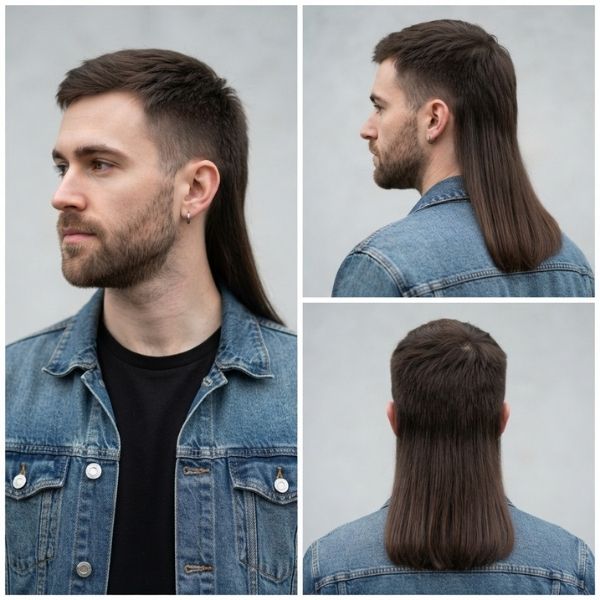
A mullet is more forgiving than a fade-heavy haircut, but it still needs a routine to stay sharp.
- Trim every 3 to 5 weeks for fade or taper versions, since the short sides grow out fastest and blur the contrast first.
- Trim the ends every 8 to 10 weeks on the longer back section to prevent split ends, which show up clearly on straight hair.
- Wash every 2 to 3 days, not daily, since over-washing strips the natural oils that help straight hair hold texture.
- Use a heat protectant any time you blow-dry or straighten, especially on the longer back length that has been growing out longer.
- Sleep on a satin or silk pillowcase to reduce friction and breakage on the back section overnight.
- Brush before styling, not after product, so texture products are not disturbed once they are set.
Straight Hair Mullet for Men

For men, the straight hair mullet usually leans toward faded sides paired with a textured or slightly messy top. Popular combinations include a taper fade with a shag-style back, or a low taper with a clean, side-swept fringe for a more polished everyday look. Athletes and musicians have helped push the fade-mullet combination into mainstream popularity, and it remains one of the most requested versions for men in 2026.
Men with straight hair generally have an easier time maintaining crisp fade lines than men with curly or coily hair, since there is no curl pattern to blur the transition zone.
Straight Hair Mullet for Women
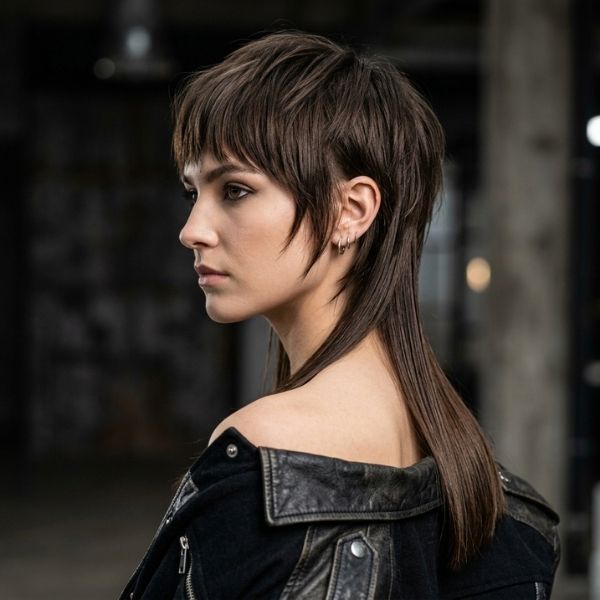
On women, the straight hair mullet often incorporates softer layering and curtain bangs rather than a hard fade, giving the cut a more feminine, face-framing finish. Shoulder-length or longer versions are especially popular since they let the back layers move and flow rather than sitting stiff.
Celebrities have played a big role in normalizing this look for women, proving that a mullet can be styled for both an edgy, rocker aesthetic and a polished, everyday appearance depending on how it is cut and finished.
Read more: Low Taper Fade Black Male: 2026 Barber Guide for Waves, Curls, Afros & Locs
Straight Hair Mullet for Girls

For younger girls, a toned-down mullet with soft layers and a longer back works well since it grows out gracefully and does not require constant fade maintenance. Skipping a hard shaved fade in favor of scissor-cut sides keeps the style low-maintenance and easy to manage for school and everyday activities, while still giving that distinctive short-front, long-back shape.
Straight Hair Mullet vs. Wolf Cut
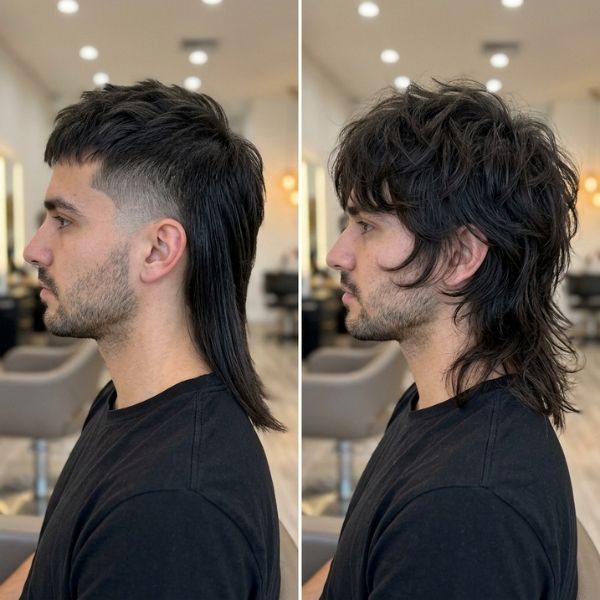
These two cuts get confused constantly because they share layered, short-to-long styling, but they are built differently.
| Feature | Mullet | Wolf Cut |
|---|---|---|
| Contrast | Sharp, intentional break between short and long | Soft, gradual blend throughout |
| Layers | Fewer, more defined layers | Heavy, choppy layering all over |
| Overall look | Bold, retro, high-impact | Tousled, casual, effortless |
| Maintenance | Regular trims to keep the contrast crisp | Grows out more naturally, fewer urgent trims |
| Best for | Straight or wavy hair with a clear fade | Most textures, especially those with natural volume |
In short, a mullet is defined by contrast and a mullet says “look at this,” while a wolf cut is defined by blending and says “I woke up like this.” If you like sharp lines and a fade, go with a mullet. If you prefer a softer, lower-maintenance shape, the wolf cut is the better fit.
Read more: Short Wolf Cut Men 2026: Best Styles for Every Hair Type
Best Face Shapes for a Straight Hair Mullet
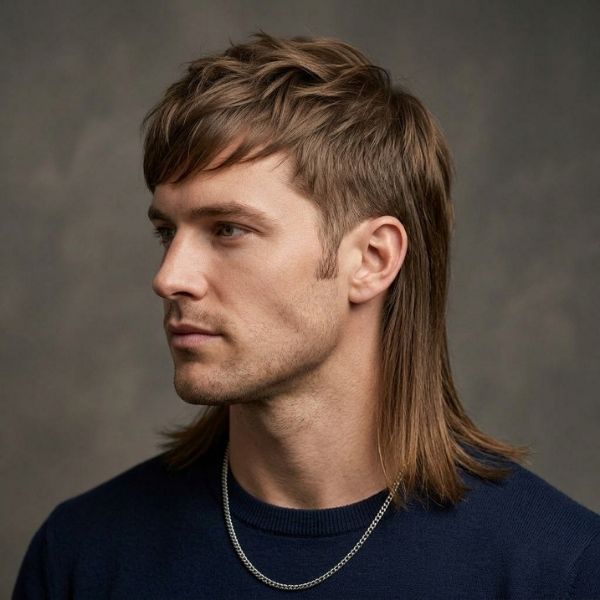
The mullet is more flexible across face shapes than people assume, as long as the styling details are adjusted.
- Round faces: Add height and volume at the crown to elongate the face, and keep the sides tighter to avoid adding width.
- Square faces: A textured top with a soft fringe softens strong jawlines nicely.
- Oval faces: This is the most flexible shape for a mullet. Almost every variation, from classic to shag, works well.
- Long faces: A fringe or curtain bangs helps break up the length of the face and balances the longer back section.
- Heart-shaped faces: Keep volume lower and avoid excessive height at the crown, which can exaggerate a narrow chin.
FAQs
Can straight hair actually hold a mullet shape?
Yes, straight hair holds a mullet’s lines better than most textures since it falls flat and shows every cut detail clearly.
How often should I trim a straight hair mullet?
Trim the faded or tapered sides every 3 to 5 weeks and the longer back section every 8 to 10 weeks.
Does a straight hair mullet need daily styling?
Not really. A quick pass with texturizing spray or clay is usually enough since straight hair naturally falls into place.
What is the easiest straight hair mullet for beginners?
A low taper mullet is the safest starting point since it is subtle, easy to grow out, and requires minimal upkeep.
Is a mullet the same as a wolf cut?
No. A mullet has a sharp, intentional break between short and long hair, while a wolf cut blends layers softly throughout.
Will a straight hair mullet suit my face shape?
Most face shapes work with the right adjustments, such as added crown height for round faces or a fringe for longer faces.
Conclusion
A straight hair mullet gives you one of the sharpest, most low-effort ways to stand out in 2026. Straight strands naturally show off clean fades, crisp tapers, and defined length contrast better than almost any other hair texture, which is exactly why this cut has moved from retro throwback to modern barbershop staple. Whether you go classic, shaggy, faded, short, or long, the key is clear communication with your barber and a simple styling routine with the right lightweight products.
Pick the variation that matches your face shape and your maintenance comfort level, book the cut with specific details rather than vague requests, and keep up with regular trims. Do that, and your straight hair mullet will stay sharp, intentional, and exactly the statement you were going for.

Zaria Rhodes is the lead editor and content curator at Lyrinexa, passionate about music, storytelling, and lyrical expression. With a deep love for discovering the meaning behind songs, she brings clarity, creativity, and accuracy to every post. Zaria is dedicated to providing readers with authentic lyrics, thoughtful interpretations, and a seamless music-exploration experience.

1 thought on “Straight Hair Mullet Guide 2026: Styles, Fade, and Easy Care”