


The burst fade mullet has become one of the most requested men’s haircuts of 2026, and it’s easy to see why.
It takes the sharp, rounded blend of a burst fade and pairs it with the length and personality of a mullet, giving you a cut that looks deliberate instead of default.
If you’re tired of the same taper or crew cut and want something with more edge, this style hits a sweet spot. It’s short and clean where you want control, and long and expressive where you want flair.
Below, you’ll find 25 burst fade mullet variations, comparisons to similar fades, face shape guidance, styling tips, and everything you need to walk into a barbershop and get exactly what you’re picturing.
What Is a Burst Fade Mullet
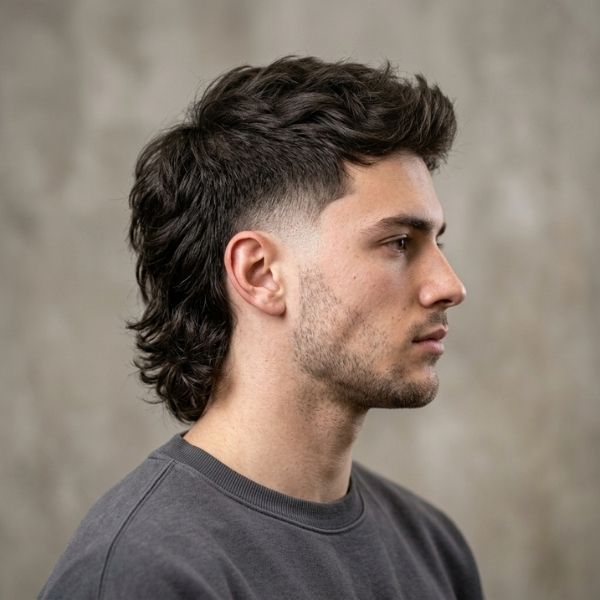
A burst fade mullet combines two distinct haircutting ideas into one style. The burst fade is a fade that curves in a rounded shape around the ear rather than cutting straight across, which is why it’s sometimes called a sunburst fade. The mullet portion means the top and sides stay short while noticeably longer hair is left at the back.
Put together, you get a haircut with real contrast. The sides look tight and intentional, the blend around the ear shows off the barber’s skill, and the back has enough length to style, texture, or grow out further. This cut works on straight, wavy, curly, and coily hair, and it can be cut low, mid, or high depending on how bold you want the contrast to look.
Read more: Straight Hair Mullet Guide 2026: Styles, Fade, and Easy Care
Why Choose a Mullet Fade
A mullet fade gives you options that a standard fade or a plain mullet can’t offer on their own. Here’s why so many men are choosing it in 2026:
- It looks current, not dated. The rounded burst blend modernizes a haircut that used to carry a retro reputation.
- It works with your natural texture. Curls, waves, and thick hair all get to show off at the back instead of being flattened.
- It’s flexible. You can keep it clean and professional with a low fade, or go bold with a high fade and a longer back.
- It photographs well. The contrast between the tight sides and longer top gives the style visible shape from every angle.
- It grows out gracefully. Unlike a buzz cut, a mullet fade doesn’t lose its shape completely between barber visits.
Burst Fade Mullet vs Drop Fade Mullet

A burst fade curves around the ear in a rounded shape, keeping the blend tight and symmetrical near the temple. A drop fade mullet, on the other hand, lets the fade line dip lower behind the ear, following the natural curve of the skull instead of staying level.
The burst version tends to look sharper and more uniform, while the drop fade adds a bit more dimension and works especially well on square or heart shaped faces. If you want a clean, classic contrast, ask for a burst. If you want a slightly more sculpted, structured look, the drop fade mullet is worth showing your barber as a reference.
Read more: 15 Best Wavy Mullet Haircuts That Are Trending in 2026
Burst Fade Mullet vs Taper Mullet Fade

A taper mullet fade uses a gradual, gentle fade that never goes down to the skin, which makes it the lower maintenance option between the two. A burst fade mullet creates far more contrast since it fades tighter around the ear and often goes closer to skin level.
Choose a taper mullet fade if you want a subtle, low key style that grows out smoothly and suits a professional setting. Choose a burst fade mullet if you want a bolder, more defined look and don’t mind trimming every few weeks to keep the fade sharp.
Face Shape Tips
Picking the right fade height and back length for your face shape makes a real difference in how balanced the final cut looks.
- Oval face: Nearly every version works here. A mid fade with moderate back length is a safe, flattering starting point.
- Round face: Add height on top and keep the sides tight to elongate the face. A high fade with texture on top works better than a heavy fringe.
- Square face: This shape can handle bold contrast. A high or drop fade pairs naturally with strong jaw features.
- Diamond face: Soften cheekbones with length or texture near the temples rather than a slicked back finish.
- Heart face: Keep volume lower and consider a soft fringe. A mid fade tends to look more balanced than a high fade.
- Long face: Avoid extra height on top. A low or mid fade with a fuller, textured top helps shorten the overall proportions.
Bangs, Hairline, and Sideburns
A front fringe softens a wider forehead and works especially well on heart and round face shapes, while guys with an oval or square face can usually skip it without losing balance. If your hairline is receding or uneven, ask your barber to keep the front section slightly longer and textured rather than cut in a hard, straight line, since this hides irregularities better.
Sideburns matter more with this cut than people expect. A rounded burst fade should connect cleanly into the sideburn rather than leaving a visible gap, so mention this specifically if you want a seamless finish. Guys with a beard should also ask their barber to blend the sideburn directly into the beard line for a more finished, cohesive look.
Read more: Low Taper Fade with Textured Fringe: Complete Guide for 2026
25 Burst Fade Mullet Variations
1. Classic Burst Mullet

The original take on this style, with a moderate fade height and a back length that sits just past the collar. It’s a dependable starting point if you’re trying this cut for the first time.
2. Burst Fade Mullet Haircut
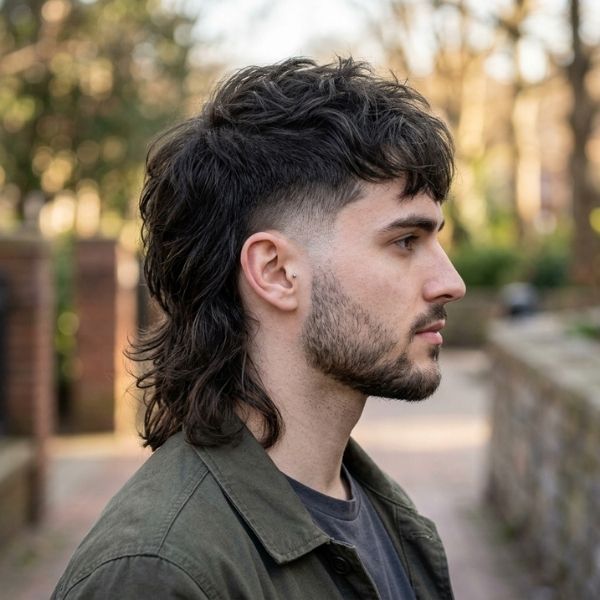
A well balanced version that keeps the top slightly longer for texture while the burst blend does the heavy lifting on the sides. Works well on most hair types.
3. Low Burst Fade Mullet

The fade starts close to the hairline, keeping contrast subtle. It’s the most workplace friendly option on this list and suits guys easing into the style.
4. Straight Hair Burst Fade Mullet

Straight strands hold the cleanest, sharpest fade lines of any texture, making this one of the crispest looking variations you can ask for.
5. Burst Fade Mullet Curly Hair

The fade clears bulk from the sides so natural curls at the back and top become the real focal point instead of competing with thick hair.
6. Mullet Skin Fade
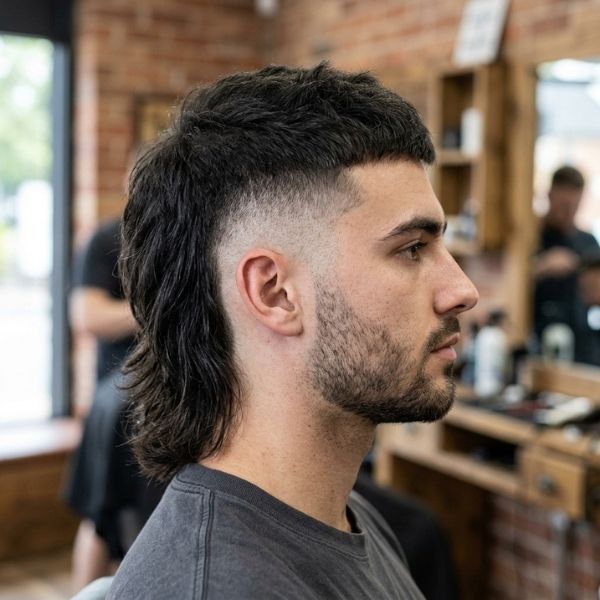
Fades all the way down to the skin for maximum contrast against the longer back. It’s the highest maintenance option here, needing trims every one to two weeks.
7. Mullet Side Fade

Focuses the burst detail mainly along the sides while keeping the crown fuller. A good pick if you want contrast without going too aggressive near the back.
8. Modern Mullet Fade
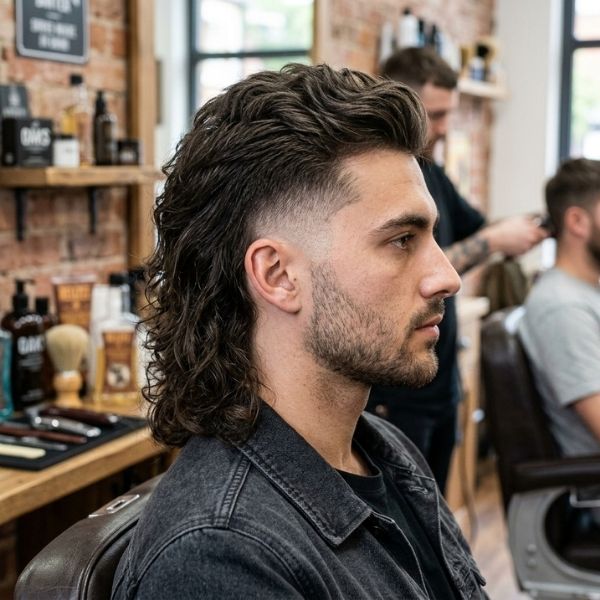
A cleaner, more refined update on the classic mullet shape, with sharper lines and more deliberate texture throughout.
9. Taper Mullet Fade
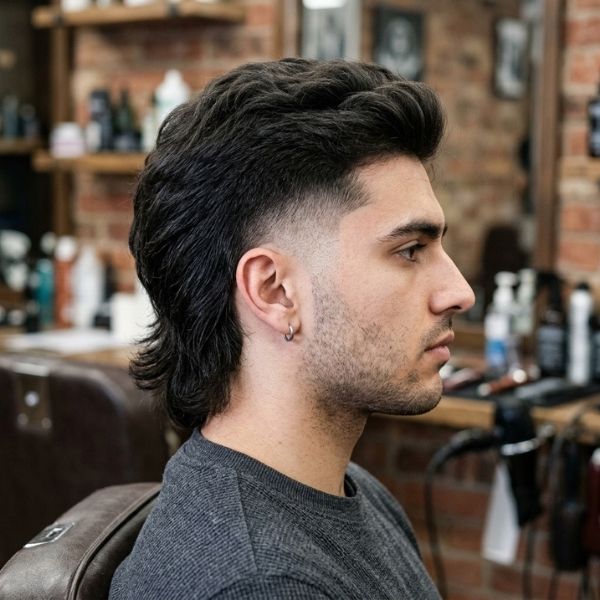
Uses a gradual taper instead of a full burst, offering a softer transition that’s easier to maintain and grow out.
10. Curly Mullet Fade

Similar to the curly burst variation but with a softer fade line, letting natural curl patterns blend more gently into the sides.
11. Short Mullet Fade
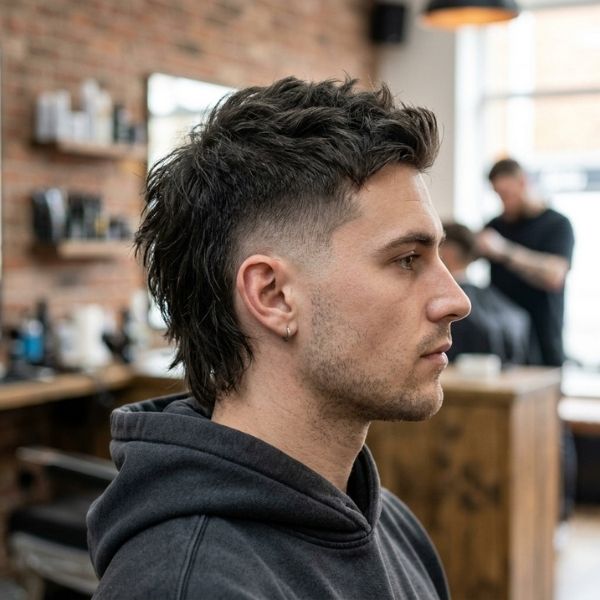
A practical, shorter back section for guys who want the silhouette without much daily upkeep. Pairs naturally with a tighter fade.
12. Kids Mullet Fade
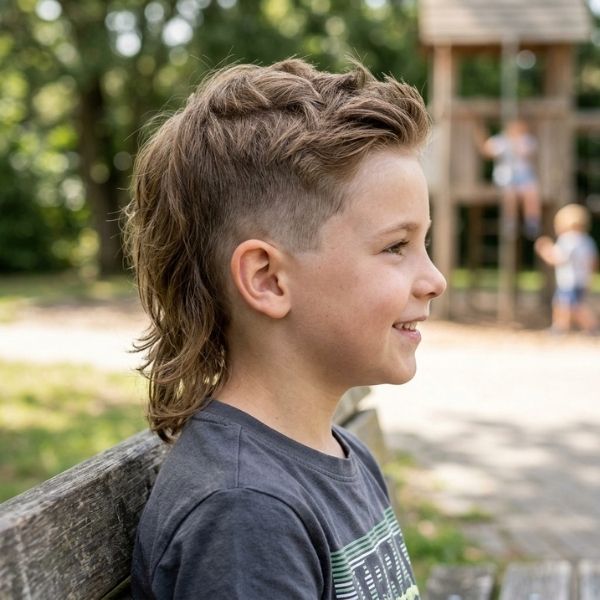
A toned down version with a lower fade and shorter back length, giving younger guys the trend without excessive maintenance.
13. Taper Modern Mullet Fade

Combines the smoother taper blend with modern, textured styling on top for a refined but current finish.
14. Taper Short Mullet Fade
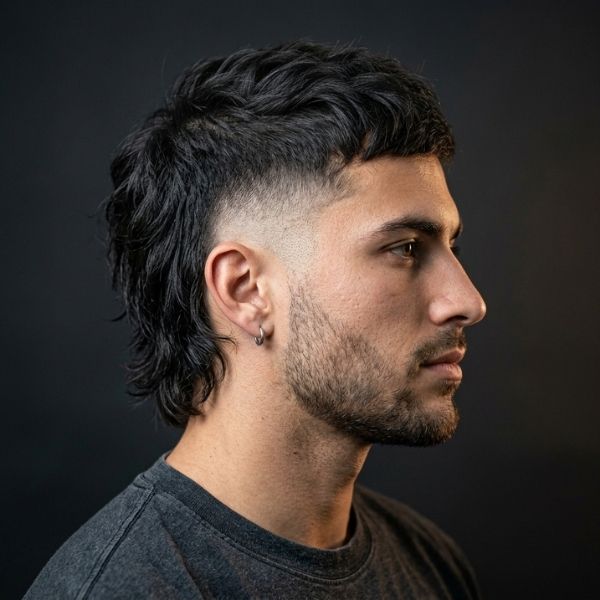
A low maintenance combination pairing a gentle taper with a shorter back length, ideal for guys who want minimal styling time.
15. Modern Mullet Fade Straight Hair

Straight hair paired with modern styling techniques creates razor sharp lines and a polished, deliberate appearance.
16. Burst Fade Mullet V Cut
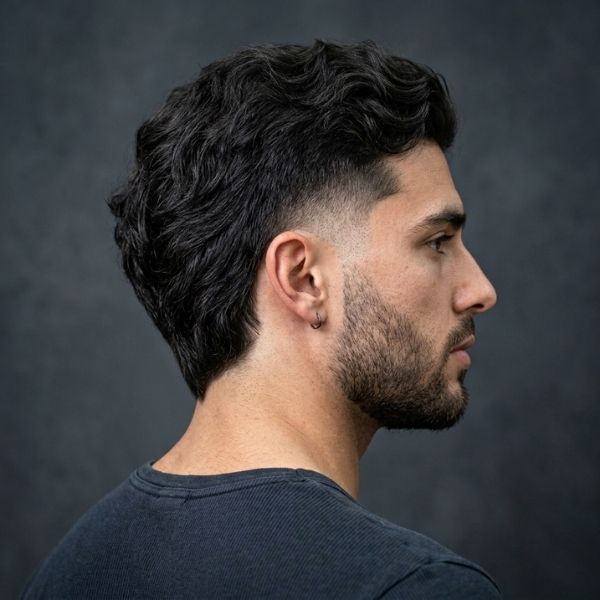
The back is cut into a V shape rather than straight across, adding a distinctive silhouette to the classic mullet outline.
17. Mullet Burst Fade

Essentially the reverse emphasis of style two, putting slightly more attention on the burst detail itself as the defining feature.
18. Temple Fade Mullet
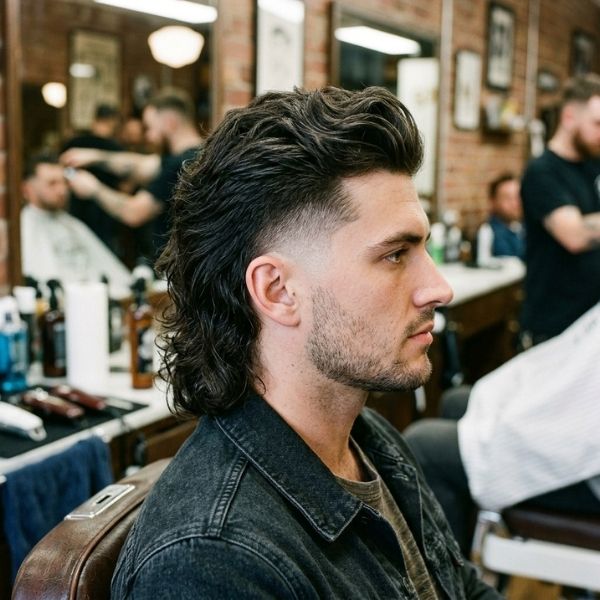
Concentrates the fade detail specifically around the temple area, giving a more targeted, subtle contrast than a full burst.
19. Burst Fade Mullet Straight Hair V Cut
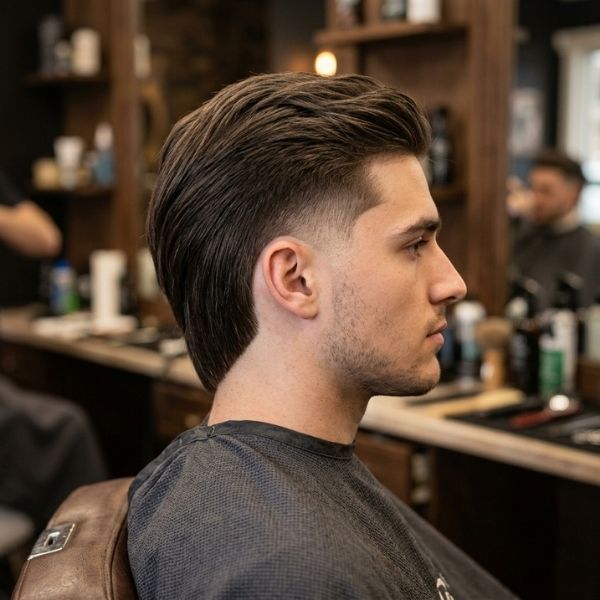
Combines the crisp lines of straight hair with a V shaped back, resulting in one of the more structured, statement looks on this list.
20. Mid Burst Fade Mullet
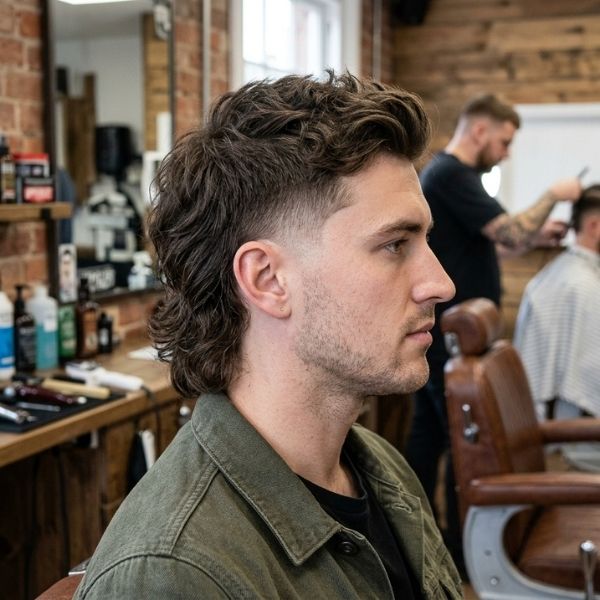
Starts a little higher than a low fade, giving clearer contrast without going as bold as a high fade. A balanced, versatile middle ground.
21. High Burst Fade Mullet
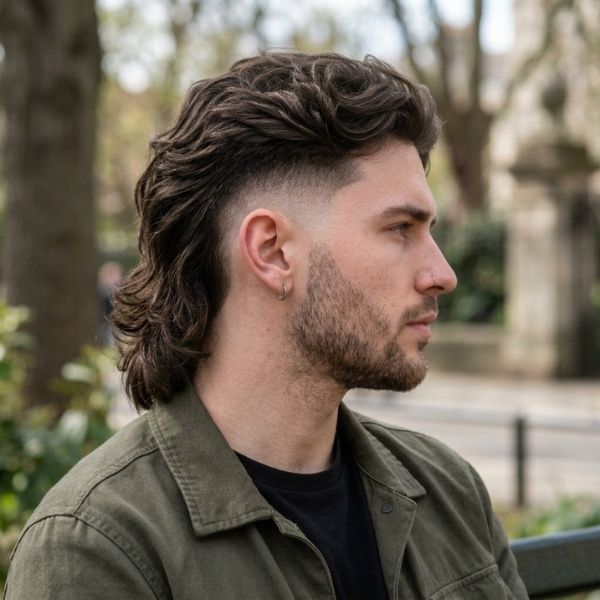
The boldest fade height option, cutting well above the ear for maximum contrast. This is the version most people picture when they hear “mullet fade.”
22. Burst Fade Mullet with Design

Adds a shaved line or pattern within the faded section for a personalized, custom detail. Expect faster grow out on the design itself.
23. Taper Burst Fade Mullet

A softer, more gradual fade than a full burst, giving you contrast without the sharper edges of a skin fade.
24. Burst Fade Mullet with Beard Blend
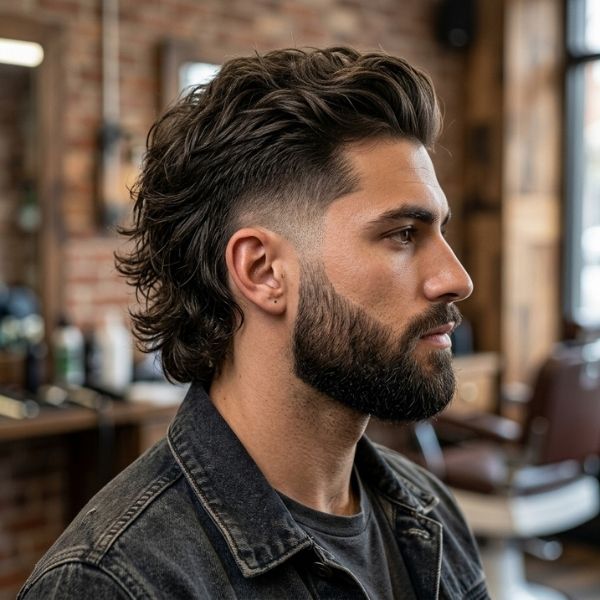
Pairs the haircut with groomed facial hair that blends directly into the sideburn, creating a more balanced, masculine overall shape.
25. Burst Fade Mohawk Mullet

A bold combination featuring a raised strip through the center paired with mullet length at the back. One of the more dramatic options on this list.
Quick Reference Table
| Style Type | Best For | Maintenance |
|---|---|---|
| Low Burst Fade Mullet | First timers, workplace settings | Low to moderate |
| Mid Burst Fade Mullet | Balanced, everyday contrast | Moderate |
| High Burst Fade Mullet | Bold, statement looks | High |
| Curly Mullet Fade | Natural curl patterns | Moderate to high |
| Taper Mullet Fade | Subtle, low fuss styling | Low |
| Mullet Skin Fade | Maximum contrast | High |
| Burst Fade Mullet with Design | Personalized detail | High |
Easy Styling Routine
You don’t need a long routine to keep this haircut looking sharp. A simple approach works best:
- Start with slightly damp hair, never soaking wet.
- Apply a small, dime sized amount of matte cream or clay to the back and top.
- Use your fingers to define texture rather than a comb, which flattens natural movement.
- Let the fade sides sit as they are since the short length rarely needs product.
- Finish with a light mist of texturizing spray if your hair is naturally straight or fine.
Wash two to three times a week with a sulfate free shampoo to avoid stripping the natural oils that keep the fade looking healthy, and condition the back length regularly once it grows past collar length.
What to Tell Your Barber
Clear communication makes the difference between a haircut you love and one you have to explain. When you sit down, be specific about three things: fade height, how far the burst curves around your ear, and how much length to leave at the back. Bring one or two reference photos, since terms like “modern mullet” mean different things to different barbers.
If you’re growing a shorter cut into a mullet, say so directly so your barber can shape the back to guide the growth rather than cutting it like a standard short style. Also mention your face shape preferences and whether you want the sideburns and beard blended into the fade.
Care and Upkeep
Plan your trim schedule around your fade height. Low fades can typically go four to five weeks between visits, mid fades need attention every three to four weeks, and high or skin fades look best with a trim every one to two weeks. The back length only needs trimming every eight to twelve weeks to remove split ends without sacrificing growth.
Where It Fits
This cut suits casual workplaces, creative industries, and everyday settings where a bit of personality is welcome. A lower fade with a modest back length reads professional enough for most office environments, while a high fade or shaved design leans more toward a bold, expressive statement look.
Conclusion
The burst fade mullet earns its spot as one of 2026’s most popular men’s haircuts because it gives you real flexibility. You get a clean, sharp side profile along with a back section that carries personality and can grow with you over time. Whether you go low and subtle or high and bold, the key to getting it right comes down to matching the fade height to your face shape, communicating clearly with your barber, and keeping up with regular trims.
Save a few reference photos, decide how much back length you’re comfortable with, and use the comparisons above to figure out whether a burst, drop, or taper fade fits your style best. A little preparation before your next appointment goes a long way toward walking out with a haircut that looks intentional from every angle.
FAQs
Is a burst fade mullet hard to maintain?
Not particularly. Low and mid fades need a trim every three to five weeks, while high or skin fades require more frequent visits.
Does a burst fade mullet work with curly hair?
Yes. The fade clears bulk from the sides so natural curls at the back and top can stand out more clearly.
How long should the back be for a first time mullet?
Start around collar length or slightly past it. You can always grow it longer once you’re comfortable with the style.
Can I wear a burst fade mullet to work?
A low or mid fade with a moderate back length usually reads as professional enough for most workplaces.
What’s the main difference between a burst fade and a taper fade mullet?
A burst fade curves around the ear with more contrast, while a taper fade uses a gentler, more gradual blend.
Do I need a specialist barber for this cut?
You need a barber comfortable with fade work and rounding the blend around the ear, though not necessarily a specialist.

Zaria Rhodes is the lead editor and content curator at Lyrinexa, passionate about music, storytelling, and lyrical expression. With a deep love for discovering the meaning behind songs, she brings clarity, creativity, and accuracy to every post. Zaria is dedicated to providing readers with authentic lyrics, thoughtful interpretations, and a seamless music-exploration experience.

1 thought on “Burst Fade Mullet 2026: 25 Clean Styles That Look Bold”