


A messy French crop is one of the few men’s haircuts that looks deliberate and relaxed at the same time. The sides stay tight, the top stays short, and a bit of natural texture does the rest of the work. No fifteen minute blow dry routine, no stiff comb lines, just a clean shape that styles itself in under a minute.
This guide breaks down what the cut actually is, who it suits, the exact words to use in the barber’s chair, and how a barber builds it from the first guideline to the final texture pass. You will also get a realistic maintenance timeline and the mistakes that quietly ruin an otherwise good haircut.
Messy French Crop: Effortless Texture, Clean Outline, Fast Style
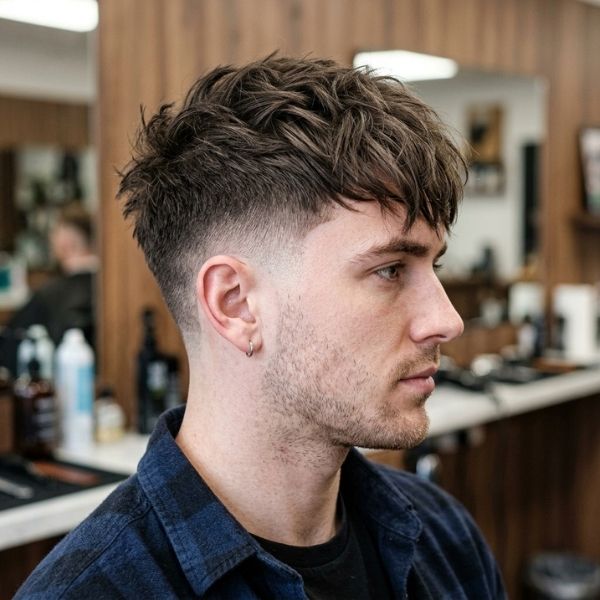
The messy French crop takes the classic French crop, short sides, longer forward top, straight fringe, and loosens it up. Instead of a combed, uniform finish, the top is textured with scissors or a razor so it falls naturally instead of sitting flat. The outline around the ears, temples, and neckline stays sharp, which is what keeps the “messy” part from looking unkempt.
It works because it separates two jobs cleanly. The sides and back handle structure through a taper or fade. The top handles personality through texture, length, and fringe shape. Get both parts right and the cut looks intentional in every photo and every mirror check, without a daily styling routine.
Read more: Low Taper Fade Black Male: 2026 Barber Guide for Waves, Curls, Afros & Locs
1) What Is a Messy French Crop

A messy French crop is a short to medium haircut with tapered or faded sides, a textured top left long enough to style forward, and a soft or choppy fringe instead of a blunt, combed one.
Barbers usually keep the top between three quarters of an inch and two and a half inches, depending on hair density and how much movement you want. Texturizing scissors, point cutting, or a razor remove weight from the underside of the top section so hair falls forward naturally rather than sitting in one solid block. The sides are cut short using clippers, either a gradual taper or a defined fade, and blended into the top with no visible line.
The result reads as a Caesar style silhouette with softer edges, more volume, and a fringe that breaks into pieces instead of lying flat.
Read more: Short Wolf Cut Men 2026: Best Styles for Every Hair Type
2) Why Choose This Cut

Men choose this haircut mainly for the ratio of effort to result. A few reasons keep it near the top of barbershop request lists:
- Low daily maintenance, since texture and a short top do most of the styling work
- Grows out evenly because there is no hard line to maintain between cuts
- Works across straight, wavy, and curly hair with only small adjustments
- Suits casual and semi-formal settings, from the gym to the office
- Flatters a wide range of face shapes when the fringe and fade height are matched correctly
It also photographs well. A textured top holds shape under studio light or a phone camera in a way that flat, heavily gelled styles often do not.
3) Face Shape Match
Face shape mainly changes two variables: fringe weight and fade height. Everything else about the cut stays largely the same.
- Oval face: Nearly every version works here. Low, mid, or high taper, textured or slightly longer fringe, all suit an oval face without much adjustment.
- Round face: Ask for added height at the crown and a slightly heavier fringe. A mid or high taper adds vertical structure and keeps the face from looking wider.
- Square face: The jawline already provides structure, so a soft, textured fringe and a low or mid taper work better than a blunt, heavy front section.
- Long face: Skip extra height on top. A fuller fringe pulled forward shortens the appearance of the face and balances a longer forehead.
- Diamond face: A soft fringe with light texture around the temples helps soften the cheekbone area without adding bulk.
- Receding hairline or high forehead: A forward, slightly longer fringe is one of the most effective ways to visually lower the hairline and soften the top of the face.
Bring a front, side, and back reference photo. Face shape charts are a starting point, not a fixed rulebook, and your barber will adjust based on your actual hairline and density.
4) Hair Types & Top Textures
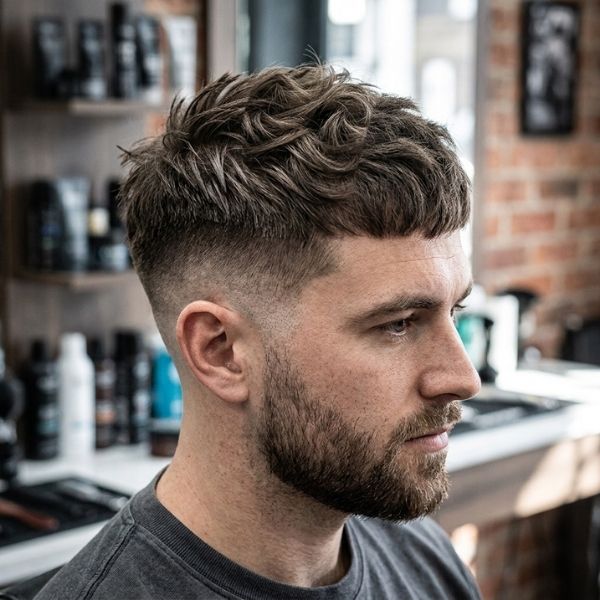
The core shape stays the same across hair types, but the technique used to build the top changes.
- Straight hair: Works best with a blunt or lightly textured fringe and point cutting near the front to avoid a flat, helmet like top.
- Wavy hair: Naturally suited to this cut. A choppy texture and soft fringe edge let the wave pattern show through without extra product.
- Curly hair: Needs shorter internal layering so curls do not gain excessive volume. A defined, slightly shorter top keeps the silhouette controlled.
- Coarse or thick hair: Ask your barber to thin the interior with texturizing shears. This reduces bulk so the top moves instead of sitting in one heavy mass.
- Fine or thinning hair: Keep the top shorter and use a forward root direction to create the appearance of density. Avoid over thinning, which can expose scalp.
Matching the technique to your texture is the difference between a crop that looks styled and one that looks accidental.
5) Exactly What to Tell Your Barber
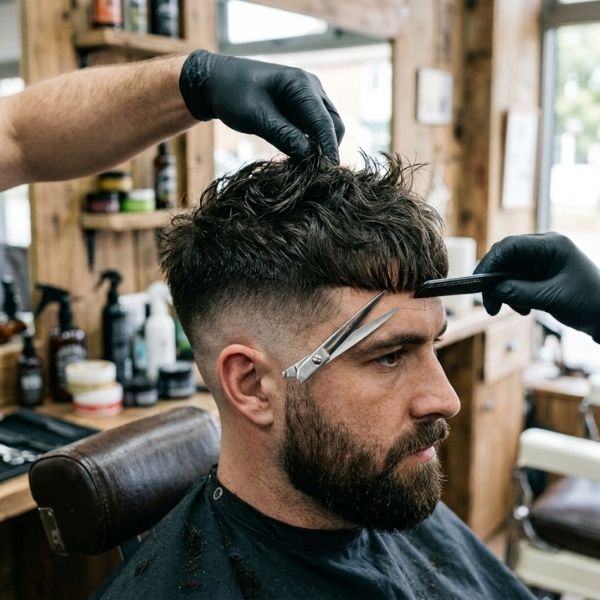
Vague requests produce inconsistent results, since “short on the sides” means something different in every chair. Use specific language and bring photos.
Try this script:
“I want a messy French crop. Keep the top about one and a half to two inches long with a textured, choppy fringe pushed forward. Sides on a low taper, blended with no visible line, and clean up my neckline and sideburns.”
Cover these four points every time:
- Top length, stated in inches or fingers of length
- Fade or taper height, low, mid, or high
- Fringe style, blunt, choppy, or textured
- Finish, matte and natural versus more defined and separated
Naming the taper height and fringe style separately avoids the most common miscommunication in this haircut, since a “French crop” label alone tells a barber almost nothing about how sharp or soft you want the sides.
6) In the Chair: Step by Step
Here is how a barber typically builds a messy French crop from start to finish.
Step 1: Consult & Plan
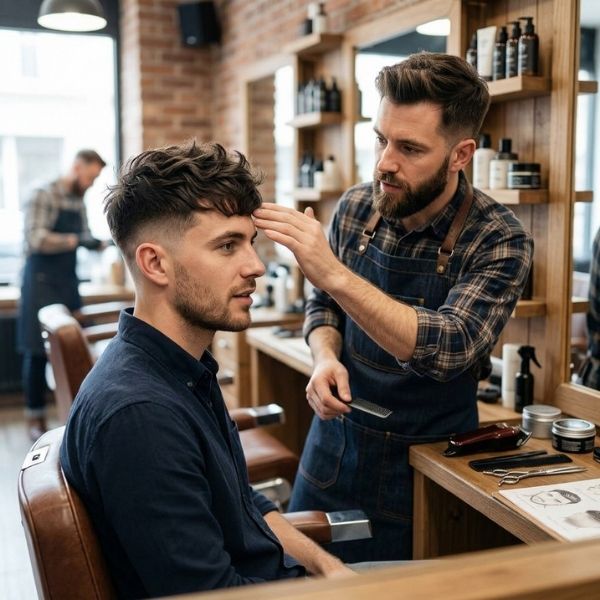
The barber checks your hair density, growth pattern, natural part, and hairline shape, then confirms fringe style, top length, and fade height against your reference photos before making a single cut.
Step 2: Prep

Hair is washed and towel dried to damp, not wet. Cutting on evenly damp hair gives an accurate read on natural fall and curl pattern, which matters more on this cut than on a fully faded style.
Step 3: Set the First Guideline
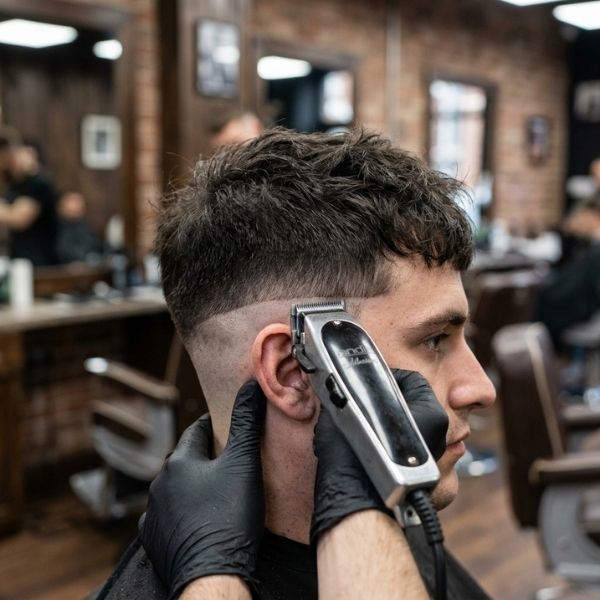
The barber establishes the perimeter, usually starting around the sideburn and temple area, to set the shortest length the fade or taper will build from.
Step 4: Build the Taper or Fade
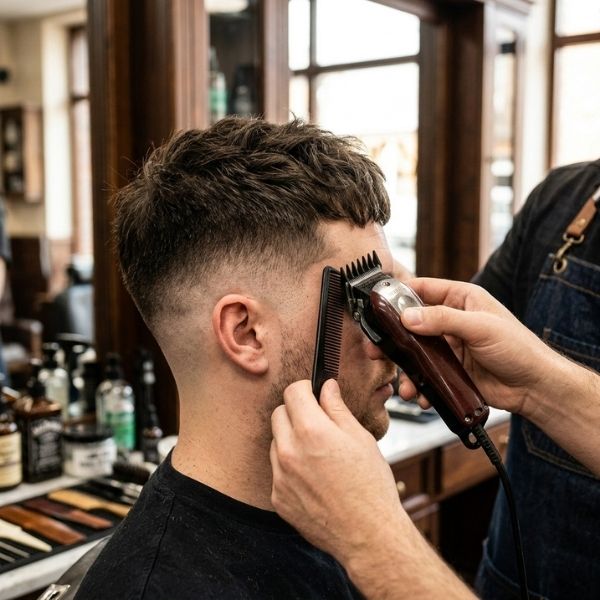
Using clippers with graduated guards, the barber works from the guideline up toward the parietal ridge, blending length gradually rather than in visible steps. This is where low, mid, and high variations are decided.
Step 5: Blend Ridges

The transition point between the sides and the top, often called the weight line, gets blended with scissor over comb or a clipper over comb technique so there is no visible shelf where the fade meets the longer top.
Read more: Burst Fade Design: Best Hair Design Ideas, Placement, and Barber Tips (2026)
Step 6: Texture & Balance
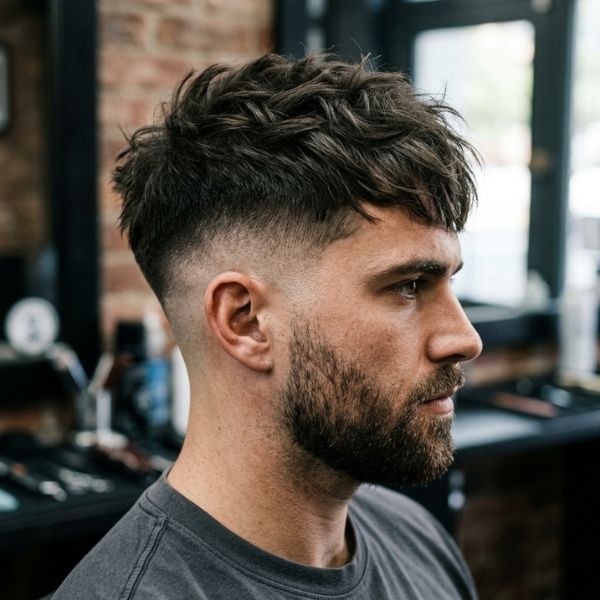
The top section is thinned and textured using point cutting or a razor, depending on hair type, to remove bulk and create natural movement rather than a flat, solid block of hair.
Step 7: Cut the Fringe
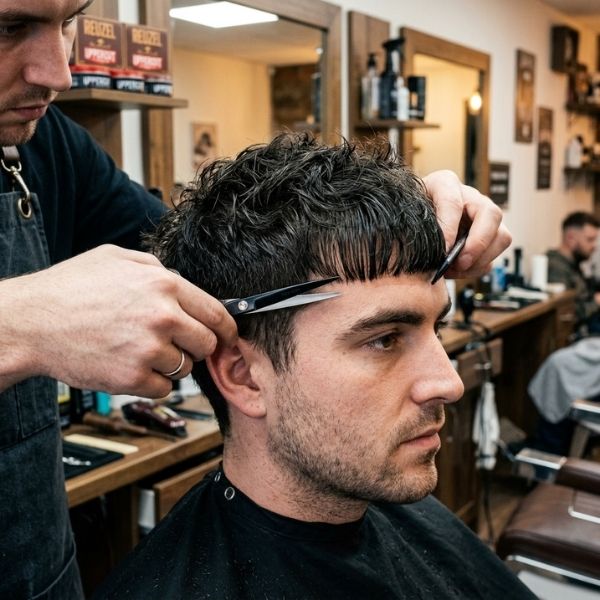
The front section is cut last, either blunt or choppy depending on the agreed style, and shaped to sit correctly against your specific hairline and forehead.
Step 8: Finish

The barber cleans the neckline, sideburns, and around the ears with a straight razor or trimmer, then does a final dry styling pass to confirm the fringe falls correctly and the fade blends under different lighting.
7) Daily Routine and Fast Style

This cut earns its “low maintenance” reputation because the routine genuinely takes under two minutes.
- Apply a small amount of matte clay, texture paste, or sea salt spray to damp or dry hair
- Rough dry with a diffuser or towel while pushing hair forward with your fingers
- Use your fingers, not a comb, to separate strands and push the fringe into place
- Add a light dust of texture powder if you want extra volume at the root
Matte clay and molding paste work best for a natural, separated look. Heavier pomades tend to flatten the texture that makes this cut work in the first place, so most barbers recommend against them here.
8) Beard & Outline Options
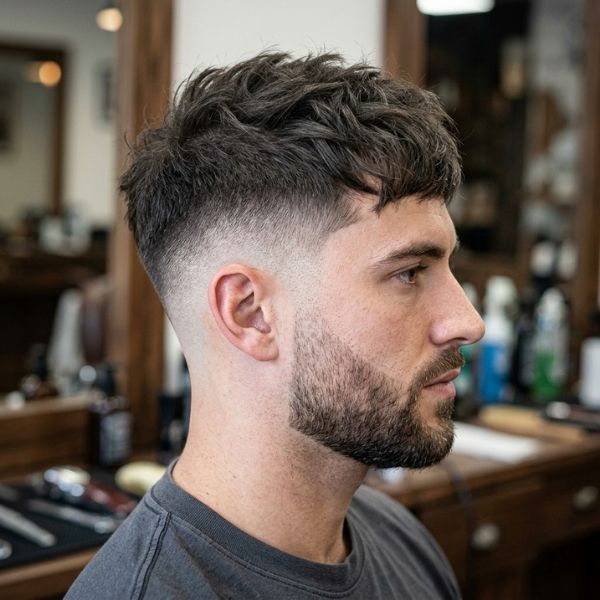
A messy French crop pairs well with several beard lengths, and the outline choice changes the overall vibe more than people expect.
- Clean shaven: Sharpens the cut for formal or professional settings and puts full focus on the fringe and fade.
- Light stubble: The most versatile pairing, adding definition without much extra grooming time.
- Short boxed beard: Balances the textured top with structure at the jawline, especially on oval and square faces.
- Natural, undefined sideburns: Suits the relaxed, tousled theme of the cut.
- Sharp, defined edges: A crisp lineup around the beard and neckline contrasts nicely with a loose, messy top and keeps the whole look from reading as unkempt.
9) Maintenance Timeline
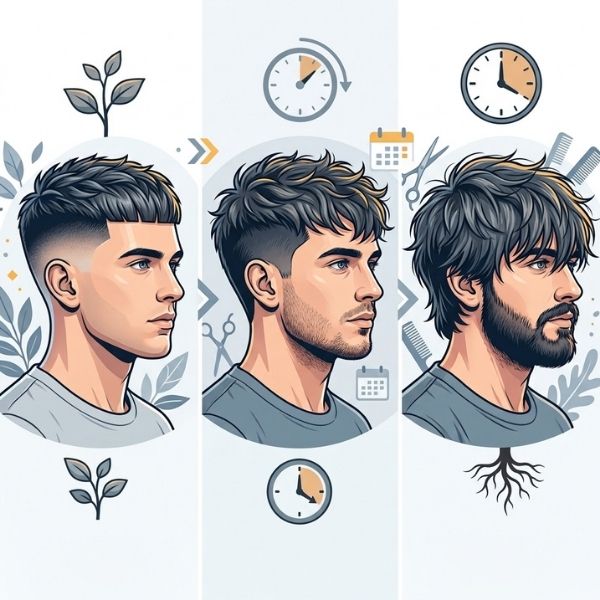
How often you need a trim depends more on the fade height than the top.
- Skin fades and high tapers: Trim every two to three weeks, since the shortest section grows out visibly fast
- Mid tapers: Trim every three to four weeks for a clean look, or stretch to five weeks if you do not mind a softer edge
- Low tapers: The most forgiving option, often lasting four to six weeks between visits
- Top length: Because it is textured rather than blunt, the top can go longer between trims than the sides without looking overgrown
A low taper paired with a textured top is the lowest maintenance version of this haircut overall, which is why it is often recommended for busy schedules or first time French crop clients.
10) Common Mistakes & Quick Fixes
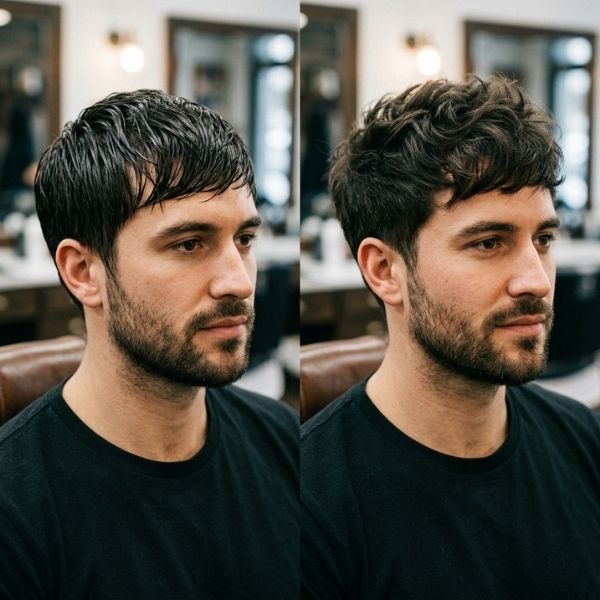
- Using heavy pomade instead of matte product: This flattens texture. Switch to clay or a light paste.
- Asking for “short on top” without a number: This leads to a top that is too short to style forward. Always give a length in inches.
- Skipping reference photos: Terminology varies by barber, so a photo removes ambiguity that words alone cannot.
- Over thinning fine hair: This exposes scalp and reduces the appearance of density. Ask for shorter length instead of aggressive thinning.
- Letting a high fade grow out too long: The contrast between the fade and the top becomes harsh and uneven. Book trims on a two to three week schedule for higher fades.
- Combing the top instead of finger styling: A comb flattens texture and pulls hair into an unnatural, uniform shape. Fingers preserve separation.
FAQs
Is a messy French crop the same as a regular French crop? No. Both share the same short sides and forward fringe, but the messy version uses texturizing techniques for a looser, tousled top instead of a smooth, combed finish.
Which fade height is easiest to maintain? A low taper is the easiest to maintain, often going four to six weeks between trims without looking overgrown.
Does this haircut work with curly hair? Yes. Curly hair works well with slightly shorter internal layering to keep volume controlled while still showing natural texture.
Can this cut help with a receding hairline? Yes. A forward, slightly longer fringe helps camouflage a receding hairline and softens a high forehead.
What products give the best texture for this cut? Matte clay, texture paste, and sea salt spray give the most natural, separated finish without weighing hair down.
How long should the top be for a messy French crop? Most versions keep the top between one and a half and two and a half inches, adjusted for hair density and desired fringe length.
Conclusion
The messy French crop works because it splits the haircut into two clear jobs. The sides carry structure through a taper or fade, and the top carries personality through texture and fringe shape. Match the fringe weight and fade height to your face shape, describe your hair type accurately to your barber, and use matte products instead of heavy pomade, and the cut will style itself in under two minutes for weeks at a time. Bring the script from this guide to your next appointment, along with a few reference photos, and you will walk out with a clean, textured shape that grows out gracefully instead of falling apart after ten days.

Zaria Rhodes is the lead editor and content curator at Lyrinexa, passionate about music, storytelling, and lyrical expression. With a deep love for discovering the meaning behind songs, she brings clarity, creativity, and accuracy to every post. Zaria is dedicated to providing readers with authentic lyrics, thoughtful interpretations, and a seamless music-exploration experience.

1 thought on “Messy French Crop Haircuts: Fast Style, Sharp Results”