


A burst fade is already one of the sharpest cuts in the barbershop, but add a design into the mix and it turns into a full statement piece.
The curved shape of a burst fade gives a barber a natural canvas to work with, and a well-placed line, star, or geometric pattern can turn a good haircut into a great one.
If you are thinking about adding a design to your next burst fade, this guide covers everything you need to know.
You will find the best placement zones, the most popular design ideas for 2026, how to pick a design based on your hair type, and exactly what to tell your barber so you leave the chair with the cut you actually pictured.
Read more: Mid Fade Crew Cut Hairstyle: Sharp, Simple, Modern
What Is a Burst Fade Design
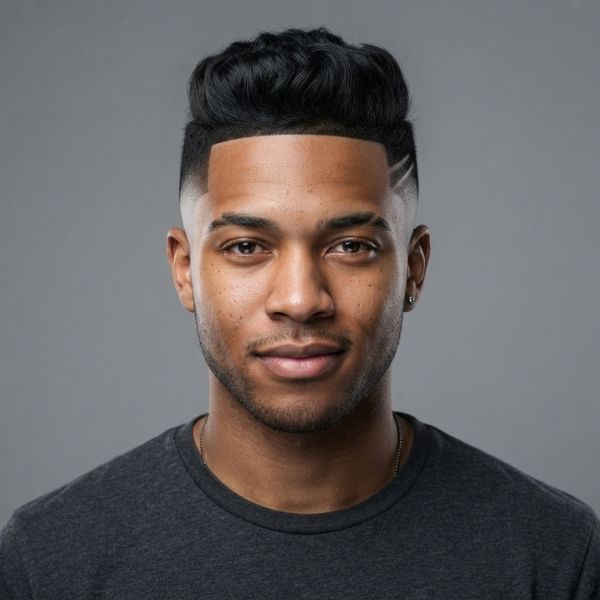
A burst fade is a fade that curves around the ear instead of running in a straight line down the side of the head. The shortest point of the fade sits directly behind or around the ear, and the hair fans outward from there, almost like the shape of a burst or an explosion. That curved shape is what separates it from a standard fade or a low taper fade.
A burst fade design simply means a barber has shaved or cut a pattern into that curved fade zone using clippers, a trimmer, or a straight razor. The design usually sits in the shortest part of the fade, right where the skin or close-cropped hair gives the sharpest contrast against longer hair.
Designs can be as simple as one thin line or as detailed as a full geometric pattern. Either way, the goal is the same: use the natural curve of the burst fade to frame the design instead of fighting against it.
Burst Fade With Design vs Regular Burst Fade
A regular burst fade relies on the taper and the curve alone for its style. There is no shaved pattern, just a clean blend from skin or a short guard length up to longer hair on top.
A burst fade with design adds a shaved element on top of that base cut. Here is how the two compare:
- Regular burst fade: Focuses on smooth blending and a clean curved line. Lower maintenance and easier to keep looking fresh between visits.
- Burst fade with design: Adds a shaved pattern that needs sharper edges and more frequent touch-ups to stay crisp.
- Regular burst fade: Works for most workplaces and formal settings without question.
- Burst fade with design: Better suited to casual settings, school, or jobs with relaxed grooming policies, since shaved patterns read as bolder and more expressive.
Neither option is better across the board. It really comes down to how much upkeep you want and how bold you want the final look to be.
Where Should the Design Go on a Burst Fade
Placement matters just as much as the design itself. A pattern placed in the wrong spot on a burst fade can look cluttered or throw off the natural curve that makes this cut work in the first place.
Most barbers place designs in one of two zones: behind the ear, where the fade is shortest, or along the nape and V area at the back of the neck.
Behind the Ear Burst Fade Design

This is the most common placement, and for good reason. The area right behind the ear is where the burst fade curves tightest, which means there is already strong contrast between short and long hair. A line, star, or small geometric shape placed here stands out without needing to be oversized.
This spot also works well because it is easy for a barber to maintain during regular touch-ups, and it stays visible whether your hair is styled up, down, or pushed back.
Nape and V Area Design
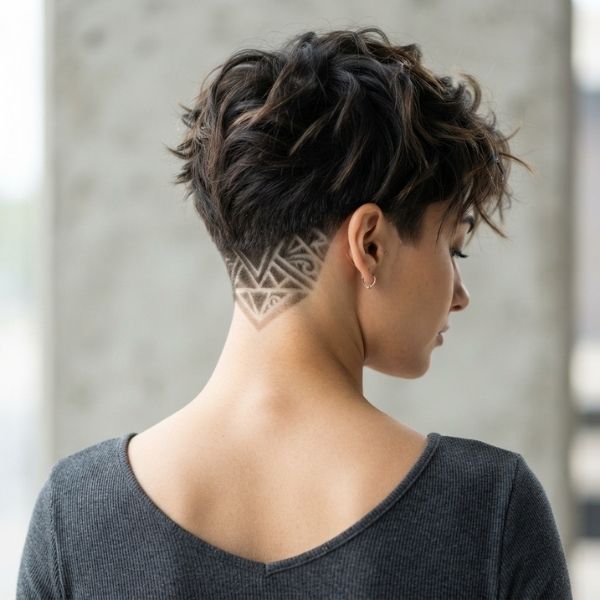
The nape sits at the base of the skull, right above the neckline. Some burst fades are cut with a V-shaped point at the nape instead of a rounded or straight edge, and this area gives a second natural spot for a design.
A subtle line or small pattern near the V shape adds detail without competing with a design placed behind the ear. Some people choose one design here instead of behind the ear, especially if they want something that only shows when the head is turned or the hair is pulled up.
Read more: Boys Mullet Haircut Guide 2026: Styles, Fades, and Care
Best Burst Fade Design Ideas
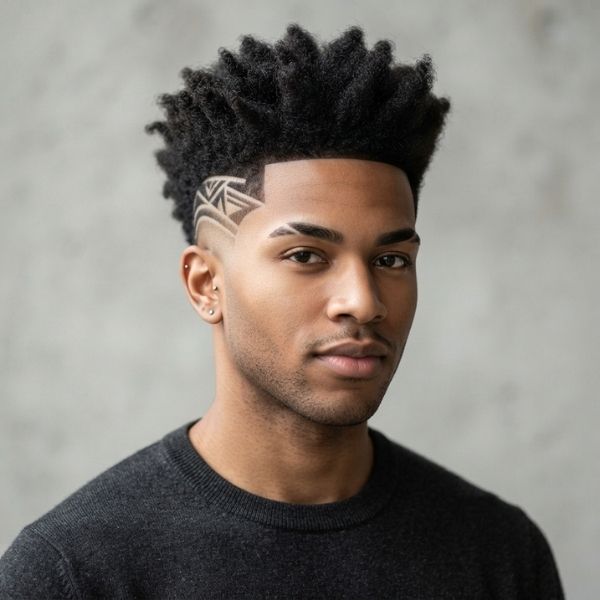
Once you know where a design will sit, the next step is choosing the design itself. Below are the most requested burst fade design ideas going into 2026, ranked from simple to more detailed.
Burst Fade Line Design
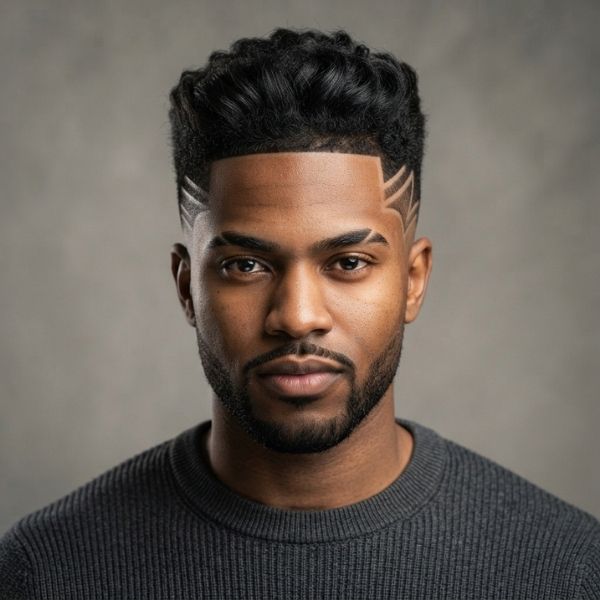
A single straight or slightly curved line is the easiest design to start with. It is quick for a barber to cut, easy to keep clean between visits, and works with almost any hairstyle on top. Some people ask for one thick line, while others prefer two or three thinner parallel lines for a bit more detail.
Burst Fade Zigzag Design

The zigzag takes the simple line and adds movement to it. It works especially well on thicker hair, where the sharp angles of the zigzag show up clearly against the surrounding length. This design pairs nicely with a mid or high burst fade, since there is more room for the zigzag pattern to sit without feeling cramped.
Burst Fade Lightning Bolt Design

A lightning bolt is one of the most popular shaved designs across all fade styles, and it translates well to a burst fade. Its angled shape follows the curve of the fade naturally, and it reads clearly from a distance, which makes it a good choice if you want a design that is easy to spot.
Burst Fade Heart Design
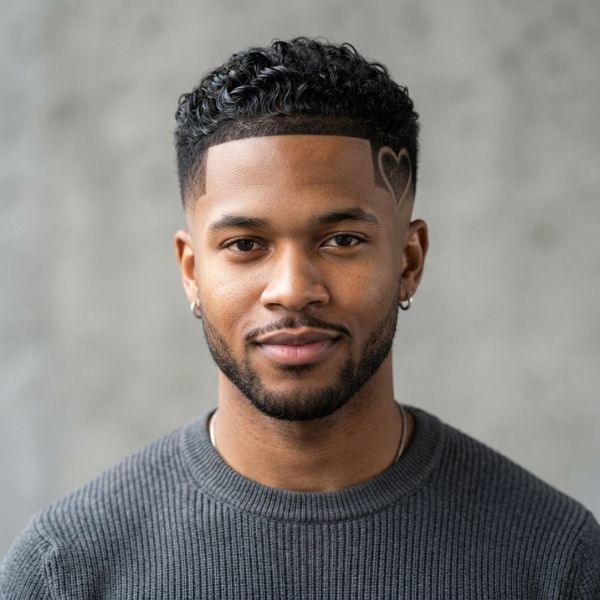
The heart design has grown in popularity, especially for younger clients and for creative, personalized cuts. It works best in a small size behind the ear, since a heart shape needs clean, rounded edges to look intentional rather than sloppy.
Burst Fade Star Design

Stars are a classic choice for a reason. A single star or a small cluster of two or three stars fits naturally into the curved shape of the burst fade. This design also ages well between cuts, since a slightly grown-out star still reads as a star, unlike sharper geometric shapes that lose definition faster.
Burst Fade Geometric Design and Negative Space
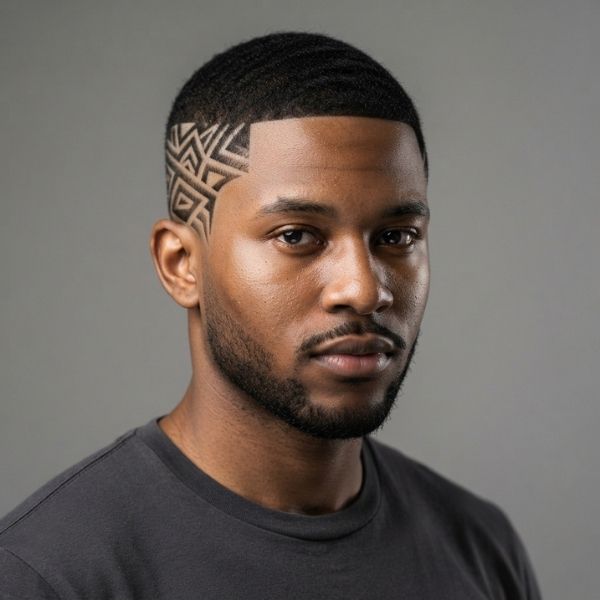
Geometric designs use straight lines, triangles, or diamond shapes, often combined with negative space, meaning parts of the pattern are left as skin while the surrounding hair fills in the rest of the shape. This style takes more skill and time in the chair, but it gives one of the most modern and detailed looks available right now.
This option works best with a barber who has experience in freehand clipper work, since the sharp angles need to be cut freehand rather than with a stencil.
Burst Fade With V Design

This design combines a V-shaped design element with the V-shaped neckline some burst fades already have at the nape. The result is a matching, symmetrical look between the neckline and the design itself. It is a subtle way to tie the whole haircut together without adding a separate, unrelated shape.
Read more: Madison Alworth Wikipedia: Bio, Age & Net Worth 2026
Low vs Mid vs High Burst Fade Design
The height of the burst fade changes how much space a barber has to work with and how bold the final design looks.
Low Burst Fade Design
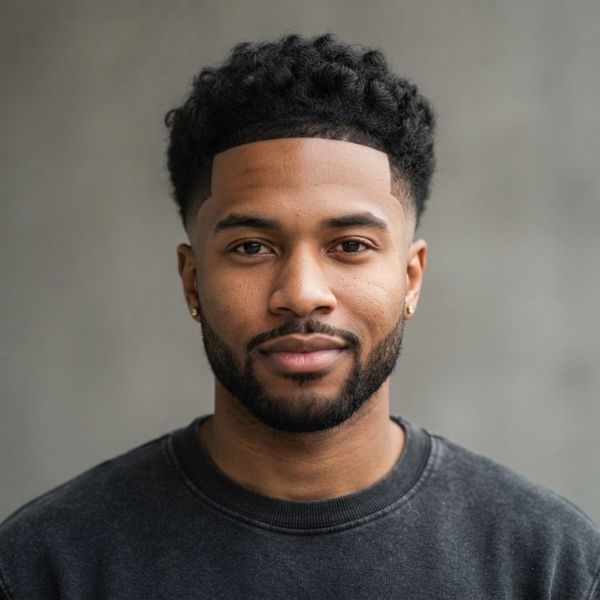
A low burst fade keeps the fade tight to the ear, staying close to the natural hairline. This leaves less room for a large design, so simple line designs or a single small star tend to work best. Low burst fades also read as more subtle overall, which makes them a safe choice for office settings or conservative dress codes.
Mid Burst Fade Design
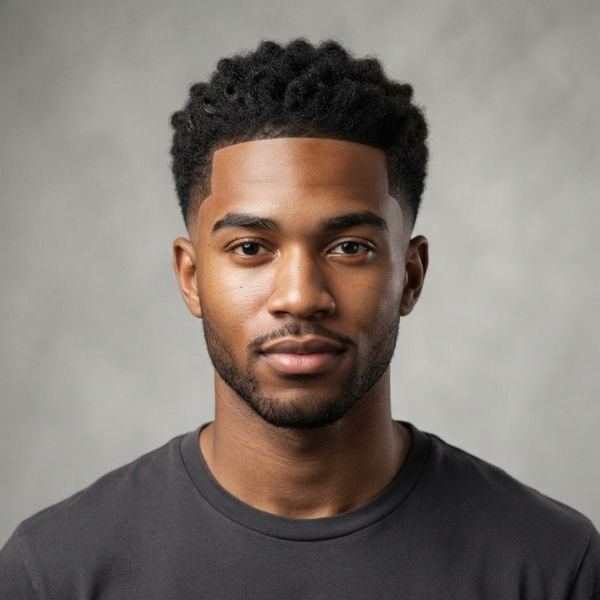
A mid burst fade starts a bit higher, giving more surface area for a design to sit comfortably. This height works well with zigzags, lightning bolts, and small geometric patterns, since there is enough room for the shape to be visible without looking cramped.
High Burst Fade Design
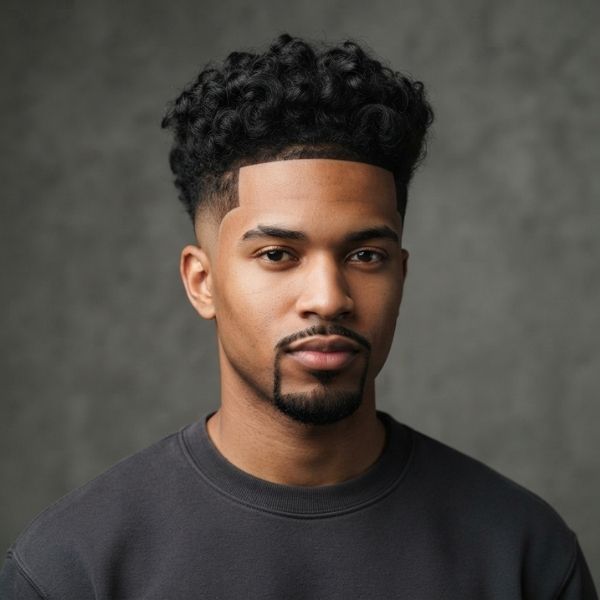
A high burst fade climbs up toward the temple, creating the most contrast and the most space for detailed work. This is the go-to choice for larger geometric designs, negative space patterns, or multiple design elements combined in one cut. It is also the boldest option, so it suits people who want their haircut to be a clear style statement.
Burst Fade Design for Different Hair Types
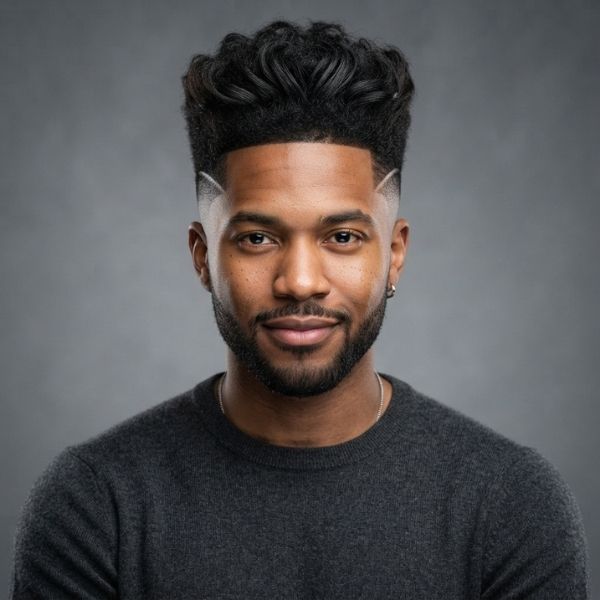
Hair type plays a bigger role in how a design turns out than most people expect. The same design can look completely different depending on texture and density.
Burst Fade Design on Straight Hair
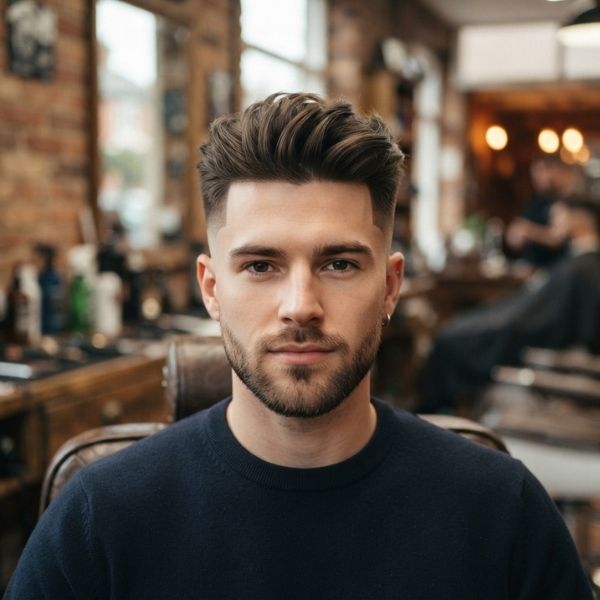
Straight hair gives the cleanest, sharpest lines for any design, since there is no natural curl pattern to soften the edges. Line designs, zigzags, and geometric patterns all show up with strong definition on straight hair, and the design tends to stay crisp for longer between touch-ups.
Burst Fade Design on Curly Hair

Curly hair adds natural texture and volume on top, which creates a strong contrast against a shaved design underneath. Designs on curly hair should generally stay a bit simpler, since tight curls can slightly blur the sharpest edges of a detailed pattern. A single line, star, or small geometric shape usually works better than an intricate multi-part design.
Burst Fade Design for Thick Hair vs Thin Hair

Thick, dense hair holds a design’s shape well and gives barbers more room to create depth with shading around the pattern. Thin hair shows the scalp more easily, which can actually make simple line designs look sharper, though very detailed patterns may be harder to maintain as regrowth appears faster in visible areas.
Burst Fade Design With Popular Top Styles
A design does not exist on its own. It needs to work with whatever is happening on top of the head.
Burst Fade Mohawk Design

A mohawk keeps a strip of longer hair down the center of the head while the sides are faded short. Adding a design into the burst fade on the sides gives the whole look extra edge, and this pairing is popular for anyone who wants a bold, high-contrast style from every angle.
Burst Fade Mullet Design

The mullet burst fade keeps length at the back while the sides and area around the ears stay tightly faded. A design placed behind the ear fits naturally into this style, since the short sides already draw attention, and the added pattern gives the cut even more personality.
Burst Fade Textured Crop or Fringe Design
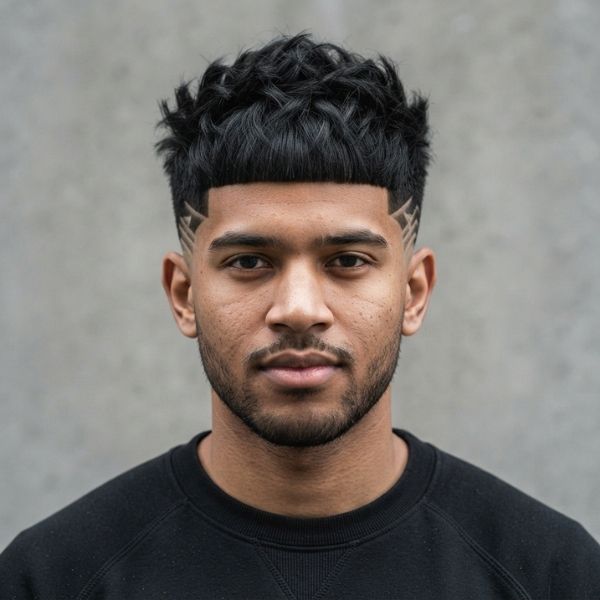
A textured crop or fringe keeps a longer, choppy top while the sides fade into a burst. This is one of the more versatile pairings, since the textured top balances out a bold design on the sides, keeping the overall look sharp without feeling overdone.
What to Tell Your Barber
Clear communication is the difference between getting the design you pictured and leaving disappointed. Barbers cannot read minds, and haircut names alone rarely give enough detail.
Here is what to cover in your consultation:
- State the fade height: low, mid, or high burst fade.
- Name the guard number for the top length, or describe it in inches if you want scissor work instead.
- Point out exactly where you want the design, either behind the ear or near the nape and V area.
- Bring a clear reference photo, ideally of someone with a similar hair type and density.
- Mention if you want the design freehand or if you are open to a stencil for extra precision.
Read more: Mid Fade Crew Cut Hairstyle
Simple Guard and Blend Notes
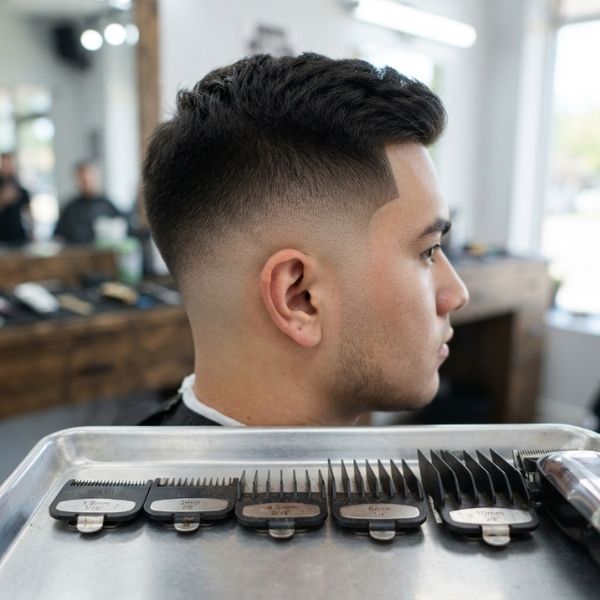
Guard numbers measure length in fractions of an inch, and knowing a few basics helps you speak the same language as your barber.
- A 0 guard means skin, with no length left at all.
- A 1 guard leaves about one-eighth of an inch.
- A 2 guard leaves about one-quarter of an inch.
- A 3 guard leaves about three-eighths of an inch.
Most burst fade designs are cut at a 0 or 1 guard, since the sharpest contrast comes from going down close to the skin. Ask your barber to blend the edges of the design smoothly into the surrounding fade so it does not look like a separate, disconnected shape.
Burst Fade Design Maintenance
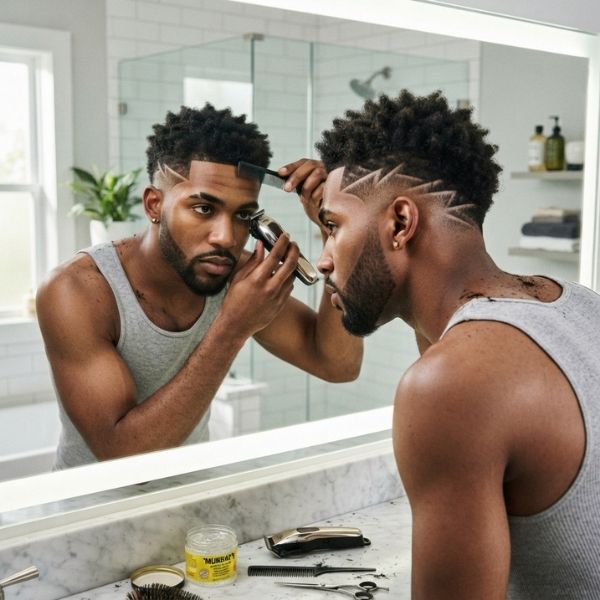
A design does not stay sharp forever. Hair grows back at different speeds depending on the person, and a design fades in definition well before the rest of the haircut looks overgrown.
How Often to Redo the Design
Most people need a touch-up on the design every one to two weeks, even if the rest of the burst fade can go three to four weeks between full haircuts. Faster hair growth or thicker hair density may push that timeline closer to the one-week mark.
Aftercare Tips
Keeping a burst fade design looking clean comes down to a few simple habits:
- Moisturize the scalp regularly, especially around the shaved design area, to avoid dryness and flaking.
- Avoid picking at or scratching the design area while it heals after a fresh cut.
- Use a soft brush to keep the top styled without disturbing the shaved lines underneath.
- Schedule touch-ups before the design starts to blur, rather than waiting until it has already grown out.
- Protect the area from excessive sun exposure, which can make freshly shaved skin more sensitive.
Burst Fade Design Mistakes to Avoid

A few common mistakes can ruin an otherwise great burst fade design:
- Choosing a design that is too large for a low burst fade, which leaves no room for clean blending.
- Skipping the reference photo and relying only on the design name, which often leads to miscommunication.
- Going to a barber with little experience in freehand or stencil design work for detailed geometric patterns.
- Waiting too long between touch-ups, which lets the design blur into the surrounding fade.
- Matching a heavy, detailed design with thin or fine hair, where subtle definition gets lost quickly.
- Forgetting to mention hairline shape and growth pattern, which can affect how symmetrical the final design looks.
Conclusion
A burst fade design takes an already sharp haircut and turns it into something personal. The key is matching the design size and placement to your fade height, hair type, and how much maintenance you are realistically willing to keep up with. Whether you go with a single clean line or a detailed geometric pattern, clear communication with your barber and consistent touch-ups are what keep the final look sharp long after you leave the chair.
Frequently Asked Questions
Does a burst fade design work on all hair types?
Yes, but simpler designs like a single line or star tend to hold their shape better on curly or thick hair than detailed geometric patterns.
How long does a burst fade design last before it needs a touch-up?
Most designs need a touch-up every one to two weeks, even though the rest of the burst fade can last three to four weeks.
Is a burst fade design more expensive than a regular burst fade?
Many barbershops charge a small additional fee for shaved designs, since they require extra time and precision beyond a standard fade.
Can I remove a burst fade design if I change my mind?
Yes, a barber can grow the design out gradually or blend it away sooner by cutting the surrounding hair shorter to match.
What is the easiest burst fade design for a first-timer?
A single straight or slightly curved line behind the ear is the simplest option and the easiest for a barber to execute cleanly.
Should I get a burst fade design low, mid, or high?
Low works best for subtle, simple designs, mid balances style with everyday wearability, and high suits larger or more detailed patterns.

Zaria Rhodes is the lead editor and content curator at Lyrinexa, passionate about music, storytelling, and lyrical expression. With a deep love for discovering the meaning behind songs, she brings clarity, creativity, and accuracy to every post. Zaria is dedicated to providing readers with authentic lyrics, thoughtful interpretations, and a seamless music-exploration experience.

2 thoughts on “Burst Fade Design: Best Hair Design Ideas, Placement, and Barber Tips (2026)”