


Finding a haircut that survives gym class, school photo day, and a Saturday at the skate park is harder than it sounds. Most kids’ cuts either look too plain or too high maintenance for a nine year old to manage on his own.
The boys mullet haircut solves that problem in one shape. Short and tidy at the front and sides, a bit of length left at the back, and just enough personality to make it his own. It is not the exaggerated 1980s cut parents remember.
The 2026 version is blended, tapered, and genuinely easy to keep looking sharp between trims.
This guide walks through what the modern boys mullet actually is, twelve of the best variations to bring to your barber, how to pick the right one for your son’s hair and age, and how to keep it looking fresh at home.
No fluff, just what you need to walk into the barbershop with confidence.
What Is a Boys Modern Mullet

A boys modern mullet is a haircut with short, tapered or faded sides, a textured top, and hair left noticeably longer at the back and nape. The short front keeps it school appropriate, while the longer back gives the style its signature edge.
What makes the modern version different from the classic mullet is the blend. Older mullets had a hard, obvious line between the short top and the long back. Today’s barbers use tapers and fades to soften that transition, so the length change looks gradual rather than accidental.
A few traits define the current trend:
- Faded or tapered sides, ranging from skin fade to a soft taper
- Textured, slightly messy top that adds volume without needing heavy styling
- Back length that flows into the neck instead of stopping in a straight line
- Works across straight, wavy, and curly hair types with small adjustments
Because the cut is built around a shape rather than one fixed length, it flexes easily as your son’s hair grows, which is one reason it has become one of the most requested kids’ haircuts of the year.
How to Choose the Right Version
Not every mullet variation suits every kid. Before booking an appointment, think through three practical factors.
Hair type. Straight hair holds a sleek mullet shape well and shows off a sharp fade. Curly and wavy hair naturally add volume on top, so a curly mullet often needs less product to look full.
Activity level. Boys who play sports or swim regularly usually do better with a shorter mullet fade, since less hair means less sweat, tangling, and post-practice styling.
Maintenance willingness. Be honest about how much daily effort your son will actually put in. A style that needs ten minutes of blow drying every morning will not survive a school week if he refuses to touch a comb.
Age also plays a role. Toddlers and younger boys generally look best with a soft, low fade and shorter back length, since it grows out cleanly and needs fewer trims. Older kids and teens can handle bolder fades and longer back sections because they are more likely to keep up with styling and appointments.
Once you have a sense of hair type, lifestyle, and age, the next step is picking a specific variation from the list below.
The Best Boys Mullet Haircut Variations
Here are twelve of the most popular boys mullet styles for 2026, ranging from low key to statement making.
1) Classic Boys Mullet

The classic version keeps things simple: short sides, a slightly textured top, and a moderate length at the back that reaches the collar. It is the easiest style to describe to a barber and works as a safe entry point if your son has never had a mullet before.
Read more: Blowout Low Taper Fade Curly Hair: 2026 Barber Guide For Curls
2) Boys Mullet Fade

This variation pairs the mullet shape with a clean fade on the sides, usually a mid or high fade that gradually shortens toward the skin. The contrast between the faded sides and the longer back gives the cut a sharper, more grown up look.
3) Short Mullet Haircut Boy

For parents who like the idea but not the commitment, the short mullet trims the back down to a small flick rather than a full tail. It keeps the mullet silhouette while staying practical for active kids who are constantly moving.
Read more: Mid Fade Crew Cut Hairstyle: Sharp, Simple, Modern
4) Curly Boys Modern Mullet

Curly hair adds natural texture and lift, which makes this version look fuller on top without extra product. Barbers usually keep the sides tapered rather than fully shaved, since curls tend to look better with a softer transition.
5) Boys Modern Mullet Straight Hair
Straight hair shows off clean lines, so this version leans into a crisp fade and a smooth, flat top rather than heavy texture. It photographs well and holds its shape between appointments longer than curlier variations.
6) Tapered Modern Mullet Haircut Boy

Instead of a fade that goes down to the skin, a tapered mullet gradually shortens the hair while leaving a bit more length overall. It is a good middle ground for parents who want something neat but not too dramatic for school.
7) Burst Fade Boys Mullet Haircut
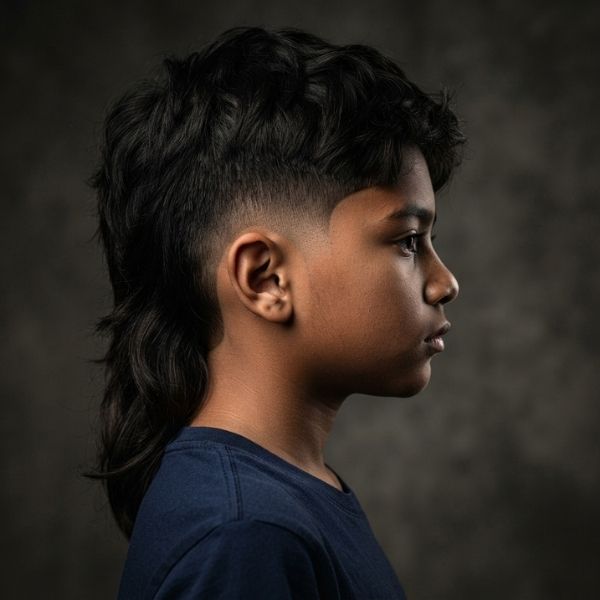
A burst fade curves around the ear rather than running in a straight line, which pairs nicely with the flowing back section of a mullet. This style tends to suit boys who already have some length on top to work with.
8) Sporty Medium Mullet

Built for kids who live in cleats or swim goggles, this version keeps the back at a medium length and pairs it with a low fade that stays neat under a helmet or cap. It needs almost no daily styling.
9) Wavy Surfer Mullet for Boys
This relaxed take leans into natural wave patterns, often left slightly longer on top with a soft, undone finish. Sea salt spray works well here to enhance texture without making the hair stiff.
10) Fringe Mullet
Adding a fringe at the front balances the length at the back, creating a framed look around the face. It works particularly well for boys who want to sweep their hair to one side for school.
11) Low Fade Modern Mullet

A low fade keeps the shortest hair close to the neckline and ears while leaving more length through the middle of the sides. It is a subtler option that still reads clearly as a mullet without being too bold for conservative dress codes.
12) Longer Back, School Safe
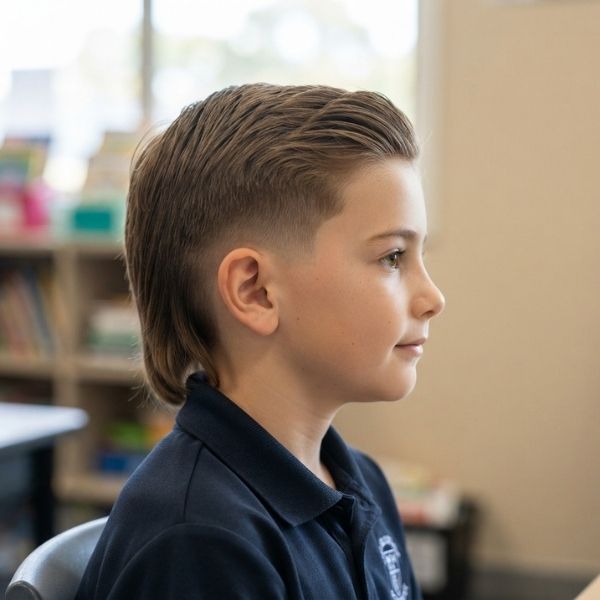
For schools with stricter grooming policies, this version keeps the back length modest, just past the collar, while still using a fade or taper on the sides. It gives the mullet look without pushing any dress code limits.
Quick Age and Care Guide
Age changes how much length and maintenance actually makes sense.
| Age Group | Recommended Style | Maintenance Level |
|---|---|---|
| Toddlers (2 to 5) | Short mullet or low fade, minimal back length | Very low, trim every 4 to 6 weeks |
| Kids (6 to 10) | Classic mullet or tapered mullet | Low, occasional product |
| Tweens (11 to 13) | Mullet fade or burst fade | Moderate, some daily styling |
| Teens (14+) | Longer back, fringe mullet, or bold fade | Higher, regular product use |
As a general rule, the younger the child, the shorter and simpler the back section should be. It is far easier to grow a shorter mullet into a longer one than to fix an overly long back that a five year old refuses to have brushed.
Daily Styling That Kids Can Do

One reason this haircut has stuck around is that most versions do not require complicated styling. A few basics cover almost every variation.
- Towel dry the hair until it is damp, not soaking wet.
- Apply a small amount of texture cream or light gel, about the size of a pea, evenly through the top and back.
- Use fingers rather than a comb to scrunch or push hair into place, which keeps the texture natural.
- For straight hair, a quick blow dry with a round brush adds volume; for curly or wavy hair, air drying usually looks better.
- Finish with a light hold spray only if the hair needs to survive a full school day.
For younger boys, skip styling altogether on most days. A mullet with a good haircut underneath still looks intentional even without product.
Care and Upkeep
Keeping a mullet looking sharp comes down to consistency rather than effort.
- Book a trim every 4 to 6 weeks to maintain the fade or taper, even though the back is meant to grow out.
- Wash hair 2 to 3 times a week with a gentle kids’ shampoo; washing daily can dry out the scalp and make styling harder.
- Brush or comb the back section regularly to prevent tangles, especially with longer or curlier styles.
- Trim split ends on the longer back every couple of months to keep it looking healthy rather than straggly.
- For active kids, a light leave in conditioner helps manage tangling after swimming or sports.
Regular trims are the single biggest factor in whether a mullet looks deliberate or messy. Skipping appointments is the most common reason the style grows out looking unkempt rather than stylish.
Barber Talk That Works
Walking in with the right words saves time and avoids a haircut that misses the mark. Try phrases like these:
- “A boys mullet with a low fade on the sides, keep the back at collar length.”
- “Textured top, tapered sides, don’t cut too much off the back.”
- “Short mullet, more of a flick at the back, not a full tail.”
- “Burst fade around the ears with a mullet shape at the back.”
Always bring a reference photo if possible. Barbers see dozens of clients a day, and a clear picture removes any guesswork about fade height or exact back length. It also helps to mention your son’s activity level and how much styling he will realistically do at home, since a good barber will adjust the cut to fit real life, not just the photo.
Conclusion
The boys mullet haircut earns its popularity in 2026 because it actually works for real life. It stays neat enough for school, has enough personality for the weekend, and adapts to straight, wavy, or curly hair without much extra effort.
Start by matching the style to your son’s age, hair type, and how much styling he will actually keep up with. From there, pick one of the twelve variations above, bring a reference photo, and use the barber phrases to get specific about fade height and back length. Keep up with trims every few weeks and the cut will hold its shape from one appointment to the next.
Frequently Asked Questions
At what age can a boy get a mullet haircut?
Most barbers can cut a mullet style on toddlers as young as two, though shorter, low maintenance versions work best for very young kids.
Does a mullet suit curly hair?
Yes, curly hair actually adds natural volume and texture on top, making the curly boys modern mullet one of the easiest versions to style.
How often does a boys mullet need a trim?
Plan on a trim every 4 to 6 weeks to keep the sides and fade neat while letting the back continue to grow.
Is a mullet haircut appropriate for school?
Most school safe versions keep the sides short and the back length modest, staying within typical dress code rules; check your school’s specific policy if unsure.
What products work best for a boys mullet?
A light texture cream or gel for styling, plus sea salt spray for wavy or curly hair looking for extra texture.
Can a mullet be grown out easily if my son changes his mind?
Yes, since the shape already has length at the back, growing it out into a longer style or trimming it into a shorter cut is a simple next step.

Zaria Rhodes is the lead editor and content curator at Lyrinexa, passionate about music, storytelling, and lyrical expression. With a deep love for discovering the meaning behind songs, she brings clarity, creativity, and accuracy to every post. Zaria is dedicated to providing readers with authentic lyrics, thoughtful interpretations, and a seamless music-exploration experience.

1 thought on “Boys Mullet Haircut Guide 2026: Styles, Fades, and Care”