


If your curls have ever looked flat on the sides and puffy on top, a blowout low taper fade fixes that in one visit. It is one of the most requested cuts in barbershops right now because it works with curl shrinkage instead of fighting it, and it keeps its shape for weeks without daily styling effort.
This guide breaks down what the cut actually is, how it differs from a regular low taper, the best variations for different hair types and ages, a real barber tutorial you can bring to your next appointment, and how to keep it looking sharp between visits. Everything here comes from real barbering practice, not guesswork, so you can walk into your next appointment and describe exactly what you want.
What Is A Blowout Low Taper Fade Curly Hair
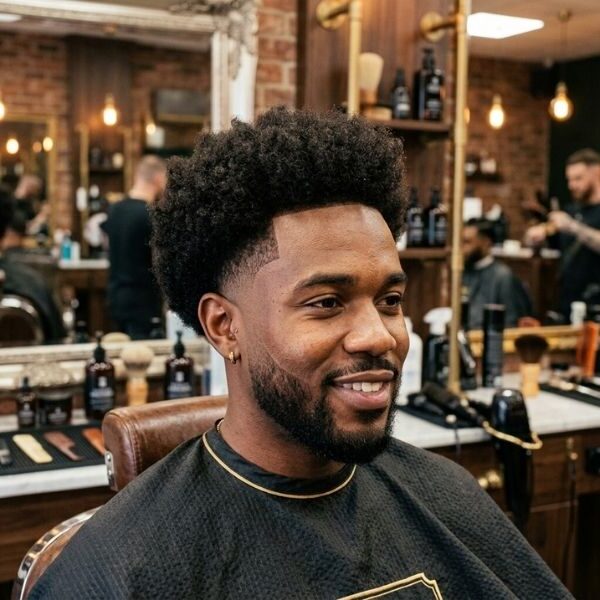
A blowout low taper fade curly hair cut combines two separate techniques into one hairstyle.
The “low taper fade” part refers to where the fade starts. Unlike a mid or high fade, a low taper keeps the fading close to the hairline, ears, and neckline, leaving more length above it. This makes the transition subtle rather than dramatic, which suits curly hair because it avoids the harsh contrast that can make curls look disconnected from the sides.
The “blowout” part refers to how the top is dried and finished. Instead of letting curls air-dry and shrink close to the scalp, a barber (or the client at home) uses a round brush and a blow dryer, sometimes with a diffuser attachment, to stretch the curls upward and outward while they dry. This creates volume, definition, and a rounded silhouette on top instead of a flat or shrunken look.
Put together, you get:
- Short, clean, barely-there fading around the ears and nape
- Full, voluminous, defined curls sitting on top
- A shape that looks intentional and structured, not overgrown
This cut works on nearly every curl pattern, from loose waves to tight coils, which is a big reason it has become a go-to request across different hair types and ethnicities in 2026.
Read more: Low Taper Fade Black Male: 2026 Barber Guide for Waves, Curls, Afros & Locs
Blowout Low Taper Fade Curly Hair vs Regular Low Taper
People often confuse these two, but the difference comes down to technique on top, not just the fade itself.
| Feature | Blowout Low Taper Fade Curly Hair | Regular Low Taper Fade |
|---|---|---|
| Top styling | Blow-dried with a round brush for volume and lift | Left natural, air-dried, or lightly styled |
| Best hair type | Curly, coily, or wavy hair | Works on straight, wavy, or curly hair equally |
| Shape on top | Rounded, full, voluminous | Flatter, closer to natural curl shrinkage |
| Maintenance effort | Requires a dryer and brush for full effect | Lower daily effort, wash and go |
| Look and feel | Polished, textured, statement style | Clean and understated |
A regular low taper fade is really just about where the sides fade to skin or near-skin. It does not specify anything about how the top is treated. A blowout low taper fade curly hair cut adds a specific styling method on top that is built around curl behavior.
The practical difference you will notice: with a regular low taper, curly hair often shrinks up after washing and looks shorter and denser than it actually is. With the blowout version, the curls are trained and dried in a stretched position, so the same length looks bigger, more defined, and more shaped.
If you want low maintenance and do not own a blow dryer, a regular low taper with a curl cream is simpler. If you want a fuller, more sculpted look and do not mind five extra minutes of drying, the blowout version is worth the effort.
Best Blowout Low Taper Fade Curly Hair Styles In 2026
Not every blowout low taper fade curly hair cut looks the same. The curl pattern, hair density, age, and personal style all change how the finished look reads. Here are the variations barbers are cutting most this year.
Short Curly Blowout Low Taper Fade Curly Hair
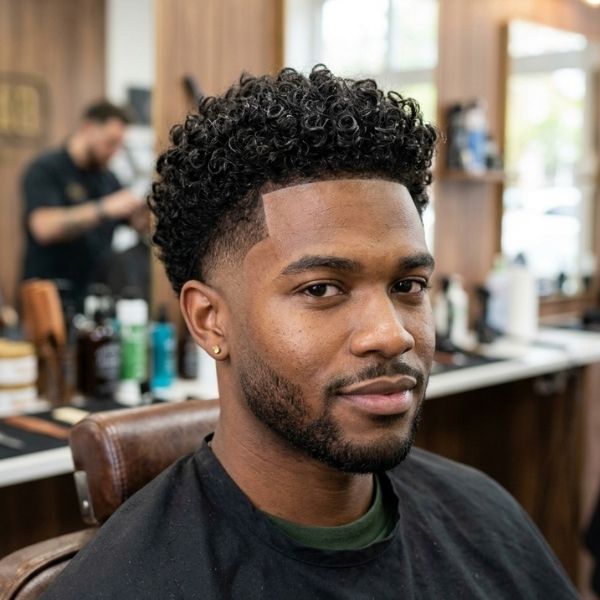
This version keeps the top shorter, usually between one and two inches, so the curls hold a rounded shape without becoming heavy or hard to manage. It is the easiest variation to maintain because shorter curls dry faster and need less product.
It suits people who want a clean, professional look for work or school while still keeping visible texture on top. Barbers usually pair this with a very tight, close taper at the sides to keep the whole cut looking sharp.
Hispanic Blowout Low Taper Fade Curly Hair

This variation is popular for thicker, wavy-to-curly hair textures common in Latino communities. The top is often left slightly longer on the front to create a soft fringe or side sweep, while the blowout technique adds lift through the crown.
Many clients ask for a slightly textured finish rather than a fully smoothed blowout, using a matte paste to keep separation between curls instead of a glossy, uniform look.
Black Male And Afro Blowout Low Taper Fade Curly Hair
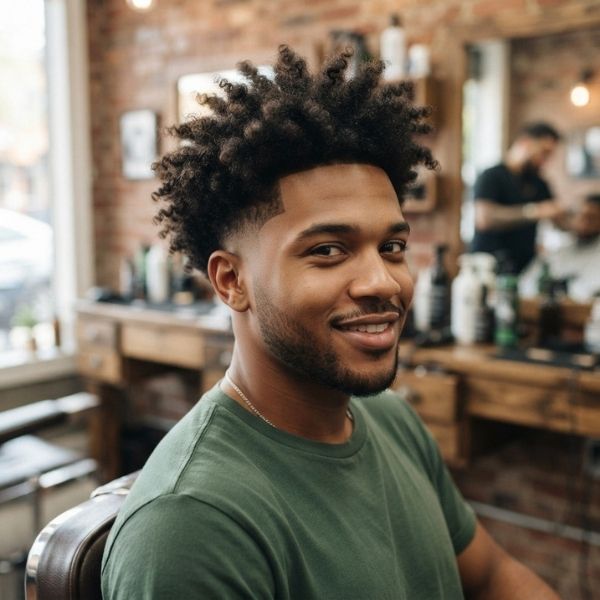
For coily and afro-textured hair, the blowout technique is especially valuable because it counters shrinkage more dramatically than with looser curl types. A round brush stretches tight coils so the top reads as a full, shaped afro-fade rather than a compact puff.
Barbers typically use a hooded dryer or handheld diffuser at a lower heat setting to protect the coil pattern, then finish with a curl-defining cream or twist-out product depending on how much definition the client wants.
For younger clients, barbers usually scale everything down. The taper stays very close to the head, the top is kept shorter, and the blowout is lighter, just enough to lift the roots and add shape without needing daily styling from a parent or the teen themselves.
Read more: Military High Fade Haircut for Men: Complete Barber Guide
Blowout Low Taper Fade Curly Hair Kids And Teens
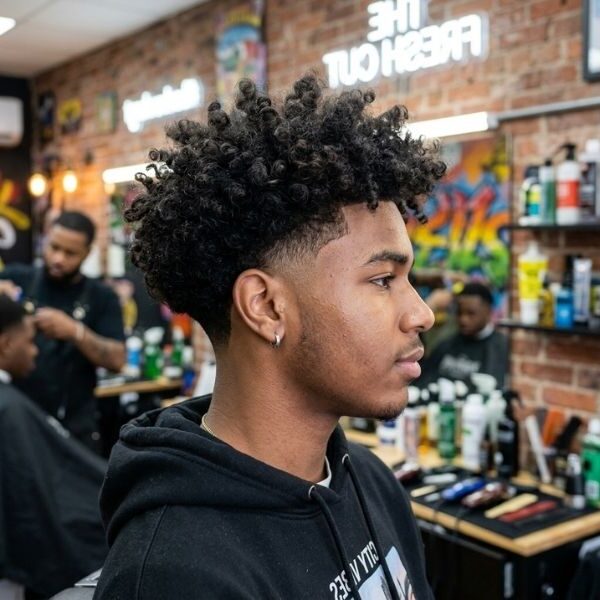
This version is popular for school-age kids because it looks neat for photos and events but does not require product application every morning. A quick finger comb-through after a shower is often enough to keep it looking intentional.
Textured Fringe Blowout Low Taper Fade Curly Hair

This style leaves extra length at the front to create a curly fringe that falls or sweeps across the forehead. The blowout lifts the roots at the crown while the fringe itself is often scrunched with a curl cream rather than fully blown out, to preserve natural texture at the front.
It works well for people who want a more fashion-forward, editorial look rather than a classic barbershop cut.
Drop Fade And Low Fade Blowout Low Taper Fade Curly Hair
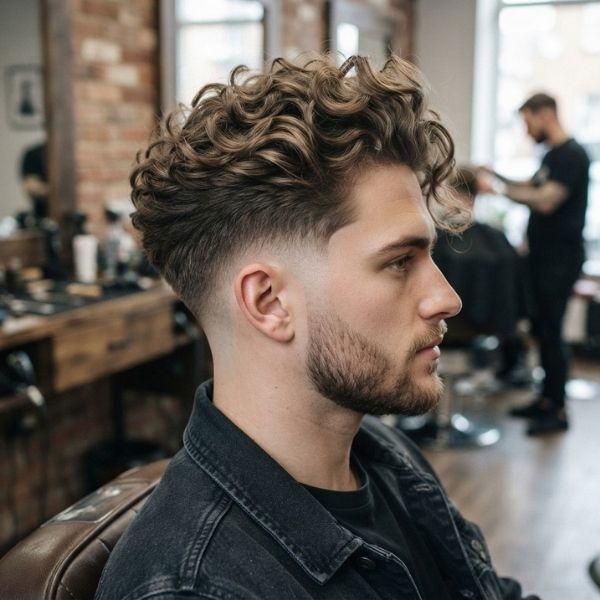
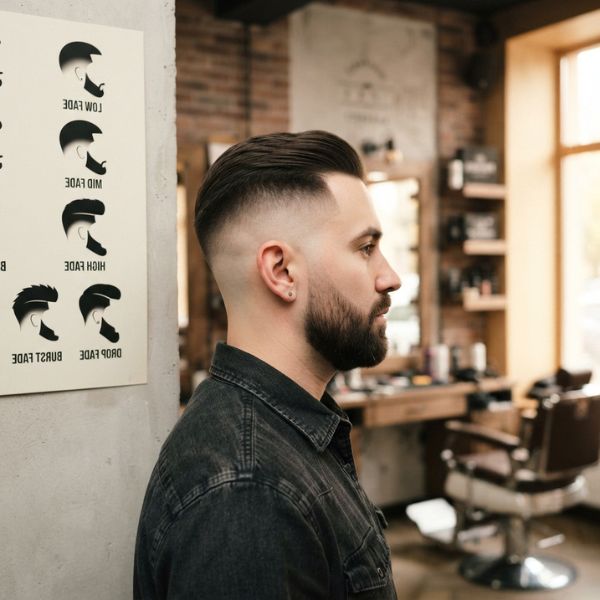
A drop fade lowers the fade line behind the ear, curving it down toward the nape instead of keeping it level. Combined with a low taper, this creates a rounder, softer shape around the back of the head, which pairs well with a fuller blowout on top because it avoids a boxy silhouette.
This combination is popular with clients who have round or oval face shapes and want the cut to follow the natural curve of the head.
Perm Blowout Low Taper Fade Curly Hair vs Natural Curls

Some clients with straight or slightly wavy hair get a texturizing perm first to create curl where there naturally is none, then pair it with a low taper and blowout styling. Permed curls tend to be more uniform in size and pattern, which can make the blowout look more symmetrical.
Natural curls vary more in size and density across the head, which some clients prefer because it looks less “done” and more organic. The trade-off is that natural curls usually need more skill from the barber to blend evenly during the fade, since curl density can hide unevenness in the cut.
Read more: Best Low Taper Fade Styles for White Guys With Photos
Funny Search Terms People Use
People searching for this cut do not always know the correct barbering terms, and some of the phrases that actually bring people to this style are worth knowing so you can describe it clearly to your barber. Common ones include:
- “Curly hair but the sides disappear”
- “Poofy top skinny sides haircut”
- “Curly mushroom fade” (usually meant for shorter, rounder top shapes)
- “Big hair don’t care fade”
- “Cloud hair haircut” for very voluminous blowouts
- “Curly hair pop haircut”
If any of these sound like what you are picturing, the technical name to say out loud in the chair is still “blowout low taper fade,” since that is what barbers are trained on.
Barber Tutorial Blowout Low Taper Fade Curly Hair
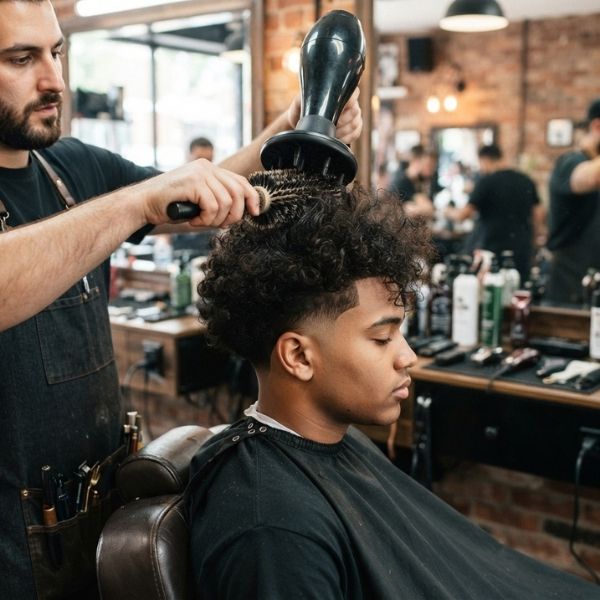
Whether you are a barber refining technique or a client who wants to understand what should happen in the chair, here is the process broken down clearly.
Tools You Need
- Clippers with multiple guard sizes for blending the taper
- A trimmer for clean edges around the ears and neckline
- Shears for texturizing and cutting curls on top
- A blow dryer, ideally with a diffuser or concentrator nozzle
- A round brush, sized based on desired curl volume
- A wide-tooth comb for detangling curls before cutting
- Curl cream, mousse, or a lightweight gel for definition
- A cape and neck strip, standard barbershop setup
Step By Step
- Consult and section the hair. The barber checks curl pattern, density, and growth direction before cutting anything, since curly hair behaves differently wet versus dry.
- Cut the top first, dry if possible. Curly hair shrinks when it dries, so many barbers cut curls dry or use the “curl by curl” method to avoid taking off too much length.
- Establish the taper guideline. Using clippers with a guard, the barber creates a guide low on the sides and back, usually starting just above the ear.
- Blend the fade upward. Switching to shorter guards or clipper-over-comb technique, the barber blends the taper smoothly into the length on top, avoiding harsh lines.
- Detail the edges. A trimmer cleans up the hairline, sideburns, and neckline for a crisp finish.
- Wash and apply product. A curl cream or mousse is worked through damp hair to prepare it for the blowout.
- Blow dry with a round brush. Starting at the roots, the barber lifts sections with the round brush while directing airflow from the dryer, working section by section to build volume and shape without pulling curls straight.
- Final shape and check. Once dry, the barber checks the silhouette from all angles and trims any flyaway pieces or uneven spots.
Styling And Caring For Blowout Low Taper Fade Curly Hair
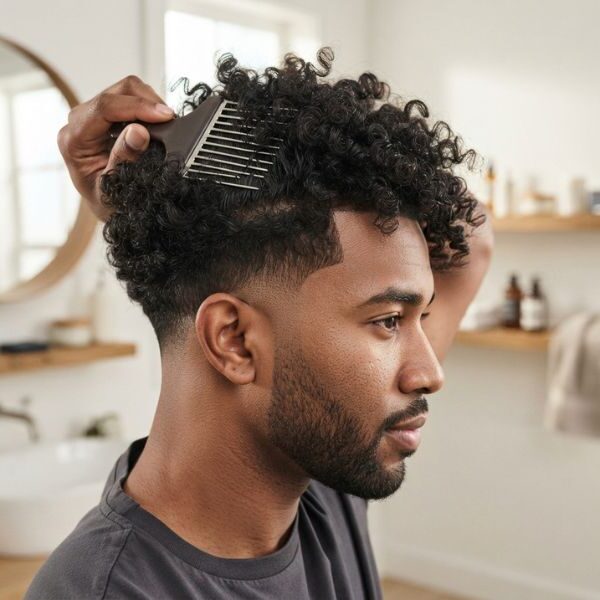
Keeping this cut looking fresh between barber visits comes down to a short, consistent routine.
- Wash with a sulfate-free or curl-specific shampoo, since regular shampoo can strip curls of moisture and cause frizz.
- Apply a leave-in conditioner or curl cream to damp hair before drying, which helps define the curl pattern and reduce frizz.
- Use a diffuser attachment on low or medium heat to dry curls without disturbing their shape, or repeat the round-brush method for the full blowout effect.
- Refresh the sides between full cuts using a trimmer if you notice fuzz or unevenness starting to show near the ears.
- Sleep on a silk or satin pillowcase, or wear a satin bonnet, to reduce frizz and preserve curl definition overnight.
- Avoid touching or running fingers through the curls too often during the day, since this can break up the shape the blowout created.
Face Shape And Beard Match For This Style
This cut is genuinely flexible across face shapes, but small adjustments make a real difference.
- Round faces usually look best with more height on top and a slightly lower, curved fade line, which elongates the face visually.
- Square faces can handle a fuller, wider blowout since strong jawlines balance well with more volume.
- Oval faces work with almost any version of this cut, including textured fringes and drop fades.
- Long faces benefit from keeping the top slightly shorter and fuller on the sides rather than stacking height, to avoid making the face look longer.
For beards, a low fade that connects into a well-lined beard creates a cleaner overall look, especially with short to medium beard lengths. Fuller beards pair well with fuller blowouts on top since the two balance each other in volume, while very short stubble usually pairs better with tighter, shorter curl styles on top so the head does not look imbalanced.
How Long This Cut Lasts And When To Refresh
A blowout low taper fade curly hair cut typically holds its shape for three to five weeks before it needs a full refresh, though this depends on how fast your hair grows and how tight the original fade was.
Signs it is time to go back to the barber:
- The faded sides start growing out and losing their clean line, usually around the two to three week mark
- Curls on top start looking uneven or losing their defined shape
- The contrast between the fade and the top begins to blur
Some clients book a quick line-up or fade touch-up every two weeks to keep the sides sharp, then get a full cut with a fresh blowout every four to six weeks. This staggered approach keeps the style looking fresh without needing a full haircut too often.
About The Barber
This guide was put together with input from licensed barbers who specialize in curly and textured hair cutting, a skill set that requires additional training beyond standard barber school since curly hair behaves differently at every stage of the cut. Barbers who focus on curl work are trained to cut hair in its natural state, understand shrinkage patterns across different curl types, and use blow-drying techniques that shape rather than damage the curl pattern. This experience is why the steps and product recommendations in this guide reflect real in-chair practice rather than generic haircare advice.
Why You Can Trust This Guide
This article was researched and written specifically for curly-haired clients and the barbers who cut for them, drawing on established barbering technique rather than recycled hairstyle roundups. Every section reflects real methods used in barbershops today, including tool lists, cutting order, and aftercare that licensed barbers actually recommend.
We do not promote a single product brand or push unnecessary purchases. The goal is to give you accurate, usable information so you can either perform the cut correctly as a barber or communicate clearly with your barber as a client, and get a result that actually works with your curl pattern.
More Fade Guides From Crew Cut Hair
- Mid Taper Fade For Curly Hair: Full Style Guide
- High Top Fade Styles For Coily And Afro Hair
- Drop Fade Haircuts: Every Variation Explained
- Curly Hair Product Guide For Fades And Blowouts
- Kids Fade Haircuts: Ages, Styles, And Barber Tips
Conclusion
A blowout low taper fade curly hair cut gives you the best of both worlds: sharp, low-maintenance sides and full, defined curls on top that actually work with your hair’s natural pattern instead of against it. Whether you have loose waves, tight coils, or permed curls, this cut can be adjusted to fit your texture, age, and face shape.
The key to getting it right is clear communication with your barber about how low you want the fade, how much volume you want on top, and how much daily styling effort you are willing to put in. Bring this guide with you, point to the variation that matches what you want, and you should walk out with a cut that holds its shape for weeks and looks intentional every day in between.
FAQs
How often should I get a blowout low taper fade curly hair cut? Most people need a refresh every three to five weeks, with an optional quick fade touch-up around the two-week mark.
Can I do the blowout part myself at home? Yes, with a round brush, diffuser or dryer nozzle, and a curl cream, though it takes practice to match a barber’s precision.
Does this cut damage curly hair over time? No, as long as heat is kept moderate and hair is properly moisturized before and after drying.
Is this style suitable for very tight coils or afro-textured hair? Yes, it works well and often creates more dramatic volume since coily hair shrinks the most when air-dried.
What is the difference between a taper and a fade on the sides? A taper gradually shortens hair without going down to skin, while a fade blends hair all the way to bare skin at some point on the sides.
Do I need a special dryer for this style? A standard blow dryer works fine, though a diffuser attachment gives more even, gentle heat distribution across curls.

Zaria Rhodes is the lead editor and content curator at Lyrinexa, passionate about music, storytelling, and lyrical expression. With a deep love for discovering the meaning behind songs, she brings clarity, creativity, and accuracy to every post. Zaria is dedicated to providing readers with authentic lyrics, thoughtful interpretations, and a seamless music-exploration experience.

3 thoughts on “Blowout Low Taper Fade Curly Hair: 2026 Barber Guide For Curls”