


A rounded fade around the ear paired with length left alone at the back sums up why this cut keeps trending. The burst fade mullet takes the sharp, curved taper barbers use on skin fades and pairs it with a mullet’s signature length at the nape, giving you a look that reads clean at the front and bold from behind.
It works on straight, wavy, and curly hair, and it scales from a subtle low fade to a shaved-tight high fade depending on how much attention you want. Below you will find what the cut actually is, how it compares to a drop fade and a taper, 25 variations to bring to your barber, and a simple routine to keep it looking sharp between visits.
What Is a Burst Fade Mullet
A burst fade mullet is a haircut where the fade curves around the ear in a semicircle instead of running in a straight horizontal line down the side of the head. The name comes from that shape, since the fade “bursts” outward from a point near the ear rather than blending evenly across the whole side. Everything above the fade line, along with the hair at the back of the neck, is left longer to create the mullet effect.
The result is a haircut with two distinct zones. The sides stay short and controlled, while the top and back carry the length, texture, and personality. This split is what makes the cut easy to dress up or down depending on the day.
Read More: Hermine Poitou: The Mystery Behind Minimalism
Why Choose a Mullet Fade
A mullet fade cuts down the bulk on the sides while keeping length at the back, so you get a haircut that looks tidy without losing character. That balance is the main reason it has become one of the most requested cuts of the past few seasons.
A few practical reasons guys pick this style:
- It looks professional from the front and side, which matters for work or school.
- The back length gives you room to experiment with texture, curls, or a mohawk shape.
- It adapts to straight, wavy, and curly hair without losing its structure.
- You can dial the fade height up or down without changing the overall cut.
- It grows out more gracefully than a straight-line fade, since the curve softens as hair fills in.
Burst Fade Mullet vs Drop Fade Mullet
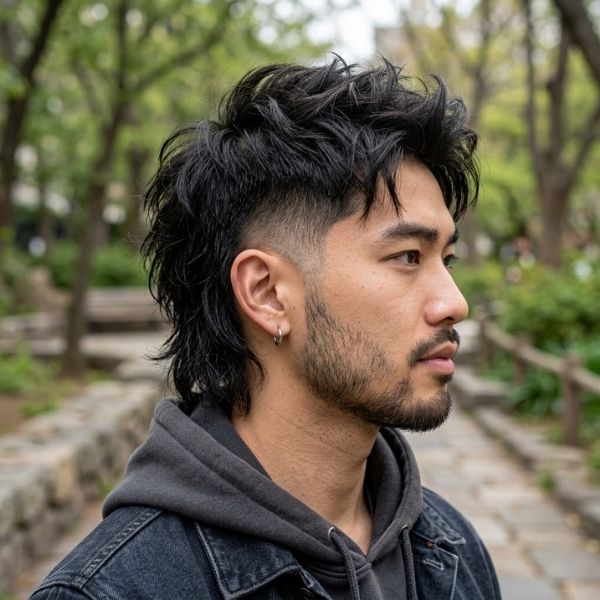
| Feature | Burst Fade Mullet | Drop Fade Mullet |
| Fade shape | Curves around the ear in a rounded arc | Drops lower behind the ear, following the skull’s curve |
| Visual effect | Sharp, sculpted side profile | Softer, more natural transition |
| Best for | Guys who want a defined, “designed” look | Guys who want a subtler blend |
| Maintenance | Needs regular touch-ups to keep the arc crisp | Slightly more forgiving as it grows out |
Burst Fade Mullet vs Taper Mullet Fade
A taper mullet fade skips the dramatic ear curve and instead thins the hair gradually down to the skin or close to it, without the rounded burst shape. It is the more understated cousin of the burst fade.
- A burst fade is sharper, more noticeable, and holds a defined line even a few weeks after a cut.
- A taper mullet fade is softer, blends more naturally into the skin, and suits workplaces with conservative grooming rules.
- Burst fades usually need a barber comfortable with precise fade work, since the curve has to sit in exactly the right spot.
- Taper fades are more forgiving for barbers still building fade experience and grow out with less visible demarcation.
If you’re deciding between the two, think about how often you can get back in the chair. A burst fade looks best with a touch-up every three to four weeks, while a taper mullet fade can stretch a little longer between visits.
Face Shape Tips
Getting the shape right matters as much as picking a style you like in a photo. Here is how the burst fade mullet tends to work across common face shapes.
- Oval faces: Handle almost any variation well, since the proportions are already balanced. Low, mid, or high fades all work here.
- Round faces: Benefit from slimmer sides and extra height on top, so a taper or a higher fade with volume at the crown helps elongate the face.
- Square faces: Can carry bold contrast, so a high or drop-style burst fade paired with strong jaw features looks intentional rather than heavy.
- Long faces: Should avoid extra height on top, since more volume up top stretches the face further. A lower fade with a fringe keeps proportions balanced.
- Diamond faces: Suit a bit more fullness at the sides and temples, so a mid fade with textured length fills in narrower temple areas nicely.
- Heart-shaped faces: Look best with some volume near the temples to balance a narrower chin, so a fringe or curtain-style top works well.
Bangs, Hairline, and Sideburns
The small details around the edges are what separate a sharp burst fade mullet from one that just looks grown out.
A light fringe softens the forehead and gives the whole cut a more relaxed feel, especially on square or angular face shapes. A small quiff at the front adds lift without pushing the style into “too much” territory, which works well if you want height but not drama.
Sideburns need to stay trimmed and connected to the fade arc, since uneven sideburns throw off the rounded shape that makes a burst fade recognizable. The nape deserves the same attention. A crisp, clean neckline is often the difference between a haircut that looks sharp and one that looks like it just needs a trim.
25 Burst Fade Mullet Variations
1. Classic Burst Mullet
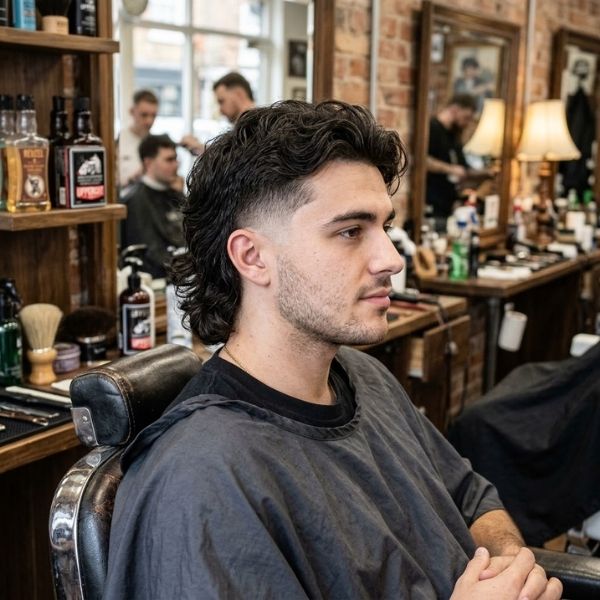
The foundation style. A rounded fade around the ear, medium length on top, and a collar-length back. This is the version most barbers use as a reference point before customizing.
2. Burst Fade Mullet Haircut
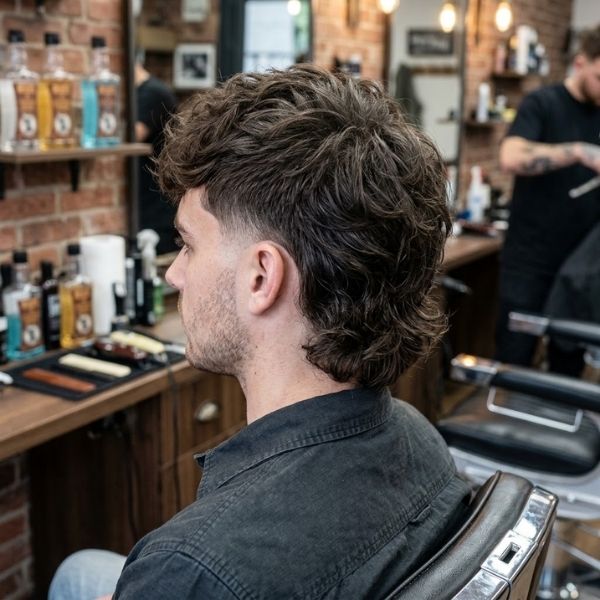
A slightly more polished take on the classic, with clean lines around the ear and a defined part on top for a more put-together finish.
3. Low Burst Fade Mullet
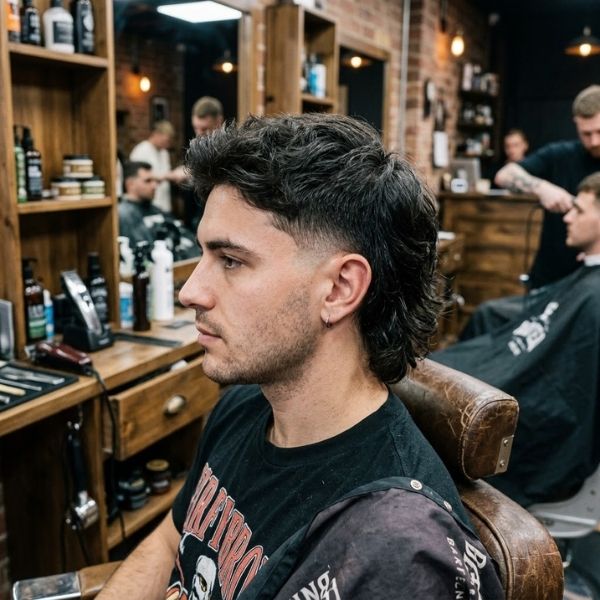
The fade sits close to the hairline, keeping contrast subtle. This is the most workplace-friendly version and the easiest one to grow out cleanly.
4. Straight Hair Burst Fade Mullet
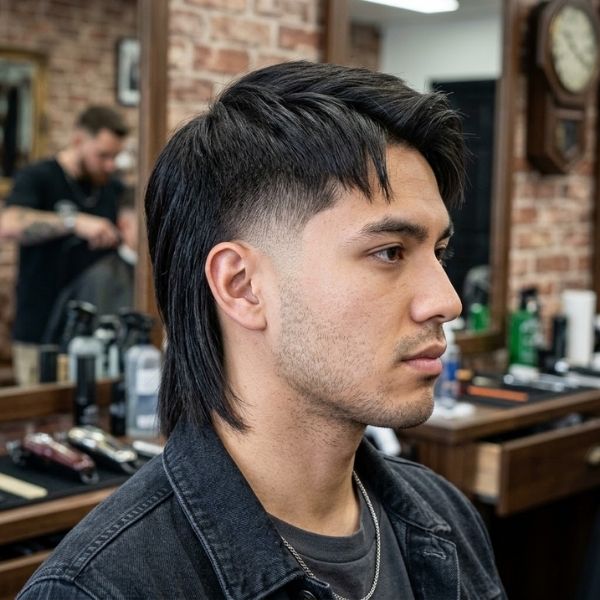
Straight strands make the fade lines look crisp and deliberate. The top lays flat with minimal effort, which suits guys who want low daily styling time.
5. Burst Fade Mullet Curly Hair
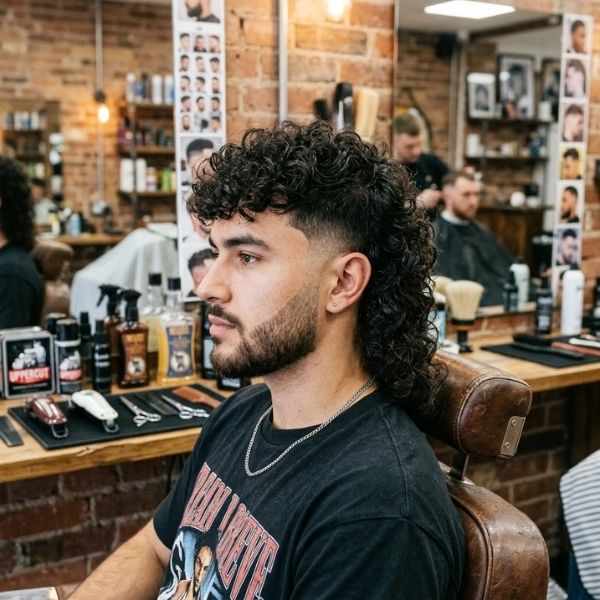
Curls add natural volume at the crown and back, so the fade does most of the shaping work. A curl-defining cream keeps the texture controlled instead of frizzy.
6. Mullet Skin Fade
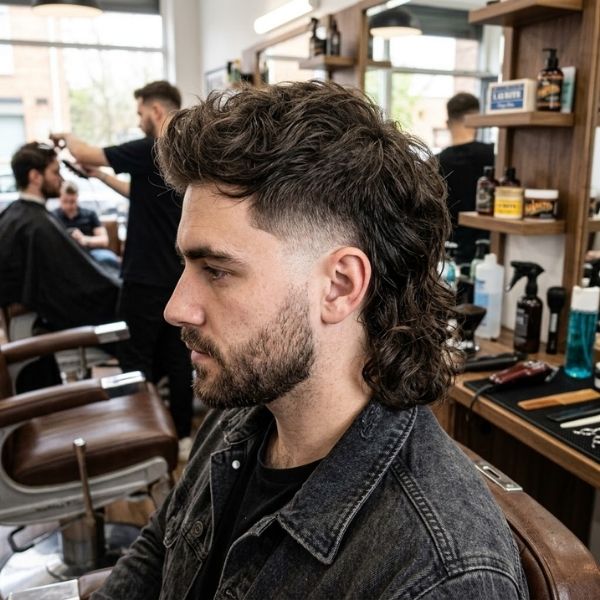
The sides go all the way down to bare skin for maximum contrast against the length on top. This is the boldest version on the list and needs the most frequent touch-ups.
Read More: 15 Best Wavy Mullet Haircuts That Are Trending in 2026
7. Mullet Side Fade
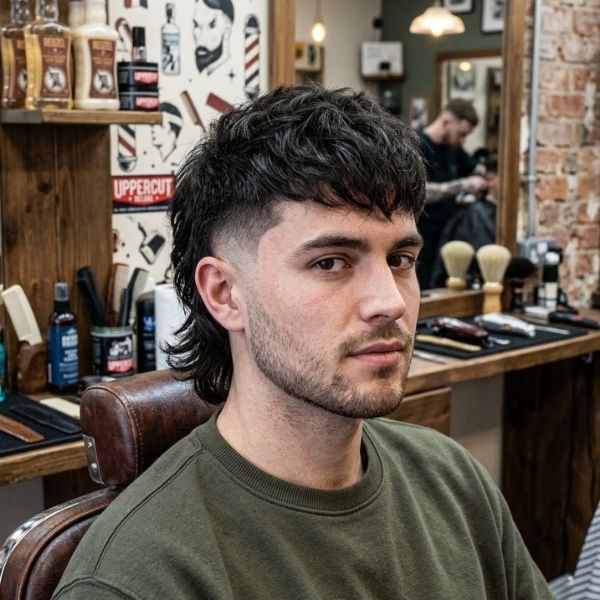
The fade is concentrated more on the sides than wrapping fully around the ear, giving a slightly less dramatic curve while still keeping things sharp.
8. Modern Mullet Fade
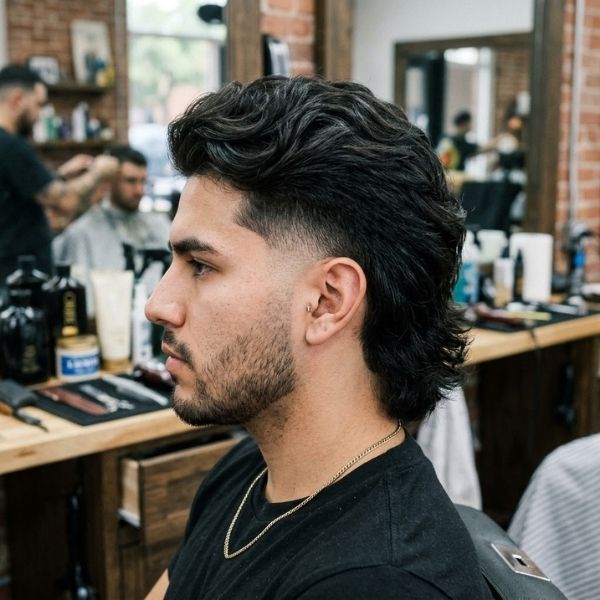
Blends clean fade lines with natural movement on top, avoiding the overly styled look of older mullet versions. It is the most balanced, everyday-wearable option.
9. Taper Mullet Fade
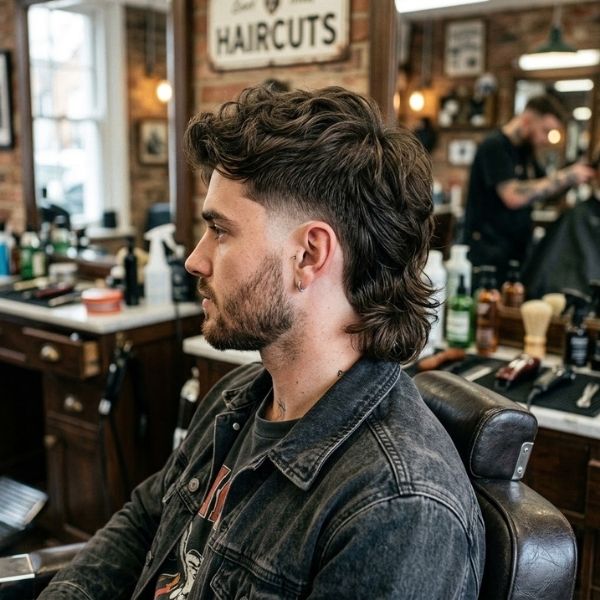
Swaps the rounded burst shape for a gradual taper down to the skin. Softer, more forgiving, and easier for a barber who is newer to fade work.
10. Curly Mullet Fade
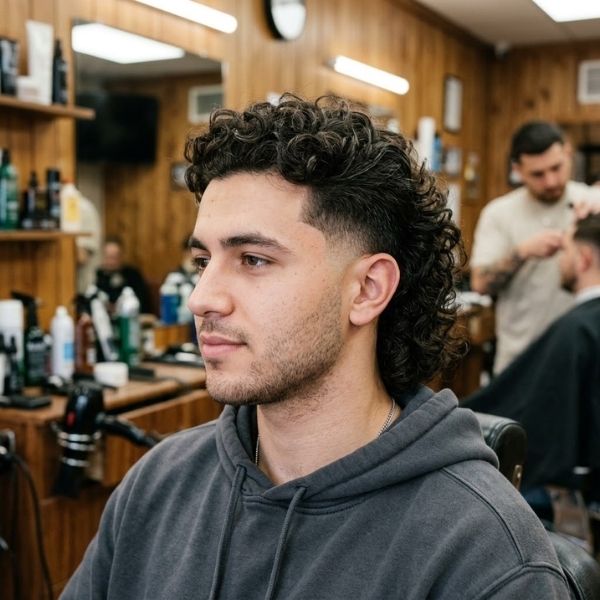
Similar to the curly burst version but paired with a longer taper instead of a sharp burst line, letting the curls at the back stay the visual focus.
11. Short Mullet Fade
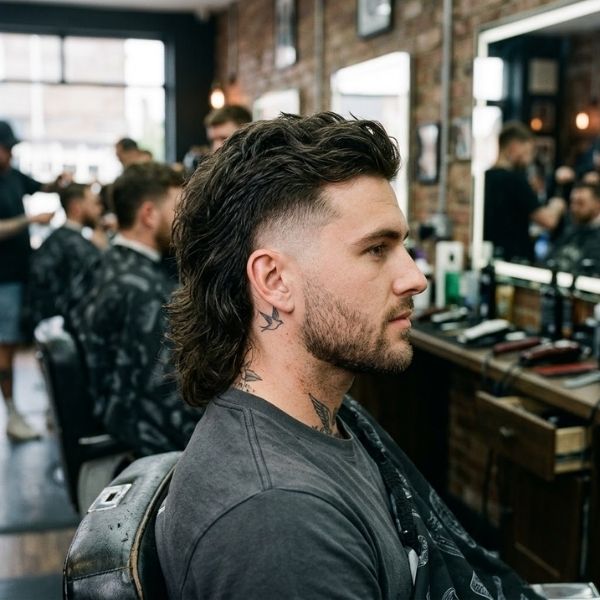
Trims the back down for a lower-maintenance mullet. It still reads as the style but without the full length, making it easier to manage day to day.
12. Kids Mullet Fade
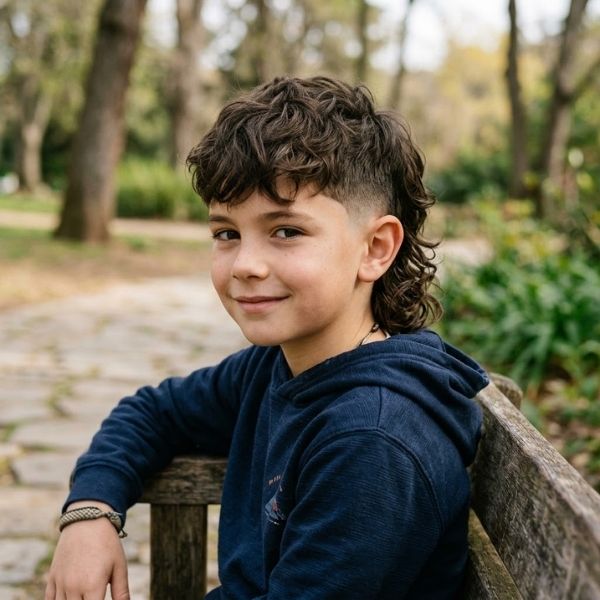
A scaled-down, lower-contrast version suited to younger hair. The fade stays gentler and the back length is kept short enough for easy care.
13. Taper Modern Mullet Fade
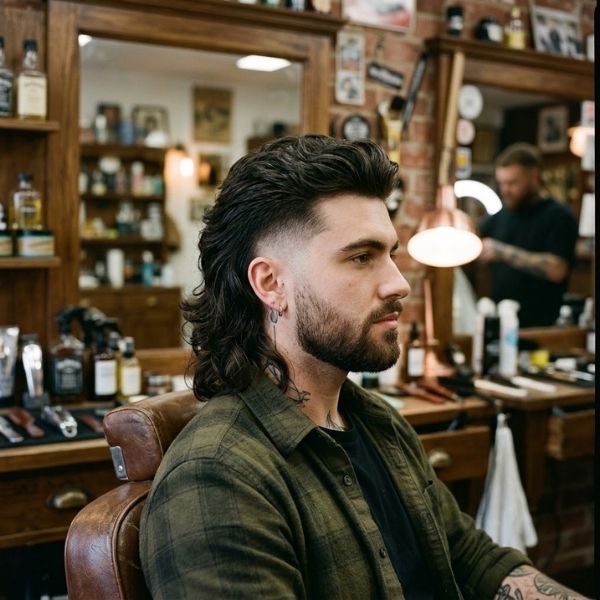
Combines the soft taper fade with a modern, textured top for a look that reads current without leaning into heavy retro styling.
14. Taper Short Mullet Fade
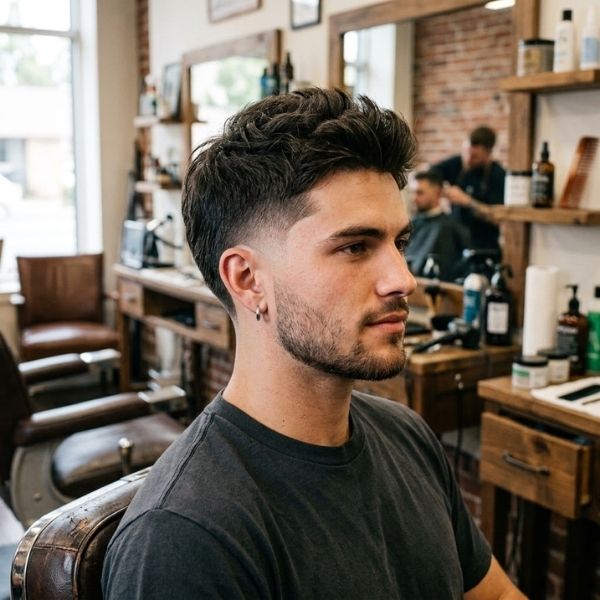
Pairs a gentle taper with a shorter back length, giving a mullet silhouette that is easy to maintain and simple to style in the morning.
15. Modern Mullet Fade Straight Hair
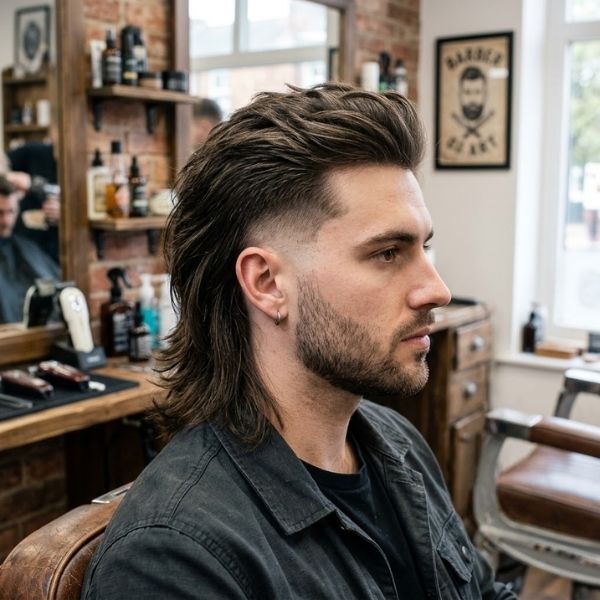
Straight hair keeps this style’s lines sharp and the top sleek, so the fade and the length both read as intentional rather than accidental.
16. Burst Fade Mullet V Cut
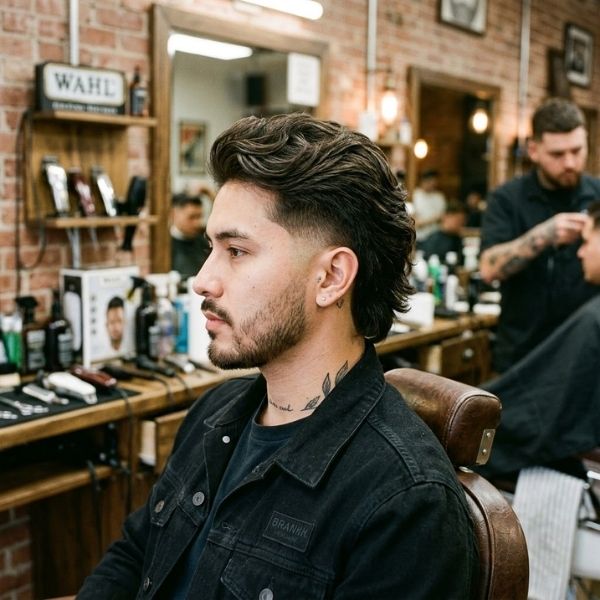
The back is cut into a defined V shape at the nape instead of a straight line, adding a distinctive detail that stands out from the standard mullet finish.
17. Mullet Burst Fade
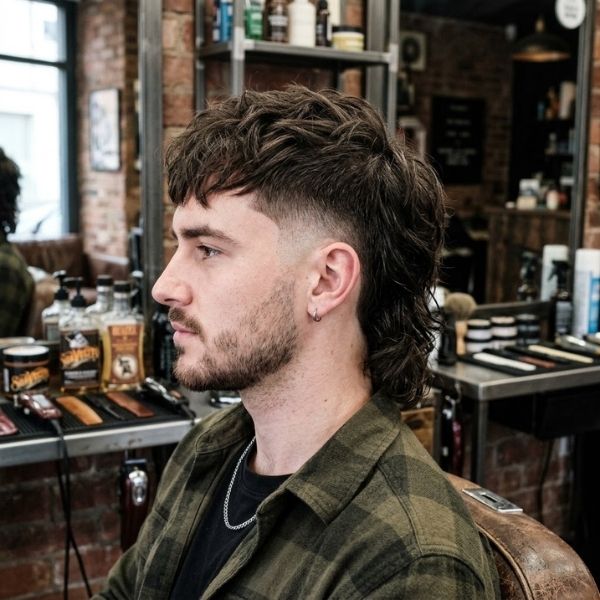
A slight reordering of the classic burst mullet that puts more emphasis on the fade’s curve, often cut a touch higher for extra contrast.
18. Temple Fade Mullet
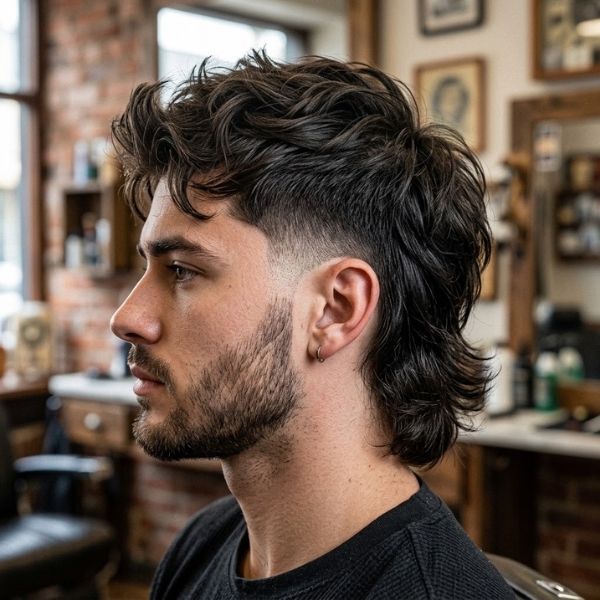
Focuses the fade on the temple and sideburn zone rather than wrapping fully around the ear, giving a slightly different silhouette from a full burst.
19. Burst Fade Mullet Straight Hair V Cut

Combines the crisp lines of straight hair with a V-shaped back for a style that looks tailored from every angle.
20. Mid Burst Fade Mullet
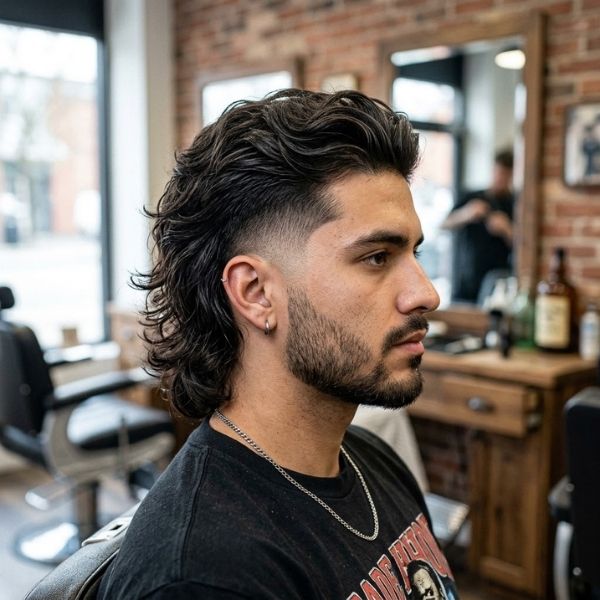
Sits between low and high fade contrast. It gives noticeable definition without going all the way to skin, making it the middle-ground pick for most guys.
21. High Burst Fade Mullet
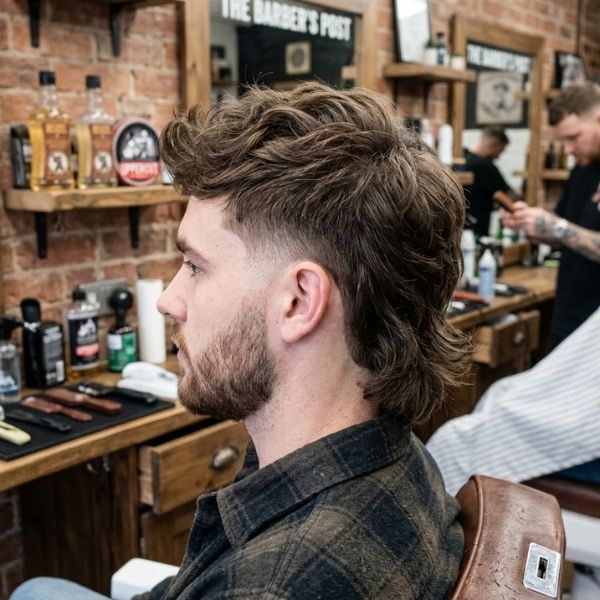
Pushes the fade well above the ear for maximum contrast. The sides disappear quickly, shifting all the visual focus to the top texture and back length.
22. Burst Fade Mullet with Design
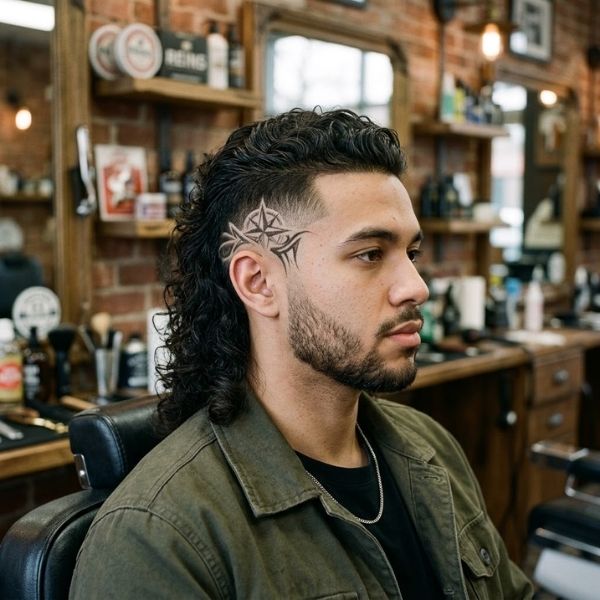
Adds a razor line or a simple shaved pattern near the ear arc. This turns the haircut into more of a statement piece for guys who want something one of a kind.
Read More: Low Fade Crew Cut Hairstyles: Clean, Modern, Easy
23. Taper Burst Fade Mullet
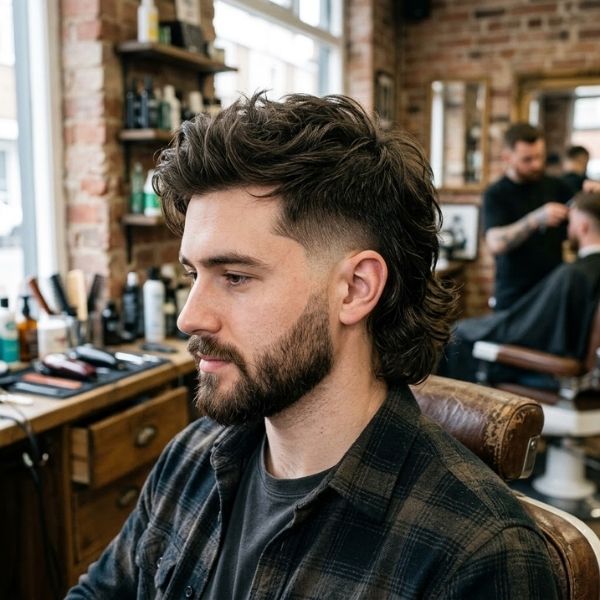
Blends the rounded burst curve with a softer taper finish at the very edge, giving a hybrid look that is sharp near the ear but gentle at the hairline.
24. Burst Fade Mullet with Beard Blend
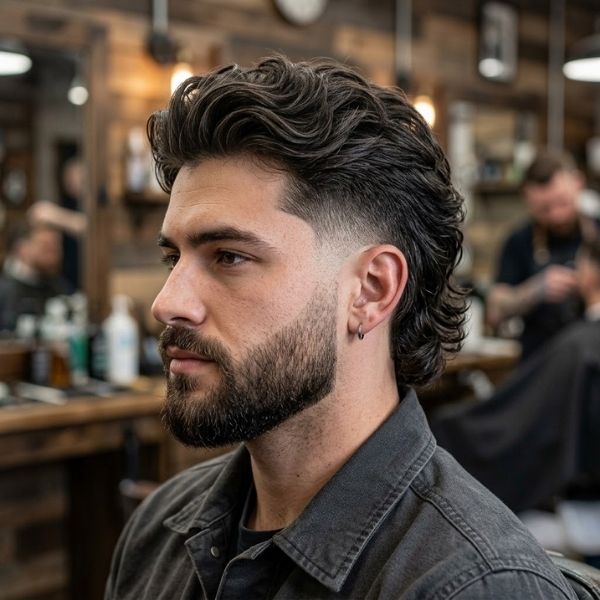
Connects the fade into a well-groomed beard for a look that balances the boldness on top with structure at the jawline.
25. Burst Fade Mohawk Mullet
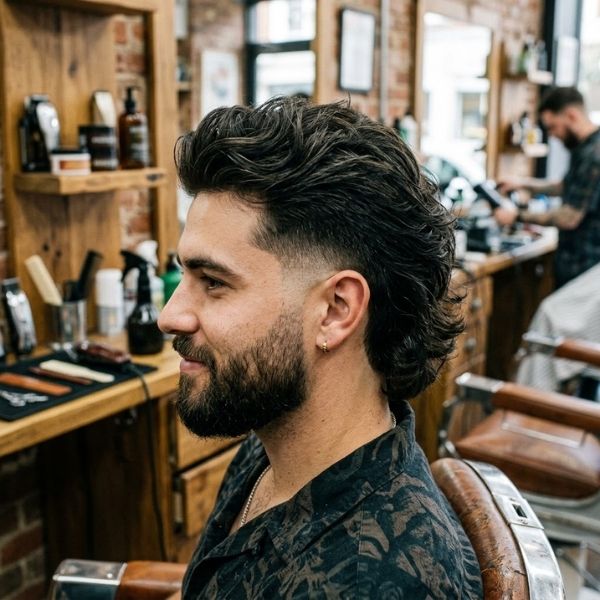
Takes the length at the crown and pushes it upward for a mohawk-inspired top, while keeping the mullet length at the back. The boldest, most attention-grabbing version on this list.
Quick Reference Table
| Style Type | Fade Height | Best Hair Type | Maintenance Level |
| Low Burst Fade Mullet | Low | Any | Low |
| Mid Burst Fade Mullet | Medium | Straight, wavy | Medium |
| High Burst Fade Mullet | High | Thick, straight | High |
| Mullet Skin Fade | High (to skin) | Any | High |
| Curly Burst Fade Mullet | Low to mid | Curly | Medium |
| Taper Mullet Fade | Low to mid | Any | Low |
| Mohawk Mullet | High | Thick | High |
Easy Styling Routine
Keeping a burst fade mullet looking intentional rather than messy comes down to a short, repeatable routine.
- Wash with a light shampoo two to three times a week, since over-washing strips natural oils and makes the top harder to style.
- Towel-dry, then rough-dry with a blow dryer on a medium setting, lifting the roots at the crown for volume.
- Apply a small amount of texture cream or clay through the top and back, working it in with your fingers rather than a comb for a more natural finish.
- Define the fade edges with a comb if you want a sharper line, or leave it soft for a more relaxed look.
- Finish with a light hold spray only if you need the style to hold through a long day, since heavy product weighs curls and waves down.
What to Tell Your Barber
Walking in with the right words saves time and avoids a cut that misses what you actually wanted. Tell your barber the fade height you want (low, mid, or high), confirm you want the curve to wrap around the ear rather than a straight taper, and specify how much length to leave at the back and crown. Bringing a reference photo helps, since “burst fade mullet” alone can mean different things to different barbers.
Care and Upkeep
Plan on a touch-up every three to four weeks for high and skin-level fades, since regrowth shows fastest there. Lower fades and taper versions can often stretch to five or six weeks. Between visits, keep the sideburns and neckline trimmed at home with clippers if you’re comfortable doing it, since a fuzzy edge is what makes a fade look unkempt fastest.
Where It Fits
This cut works in most casual and business-casual settings, since the front and sides read clean even when the back carries extra length. It is a strong pick for guys in creative fields, students, and anyone who wants a haircut with more personality than a standard fade without crossing into high-maintenance territory.
Conclusion
The burst fade mullet earns its place as one of the standout men’s cuts of 2026 because it does something most fades cannot: it lets you keep length and personality at the back while still looking sharp and current up front.
Whether you go subtle with a low taper or bold with a skin fade and mohawk top, there is a version on this list built for your hair type and face shape. Take a style, or a mix of a few, to your next barber appointment and start the conversation from there.
Quick FAQs
Is a burst fade mullet hard to maintain?
Not particularly, though higher fades need touch-ups every three to four weeks to stay sharp.
Does this cut work with curly hair?
Yes, curls add natural volume at the crown and back, which pairs well with the fade’s contrast.
What’s the safest style to start with?
A low or mid burst fade mullet is the easiest entry point and suits most face shapes.

Zaria Rhodes is the lead editor and content curator at Lyrinexa, passionate about music, storytelling, and lyrical expression. With a deep love for discovering the meaning behind songs, she brings clarity, creativity, and accuracy to every post. Zaria is dedicated to providing readers with authentic lyrics, thoughtful interpretations, and a seamless music-exploration experience.
