


The burst fade mullet has quietly become one of the most requested haircuts at barbershops in 2026. It takes the sharp, rounded blend of a burst fade and pairs it with the length and attitude of a mullet, giving guys a cut that looks deliberate instead of default.
If you’re tired of a plain taper or a crew cut that blends into every other haircut in the room, this style offers something with more personality. It works on straight hair, curly hair, thick hair, and thin hair, and it can be dressed up for the office or left loose and textured for the weekend.
This guide breaks down what a burst fade mullet actually is, how it compares to other fade mullets, which version suits your face shape, and 25 real variations you can screenshot and take straight to your barber.
What Is a Burst Fade Mullet

A burst fade mullet combines two separate haircut techniques into one style. The burst fade is a fade that curves around the ear in a half circle instead of cutting straight across, which is why it’s sometimes called a sunburst fade. The mullet part means the back is left noticeably longer than the sides and top.
Put together, you get short, tightly blended hair around the ears and temples, a fuller top that can be styled several ways, and length at the nape that gives the cut its rebellious edge. The rounded shape of the burst is what separates it from a standard fade mullet, since a normal fade usually runs in a straighter line down the side of the head.
Barbers like this combination because the curved fade draws the eye toward the ear and jawline, which tends to flatter most face shapes while still leaving plenty of length at the back for movement, texture, or a bit of flair.
Read More :Boys Mullet Haircut Guide 2026: Styles, Fades, and Care
Why Choose a Mullet Fade

A mullet fade gives you the best of both worlds: a sharp, low-maintenance side profile and enough length at the back to actually style. Here’s why so many guys are switching to it in 2026.
- It works with almost any hair type. Straight, wavy, curly, and coily hair all take a burst fade mullet well, since the fade does the heavy lifting on the sides while the top and back can be left to their natural texture.
- It’s easier to grow out than a full mullet. Because the sides are already faded, growing the top and back out into a longer mullet or shaggy style doesn’t require an awkward in-between phase.
- It stands out without being high maintenance. Once the fade is cut, daily styling usually takes five minutes or less with the right product.
- It suits a wide age range. From kids to adults, the mullet fade has become a genuinely mainstream cut rather than a niche throwback.
- It’s flexible for different settings. A tighter, cleaner burst reads as professional, while a looser, shaggier top feels more casual or creative.
Burst Fade Mullet vs Drop Fade Mullet
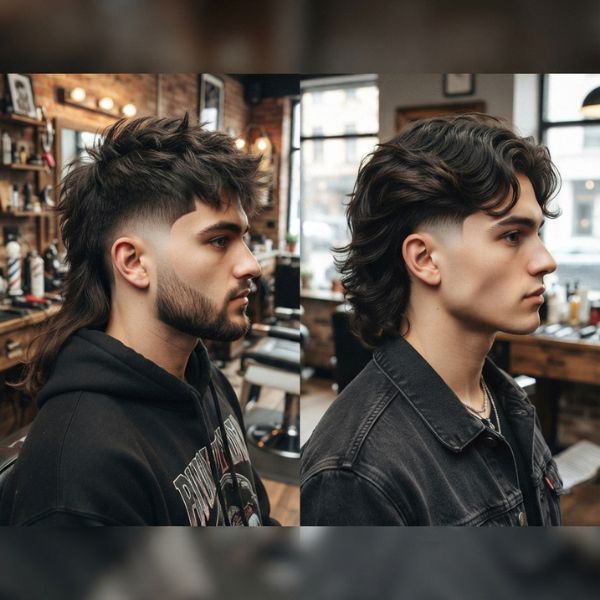
Both cuts fade the sides down to the skin, but the shape of the fade line is different.
A burst fade curves around the ear in a rounded, sunburst pattern, so the transition from short to long happens gradually and in an arc. A drop fade, on the other hand, dips lower behind the ear before curving back up toward the nape, creating a more angular, dropped line along the back of the head.
In practice, a burst fade mullet tends to look softer and more rounded from the side, while a drop fade mullet has a sharper, more sculpted line that some guys prefer for a bolder contrast. If you have a rounder face, the burst fade’s gentler curve is usually more flattering. If you want maximum definition and don’t mind a harder edge, the drop fade is worth asking about too.
Burst Fade Mullet vs Taper Mullet Fade

The taper mullet fade is the more subtle, lower-maintenance cousin of the burst fade mullet.
A taper keeps more length on the sides and blends gradually without necessarily going all the way down to the skin. There’s no dramatic curve around the ear, just a smooth gradient from longer hair on top to shorter hair near the hairline. A burst fade, by comparison, almost always fades to skin and creates a much more visible line of contrast.
If you’re new to mullets or work in a more traditional environment, a taper mullet fade is the safer starting point. It grows out cleanly and doesn’t require touch-ups as often. If you want a bolder, more editorial look with sharper contrast, the burst fade mullet is the better pick.
Face Shape Tips

Not every version of this cut suits every face shape the same way. A quick chat with your barber about your face shape before you sit down will save you a lot of trial and error.
- Round face: Ask for more height on top and a higher burst fade to add vertical length and reduce width.
- Square face: A mid or low burst fade softens strong jawlines, and textured layers on top balance angular features.
- Oval face: Almost any burst fade mullet variation works well here, since an oval face has balanced proportions to begin with.
- Long face: Keep some length and volume on the sides rather than shaving too high, and avoid excessive height on top.
- Heart-shaped face: A burst fade with fuller sides and a softer top helps balance a wider forehead against a narrower chin.
Read More : Straight Hair Mullet Guide 2026: Styles, Fade, and Easy Care
25 Burst Fade Mullet Variations
1. Classic Burst Mullet

The original template: a rounded burst fade on the sides, moderate length on top, and a clean but noticeable tail at the back. Simple, balanced, and easy for most barbers to execute.
2. Burst Fade Mullet Haircut
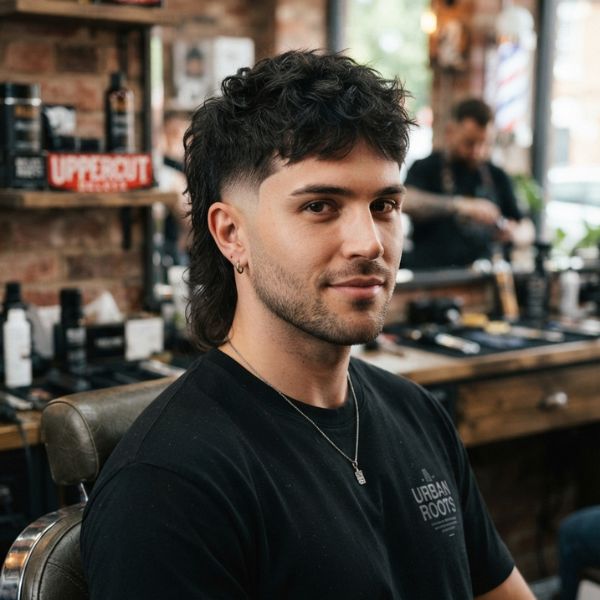
A slightly more polished take with sharper fade lines and a defined part on top, making it a good option for guys who want the mullet look but still want the cut to read as tidy.
3. Low Burst Fade Mullet

The fade starts closer to the ear rather than higher up on the head, which keeps more length overall and gives a softer, less dramatic contrast. Great for a first-time mullet fade.
4. Straight Hair Burst Fade Mullet
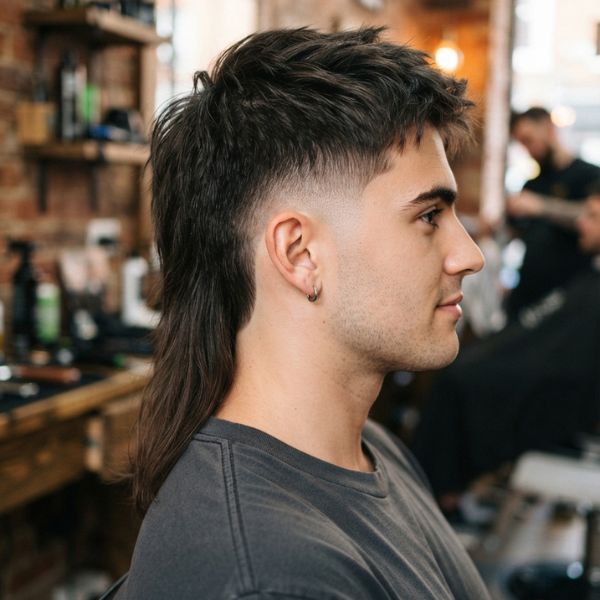
On straight hair, the burst fade shows off crisp, clean lines, and the back tends to hang flat, giving the whole cut a sleek, modern finish.
5. Burst Fade Mullet Curly Hair
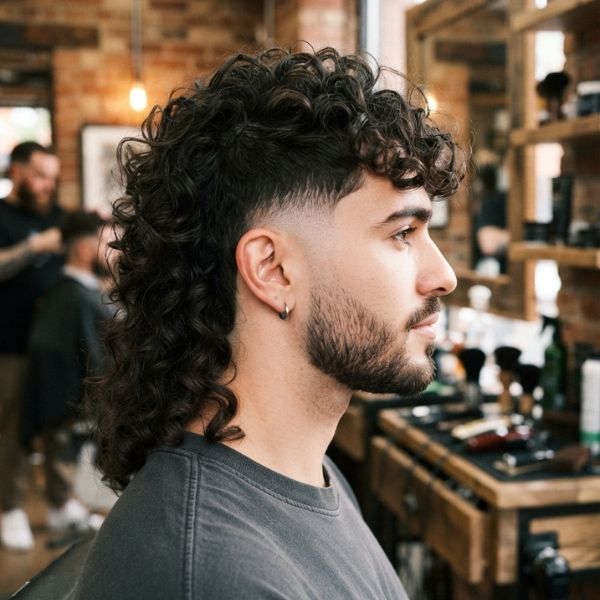
Curly hair adds natural volume and texture on top, which pairs well with the tight curve of the burst fade. This version often needs the least amount of daily styling.
6. Mullet Skin Fade

Here, the sides are faded all the way down to bare skin for maximum contrast against the longer top and back, giving the sharpest, boldest version of the cut.
7. Mullet Side Fade
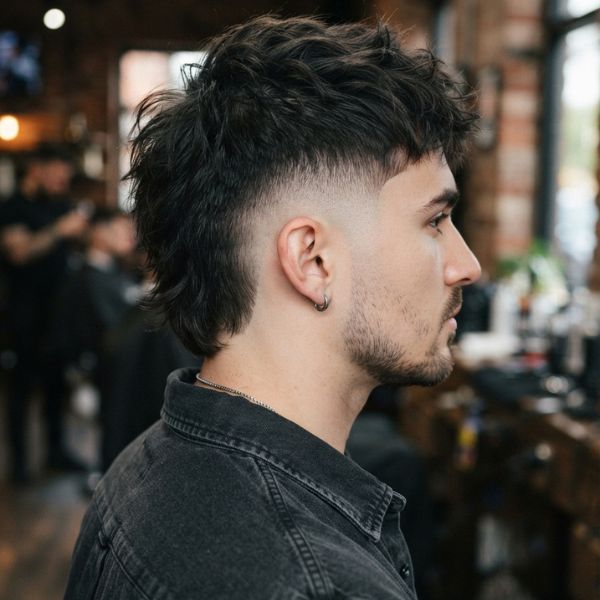
Instead of fading evenly around the whole head, the fade is concentrated more on the sides, leaving a bit more thickness toward the back for a fuller silhouette.
8. Modern Mullet Fade

A contemporary reinterpretation with softer, more blended edges and a textured, tousled top, built to look current rather than retro.
9. Taper Mullet Fade
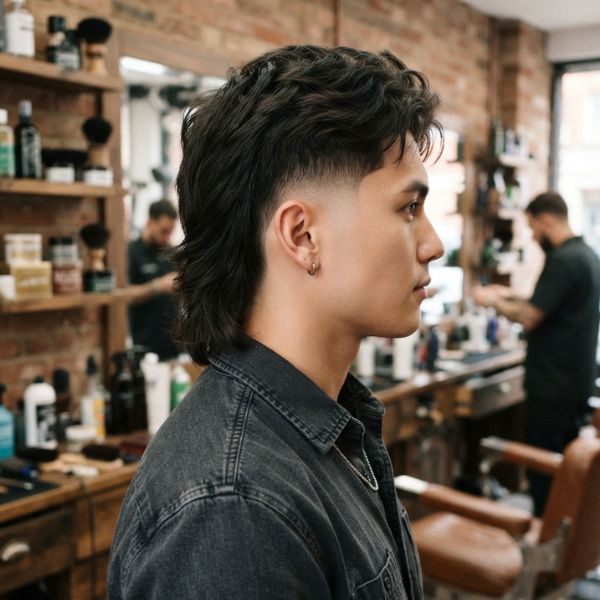
A gentler alternative where the sides taper down without a hard skin fade, offering a lower-maintenance option that still has that mullet silhouette.
10. Curly Mullet Fade
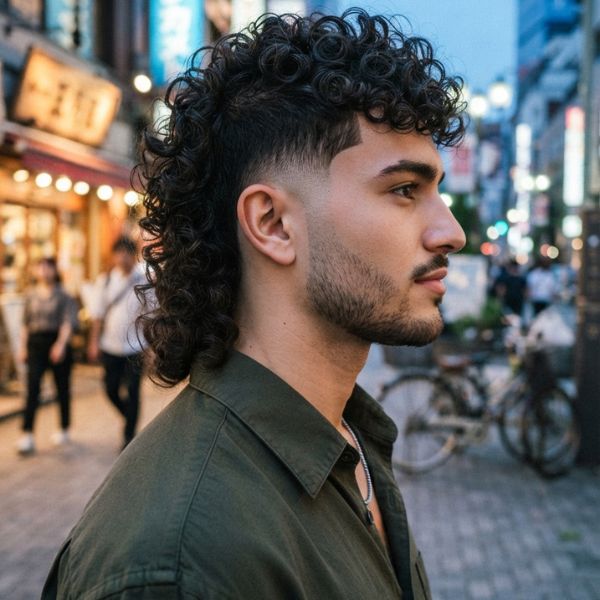
Similar to the curly burst fade mullet but with a looser, less structured fade, letting natural curl pattern take center stage on top.
11. Short Mullet Fade
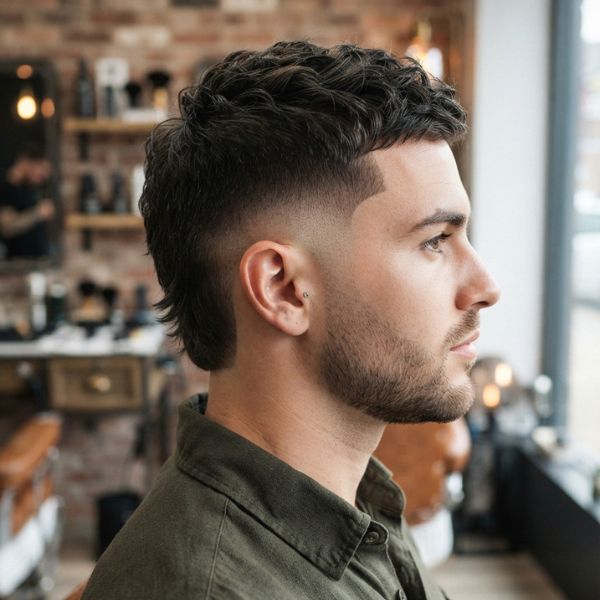
A more subtle mullet where the back length is kept relatively short, ideal for guys who want the concept without a dramatic length difference.
12. Kids Mullet Fade
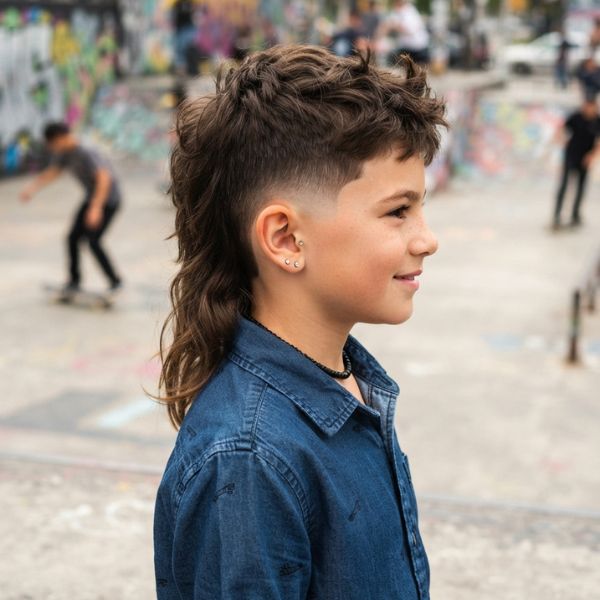
A scaled-down, easy-care version popular with younger kids, usually with a lighter fade and shorter back length for practicality.
13. Taper Modern Mullet Fade
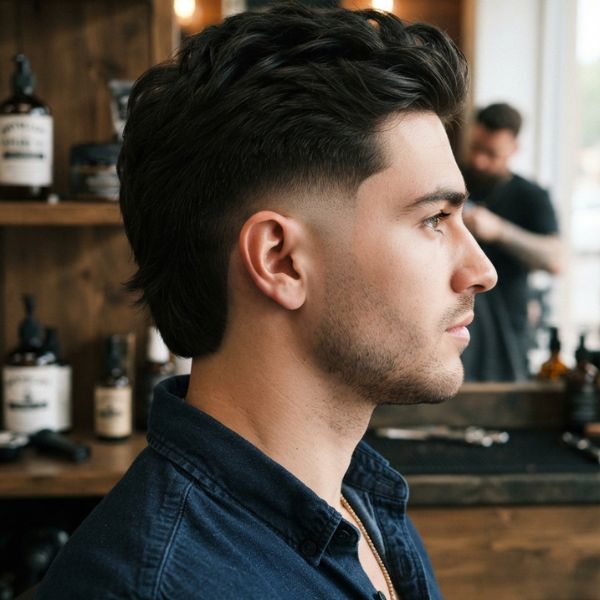
Combines the soft taper with modern styling choices like a textured fringe or slicked top, striking a balance between edgy and refined.
14. Taper Short Mullet Fade
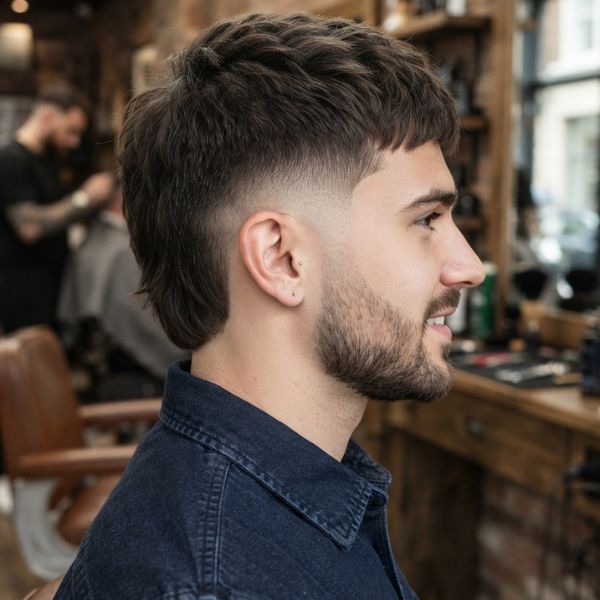
A conservative option pairing a light taper with minimal back length, well suited to workplaces with stricter grooming expectations.
15. Modern Mullet Fade Straight Hair

Straight hair keeps this version looking crisp and architectural, with clean separation between the fade and the longer top and back sections.
16. Burst Fade Mullet V Cut

The back is cut into a distinct V shape rather than a straight or rounded line, adding a sharper, more graphic silhouette to the nape.
17. Mullet Burst Fade
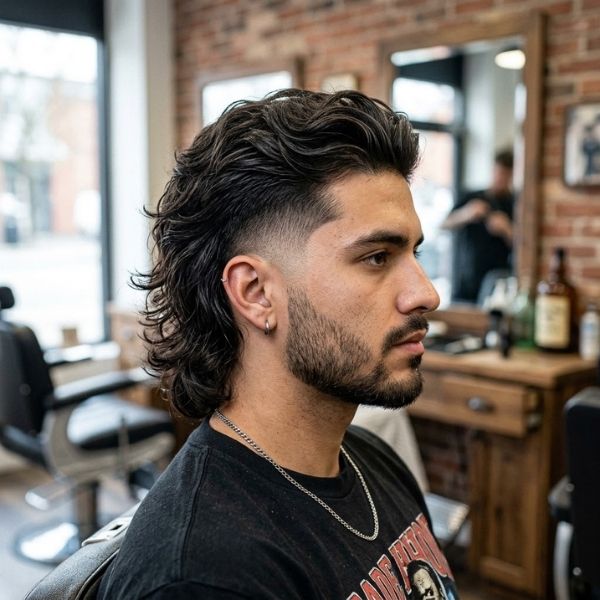
A near-identical sibling to the classic burst mullet, but usually with a slightly higher fade line for more visible contrast from the front.
18. Temple Fade Mullet

The fade is concentrated tightly around the temples rather than sweeping across the whole side, leaving more natural length elsewhere.
19. Burst Fade Mullet Straight Hair V Cut

Combines the crisp look of straight hair with the graphic V-shaped nape line, giving a sharp, symmetrical finish that photographs well.
20. Mid Burst Fade Mullet
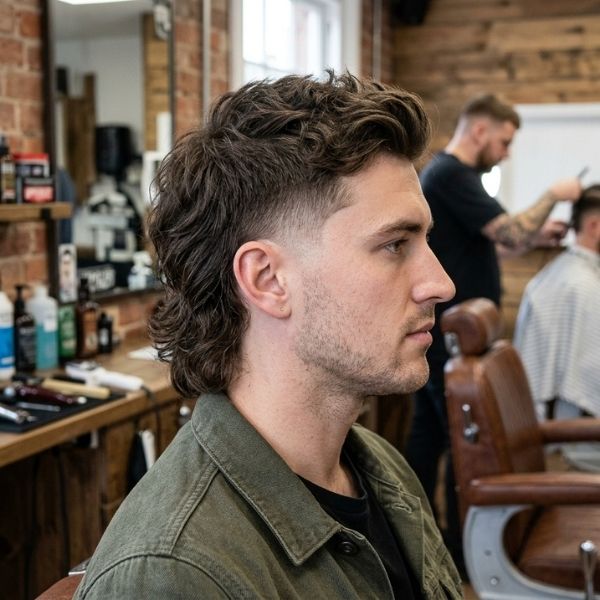
Sits between a low and high fade, offering a balanced amount of contrast that suits the widest range of face shapes and hair types.
21. High Burst Fade Mullet
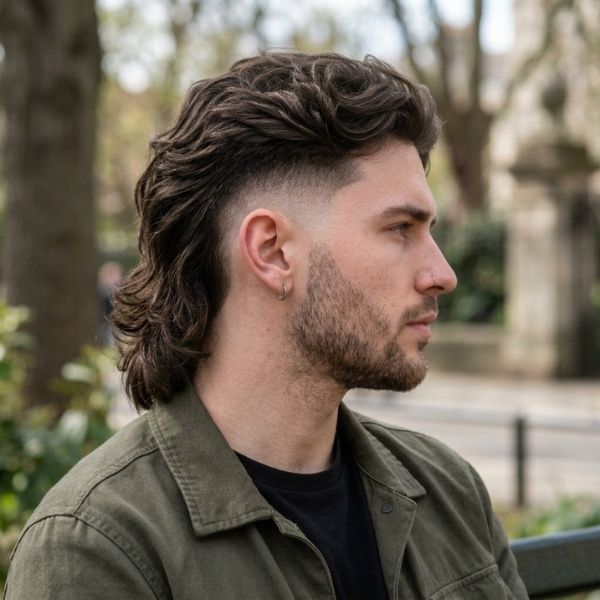
The fade starts noticeably higher on the head, creating maximum contrast and making this the boldest, most attention-grabbing version on this list.
22. Burst Fade Mullet with Design

Adds a shaved line, geometric pattern, or small design within the fade itself, giving the cut an extra personal touch.
23. Taper Burst Fade Mullet

A hybrid that blends the gentler taper technique on the upper sides with a true burst fade closer to the ear for the best of both worlds.
24. Burst Fade Mullet with Beard Blend

The fade connects directly into a well-groomed beard, creating one continuous line from hairline to jaw for a more cohesive, mature look.
25. Burst Fade Mohawk Mullet

Pairs a burst fade with a raised strip of hair down the center of the top, creating a bolder, more rebellious hybrid of a mohawk and mullet.
Quick Reference Table
| Style Type | Maintenance Level | Best For |
|---|---|---|
| Classic Burst Mullet | Medium | Everyday wear |
| Low Burst Fade Mullet | Low | First-timers |
| High Burst Fade Mullet | High | Bold statement looks |
| Taper Mullet Fade | Low | Workplaces, easy grow-out |
| Curly Mullet Fade | Low to Medium | Natural curl types |
| Mullet Skin Fade | High | Maximum contrast |
| Burst Fade Mullet with Design | High | Creative, standout looks |
Easy Styling Routine
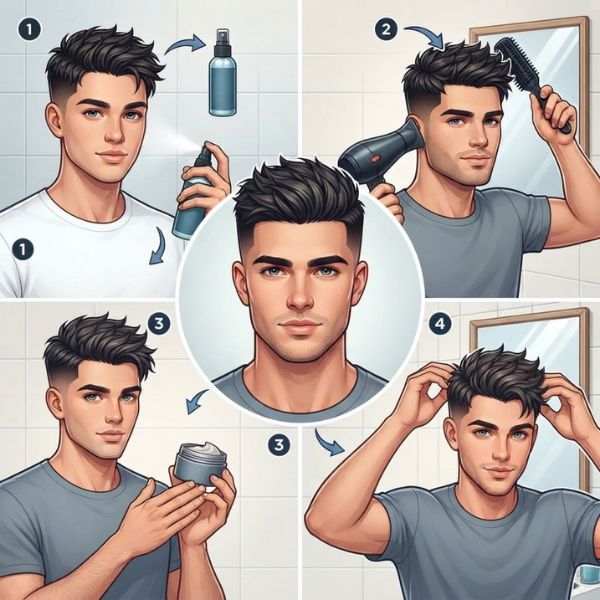
You don’t need a complicated routine to keep a burst fade mullet looking sharp. Here’s a simple order to follow.
- Start with damp, towel-dried hair. Fully wet hair is harder to control, and fully dry hair won’t hold product well.
- Apply a small amount of matte clay or texturizing paste to the top and back, focusing on the mid-lengths rather than the roots.
- Rough-dry with your fingers if you want volume, or comb through for a sleeker finish.
- Define the top with your fingers, pushing hair back, to the side, or forward depending on the look you want that day.
- Finish with a light-hold spray if you need the style to last through a humid day or a workout.
What to Tell Your Barber

Walking in with the right language makes a huge difference in how close the final result matches what you had in mind.
- Specify the fade height: “low,” “mid,” or “high” burst fade around the ears.
- Say how much length you want left at the back, in inches if you can, rather than just saying “keep it long.”
- Mention your hair type and how much daily styling time you’re realistic about.
- Ask for the sideburns to connect cleanly into the fade so there’s no visible break.
- Bring a reference photo, since “burst fade mullet” can mean slightly different things to different barbers.
Care and Upkeep
Plan to get the fade refreshed every three to four weeks to keep the contrast sharp, since fades grow out faster than the length at the back. The longer top and back sections can typically go six to eight weeks between trims, which is one reason this cut is more forgiving than a full skin fade.
Where It Fits
The burst fade mullet works in casual and semi-formal settings alike. A tighter, cleaner burst with a neatly styled top reads as professional enough for most offices, while a looser, shaggier version leans more toward creative industries, music, or streetwear culture.
Read More : Mid Burst Fade: Best Styles, How to Ask, and Easy Care 2026
FAQs
Does a burst fade mullet work on thin hair?
Yes, though the top may need texturizing spray or a fiber paste to add the illusion of volume and prevent it from looking flat.
How long does hair need to be to start a burst fade mullet?
Most barbers can work with at least three to four inches at the back and crown, though shorter hair can still be faded on the sides while the rest grows out.
Is a burst fade mullet appropriate for work?
A cleaner, mid or low burst with a tidy top is generally office-appropriate, while high-contrast or design fades lean more casual or creative.
Can I switch from a taper mullet fade to a burst fade later?
Yes, a barber can convert a taper into a burst fade at any point since the burst simply reshapes the existing fade line around the ear.
How often should I get the fade touched up?
Every three to four weeks keeps the fade looking sharp, since the shorter hair near the skin grows out and softens faster than the longer sections.
Conclusion
The burst fade mullet earns its popularity by solving a real problem: it gives you the sharp, clean sides that make a fade look intentional, without sacrificing the length and personality that make a mullet fun to wear. Whether you go with a soft low burst for your first attempt or a high-contrast skin fade with a shaved design, there’s a version of this cut suited to your hair type, face shape, and lifestyle. Take a couple of these references to your next appointment, be specific about fade height and back length, and you’ll walk out with a cut that looks bold rather than accidental.

Zaria Rhodes is the lead editor and content curator at Lyrinexa, passionate about music, storytelling, and lyrical expression. With a deep love for discovering the meaning behind songs, she brings clarity, creativity, and accuracy to every post. Zaria is dedicated to providing readers with authentic lyrics, thoughtful interpretations, and a seamless music-exploration experience.
