


Walking into a barbershop without the right words can turn a simple trim into a haircut you didn’t ask for. That’s the real problem behind most bad fades: not the clippers, but the communication. The low taper black fade male style solves that problem because it gives you a clear, repeatable formula that works with almost any texture, from loose 3C curls to dense 4C coils.
This guide breaks down what a low taper fade actually is, how it compares to other fade types, every popular variation from waves to locs, and how to match the cut to your face shape. You’ll also get an exact script for the barber chair, a maintenance schedule by hair type, and the mistakes that ruin an otherwise great haircut. By the end, you’ll know precisely what to request and how to keep it sharp between visits.
What Is a Low Taper Fade for Black Men?
A low taper black fade is a haircut where the clipper work starts low, right around the sideburns and neckline, and gradually blends into a longer length on the sides and top. Unlike higher fades, the tapering stays close to the hairline rather than climbing toward the temples or crown.
For Black men, this matters because most of the natural volume, curl pattern, or wave formation stays untouched. The barber only cleans up the perimeter, which means your texture does the visual work while the taper simply frames it.
The result is a cut that looks intentional without stripping away the density that makes Afro-textured hair distinctive. It’s subtle enough for a corporate office and sharp enough for a weekend event.
Low Taper Fade vs Other Fades on Black Hair
Fade height is the single biggest variable separating one style from another, and getting it wrong is the number one reason clients leave a barbershop disappointed.
| Fade Type | Where It Starts | Contrast Level | Best Suited For |
|---|---|---|---|
| Low Taper Fade | At the sideburns and neckline, below the temple | Subtle | Waves, locs, professional environments |
| Low Fade | Just above the ear | Moderate | Curls, cropped styles, everyday versatility |
| Mid Fade | Around the temple line | Bold | Round faces needing extra height |
| High Fade | Above the temple, near the crown | Maximum | Statement looks, thicker hair that needs volume reduction |
A low taper is the most forgiving choice for men who are protecting a wave pattern, growing locs, or simply want a cut that still looks clean three weeks after leaving the chair. Because so little hair is removed, regrowth blends naturally instead of creating a visible line.
Read More : Hermine Poitou: What’s Behind the Minimalist Mystery? 2026
Why Low Taper Fades Work So Well for Black Hair
Black hair spans a wide range of curl patterns, commonly classified from 3C through 4C, each with its own density, shrinkage rate, and styling needs. A low taper fade adapts to all of them because it never forces the hair into a shape that fights its natural pattern.
Here’s what makes it consistently reliable:
- It preserves volume on top instead of shaving it away, so curl definition and wave patterns stay visible
- The neckline and sideburns get a crisp edge, which instantly sharpens the whole silhouette
- It grows out slowly and evenly, so you’re not rushing back to the barber every ten days
- It transitions cleanly between casual and formal settings without needing a restyle
- It pairs with almost any top length, from a buzz cut to shoulder-length locs
Because the fade line sits so low, even two or three weeks of regrowth still looks deliberate rather than unkempt, which is one reason this cut has stayed a staple in Black barbershops for decades.
Top Variations of Low Taper Fade Black Male Hairstyles
Every variation below uses the same base: a soft taper at the sideburns and neckline. What changes is the top, and that’s where you get to express texture, length, and personality.
Short & Buzz-Cut Low Taper Fades
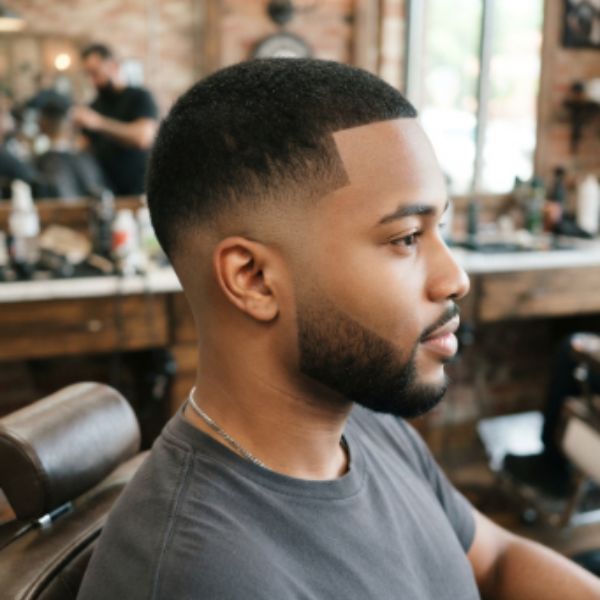
Short cuts are the lowest-maintenance option and a good starting point if you’re new to fades.
- Classic short taper: Hair is clipped close on top while your natural curl or coil pattern stays visible. A quick swipe of leave-in conditioner in the morning is usually all the styling this needs.
- Buzz cut with a taper: One consistent guard length across the top with the taper carved cleanly at the neckline. Adding a line-up turns this from a simple buzz into a purposeful style.
- Textured crop: Slightly longer than a buzz, just enough to show the beginning of curl or wave definition without extra styling time.
Waves, 360 Waves & Coils
Wavers rely on consistent brushing and wolfing to build their pattern, and a low taper protects that investment by leaving the sides mostly untouched.
- 360 waves with a low taper: The taper only shapes the base, so the wave pattern continues uninterrupted around the entire head. A crisp edge-up finishes the connection points.
- Wave-focused taper: For men who want depth in their waves over height in their fade, the sides keep their pattern while the taper adds just enough shape.
- Coil taper: Tight 4A or 4B coils are kept compact with a soft taper underneath, keeping the profile neat without flattening the coil pattern.
Afro Tops & Shaped Afros
A shaped afro on a tapered base reads as styled rather than grown out.
- Rounded afro taper: The afro is trimmed into an even, rounded shape while the base is tapered cleanly, giving the illusion the afro is sitting on a neat platform.
- Tall or angular afro: More height on top paired with a tight taper at the ears and neck. This combination adds vertical balance, which flatters rounder face shapes especially well.
A curl sponge and a light, water-based moisturizer between visits will keep the afro’s shape defined without weighing it down.
Long Hair, Braids, Locs & Dreads
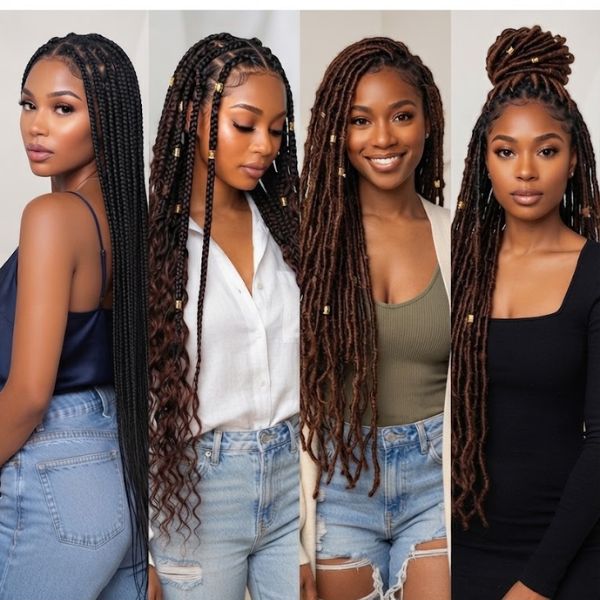
Length doesn’t have to mean messy edges. A tapered base keeps braids, twists, locs, and free-flowing curls looking sharp no matter how long the top gets.
- Long hair over a taper: Length is preserved for braids, twists, or loose curls while the neckline and sideburns stay clean and shaped.
- Braids with a taper: Cornrows or box braids on top paired with a taper at the lower sides. New growth around the neckline doesn’t disrupt the braid pattern because the base stays defined.
- Locs with a taper: Thicker locs worn loose or tied back while the taper keeps the perimeter neat. Frequently paired with a line-up and beard fade for a more polished finish.
- Thin or medium locs with a taper: The tapered base creates breathing room around the ears, so the style never feels heavy, and updos hold their shape longer.
Read More : Low Fade Mullet Guide: Styles, Mid and High Options
Sponge Twists & Hybrid Textures
Sponge twists bring texture and movement to the top while the taper keeps the overall look disciplined.
- Sponge twist taper: Medium-length hair twisted into springy, defined coils using a sponge tool. The taper trims the lower sides so the silhouette doesn’t spread too wide.
- Finger coil hybrid: Small, tight coils sit close to the scalp with visible texture. A clean taper makes the look feel intentional rather than like an overgrown natural style.
Beards, Line-Ups & Designs
The edge work is often what separates an average fade from a signature one.
- Taper with a beard fade: The taper blends directly into the beard, forming one continuous gradient from hairline to jaw that frames the whole face.
- Taper with a goatee: Attention stays on the chin and moustache while the taper keeps sideburns and neckline sharp around it.
- Taper with a line-up: A geometric edge carved along the hairline and temples connects to the taper below. This detail works with virtually any top style.
- Taper with a design: Subtle razor line art added into the tapered area near the ear or nape adds personality without overwhelming the cut.
Mohawk, Frohawk & Mid-Low Taper
For men who want a bit more edge while staying workplace-appropriate, these hybrids add shape without going too bold.
- Mohawk taper: A strip of longer hair runs from front to back while the lower sides taper down instead of being shaved bald. Distinctive but still versatile enough for daily life.
- Frohawk taper: Afro curls or coils are shaped into a raised ridge through the center while the sides taper softly. This adds height, which particularly benefits rounder faces.
- Mid-low taper: The taper sits slightly higher than a true low taper, closer to the mid position, giving more visible contrast around the temples while still keeping side volume.
Best Low Taper Fade Black Male for Different Face Shapes
Face shape determines how much height or width a hairstyle needs to look proportionate. Matching your top style to your face shape is one of the easiest ways to make sure the cut works for you, not just looks trendy in a photo.
| Face Shape | Recommended Style | What to Avoid |
|---|---|---|
| Oval | Nearly any variation works well | No major restrictions |
| Round | Afro tops, frohawk, or coils with added height | Styles that widen the sides further |
| Square | Softer, blended tops with defined curls or sponge twists | Sharp geometric shapes that echo the jawline |
| Oblong / Long | 360 waves, low afro, fuller sides | Excess height that stretches the face further |
| Diamond | Defined curls, braids, or a textured crop | Very tight sides that narrow the top too much |
A simple rule of thumb: round faces benefit from vertical height, while longer faces look more balanced with fuller sides. A skilled barber can also shift the taper placement slightly higher or lower to fine-tune your proportions.
How to Ask for Low Taper Fade Black Male at the Barber
Vague requests lead to vague results. Being specific about height, top length, and finishing touches removes almost all the guesswork.
Use this as a script:
“I’d like a low taper starting at my sideburns and neckline only, please keep it below my temples. On top, I want [short crop / 360 waves / afro / curls / sponge twists / braids / locs / long hair]. Finish with a clean line-up [and a beard fade / and a design near the ear].”
Before you sit down:
- Bring two or three reference photos, one for the top style, one for the taper height, and one for any beard or edge detail
- Mention if you’re actively growing 360 waves so the barber avoids disturbing the pattern
- Tell your barber your typical visit frequency and lifestyle so the cut is designed to last
How to Maintain Low Taper Fade Black Male Cuts
Maintenance depends heavily on your top style, but the taper itself needs regular attention regardless of what’s happening on top.
| Hair Type | Recommended Barber Visits | Daily Care |
|---|---|---|
| Waves / 360 | Every 2 to 3 weeks | Brush daily, wear a durag overnight, use a light wave pomade |
| Curls / Coils | Every 2 to 3 weeks | Leave-in conditioner, curl cream, satin bonnet at night |
| Afro | Every 3 to 4 weeks | Gentle picking, moisturize with hair oil or shea butter |
| Braids / Locs | Every 3 to 5 weeks | Oil the edges, keep the scalp clean, wrap with a silk scarf overnight |
A few habits apply across every texture:
- Use a sulfate-free shampoo once or twice a week to avoid drying out the scalp
- Apply edge control sparingly to keep the hairline defined without buildup
- Keep the hair moisturized consistently, since dryness is what makes even a fresh taper look dull
- Book your next appointment before the current one fully grows out, so you’re never catching up on the shape
Common Mistakes & How to Avoid Them
Most disappointing haircuts trace back to one of these five issues.
- Being vague about fade height. Saying “give me a taper” without specifying low, mid, or high often results in the barber going higher than you wanted. Always say “low taper, below the temples” and back it up with a photo.
- Letting the barber take too much off the sides. If you’re protecting waves or an afro, say so before the clippers start. A simple line like “keep the sides full, only taper at the very base” prevents this.
- Skipping the line-up. A taper without a clean edge-up at the hairline and temples looks unfinished, no matter how good the blend is.
- Over-sharpening the hairline. Pushing the corners back too aggressively for a sharper look can make the hairline appear to recede over time. Ask your barber to work with your natural hairline shape.
- Waiting too long between visits. The tapered area grows out faster than the top length, and letting it go five or six weeks can erase the shape entirely. Stick to a two-to-four-week rebooking window depending on your style.
Read More : Tesehki Age: How Old Is She and What’s Her Story? 2026
Frequently Asked Questions
How long does a low taper fade last before it needs a touch-up?
Most men can go two to four weeks between visits, depending on hair growth speed and top style, since the low placement grows out gradually rather than leaving a visible line.
Does a low taper fade work with 4C hair?
Yes, a low taper fade adapts well to 4C hair because it leaves volume and shrinkage patterns intact while only shaping the perimeter.
Is a low taper fade good for a receding hairline?
Yes, because the taper stays low and doesn’t draw attention to the temple area, it can visually soften the appearance of a receding hairline better than higher fades.
Can I get a low taper fade at home?
It’s possible with clippers and guards, but the blend at the neckline is difficult to get even without practice, so most men still prefer a professional barber for a clean result.
What’s the difference between a low taper fade and a low fade?
A low taper fade blends very gradually and starts right at the sideburns, while a low fade starts slightly higher, near the top of the ear, and creates more visible contrast.
Is a low taper fade professional enough for the office?
Yes, it’s one of the most workplace-appropriate fade styles available because the subtle blend and preserved volume look polished without appearing overly styled.
Conclusion
The low taper fade black male cut remains one of the most reliable, versatile styles in Black grooming because it works with your natural texture instead of overriding it. Whether you’re pairing it with 360 waves, a shaped afro, locs, or a simple buzz cut, the same principle applies: protect the volume, sharpen the perimeter, keep the fade low.
Before your next barber visit, gather a few reference photos, use the script above, and be specific about fade height and lifestyle. That small bit of preparation is the difference between a cut you tolerate and one that actually fits how you live, work, and show up every day.

Zaria Rhodes is the lead editor and content curator at Lyrinexa, passionate about music, storytelling, and lyrical expression. With a deep love for discovering the meaning behind songs, she brings clarity, creativity, and accuracy to every post. Zaria is dedicated to providing readers with authentic lyrics, thoughtful interpretations, and a seamless music-exploration experience.
