


Ask ten barbers what makes a haircut look sharp for weeks instead of days, and most will point to the same thing: a clean curve around the ear. That curve is the whole idea behind this style, one of the most requested men’s haircuts of 2026.
It sits in a sweet spot. It has more energy than a plain mid fade, more restraint than a high burst, and enough length on top to work with almost any hair type, from tight curls to pin straight strands. It also photographs well, which is part of why it keeps showing up on barbershop walls and social feeds alike.
This guide covers what the cut actually is, how it compares to a regular mid fade and a drop fade, the best variations by hair type and style, exactly what to say in the barber chair, and a realistic maintenance schedule so the cut still looks fresh in week three, not just day one.
What is a mid burst fade?
A mid burst fade is a men’s haircut where the sides fade to short or skin starting from the middle of the head, then curve around the ear in a rounded shape instead of running in a straight line. The top stays longer, giving a clear contrast between the tight sides and the fuller crown.
The word “mid” refers to where the fade begins, roughly at the temple, between the more subtle low fade and the bolder high fade. That placement makes it flexible enough for the office and sharp enough for a night out.
Three things define a true burst fade at this height:
- The fade starts around the mid point of the head, not right above the ear and not near the crown.
- The transition curves around the ear instead of cutting straight across.
- The top keeps enough length to create contrast with the tight sides.
Why it’s called “burst”
The name comes from the shape of the cut, not the color or texture. A burst fade curves around the ear the way light spreads out from a burst, radiating outward instead of following one flat line. That rounded arc is what separates it from every other fade type.
Because the fading is concentrated in that arc, the rest of the back of the head is often left a little longer. This is exactly why the burst fade pairs so naturally with mullets, mohawks, and other styles that keep extra length behind the crown.
Mid burst fade vs regular mid fade
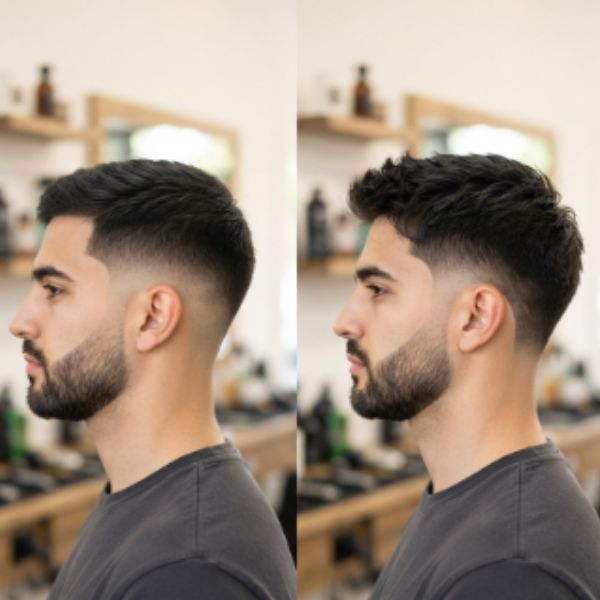
A regular mid fade follows a fairly straight, even line across the side of the head. A mid burst fade takes that same starting height but bends the line into a circular shape around the ear.
Here’s the practical difference:
- A standard mid fade looks clean and linear from every angle, which suits a more conservative, corporate look.
- A mid burst fade draws the eye toward the ear and cheekbone, giving a more sculpted, editorial finish.
- The burst version usually needs slightly more precision to keep, since any unevenness around the curve is easy to spot.
If you want a fade that frames your face, go burst. If you want the simplest possible line with minimal barber time, a standard mid fade is the safer, lower maintenance choice.
Read More : 15 Best Wavy Mullet Haircuts That Are Trending in 2026
Low vs mid vs high burst fade and drop fade
All burst fades share the same rounded shape around the ear. What changes is where the fade begins on the head.
- Low burst fade: Starts just above the ear. Subtle contrast, easiest to grow out, good for first timers or workplaces with conservative dress codes.
- Mid burst fade: Starts roughly at the temple. Balanced contrast that reads as modern without looking extreme.
- High burst fade: Starts near the top of the head. Maximum contrast, the boldest option, and it needs the most frequent trims to stay sharp.
A drop fade is a different family of haircut entirely, even though people often mention it in the same breath as the burst fade.
Mid burst fade vs drop fade
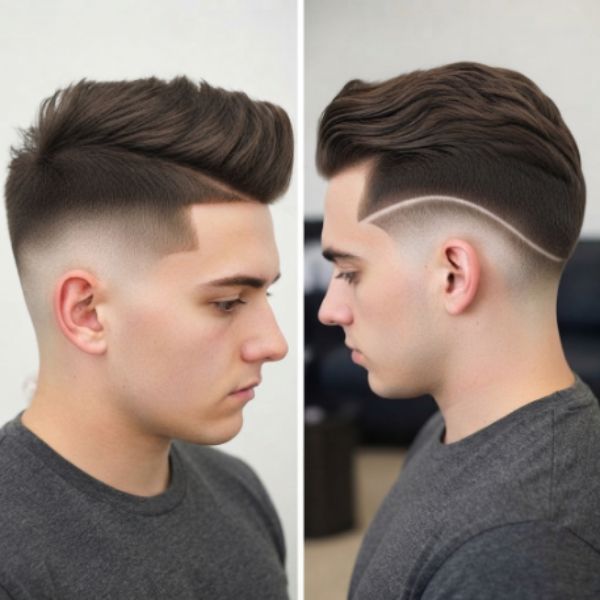
The easiest way to tell them apart is to look at what happens behind the ear.
- This cut concentrates its fading in a rounded arc around the ear, then often leaves the rest of the back and crown longer.
- A mid drop fade follows a continuous curved line that dips downward behind the ear and keeps fading evenly all the way around the back of the head.
In short, the burst fade is concentrated and circular. The drop fade is continuous and follows the natural curve of the skull toward the nape. Curly or thick hair types tend to suit either style well, but the burst fade is the stronger pick if you plan to grow out a mullet or keep extra volume at the crown, since it does not fade that back section down.
Some barbers will also offer a hybrid, blending a burst curve around the ear with a drop toward the neckline, for guys who like both details in one haircut.
Best mid burst fade styles by hair type
The fade shape itself is only half the haircut. What you do on top, and how your natural texture behaves, decides whether the style actually works for you. Below are the pairings that consistently perform well in the barber chair.
Mid burst fade curly hair
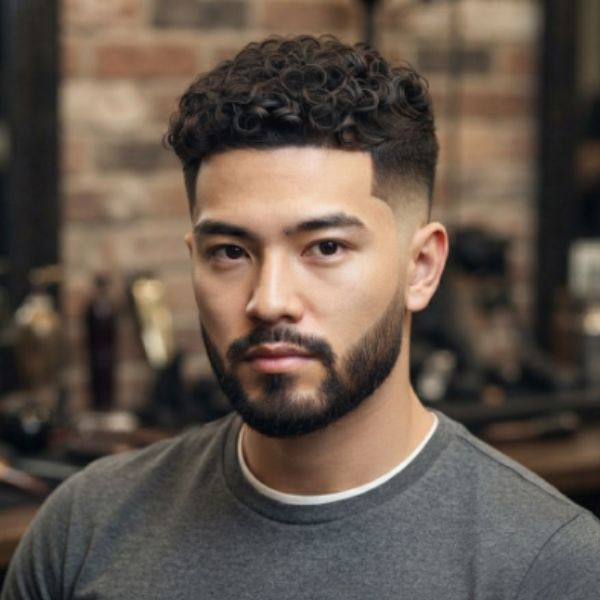
Curly hair and this fade shape are a natural match. The curls add volume and shape at the crown, while the tight sides keep everything looking controlled rather than bulky.
- Ask for enough length on top to let the curl pattern actually show once it dries.
- Keep the area right behind the ear tight so the curls don’t look disconnected from the fade line.
- At home, apply a lightweight leave-in conditioner and a curl cream on damp hair, then let it air dry or diffuse on low heat.
Mid burst fade straight hair
Straight hair shows off the sharp line of the burst fade clearly, but it can look flat without some added texture on top.
- Request point cutting or texturizing shears on the top length to break up the flat, single sheet look straight hair tends to fall into.
- A matte clay or texture powder gives lift at the root without weighing the strands down.
- Style with fingers rather than a comb for a more natural, undone finish.
Mid burst fade textured fringe
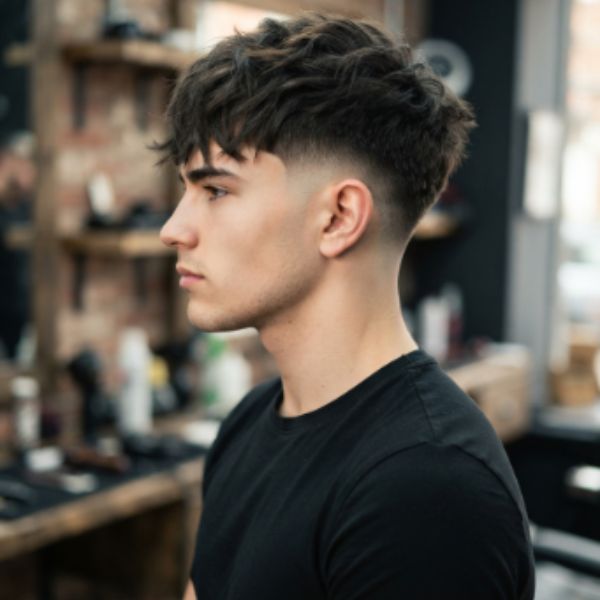
A fringe pairs the burst fade with a defined, often blunt or slightly textured section of hair falling over the forehead.
- This look works best on square, oval, and heart shaped faces, since the fringe frames the upper face.
- Expect more frequent trims, roughly every two to three weeks, since a fringe grows out and loses its line quickly.
- Blow dry the fringe forward while it’s damp, using a light styling cream to keep the ends soft rather than stiff.
Mid burst fade short hair and mid burst fade buzz cut
For guys who want the sharp side detail without daily styling, a short top or full buzz cut is the lowest maintenance route.
- A short crop keeps the burst fade as the main statement while the top stays wash and go.
- A full buzz cut with this fade shape adds subtle dimension to what would otherwise be a completely flat cut.
- Both options suit thinning hair well, since there’s minimal length to expose gaps in density.
Mid burst fade mullet and mid burst fade mohawk
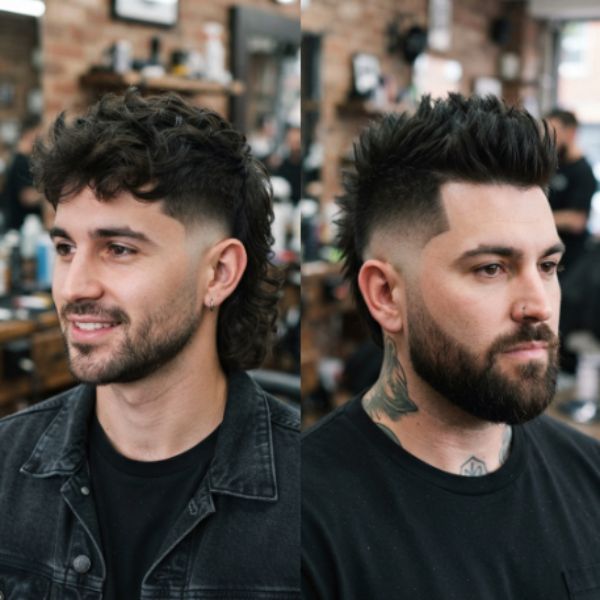
These two combinations lean into the fact that a burst fade leaves the back of the head longer.
- The mullet version blends tight, faded sides with noticeable length at the back, creating strong contrast and a bold silhouette.
- The mohawk version keeps a strip of longer hair running from the front hairline to the crown, with the sides bursting tightly around the ears on both sides.
- Both variations demand precise, symmetrical work on the arc, since asymmetry is far more obvious once there’s a strip or tail of length to compare it against.
Mid burst fade black men
On coily and tightly curled hair textures, the burst fade tends to stand out even more, because the density and coil pattern add natural height and definition at the crown.
- Barbers often leave a bit more length up top to let a natural curl pattern, twist out, or short afro sit above the tight, curved sides.
- A skin level burst fade gives the sharpest possible contrast against coily texture.
- Regular moisture, using a light oil or leave-in cream, keeps the top section from drying out between cuts.
Read More : Burst Fade Mullet 2026: 25 Clean Styles That Look Bold
Mid burst fade with design and mid burst fade with V
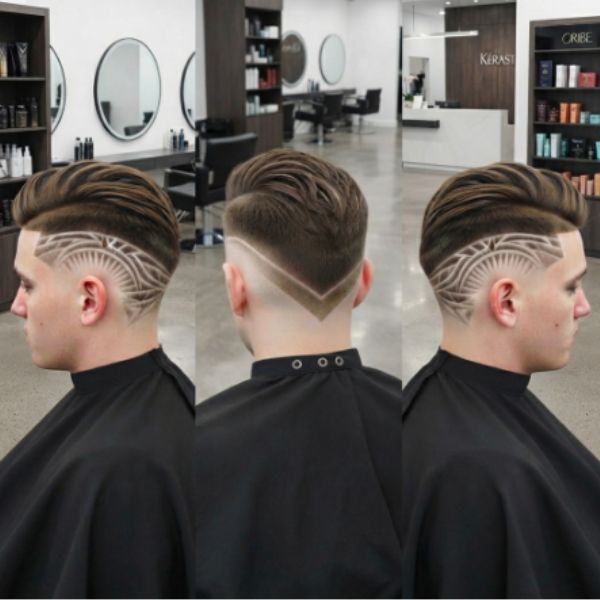
For guys who want an extra detail beyond the fade itself, two additions come up often.
- Adding a design brings in razor line work, geometric patterns, or shaved art within the fade, usually near the temple.
- Adding a V shapes the hairline at the back of the neck into a pointed edge instead of a straight or rounded finish, a detail that’s especially popular alongside a mullet or longer back section.
- Both additions need a steadier maintenance schedule, since fine line work and shaped necklines grow out and blur faster than the main fade.
What to tell your barber
A great result depends heavily on clear communication before the clippers start. Bring a photo if you have one, but also use specific words, since barbershop terminology can vary slightly by region.
Try a request along these lines:
- Ask for a mid burst fade, and specify the starting height, at or just below the temple.
- Mention your preferred top length, whether that’s a short crop, a longer curly top, or mullet length at the back.
- Ask the barber to keep the curve tight and symmetrical around both ears, since that arc is the part most likely to look uneven if rushed.
- If you want a fringe, design, mohawk, or V shape, name it clearly rather than assuming it’s implied.
- Mention any cowlicks or growth patterns near your ears or hairline, since these can change how cleanly the curve sits.
- Tell your barber how often you realistically plan to come back in, so they can adjust the fade’s tightness to match your maintenance schedule.
If you have a beard, it’s worth asking for the fade to blend directly into it for a cleaner side profile rather than leaving a visible gap.
Maintenance schedule (week by week)
This haircut looks its sharpest on day one and starts softening the moment new growth appears around that curved line. Here’s a realistic timeline to keep it looking intentional.
- Week 1: The cut is at its sharpest. Stick to washing two to three times a week with a shampoo suited to your hair type, and apply a light styling product daily to keep the top controlled.
- Week 2: New growth starts to soften the curve around the ear. Use a detail trimmer to clean up the hairline, sideburns, and neckline every seven to ten days. Avoid touching the main fade blend yourself unless you’re confident with clippers.
- Week 3: This is typically when the fade needs a professional refresh, especially for high contrast or skin level bursts. Low burst fades can often stretch a little further.
- Week 4 and beyond: If you’re growing out length on top for a mullet or curly style, this is a good stage to ask your barber to blend rather than fully re-fade, keeping the overall shape while adjusting the top.
As a general guide, skin level and high burst fades usually need attention every two weeks, mid burst fades hold well for around three weeks, and low burst fades can often stretch to four or five weeks between full visits.
Common mistakes and quick fixes
Even a well cut fade like this can go wrong between visits. These are the issues that come up most often, along with simple ways to correct them.
- Uneven curve around the ear. This usually happens when a barber rushes the detailing. Fix it by pointing out the specific side that looks off before they finish, or book a touch up rather than trying to fix it yourself with clippers.
- Top looks too heavy or puffy behind the ear. Ask for slight thinning with shears in that section only, since removing too much bulk elsewhere can flatten the whole style.
- Curls look disconnected from the fade. This is often a length issue. A slightly longer top gives curls room to fall naturally into the fade rather than sitting in a separate block above it.
- Fringe or design loses its sharp line quickly. These details grow out fast by nature. Book shorter, more frequent trims specifically for that section instead of waiting for a full haircut.
- Fade looks patchy after a week. This is normal early regrowth, not a bad haircut. A quick pass with a detail trimmer along the hairline and neckline usually restores the clean look without a full re-fade.
- Style looks great in the mirror but flat by midday. Switch to a lightweight matte product like texture powder or clay, and apply it to towel dried, not fully dry, hair for better lift.
FAQs
Is a mid burst fade good for curly hair?
Yes. Curls add natural volume on top, and the tight sides keep the overall shape controlled rather than bulky.
What’s the difference between a burst fade and a drop fade?
A burst fade curves in a rounded arc around the ear, while a drop fade continues fading downward and around the back of the head.
How often does a mid burst fade need a trim?
Most hold their shape for about three weeks, with detail trims to the hairline and neckline every seven to ten days in between.
Can I get a mid burst fade with a beard?
Yes, and asking your barber to blend the fade directly into the beard line gives a cleaner, more finished side profile.
Does a mid burst fade suit round faces?
Yes, since the curved contrast and added height on top tend to elongate a round face rather than widen it.
Is a mid burst fade low maintenance?
It’s moderate rather than low maintenance. It holds up better than a high or skin fade but still needs a professional refresh roughly every three weeks.
Read More : Carla Diab Net Worth 2026: $5M Fortune, Career & Wealth
Conclusion
This haircut earns its popularity honestly. It gives you a sharper, more sculpted look than a standard mid fade, without the constant upkeep a high or skin burst fade demands. Whether your hair is curly, straight, coily, or somewhere in between, there’s a version of this cut, from a simple buzzed side to a full mullet or mohawk pairing, that fits your texture and your lifestyle.
The results come down to two things: being specific with your barber about the height, curve, and top length you want, and keeping a realistic maintenance routine between visits. Get both right, and a mid burst fade stays sharp well past week one, not just on the walk out of the barbershop.

Zaria Rhodes is the lead editor and content curator at Lyrinexa, passionate about music, storytelling, and lyrical expression. With a deep love for discovering the meaning behind songs, she brings clarity, creativity, and accuracy to every post. Zaria is dedicated to providing readers with authentic lyrics, thoughtful interpretations, and a seamless music-exploration experience.
