


The mullet is no longer a punchline. It is one of the most requested cuts in barbershops right now, and straight hair happens to be the best texture for wearing one. If your hair is naturally straight, you already have the raw material for the sharpest version of this cut: clean lines, visible contrast, and a shape that holds without much effort.
This guide breaks down every straight hair mullet variation worth knowing in 2026, how to style it at home, which products actually work, what to say to your barber, and how to keep it looking fresh between visits. Whether you’re a man building a bold new look, a woman experimenting with edgy layers, or a parent considering the cut for a teen, you’ll find a clear answer here.
What Is a Straight Hair Mullet?
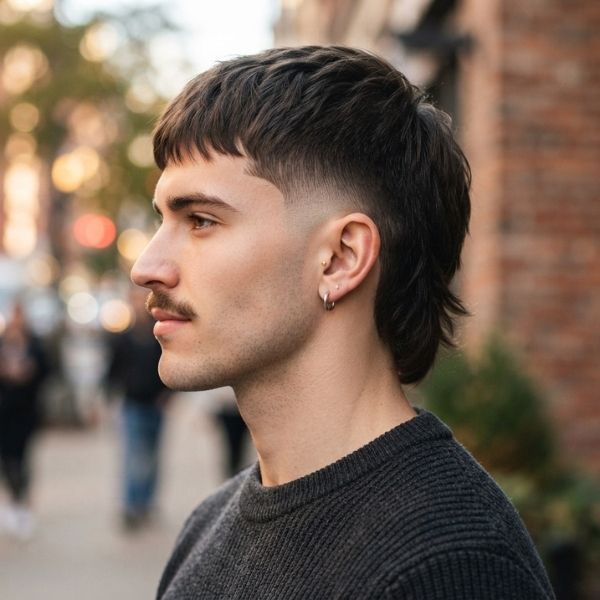
A straight hair mullet is a haircut with short, tapered or faded sides and front, paired with noticeably longer hair left at the back and crown. It follows the classic mullet formula, often described as short in the front and long in the back, but the straight hair texture changes how the cut behaves.
Because straight strands don’t have natural volume or bend, every line the barber cuts shows up exactly where it was placed. There’s no curl pattern to soften a rough edge or hide an uneven length. That’s actually an advantage for a mullet, since the whole point of the style is contrast. Straight hair displays that contrast with total clarity, giving you crisp separation between the short sides and the long back section.
The mullet itself has a long history that stretches back centuries, with early versions appearing across several ancient cultures before it became a defining hairstyle of the 1980s. The version people are wearing now is a modern reinterpretation: cleaner sides, better blending, and far more flexibility in length and finish than the original.
Why Straight Hair Is Perfect for a Mullet
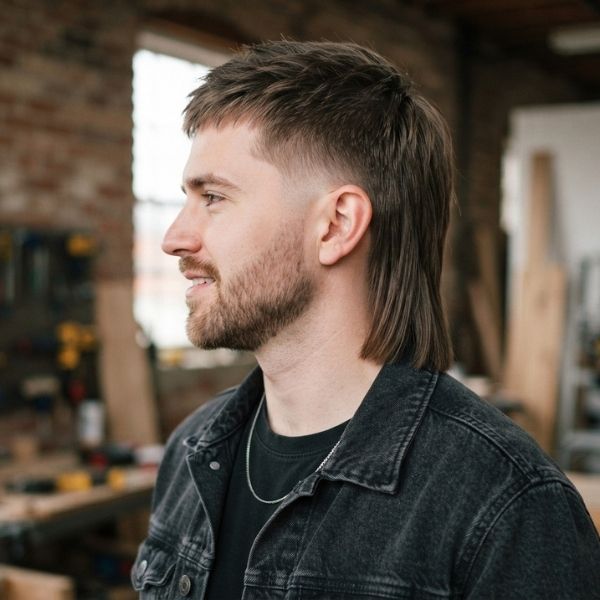
Not every hair type wears a mullet the same way, and straight hair has a genuine structural advantage over wavy or curly textures.
Here’s why:
- Sharper contrast. Straight strands lie flat against the head, so the line between the short top and the long back reads as a clean, defined edge instead of a blended transition.
- Easier fade integration. A skin fade or taper looks crisper on straight hair because there’s no texture disrupting the gradient from skin to hair.
- Predictable styling. Straight hair falls the same way every time, which means less daily guesswork with a comb, brush, or dryer.
- Better shine payoff. Straight hair reflects light more evenly across the surface, which makes the back section look sleek rather than dull.
- Lower product dependency. You don’t need heavy creams to fight frizz or define curl clumps, so styling routines stay simple.
The one trade-off is that straight hair wants to sit flat at the crown, which can make a mullet look thin or lifeless if the barber doesn’t build in some layering or lift. That’s a styling and cutting detail, not a reason to avoid the cut, and it’s covered in the styling section below.
Read More : Short Wolf Cut Men 2026: Best Styles for Every Hair Type
Straight Hair Mullet Variations
There isn’t just one straight hair mullet. The cut has branched into dozens of variations that adjust length, fade intensity, and texture. Below are the most requested versions going into 2026.
Classic Straight Hair Mullet
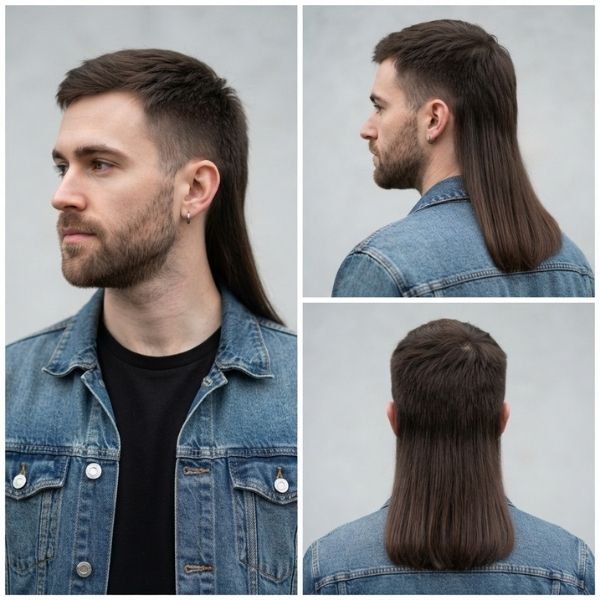
The classic version sticks closest to the original 80s shape: short sides, a fuller top, and a back section that extends past the collar. On straight hair, this cut reads as retro but wearable, especially when the sides are kept neat rather than shaggy. It’s a good starting point if you want the mullet silhouette without heavy styling demands.
Modern Straight Hair Mullet
The modern mullet keeps the short-front, long-back formula but softens the transitions with cleaner lines and more precise cutting. Instead of a rough, choppy top, the modern version uses controlled layering for a sleek, structured finish. This is the variation most commonly seen on musicians, athletes, and anyone wanting a mullet that still looks professional-adjacent.
Straight Hair Mullet with Taper Fade
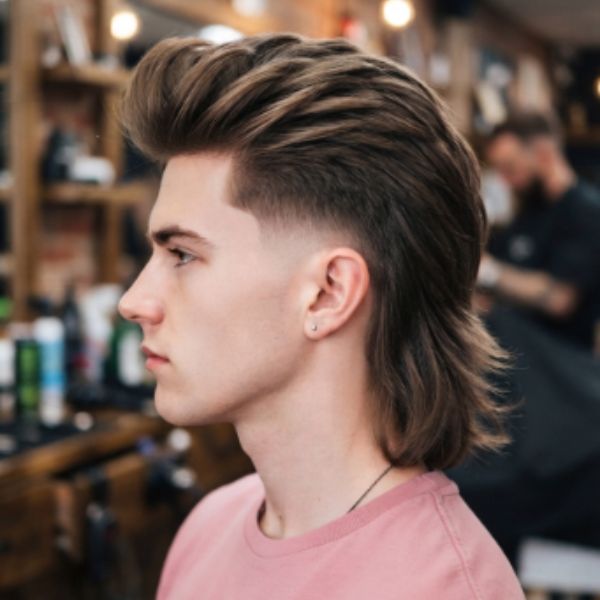
Adding a taper fade to the sides brings a gradual, blended finish that transitions smoothly from skin to length. On straight hair, a taper fade mullet looks polished rather than harsh, since the fade gradient shows evenly across the flat texture. It’s one of the most versatile combinations because it works for casual and semi-formal settings alike.
Low Taper Straight Hair Mullet

A low taper keeps the fade close to the hairline and ears rather than climbing high up the sides. This version is the safest, most workplace-friendly straight hair mullet, since the shorter fade area keeps the overall look connected and understated while the length at the back still delivers the mullet effect.
Straight Hair Mullet Fade
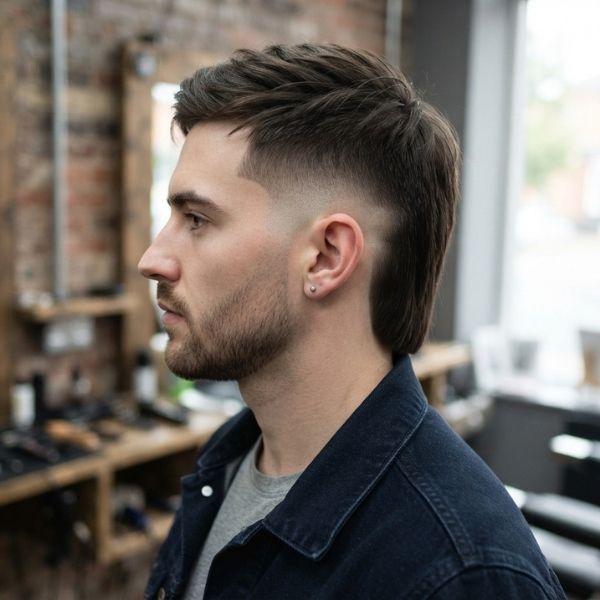
A full mullet fade takes the contrast further with a high or skin fade on the sides, creating a sharper, high-impact look. This variation leans bold and works especially well on straight hair because the skin-to-hair gradient stays crisp without curl texture interrupting the line. It’s the go-to choice for anyone who wants their mullet to make a statement.
Short Straight Hair Mullet
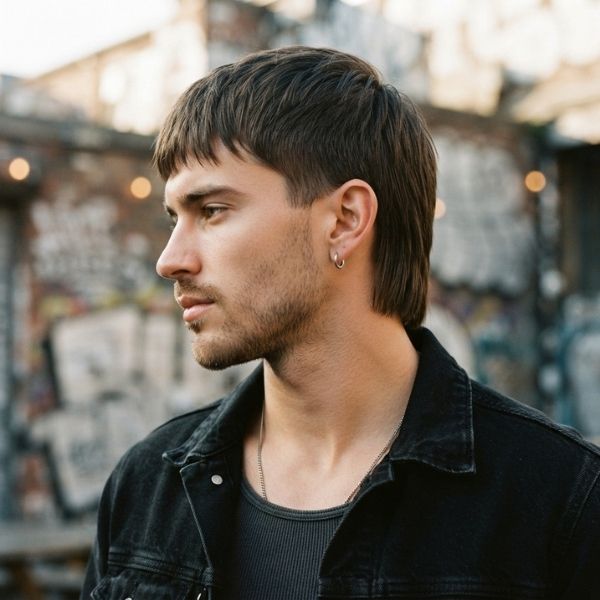
The short mullet trims the back section down so it barely extends past the neckline. It’s the easiest variation to maintain and the least dramatic, making it ideal for first-timers who want to test the mullet shape before committing to serious length in the back.
Long Straight Hair Mullet
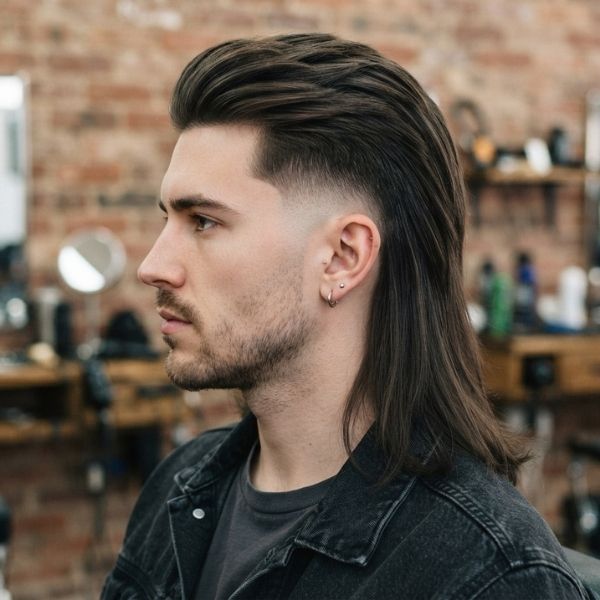
At the opposite end, the long straight hair mullet lets the back grow well past the shoulders for a dramatic, standout look. Thicker straight hair carries this length best, since it can hold shape without looking stringy. Fine straight hair can still wear it, but keeping the ends slightly shorter helps avoid a thin, flat appearance.
Layered Straight Hair Mullet
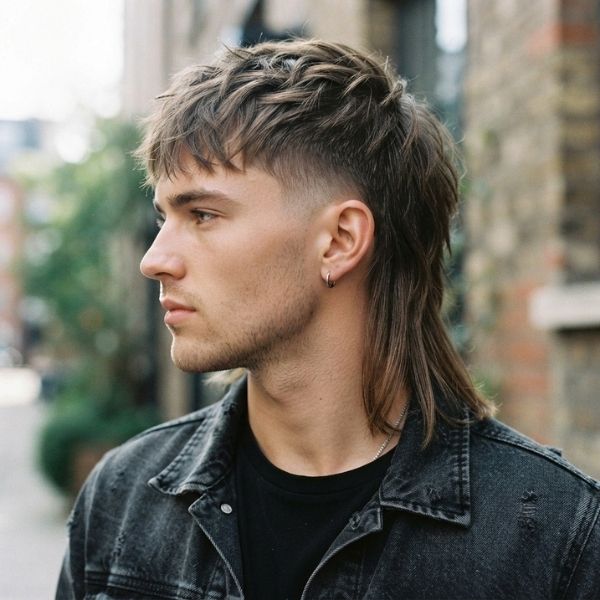
This version adds internal layering throughout the back and crown to introduce movement and reduce bulk. Layering is particularly useful on thick straight hair, where an unlayered mullet can look heavy, and it also helps fine hair fake extra volume through strategic texturizing.
Straight Hair Mullet with Fringe or Bangs
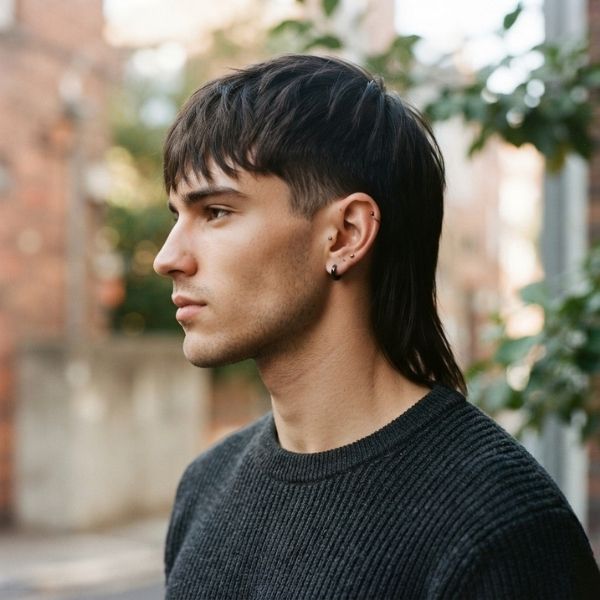
Pairing the mullet with a straight, blunt fringe across the front creates a youthful, editorial look that’s become popular in K-style and streetwear circles. The front stays structured while the back keeps the classic mullet length, giving the whole cut a distinct, fashion-forward edge.
Straight Hair Shag Mullet

The shag mullet blends heavy layering and choppy ends with the traditional mullet shape, creating a looser, more textured silhouette. On naturally straight hair, this variation often gets light waves added with a curling iron to mimic the shag’s signature movement, since the layering alone won’t create texture the way it would on wavy hair.
How to Style a Straight Hair Mullet
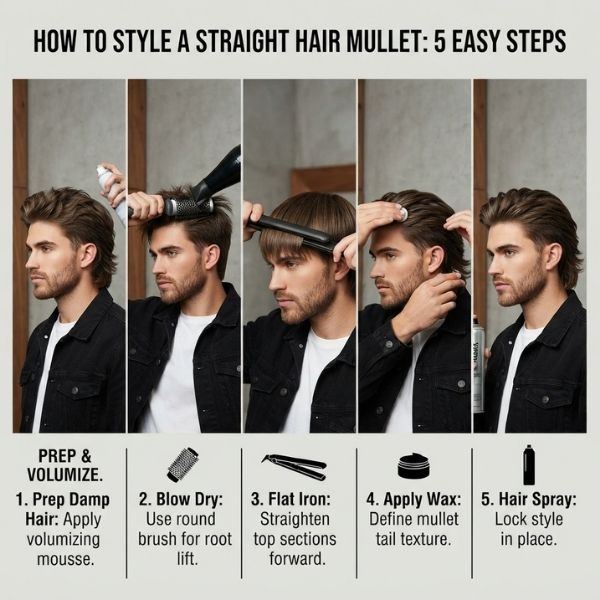
Styling a straight hair mullet is quick once you know the sequence. Because straight hair lacks natural lift, the goal is always to build volume at the crown and control the back section so it doesn’t sit flat.
- Start with a towel dry. Bring hair down to about 80% dry using a microfiber towel to avoid frizz and breakage.
- Apply a heat protectant. Spray it through the mid-lengths and ends before using any hot tools.
- Work in a volumizing product. Rub a small amount of mousse or volumizing spray into the roots, focusing on the crown.
- Blow-dry with lift. Use a round brush at the roots to push the crown upward, then direct the top layers forward and the back section outward.
- Define the front. Use fingers or a fine comb to shape the top and fringe area, keeping the line sharp if you have a fade.
- Add texture to the back. Tousle the longer back section by hand and mist on a light texturizing spray to separate the strands and prevent flatness.
- Set with a light-hold product. Finish with a small amount of pomade or wax on the ends only, so the shape holds without looking greasy.
Daily maintenance is faster once the initial style is set. Most people can refresh a straight hair mullet in under five minutes using just a comb and a touch of pomade.
Read More : Messy French Crop Haircuts: Fast Style, Sharp Results
Best Products for a Straight Hair Mullet

The right products solve straight hair’s biggest weakness for this cut: a lack of natural volume. Here’s what actually helps.
- Volumizing mousse for lifting the roots and crown before blow-drying.
- Heat protectant spray to prevent damage from daily blow-drying or straightening.
- Texturizing spray or sea salt spray to add grip and separation to the back section.
- Matte clay or light pomade for defining the front and fringe without weighing hair down.
- Light-hold hairspray to lock in shape, especially useful if you’re adding curls to a shag mullet.
- A round brush in a 25 to 35mm barrel size, essential for building crown lift during blow-drying.
Avoid heavy waxes and thick creams on the crown area specifically. They tend to flatten straight hair rather than support it, which works against the volume the cut needs.
What to Tell Your Barber for a Straight Hair Mullet
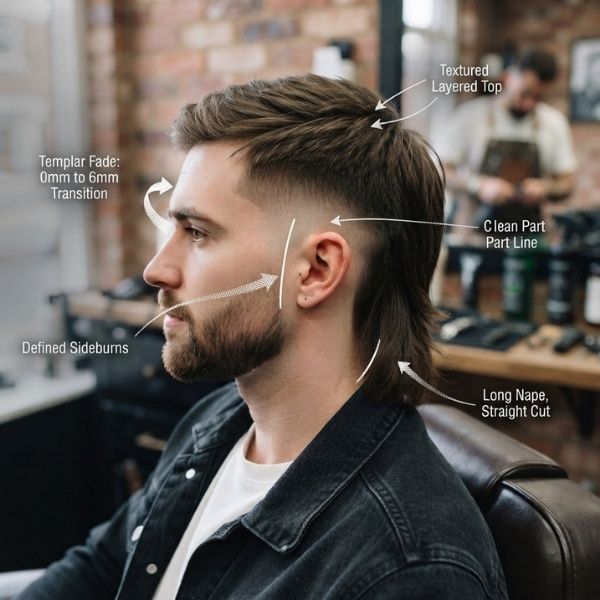
Vague requests lead to inconsistent results with a mullet, since the term covers dozens of variations. Bring a reference photo and use specific language.
- Specify the fade type: “Skin fade,” “low taper,” or “burst fade around the ear.”
- Give an exact back length: “Collar length,” “past the shoulder,” or a specific inch measurement.
- Clarify the top connection: ask for either a blended top or a disconnected top, and pick one rather than leaving it open.
- Mention crown texture: request point-cutting or layering at the crown so the style doesn’t sit flat.
- Decide on the fringe: state whether you want it short and blunt or long enough to push back.
A five-minute conversation using this language will get you a far more accurate result than simply saying “I want a mullet.”
Straight Hair Mullet Maintenance Tips
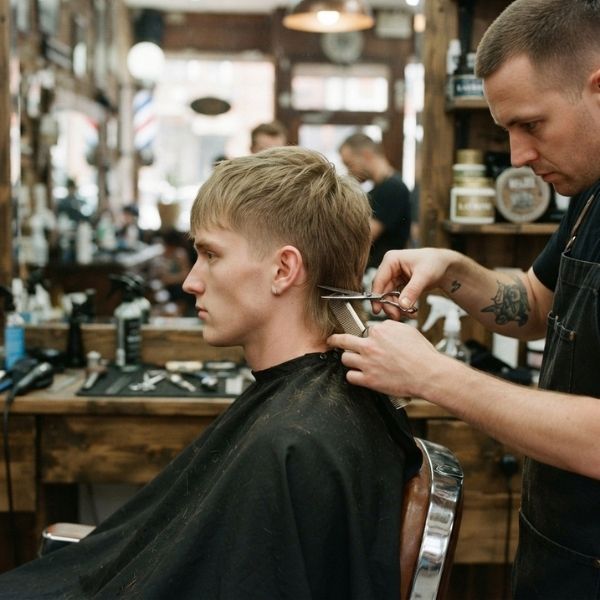
Mullets need more regular shaping than most cuts because the contrast between lengths grows out unevenly. Follow these habits to keep the shape sharp.
- Trim the sides every 2 to 3 weeks if you have a fade or taper, since regrowth blurs the line fastest there.
- Trim the back every 8 to 12 weeks, just enough to keep the ends healthy without losing the length you’re growing out.
- Wash 2 to 3 times a week rather than daily, since straight hair can look flat if it’s over-washed and stripped of natural oil.
- Use a leave-in conditioner on the back section if you’re growing it long, to prevent split ends.
- Sleep on a silk or satin pillowcase to reduce friction and keep the ends from getting frayed overnight.
- Book a “shape-up” between full cuts, a quick 10-minute sideline and neckline clean-up that keeps the cut looking intentional.
Straight Hair Mullet for Men
For men, the straight hair mullet is currently one of the most requested specialty cuts in barbershops, largely because it adapts to almost any lifestyle. A low taper or blended top keeps things office-appropriate, while a skin fade with a longer back leans into a rock-and-roll or streetwear aesthetic.
Men with fine straight hair generally do better with a shorter back section and added crown layering to avoid a thin, stringy look. Men with thick straight hair can carry more length and a heavier back section without it feeling unbalanced. Athletes and musicians have driven much of the style’s current popularity, often pairing it with a high fade for maximum contrast.
Straight Hair Mullet for Women
On women, the straight hair mullet leans into fashion-forward territory, often combined with face-framing layers, curtain bangs, or a soft fringe. It reads as edgy without being severe, since the layering around the face softens the boldness of the back length.
Styling options are wider for women’s versions. Loose waves added with a curling iron can soften a straight mullet for an evening look, while a sleek, straightened finish keeps it polished for daytime. Color also plays a bigger role here, with money-piece highlights or a two-tone effect (darker roots, lighter ends) used to emphasize the length contrast.
Straight Hair Mullet for Girls
For younger clients, most stylists recommend a toned-down version of the mullet: soft layers, minimal or no fade, and a back section that doesn’t extend too dramatically past the shoulders. This keeps the cut low-maintenance for a school routine while still giving a trendy, current shape.
Parents should ask for rounded, blended edges rather than a sharp fade, since it grows out more gracefully and needs fewer touch-up visits. A light fringe or curtain bangs at the front is a popular addition, as it frames the face without requiring daily styling effort.
Straight Hair Mullet vs. Wolf Cut
These two cuts get confused constantly because both feature longer layers at the back and shorter sections up front, but the structure and effort involved are genuinely different.
| Feature | Straight Hair Mullet | Wolf Cut |
|---|---|---|
| Core structure | Sharp, intentional contrast between short front and long back | Blended layers that flow gradually, no hard line |
| Best hair texture | Straight or thick hair, since flat strands show the contrast clearly | Wavy or curly hair, since natural texture creates the fluffy layering |
| Maintenance | Higher, needs regular trims to keep the line sharp | Lower, grows out more naturally |
| Overall vibe | Bold, rebellious, retro-inspired | Soft, relaxed, modern |
| Face-framing | Minimal, the focus is the back length | Strong, layers frame the face directly |
If your hair is straight and you want a defined, high-contrast shape, the mullet is the stronger choice. If you have natural wave or curl and want an easier grow-out with a softer look, the wolf cut generally performs better.
Best Face Shapes for a Straight Hair Mullet
The straight hair mullet is more adaptable across face shapes than people assume, as long as the crown volume and fringe length are adjusted correctly.
- Round faces benefit from extra volume built into the crown, which adds vertical length and balances the width of the face.
- Square or angular faces pair naturally with the mullet’s structured lines, since the cut echoes the strong jaw and can be worn with a sharper fade.
- Oval faces can wear nearly any version of the straight hair mullet without adjustment, since this shape suits most proportions.
- Long faces should ask for softer, more blended layers rather than a high-volume crown, which helps avoid adding extra visual length.
- Heart-shaped faces do well with a fringe or bangs variation, since the front hair balances a wider forehead against a narrower chin.
A quick conversation with your barber about your face shape, alongside the reference photo, is enough to get the proportions right on the first cut.
Read More : Burst Fade Mullet 2026: 25 Clean Styles That Look Bold
Frequently Asked Questions
Does a straight hair mullet suit thin hair?
Yes, but keep the back section shorter and add layering at the crown, since fine straight hair can look stringy at longer lengths.
How often should I get my straight hair mullet trimmed?
Trim the sides every 2 to 3 weeks if faded, and the back every 8 to 12 weeks to maintain shape without losing length.
Can I straighten wavy hair to get this look?
Yes, straightening wavy or curly hair before a mullet cut works, though the shape may soften again once natural texture returns after washing.
Is a straight hair mullet professional enough for work?
A low taper or blended top mullet with a moderate back length reads as workplace-appropriate in most casual to business-casual settings.
What’s the difference between a mullet fade and a taper mullet?
A fade blends the sides down to the skin for high contrast, while a taper keeps some length on the sides for a softer, more subtle transition.
Do I need heat styling tools for this cut?
Not daily. A round brush and blow-dryer for volume is usually enough; heat tools like straighteners or curling irons are optional for special styling.
Conclusion
The straight hair mullet earns its current popularity honestly. It combines a bold, retro-rooted silhouette with a texture that displays every line and fade with total precision. Whether you’re drawn to a low-maintenance classic cut, a high-contrast skin fade, or a face-framing fringe variation, there’s a version of this style built for your hair length, lifestyle, and face shape.
Success with this cut comes down to three things: choosing the right variation for your goals, communicating clearly with your barber, and staying consistent with trims so the contrast stays sharp. Get those right, and a straight hair mullet is one of the easiest ways to stand out in 2026 without overhauling your entire routine.

Zaria Rhodes is the lead editor and content curator at Lyrinexa, passionate about music, storytelling, and lyrical expression. With a deep love for discovering the meaning behind songs, she brings clarity, creativity, and accuracy to every post. Zaria is dedicated to providing readers with authentic lyrics, thoughtful interpretations, and a seamless music-exploration experience.

1 thought on “Straight Hair Mullet Guide 2026: Styles, Fade, and Easy Care”