


A low taper fade black male haircut is the one cut that never leaves the barbershop rotation. It works with waves, coils, afros, braids, locs, and everything in between, and it does that job without demanding a fresh visit every two weeks. This guide breaks down what the cut actually is, how it compares to other fades, the best variations for different hair types, which version suits your face shape, and exactly what to say in the chair so you leave with the cut you asked for, not a rough guess at it. Everything here reflects 2026 barbershop practice, current guard-number standards, and real styling routines, so you can walk in prepared and walk out with a fade that grows in clean.
What Is a Low Taper Fade for Black Men?
A low taper fade starts its blend just above the ear and around the nape, then gradually shortens the hair without necessarily taking it down to bare skin. Unlike a bald or skin fade, a true taper blends hair into hair, which is part of why it holds its shape for three to five weeks instead of two.
For Black men, the low taper works directly with natural hair texture rather than against it. The sides and back taper down smoothly, while the top keeps enough length to show off waves, curls, an afro, or longer styles like braids and locs. Barbers usually work with clippers using a guard system, where a #1 guard cuts to about 1/8 inch and a #4 leaves closer to 1/2 inch, blending those lengths into the taper zone with shears or a trimmer.
Low Taper Fade vs Other Fades on Black Hair
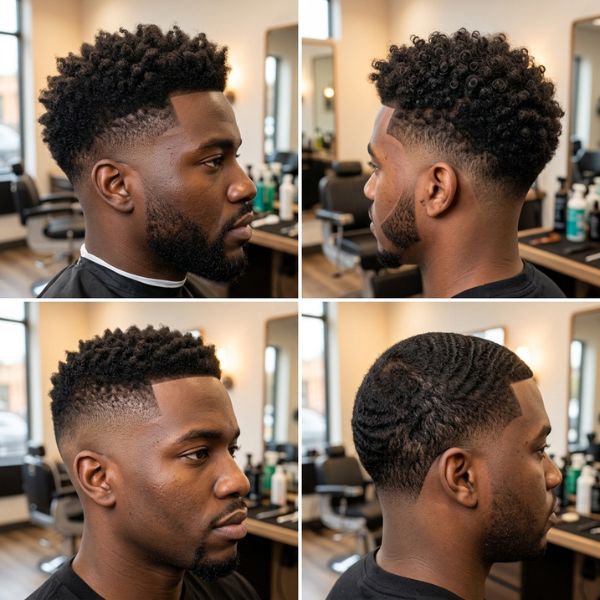
Fades are grouped by where the blend starts, and that single detail changes the whole look of the haircut.
- Low fade: blend begins just above the ear. Most subtle, most versatile, and the easiest to grow out.
- Mid fade: blend starts at the temple. A middle ground that still shows some contrast on top.
- High fade: blend starts near the top of the head. Bold, high-contrast, and attention-grabbing.
- Bald or skin fade: taken down to skin at the bottom, regardless of height. Sharpest look, but needs a touch-up every ten to fourteen days.
- Temple fade: a low fade shaped specifically around the hairline and temples, common with waves and afros.
- Burst fade: fades in a half-circle around the ear instead of across the whole head, often paired with a mohawk or longer back section.
On coarse, coily, and curly hair textures, a low taper fade tends to look more natural and less like a fresh cut every day, because the gradual blend hides regrowth better than a stark skin fade does.
Read more: Low Taper Fade with Textured Fringe: Complete Guide for 2026
Why Low Taper Fades Work So Well for Black Hair
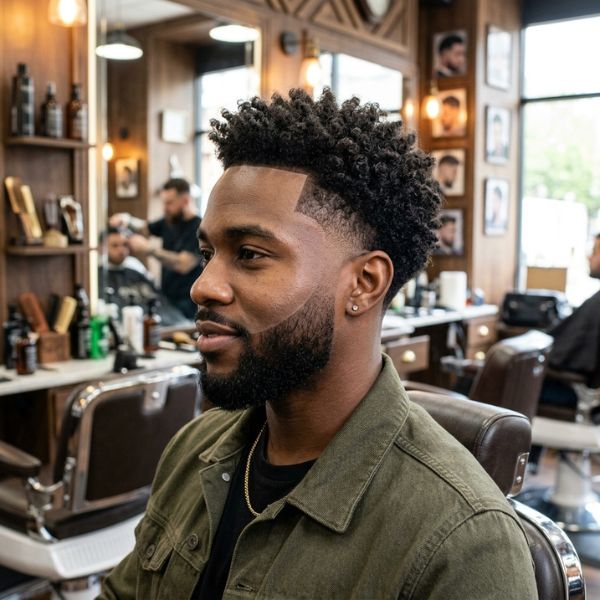
Several practical reasons explain why this cut has become the default request in barbershops that specialize in textured hair.
- It respects natural texture. Coily and kinky hair patterns shrink when cut, so a low taper leaves enough length on top to preserve curl definition and volume.
- It reduces upkeep. Because the fade blends hair into hair rather than skin, regrowth is far less noticeable, which stretches the time between barber visits.
- It pairs with almost any top style. Waves, afros, twists, braids, and locs all sit comfortably above a low taper without competing with it.
- It suits any setting. The subtle blend reads as polished in a corporate office and sharp in a casual setting, with no styling changes needed.
- It has cultural depth. The fade has roots in mid-century barbering and was reshaped through hip-hop era barbershops into a defining style for Black men, which is part of why it remains a barbershop staple rather than a passing trend.
Top Variations of Low Taper Fade Black Male Hairstyles
Short & Buzz-Cut Low Taper Fades
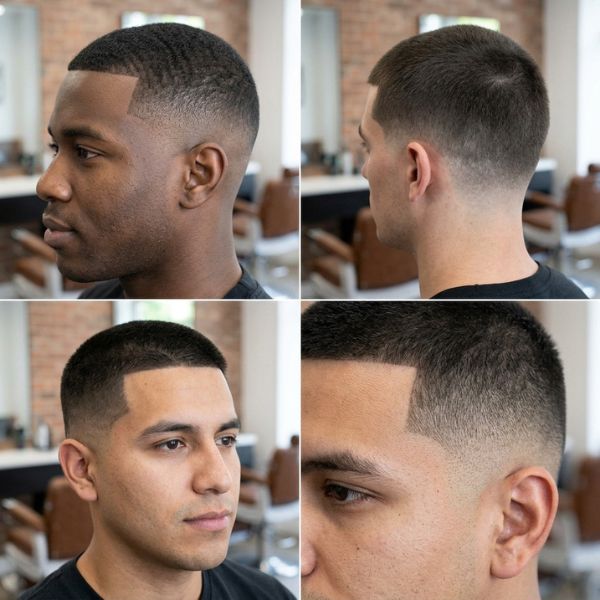
A short buzz on top with a low taper on the sides is the lowest-maintenance version of this cut. Using a #2 to #4 guard on top blended into the taper keeps things sharp with almost no daily styling. It also highlights bone structure, which makes it a strong option for oval, square, and diamond face shapes.
Waves, 360 Waves & Coils
This is one of the most requested combinations for Black men in 2026. The low taper removes bulk from the sides while the top is brushed or brushed and durag-wrapped to build 360 waves. To style it, apply a light wave pomade to damp hair, brush in one consistent direction, and tie down with a durag for at least twenty to thirty minutes. Finger coils work the same way structurally, giving a defined, low-profile texture on top with a clean fade underneath.
Afro Tops & Shaped Afros
The classic short afro with a low taper keeps one to two inches of natural texture on top rounded into an even silhouette, with the sides tapered instead of shaved to skin. This version does not require trimming the afro down the way a high fade often does, which makes it popular with men who want to grow their top out over time. A shaped afro edged with a clean line-up looks noticeably more polished for formal settings.
Long Hair, Braids, Locs & Dreads

A low taper fade with longer hair on top, braids, locs, or dreadlocks gives sharp contrast between the tight sides and the textured or flowing top. Barbers typically leave three to five inches or more depending on the braid or loc pattern, then taper cleanly around the ear and nape so the style looks deliberate rather than overgrown. This combination has become one of the most photographed barbershop looks because it reads as both edgy and well-groomed.
Sponge Twists & Hybrid Textures
Sponge twists use a twist sponge or brush to create small, uniform curls closer to the scalp, which pairs cleanly with a low taper because both elements stay tight and controlled. Hybrid textures, where twists, coils, and natural curl are combined on top, work the same way. Keep the twists hydrated with a leave-in conditioner and a sulfate-free shampoo, and avoid overwashing, since that dries out the twist pattern faster.
Read more: Burst Fade Design: Best Hair Design Ideas, Placement, and Barber Tips (2026)
Beards, Line-Ups & Designs
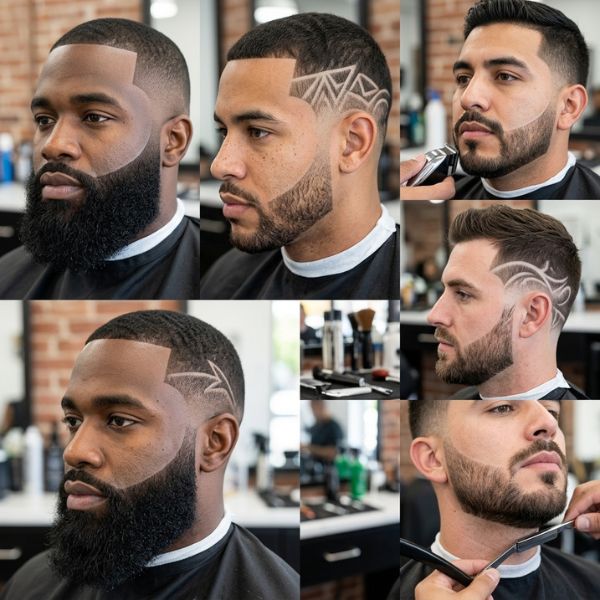
Pairing a low taper fade with a beard fade creates one continuous gradient from the hairline down to the jaw, which frames the face without looking like the beard and haircut are two separate decisions. A line-up along the front hairline sharpens the whole look further, and a small design shaved into the taper zone (a part line, a geometric shape, or initials) turns a standard cut into something more personalized.
Mohawk, FRO hawk & Mid Low Taper
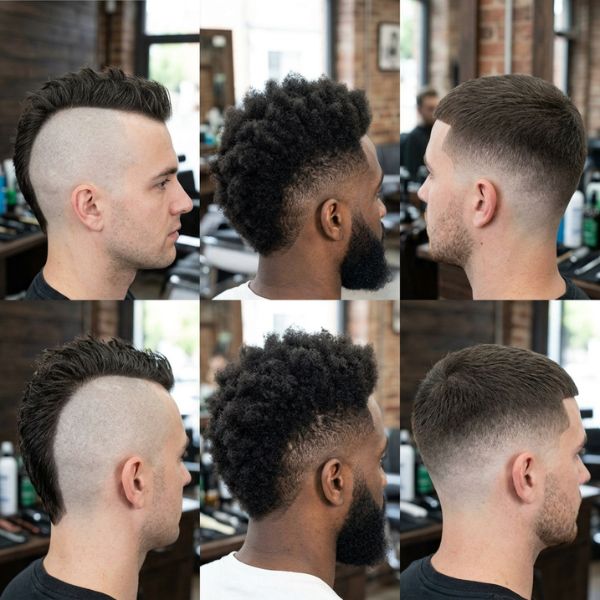
A mohawk built on a low taper fade uses a burst fade around the ears so the sides disappear while a strip of length runs down the center. A frohawk applies that same idea to natural afro texture, keeping curl definition down the middle instead of shaving it flat. A mid low taper simply starts the blend slightly higher than a classic low fade, giving a bit more contrast while still keeping the natural, hair-into-hair blend that defines this style family.
Best Low Taper Fade Black Male for Different Face Shapes
- Oval face: Balanced proportions mean almost any top style works. A textured crop, classic afro, or side part all look sharp.
- Round face: Add height on top, such as a shaped afro or a slight quiff, since a flat, short top with no volume exaggerates roundness.
- Square face: A softer, textured top takes the edge off strong angles without hiding a defined jawline. Avoid an extremely short buzz paired with a clean-shaven face, since that combination overemphasizes every angle.
- Diamond face: A bit of extra width or volume on the sides relative to the top helps balance narrow forehead and chin points against wider cheekbones.
- Heart-shaped face: Some forward texture or a light fringe over the forehead balances a wider top half against a narrower chin.
- Long or oblong face: Keep the top shorter and wider rather than tall, since added height stretches the face further.
How to Ask for Low Taper Fade Black Male at the Barber
Walking in with a script removes almost all the guesswork for both you and your barber.
- State the fade height clearly: “low taper, starting just above the ear.”
- Give a guard number for the bottom and one for the top of the fade zone, for example “#1 at the bottom blending into a #3 or #4.”
- Describe the top style you want: afro, waves, twists, braids, or a specific length in inches.
- Mention your neckline preference: natural, tapered, or squared off.
- Bring one or two reference photos and point out the specific parts you like, such as the blend, the neckline, or the beard connection.
- Note your beard plan so the barber can decide whether to fade it into the haircut.
Being specific about guard numbers matters more than showing a photo alone, since lighting and camera angles can make two very different fades look similar in a picture.
Read more: Boys Mullet Haircut Guide 2026: Styles, Fades, and Care
How to Maintain Low Taper Fade Black Male Cuts
- Rebook every three to five weeks. A taper fade grows out more gracefully than a skin fade, but the blend still softens over time.
- Wash with a sulfate-free shampoo two to three times a week to avoid stripping natural oils from coily or curly hair.
- Use a leave-in conditioner on twists, coils, or longer top sections to prevent dryness and breakage.
- Apply lightweight products. Pomade, clay, or matte paste give a natural finish for shorter tops, while curl cream or a texture powder works better for waves, coils, and afros.
- Retwist or redefine curls as they grow to keep sponge twists or coil patterns from looking undefined.
- Protect waves overnight with a durag or satin bonnet to maintain pattern and moisture.
Common Mistakes & How to Avoid Them
- Cutting curly or coily hair wet. Curl shrinkage means wet hair looks longer than it will once dry. Ask your barber to cut curls dry, or at least check the length dry before finishing.
- Choosing a skin fade without wanting the upkeep. A skin fade needs a visit every ten to fourteen days. If that is not realistic, ask for a soft taper instead.
- Overwashing twists or coils. This dries out the pattern and shortens how long the style holds between retwists.
- Skipping guard numbers in your request. Saying only “low taper” leaves too much room for interpretation. Always pair it with a specific number or length.
- Ignoring face shape when picking a top style. The fade itself flatters nearly everyone, but the wrong top length can work against your proportions.
- Not maintaining the beard connection. If your beard is faded into the haircut, it needs upkeep on a similar schedule, or the two sections grow apart and look disconnected.
Low Taper Fade Black Male FAQs
Is a low taper fade good for Black hair?
Yes. It blends hair into hair rather than skin, which suits coarse and coily textures and holds its shape longer between barber visits.
How often should I get a low taper fade touched up?
Most men rebook every three to five weeks, since the gradual blend grows out more gracefully than a skin fade.
Does a low taper fade work with an afro on top?
Yes, it is one of the most classic pairings. The taper cleans up the sides while the afro keeps its natural volume and shape.
Can I get a low taper fade with locs or braids?
Yes. Barbers taper the sides and back while leaving the top length for braids or locs untouched, creating clean contrast between the two textures.
What should I say to my barber for a low taper fade?
Ask for a low taper starting above the ear, give guard numbers for the top and bottom of the fade zone, and describe your desired top style and neckline.
Is a low taper fade or skin fade better for Black men?
A low taper generally needs less frequent maintenance, while a skin fade looks sharper immediately after cutting but requires touch-ups every ten to fourteen days.
Conclusion
A low taper fade black male haircut earns its popularity honestly. It works with nearly every natural hair type Black men wear, from short buzz cuts and 360 waves to shaped afros, sponge twists, braids, and locs, and it does that while asking for less maintenance than a skin fade. The real difference between a good version of this cut and a great one comes down to communication: knowing your fade height, your guard numbers, your top style, and how your face shape responds to length and volume. Bring that information to your next appointment, along with one or two clear reference photos, and you will walk out with a low taper fade that actually fits your hair, your face, and your routine.

Zaria Rhodes is the lead editor and content curator at Lyrinexa, passionate about music, storytelling, and lyrical expression. With a deep love for discovering the meaning behind songs, she brings clarity, creativity, and accuracy to every post. Zaria is dedicated to providing readers with authentic lyrics, thoughtful interpretations, and a seamless music-exploration experience.

2 thoughts on “Low Taper Fade Black Male: 2026 Barber Guide for Waves, Curls, Afros & Locs”