


Meta Description: Messy French crop haircuts blend a tapered fade with a textured, tousled top for a sharp, low effort style. Get the full barber guide inside.
The messy French crop is one of the most requested men’s haircuts right now, and for good reason. It pairs short, faded sides with a longer, textured top that falls forward into a loose fringe. The result looks undone in the best way, sharp at the edges, relaxed on top, and ready in under five minutes each morning. This guide breaks down what the cut actually is, who it suits, the exact words to use in the chair, and how to keep it looking fresh between visits. Whether you have straight hair, waves, curls, or coils, there is a version of this crop built for your texture and face shape.
Messy French Crop: Effortless Texture, Clean Outline, Fast Style
At its core, this haircut takes the discipline of a traditional crop, short sides, a defined outline, a forward fringe, and loosens it up with texture. Barbers achieve the messy look through texturizing scissors, point cutting, or a razor, then finish the sides with a taper or fade so the whole shape stays sharp even when the top looks casual. It is this contrast, tidy sides against a tousled crown, that gives the style its appeal.
1) What Is a Messy French Crop
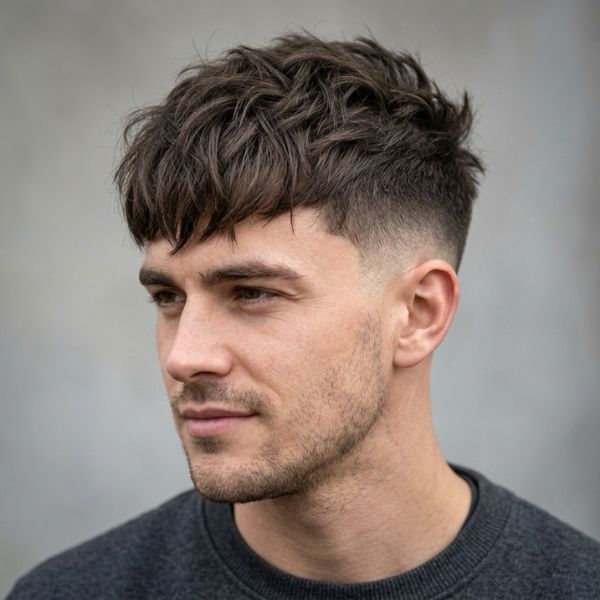
A messy French crop is a short to medium length men’s haircut with cropped or faded sides and back, paired with a longer, choppy top that is styled forward over the forehead. Instead of a neat, combed finish, the top is cut and styled to look naturally tousled, with individual pieces of hair separated for texture and movement.
The classic French crop has roots in European barbering traditions, where short, practical hair with a forward fringe was popular among soldiers and workers. Modern barbers updated the look by adding taper and skin fades on the sides, then loosened the top with texturizing techniques. The result is a hairstyle that reads as intentional rather than unfinished, even though it looks like you barely touched it.
Key markers of a messy French crop include:
- A textured top cut with scissors, thinning shears, or a razor for softness
- Sides that taper or fade down, usually a low fade or mid fade
- A short fringe pushed forward instead of swept to one side
- A visible but soft outline around the hairline and ears
2) Why Choose This Cut
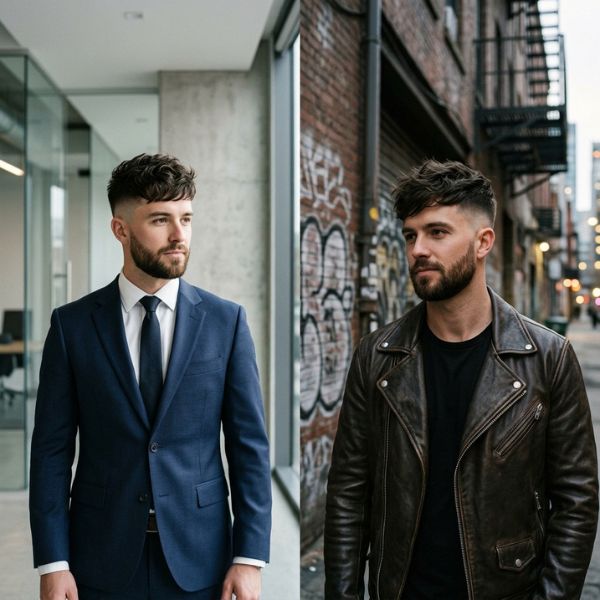
Men gravitate toward the messy French crop for a few practical reasons that go beyond looks.
- It requires minimal daily styling once the shape is cut correctly.
- It flatters most face shapes when the fringe and fade are adjusted to fit.
- It moves easily between office days and weekend plans.
- It works across straight, wavy, curly, and coily hair.
- It grows out cleanly, so the gap between barber visits feels shorter.
Because the top can be styled sleek one day and messy the next, this cut also gives you more flexibility than a lot of short hairstyles that only really work one way. It is a haircut that looks styled even on days you genuinely did not style it.
Read more:Short Wolf Cut Men 2026: Best Styles for Every Hair Type
3) Face Shape Match

The fringe length and fade height are the two details that do the most work in flattering your face shape. Here is a general starting point to discuss with your barber.
| Face Shape | What Works Best | Why |
|---|---|---|
| Oval | Almost any fringe length or fade height | Balanced proportions suit most variations |
| Square | Slightly longer, softer fringe with a low to mid fade | Softens strong jaw and temple lines |
| Round | Higher fade with more height and volume on top | Adds length and breaks up width |
| Rectangular or long | Fuller fringe worn lower on the forehead | Shortens the visual length of the face |
| Diamond | Textured fringe with volume at the temples | Balances a narrower forehead and chin |
Bring a front-facing photo to your appointment. A skilled barber will read your hairline, cowlicks, and forehead shape in seconds and adjust the fringe and fade to suit you specifically, rather than copying a reference photo exactly.
4) Hair Types & Top Textures
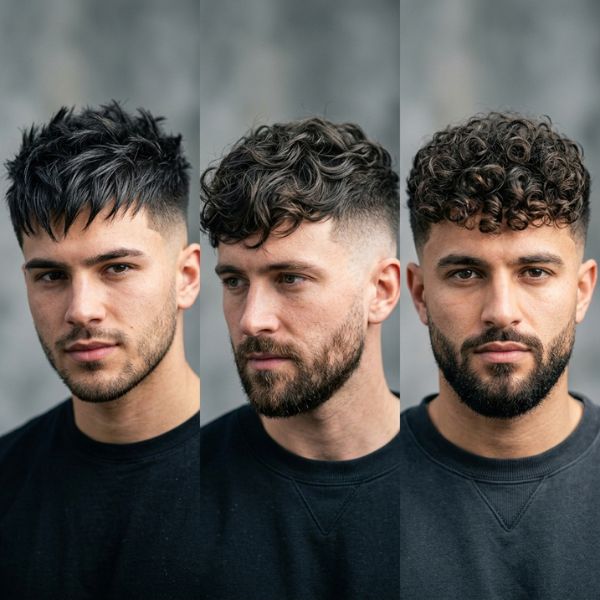
Hair type changes how the messy French crop is cut and how it behaves day to day.
- Straight hair: Works best with a blunt or straight fringe and a flatter textured top with light breakup near the front. Straight hair needs product to hold separation since it naturally falls flat.
- Wavy hair: Suits a choppy textured crop with a softer fringe edge. Waves already have movement, so the barber usually thins less and lets the natural pattern show.
- Curly hair: Needs shorter layering on top so curls do not become too heavy or triangular. A slightly longer fringe can be left to frame the face.
- Coily or thick hair: Benefits from internal thinning so volume does not push outward too aggressively. This keeps the crop close to the head while still allowing texture.
Fine hair generally holds a crisper fringe line, while thick or coarse hair leans naturally toward the tousled, piecey look the cut is known for.
Read more:Low Taper Fade Black Male: 2026 Barber Guide for Waves, Curls, Afros & Locs
5) Exactly What to Tell Your Barber
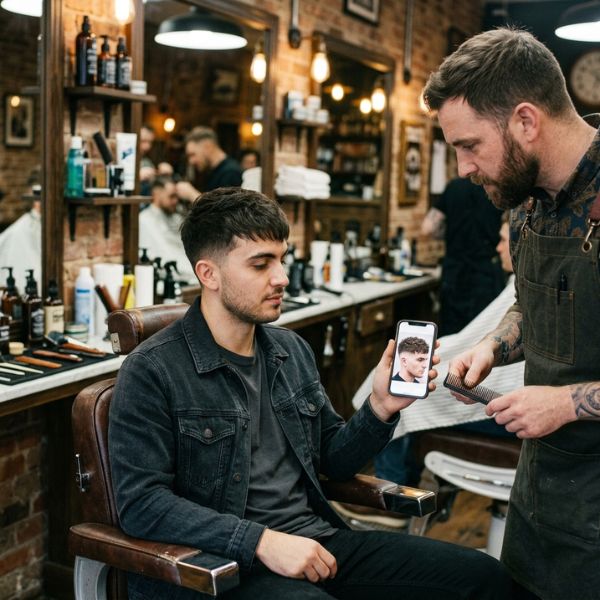
Vague requests lead to inconsistent results. Use language your barber can act on immediately.
- “I want a messy French crop with a low taper or low fade on the sides.”
- “Keep the top around two to four inches so I can push it forward.”
- “Texturize the top with scissors or a razor, not just a straight trim.”
- “Cut the fringe [blunt / choppy] to match my forehead.”
- “Keep a natural neckline” or “give me a soft line up,” depending on your preference.
It also helps to mention your hair’s natural behavior, including cowlicks, growth patterns, or how quickly your hair thins out at the crown. This lets the barber plan the cut around your head rather than a generic template.
6) In the Chair: Step by Step
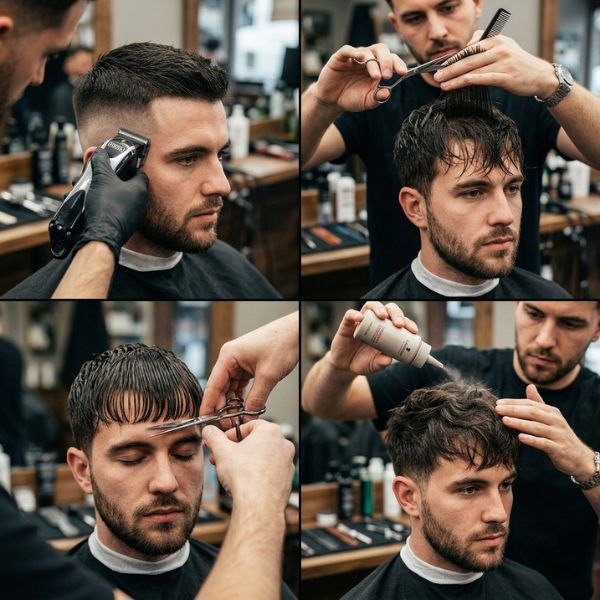
Every good barber follows a similar sequence when building this haircut, even if the exact technique varies slightly by hand.
Step 1: Consult & Plan
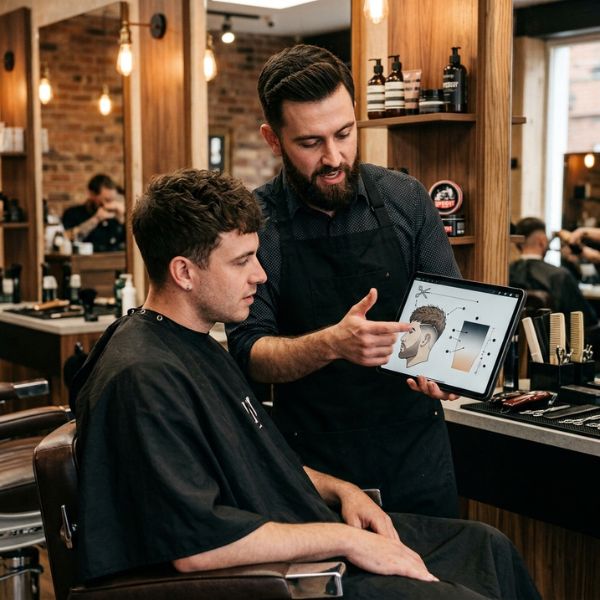
The barber checks your hair type, density, growth pattern, and any cowlicks at the crown. This is also when you confirm fringe length, fade height, and how much texture you want on top. A reference photo speeds this step up considerably.
Step 2: Prep
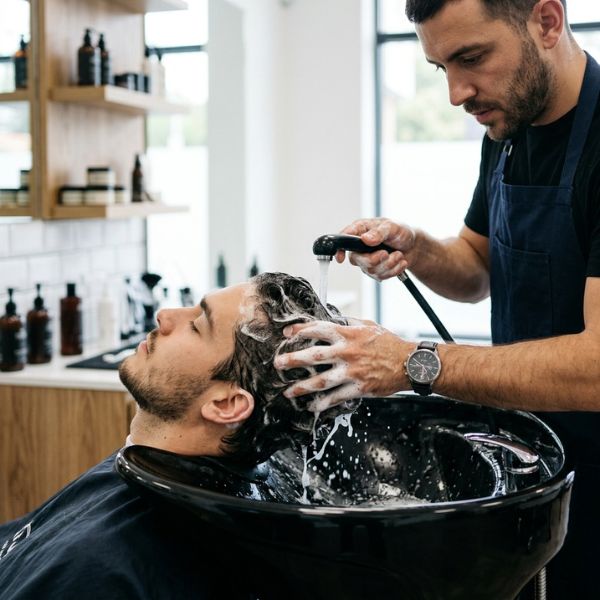
Hair is washed and towel dried to roughly 70 percent dry, since damp hair reveals natural root direction and is easier to cut cleanly. The barber may section the top away from the sides to keep guidelines sharp.
Read more:Low Taper Fade with Textured Fringe: Complete Guide for 2026
Step 3: Set the First Guideline
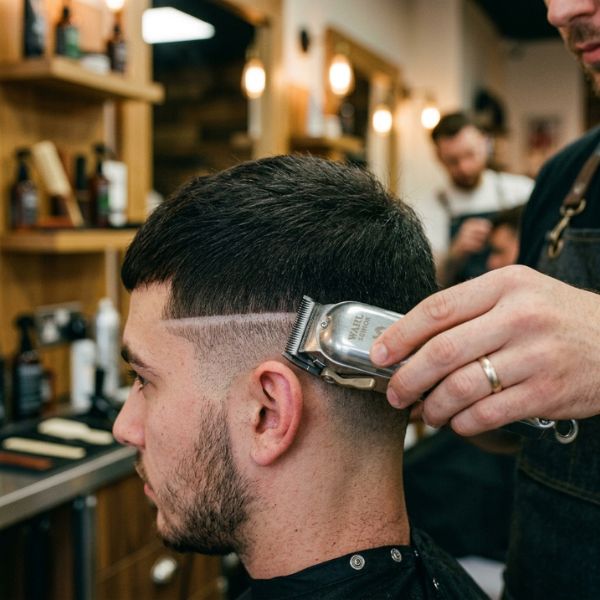
A baseline is placed low, usually near the top of the ear, to anchor the taper or fade. This first guideline curves around the head and sets the shape everything else will be blended into.
Step 4: Build the Taper or Fade
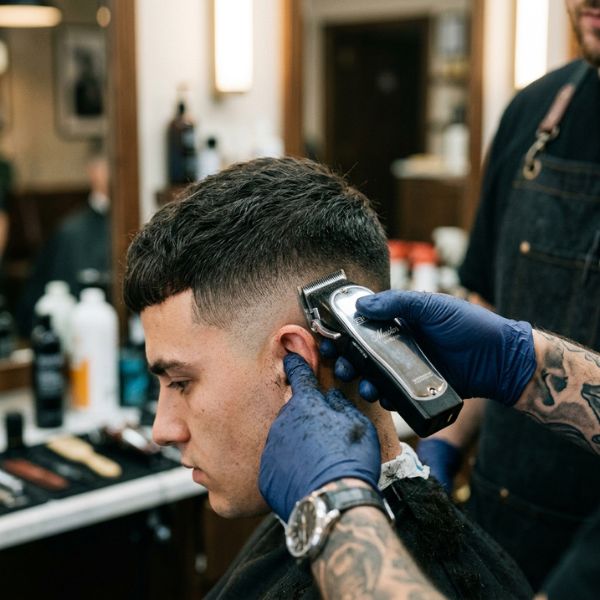
Working upward from the neckline and around the ears, the barber blends the sides from short to longer in smooth passes. A low taper keeps more length for a subtle look, while a fade takes the sides down closer to the skin for more contrast.
Step 5: Blend Ridges
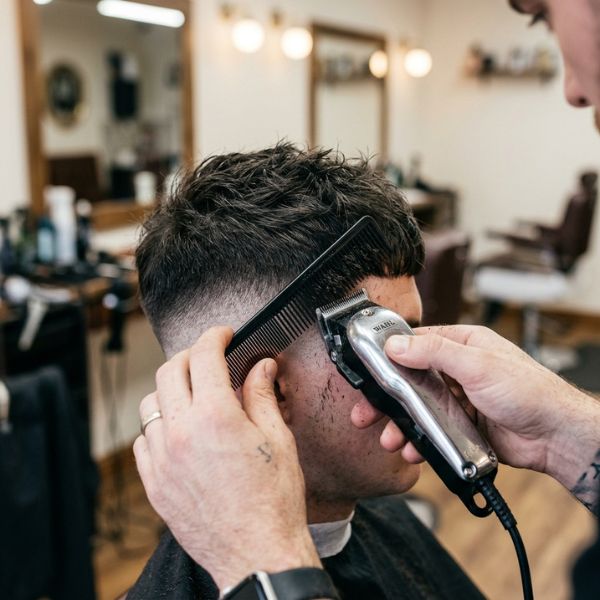
The area where the shorter sides meet the longer top, often called the parietal ridge, is blended carefully so there is no visible line or step. Clean ridge work is what separates a sharp crop from one that looks unfinished as it grows out.
Step 6: Texture & Balance
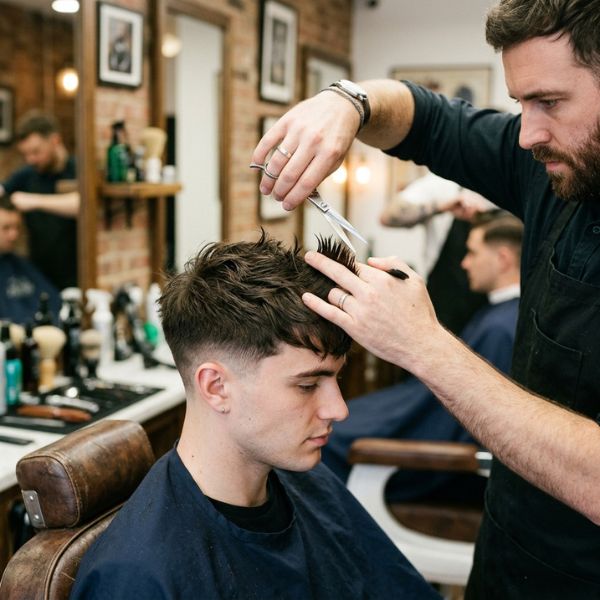
The top is texturized with point cutting, thinning shears, or a razor to remove bulk and create the piecey, tousled look. The barber checks the shape from the front, both sides, and the back to keep it balanced.
Step 7: Cut the Fringe
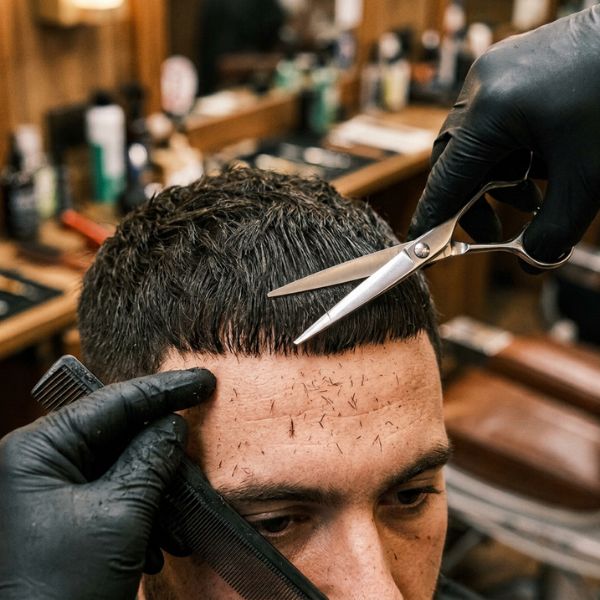
The fringe is cut last, either blunt for a stronger line or choppy for a softer, broken edge. This is trimmed to sit just above the eyebrows or slightly longer depending on your preference and forehead shape.
Step 8: Finish
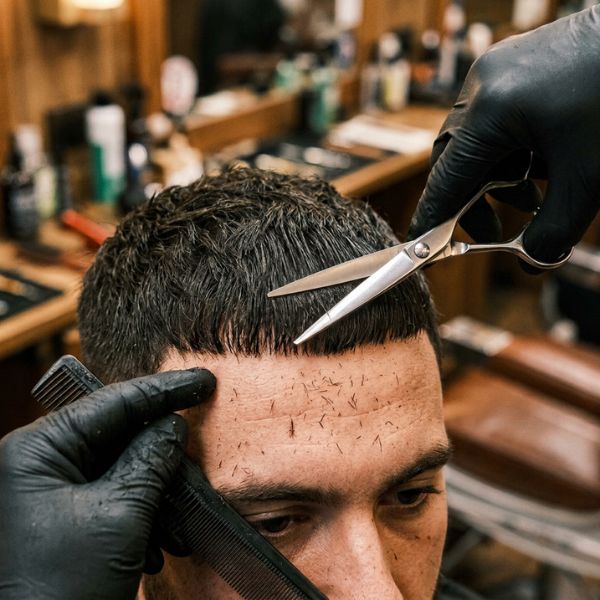
The barber cleans up the neckline, checks the outline around the ears, and does a final texture pass to remove any stray bulk. A small amount of product may be applied to show you how the cut styles once it is finished.
7) Daily Routine and Fast Style
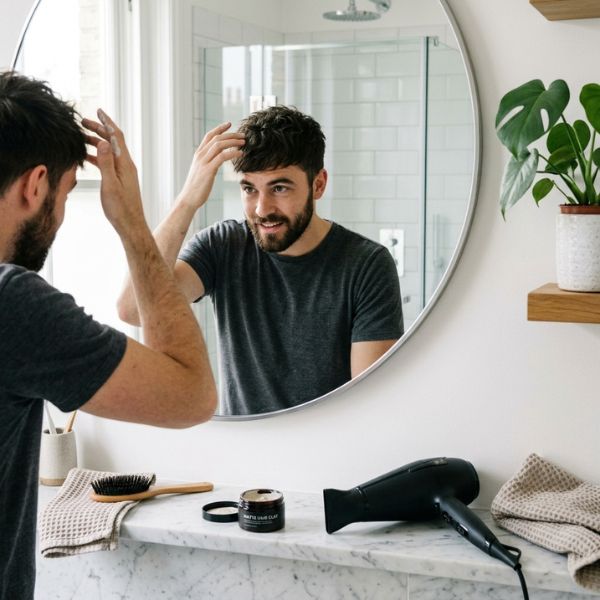
Part of the appeal here is speed. A typical morning routine takes under five minutes.
- Towel dry hair to damp, not soaking wet.
- Apply a small amount of matte clay, texture paste, or sea salt spray to the palms and rub through evenly.
- Push the top forward with your fingers, focusing on the fringe area.
- Separate a few pieces near the front for texture rather than combing it flat.
- Optional: a quick pass with a blow dryer on a cool or low setting adds lift and separation before product goes in.
Matte clay and molding paste suit most hair types and give a natural, non-shiny finish. Sea salt spray works well for guys who want extra texture without heavy hold, particularly on wavy or curly hair.
8) Beard & Outline Options
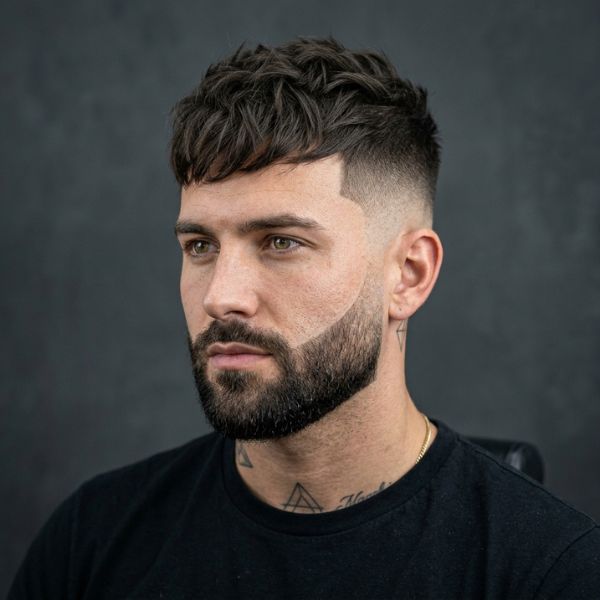
The messy French crop pairs naturally with several beard styles, and the outline choice around your hairline changes the overall effect.
- Clean shaven: Keeps the focus entirely on the textured top and sharp sides, suited to formal or professional settings.
- Short stubble: Adds a bit of edge without much extra grooming effort.
- Full beard: Balances the volume on top, especially on cuts with a lower fade.
- Goatee: Works well with a softer, less aggressive fade for a more casual finish.
For the outline, a natural neckline that follows your existing hairline looks more relaxed and grows out with fewer visible lines. A soft line up around the front hairline adds sharpness without looking overly rigid, while a hard part or skin outline suits guys who want a bolder, more defined look.
9) Maintenance Timeline
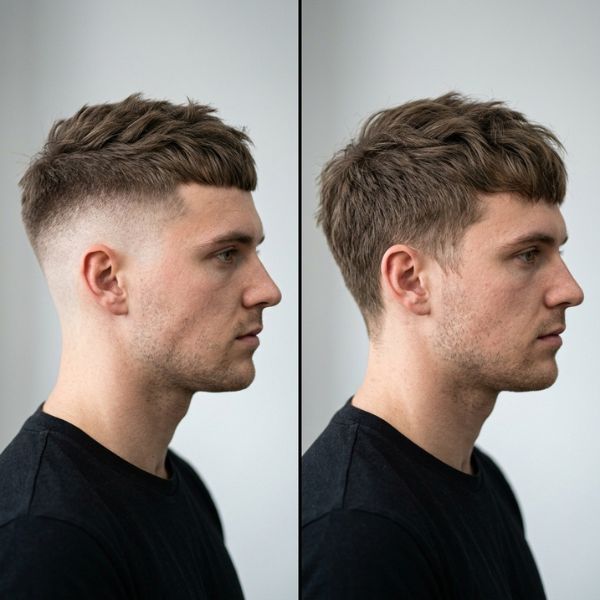
This cut is low maintenance day to day, but the fade and fringe do need regular attention to stay sharp.
- Every 1 to 2 weeks: Use a trimmer with a guard to tidy the neckline and around the ears at home if your fade is low.
- Every 3 to 4 weeks: Book a barber visit for most fade heights to keep the blend clean.
- Every 4 to 6 weeks: Straight or low taper versions can often stretch a little longer between full cuts.
Signs it is time for a trim include a fringe dipping into your eyes, a fade that has softened into a blur instead of a clean line, or a styling routine that suddenly takes longer than it used to. Any one of these is a reliable signal that the shape has grown past its best point.
10) Common Mistakes & Quick Fixes
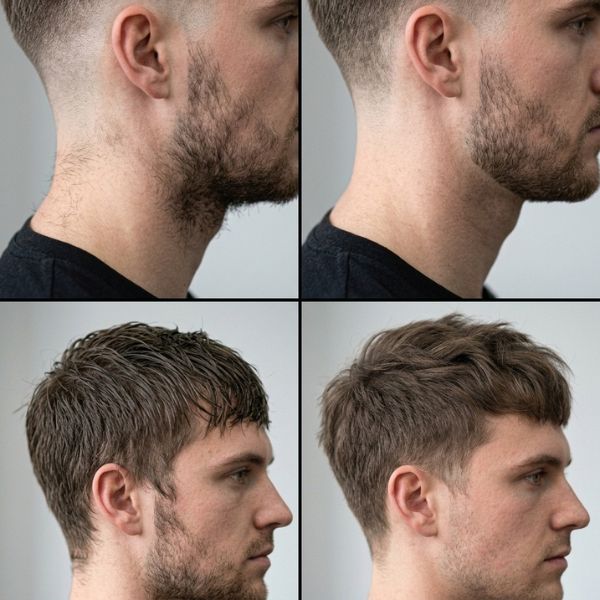
Even a well cut messy French crop can go wrong between visits or with the wrong technique. Here is how to catch and correct the most common issues.
- Top looks too heavy or flat: The interior needs more thinning. Ask your barber to debulk the corners and re-blend the ridge.
- Fade creeping too high: The baseline has drifted upward over time. A barber can reset it lower and rebuild the blend with shorter clipper strokes.
- Patchy or uneven skin fade: This usually means the transition zones were not blended finely enough. Gentle foil work or extra blending passes fix this.
- Fringe losing its shape fast: A blunt fringe that flops by midday may need a slightly shorter length or a lighter hold product applied to fully dry hair rather than damp hair.
- Style looks stiff instead of messy: Too much product, or the wrong type, can flatten texture. Switch to a lighter clay or a sea salt spray and use less than you think you need.
Frequently Asked Questions
Does a messy French crop suit thin hair?
Yes. Texturizing adds the appearance of volume, and a slightly longer top helps create fullness for finer hair.
Is this haircut office appropriate?
Yes, especially with a low taper and a softer fringe, it reads as tidy and professional rather than overly casual.
How long does the top need to be?
Most versions work with the top between two and four inches, long enough to push forward and texturize.
Can curly hair get a messy French crop?
Absolutely. Curly hair often needs shorter layering to prevent the top from becoming too heavy or triangular.
What products work best for styling?
Matte clay and molding paste suit most hair types, while sea salt spray adds texture with a lighter hold.
How often should I get it trimmed?
Every three to four weeks for fades, and up to six weeks for lower tapers, depending on how fast your hair grows.
Conclusion
The messy French crop earns its popularity because it solves a real problem: looking put together without spending real time on it. The structure comes from a clean taper or fade and a protected outline, while the personality comes from a textured, forward styled top that never looks overworked. Whether your hair is straight, wavy, curly, or coily, the cut can be adjusted through fringe length, fade height, and texturizing technique to suit both your hair and your face shape. Bring a clear reference photo to your next appointment, use the exact wording from this guide, and keep up with regular trims, and you will have a haircut that looks intentional every single day, in the mirror and in photos.

Zaria Rhodes is the lead editor and content curator at Lyrinexa, passionate about music, storytelling, and lyrical expression. With a deep love for discovering the meaning behind songs, she brings clarity, creativity, and accuracy to every post. Zaria is dedicated to providing readers with authentic lyrics, thoughtful interpretations, and a seamless music-exploration experience.

2 thoughts on “Messy French Crop Haircuts: Fast Style, Sharp Results”