


A boys mullet haircut is short on top and around the sides, then left longer at the back. That’s the whole formula, and it’s why the style has become one of the most requested kids’ haircuts of the year. Parents like it because it still looks tidy for school photos. Kids like it because it feels different from the cut every other boy in class is wearing.
This guide walks through what a modern boys mullet actually looks like in 2026, how to pick the right version for your son’sboys mullet hair type and age, twelve style variations with real barber language you can use, and a full care routine that doesn’t require a stylist’s degree to follow. By the end, you’ll know exactly what to ask for and how to keep it looking sharp between visits.
What Is a Boys Modern Mullet
The old mullet from decades past was choppy and often had a hard, obvious line between the short top and the long back. The boys modern boys mullet fixes that problem. Today’s version uses blended sides, a textured crown, and a back section that tapers gradually instead of dropping off in one blunt cut.
Three things define a modern mullet haircut for boys:
- Blended sides. A fade or taper connects the short hair to the skin smoothly, so there’s no harsh line.
- Textured top. Point cutting or thinning shears remove bulk and add movement, which keeps the style from looking flat.
- Layered back. The length at the nape is layered rather than left blunt, so it moves naturally instead of hanging like a curtain.
Because the boys mullet cut relies on blending rather than length alone, it works across straight, wavy, and curly hair. That flexibility is a big reason it has stuck around instead of fading out as a passing trend. A well cut boys mullet also grows out more gracefully than most short styles, since the back is already designed to lengthen over time.
How to Choose the Right Version
Picking the right variation comes down to three practical factors: hair texture, age, and how much daily maintenance your household actually has time for.
Hair texture matters most. Straight hair shows a clean line and works well with a classic or straight mullet. Curly and coily hair naturally adds volume on top, so a curly modern mullet often needs less product to look finished. Wavy hair sits somewhere in between and tends to suit tapered or surfer-inspired versions.
Age changes what’s practical.
- Younger boys, roughly five to eight, usually do best with a shorter back section and a soft taper. It’s easier for them to sit still for, and it grows out without looking messy.
- Boys around nine to twelve can handle more contrast, like a mid fade or a longer back, since they’re often more patient in the chair and more involved in choosing the look.
- Teens tend to want sharper details such as a burst fade, a hard part, or a longer flowing back for a bolder statement.
Routine matters more than trend. If mornings are already rushed, choose a shorter back with a soft taper. It needs almost no styling and still looks clean. If your son enjoys spending a few minutes with a comb or some texture cream, a longer or wavier version gives him more to work with.
Bring a clear reference photo to the barber, mention the hair type, and be specific about how much length to leave at the back. Those three details prevent most of the miscommunication that leads to a cut nobody’s happy with.
Read More : Straight Hair Mullet Guide 2026: Styles, Fade, and Easy Care
The Best Boys Mullet Haircut Variations
1) Classic Boys Mullet
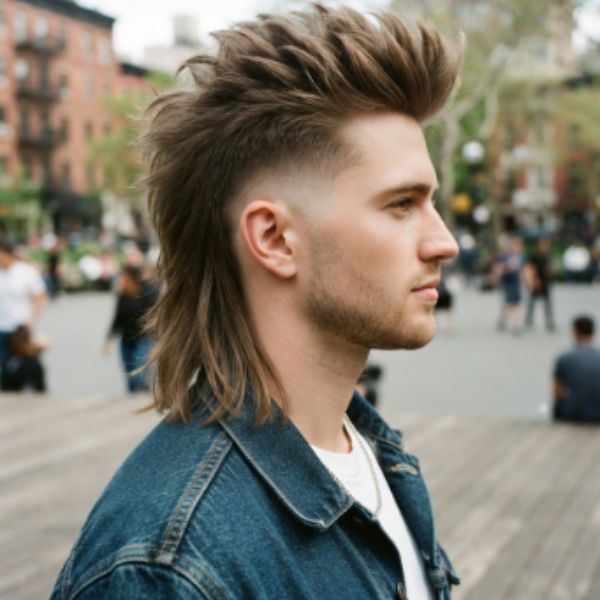
The original formula: short top and sides with moderate length left at the back. It’s the most requested version because it’s easy for any barber to execute and easy for parents to maintain. The classic works well on straight to slightly wavy hair and suits nearly every face shape, since the shorter sides keep the overall silhouette balanced.
2) Boys Mullet Fade

This variation swaps the soft taper for a proper fade, either mid or high, on the sides. The contrast between the skin-close fade and the longer back creates a sharper, more grown-up look. It’s a strong pick for boys who want the mullet shape but with more definition and less bulk around the ears.
3) Short Mullet Haircut Boy

For families who want the idea of a mullet without the commitment, this version trims the back down to a subtle flick instead of a long tail. It suits active kids since there’s less hair to get in the way during sports, swimming, or general roughhousing, and it still reads clearly as a mullet from any angle.
4) Curly Boys Modern Mullet

Curly hair adds natural height and texture on top, so this version often needs the least amount of daily styling. Barbers usually keep the curls a bit longer on top to let the shape show, then taper the sides to keep the volume from spreading outward. A light curl cream on damp hair is usually all it takes to finish the look.
5) Boys Modern Mullet Straight Hair

Straight hair shows off clean lines, which makes this version look crisp right out of the chair. The top is usually cut with a bit of length so it can be pushed forward or side-swept, while the back stays sleek rather than choppy. This is one of the lowest-maintenance options for boys with fine, straight hair.
6) Tapered Modern Mullet Haircut Boy
A tapered mullet skips the hard fade line entirely and instead gradually shortens the hair from the crown down to the neckline. It’s a softer, more subtle look that many parents prefer for school settings, since there’s no sharp contrast to draw attention. It’s also one of the easiest cuts to grow out between appointments.
7) Burst Fade Boys Mullet Haircut
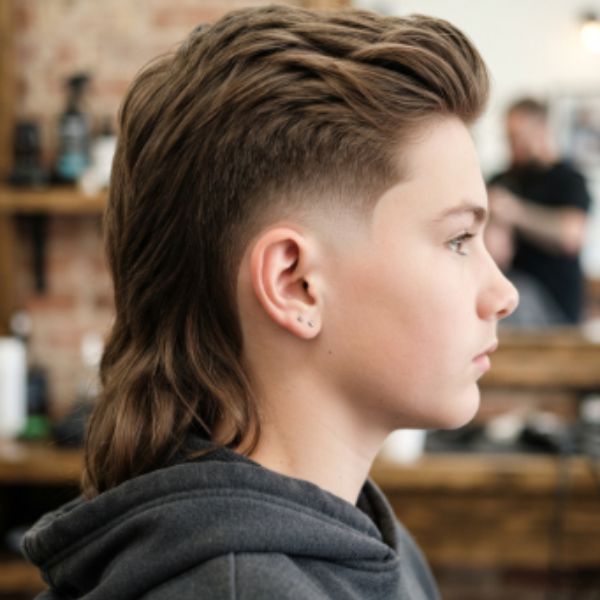
The burst fade curves around the ear instead of running in a straight line, which pairs nicely with the flowing back of a mullet. It’s a popular choice among preteens and teens who want a cut with more visual interest. This version does require more frequent trims to keep the fade line looking sharp, typically every two to three weeks.
8) Sporty Medium Mullet
Built for boys who are constantly moving, this version keeps the back at a medium length rather than long, and the top short enough to stay out of the eyes during activity. It pairs well with a low fade or taper on the sides. It’s a practical choice for kids in year-round sports who still want a bit of personality in their cut.
9) Wavy Surfer Mullet for Boys

This laid-back version leans into natural wave patterns, with a longer, tousled top and a back that flows rather than tapers sharply. Sea salt spray or a light texturizing product enhances the wave without weighing the hair down. It’s a popular warm-weather choice, especially for boys who spend a lot of time outdoors.
10) Fringe Mullet
Here, the front section is left longer and swept forward or to the side, creating a fringe that frames the face. The sides are usually faded or tapered to balance out the extra length up front. This variation works particularly well for boys with straighter hair, since the fringe holds its shape without much effort.
Read More : Messy French Crop Haircuts: Fast Style, Sharp Results
11) Low Fade Modern Mullet
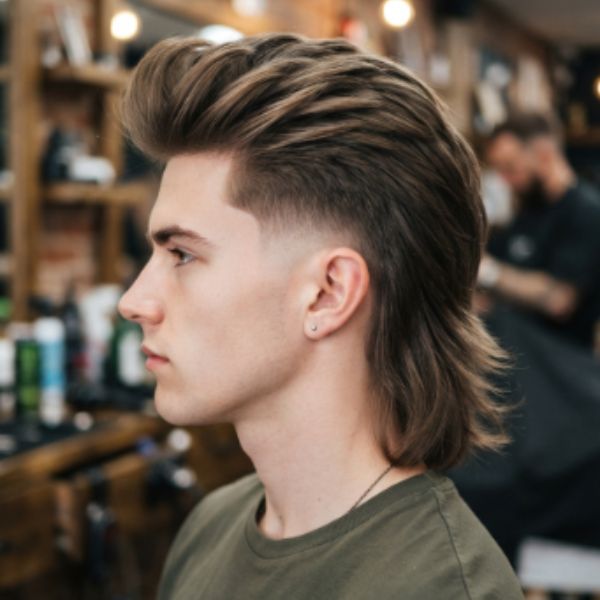
A low fade starts higher on the head and gradually fades down closer to the skin near the ears and neckline, offering a subtler contrast than a mid or high fade. It’s a good middle-ground choice for parents who want a defined edge without an overly dramatic look, and it tends to be more school-appropriate than a high or burst fade.
12) Longer Back, School Safe
For families navigating school dress codes, this version keeps the back at a moderate, collar-grazing length rather than letting it grow long and dramatic. The top and sides stay neatly tapered. It gives boys the mullet silhouette while staying within most school hair policies, and it’s worth double-checking your school’s specific guidelines before booking.
Quick Age and Care Guide
| Age Group | Recommended Style | Trim Frequency | Styling Effort |
|---|---|---|---|
| 5 to 8 years | Classic or tapered, shorter back | Every 5 to 6 weeks | Minimal |
| 9 to 12 years | Mid fade, sporty medium, or fringe mullet | Every 4 to 5 weeks | Light, a few minutes |
| 13 and up | Burst fade, low fade, or surfer mullet | Every 2 to 3 weeks | Moderate, daily styling |
Younger kids generally do better with lower-maintenance versions since they’re less likely to style their own hair consistently. As boys get older and more invested in their appearance, styles with more contrast and definition tend to hold their appeal longer.
Daily Styling That Kids Can Do
A mullet doesn’t have to mean a complicated morning routine. Most boys can manage their own style in under five minutes with the right approach.
- Start with damp hair. A quick spray bottle mist makes hair easier to work with than dry hair straight out of bed.
- Apply a small amount of product. A pea-sized amount of texture cream, matte clay, or curl cream depending on hair type is usually enough for a kid-sized head.
- Work product through with fingers. Fingers give a more natural, less overworked finish than a comb for most textured or wavy styles.
- Push the top forward or to the side. This defines the shape without needing a blow-dryer.
- Leave the back alone. The layered back is designed to fall naturally, so over-styling it usually makes it look flatter, not better.
For straighter hair, a wide-tooth comb after applying product helps smooth the top without flattening the volume completely. For curly hair, skip the comb after styling and let the curls set on their own to avoid frizz.
Care and Upkeep
Between barber visits, a few simple habits keep the cut looking intentional rather than overgrown.
- Wash two to three times a week. Washing too often can dry out a child’s scalp, while too little leads to product buildup that weighs the style down.
- Use a lightweight conditioner. This matters most for the longer back section, which is more prone to tangling than the shorter top.
- Detangle gently before bed. A quick brush through the back at night prevents the kind of knots that make the next wash a battle.
- Trim the back lightly every few weeks. Even boys growing the back out longer benefit from a light dusting trim to remove split ends without losing length.
- Protect it during swim season. Chlorine and salt water dry hair out fast. Rinsing with fresh water right after swimming and applying a leave-in conditioner helps the longer sections stay healthy.
Skipping regular trims is the most common mistake parents make with this cut. Even a barely-there trim every four to six weeks keeps the shape from getting stringy or uneven as it grows.
Barber Talk That Works
Walking into an appointment with the right vocabulary saves time and avoids a cut that misses the mark. Here’s language that communicates clearly with most barbers:
- “Short on top and sides, leave the back to grow for a mullet shape.”
- “Blend the sides with a taper, not a hard line.”
- “Keep about [X] inches at the back, layered so it moves.”
- “Texture the top with point cutting so it’s not too heavy.”
- “I want it school-appropriate, so keep the back around collar length.”
Bringing a reference photo is still the single most effective tool. Even with the right words, hair texture and head shape vary enough that a photo helps the barber picture the exact outcome you’re after.
Frequently Asked Questions
Is a mullet a good haircut for a young boy?
Yes, it’s a practical choice since it keeps hair out of the eyes up front while giving kids a bit of personality in the back. It also adapts well to most hair types and ages.
How often does a boys mullet need a trim?
Most versions need a trim every four to six weeks, though fades and burst fades hold their shape better with a trim every two to three weeks.
What hair type works best for a mullet?
All hair types work, but curly and wavy hair tend to add natural volume that reduces the need for daily styling compared to fine, straight hair.
Will a mullet grow out awkwardly?
Not if it’s cut with layers and a proper blend. A well-layered mullet grows out gradually into a longer style rather than an uneven one.
What’s the best age to start a mullet?
There’s no strict minimum age. Many parents start with a soft, short-back version around age five, while others wait until their son specifically asks for the style.
Does a mullet need a lot of product to style?
No. A small amount of texture cream or curl cream is usually enough, and many curly-haired boys need little to no product at all.
Read More : Short Wolf Cut Men 2026: Best Styles for Every Hair Type
Conclusion
The boys mullet haircut earns its popularity because it genuinely works for real life. It’s tidy enough for school, distinct enough to feel like a real choice rather than a default cut, and flexible enough to suit straight, wavy, or curly hair. Whether you land on a classic version, a fade, a curly modern mullet, or a school-safe longer back, the shape adapts to your son instead of forcing him to adapt to it.
Pick the variation that matches his hair type and your family’s routine, bring a clear reference photo to the barber, and keep up with light trims between visits. That combination is really all it takes to get a cut he’ll actually want to keep.

Zaria Rhodes is the lead editor and content curator at Lyrinexa, passionate about music, storytelling, and lyrical expression. With a deep love for discovering the meaning behind songs, she brings clarity, creativity, and accuracy to every post. Zaria is dedicated to providing readers with authentic lyrics, thoughtful interpretations, and a seamless music-exploration experience.

1 thought on “Boys Mullet Haircut Guide 2026: Styles, Fades, and Care”