


If you have naturally straight hair and you’re thinking about a mullet, you’re in luck. The straight hair mullet is one of the sharpest, easiest to maintain haircuts you can walk into a barbershop and ask for in 2026, and it holds its shape far better than curly or wavy hair ever could. This guide covers every version of the cut, from the classic short back and sides to the modern taper fade mullet, plus how to style it, which products actually work, what to say to your barber, and how to keep it looking fresh between visits. Whether you’re a man chasing that business in the front, party in the back energy, a woman wanting a wolf cut alternative, or a parent looking into a mullet for a kid, you’ll find real, usable answers here rather than vague trend talk.
What Is a Straight Hair Mullet?
A straight hair mullet is a haircut where the front, top, and sides are cut short, while the back is left noticeably longer. That length difference is what defines every mullet, but straight hair changes how the cut behaves compared to curly or coily textures.
Because straight strands don’t curl, coil, or add volume on their own, every line the barber cuts shows up exactly where it was placed. There’s no natural texture to hide an uneven fade or a poorly blended top, which is part of why the straight hair mullet reads as such a clean, deliberate style rather than a messy throwback to the 1980s.
The modern version keeps the same “short in front, long in back” formula, but with tighter fades, better blending, and far more room to customize length, layering, and finish than the original mullet ever had.
Why Straight Hair Is Perfect for a Mullet
Straight hair and the mullet haircut are a natural match for a few practical reasons.
- Sharp contrast. Straight strands sit flat and reflect light evenly, so the short sides and long back create an obvious, sharp contrast instead of blending together.
- Cleaner fades. A skin fade or taper fade looks crisper on straight hair because there’s no natural curl pattern disrupting the gradient.
- Easier daily styling. Straight hair air-dries into a fairly predictable shape, which means less time with a blow dryer or styling brush each morning.
- Better for structured cuts. Shapes like the shag mullet or layered mullet rely on visible lines and defined layers, both of which show up more clearly on straight hair.
The one thing straight hair needs help with is volume. Because it naturally lies flat, the crown of a straight hair mullet needs a little extra lift, either from the haircut itself or from styling products, so the top doesn’t look pancaked against the head.
Read more: Messy French Crop Haircuts: Fast Style, Sharp Results
Straight Hair Mullet Variations
There isn’t just one straight hair mullet. The style covers a wide range of lengths, fades, and finishes, so there’s a version for almost every lifestyle and grooming routine.
Classic Straight Hair Mullet

This is the closest version to the original 1980s cut, with short sides, a flat top, and a longer back that isn’t heavily layered. It’s a bold, statement look that works well for anyone comfortable standing out.
Modern Straight Hair Mullet

The modern take softens the classic shape with a cleaner taper, better blending between the top and sides, and a back section that’s shaped rather than left blunt. It reads as edgy but still wearable in most everyday settings.
Straight Hair Mullet with Taper Fade

Here, the sides gradually shorten toward the skin instead of being cut with a single length. A taper fade mullet gives a polished, “professional adjacent” finish, which makes it a popular choice for people who want the mullet shape without looking too extreme at work.
Low Taper Straight Hair Mullet

A low taper keeps the fade close to the hairline instead of climbing high up the sides. It’s the most subtle fade option and pairs well with straight hair because the transition stays soft and easy to maintain between barber visits.
Straight Hair Mullet Fade

This is a broader term for any mullet where the sides are faded rather than just trimmed. Fades can range from a subtle low fade to a dramatic skin fade, and the choice usually comes down to how much contrast you want between the sides and the long back.
Read more: Short Wolf Cut Men 2026: Best Styles for Every Hair Type
Short Straight Hair Mullet

A shorter, tighter version where the back length is kept close to the collar rather than extending past it. This is the easiest straight hair mullet to maintain and the least noticeable in more formal environments.
Long Straight Hair Mullet

The back is allowed to grow well past the collar, sometimes to shoulder length or beyond. This dramatic version needs healthy, well-conditioned hair to avoid looking thin or stringy at the ends, since straight hair shows split ends and damage clearly.
Layered Straight Hair Mullet

Layers are cut throughout the back and crown to add movement and reduce the flat, blunt look that can come with straight hair. This variation blends especially well into a shag mullet finish.
Straight Hair Mullet with Fringe or Bangs

A straight, blunt fringe at the front pairs with the longer back for a youthful, retro look. The fringe can be worn short and choppy or long enough to be pushed to the side, depending on how much of the forehead you want to show.
Straight Hair Shag Mullet

This variation borrows heavily layered, textured styling from the classic 1970s shag and applies it to the mullet’s short front, long back structure. It’s a lower maintenance option because the choppy layers forgive slight regrowth better than a clean fade does.
How to Style a Straight Hair Mullet
Styling a straight hair mullet is quick once you know the basic routine.
- Start with damp, towel dried hair rather than soaking wet hair, since product distributes more evenly this way.
- Apply a small amount of styling cream or texturizing product through the roots first, focusing on the crown to build lift.
- Rough dry the top and front with your fingers, pushing hair upward and slightly backward to avoid the flat look straight hair tends toward.
- Use a round brush on the front section if you want a smoother, more polished finish.
- Leave the back mostly undisturbed, or twist small sections around your finger while drying for subtle movement.
- Finish with a light hold spray if you want the shape to last through a humid or windy day.
For a shaggier finish, skip the round brush and instead scrunch product through damp hair with your hands, letting it air dry for a more lived in texture.
Best Products for a Straight Hair Mullet
Straight hair needs texture and lift more than it needs heavy hold, so the product choice matters.
- Texturizing cream or clay: Adds grip and a matte finish without weighing the hair down, ideal for the top and crown.
- Sea salt spray: Creates light texture and a slightly tousled look, useful for the shag mullet variation.
- Volumizing mousse: Applied at the roots before blow-drying, this helps counter straight hair’s natural tendency to sit flat.
- Light hold pomade: Keeps the front and sides in place without the greasy shine of old-school pomades.
- Heat protectant spray: Essential if you’re regularly using a blow dryer or round brush, since straight hair can dry out and split at the ends.
Avoid heavy waxes or gels on the crown, since they tend to flatten straight hair instead of lifting it.
What to Tell Your Barber for a Straight Hair Mullet
Because “mullet” covers such a wide range of looks, walking in without specifics is the fastest way to get a cut you don’t want. Bring a reference photo if you can, and be ready to answer these points clearly.
- State the fade type you want on the sides, for example skin fade, low fade, or a simple taper with scissors only.
- Specify the length you want kept in the back, such as collar length, shoulder length, or somewhere in between.
- Say whether you want the top blended into the sides or kept disconnected for more contrast.
- Ask for extra texture or a slightly choppy finish at the crown if you want to avoid a flat, straight hair mullet.
- Mention whether you want a fringe left at the front or if you’d rather have the top pushed back.
Being specific about these five points takes most of the guesswork out of the appointment and gives your barber a clear plan before the clippers even come out.
Straight Hair Mullet Maintenance Tips

A straight hair mullet is generally low maintenance, but a few habits keep it looking sharp between visits.
- Book a trim every four to six weeks if you have a faded or tapered version, since fades grow out faster than blunt cuts.
- Trim the ends of the back section every couple of months even if you’re growing it out, to prevent split ends from becoming visible.
- Use a deep conditioning treatment weekly, especially on the longer back section, since straight hair can dry out at the ends faster than curlier textures.
- Brush gently rather than aggressively, particularly on longer back lengths, to avoid unnecessary breakage.
- If you swim regularly, rinse with fresh water afterward and apply a leave-in conditioner to protect the length from chlorine damage.
Straight Hair Mullet for Men
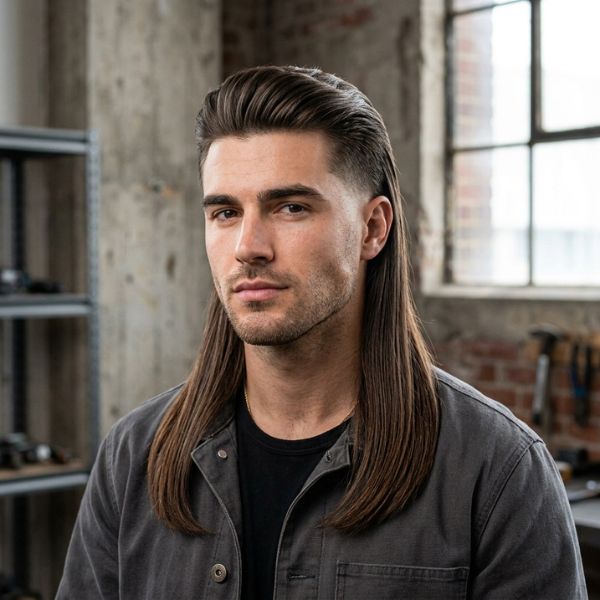
For men, the straight hair mullet is usually built around a fade, taper, or disconnected top paired with a back length that ranges from just past the collar to the shoulders. Popular men’s variations lean toward the modern mullet with a skin fade, the low taper mullet for a more subtle, work-friendly look, and the mullet with a straight fringe for a younger, edgier finish. Athletes and musicians have helped push the high-contrast fade mullet back into the mainstream, making it one of the more socially accepted bold cuts for men right now.
Read more: Low Taper Fade Black Male: 2026 Barber Guide for Waves, Curls, Afros & Locs
Straight Hair Mullet for Women

Women’s straight hair mullets tend to lean toward softer, more layered shapes rather than sharp skin fades, though fades are still an option for anyone who wants a bolder look. Common choices include the shag mullet, which blends heavy layering with mullet length contrast, and the long mullet, where the front stays chin to shoulder length while the back extends well past it. A curtain fringe paired with a straight hair mullet is also a popular combination, since it softens the face while keeping the overall silhouette intact.
Straight Hair Mullet for Girls

For younger girls, a toned down version of the mullet works best, usually without a skin fade and with softer, more blended layers instead of a sharp taper. A short mullet with a rounded fringe or a slightly longer, shaggy back is easy to manage for both the parent and the child, and it grows out gracefully without needing frequent trims. It’s worth discussing with the stylist how bold the contrast should be, since a subtler cut is generally easier to maintain for kids who aren’t yet doing much of their own hair styling.
Straight Hair Mullet vs. Wolf Cut

The straight hair mullet and the wolf cut are related but not the same haircut, and the difference comes down to layering and how the length is distributed.
| Feature | Straight Hair Mullet | Wolf Cut |
|---|---|---|
| Core structure | Short front and sides, distinctly long back | Heavy layering throughout, choppy volume at the crown |
| Best hair texture | Straight or fine hair, since lines show clearly | Wavy or curly hair, since texture adds natural volume |
| Contrast level | High, sharp separation between lengths | Softer, blended transition between short and long pieces |
| Styling effort | Low once cut, especially with a fade | Slightly higher, benefits from texture products or natural wave |
| Overall vibe | Bold, retro, high-contrast | Shaggy, tousled, lived-in |
In short, a mullet is defined by its length contrast, while a wolf cut is defined by its heavy layering. Since a wolf cut is essentially a shag and mullet hybrid, some straight hair mullet variations, like the shag mullet, sit close to wolf cut territory, but a true wolf cut usually has less dramatic length separation than a classic mullet.
Best Face Shapes for a Straight Hair Mullet
Most face shapes can wear a straight hair mullet, but small adjustments help the cut sit better.
- Round faces benefit from added height and volume at the crown, which helps elongate the face rather than widening it further.
- Square faces pair well with a more structured, high-contrast fade mullet, since the sharp lines complement strong jaw features.
- Oval faces can wear almost any straight hair mullet variation, from the classic cut to a long, dramatic back length.
- Long faces look best with softer layers and a fringe, since a flat top with too much height can stretch the face further.
- Heart-shaped faces suit a mullet with a side-swept or curtain fringe, which balances a wider forehead against a narrower chin.
A good barber will usually adjust the top height and fringe style once they see your face shape, so this is worth mentioning during your consultation rather than treating it as a rigid rule.
Conclusion
The straight hair mullet has moved well past its 1980s reputation and become one of the more flexible, low-effort haircuts available in 2026, whether you want a subtle low taper version for the office or a dramatic long mullet that makes a statement. Straight hair happens to be the best canvas for this cut, since every fade, layer, and length transition shows up cleanly instead of getting lost in natural curl or wave. Start with a clear idea of the fade, back length, and top texture you want, communicate it clearly to your barber, and keep up with regular trims and light conditioning to keep the shape sharp. From there, it’s simply a matter of picking the variation, classic, modern, faded, shaggy, or long, that matches your lifestyle and face shape best.
FAQs
Does a mullet work better with straight hair or curly hair?
Straight hair generally holds a mullet’s shape more clearly, since fades and length lines show up precisely where they’re cut, while curly hair adds volume but can blur sharp contrast.
How often should I get my straight hair mullet trimmed?
Faded or tapered versions need a trim every four to six weeks, while shaggier or longer mullets can typically go six to eight weeks between visits.
Can I grow a mullet out from a regular short haircut?
Yes, though it usually looks best if you get a proper mullet shape cut in early on rather than letting a plain short cut grow unevenly at the back.
Is a straight hair mullet suitable for a professional workplace?
A low taper or classic mullet with a moderate back length is generally the most workplace-friendly option, since it keeps a subtler contrast than a skin fade or dramatically long back.
What is the main difference between a mullet and a wolf cut?
A mullet is defined by a sharp length contrast between the front and back, while a wolf cut relies on heavy layering throughout for a softer, shaggier look.
Does a straight hair mullet suit thin hair?
Yes, though thin straight hair benefits from keeping the back length shorter and adding volumizing product at the crown, since very long, thin ends can look sparse.

Zaria Rhodes is the lead editor and content curator at Lyrinexa, passionate about music, storytelling, and lyrical expression. With a deep love for discovering the meaning behind songs, she brings clarity, creativity, and accuracy to every post. Zaria is dedicated to providing readers with authentic lyrics, thoughtful interpretations, and a seamless music-exploration experience.

2 thoughts on “Straight Hair Mullet Guide 2026: Styles, Fade, and Easy Care”