


The long crew cut represents one of the most versatile and flattering short hairstyles available to modern men. Unlike its shorter counterpart, this variation extends the hair on top to approximately 1.5 to 2.5 inches, providing genuine styling flexibility while maintaining the signature clean, professional aesthetic that made the crew cut a timeless staple.
This extended length transforms the traditional crew cut from a wash-and-go style into something that rewards intentional grooming. The result is a haircut that works equally well in corporate boardrooms, casual weekend settings, and everything in between. The appeal lies in its ability to combine structure with versatility, offering men a practical solution that doesn’t demand hours of daily maintenance.
The long crew cut has gained significant traction among men seeking a modern alternative to ultra-short styles. It provides enough length to experiment with different textures and styling directions while maintaining the sharp, controlled appearance that defines the crew cut family of cuts.
What Is a Long Crew Cut Hairstyle?

A long crew cut hairstyle is characterized by moderately longer hair on the crown and top of the head, paired with neatly tapered or faded sides and back. The defining feature is this length differential, which typically measures 1 to 2.5 inches on top while the sides graduate down to roughly 0.5 inches or less at the base.
The cut maintains the military precision and clean lines associated with traditional crew cuts, but the increased top length eliminates the severe, utilitarian appearance of ultra-short versions. This middle ground creates a shape that looks intentional and groomed rather than utilitarian.
What separates the long crew cut from other short men’s hairstyles is its consistent approach. The hair doesn’t drop off abruptly or create harsh angles. Instead, there’s a deliberate gradient from longer to shorter, whether achieved through a fade or taper. The front hairline remains slightly longer than the crown, creating natural movement that makes the style feel less rigid.
The construction requires precision. A barber must maintain the correct length on top while creating a smooth transition to the sides. Get this right, and the haircut practically styles itself. Miss the mark, and you end up with a shapeless cut that needs heavy product to look intentional.
Who It Suits
The long crew cut works exceptionally well for men seeking a professional appearance without compromising on personality. This makes it ideal for professionals in business environments, creative industries, and any field where neatness matters.
The style also appeals to men who dislike spending significant time on their appearance each morning. The longer top provides enough length for texture and movement, yet the overall structure requires minimal daily maintenance compared to longer hairstyles.
Athletes and active men appreciate the long crew cut because it maintains its shape through workouts and moisture exposure better than completely shaved heads while remaining cooler than shoulder-length alternatives. It’s a practical middle ground.
Read More : Low Fade Crew Cut Hairstyles: Clean, Modern, Easy
Face Shapes and Hair Types

Oval Face Shapes: Oval faces represent the most forgiving canvas for the long crew cut. The balanced proportions work with virtually any fade level or styling direction. You can opt for a high-fade version for added contrast or a subtle taper for a softer appearance without concern about distorting facial proportions.
Square Face Shapes: Men with square faces benefit from a slightly softer approach. A mid-fade works particularly well because it provides structure without emphasizing the already-defined jawline. Avoid extremely high fades that can make strong jaw structures appear even more angular. A low fade or classic taper offers a more flattering option.
Round Face Shapes: Longer hair on top combined with shorter sides creates the illusion of length in round faces. A mid to high fade works best here, as it adds definition to the sides while the extended crown height balances facial width. Request that your barber add subtle texture to the top to enhance this height effect.
Rectangular or Oblong Face Shapes: Men with longer face shapes should avoid excessive height on top. A longer crew cut with a more subtle crown does better than adding unnecessary vertical length. A low or mid-fade with a flat-laying top keeps proportions balanced.
Straight Hair: Straight hair shows the crew cut’s lines with clarity and precision. The challenge with straight hair is avoiding a flat appearance. Request light texturizing at the front and crown to create movement. A low-fade or taper on the sides gives straight-haired men clean definition without visual heaviness.
Wavy Hair: Wavy hair naturally creates texture within the crew cut framework. The longer top length allows waves to express themselves, adding dimension. Most men with wavy hair need less product and styling effort because the texture works with the cut rather than against it. A mid-fade complements wavy texture well.
Curly Hair: Curly hair requires slightly different approach. The long crew cut allows curl pattern room to develop. You’ll need more length on top than you might initially think. Request that your barber leaves approximately 2 to 2.5 inches on top to prevent curls from looking too tight against the head. A fade or taper containing the curl pattern on the sides creates a balanced appearance.
Thick Hair: Thick hair can appear bulky in a crew cut if the top length gets too generous. Keep the top length closer to 1.5 inches rather than 2.5 inches. The length provides enough styling flexibility while the natural density maintains visual weight. Avoid extremely high fades with thick hair, as this can create unwanted volume in the crown.
Fine Hair: Fine hair benefits from slightly longer top length, as this helps hair appear fuller and denser. The weight of length works with fine hair. A mid-fade provides enough contrast without making the hair look thin. Minimal product keeps fine-haired crew cuts from looking flat or sparse.
Best Variations of Long Crew Cut Hairstyle Men
Long Crew Cut Hairstyle Men Without Beard

The clean-shaven long crew cut creates a sharp, youthful appearance that works across all professional settings. Without facial hair competing for attention, the focus falls entirely on the haircut. This requires precise barber work, as any imperfections in the cut become immediately visible.
The styling possibilities expand without a beard. A slicked-back direction, slight side part, or textured upward sweep all work effectively. The clean neck and jaw frame face shape more obviously, so this variation particularly benefits men with strong facial structure.
Maintenance demands regular shaving discipline. The contrast between neat hair and facial stubble disrupts the polished appearance. Weekly maintenance keeps the beard-free look intentional rather than neglected.
Long Crew Cut Hairstyle Men Straight Hair

Straight hair crew cuts offer clean, geometric precision. The challenge involves preventing a flat appearance on top. Request light scissor texturizing on the front and crown to create separation and movement within the longer length.
Styling straight-haired long crew cuts requires minimal effort. A blow dryer on medium heat with a slight upward direction followed by a light matte clay or paste creates a casual, controlled appearance. The straight hair’s natural structure maintains this shape throughout the day without restyling.
Straight hair looks particularly sharp with a low fade, as the fade line remains visible and clean. The contrast between the faded sides and textured top creates visual interest that straight hair’s inherent smoothness might otherwise lack.
Long Crew Cut with Low Fade
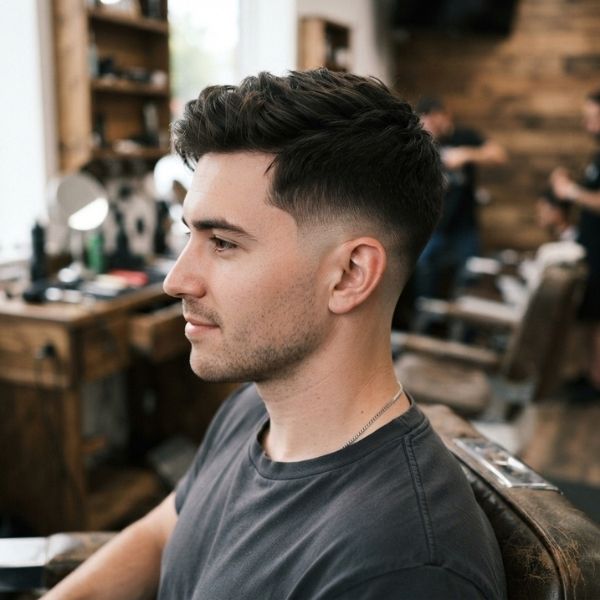
The low fade starts the gradual length reduction very close to the scalp. The fade only extends up the sides to approximately ear level, leaving more hair at the temples and sideburn areas. This provides a subtle contrast that doesn’t emphasize the sides.
A low fade suits men who prefer understated style changes and professionals in conservative fields. It’s less visually dramatic than higher fades while maintaining the crew cut’s defining crisp appearance. The low fade works well with all face shapes and hair types.
This variation requires longer clipper guard sizes in the fading zone. A barber typically uses guards like #2 down to #0.5, creating a gradual reduction. The result feels blended rather than starkly divided between top and sides.
Long Crew Cut with Mid Fade
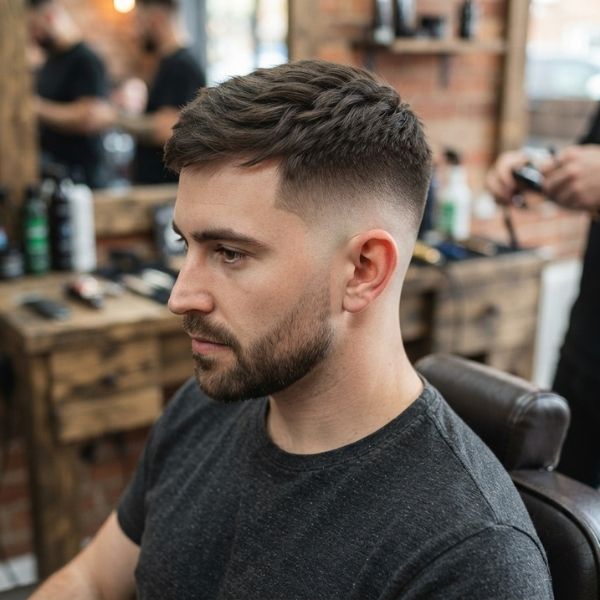
The mid-fade represents the versatility sweet spot for many men. The fade reaches approximately halfway up the side of the head, creating noticeable contrast without aggressive styling. This fade level complements the longer top length by providing enough structure to frame the hair above.
A mid-fade works across professional and casual contexts. It’s distinctive enough to look intentional without requiring explanation. The fade height starts around the temple area and rises to approximately ear level height.
Most barbers recommend mid-fades for men uncertain about fade intensity. It’s forgiving, flattering, and easy to maintain. The fade remains visible and clean while the overall appearance stays approachable rather than sculpted.
Long Textured Crew Cut
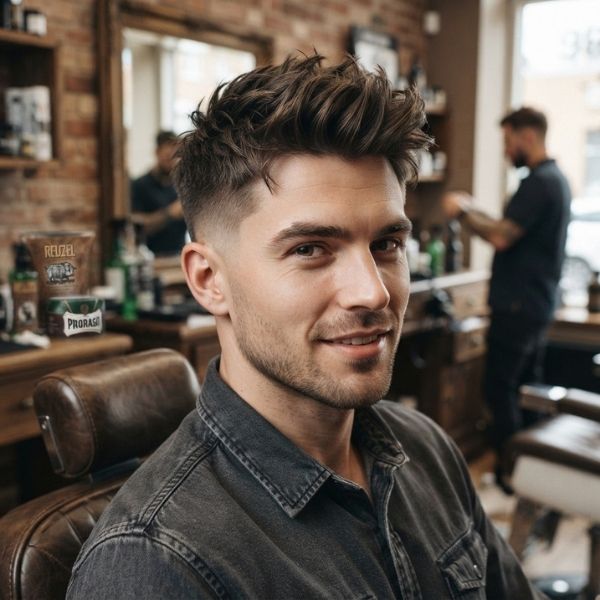
Texture within a long crew cut comes from multiple sources: natural hair pattern, deliberate scissor work, or product application. A textured crew cut emphasizes movement and dimension rather than smooth, controlled lines.
This variation works exceptionally well with wavy and curly hair types. Straight-haired men should request texturizing techniques like choppy layers or point-cutting to create deliberate movement. Texture makes the longer length work harder visually, adding appeal without adding bulk.
Styling textured crew cuts involves matte products like clay or paste that separate hair strands rather than gluing them together. A small amount applied to towel-dried hair and worked through with fingers creates the intended casual, slightly undone appearance.
Long Crew Cut Side Part

A side part introduces direction to the longer crew cut. Rather than letting hair fall naturally upward or straight back, a side part creates a distinct division, typically positioned one-third to one-half the way across the top of the head.
This variation demands precise barber work on the part line itself. Some men request a natural part based on hair growth pattern, while others ask for a subtle razor line to enhance definition. The side part works particularly well with slicked-back styling using pomades or gels.
The side part long crew cut conveys precision and intentionality. It’s popular among men seeking a slightly more refined appearance than the typical textured or swept-back options.
Long Crew Cut with Taper

A taper differs from a fade in approach and execution. Rather than using progressively shorter clipper guards to create distinct length transitions, a taper uses scissors to gradually reduce length from top to bottom. The result is softer, less geometric, and more naturally blended.
Tapers work wonderfully with curly and wavy hair where fade lines can look harsh. The gradual scissor-based reduction respects natural hair patterns better than clipper-based fades. Tapered sides feel less severe while maintaining the necessary structure.
Men preferring a less dramatic contrast between top and sides gravitate toward tapered long crew cuts. The look remains clean and neat without the architectural precision of a fade.
Long Crew Cut with Beard

A full beard completely transforms the long crew cut’s aesthetic. Rather than a clean, youthful look, beard and crew cut combinations project maturity and considered style. The beard draws attention downward, changing how facial proportions appear.
Beard thickness matters significantly. Substantial beards work best with slightly longer crew cut tops, as matching hair length creates visual harmony. A well-groomed beard with tapering sides on the crew cut creates intentional, cohesive styling.
Men combining beards with long crew cuts should maintain both components regularly. Beard oil and trimming keep facial hair looking deliberate rather than accidental. A barber familiar with beard styling ensures the combination looks planned rather than like two separate elements.
Barber Script
Clear communication with your barber prevents miscommunication and ensures you receive the exact cut you want. Use this script as a starting point, modifying specifics based on your preferences.
Script: “I’d like a long crew cut with [fade type] fade. The top should be approximately [1.5 to 2.5] inches, with a flat-lying crown and [texture type] on top. The sides should fade from [guard size at temples] down to a [#0.5 or #0] at the base. Clean up the neckline to [squared/natural], and tidy the sideburns to [specific length]. I prefer [styling direction], so add any [texture/layers] that would support that.”
Breaking this down into components:
Top Length: Specify exact inches. This matters. “Short” and “long” mean different things to different barbers. Saying 1.5 inches is far clearer than “not too short.”
Crown Control: Indicate whether you want the crown to lie flat, stand upward, or follow natural growth patterns. This affects how the barber approaches the crown area specifically.
Texture: Describe what you want. Natural texture, choppy layers, point-cutting, or a smooth, slicked appearance. Each requires different technique.
Fade Specifics: Specify low, mid, or high fade. Mention the starting guard size at the temples and the guard size used at the base. For example: “Mid fade starting with a #3 at the temples, graduating down to a #0.5 at the base.”
Neckline: Choose squared off or natural. Squared necklines appear neater but require more frequent trimming. Natural necklines age more gracefully between cuts.
Sideburns: Specify the length. Most long crew cuts work with sideburns that reach approximately the middle of the ear or slightly longer.
Styling Direction: Mention whether you plan to wear it swept back, textured upward, side-parted, or natural. This influences how the barber cuts the grain pattern.
Bringing a clear reference photo accelerates communication. Show your barber the exact fade height, top length, and styling you want. Photos eliminate ambiguity that words alone might create.
Read More : Demetris Fenwick Boxer: Untold Story & Career 2026
Quick Styling Steps

A proper long crew cut requires minimal daily styling. Follow these steps for a sharp appearance:
Step 1: Cleanse and Prepare Start with clean, towel-dried hair. Shower directly before styling if possible. Towel dry until damp but not dripping. Some water in the hair helps product application and gives hair enough malleability to shape.
Step 2: Apply Product Use a small amount of product roughly the size of a pea. The amount matters. More product than this typically makes the hair look overworked. Rub the product between your hands until it’s evenly distributed, then work it through your hair.
Step 3: Shape and Direct Using your fingers or a styling brush, direct the hair in your chosen direction. For an upward sweep, brush straight up and slightly back. For a side part, use a fine-tooth comb to establish the part line, then brush the longer side backward.
Step 4: Dry Blow dry on low to medium heat, roughly 6 inches from your hair. Use your free hand to direct the hair as it dries. The blow dryer sets the style and adds volume. Finish with a quick cool shot to lock everything in place.
Step 5: Final Touches Once dry, check the overall appearance. Make minor adjustments with your fingers if needed. A light touch of product on the top surfaces creates separation and definition. Avoid over-touching once dry, as this disturbs the style.
The entire process takes approximately five to seven minutes. Many men find it takes less time after the first week as they understand their specific hair’s behavior.
Product Recommendations:
Matte Clay or Paste: Use for textured, casual styles. Matte finish products don’t shine and provide light hold without making hair appear wet or greasy.
Pomade: Choose for sleeker, more controlled looks. Pomade provides stronger hold and subtle shine. Water-based pomades wash out easily; oil-based versions last longer but require more substantial shampooing to remove.
Styling Cream: Use for looser, more natural styles. Creams provide light hold with a natural finish, making them ideal for men preferring an effortless appearance.
Texture Wax: Apply sparingly for enhanced separation and definition. Wax works particularly well with textured crew cuts and shorter styles where strong hold isn’t necessary.
Most long crew cuts need nothing more than light clay or paste applied to damp hair. Heavy products create an appearance of deliberate styling rather than the intentional-but-easy aesthetic that makes the long crew cut appealing.
Maintenance and Fixes
Trimming Frequency : Schedule barber appointments every 2 to 3 weeks. The faded sides grow back relatively quickly, and maintaining crisp fade lines requires consistent trims. Waiting longer than 3 weeks causes the fade to appear fuzzy and the overall shape to blur.
Some men stretch to 4 weeks between appointments, but this typically results in noticeably grown-out sides. The crew cut’s appeal lies partly in its sharp definition, which disappears without regular maintenance.
Between-Appointment Touch-Ups : If you’re confident with clippers, touch up the neckline and fade yourself using appropriate guard sizes. This extends the time between full barber appointments. Use the same guard sizes your barber used and work conservatively rather than aggressively.
Never attempt to create the top shape yourself without professional experience. The crown area is particularly difficult to maintain properly. Let your barber handle the actual cut; save home maintenance for simple touch-ups.
Handling an Overgrown Crew Cut ; If it’s been more than 4 weeks and the cut has grown out noticeably, the barber typically needs to reshape the crown and reestablish the fade lines. Don’t try to stretch appointments indefinitely; the longer you wait, the more work the barber must do, and the less intentional your style appears.
Addressing Common Issues
Issue: Flat Crown If your crew cut’s crown lies too flat, request your barber add texture or point-cutting during the next appointment. This creates separation that prevents flatness. Between appointments, try blow-drying in an upward direction followed by a small amount of matte paste.
Issue: Overly Bulky Top If the longer length creates unwanted volume, ask your barber to trim the top slightly shorter or thin it out with texturizing techniques. Occasionally, the issue stems from product rather than cut; try using less product or switching to a lighter formula.
Issue: Sides Appearing Too Wide Request a higher fade or taper during your next appointment. If the fade was appropriate but grows out quickly, schedule appointments slightly more frequently. Between appointments, keep sides as neat as possible with careful home touch-ups.
Issue: Hair Won’t Hold a Style This typically indicates either insufficient hold or a cut that doesn’t suit your hair type and growth pattern. Discuss with your barber whether adding texture, adjusting lengths, or changing the styling direction might help. Sometimes switching to a heavier-hold product resolves the issue without requiring a recut.
Hair Care Routine Use a quality shampoo and conditioner suitable for your hair type. Short hair still benefits from conditioning, though you need less product. Wash with warm water followed by cool water rinse for better shine and scalp health.
Skip daily shampooing if possible. Rinsing with water and reapplying product works fine on non-wash days, reducing wear on hair and scalp. Most men shampoo their crew cuts 3 to 4 times weekly with good results.
Frequently Asked Questions
How long does a long crew cut take to grow out?
A long crew cut reaches full growth length of approximately 4 to 6 inches within 2 to 3 months. The sides grow out visibly within 2 to 3 weeks, so fade sharpness diminishes quickly even though the top length remains relatively consistent.
Can I get a long crew cut with receding hairline?
Yes. The crew cut works well with receding hairlines because the sides remain neat and short. Focus on top length rather than trying to cover the recession. The structured sides create intentional appearance even with hair loss.
What’s the difference between a long crew cut and an undercut?
A crew cut features gradually tapered or faded sides creating a gradual transition. An undercut has distinct very short or shaved sides with deliberately longer hair on top. The long crew cut blends; the undercut contrasts dramatically.
How much does a long crew cut cost?
Most barbers charge $25 to $60 for a crew cut depending on location and barber experience. Experienced barbers specializing in fades typically charge more than general barbers. Tip approximately 15 to 20 percent.
Can women get a long crew cut?
Absolutely. While traditionally masculine, the long crew cut works for anyone seeking a short, neat, professional appearance. The styling versatility and low-maintenance nature appeal to people across gender lines.
Does a long crew cut work with salt-and-pepper or gray hair?
Yes, it works exceptionally well. The structured cut complements mature appearance, and gray hair actually benefits from the defined sides and shaped top that a proper crew cut provides.
What products should I avoid with a long crew cut?
Avoid heavy pomades that create a shiny, slicked appearance unless that’s your specific styling goal. Skip volumizers and thickeners designed for longer hair; they’re unnecessary for crew cuts. Avoid products with strong fragrances if you’re in professional environments.
How do I maintain a long crew cut between barber visits?
Keep the neckline clean with careful clipper work if comfortable. Wash regularly but not daily. Reapply styling product as needed. Schedule touch-ups if the fade grows out noticeably. Don’t attempt to reshape the top without professional experience.
Is a long crew cut good for thin hair?
Yes. The slightly longer top length helps thin hair appear fuller. Avoid extremely heavy products and keep styling minimal. Request your barber avoid thinning scissors on thin hair, as this can make thinning worse visually.
Can I style a long crew cut multiple ways?
Definitely. A proper long crew cut can be worn swept back, textured upward, side-parted, or natural depending on product choice and blow-dry direction. This versatility is one of the style’s key advantages.
Read More : Madison Alworth Wikipedia: Bio, Age & Net Worth 2026
Conclusion
The long crew cut hairstyle offers men a genuine middle ground between ultra-short utilitarian cuts and longer styles requiring substantial styling effort. The slightly extended length provides practical styling flexibility while the structured shape maintains the crew cut’s professional, intentional aesthetic.
Success with a long crew cut begins with clear communication with your barber. Specify exact measurements, describe your hair type, mention your face shape, and bring reference photos. A good barber can then recommend the specific fade height, texture approach, and styling direction that works for your circumstances.
The maintenance commitment remains modest compared to longer hairstyles. Regular trimming every 2 to 3 weeks, a simple daily styling routine taking less than ten minutes, and basic hair care constitute the complete requirement. The return on this small investment is a haircut that works equally well for professional settings, weekend activities, and everything between.
Whether you prefer a textured, casual appearance, a slicked-back refined look, a side-parted style, or the classic crew cut aesthetic, a long crew cut variation exists that fits your preferences. The extended top length ensures you’re never limited to a single styling option.
Start by consulting with an experienced barber familiar with crew cut variations. Show reference photos and discuss your daily lifestyle and styling preferences. A barber who understands the nuances of cut, fade, texture, and styling direction can deliver a long crew cut that looks sharp, suits your face and hair, and requires only the maintenance effort you’re willing to invest.
The long crew cut remains popular precisely because it delivers on its promises: clean appearance, easy control, professional aesthetic, and genuine styling flexibility. These benefits make it one of the most practical and flattering short hairstyles available to modern men.

Zaria Rhodes is the lead editor and content curator at Lyrinexa, passionate about music, storytelling, and lyrical expression. With a deep love for discovering the meaning behind songs, she brings clarity, creativity, and accuracy to every post. Zaria is dedicated to providing readers with authentic lyrics, thoughtful interpretations, and a seamless music-exploration experience.

3 thoughts on “Long Crew Cut Hairstyle Men: Clean Length, Easy Control”