


A mid fade crew cut hairstyle gives you the best of both worlds: the clean shape of a classic crew cut and the modern contrast of a fade. The top stays short and manageable, while the sides gradually become tighter around the temples, ears, and neckline.
It is a practical choice if you want a polished haircut without spending a long time styling it every morning. You can keep it traditional, add texture, pair it with a beard, or make it sharper with a line-up or hard part.
This guide covers what the cut looks like, who it suits, 12 popular variations, what to tell your barber, styling steps, maintenance, and quick fixes for common problems.
What Is a Mid Fade Crew Cut Hairstyle?
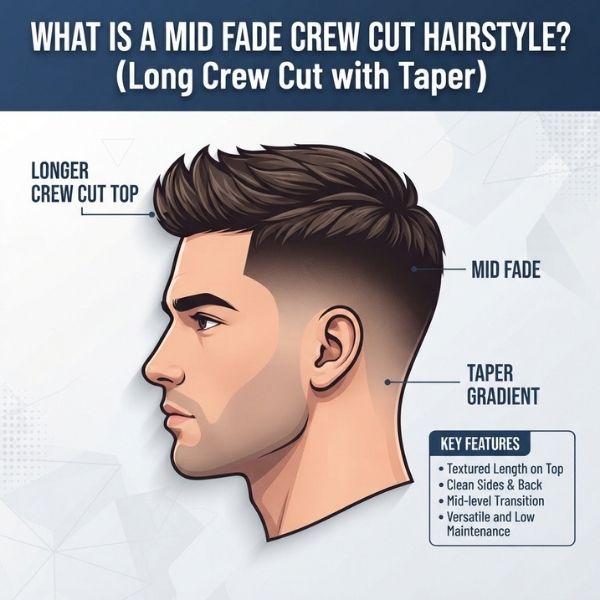
A mid fade crew cut hairstyle combines a short crew cut on top with a fade that begins around the middle of the sides of the head. The hair gradually gets shorter as it moves toward the ears and neckline.
Unlike a low fade, the blend starts higher. Unlike a high fade, it does not climb as aggressively toward the temples and upper sides. That middle position creates a balanced silhouette.
The top usually stays between roughly 1 and 2 inches, although the exact length depends on your hair texture, face shape, and preferred finish. The front can remain slightly longer if you want more styling flexibility.
The fade itself can be a soft shadow fade, a close clipper fade, or a skin fade. Your barber can also customize the neckline, sideburns, texture, and edges.
Who It Suits
One reason this haircut remains popular is its versatility.
A mid fade works particularly well if you want:
- A clean professional haircut
- A short style with some personality
- Easy daily styling
- Less bulk around the temples
- A haircut that works with facial hair
- A modern alternative to a traditional crew cut
- A neat style for work, school, travel, or casual settings
It can also work well for active lifestyles because the sides stay controlled and the short top does not demand constant attention.
However, the best version depends on your natural hair growth and head shape. A skilled barber should adjust the blend instead of using exactly the same proportions on every client.
Read More : Long Crew Cut Hairstyle Men: Clean Length, Easy Control
Face Shapes and Hair Types
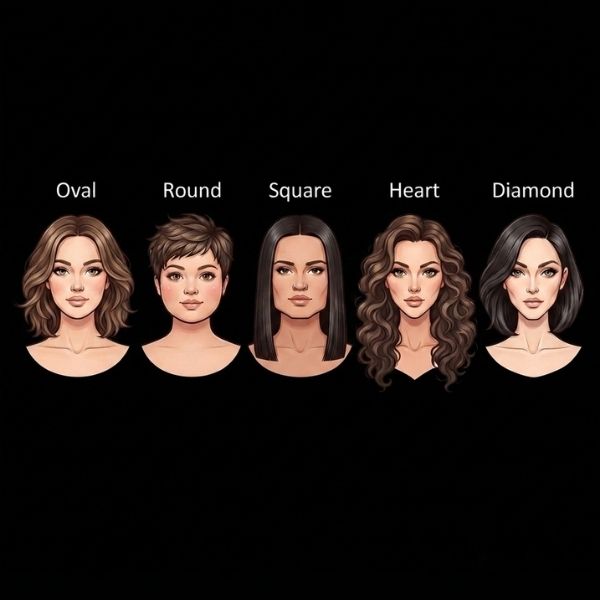
Your face shape can help determine how much length and height you should leave on top.
Oval face: Almost any crew cut variation can work. Light texture adds movement without disturbing the natural balance.
Square face: A mid fade complements a strong jawline. Keep the top moderately textured if you want a softer overall appearance.
Round face: Leave slightly more length on top and create subtle vertical height. This can make the face appear longer and more defined.
Long face: Avoid excessive height on top. A balanced top with a moderate fade usually creates better proportions.
Diamond face: Keep some controlled weight around the upper sides while avoiding an overly narrow silhouette.
Hair texture matters, too.
Straight hair: Add texture on top to prevent the hair from looking flat or overly uniform.
Wavy hair: Let the natural wave provide movement while the fade controls unwanted width around the sides.
Curly hair: Keep enough length to show the curl pattern. The fade can remove excess weight and create a cleaner outline.
Thick hair: A mid fade removes bulk from the sides while leaving enough density on top for texture.
Fine hair: Avoid removing too much density from the top. A slightly textured finish can make the hair appear fuller.
Edges and Details
Small details can completely change the character of a crew cut.
A line-up creates sharper corners around the forehead and temples. It is ideal when you want a crisp, geometric finish.
A hard part adds a visible separation and gives the top a defined direction. It works particularly well with a side-swept or Ivy League finish.
For the neckline, you can choose a natural finish, squared shape, rounded shape, or subtle V shape. Your choice should match your neck shape and how frequently you plan to maintain the haircut.
If you wear a beard, ask your barber to blend the sideburn area into the facial hair. This makes the haircut and beard look like one coordinated style rather than two separate shapes.
12 Variations of Mid Fade Crew Cut Hairstyle
There is no single way to wear this haircut. These 12 variations let you adjust the style according to your hair, personality, and maintenance routine.
Classic Mid Fade Crew Cut

The classic version keeps the top short, neat, and lightly tapered toward the crown. The sides receive a clean mid fade, while the neckline remains natural or subtly shaped.
It is the safest starting point if you have never tried a fade before. It also works well in professional environments where you want modern detail without an extreme appearance.
Textured Mid Fade Crew Cut Hairstyles
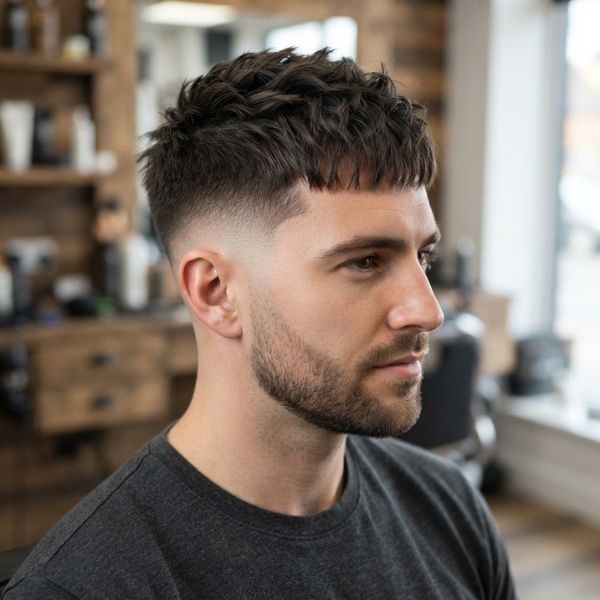
A textured top adds separation and movement instead of leaving the hair completely uniform.
This version works especially well with thick or straight hair. Ask your barber for light point cutting or texturizing rather than removing too much overall length.
For styling, use a small amount of matte clay or paste. Work it through the front and top with your fingers for a natural finish.
Messy Mid Fade Crew Cut
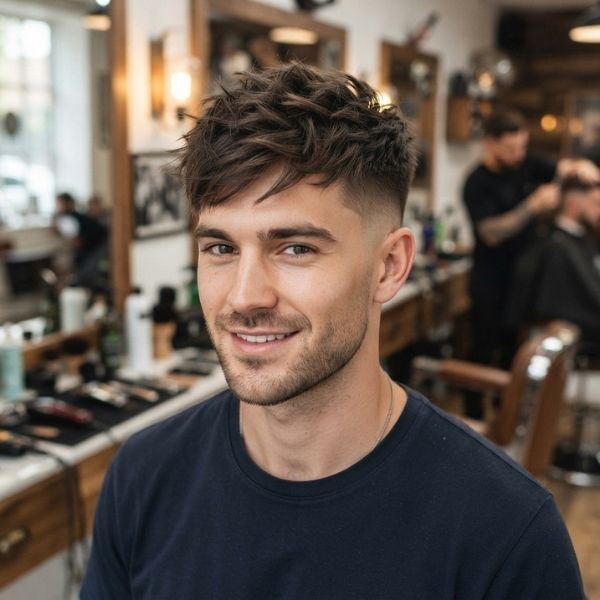
The messy version deliberately looks relaxed rather than perfectly combed.
Keep the top slightly longer and use your fingers to create loose separation. The fade keeps the sides controlled, so the messy top still looks intentional.
It is a strong option for casual outfits, weekends, and anyone who prefers a less formal appearance.
Skin Mid Fade Crew Cut Hairstyle
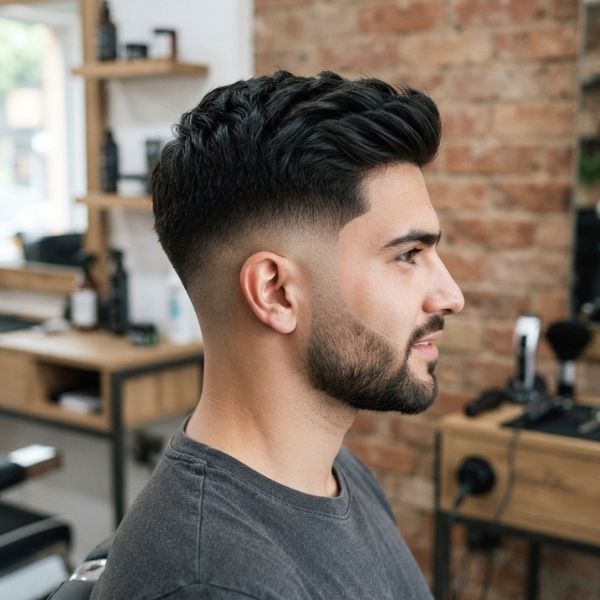
A skin mid fade takes the shortest section down to the skin before gradually blending into the longer hair above.
This creates stronger contrast and makes the top appear more prominent. It also gives the jawline and facial structure a sharper visual frame.
The tradeoff is maintenance. Skin fades lose their freshly shaved appearance faster than softer fades, so you may want more frequent barber visits.
Mid Fade Crew Cut with Line Up
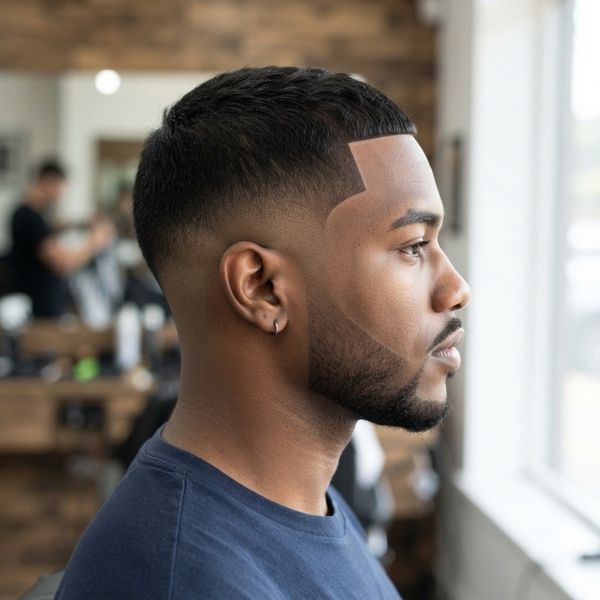
A line-up adds precise edges around the forehead, temples, and sometimes the sideburns.
This variation is particularly effective if you prefer a crisp, structured appearance. The key is balance. Extremely sharp edges should complement the natural hairline rather than fight it.
Ask your barber to work with your natural hairline instead of forcing an artificial shape.
Mid Fade Crew Cut with Hard Part
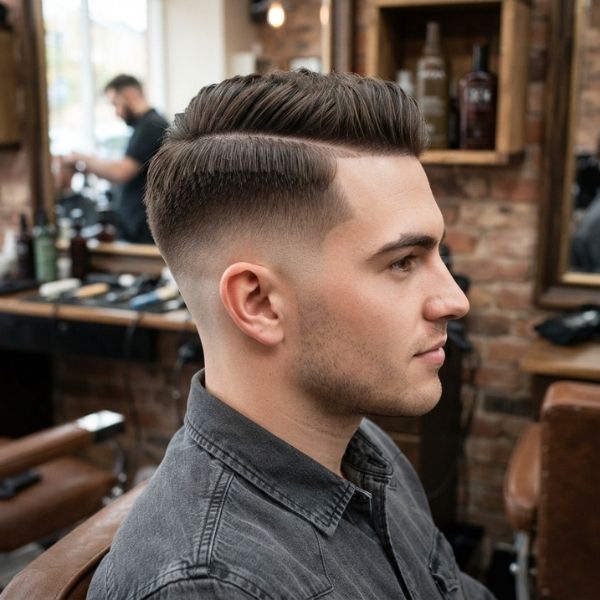
A hard part creates a defined shaved or razor-cut line that separates the top.
It gives the haircut a more deliberate, classic appearance. The mid fade keeps the lower sides clean while the part gives the top direction.
This works best when your hair naturally supports a side part. Otherwise, your barber may need to create a stronger styling routine.
Ivy League Mid Fade

The Ivy League is a longer, more polished cousin of the traditional crew cut.
The top remains long enough to sweep slightly to the side, while the mid fade keeps the sides neat. This makes it a useful option for offices, formal occasions, and men who want a refined haircut with modern contrast.
A small amount of styling cream or matte paste can keep the side sweep controlled without making it look stiff.
Curly Mid Fade Crew Cut
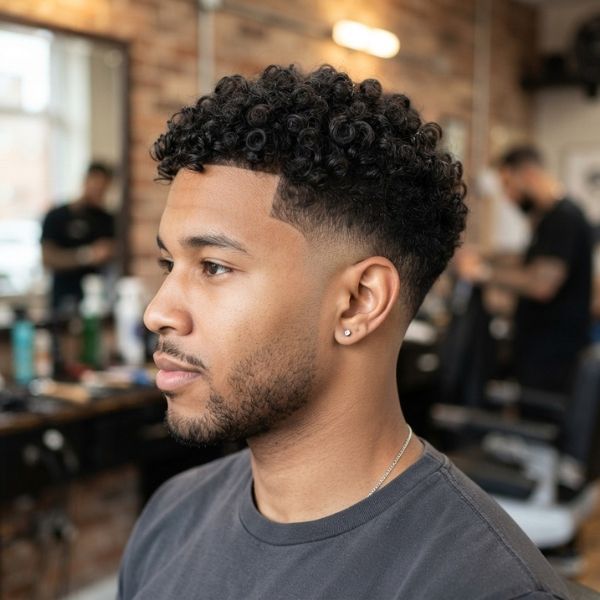
Curly hair can look excellent with this shape because the fade removes excess bulk while allowing the curls to remain visible on top.
Do not automatically cut the curls too short. Leave enough length for the natural curl pattern to form properly.
A lightweight curl cream can enhance definition while keeping the finish natural.
Wavy Mid Fade Crew Cut
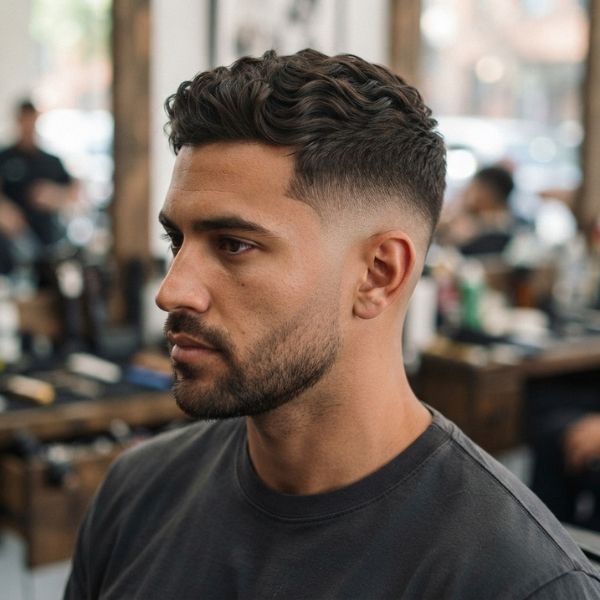
Wavy hair gives the crew cut natural texture without requiring heavy styling.
Keep the waves on top and use the fade to reduce bulk around the temples and ears. You can brush the front forward, lift it slightly, or let it fall naturally.
This is one of the easiest variations to personalize because the natural wave does much of the styling work.
Straight Hair Mid Fade Crew Cut
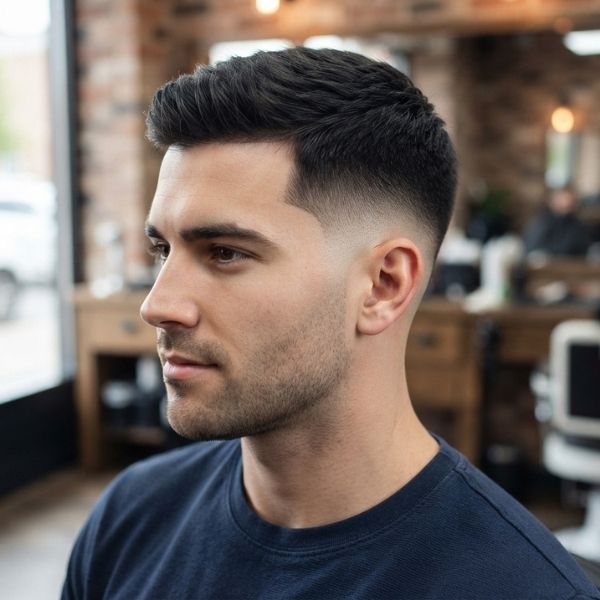
Straight hair creates a clean, controlled version of the crew cut.
The main challenge is avoiding a flat or shelf-like top. Ask your barber for subtle texture and keep enough length at the front to create movement.
A quick blow-dry followed by a small amount of matte paste can give straight hair a fuller appearance.
Mid Fade Crew Cut with Beard
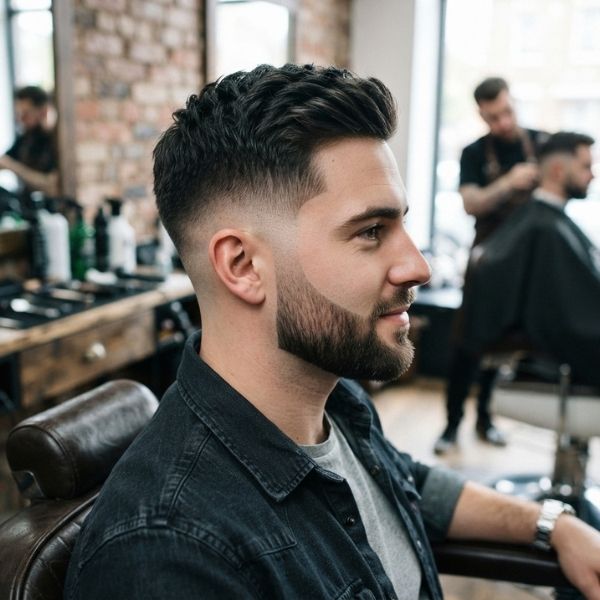
Adding a beard creates a stronger frame around the face.
The important part is the transition between the haircut, sideburns, and beard. Ask your barber to blend these areas instead of creating a sudden change in length.
A short boxed beard pairs particularly well with a clean fade because both styles have defined edges.
Mid Fade Crew Cut with V-Shape Nape
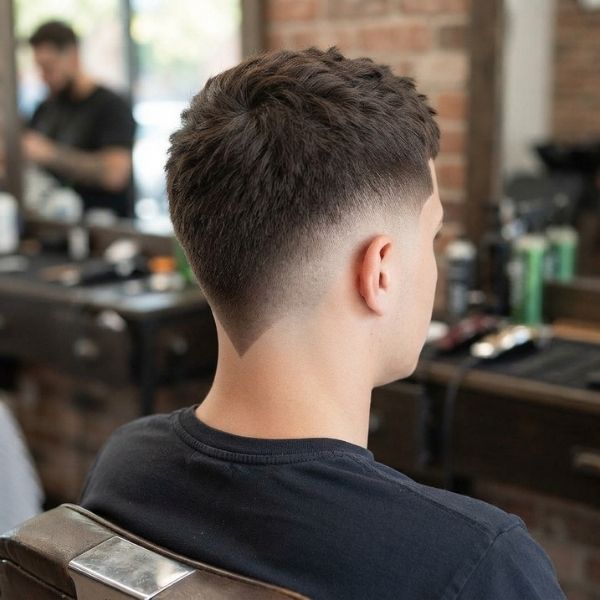
A V-shaped nape replaces the usual straight or natural neckline with a subtle point at the back.
It adds personality without requiring an elaborate hair design. Keep the V shallow and proportional if you want a sophisticated result.
This detail is especially noticeable from the side and back, so ask your barber to check the shape from multiple angles.
Barber Script
The easiest way to avoid confusion is to tell your barber exactly what you want.
You can say:I want a mid fade crew cut. Keep the top short with light texture and leave a little extra length in front. Start the fade around the middle of the sides, blend it smoothly, and keep the neckline clean. I want a natural finish unless you think a sharper line-up would suit my hairline.
Then specify any extras:
For a skin fade: “Take the shortest part down to the skin.”
For a line-up: “Keep the forehead and temple edges crisp but natural.”
For a hard part: “Add a subtle hard part on my preferred side.”
For a V-shaped nape: “Finish the neckline with a shallow V.”
If possible, bring a reference photo. Hair density, growth patterns, and head shape can make the same haircut look different on two people.
Quick Styling Steps
The beauty of this haircut is that styling should take only a few minutes.
- Wash or dampen your hair and towel dry it.
- Brush or finger-comb the top into your preferred direction.
- Blow-dry from the roots if you need extra lift or control.
- Apply a small amount of matte clay, paste, or styling cream.
- Work the product through the top with your fingers.
- Finish with a comb for a cleaner look or your fingers for a textured finish.
You usually do not need much product. Too much can make a short crew cut look greasy, heavy, or overly stiff.
Read More : Low Fade Crew Cut Hairstyles: Clean, Modern, Easy
Maintenance
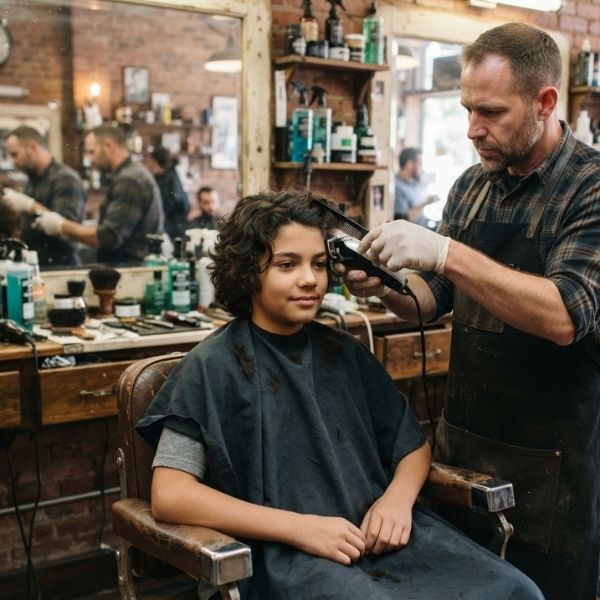
A mid fade crew cut hairstyle generally needs a trim every three to five weeks.
If you prefer extremely crisp edges, you may want a shorter interval. A skin fade usually needs more frequent maintenance because the exposed skin becomes less defined as the hair grows.
Between appointments:
- Keep the neckline clean.
- Wash based on your scalp and hair needs.
- Avoid using excessive styling product.
- Brush or reshape the top after wearing a hat.
- Keep facial hair trimmed if you wear a beard.
- Save your barber’s guard numbers for your next appointment.
Your barber may use different guards depending on your hair density and desired fade. Recording the final setup can make future appointments much easier.
Troubleshooting
The sides look too bulky: Ask your barber to remove more weight around the temples.
The top looks flat: Add texture and use a quick root-focused blow-dry.
The fade looks too high: Tell your barber you prefer a lower mid fade that leaves more weight above the transition.
The skin fade grows out too quickly: Switch to a shadow or clipper fade for a softer grow-out.
The curls look puffy: Reduce excess side weight while keeping enough length on top for the curl pattern.
The straight hair looks lifeless: Ask for subtle texture instead of taking more length away.
The neckline looks too harsh: A natural neckline may suit you better than an aggressively squared finish.
The beard and fade look disconnected: Ask your barber to blend the sideburn area into the beard.
FAQs
Is a mid fade crew cut low maintenance?
Yes. The short top and faded sides require little daily styling, although regular trims keep the fade looking fresh.
How long should the top be on a crew cut?
Around 1 to 2 inches is a common range, but the ideal length depends on your hair texture, face shape, and desired styling options.
Is a mid fade better than a high fade?
A mid fade offers a balanced amount of contrast. It is often a good choice if a high fade feels too dramatic.
Can curly hair get a mid fade crew cut?
Yes. A mid fade can remove unwanted side bulk while keeping enough curl on top for natural definition.
Does a mid fade crew cut suit a round face?
Yes. Keeping slightly more length and controlled height on top can create a more balanced appearance for a round face.
Can I wear a mid fade crew cut with a beard?
Absolutely. Blending the sideburns into the beard creates a more connected and structured look.
How often should I get a mid fade crew cut?
Most people can maintain it with a trim every three to five weeks. Skin fades may need attention sooner.
Is a mid fade the same as a mid taper?
No. A mid fade creates a stronger transition across the sides, while a mid taper usually keeps more hair around the sides and creates a subtler change.
Read More : Demetris Fenwick Boxer: Untold Story & Career 2026
Conclusion
The mid fade crew cut hairstyle is popular for a simple reason: it gives you a clean shape without demanding complicated styling.
The short crew cut keeps the top practical, while the mid fade removes excess bulk and adds modern contrast. You can make it traditional with a natural neckline, sharper with a line-up, more polished with an Ivy League top, or more distinctive with a hard part, beard, or V-shaped nape.
Your hair type and face shape should guide the final proportions. Straight hair may need extra texture, curly hair benefits from controlled side weight, and rounder faces can often use a little more height on top.
The best approach is simple: choose the variation that fits your lifestyle, show your barber a reference photo, and ask for the exact fade height and top length you want. With regular trims and minimal styling, this haircut can stay sharp from the office to the weekend without becoming a daily project.

Zaria Rhodes is the lead editor and content curator at Lyrinexa, passionate about music, storytelling, and lyrical expression. With a deep love for discovering the meaning behind songs, she brings clarity, creativity, and accuracy to every post. Zaria is dedicated to providing readers with authentic lyrics, thoughtful interpretations, and a seamless music-exploration experience.

1 thought on “Mid Fade Crew Cut Hairstyle: Sharp, Simple, Modern”