


A low fade mullet is the haircut men ask for when they want a sharp, tidy silhouette up front and real personality in the back. It takes the classic mullet, short sides with long back hair, and pairs it with a clean fade that blends near the ear instead of chopping off in a hard line. The result reads professional from the front and expressive from the side, which is exactly why it has become one of the most requested cuts at barbershops right now.
This guide covers everything you need before your next appointment. You will learn what the cut actually is, how low, mid, and high fade heights change the finished look, and which of the seventeen variations below fits your hair type, face shape, and daily routine. You will also get a three-step styling routine, exact words to use with your barber, and a simple care plan so the cut grows out looking intentional instead of shaggy.
What Is a Low Fade Mullet
A low fade mullet keeps the fade close to the ear, usually starting an inch or so above the hairline, then blends upward into a longer top and a layered back. Unlike a traditional mullet, which often has a blunt or choppy line between the sides and the length, the fade removes that hard edge and replaces it with a smooth gradient.
That gradient is what makes the style so wearable. Because the sides stay short and controlled, the length at the back does not overwhelm the whole look. The top can be worn textured, swept, or pushed straight up, and the back can range from a subtle collar-length flick to a fuller flow, depending on how long you let it grow.
The cut works on straight, wavy, and curly hair with only small adjustments to length and product. It also flatters most face shapes, since the low fade narrows the sides visually while the height on top and length in back add balance. That combination of neatness and flair is why the low fade mullet has moved from a niche throwback cut into a genuine mainstream mullet haircut for men.
Quick Fit Table
Use this table to compare fade height, ideal hair type, and upkeep at a glance before choosing a variation.
| Fade Height | Where It Sits | Best Hair Type | Vibe | Upkeep |
|---|---|---|---|---|
| Low fade | Just above the ear | Straight, wavy, thick | Neat, office friendly | Trim every 4 to 6 weeks |
| Mid fade | Between temple and crown | Wavy, curly, medium density | Balanced, everyday versatile | Trim every 3 to 5 weeks |
| High fade | Near the top of the head | Fine, straight, or textured curly | Bold, high contrast | Trim every 2 to 4 weeks |
Fine hair usually looks fullest with a low or mid fade, since a high fade can expose thin patches. Thick or curly hair can handle any of the three heights, though a low fade keeps more weight for controlling frizz.
Variations
There are close to twenty ways to ask for this cut, and the wording actually matters because barbers use these terms slightly differently. Here is a breakdown of every major variation so you know exactly what to request in the chair.
Read more:Military High Fade Haircut for Men: Complete Barber Guide
1) Low Fade Mullet Haircut

The low fade mullet haircut is the baseline version of this style. The fade hugs the skin near the ear and rises gently into a textured top, while the back is left with light layers rather than heavy bulk. It reads clean enough for a client meeting and relaxed enough for a weekend out. Ask for a fingertip of matte clay worked through the top for texture that does not look overdone.
2) Mullet Low Fade
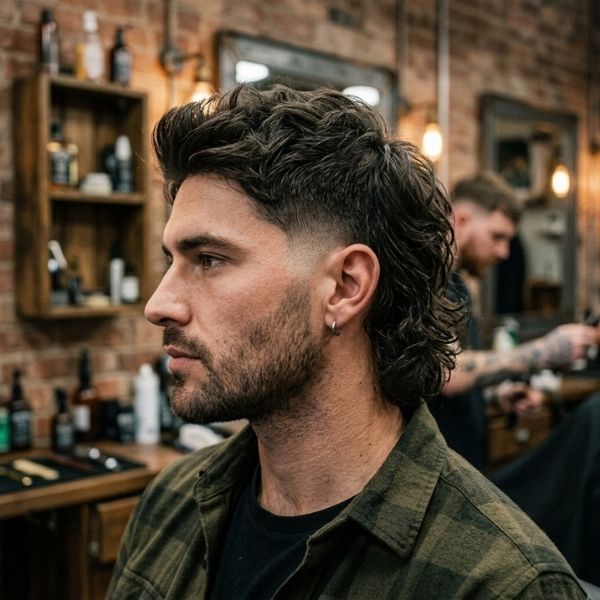
A mullet low fade shifts the emphasis slightly, keeping more length around the crown while the fade height stays conservative. This version suits men who like the contrast between short sides and long back but want a softer transition at the temple rather than a dramatic drop. It is a good pick for a first mullet, since it eases you into the style without going too extreme.
3) Modern Mullet Low Fade
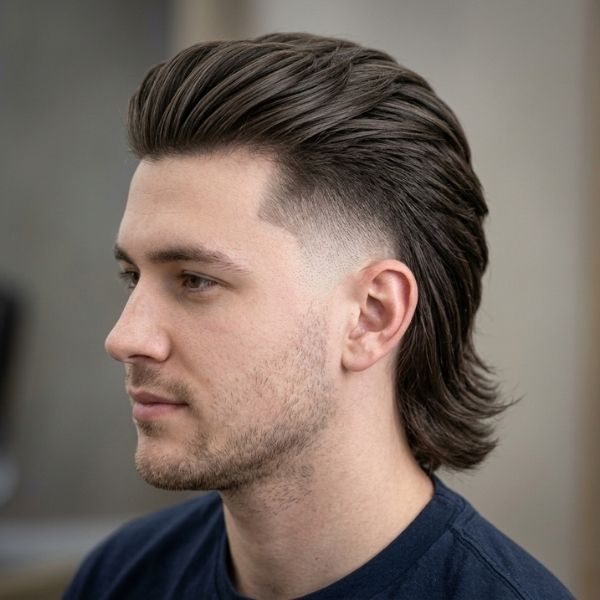
The modern mullet low fade adds a disconnected element, where the top is left noticeably longer than the fade line for a bolder finish. It pairs well with a textured fringe or a swept front. Medium to thick hair holds this shape best, since the contrast between the short sides and the fuller top needs enough density to read clearly.
4) Low Mullet Haircut

A low mullet haircut is a slightly gentler take that keeps the overall silhouette compact. The sides stay short without a sharp skin fade, and the back is trimmed to a moderate length instead of a dramatic flow. This works well for workplaces with conservative dress codes, since it keeps the mullet identity without drawing too much attention.
5) Mullet Low Fade Haircut
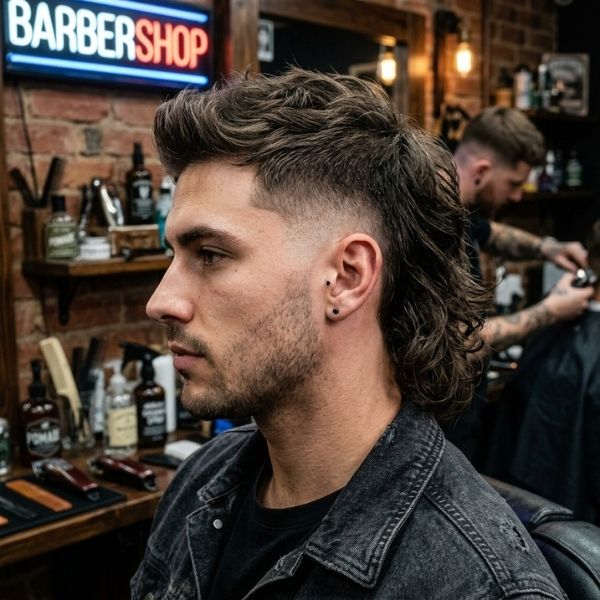
This variation blends tightly at the base of the fade and then opens quickly into fuller length on top and at the back. It handles thick hair particularly well, since the short zone near the ear helps control bulk and keeps the silhouette from looking heavy on the sides.
6) Low Mullet Fade
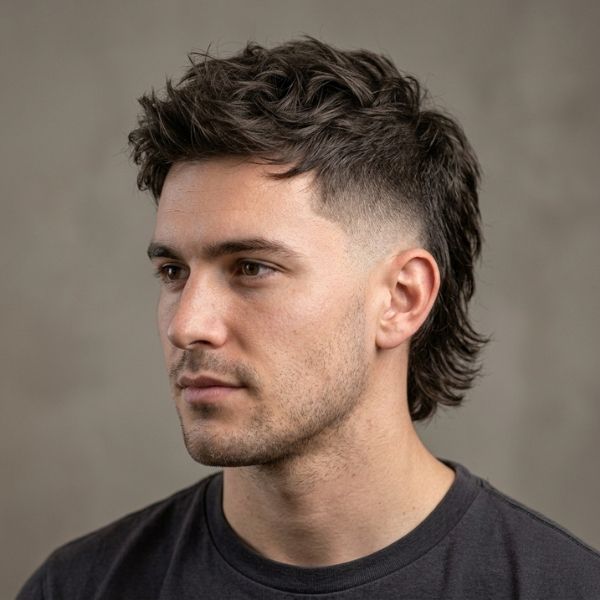
A low mullet fade keeps things simple: short, tidy sides with a fade that barely rises above the ear, topped with natural length left long at the back. It is the lowest maintenance version of the family, since the fade line rarely needs sharpening between visits and the length on top can be styled in under a minute.
7) Low Mullet
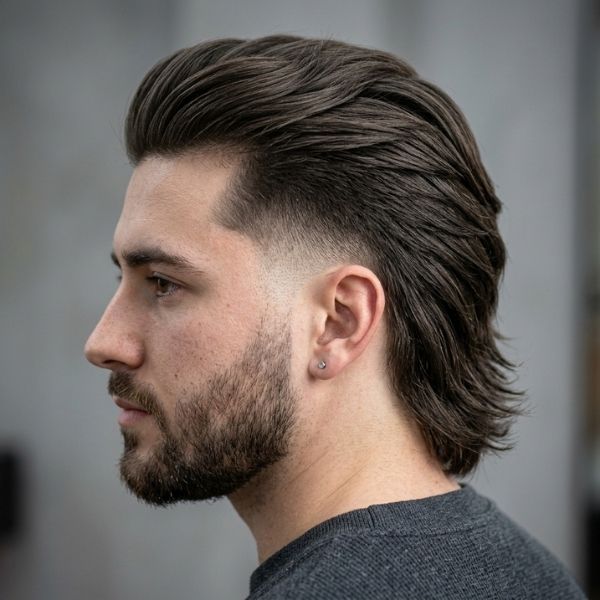
The plain low mullet is the most versatile setup in this entire group. There is no aggressive fade line, just a low, close trim at the sides that blends into a simply styled top and a softly layered back. It suits nearly every hair type and is the easiest version to describe to a new barber if you are unsure of the exact terminology.
8) Mid Fade Mullet
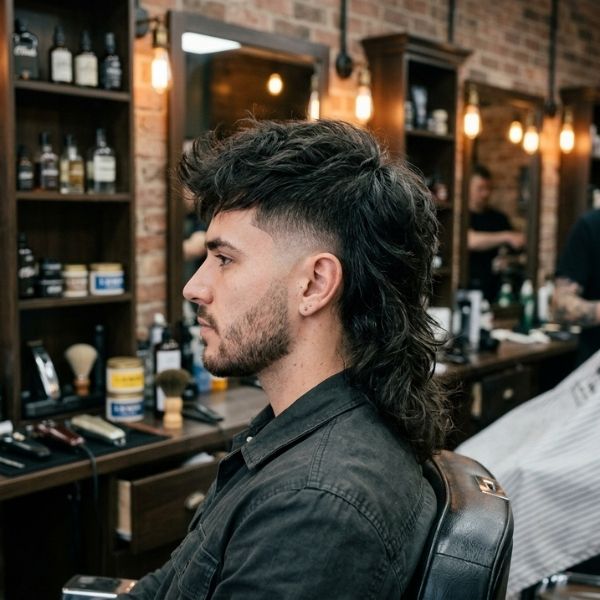
A mid fade mullet raises the fade to sit between the temple and the crown, creating more visible contrast than a low fade without going as bold as a high fade. It is the most balanced option in the group, working equally well for casual and semi-formal settings, and it gives styling more room to play with volume on top.
9) Mullet Mid Fade
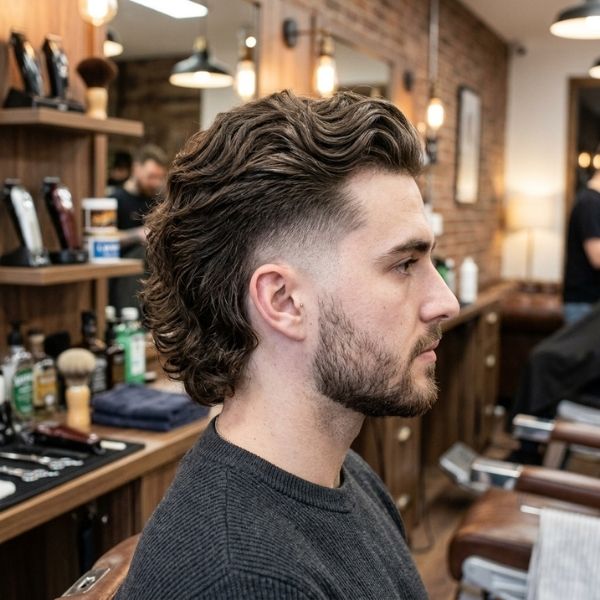
This version pairs the mid fade with a slightly longer back section, so the length at the nape stands out more against the shorter sides. It looks especially sharp on wavy or curly hair, where the mid-height fade gives the curls room to show texture instead of getting lost in a longer, lower fade.
Read more: Mid Burst Fade Best Styles, How to Ask, and Easy Care 2026
10) Mid Fade Mullet Haircut
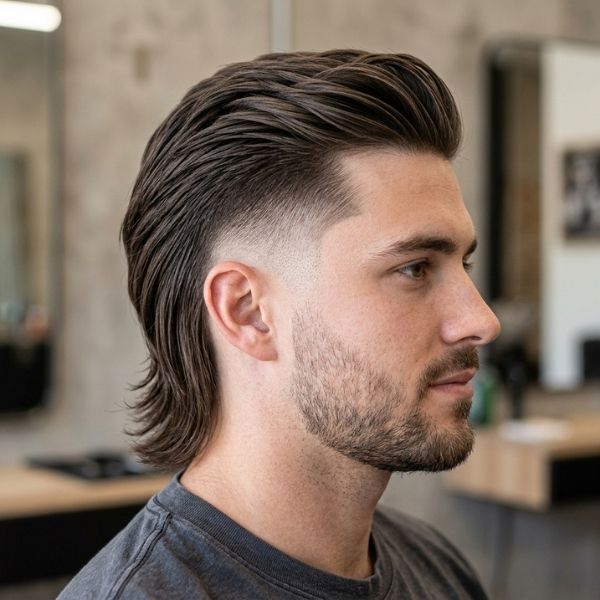
The mid fade mullet haircut is the go-to choice for men who want their mullet to look deliberate rather than accidental. The clear line between the fade and the length reads as an intentional style choice, which makes it a strong option for creative workplaces or anyone who wants a bit more edge than the low fade family offers.
11) Mid Mullet

A mid mullet keeps proportions even across the whole head. Neither the sides nor the back dominate the look, which makes it forgiving for growing-out phases between barber visits. It is a practical choice if you are transitioning from a shorter haircut and want the mullet shape to develop gradually.
12) Mid Mullet Fade
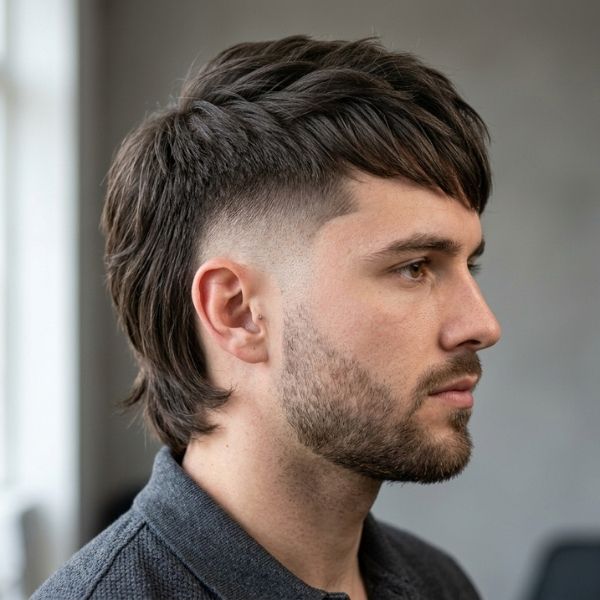
This take sharpens the fade line slightly more than a standard mid mullet, giving a crisper edge around the ear while keeping the rest of the proportions balanced. It suits fine to medium hair density, since the added contrast at the fade compensates for hair that would otherwise look flat.
13) Mid Mullet Haircut
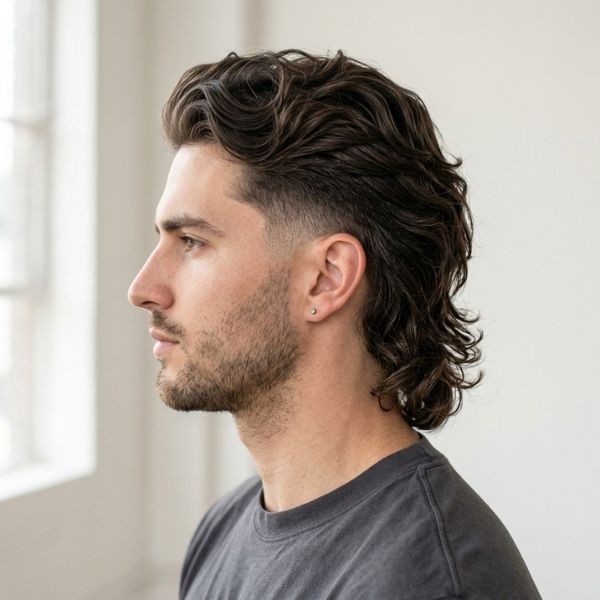
The mid mullet haircut works as a everyday, low-fuss option. It holds its shape well between trims, resists looking messy as it grows, and adapts easily whether you style the top forward, back, or left natural. It is often recommended for men trying a mullet for the first time who are not ready to commit to a high-contrast fade.
14) High Fade Mullet
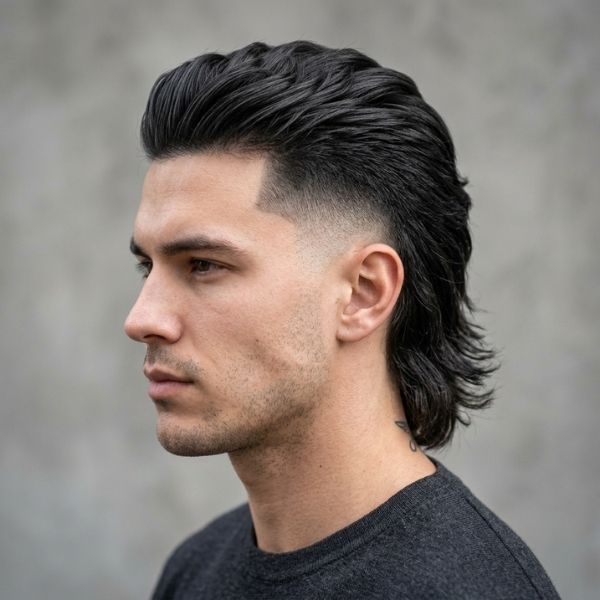
A high fade mullet pushes the fade close to the top of the head, creating the sharpest contrast in the entire family. The sides are cut very short and blend quickly into the crown, which sculpts the face and draws attention to the cheekbones and jawline. It pairs particularly well with a short, groomed beard for balance.
15) High Mullet
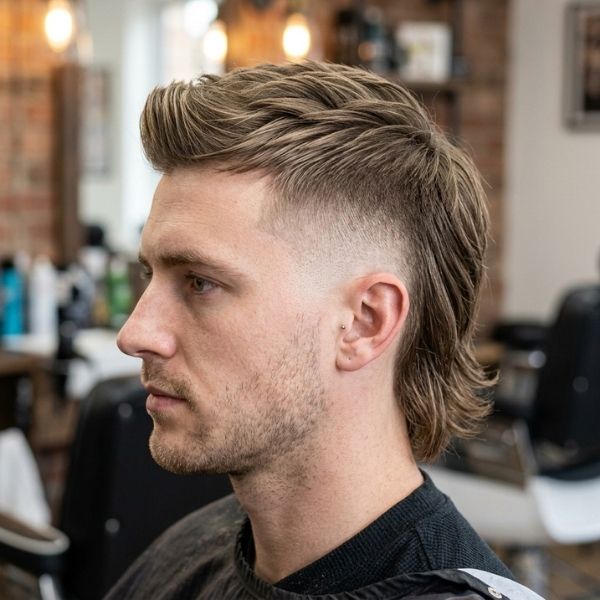
The high mullet suits creative industries, nightlife, and anyone who wants a statement cut that still cleans up for a smart jacket. The high sides frame the face strongly, the top has room to lift with a blow-dry, and the back is left to flow rather than sit flat. It needs slightly more product to hold shape than the lower fade options.
16) High Mullet Haircut
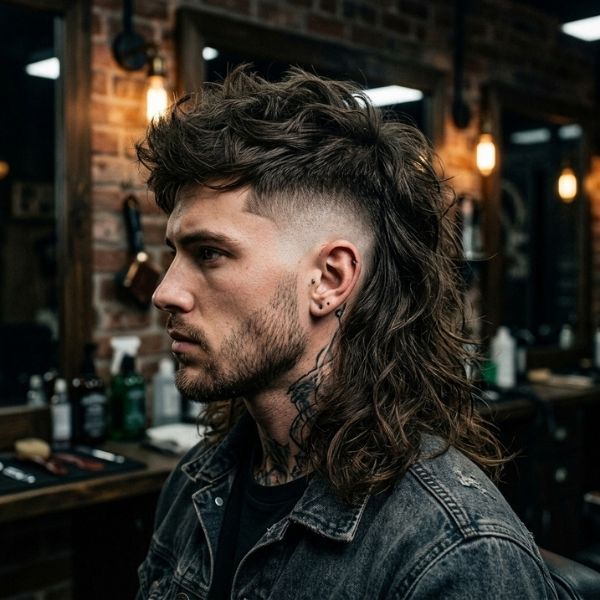
This version leans into maximum contrast, keeping the sides almost bare and letting the top and back carry all the length. It is the boldest, most attention-grabbing cut in the group, and it requires the most frequent trims since new growth at the fade line shows up quickly against the skin.
17) Mullet High Fade
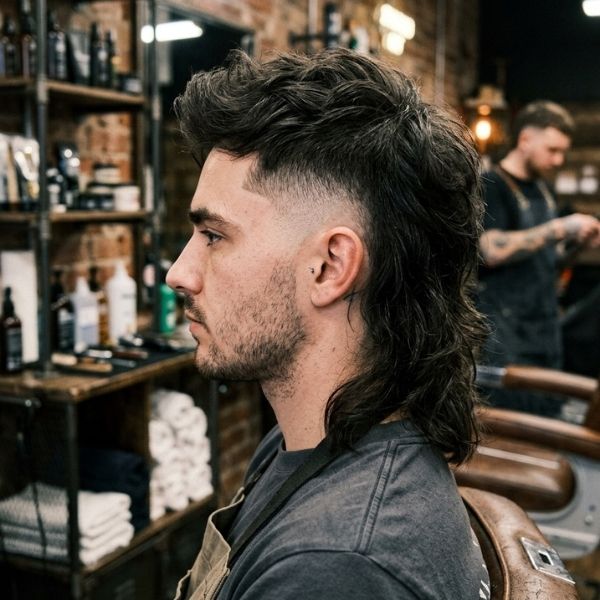
The mullet high fade sets the highest contrast of any variation here. The sides start very short and blend into the crown fast, keeping the back at a medium length so the overall look stays modern rather than dated. If you want maximum edge with a routine that still takes only a few minutes each morning, this is the pick.
How to Style in Three Steps
A low fade mullet is quick to style once you know the order of operations. Follow these three steps for a clean daily finish.
- Prep damp hair. Towel dry until hair is just damp, then apply a light sea salt spray or volumising mousse through the top and back for grip and texture.
- Blow dry with direction. Use a low heat setting and guide the hair with your fingers or a vent brush, lifting the roots at the crown and sweeping the back where you want the flow to sit.
- Finish with light product. Work a small amount of matte clay or pomade through the top only, then run a light pass through the back so it moves naturally without looking stiff.
Keep product light. A small amount is all this cut needs, since heavy product weighs down the layers and flattens the contrast the fade is meant to create.
Read more: 15 Best Wavy Mullet Haircuts That Are Trending in 2026
Barber Instructions
Walking into a barbershop with the right wording saves time and avoids a cut that misses the mark. Use these pointers when you sit in the chair.
- State the fade height first: say “low fade,” “mid fade,” or “high fade” before anything else, since this is the detail most barbers ask about.
- Specify where you want the fade to start, for example “an inch above the ear” for a low fade or “at the temple” for a mid fade.
- Describe the top length using finger measurements, such as “leave two to three inches on top” for enough length to style.
- Explain how much back length to keep, since this is what separates a subtle mullet from a dramatic one.
- Bring a reference photo if possible. Terms like mullet low fade and low mullet fade sound similar but can produce different results depending on the barber.
- Ask for texturising shears on the top if you have thick hair, which removes bulk without shortening the overall length.
Care and Upkeep
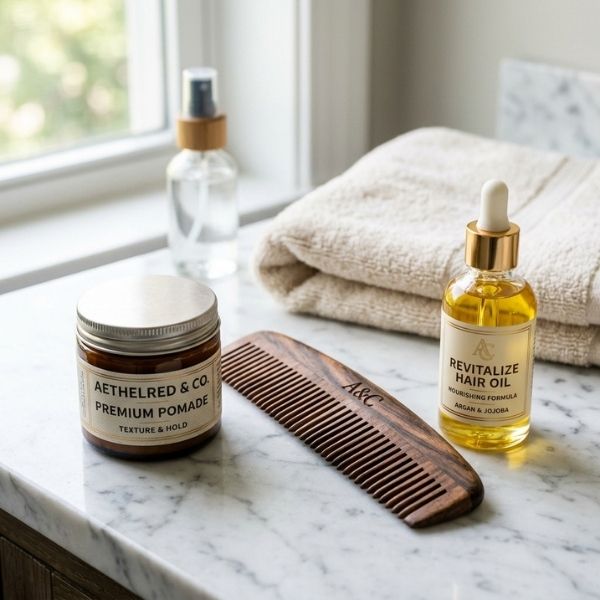
A low fade mullet needs more attention at the fade line than at the back, since that is the section that grows out fastest and starts to look untidy first.
- Trim the fade every two to six weeks, depending on how high the fade sits. Low fades can stretch closer to six weeks, while high fades need attention closer to every two to three weeks.
- Let the top and back grow with a plan. Full haircuts, including layering the back and shaping the top, are usually needed every couple of months rather than every visit.
- Use a moisturising shampoo on the longer sections to prevent dryness, especially if you blow dry or use heat tools often.
- Condition the ends of the back section regularly, since this hair is exposed to more friction from collars and jackets than the shorter sides.
- Apply a lightweight oil once or twice a week to keep the longer layers looking healthy rather than frizzy.
- Book fade-only touch-ups between full cuts. Many barbershops offer a discounted rate for a quick fade refresh, since it takes far less time than a complete haircut.
Low Fade Mullet FAQs
How long does hair need to be before getting a low fade mullet?
Most barbers recommend at least three to four inches on top and at the back so there is enough length to layer and style properly.
Can fine or thin hair handle a low fade mullet?
Yes, fine hair works well with a low or mid fade paired with volumising product to add fullness on top.
Does a low fade mullet suit curly hair?
Curly hair holds the style especially well, since the fade keeps the sides controlled while the curls add natural texture up top and in back.
How often should the fade be trimmed?
Every two to six weeks depending on fade height, with low fades stretching longer between visits than mid or high fades.
Is a low fade mullet professional enough for an office job?
In most workplaces, yes. The clean fade and controlled top make it far more office-appropriate than a traditional, unfaded mullet.
What is the difference between a low, mid, and high fade mullet?
The difference is where the fade starts on the head. A low fade begins near the ear, a mid fade begins around the temple, and a high fade begins near the crown, with contrast increasing at each level.
Conclusion
The low fade mullet earns its popularity by solving a real problem: it lets men keep length and personality at the back without sacrificing a neat, professional look up front. Whether you land on a soft low mullet, a balanced mid fade mullet, or a bold high fade mullet, the core formula stays the same, short controlled sides blending into longer, layered length. Use the quick fit table to match the fade height to your hair type, bring the right wording into the barbershop, and stick to a simple trim schedule. Do that, and this cut will look sharp at every stage of growth, not just the day you leave the chair.

Zaria Rhodes is the lead editor and content curator at Lyrinexa, passionate about music, storytelling, and lyrical expression. With a deep love for discovering the meaning behind songs, she brings clarity, creativity, and accuracy to every post. Zaria is dedicated to providing readers with authentic lyrics, thoughtful interpretations, and a seamless music-exploration experience.

1 thought on “Low Fade Mullet Guide: Styles, Mid and High Options”