


If you have ever sat in a barber chair unsure how to describe the cut you wanted, you already understand why the low taper fade has become the go to request for Black men in 2026. It is the haircut equivalent of a well tailored suit: sharp where it needs to be, relaxed everywhere else, and flattering on almost every head shape. This guide breaks down what a low taper fade actually is, how it differs from other fades, and how it works with waves, curls, afros, locs, and braids. You will also find face shape pairings, barber talking points, a maintenance routine, and answers to the questions Black men search for most before booking a chair.
What Is a Low Taper Fade for Black Men?
A low taper fade is a haircut where the hair is cut short around the ears and the nape of the neck, then gradually blends into longer hair on top. Unlike a skin fade, the sides are never shaved down to bare skin; there is always a light layer of hair left, which is why barbers often call it a soft or subtle fade.
The fade line typically starts about an inch above the ear, much lower than a mid or high fade. That low starting point keeps the transition tight and close to the hairline, so the haircut reads as clean rather than dramatic. On Black hair specifically, this technique does something extra: it acts like a frame that pushes attention toward the top of the head, where curls, coils, waves, or an afro can do the talking.
Key traits of a low taper fade for Black men include:
- A fade line that begins near the ears and nape, not the temples
- Longer length retained on top, usually one to four inches depending on the style
- A soft, blended transition rather than a hard shaved line
- Compatibility with nearly every natural Black hairstyle, from waves to locs
Low Taper Fade vs Other Fades on Black Hair
Barbers use “fade” as an umbrella term, and the differences between each type come down to where the fade starts and how aggressively the hair is cut down. Here is how the low taper fade compares to its closest relatives.
| Fade Type | Where It Starts | Best For | Maintenance |
|---|---|---|---|
| Low Taper Fade | Just above the ear and nape | Office jobs, school, everyday wear | Every 3 to 4 weeks |
| Mid Fade | Between the ear and temple | Bold but still versatile looks | Every 2 to 3 weeks |
| High Fade | At or above the temple | Statement styles, high contrast tops | Every 2 weeks |
| Skin (Bald) Fade | Varies, fades to bare skin | Maximum contrast, sharper lines | Every 1 to 2 weeks |
| Drop Fade | Curves down behind the ear | Curly or wavy tops, rounder faces | Every 3 weeks |
| Burst Fade | Circles around the ear only | Mohawks, edgy top styles | Every 2 to 3 weeks |
The main takeaway for Black men choosing between these options is upkeep. A low taper fade grows out more gracefully than a mid or high fade because the contrast between the sides and top is smaller, so regrowth is far less noticeable between barber visits. That makes it the practical choice for anyone who cannot get to the shop every two weeks.
Why Low Taper Fades Work So Well for Black Hair
Black hair typically grows in a coily or tightly curled pattern, which behaves differently under clippers than straight or wavy hair. A few reasons this cut pairs so naturally with natural Black hair textures:
- It respects shrinkage. Curly and coily hair shrinks up when cut short, so a low taper fade avoids over cutting the sides while letting the top retain enough length to show real texture once it dries or is styled.
- It reduces bumps and irritation. Because the blend is soft rather than shaved to the skin, there is less direct clipper contact with sensitive skin, which lowers the risk of razor bumps, a common concern for coarser hair types.
- It grows out cleanly. New growth on Black hair tends to curl tighter near the scalp, and a low fade hides that new growth longer than a high or skin fade would.
- It highlights craftsmanship without demanding upkeep. The low fade still shows off a barber’s line work and blending skill, but it does not require weekly touch ups to look sharp.
- It complements protective styles. Locs, braids, and twists rely on healthy edges and a clean perimeter, and a low taper fade delivers that structure without disturbing the style on top.
Top Variations of Low Taper Fade Black Male Hairstyles
One reason this cut dominates barbershops in 2026 is its flexibility. It is less a single hairstyle and more a foundation that pairs with almost any texture or length on top.
Read more: Low Fade Mullet Guide: Styles, Mid and High Options
Short & Buzz-Cut Low Taper Fades
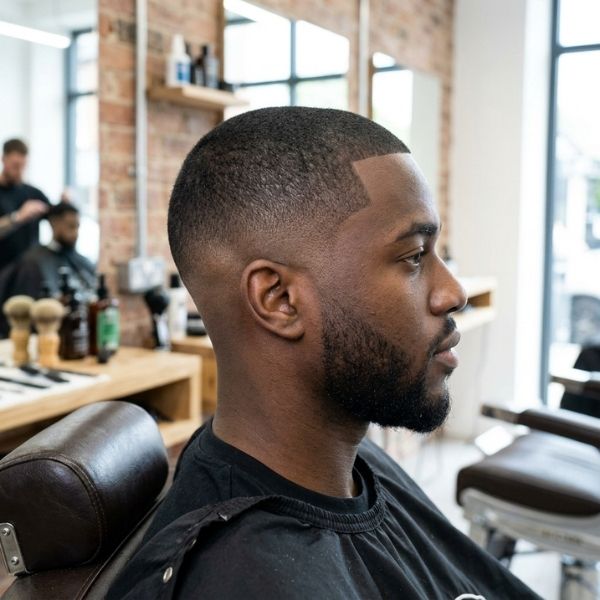
For men who want a wash and go routine, pairing a low taper fade with a short buzz or a cropped afro on top keeps things simple. This version usually runs a quarter inch to half an inch on top, blended into the sides. It is popular with professionals, athletes, and anyone in a uniform environment because it looks polished with almost no daily styling. A light curl sponge or a small amount of matte cream is often enough to define the texture in the morning.
Waves, 360 Waves & Coils
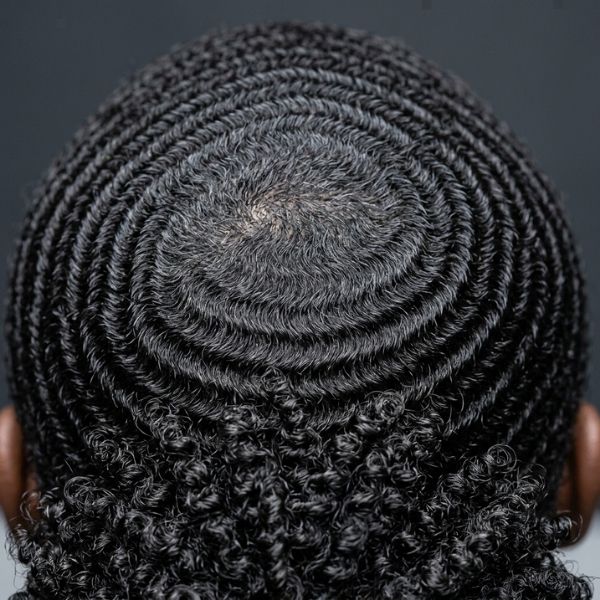
The low taper fade is arguably the single best haircut for showing off waves. Because the sides stay short and neat, the eye is drawn straight to the swirl pattern on top. To build 360 waves, barbers usually recommend:
- Cutting the top short enough for a durag or wave cap to lay the hair down
- Brushing in a consistent direction two to three times daily with a medium bristle brush
- Applying a light wave pomade or curl activator, never a heavy grease that causes buildup
- Wearing a silk or satin durag overnight to maintain the pattern
Coils benefit from the same fade but often need a defining gel or curl cream applied to damp hair to keep individual coils separated instead of clumping into a puffier afro shape.
Afro Tops & Shaped Afros

A low taper fade with a rounded or boxed afro on top is one of the most requested combinations in 2026, especially as more Black men lean into natural, chemical free hair. The sides stay tapered while the top is left long enough, usually two inches or more, to hold its shape. Barbers shape the afro with shears or an afro pick comb to create a rounded silhouette, and the low fade underneath keeps the whole look from feeling bulky or unstructured.
Read more: Military High Fade Haircut for Men: Complete Barber Guide
Long Hair, Braids, Locs & Dreads

For men growing out locs, dreads, or braids, a low taper fade gives the perimeter a clean, groomed edge without touching the length on top. This is especially useful during the early stages of loc growth, when the top is too short to style but the sides and back still need regular trims. Common pairings include:
- Two strand twists with a faded nape and sideburns
- Shoulder length locs pulled into a bun with tapered sides
- Cornrows or box braids with a low fade edge for a sharper hairline
- Freeform locs paired with a subtle fade for men who want length without looking unkempt
Sponge Twists & Hybrid Textures
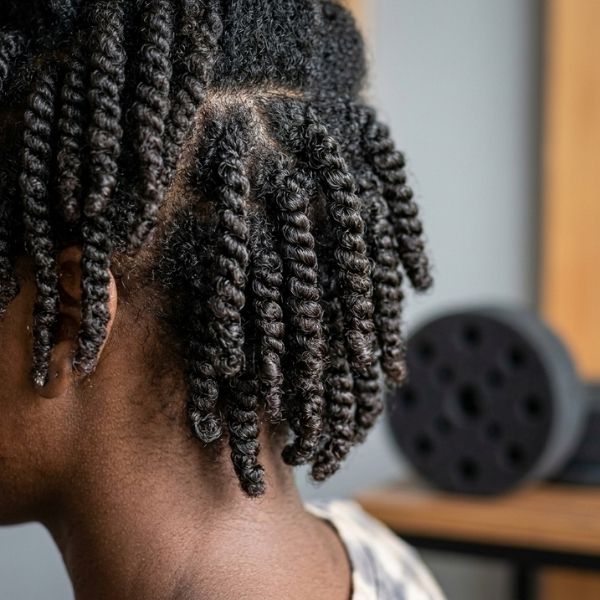
Sponge twists, sometimes called twist sponges, have grown in popularity because they create defined, uniform curls in a fraction of the time it takes to twist hair by hand. Paired with a low taper fade, sponge twists give a textured, coily top that photographs well and works for both casual and formal settings. This combination is especially popular among men transitioning from a fresh buzz cut into a longer natural style, since sponge twists help train shorter hair into a curl pattern as it grows.
Beards, Line-Ups & Designs
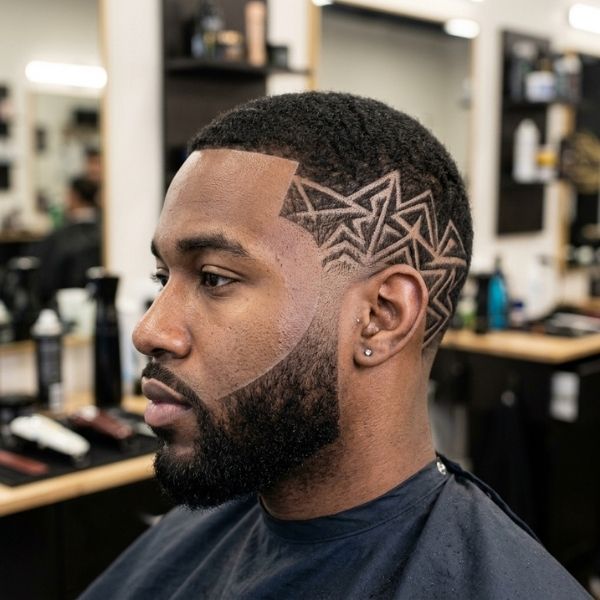
A low taper fade is almost always finished with a line up, a crisp, straight edge cut along the hairline and temples using clippers or a straight razor. Pairing the fade with a well groomed beard creates a unified, framed look for the whole face. Popular additions include:
- A connected beard fade that blends the sideburns directly into the beard
- Hair designs such as thin lines or a part cut into the side, especially popular with shorter buzz styles
- A sharp part line for men who want a slightly retro, structured finish
Mohawk, FRO hawk & Mid Low Taper

For men who want more edge, a mohawk or “fro hawk” built on top of a low taper fade offers contrast without going as extreme as a full high fade. The sides taper down low and soft, while the center strip is left long, either as straight hair, curls, or a mini afro running front to back. A mid low taper, a slightly higher version of the classic low fade, gives a bit more definition around the temple while still keeping the overall look understated.
Read more: Mid Burst Fade Best Styles, How to Ask, and Easy Care 2026
Best Low Taper Fade Black Male for Different Face Shapes
The right variation of a low taper fade can balance facial proportions and highlight strong features. Use this as a general starting point, then let your barber fine tune based on your hairline and head shape.
| Face Shape | Recommended Top Style | Why It Works |
|---|---|---|
| Round | Taller afro or waves with extra height on top | Adds vertical length to balance width |
| Square | Textured curls or a soft fringe | Softens strong jawlines and angles |
| Oval | Almost any variation, including buzz cuts and mohawks | Naturally balanced proportions handle most styles |
| Long or Rectangular | Fuller sides, shorter top | Prevents the face from looking stretched |
| Diamond | Waves or coils with fuller sides | Balances a narrower forehead and chin |
| Heart | Beard paired with a low fade | Draws attention downward and balances a wider forehead |
How to Ask for Low Taper Fade Black Male at the Barber
Miscommunication is the most common reason a haircut turns out wrong, so being specific with your barber matters. When you sit down, try covering these points:
- Name the fade height first. Say clearly that you want a low taper fade, meaning the fade should start just above the ears and nape, not up near the temples.
- Specify the top length in inches or finger widths. Barbers often measure top length using clipper guard numbers or scissor over comb technique, so bring reference photos to avoid guesswork.
- Describe the texture you want to keep. Mention whether you want waves brushed in, an afro shape, twists, or locs left untouched on top.
- Ask about the blend technique. Request a soft or shadow blend rather than a hard part if you want the fade to look seamless.
- Bring two or three reference photos. Angles matter, so include a front view, a side view, and a back view so the barber can see the full shape you are going for.
- Confirm the line up and beard work. Let the barber know if you want a full line up, a light cleanup, or no line up at all.
How to Maintain Low Taper Fade Black Male Cuts
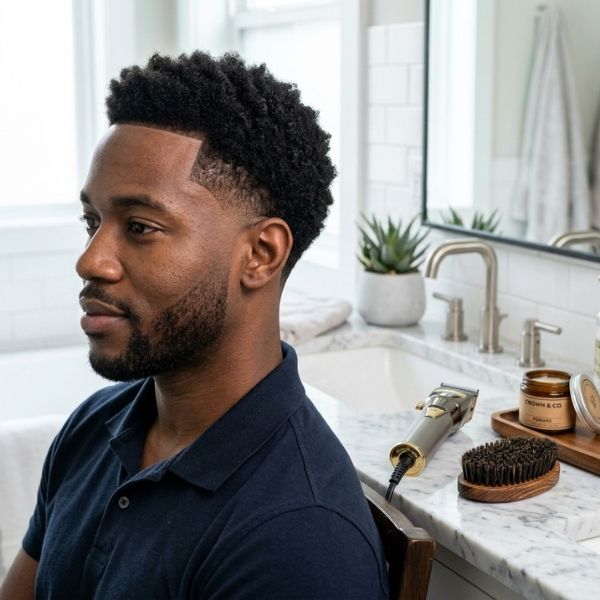
A low taper fade holds its shape longer than most fades, but a bit of home care keeps it looking freshly cut between appointments.
- Book touch ups every 3 to 4 weeks. This is the natural rhythm for a low fade, since the softer blend hides regrowth longer than a mid or high fade.
- Moisturize daily. Black hair and scalp tend to run dry, so a light leave in conditioner or scalp oil prevents flaking and keeps curls defined.
- Use the right tool for your top style. A wave brush for 360 waves, a pick or afro comb for a rounded afro, and a rat tail comb for parting designs.
- Protect it at night. Sleeping on a silk or satin pillowcase, or wearing a durag or bonnet, prevents frizz and preserves wave patterns or curl definition.
- Avoid heavy products. Thick pomades and gels can clog pores along the fade line and cause bumps, so lighter creams and curl activators are usually the better choice.
- Trim the neckline between full cuts. A quick clean up of the neckline and edges at home, or a mid cycle barber visit, keeps the low fade sharp without a full fresh cut.
Common Mistakes & How to Avoid Them
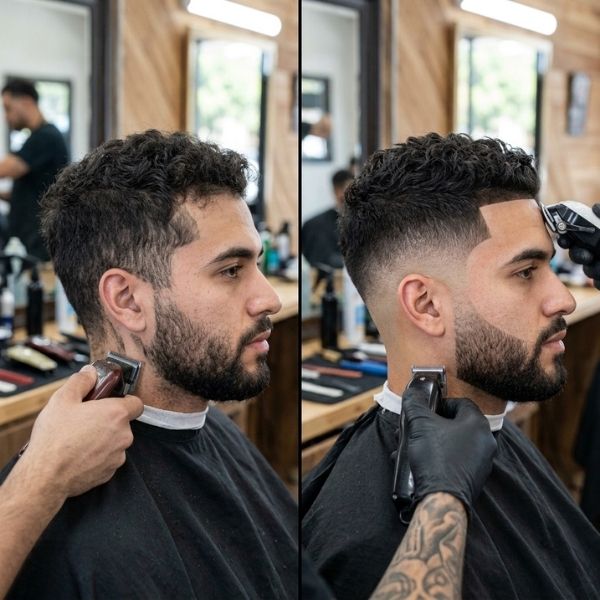
Even a great haircut can look off if a few basics get missed. Watch out for these frequent issues.
- Choosing the wrong barber for textured hair. Not every barber has experience with coily or kinky textures. Ask to see a portfolio of low taper fades on Black clients before booking.
- Skipping reference photos. Verbal descriptions alone often lead to a fade that starts too high or too low. Photos remove the guesswork.
- Over washing the hair. Washing every day strips natural oils and can leave curls dry and dull. Two to three times a week with a moisturizing shampoo is usually enough.
- Ignoring the hairline. A sharp fade paired with a patchy or undefined hairline looks unfinished. Regular line ups keep the whole cut balanced.
- Using the wrong products for the style. Heavy grease under a durag can suffocate waves, while a dry top with no moisture at all leads to frizz and breakage. Match the product to the style you are maintaining.
- Letting it grow out too long. Waiting past six weeks lets the fade lose its shape, so the barber ends up starting over instead of touching it up.
Conclusion
The low taper fade has earned its place as one of the most reliable, versatile haircuts for Black men because it does something simple exceptionally well: it stays clean without demanding constant upkeep, and it lets natural Black hair textures, whether waves, coils, an afro, or locs, take center stage. Whether you are heading into the barbershop for the first time or looking to refine a cut you already love, understanding the fade height, the top style options, and the right maintenance routine puts you in control of the final result. Bring your reference photos, communicate clearly, and let your barber tailor the details to your face shape and lifestyle, and the low taper fade will keep working for you well beyond 2026.
Frequently Asked Questions
Is a low taper fade good for thick, coily Black hair?
Yes. The soft blend and lower starting point work with shrinkage instead of fighting it, making it one of the safest fade choices for coily textures.
How often should Black men get a low taper fade touched up?
Most barbers recommend every 3 to 4 weeks, since the low blend hides new growth longer than mid or high fades.
Can you get a low taper fade with dreadlocks or braids?
Absolutely. The fade is applied only to the sides and nape, leaving locs, twists, or braids on top completely untouched.
What is the difference between a low taper fade and a low fade?
The terms are often used interchangeably, but a low taper technically leaves slightly more length on the sides for a softer, less shaved finish.
Does a low taper fade suit every face shape?
Most face shapes can wear it comfortably. The top style, such as a taller afro or a lower buzz, is usually adjusted to balance the specific face shape.
What products help maintain waves with a low taper fade?
A light wave pomade or curl activator, a medium bristle brush, and a silk or satin durag at night are the core tools most barbers recommend.

Zaria Rhodes is the lead editor and content curator at Lyrinexa, passionate about music, storytelling, and lyrical expression. With a deep love for discovering the meaning behind songs, she brings clarity, creativity, and accuracy to every post. Zaria is dedicated to providing readers with authentic lyrics, thoughtful interpretations, and a seamless music-exploration experience.

1 thought on “Low Taper Fade Black Male: 2026 Barber Guide for Waves, Curls, Afros & Locs”