


A low fade mullet is one of the easiest ways to get a bold haircut that still works at the office. The sides stay short and controlled, the top keeps some texture, and the back holds on to length and movement. It reads as sharp from the front and playful from behind, which is exactly why barbers keep seeing it walk through the door.
This guide breaks the cut down piece by piece. You will learn what actually separates a low fade mullet from a mid or high fade version, see a quick reference table for choosing between them, and get seventeen named variations so you can point to the exact one you want. There are also simple styling steps, the words to use in the barber’s chair, and a maintenance routine that keeps the shape looking clean between visits.
What Is a Low Fade Mullet

A low fade mullet combines a low fade on the sides with a mullet’s signature short front and longer back. The fade begins close to the hairline, usually within an inch of the ear, then blends upward into the top so there is no harsh line. Because the transition sits so low on the head, the cut looks tidy and restrained from the front while the length at the back does the talking.
This is different from a mid or high fade mullet, where the blend starts higher up the side of the head and creates more visible contrast. A low fade is the subtle end of the spectrum. It suits men who want a mullet’s personality without the loud, high-contrast look, and it tends to grow out more gracefully since there is less of a hard edge to maintain.
The style works across most hair types. Straight hair shows the back’s length and movement clearly, wavy hair adds natural texture to the top, and curly hair gives the crown extra volume that pairs well with a tight, low fade on the sides. Face shape matters less than most guides suggest, since the fade sits low and the length at the back is what shapes the overall silhouette, but adding height on top can balance a rounder face while keeping the sides tighter suits a wider jawline.
Quick Fit Table
| Variation | Fade Height | Best Hair Type | Contrast Level | Maintenance |
|---|---|---|---|---|
| Low Fade Mullet | Near the ear | Straight, wavy | Low | Low |
| Mid Fade Mullet | Mid temple | Wavy, curly | Medium | Medium |
| High Fade Mullet | Above temple, near crown | Straight, thick | High | High |
| Textured or Modern Low Fade | Near the ear | Wavy, curly | Low to medium | Low |
Use this table as a starting point, then read the variation that matches your goal for a fuller picture of how each one is cut and styled.
Variations
Each version below shares the same short front, long back structure, but the fade height, texture, and finishing details change the overall effect. Read through a few and note which words match the photo or idea you already have in mind.
1) Low Fade Mullet Haircut
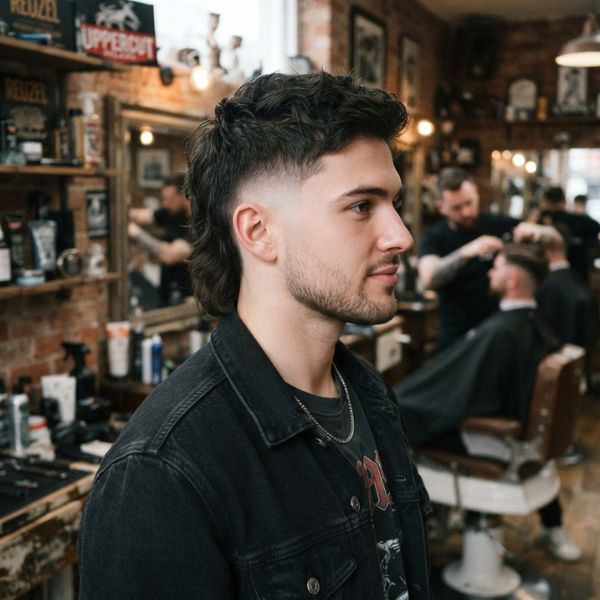
This is the baseline version and the one most barbers picture when you say “low fade mullet.” The fade sits tight against the ear and blends upward within an inch or two, the top carries light texture for movement, and the back is layered rather than blunt so it falls naturally instead of sitting in one thick chunk. It works well for a first-time mullet because the contrast is gentle and forgiving as it grows out.
2) Mullet Low Fade

Same haircut, different word order, and barbers use both interchangeably. This version leans slightly more into protecting length around the crown, so the top is left a touch longer than the classic low fade mullet haircut. It suits men who want the back to stand out more than the sides.
3) Modern Mullet Low Fade

The modern take drops the boxy, blunt layers that defined the 1980s original. Instead, the back is cut with feathered, textured layers, and the fade is kept clean but not razor sharp. This version photographs well and tends to be the one clients bring in as a reference image, since it looks intentional rather than retro.
4) Low Mullet Haircut
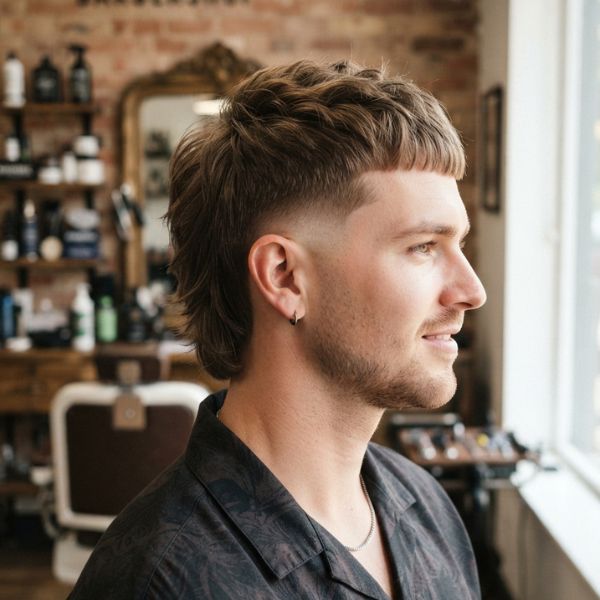
Here the emphasis shifts to the mullet length itself rather than the fade. The back is kept shorter overall, closer to collar length, which makes the cut easier to maintain and less noticeable under a hat or helmet. It still uses a low fade on the sides, but the reduced length up top and back gives it a more subtle, everyday feel.
Read More : Isla Amelia Gates: Age, Family & Life Story in 2026
5) Mullet Low Fade Haircut
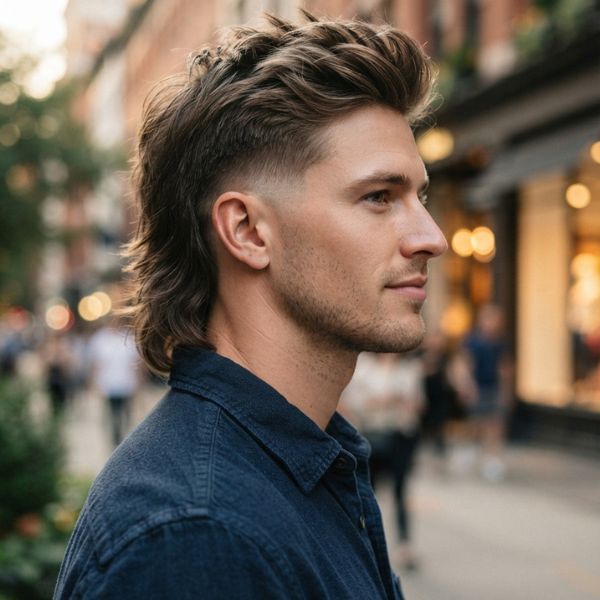
This is a workplace-friendly variation built around a clean, symmetrical fade line and a top that is styled forward or swept to one side rather than left loose. The back holds moderate length with soft layering, which keeps the silhouette neat enough to pass in most professional settings.
6) Low Mullet Fade
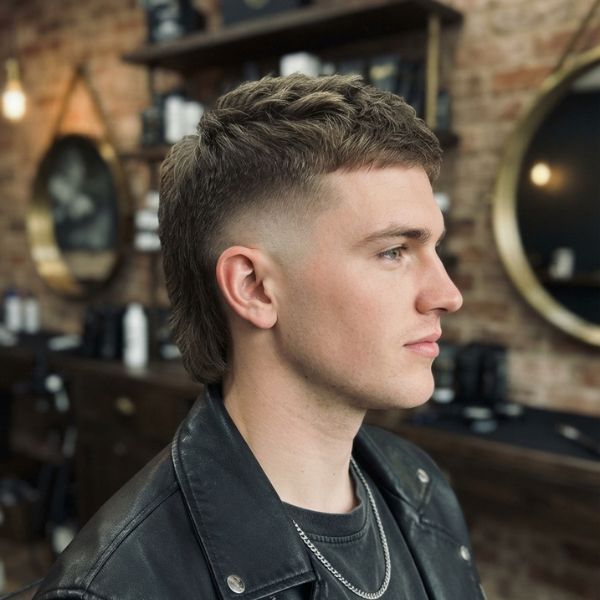
This version pairs the low fade with a slight curve behind the ear, similar to a drop fade, rather than a straight horizontal line. The curved blend softens the transition even further and tends to suit rounder head shapes, since it avoids a harsh straight edge along the sideburn.
7) Low Mullet
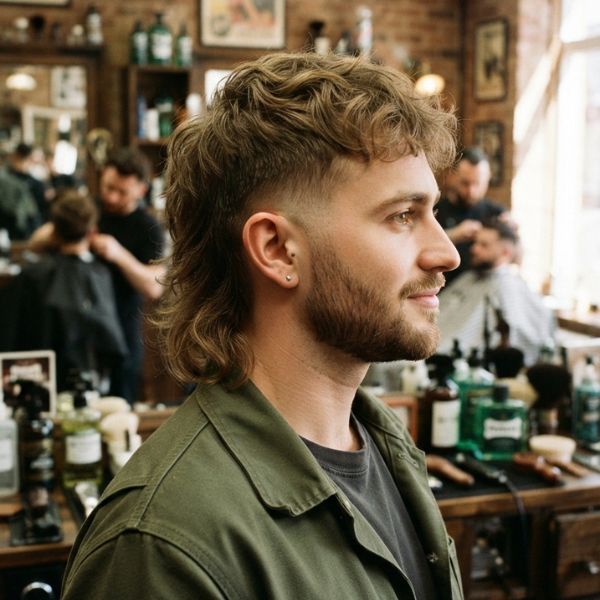
Without much fade contrast at all, this is the most conservative option on the list. The sides are trimmed short with clippers but without a dramatic blend, so the whole cut reads as low maintenance and grows out with almost no visible line. It is a good entry point for anyone unsure about committing to a fade.
8) Mid Fade Mullet
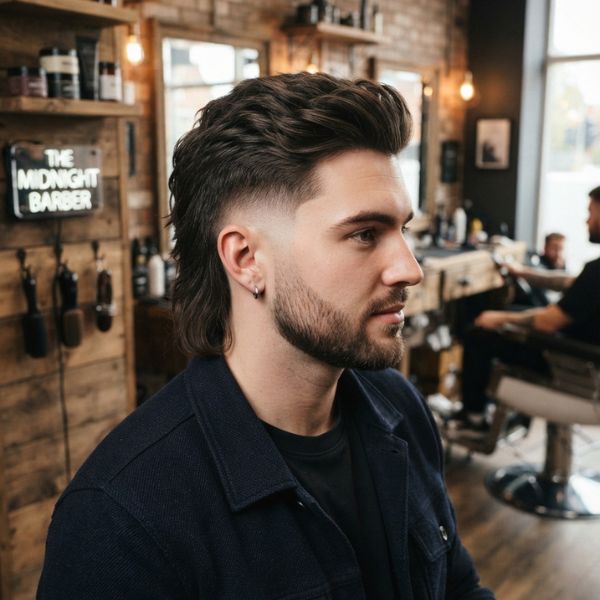
The mid fade mullet moves the blend up to the middle of the side of the head, roughly level with the temple. This creates noticeably more contrast than any low fade version while still leaving the top with enough length to style. It is the most requested option for men who want a balance between bold and wearable.
9) Mullet Mid Fade

This variation keeps the same mid-height blend but pushes slightly more length into the crown area, giving the top extra volume before it transitions into the back. It suits thicker hair that can hold shape without excess product.
10) Mid Fade Mullet Haircut
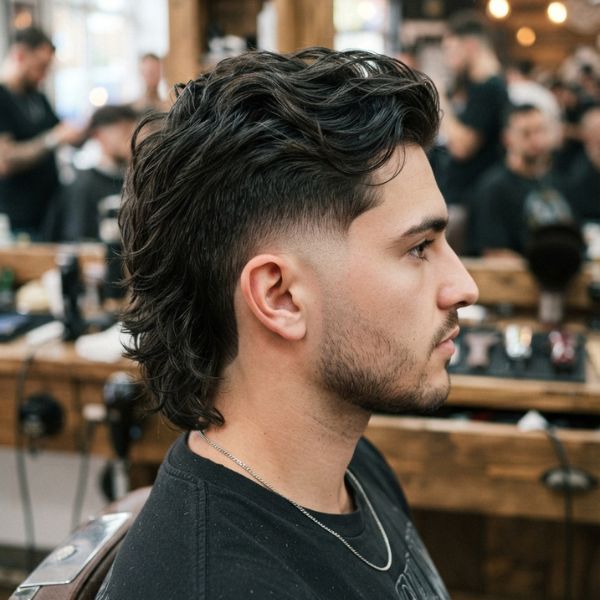
A more structured version of the mid fade, this cut uses a sharper, more defined line at the fade and a clean part or comb line on top. It leans dressier than the standard mid fade mullet and works well for men who want definition without going all the way to a high fade.
11) Mid Mullet
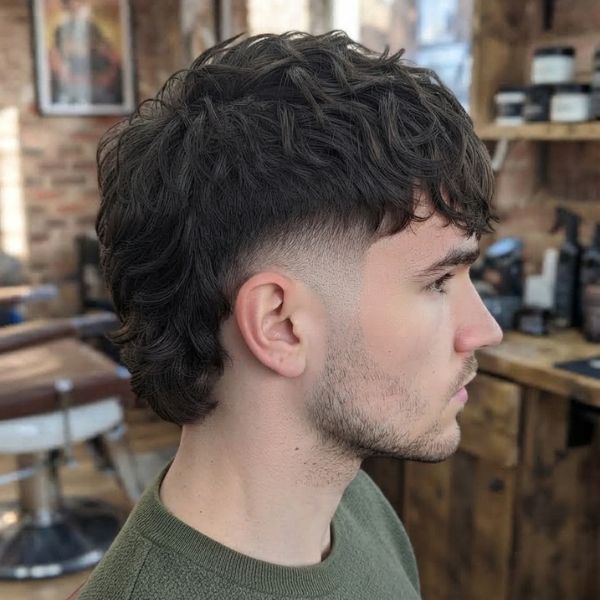
Here the mullet length itself sits in the middle ground, longer than a low mullet but shorter than a full-length back. Combined with a mid fade, this creates a balanced, proportional cut that does not lean too far toward either the retro or the ultra-modern end of the style spectrum.
12) Mid Mullet Fade

This version often gets paired with a textured crop or fringe on top, since the added height at the temple gives more room to style forward-swept layers. It photographs well on wavy and curly hair, where natural texture adds shape to the fringe.
13) Mid Mullet Haircut

A slightly looser, more casual cut than the mid fade mullet haircut above, this version favors shaggier layers through the back and top rather than a precise, combed finish. It suits curly and wavy hair types especially well, since the natural texture does most of the styling work.
14) High Fade Mullet
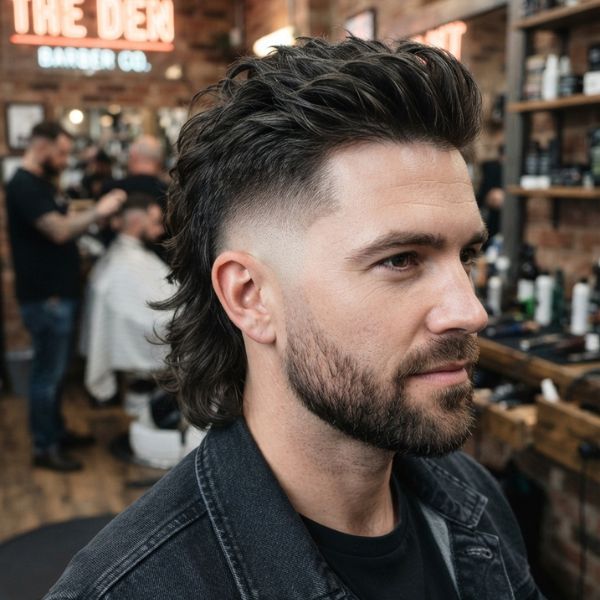
The high fade mullet is the boldest version on this list. The fade starts high, often near the crown, and creates a sharp, dramatic contrast against the longer back. It sculpts strong cheekbones and pairs naturally with a short beard, but it also needs more frequent barber visits to keep the line looking sharp as it grows out.
15) High Mullet
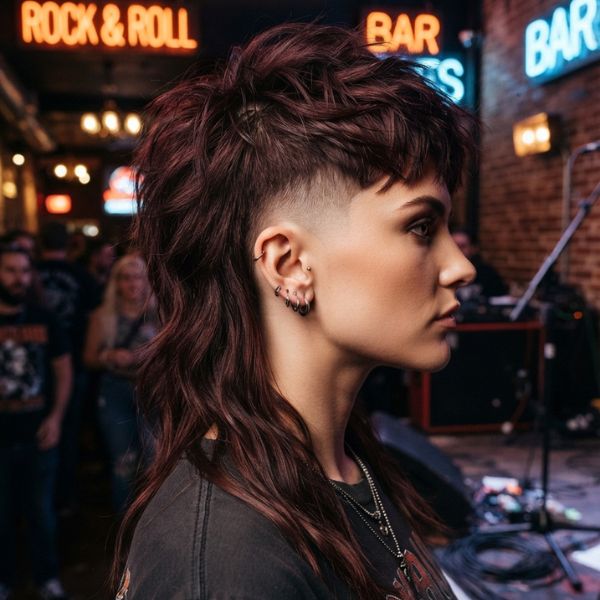
This variation focuses on overall length rather than fade height. It combines an aggressive high fade with a longer, fuller back, sometimes reaching well past the collar. It tends to show up on musicians, skaters, and anyone drawn to a more rebellious, statement-making look.
16) High Mullet Haircut

A more disconnected version, this cut creates a visible gap between the short, high-faded sides and the longer top, rather than a smooth gradual blend. The result looks edgier and more graphic, closer to an undercut with mullet length left at the back.
17) Mullet High Fade
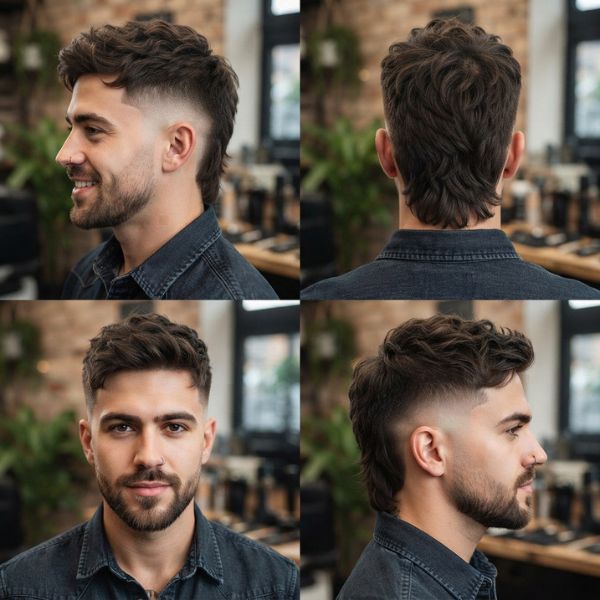
This version pairs the high fade with a skin fade finish at the very bottom, meaning the hair fades all the way down to the skin near the hairline before building up in length. It is the highest-maintenance option here and works best on straight or thick hair that holds a crisp line.
Read More : Albert DePrisco Net Worth 2026: How Rich Is He Today?
How to Style in Three Steps
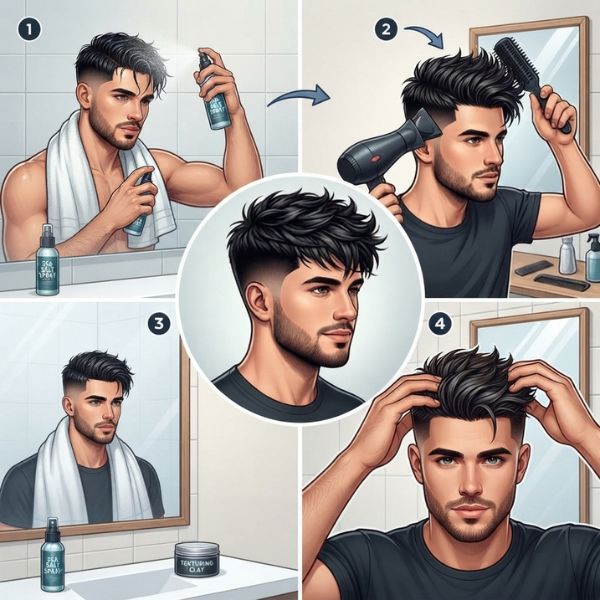
Getting a low, mid, or high fade mullet to look intentional takes only a few minutes once you know the order of operations.
- Prep damp hair. Towel dry until hair is just damp, then work a small amount of sea salt spray or light styling cream through the top and back for grip and texture.
- Blow dry with direction. Use a low heat setting and guide the top forward or to one side with your fingers or a vent brush, then let the back fall naturally without forcing it flat.
- Finish and set. Apply a small amount of matte pomade or clay to the top for hold, run a light pass through the back to define the layers, and pinch any fringe into place if you have one.
The full routine takes about three to five minutes and does not require heavy heat styling, which is one reason this cut has stayed popular.
Barber Instructions
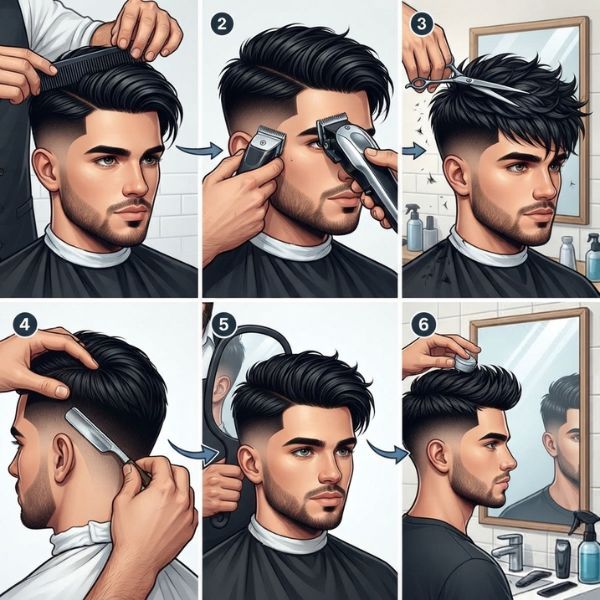
Clear communication in the chair is what separates a great mullet from an uneven one. Bring a reference photo if you have one, and use these specifics:
- State the fade height first: low, mid, or high, and mention it should start “within an inch of the ear” for a low fade or “at the temple” for a mid fade.
- Give a guard number range for the sides, such as a 1 to 3 fade, so the barber knows how aggressive the blend should be.
- Specify the top length in inches or fingers, and say whether you want it textured or left longer for styling.
- Describe how far down the back should fall, using a landmark like “collar length” or “a few inches past the collar.”
- Ask for the transition to be blended smoothly rather than disconnected, unless you specifically want the disconnected look described in the high mullet haircut variation.
Most barbers can complete a low or mid fade mullet in 30 to 45 minutes, while a high fade or skin fade version may take slightly longer due to the sharper detail work required.
Care and Upkeep
A low fade mullet holds its shape longer than higher-contrast versions, but it still needs a routine to look its best.
- Trim schedule: Book a fade refresh every 3 to 4 weeks for low fades, and every 2 to 3 weeks for mid or high fades, since the higher the fade, the faster the line grows out and loses definition.
- Washing: Wash two to three times a week with a sulfate-free shampoo to avoid stripping natural oils, which keeps the back looking healthy rather than dry and frizzy.
- Conditioning: Use a lightweight conditioner or leave-in treatment on the longer back section, since that hair is older and more prone to split ends than the freshly cut sides.
- Product: Stick to a small amount of pomade, clay, or sea salt spray daily. Heavy product buildup weighs down the back and flattens the texture on top.
- Between-trim maintenance: If you want to stretch time between barber visits, ask your barber to teach you a basic line-up with clippers so you can clean the neckline and sideburns at home.
Frequently Asked Questions
Is a low fade mullet professional enough for work?
Yes. The low, gentle blend and shorter front keep it neat from most angles, which is why it is one of the most office-friendly mullet variations.
What hair type works best with a low fade mullet?
Straight, wavy, and curly hair all work, though wavy and curly textures add natural movement to the top and back with less styling effort.
How long does hair need to be to start a mullet?
Most barbers need at least 3 to 4 inches at the back and 2 to 3 inches on top to create visible length and contrast against the fade.
Does a mullet suit round or square faces?
Yes. A round face benefits from added height on top, while a square jaw pairs well with tighter sides and a slightly softer, low fade.
How often should I get a mullet fade trimmed?
Every 3 to 4 weeks for a low fade, and every 2 to 3 weeks for mid or high fade versions to keep the blend sharp.
Can I switch between low, mid, and high fade later?
Yes. Moving from a low to a mid or high fade is a simple adjustment for a barber, though going the other way takes more time to grow out evenly.
Read More : Boys Mullet Haircut Guide 2026: Styles, Fades, and Care
Conclusion
The low fade mullet family covers a lot of ground, from the barely-there contrast of a low mullet to the sharp, high-fade skin fade version at the other end. What ties all seventeen variations together is the same short-front, long-back structure, adjusted through fade height, top length, and texture to match your hair type and how much contrast you actually want. Bring the specific name and details from this guide into your next barber appointment, follow the three-step styling routine, and stick to a regular trim schedule, and the cut will stay sharp between visits with very little daily effort.

Zaria Rhodes is the lead editor and content curator at Lyrinexa, passionate about music, storytelling, and lyrical expression. With a deep love for discovering the meaning behind songs, she brings clarity, creativity, and accuracy to every post. Zaria is dedicated to providing readers with authentic lyrics, thoughtful interpretations, and a seamless music-exploration experience.
