


Messy French Crop: Effortless Texture, Clean Outline, Fast Style
Short on top of the head is out. Short with movement is in, and the messy French crop sits right at the center of that shift. It takes the tidy, military-born French crop and loosens the top just enough to look lived in rather than combed into place. The sides stay tight, the fringe stays defined, and everything above it gets left a little rough around the edges.
This guide breaks down what the cut actually is, who it suits, and how a barber builds it from the first guard to the final comb-through. You will also get the exact words to use in the chair, a realistic maintenance schedule, and fixes for the mistakes that turn a sharp crop into a flat, shapeless mess.
1) What Is a Messy French Crop
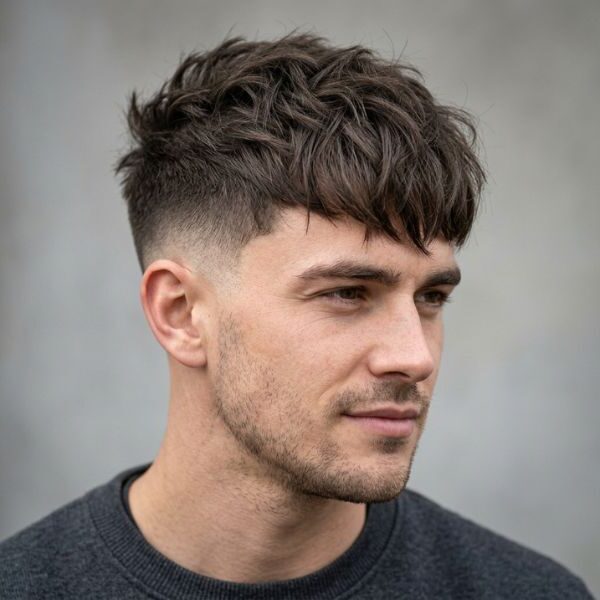
A French crop is a short back and sides paired with a blunt, forward-falling fringe on top. It started as a functional military cut and later became a barbershop staple because it is quick to maintain and flatters almost any head shape.
The messy version keeps that same skeleton, short sides, defined fringe, but changes how the top is cut and finished. Instead of a smooth, combed top, the hair is textured with scissor-over-comb or point cutting so individual strands separate instead of sitting flat as one block.
Key traits of the style include:
- A short, straight or slightly broken fringe that sits above the eyebrows
- Tight sides finished with a fade, taper, or close clipper cut
- A textured top with visible separation between strands
- A natural, undone finish rather than a slicked or heavily gelled one
The look became especially popular through period dramas and street style photography, where the rough, forward fringe reads as confident rather than unkempt.
Read more: Short Wolf Cut Men 2026: Best Styles for Every Hair Type
2) Why Choose This Cut

The biggest draw is the balance between structure and ease. The sides and fringe give the cut a defined shape that always looks intentional, while the textured top forgives a bad hair day and needs almost no daily effort.
Reasons this haircut keeps trending include:
- Low daily maintenance. A well cut crop holds its shape through air drying alone, so a rushed morning still looks presentable.
- Fast in the chair. Most appointments run 20 to 30 minutes since there is no long length to manage.
- Works with a fade or a taper. The sides can be dialed up for a sharper, more formal finish or kept soft for an everyday look.
- Suits thick, thin, straight, and curly hair. Texturizing on top solves bulk for thick hair and adds visual density for fine hair.
- Office appropriate and casual friendly. The clean outline reads professional, while the tousled top keeps it from looking stiff.
3) Face Shape Match
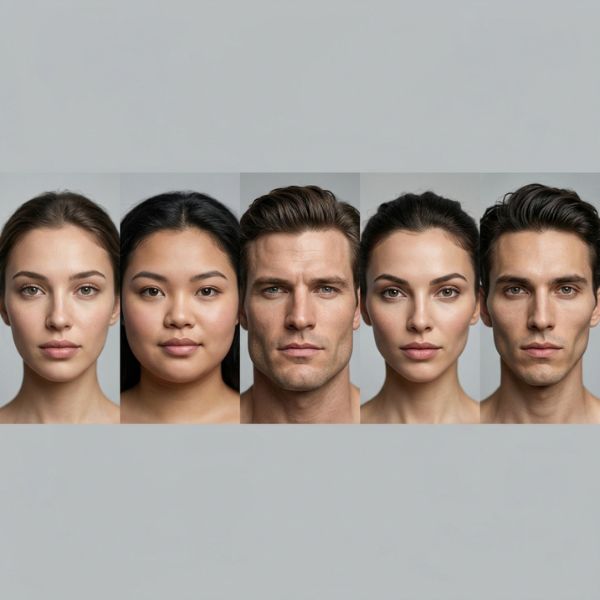
The fringe is the feature that does most of the work when it comes to face shape, since it sits directly above the eyes and frames the forehead.
| Face Shape | How the Cut Helps |
|---|---|
| Oval | Nearly every fringe length and top texture works well, since the proportions are already balanced. |
| Square | A structured top and straight fringe soften a strong jawline without hiding it. |
| Round | A slightly longer, angled fringe adds height and breaks up the roundness of the cheeks. |
| Heart or triangle | A fuller, wider fringe balances a narrower chin against a broader forehead. |
| Rectangle or long | Keeping some width on top and avoiding excess height reduces the appearance of face length. |
A barber will usually check your hairline and brow position before cutting the fringe, since a fringe that sits too high exposes more forehead, while one that falls too low can look heavy rather than textured.
4) Hair Types & Top Textures
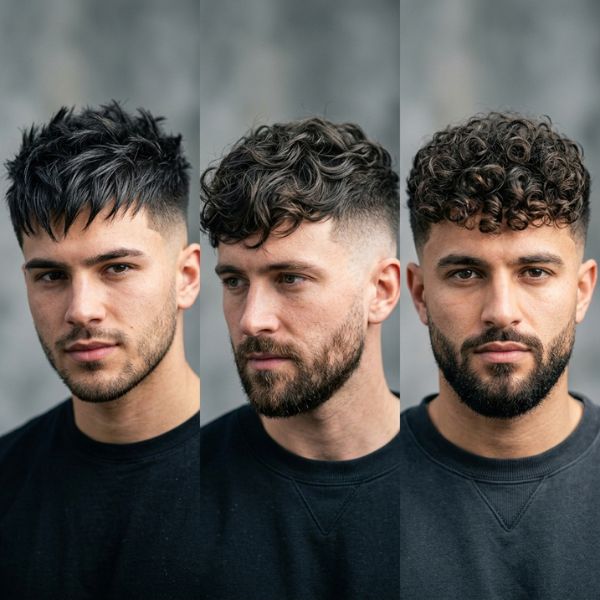
Hair type changes how the top is thinned and how long the fringe should be left, even though the base shape of the cut stays the same.
- Straight hair: Holds a crisp fringe line well and takes to both a smooth and a messy finish. Point cutting adds texture without losing definition.
- Wavy hair: Naturally supports the tousled look with minimal product, since the waves already create separation.
- Curly hair: Needs slightly more length on top so the curl pattern has room to form once it dries, and the fringe is often cut a touch shorter to account for shrinkage.
- Thick hair: Benefits most from internal thinning with texturizing shears, since untouched thick hair tends to push outward into a mushroom shape as it grows.
- Fine or thin hair: A shorter, blunter fringe creates an illusion of density at the front, and heavy products should be avoided since they weigh the top down flat.
5) Exactly What to Tell Your Barber
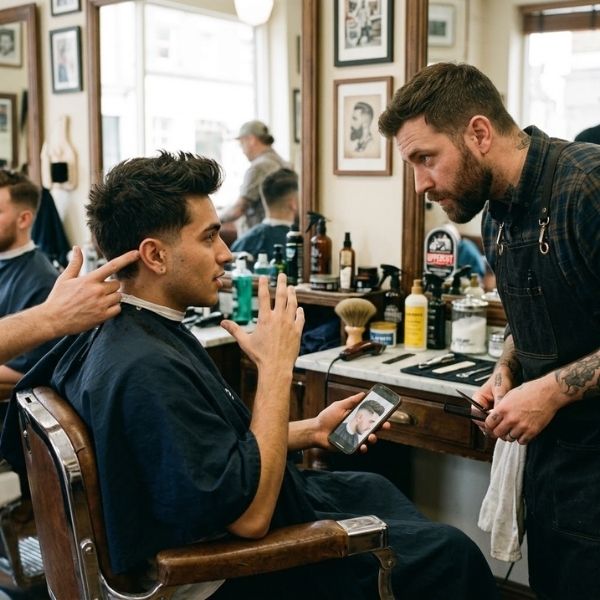
Vague requests lead to inconsistent results, so it helps to bring a reference photo and use specific language once you are in the chair.
Try requesting the following:
- “A French crop with a textured, messy top, not a smooth one.”
- “Sides tapered or faded with a #1 or #2 guard, blended up into the top.”
- “Top length between 4 and 6 centimeters, thinned with texturizing shears.”
- “A blunt fringe that falls just above my eyebrows.”
- “Point cutting through the fringe so it breaks into pieces instead of sitting as one solid block.”
Mentioning your hair type and how much time you spend styling it each morning also helps the barber choose the right level of thinning and fringe length for your routine.
Read more: Short Wolf Men 2026: Best Styles for Every Hair Type
6) In the Chair: Step by Step
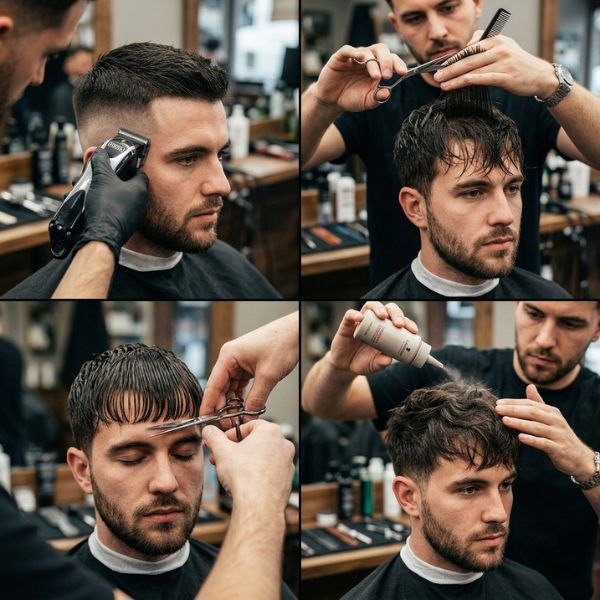
A professional messy French crop is built in a specific order, and skipping a step is usually why the finished cut looks unbalanced.
Step 1: Consult & Plan
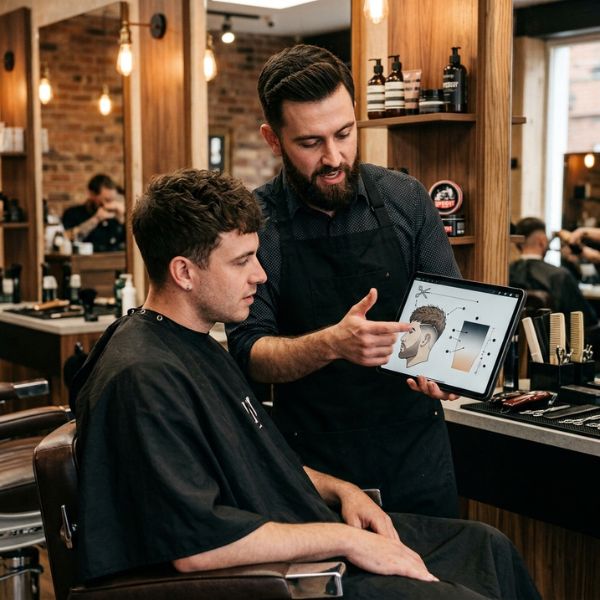
The barber checks your hair type, growth pattern, face shape, and how the hair currently falls before making a single cut. This is also when fringe length, fade height, and top length get agreed on.
Step 2: Prep
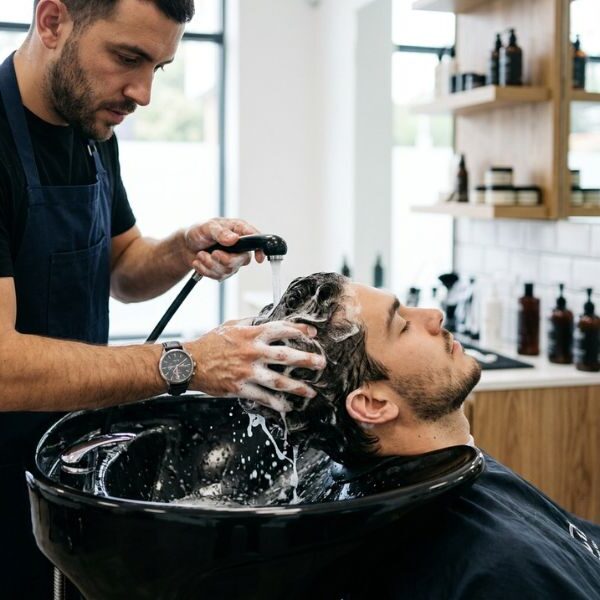
Hair is washed and combed through to remove tangles and product buildup. Cutting on clean hair gives a more accurate read of natural texture and how the hair will fall once dry.
Step 3: Set the First Guideline
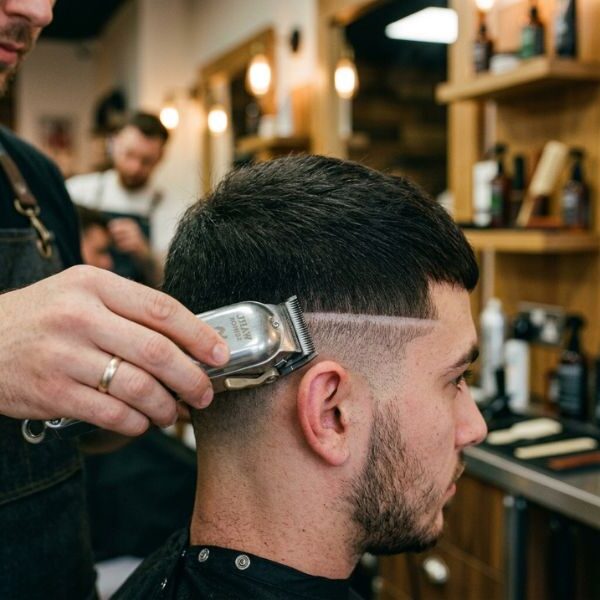
The barber establishes a guide length on the sides, usually with clippers and a guard, which becomes the reference point for every other length on the head.
Step 4: Build the Taper or Fade
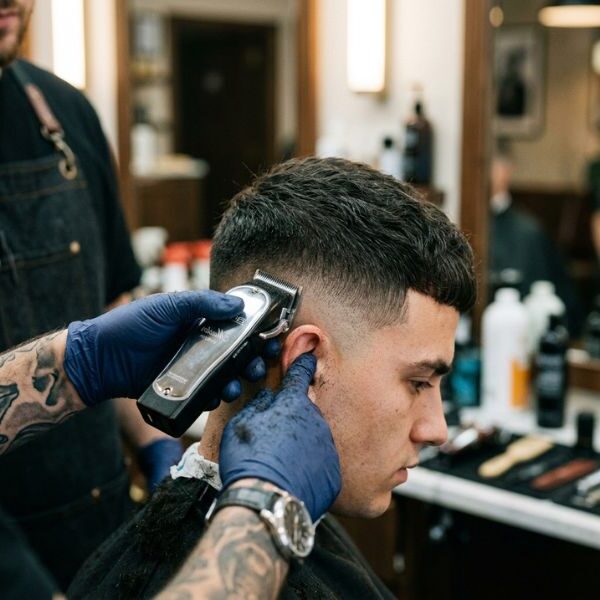
Working from the guideline, the barber gradually shortens the hair down toward the neckline and ears, creating either a soft taper or a sharper skin fade depending on what was agreed in the consultation.
Step 5: Blend Ridges
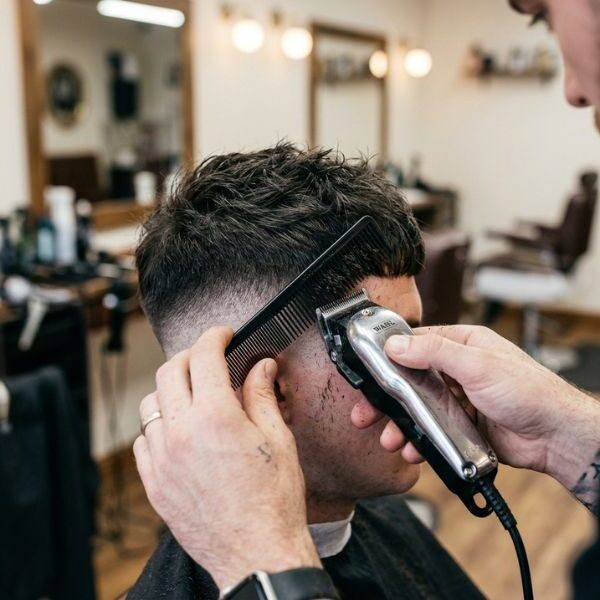
Clipper lines between sections are blended using clipper-over-comb or shears, removing any visible steps so the sides flow smoothly into the top.
Step 6: Texture & Balance
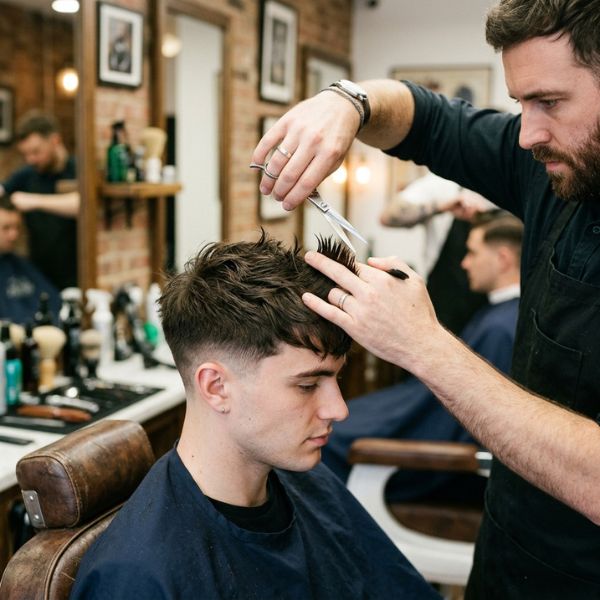
The top is thinned and shaped with point cutting or texturizing shears, removing bulk while keeping enough length for the fringe to fall forward.
Step 7: Cut the Fringe
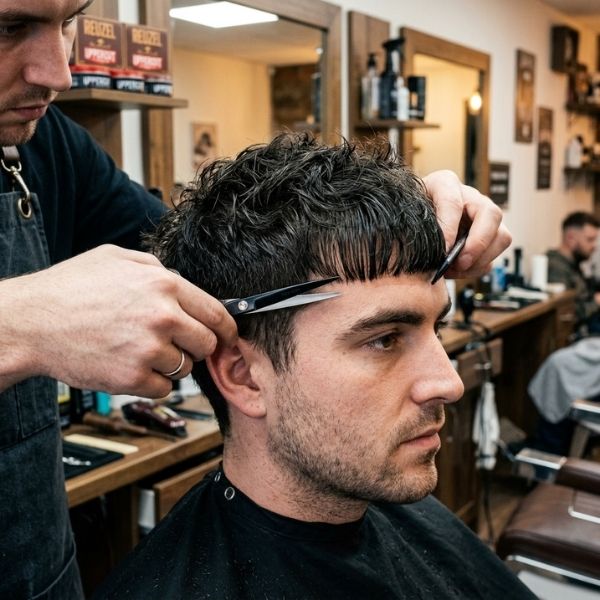
The fringe is cut last, using the natural fall of the hair as a guide, then checked from multiple angles so it sits evenly above the brow line.
Step 8: Finish
A lightweight product is worked through with fingers, and the barber checks the outline around the ears and neckline before a final comb through and mirror check.
7) Daily Routine and Fast Style

One of the main selling points of this cut is how little time it takes to style once the initial cut is done correctly.
A quick daily routine looks like this:
- Apply a small amount of matte clay, texture powder, or sea salt spray to damp or towel dried hair.
- Rough dry with a blow dryer on a low or medium setting, pushing the fringe forward with your fingers.
- Once mostly dry, use your fingertips rather than a comb to separate strands and break up the top.
- Skip heavy pomades or waxes with high shine, since these flatten the texture the cut relies on.
On busy mornings, the cut still holds its shape through air drying alone, which is why it has become a favorite for people who do not want to spend more than a few minutes on their hair.
Read more: Burst Fade Design: Best Hair Design Ideas, Placement, and Barber Tips (2026)
8) Beard & Outline Options

The crop pairs naturally with facial hair since both rely on a clean, defined outline against textured length.
- Full beard: Balances a short crop by adding volume lower on the face, especially useful for round or square face shapes.
- Light stubble: Keeps the overall look low maintenance and works well with a soft taper rather than a hard fade.
- Clean shaven: Puts full focus on the fringe and hairline, so the barber should pay extra attention to a crisp neckline.
- Sharp neckline and temple outline: A straight razor finish around the ears and neck sharpens the whole cut, even when the top is left deliberately messy.
9) Maintenance Timeline
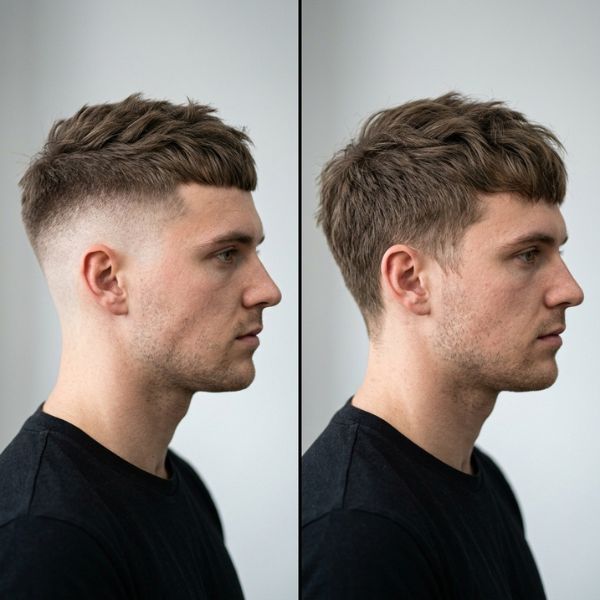
How often you need a trim depends mostly on the sides, since regrowth there shows far faster than length lost on top.
| Cut Style | Recommended Trim Frequency |
|---|---|
| Skin fade pairing | Every 2 to 3 weeks |
| Taper pairing | Every 3 to 4 weeks |
| Low or soft taper, no hard line | Every 4 to 5 weeks |
| Fringe upkeep only | Every 3 weeks to keep the line sharp |
Between visits, keep an eye on the fringe specifically. Once it starts falling into your eyes or losing its shape, that is the clearest sign a trim is overdue, even if the sides still look tidy.
10) Common Mistakes & Quick Fixes
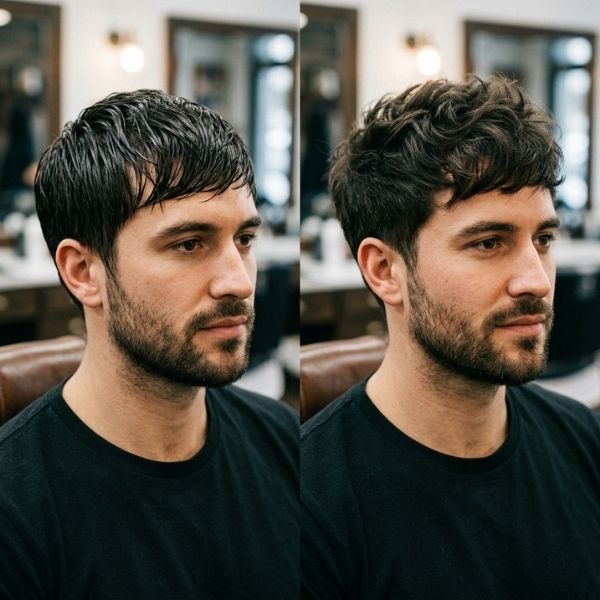
Most complaints about this haircut come down to a handful of avoidable issues rather than the style itself.
- Problem: The top looks flat with no movement. Fix: Ask for point cutting or texturizing shears on your next visit, and use a matte clay rather than a smooth pomade.
- Problem: The fringe sits too high or too low. Fix: Communicate clearly that you want it resting just above the eyebrows, and bring a reference photo so there is no guesswork.
- Problem: Thick hair mushrooms outward within two weeks. Fix: Request internal thinning through the top so bulk is removed without shortening the overall shape.
- Problem: The fringe will not sit forward. Fix: Apply product to damp hair and train it forward daily. A strong natural growth pattern sometimes needs a shorter fringe to manage.
- Problem: The cut looks unkempt rather than intentionally messy. Fix: The line between messy and untidy is the outline. A clean neckline and sharp sides let a loose top read as styled rather than neglected.
FAQs
How often should I get a messy French crop trimmed?
Every 3 to 4 weeks for a standard taper, or every 2 to 3 weeks if it is paired with a skin fade.
Does a messy French crop suit curly hair?
Yes, though it works best with slightly more length on top so the curl pattern has room to form as it dries.
What products work best for styling?
Matte clay, texture powder, or sea salt spray give the best hold without flattening the texture on top.
Can I style it without any products?
Yes, a well cut crop holds its shape through air drying alone, though a small amount of product sharpens the finish.
Is the messy French crop suitable for work?
Yes, the clean sides and defined fringe keep it professional, while the textured top keeps it from looking overly formal.
What is the difference between a French crop and a messy French crop?
A classic French crop is combed smooth and flat, while the messy version is texturized so the top separates and looks tousled.
Conclusion
The messy French crop works because it gives you two haircuts in one. The sides and fringe hold a clean, defined outline that always looks deliberate, while the textured top forgives busy mornings and bad hair days. Getting it right comes down to clear communication with your barber, choosing the right level of texture for your hair type, and staying on top of trims before the fringe loses its shape. Once the base cut is dialed in, the daily upkeep takes minutes, which is exactly why this style has held its place as one of the most requested men’s haircuts season after season.

Zaria Rhodes is the lead editor and content curator at Lyrinexa, passionate about music, storytelling, and lyrical expression. With a deep love for discovering the meaning behind songs, she brings clarity, creativity, and accuracy to every post. Zaria is dedicated to providing readers with authentic lyrics, thoughtful interpretations, and a seamless music-exploration experience.

1 thought on “Messy French Crop Haircuts: Fast Style, Sharp Results”