


Wavy hair and mullets are having a moment, and barbers are not surprised. A wavy mullet takes a haircut that used to feel loud and gives it a softer, more natural shape, because the texture does half the styling work on its own.
If your hair already has movement, you are closer to this look than you think. This guide covers what the cut actually is, eight variations worth showing your barber, how long to keep the top and fringe, a simple daily styling routine, upkeep advice, and the exact words to use in the chair so you walk out with the right result.
What Is a Wavy Mullet Men
A wavy mullet is the classic mullet shape (shorter hair on the sides and top, longer hair left at the back) cut specifically to work with natural wave or curl pattern instead of fighting it.
On straight hair, a mullet can look flat or overly structured. On wavy hair, the same cut gains texture, volume, and a slightly undone finish that reads as intentional rather than messy.
Barbers usually build it around three zones:
- The sides. Kept short through a taper or fade so the contrast with the top reads clearly.
- The top and crown. Left with enough length for the waves to show shape and lift.
- The back. Grown out past the natural cutting line, so it falls over the collar or further depending on the variation.
The result is a low effort, high impact style. Wavy hair is naturally more forgiving than straight hair, so small grow out periods between trims still look styled rather than unkempt.
Quick Fit Table
Use this as a starting point before your appointment. Face shape and hair density both affect how a specific variation sits.
| Variation | Best Hair Length | Best Face Shape | Maintenance Level |
|---|---|---|---|
| Classic Wavy Mullet | Medium | Oval, Square | Low |
| Wavy Hair Mullet Fade | Short to Medium | Oval, Round | Medium |
| Short Wavy Mullet | Short | Round, Heart | Low |
| Wavy Modern Mullet | Medium | Square, Oval | Medium |
| Wavy Mullet Medium | Medium | Any face shape | Medium |
| Long Wavy Modern Mullet | Long | Oval, Rectangular | Medium |
| Burst Fade Wavy Mullet | Short to Medium | Round, Square | High |
| Korean-Inspired Wavy Mullet | Medium | Oval, Heart | Medium |
Wavy Mullet Variations
Here are the eight variations barbers report cutting most often this year, ranked roughly from lowest commitment to boldest statement.
1) Classic Wavy Mullet Men

The classic version keeps the formula simple. Sides are trimmed short, the top is left a bit longer, and the natural waves at the back are allowed to fall over the collar without heavy layering.
This is the easiest entry point if you have never worn a mullet before. There is no dramatic fade or shaved detailing involved, so it is easy for a barber to soften or reverse later. A light sea salt spray is usually all it needs on a daily basis.
Read more: Low Fade Crew Cut Hairstyles: Clean, Modern, Easy
2) Wavy Hair Mullet Fade
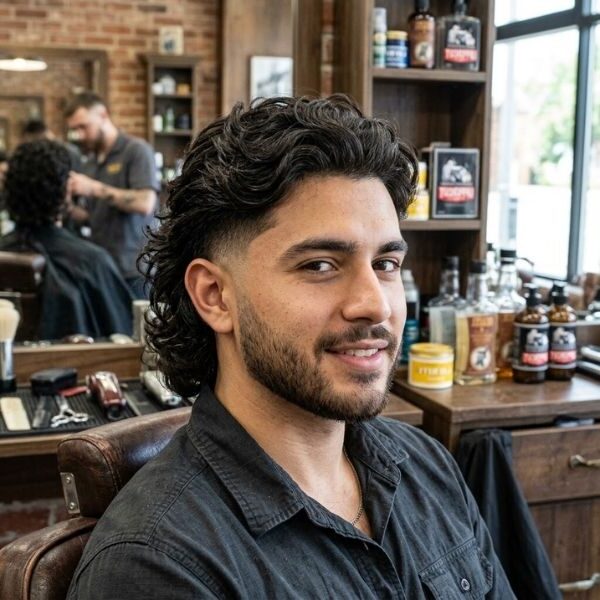
This variation sharpens the classic shape by adding a taper or fade on the sides. The contrast pushes attention toward the waves on top and at the back, giving the whole cut more definition.
It reads as more polished than the classic version, which makes it a solid choice for office casual environments. Because the fade keeps the sides consistently neat, the back can grow out for weeks without the cut looking unfinished.
3) Short Wavy Mullet Men

Sometimes called a baby mullet, this cut trims the back down to just an inch or two longer than the top. It hints at the mullet shape rather than committing fully to it.
This makes it ideal for men easing into the trend, or for anyone working in a more conservative setting where a dramatic length difference would stand out too much.
4) Wavy Modern Mullet

The modern mullet blends heavier layering through the crown with a tighter taper on the sides. The result is a shaggier, more textured look overall, closer to a grown out shag than a traditional mullet.
It leans into the grown out but intentional aesthetic that has been dominating men’s hairstyling this year, and it photographs well because the layers catch light differently at every angle.
5) Wavy Mullet Medium

Sitting between short and long, the medium wavy mullet gives just enough back length to show movement without turning into a statement cut. It is one of the most versatile lengths on this list.
Because it splits the difference, it works for both casual weekends and smart casual workwear, and it is forgiving if you are still deciding how far you want to take the length at the back.
6) Long Wavy Modern Mullet

For men who want maximum drama, this version pushes the back length past the collar while keeping the top layered and full. Straight hair at this length can look stringy, but waves add body and prevent that flat, weighed down effect.
This is the variation that requires the most patience to grow out, and the most regular trims once you reach the length you want, since split ends show more obviously on longer hair.
Read more: Straight Hair Mullet Guide 2026: Styles, Fade, and Easy Care
7) Burst Fade Wavy Mullet
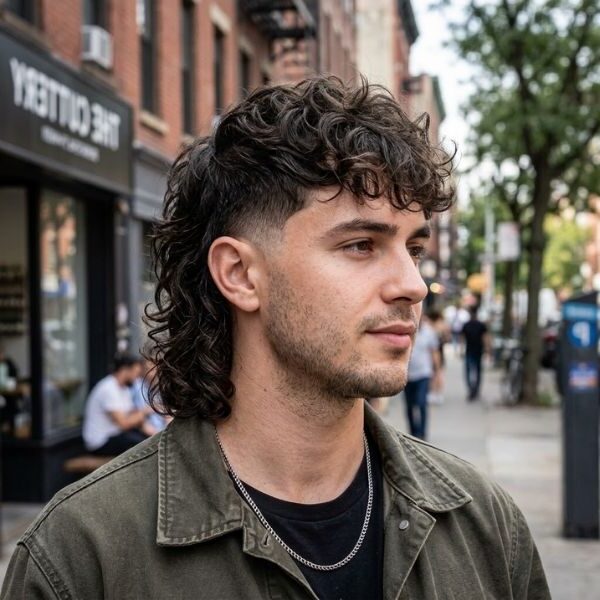
A burst fade curves around the ear rather than running in a straight horizontal line, creating a rounded, high contrast finish instead of a flat one. Paired with waves on top, it is one of the boldest options on this list.
It suits men who already like sharper, more architectural haircuts and want the mullet’s length without losing that clean, barbershop finish on the sides.
8) Korean-Inspired Wavy Mullet
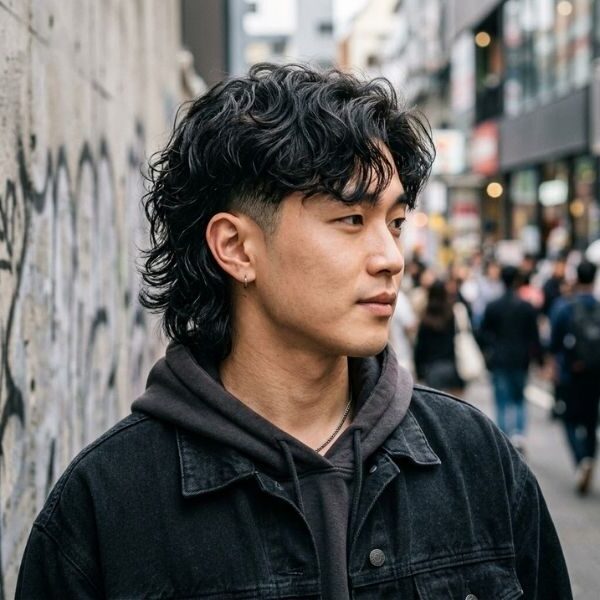
Korean mullet styling trades hard contrast for softness and movement. Instead of a sharp fade, the sides are lightly tapered, and a longer, textured fringe or curtain style front frames the face.
This variation favors light layering over heavy thinning, and it is usually finished with a soft hold cream or spray rather than a stiff pomade, which keeps the texture loose instead of sculpted.
Length and Fringe

Length decisions matter more on wavy hair than straight hair because waves add visual volume, which can make a cut look longer or fuller than the actual measurement suggests.
A few general guidelines:
- Top length. Two to four inches gives waves enough room to form a visible pattern without becoming heavy or flopping over the forehead.
- Back length. Anything from an inch past the natural hairline (short wavy mullet) to well past the collar (long wavy modern mullet) is fair game, depending on how bold you want the silhouette.
- Fringe. A slightly longer, textured fringe that grazes the brow works well with wave patterns, since it moves rather than sitting flat. Curtain style fringes, parted lightly at the center, are common in the Korean-inspired variation.
If you are unsure where to start, ask for a length that just touches the collar at the back. It is the easiest point to adjust from at your next trim, whether you want to go shorter or commit to more length.
Daily Styling in Three Steps
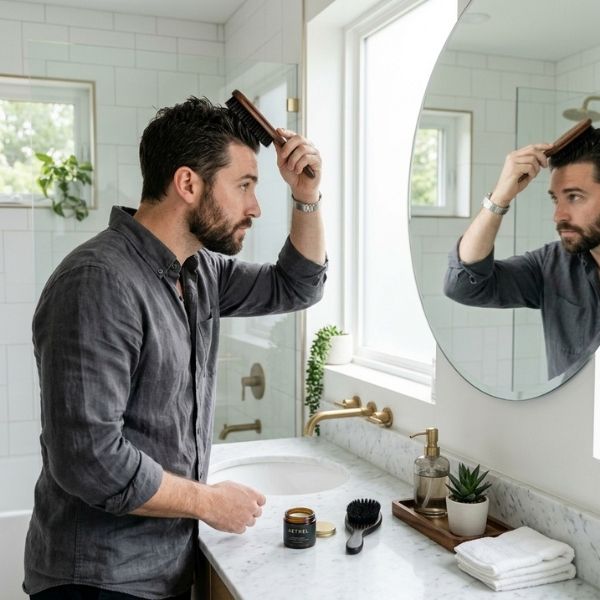
Wavy hair needs less daily effort than straight hair, but a few minutes still makes a visible difference.
- Apply product to damp hair. Work a small amount of sea salt spray or lightweight texture cream through hair while it is still slightly damp from the shower or a spray bottle. This helps define the wave pattern before it dries into a set shape.
- Scrunch and lift at the roots. Use your fingers, not a comb, to scrunch the top and crown upward. This builds volume and keeps the waves looking natural instead of pressed flat.
- Air dry or diffuse on low heat. Letting hair air dry preserves the most natural texture. If you are short on time, a diffuser attachment on low heat speeds things up without flattening the waves the way a regular blow dryer nozzle would.
That is generally the whole routine. Heavy gels and waxes are best avoided, since they tend to weigh waves down and flatten the texture that makes this haircut work in the first place.
Care and Upkeep

A wavy mullet is genuinely low maintenance day to day, but it still needs a regular trim schedule to hold its shape.
- Trim the sides every three to four weeks if you are wearing any kind of fade or taper, since regrowth shows fastest there.
- Trim the back every six to eight weeks, or less often if you are actively growing out to a longer variation.
- Deep condition weekly. Wavy hair tends to run drier than straight hair, and dryness leads to frizz rather than defined waves.
- Sleep on a satin or silk pillowcase. Cotton pulls moisture out of hair overnight and roughs up the wave pattern, making mornings harder to style.
- Avoid over-washing. Washing two to three times a week, rather than daily, keeps natural oils in place that help define waves instead of stripping them out.
Skipping trims for too long is the most common mistake. A fade grows out unevenly within a couple of weeks, and even the low maintenance classic version starts to lose its shape once the back overtakes the layering on top.
Read more: Messy French Crop Haircuts: Fast Style, Sharp Results
Barber Talk That Works
Bringing the right vocabulary into your appointment saves time and avoids miscommunication. Try these phrases:
- “Keep the top long enough to show the wave pattern, roughly two to three fingers of length.”
- “Taper the sides, not a skin fade” (or the reverse, if you want a burst fade or skin fade look).
- “Leave the back to grow past the collar” or “trim the back to just past the natural hairline” depending on the variation you want.
- “Point cut the ends instead of blunt cutting them” to keep the texture soft rather than heavy.
Bring two or three reference photos showing the front, side, and back of the style you want. Barbers work visually, and a photo removes guesswork about how long “long” or how tapered “tapered” actually means to you.
FAQ’s
Does a mullet work with wavy hair?
Yes. Wavy hair adds natural volume and movement that softens the mullet’s contrast, making it look fuller and more intentional than the same cut on straight hair.
How often should I trim a wavy mullet?
Trim the sides every three to four weeks if you have a fade or taper, and the back every six to eight weeks to keep the shape from growing out unevenly.
Is the wavy mullet high maintenance?
No. Daily styling takes a few minutes with the right product, though variations with a sharp fade need more frequent barber visits to stay clean.
What products work best for a wavy mullet?
Lightweight sea salt sprays, texture creams, and soft hold pastes work best. Heavy gels and waxes flatten the waves and should generally be avoided.
Conclusion
The wavy mullet earned its place as one of the standout men’s haircuts this year because it does something rare: it looks bold without demanding much work. Whether you start with the classic version, add a fade for more contrast, or commit to a long wavy modern mullet, your natural texture is doing most of the styling for you.
Pick a variation that matches your current length and comfort level, bring reference photos to your next appointment, and use the terminology in this guide to get exactly the shape you want. From there, a simple three step styling routine and a consistent trim schedule are all it takes to keep it looking sharp.

Zaria Rhodes is the lead editor and content curator at Lyrinexa, passionate about music, storytelling, and lyrical expression. With a deep love for discovering the meaning behind songs, she brings clarity, creativity, and accuracy to every post. Zaria is dedicated to providing readers with authentic lyrics, thoughtful interpretations, and a seamless music-exploration experience.

1 thought on “15 Best Wavy Mullet Haircuts That Are Trending in 2026”