


A burst fade design turns a standard haircut into a statement. Instead of a plain skin fade, you get a curved arc around the ear paired with a shaved pattern that adds personality and sharpness to the cut. Whether you want a single clean line, a bold lightning bolt, or a full geometric pattern, this guide covers everything you need before you sit in the chair.
You’ll find the best burst fade design ideas for 2026, where each design works best, how placement changes with low, mid, and high fades, and exactly what to tell your barber so you leave with the cut you pictured. We’ll also cover hair type, maintenance, and common mistakes to avoid.
What Is a Burst Fade Design
A burst fade is a haircut where the fade doesn’t run in a straight vertical line up the side of the head like a typical taper or skin fade. Instead, the shortest point sits directly behind or around the ear, and the length fans outward in a semicircle, or “burst,” from that point. The result looks like a halo of short hair radiating around the ear rather than a straight column running toward the temple.
A burst fade design simply adds a shaved pattern, part, or shape into that curved fade zone. Barbers use trimmers and a straight razor to carve lines, shapes, or symbols into the short hair, using the natural curve of the burst as a canvas. Because the burst fade already has an unusual, rounded shape, it gives barbers more room for curved and angular designs than a standard fade does.
Burst Fade With Design vs Regular Burst Fade
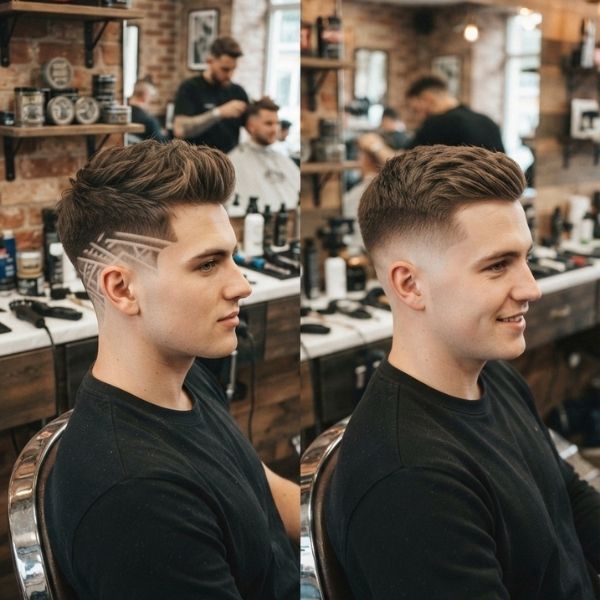
A regular burst fade relies entirely on the shape of the fade for visual interest. There’s no shaved artwork, just a clean gradient from skin or a low guard number up to the longer hair on top. It’s a subtle, professional option that still looks sharp without drawing extra attention.
A burst fade with design adds a second layer of detail. The barber uses the burst as a base, then shaves a line, shape, or pattern within or around that curve. This version is bolder and more personalized, but it also needs more upkeep since the shaved lines grow out faster than the surrounding fade. For a low-maintenance look at work, a plain burst fade is the safer choice. For a haircut that stands out, a design adds that extra edge.
Read More : Burst Fade Straight Hair: 15 Trendy Styles That Look Sharp
Where Should the Design Go on a Burst Fade
Placement is what separates a clean, intentional-looking design from one that feels random or overcrowded. Because the burst fade already curves around the ear, most designs follow that same arc rather than fighting against it. The two most common zones barbers use are the area directly behind the ear and the nape or V area at the back of the neck.
Behind the Ear Burst Fade Design

The space directly behind the ear is the natural starting point of a burst fade, which makes it the most popular spot for a design. A single curved line, a small star, or a short zigzag placed here follows the existing shape of the fade instead of interrupting it. This placement holds up longer, too, since it’s tucked slightly out of the way of everyday friction from hats or headphones.
Smaller, simpler shapes work best behind the ear. A lightning bolt, a thin part line, or a small heart reads clearly in this tighter space, while larger or more detailed patterns can look cramped.
Nape and V Area Design

The nape, or the V-shaped point where the hairline comes to a point at the back of the neck, is the second most common design zone. This area gives a barber more flat surface, making it a better spot for geometric patterns, negative space designs, or anything with sharper angles.
A V design plays off the natural point of the nape, either sharpening that shape with a razor or adding a line that mirrors it. This placement pairs especially well with burst fade mullets and longer nape lengths, since there’s more room to frame the design.
Best Burst Fade Design Ideas
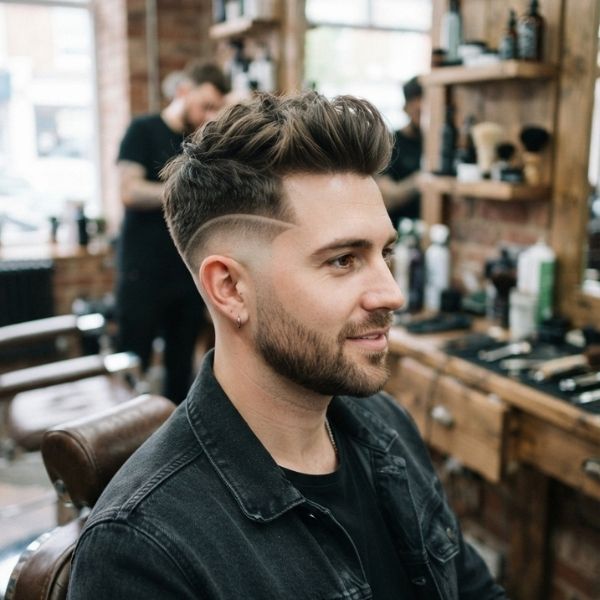
Once you know where the design will sit, the next decision is what shape or pattern to actually get. Below are the most requested burst fade design ideas for 2026, ranked from simplest to most detailed.
Burst Fade Line Design
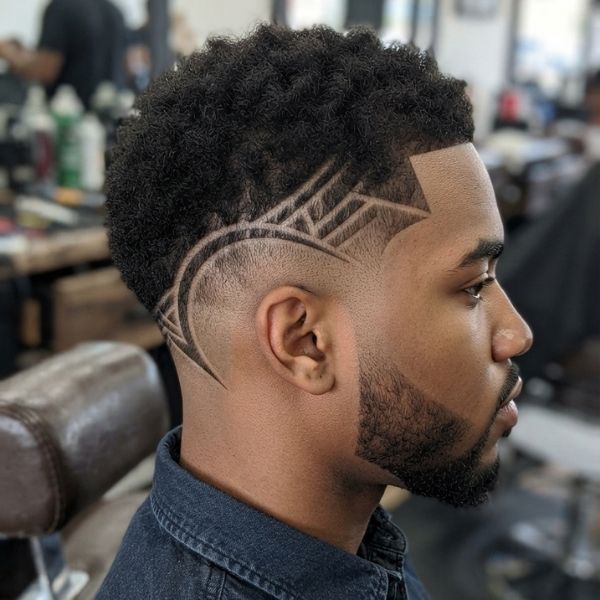
A single shaved line is the most understated design option and a good starting point if you’ve never had a shaved pattern before. Barbers typically place one straight or slightly curved line following the arc of the burst, either behind the ear or cutting through the fade at an angle. It’s quick to maintain and subtle enough for most workplaces.
Burst Fade Zigzag Design
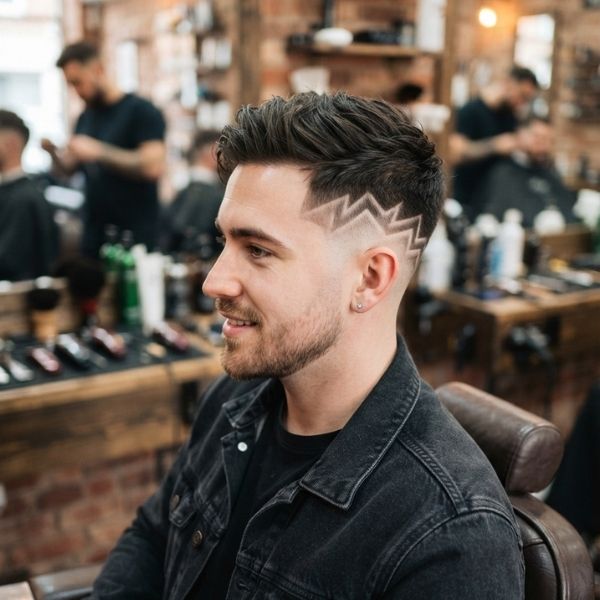
A zigzag adds movement without requiring a large canvas, and works well in the nape area or as a short accent behind the ear. Because it’s made of short, angled segments, it tends to hold its shape a little longer between touch-ups than a single curved line.
Burst Fade Lightning Bolt Design

The lightning bolt remains one of the most requested burst fade designs because it’s bold, recognizable, and fits naturally into the curve of the burst. A single bolt usually sits behind the ear or along the temple for high contrast. It needs sharp, straight-razor detailing to look crisp, so ask specifically for razor line-up work rather than trimmers alone.
Burst Fade Heart Design

A heart design has become popular for younger clients, matching sibling haircuts, or a playful take on the burst fade. It requires more freehand control than a straight-line design, so it’s best done by a barber with freestyle experience. Placement is usually behind the ear or at the nape, where there’s enough flat space to shape the curves properly.
Burst Fade Star Design
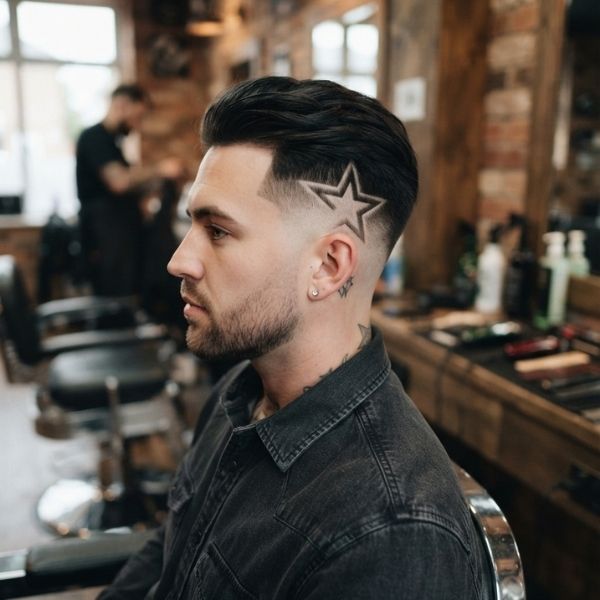
A star is a mid-difficulty design that works as a single accent piece or a small cluster. One star behind the ear reads as a subtle detail, while a cluster along the nape creates a bolder statement. Like the heart, it benefits from a barber comfortable with freehand razor work.
Burst Fade Geometric Design and Negative Space

Geometric and negative space designs are the most advanced option here. Instead of shaving a shape into the hair, negative space designs shave around a shape, leaving the pattern in slightly longer hair while the surrounding area goes to skin. This creates strong contrast but takes longer in the chair and requires an experienced barber. Triangles, hexagons, and interlocking line patterns are the most common geometric requests for 2026.
Burst Fade With V Design
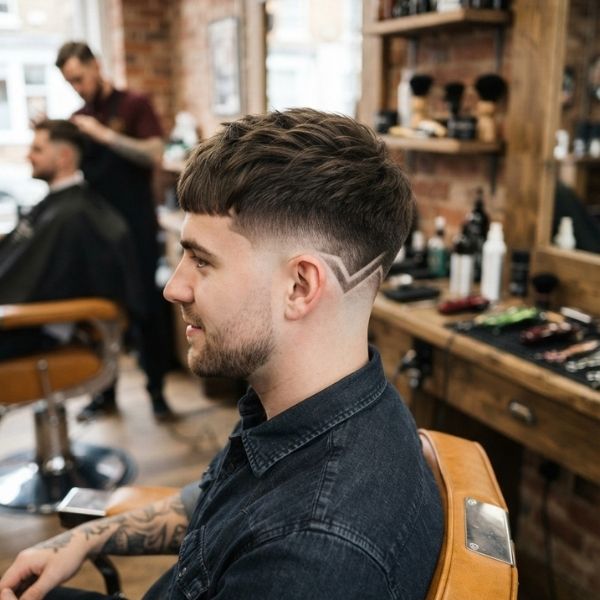
A V design sharpens or emphasizes the natural point at the nape, either with a single crisp V-shaped line or a double V for extra contrast. This pairs particularly well with a burst fade mullet, since the added length gives the V shape more room to stand out.
Low vs Mid vs High Burst Fade Design
Where the fade itself starts on the head changes how a design looks and how much space a barber has to work with. This is one of the most important decisions to make before choosing a design, since a large geometric pattern that looks great on a high burst fade might look cramped on a low one.
Low Burst Fade Design
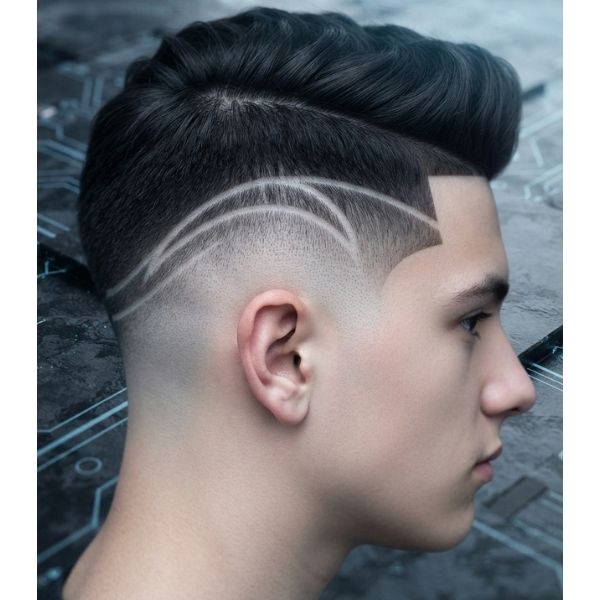
A low burst fade starts close to the hairline, just above the ear, and stays subtle with minimal contrast. This conservative option suits workplaces with stricter grooming expectations. Because the burst area is smaller, keep designs simple: a single line, small star, or thin zigzag works better than a detailed pattern.
Mid Burst Fade Design

A mid burst fade starts around the temple, curving around the ear with more visible contrast while still staying wearable for most settings. This is the most versatile placement for a design, with enough room for medium-sized patterns like a lightning bolt, heart, or short geometric accent.
High Burst Fade Design
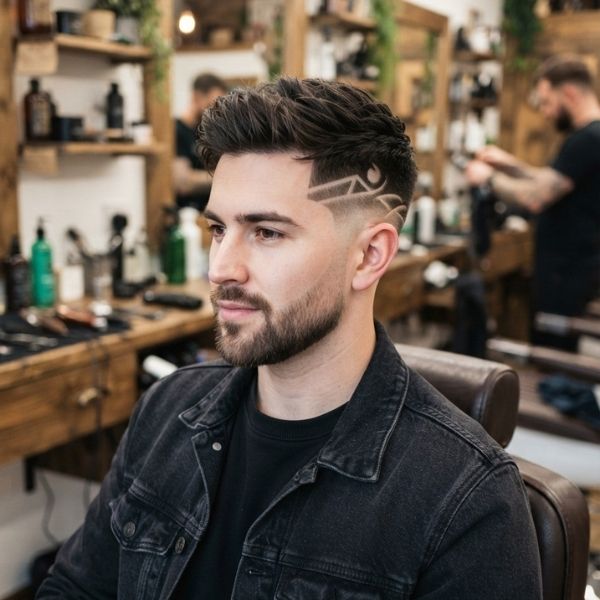
A high burst fade starts well above the ear, sometimes near the top of the head, creating the boldest contrast of the three. This gives a barber the most space to work with, making it the best choice for larger designs or multiple elements combined. High burst fades pair especially well with mohawks and textured crops, since the fade height matches the height of the style on top.
Burst Fade Design for Different Hair Types
Hair type affects both how a design looks once it’s cut and how long it holds up between visits. A pattern that looks razor-sharp on straight hair might soften within days on curly or coily hair, so it helps to set expectations with your barber based on your natural texture.
Burst Fade Design on Straight Hair
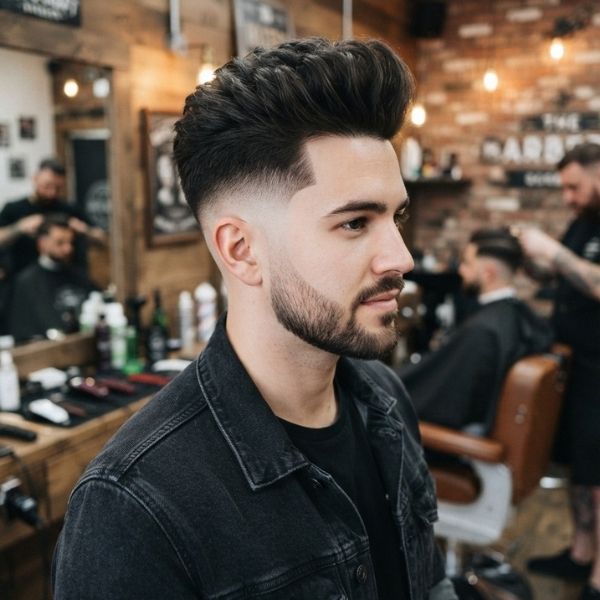
Straight hair shows the cleanest, sharpest lines of any texture, making it ideal for detailed designs like geometric patterns. The tradeoff is that any inconsistency in the blend is more visible, so straight hair needs precise clipper and razor work.
Burst Fade Design on Curly Hair

Curly hair adds natural volume on top that contrasts nicely with a sharp shaved design underneath. Because curls shrink as they dry, barbers typically cut slightly longer than the target length. Designs on curly hair also soften faster as new growth curls over the shaved lines, so more frequent touch-ups keep the pattern crisp.
Burst Fade Design for Thick Hair vs Thin Hair
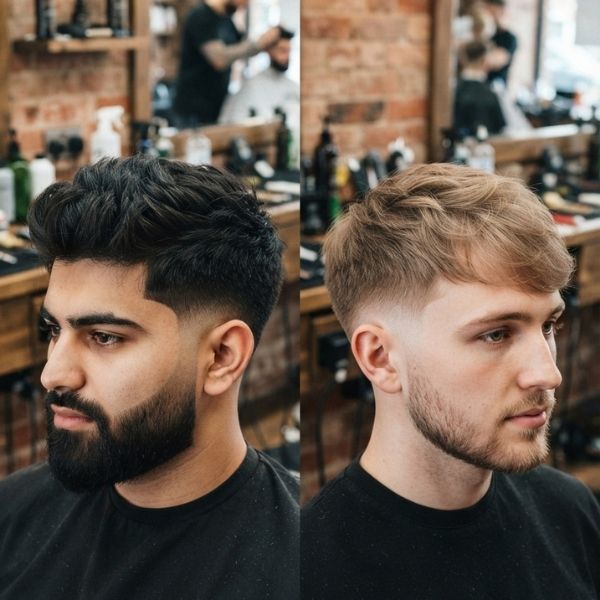
Thick hair holds a design’s contrast well, but needs more clipper-over-comb work to remove bulk without leaving heavy shelves. Thin hair shows the scalp more easily, which can make a design’s outline appear sharper, but barbers usually stick to longer guards on the surrounding fade to avoid a sparse look.
Burst Fade Design With Popular Top Styles
The design doesn’t exist in isolation. It’s meant to complement whatever is happening on top, whether that’s length, texture, or a specific silhouette like a mohawk or mullet.
Burst Fade Mohawk Design

Pairing a design with a mohawk creates one of the boldest combinations here. Since a mohawk already shaves the sides down to skin or a very low guard, there’s a wide, clean canvas for a design, usually placed just above the burst curve. A high burst fade works best, matching the height and energy of the mohawk itself.
Burst Fade Mullet Simple

A mullet’s longer back section pairs naturally with nape and V area designs, since there’s more length to frame the shaved pattern against. This combination stays popular because it balances a low-maintenance top with a bold, detailed back section.
Burst Fade Textured Crop or Fringe Design
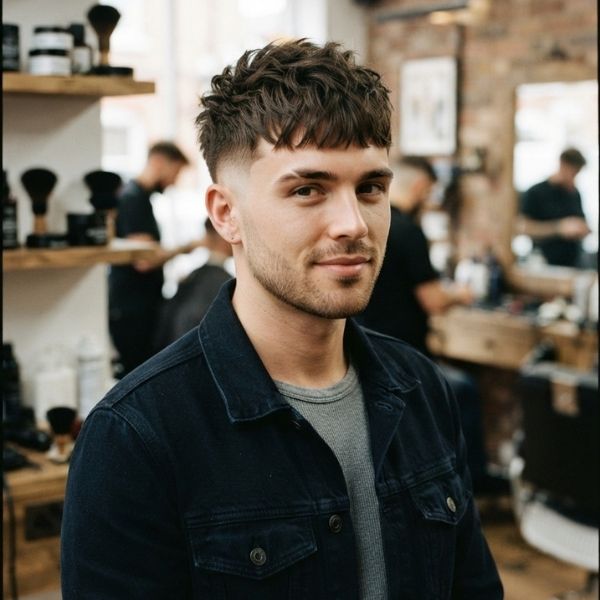
A textured crop or fringe on top keeps the front soft and natural while the burst fade design adds contrast at the sides. A simple line or small design behind the ear stays professional, while a bolder geometric pattern dials up the edge for a more casual setting.
What to Tell Your Barber
Miscommunication is the top reason a design doesn’t come out the way a client pictured it. A clear reference photo is the best starting point, but it also helps to describe the cut in the same language barbers use.
Specify these points before the clippers come out:
- Fade height: Say whether you want a low, mid, or high burst fade so the barber knows where to start the guideline.
- Guard number for the sides: A guard 1 keeps close, visible skin; a guard 2 or 3 leaves more length and softer contrast.
- Design placement: Point to exactly where you want the pattern, whether that’s behind the ear or in the nape area.
- Design complexity: Let the barber know if you want a simple line or something more detailed like a geometric or freehand shape, since this affects how long the appointment takes.
- Top length and style: Mention whether you’re keeping length for a crop, mullet, or mohawk, since this changes how the burst blends into the top.
Read More : Blowout Low Taper Fade Curly Hair: 2026 Barber Guide For Curls
Simple Guard and Blend Notes
For reference, guard numbers roughly translate as follows:
- Guard 0: Skin or close to it, used for the sharpest part of the burst and the design lines themselves.
- Guard 1: About 1/8 inch, very close with visible scalp.
- Guard 2: About 1/4 inch, short with light coverage.
- Guard 3: About 3/8 inch, visible texture with more length.
Barbers often blend between these numbers, using half sizes to avoid a visible line where one guard length meets the next. For the sharpest design, ask for the pattern to be finished with a straight razor rather than trimmers alone, since a razor creates a cleaner edge against the skin.
Burst Fade Design Maintenance
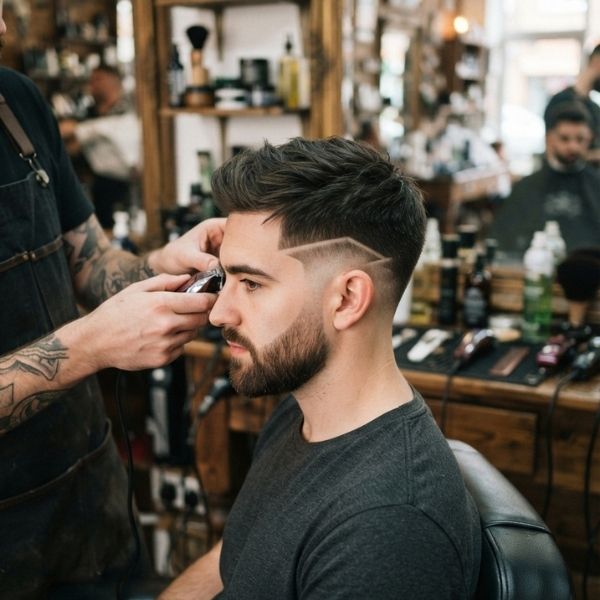
A burst fade design grows out faster than the haircut around it, since the shaved lines are the shortest part of the entire cut. Keeping the pattern sharp takes more frequent attention than a standard fade.
How Often to Redo the Design
Most barbers recommend touching up a burst fade design every one to two weeks, depending on how fast your hair grows. The overall fade can usually go two to three weeks between full appointments, but the shaved design will blur into the surrounding hair before that if left alone. If you’re comfortable with clippers, you can touch up a simple line design at home, though anything with curves or freehand shapes is best left to a professional.
Aftercare Tips
- Wash with a gentle shampoo and avoid scrubbing directly over freshly shaved lines for the first day or two.
- Apply a light moisturizer or beard-and-scalp oil around the design to prevent dryness or flaking, which can make the lines look uneven.
- Avoid tight hats or headphones pressing directly over the design area right after a fresh cut, since friction can irritate freshly shaved skin.
- Use a soft-bristle brush to keep the top styled without disturbing the fade line underneath.
Burst Fade Design Mistakes to Avoid
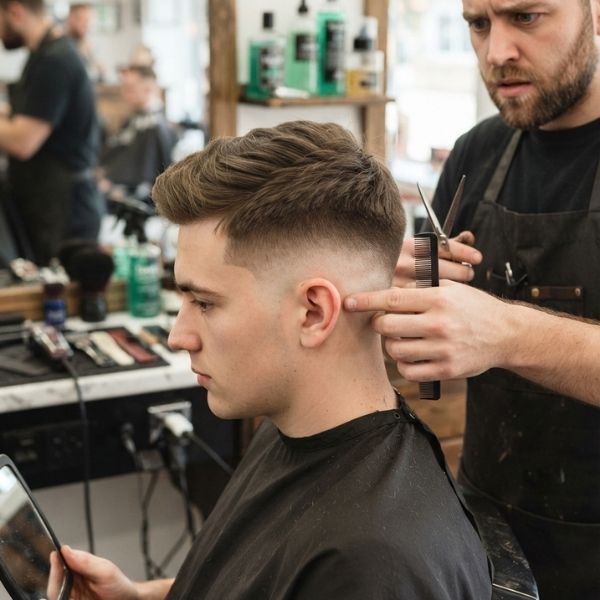
A few recurring mistakes show up again and again with burst fade designs, and most of them are avoidable with better planning before the appointment.
- Choosing a design too large for the fade height. A detailed geometric pattern needs the space of a mid or high burst fade. Squeezing it into a low burst usually looks cramped.
- Skipping the reference photo. Verbal descriptions alone often lead to a different shape than what you pictured. Bring at least one clear photo, even if you plan to adjust it.
- Ignoring hair growth speed. Fast-growing hair blurs a design within days. If you can’t commit to weekly touch-ups, choose a simpler line-based design over an intricate one.
- Not accounting for hair texture. Curly or coily hair shrinks as it dries, which can make a design look different once it settles. Mention your texture upfront so the barber cuts accordingly.
- Picking a design that clashes with your top style. A large design under a long mullet or mohawk can look disconnected if it doesn’t follow the same visual line as the rest of the cut. Ask your barber how the design will read once the top is styled, not just while it’s wet and freshly cut.
- Going too bold for the setting. If you’re in a formal workplace, a subtle line or small shape behind the ear is a safer bet than a large, highly visible pattern.
FAQs
Is a burst fade design hard to maintain?
It takes more upkeep than a plain burst fade since the shaved lines grow out fastest. Expect a touch-up every one to two weeks to keep the pattern sharp.
Can I get a burst fade design on short hair?
Yes, short hair on top actually makes many designs easier to see clearly, especially behind the ear or along the nape.
Does a burst fade design work for curly hair?
Yes, but curls can shrink and soften the lines faster than straight hair, so more frequent touch-ups help keep the design crisp.
What’s the best design for a first-timer?
A single line or small shape behind the ear is the easiest starting point since it’s subtle, quick to maintain, and works with most hair types.
Should I bring a photo to my barber?
Always. A clear reference photo, even if you plan to adjust the placement or size, prevents miscommunication about the design’s shape and scale.
Read More : Low Taper Fade Black Male: 2026 Barber Guide for Waves, Curls, Afros & Locs
Conclusion
A burst fade design is one of the most versatile ways to personalize a haircut in 2026, whether you’re after a single clean line or a full geometric pattern. The key to getting it right comes down to three things: choosing a placement that follows the natural curve of the burst, matching the design’s size to your fade height, and communicating clearly with your barber about guard numbers, placement, and complexity. Pair that with regular touch-ups and proper aftercare, and a burst fade design stays sharp, intentional, and worth showing off long after you leave the chair.

Zaria Rhodes is the lead editor and content curator at Lyrinexa, passionate about music, storytelling, and lyrical expression. With a deep love for discovering the meaning behind songs, she brings clarity, creativity, and accuracy to every post. Zaria is dedicated to providing readers with authentic lyrics, thoughtful interpretations, and a seamless music-exploration experience.

2 thoughts on “Burst Fade Design: Best Hair Design Ideas, Placement, and Barber Tips (2026)”